
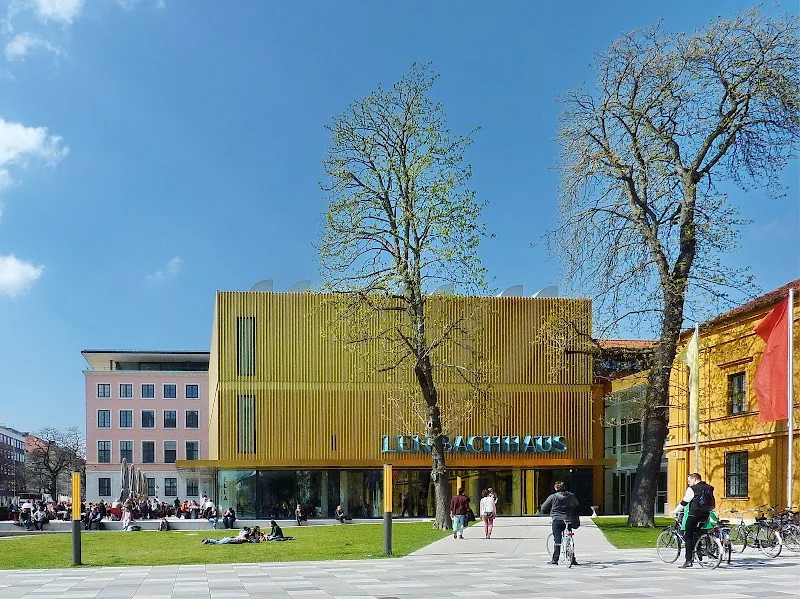
Luisenstraße 33, München-Maxvorstadt
Luisenstraße 33, 80333 München, Germany
Lenbachhaus | Exhibitions & Tickets
The Lenbachhaus in Munich is not a museum that you visit briefly and then forget. It is a place with two faces: on one side, the historic villa of the painter Franz von Lenbach with its garden and living spaces, and on the other side, a museum for modern and contemporary art, which has long been one of the most important addresses for art and culture in the city. The Städtische Galerie in Lenbachhaus and Kunstbau Munich was founded in 1929 and houses the world's largest collection of the Blue Rider. At the same time, the collection includes further focuses from 19th-century art to classical modernism and post-war modernism to contemporary art. This very mix is what makes it appealing: here, art history, the present, and a very unique Munich location with recognition value meet. Those searching for lenbachhaus munich, lenbachhaus exhibition, or lenbachhaus current exhibition will therefore find not just a single exhibition destination, but a multifaceted museum experience with collection, program, garden, restaurant, and changing formats for a wide variety of visitors. ([lenbachhaus.de](https://www.lenbachhaus.de/en/museum/about-us))
Current Exhibitions 2026 and Upcoming Events
The exhibition and event program of the Lenbachhaus is particularly focused on its own collection, dialogue, and current artistic positions in 2026. The official homepage highlights, among other things, Beyond the World. The Blue Rider running until September 5, 2027, as well as Franz Wanner. Suspended Presences until July 19, 2026. In the current exhibitions, What May Vanish Becomes Image. Regarding Nature and Art will be shown until spring 2027. Additionally, the house presents historical rooms of Franz von Lenbach, thus relating collection, house history, and special exhibitions to one another. For inquiries such as lenbachhaus exhibitions 2026 or lenbachhaus upcoming events, it is important: the program thrives not only on exhibitions but also on guided tours, discussion formats, and participatory events. For example, the series Buntes Garten Ciao, which takes place in the garden, on the forecourt, and in the surroundings between April 23 and August 30, 2026, as well as specific dates like the opening on April 23, 2026, performances, workshops, walks, dance, theater, karaoke, and discussion formats. This is exactly what makes the Lenbachhaus attractive for visitors looking for more than just a static display: it is about art as an experience, about exchange, and about a program structure that continuously creates new occasions for a visit even in 2026. Those wanting the best overview should check the current calendar offerings in advance and plan tickets in a timely manner, as early booking is particularly worthwhile around popular special exhibitions and evening formats. ([lenbachhaus.de](https://www.lenbachhaus.de/en/))
Opening Hours, Tickets, Annual Pass, and Free Admission
For practical planning, the Lenbachhaus is very clearly structured. The regular opening hours are closed on Mondays, open from Tuesday to Sunday and on public holidays from 10 AM to 6 PM, and on Thursdays from 10 AM to 8 PM. This makes the museum suitable for both classic daytime visits and longer evening stays. Admission costs 10 euros regularly, 6 euros reduced, and the audio guide in German and English is already included in the price. Tickets can be purchased at the museum ticket office in Lenbachhaus or online. For visitors who come more often, the annual pass is interesting: it costs 25 euros regularly and 15 euros reduced, is valid for twelve months from the chosen start date, and includes the collections as well as all special exhibitions. Those searching for lenbachhaus entry, lenbachhaus tickets, or lenbachhaus annual pass will thus receive a well-understandable and transparent pricing model. Additionally, there is a particularly attractive free-entry offer: every first Thursday of the month, free admission is available from 6 PM to 10 PM as part of extra+ at the Lenbachhaus. Those planning their visit without crowds and waiting times should especially consider an online ticket for weekends. This is not only practical but also helpful when current exhibitions generate a lot of interest. The combination of fair ticket prices, an annual pass with clear added value, and regular free admission makes the Lenbachhaus interesting for both spontaneous and returning visits. Thus, the museum remains accessible without losing its high exhibition standards. ([lenbachhaus.de](https://www.lenbachhaus.de/faq))
The Blue Rider and the Collection of the Lenbachhaus
The actual magnet of the Lenbachhaus is for many the Blue Rider. The collection is considered the largest of its kind in the world and is therefore not only a local pride but an international reference point for the avant-garde of the early 20th century. This was made possible by the generous donation from Gabriele Münter in 1957, which brought more than a thousand works by artists of the Blue Rider to the Lenbachhaus. Among them were not only about ninety oil paintings by Wassily Kandinsky but also numerous watercolors, drawings, sketchbooks, reverse glass paintings, and graphic works. Later, further central holdings were added, such as works by Franz Marc and August Macke from the circle of Bernhard Koehler, as well as the Gabriele Münter and Johannes Eichner Foundation. This development turned the Lenbachhaus into an institution that not only collects but actively shapes research, mediation, and visibility of this art movement. For inquiries like lenbachhaus blue rider, this collection is the core of interest. Visitors encounter not just individual icons but an entire artistic mindset that has rethought color, form, spirituality, and expression. The house describes the Blue Rider as one of the most important avant-garde groups of the early 20th century; its artists developed a vibrant, expressive, and partly abstract language of forms starting in 1908, which still has a strong impact today. Therefore, those visiting the Lenbachhaus experience not only masterpieces but the historical context of a movement that made Munich internationally famous. This is precisely where the special strength of the house lies: it connects great names like Kandinsky, Münter, Marc, Macke, Jawlensky, or Klee with a clear museum claim that does not separate collection, research, and exhibition but brings them together. ([lenbachhaus.de](https://www.lenbachhaus.de/en/discover/the-blue-rider))
Kunstbau, History, and Historic Villa
The Lenbachhaus is architecturally and historically a museum ensemble with several levels. At its center is the historic villa of the painter Franz von Lenbach, complemented by the modern new building at Königsplatz and the Kunstbau. The museum was founded in 1929 and thus not only utilizes a location but also its history as part of the visitor experience. Franz von Lenbach's villa and studio building tell of Munich in the late 19th century, while the museum expansion and the Kunstbau open the view to the present. The Kunstbau itself is a subterranean gallery space on the intermediate floor of the Königsplatz subway station and was opened in 1994. It allows for large special exhibitions in close proximity to the main building and is thus an essential part of the Lenbachhaus profile. At the same time, 2026 is important: the Kunstbau will remain closed due to energy renovation work. Therefore, those searching for lenbachhaus kunstbau should definitely take this current information into account and focus their visit more on the villa, the new building, and the current exhibition areas in the Lenbachhaus itself. The connection between historical building substance and modern exhibition architecture is what makes it appealing. The former artist residence of Lenbach is not presented in isolation but is used as part of a larger context of collection, city history, and changing perspectives. The current program structure also shows this thought: historical rooms, special exhibitions, mediation offers, and dialogue formats interlink. The Lenbachhaus is thus a house that not only shows art but also considers the conditions of its display. This gives the visit depth, especially if one is looking for more than just a quick overview of individual works. ([lenbachhaus.de](https://www.lenbachhaus.de/en/museum/about-us))
Access, Parking, and Accessibility
The access to the Lenbachhaus is uncomplicated and well signposted for different means of transport. The official website recommends the U-Bahn lines U2 and U8 to Königsplatz, U1 and U7 to Stiglmaierplatz, tram line 27 to Karolinenplatz, bus 100 to Königsplatz, and the S-Bahn to Hauptbahnhof. The museum is about a five-minute walk from Munich's main train station. For coaches, the central bus station is mentioned as the next parking option. Regarding lenbachhaus parking, it is important: according to the FAQ, there are only public parking spaces, including disabled parking spaces. The accessibility page specifies that there are two public disabled parking spaces on Luisenstraße. Therefore, those arriving by car should not expect a private museum garage but should plan for public parking spaces. The museum itself is largely accessible. All parts of the Lenbachhaus are wheelchair accessible according to the official accessibility page, the ticket area and the upper exhibition levels are reachable by lift, and there is a barrier-free access through the main entrance. Additionally, there are loan wheelchairs and walkers, a barrier-free toilet, and clearly marked paths. The garden can also be accessed through a gate on Luisenstraße. For the Kunstbau: the exhibition hall itself is step-free, but regular access is via stairs or escalators; a lift for wheelchair users is located at Luisenstraße 29 and is operated by staff. At the same time, the Kunstbau is closed in 2026. Thus, accessibility is very differentiated but practically usable. Those with questions in advance can contact the visitor office by phone. Overall, the Lenbachhaus makes the visit well-planned for families, groups, older people, and guests with mobility impairments. ([lenbachhaus.de](https://www.lenbachhaus.de/en/visit/plan-your-visit))
Café Ella, Garden, and Museum Shop
A typical visit to the Lenbachhaus includes far more than just the exhibition. The garden is freely accessible without a ticket during museum opening hours and is described by the official website as a small oasis of tranquility in the middle of the city. It was designed by Max Kolb and was created during the lifetime of Franz von Lenbach. Today, with its benches, seating areas, and views of the historic villa, it is a place where one can briefly catch their breath between art and urban life. That is why inquiries like lenbachhaus free admission or lenbachhaus munich often refer not only to the museum but also to the public access to the garden. The bookstore Walther König is also accessible without a ticket. Additionally, there is the café and restaurant Ella, which is described on the official website with very clear opening hours: closed on Mondays, Tuesday from 10 AM to 6 PM, Wednesday from 10 AM to 8 PM, Thursday from 10 AM to 11 PM, Friday from 10 AM to 8 PM, Saturday from 9 AM to 8 PM, and Sunday from 9 AM to 7 PM. Ella offers a bar, lounge, and restaurant, a spacious terrace overlooking Königsplatz, and even a Blue Rider menu at a special price with a museum ticket. The name of the establishment refers to the nickname that Wassily Kandinsky gave to Gabriele Münter, which charmingly connects gastronomy and the museum world. Additionally, there is the museum shop with books, catalogs, design objects, and Lenbachhaus merchandise. This makes the visit very rounded: viewing art, relaxing in the garden, staying in the café, browsing in the shop, and perhaps returning with an annual pass. Therefore, the Lenbachhaus is not just an exhibition address but a whole day in the art area of Munich. ([lenbachhaus.de](https://www.lenbachhaus.de/en/visit/plan-your-visit))
Sources:
Show moreShow less
Lenbachhaus | Exhibitions & Tickets
The Lenbachhaus in Munich is not a museum that you visit briefly and then forget. It is a place with two faces: on one side, the historic villa of the painter Franz von Lenbach with its garden and living spaces, and on the other side, a museum for modern and contemporary art, which has long been one of the most important addresses for art and culture in the city. The Städtische Galerie in Lenbachhaus and Kunstbau Munich was founded in 1929 and houses the world's largest collection of the Blue Rider. At the same time, the collection includes further focuses from 19th-century art to classical modernism and post-war modernism to contemporary art. This very mix is what makes it appealing: here, art history, the present, and a very unique Munich location with recognition value meet. Those searching for lenbachhaus munich, lenbachhaus exhibition, or lenbachhaus current exhibition will therefore find not just a single exhibition destination, but a multifaceted museum experience with collection, program, garden, restaurant, and changing formats for a wide variety of visitors. ([lenbachhaus.de](https://www.lenbachhaus.de/en/museum/about-us))
Current Exhibitions 2026 and Upcoming Events
The exhibition and event program of the Lenbachhaus is particularly focused on its own collection, dialogue, and current artistic positions in 2026. The official homepage highlights, among other things, Beyond the World. The Blue Rider running until September 5, 2027, as well as Franz Wanner. Suspended Presences until July 19, 2026. In the current exhibitions, What May Vanish Becomes Image. Regarding Nature and Art will be shown until spring 2027. Additionally, the house presents historical rooms of Franz von Lenbach, thus relating collection, house history, and special exhibitions to one another. For inquiries such as lenbachhaus exhibitions 2026 or lenbachhaus upcoming events, it is important: the program thrives not only on exhibitions but also on guided tours, discussion formats, and participatory events. For example, the series Buntes Garten Ciao, which takes place in the garden, on the forecourt, and in the surroundings between April 23 and August 30, 2026, as well as specific dates like the opening on April 23, 2026, performances, workshops, walks, dance, theater, karaoke, and discussion formats. This is exactly what makes the Lenbachhaus attractive for visitors looking for more than just a static display: it is about art as an experience, about exchange, and about a program structure that continuously creates new occasions for a visit even in 2026. Those wanting the best overview should check the current calendar offerings in advance and plan tickets in a timely manner, as early booking is particularly worthwhile around popular special exhibitions and evening formats. ([lenbachhaus.de](https://www.lenbachhaus.de/en/))
Opening Hours, Tickets, Annual Pass, and Free Admission
For practical planning, the Lenbachhaus is very clearly structured. The regular opening hours are closed on Mondays, open from Tuesday to Sunday and on public holidays from 10 AM to 6 PM, and on Thursdays from 10 AM to 8 PM. This makes the museum suitable for both classic daytime visits and longer evening stays. Admission costs 10 euros regularly, 6 euros reduced, and the audio guide in German and English is already included in the price. Tickets can be purchased at the museum ticket office in Lenbachhaus or online. For visitors who come more often, the annual pass is interesting: it costs 25 euros regularly and 15 euros reduced, is valid for twelve months from the chosen start date, and includes the collections as well as all special exhibitions. Those searching for lenbachhaus entry, lenbachhaus tickets, or lenbachhaus annual pass will thus receive a well-understandable and transparent pricing model. Additionally, there is a particularly attractive free-entry offer: every first Thursday of the month, free admission is available from 6 PM to 10 PM as part of extra+ at the Lenbachhaus. Those planning their visit without crowds and waiting times should especially consider an online ticket for weekends. This is not only practical but also helpful when current exhibitions generate a lot of interest. The combination of fair ticket prices, an annual pass with clear added value, and regular free admission makes the Lenbachhaus interesting for both spontaneous and returning visits. Thus, the museum remains accessible without losing its high exhibition standards. ([lenbachhaus.de](https://www.lenbachhaus.de/faq))
The Blue Rider and the Collection of the Lenbachhaus
The actual magnet of the Lenbachhaus is for many the Blue Rider. The collection is considered the largest of its kind in the world and is therefore not only a local pride but an international reference point for the avant-garde of the early 20th century. This was made possible by the generous donation from Gabriele Münter in 1957, which brought more than a thousand works by artists of the Blue Rider to the Lenbachhaus. Among them were not only about ninety oil paintings by Wassily Kandinsky but also numerous watercolors, drawings, sketchbooks, reverse glass paintings, and graphic works. Later, further central holdings were added, such as works by Franz Marc and August Macke from the circle of Bernhard Koehler, as well as the Gabriele Münter and Johannes Eichner Foundation. This development turned the Lenbachhaus into an institution that not only collects but actively shapes research, mediation, and visibility of this art movement. For inquiries like lenbachhaus blue rider, this collection is the core of interest. Visitors encounter not just individual icons but an entire artistic mindset that has rethought color, form, spirituality, and expression. The house describes the Blue Rider as one of the most important avant-garde groups of the early 20th century; its artists developed a vibrant, expressive, and partly abstract language of forms starting in 1908, which still has a strong impact today. Therefore, those visiting the Lenbachhaus experience not only masterpieces but the historical context of a movement that made Munich internationally famous. This is precisely where the special strength of the house lies: it connects great names like Kandinsky, Münter, Marc, Macke, Jawlensky, or Klee with a clear museum claim that does not separate collection, research, and exhibition but brings them together. ([lenbachhaus.de](https://www.lenbachhaus.de/en/discover/the-blue-rider))
Kunstbau, History, and Historic Villa
The Lenbachhaus is architecturally and historically a museum ensemble with several levels. At its center is the historic villa of the painter Franz von Lenbach, complemented by the modern new building at Königsplatz and the Kunstbau. The museum was founded in 1929 and thus not only utilizes a location but also its history as part of the visitor experience. Franz von Lenbach's villa and studio building tell of Munich in the late 19th century, while the museum expansion and the Kunstbau open the view to the present. The Kunstbau itself is a subterranean gallery space on the intermediate floor of the Königsplatz subway station and was opened in 1994. It allows for large special exhibitions in close proximity to the main building and is thus an essential part of the Lenbachhaus profile. At the same time, 2026 is important: the Kunstbau will remain closed due to energy renovation work. Therefore, those searching for lenbachhaus kunstbau should definitely take this current information into account and focus their visit more on the villa, the new building, and the current exhibition areas in the Lenbachhaus itself. The connection between historical building substance and modern exhibition architecture is what makes it appealing. The former artist residence of Lenbach is not presented in isolation but is used as part of a larger context of collection, city history, and changing perspectives. The current program structure also shows this thought: historical rooms, special exhibitions, mediation offers, and dialogue formats interlink. The Lenbachhaus is thus a house that not only shows art but also considers the conditions of its display. This gives the visit depth, especially if one is looking for more than just a quick overview of individual works. ([lenbachhaus.de](https://www.lenbachhaus.de/en/museum/about-us))
Access, Parking, and Accessibility
The access to the Lenbachhaus is uncomplicated and well signposted for different means of transport. The official website recommends the U-Bahn lines U2 and U8 to Königsplatz, U1 and U7 to Stiglmaierplatz, tram line 27 to Karolinenplatz, bus 100 to Königsplatz, and the S-Bahn to Hauptbahnhof. The museum is about a five-minute walk from Munich's main train station. For coaches, the central bus station is mentioned as the next parking option. Regarding lenbachhaus parking, it is important: according to the FAQ, there are only public parking spaces, including disabled parking spaces. The accessibility page specifies that there are two public disabled parking spaces on Luisenstraße. Therefore, those arriving by car should not expect a private museum garage but should plan for public parking spaces. The museum itself is largely accessible. All parts of the Lenbachhaus are wheelchair accessible according to the official accessibility page, the ticket area and the upper exhibition levels are reachable by lift, and there is a barrier-free access through the main entrance. Additionally, there are loan wheelchairs and walkers, a barrier-free toilet, and clearly marked paths. The garden can also be accessed through a gate on Luisenstraße. For the Kunstbau: the exhibition hall itself is step-free, but regular access is via stairs or escalators; a lift for wheelchair users is located at Luisenstraße 29 and is operated by staff. At the same time, the Kunstbau is closed in 2026. Thus, accessibility is very differentiated but practically usable. Those with questions in advance can contact the visitor office by phone. Overall, the Lenbachhaus makes the visit well-planned for families, groups, older people, and guests with mobility impairments. ([lenbachhaus.de](https://www.lenbachhaus.de/en/visit/plan-your-visit))
Café Ella, Garden, and Museum Shop
A typical visit to the Lenbachhaus includes far more than just the exhibition. The garden is freely accessible without a ticket during museum opening hours and is described by the official website as a small oasis of tranquility in the middle of the city. It was designed by Max Kolb and was created during the lifetime of Franz von Lenbach. Today, with its benches, seating areas, and views of the historic villa, it is a place where one can briefly catch their breath between art and urban life. That is why inquiries like lenbachhaus free admission or lenbachhaus munich often refer not only to the museum but also to the public access to the garden. The bookstore Walther König is also accessible without a ticket. Additionally, there is the café and restaurant Ella, which is described on the official website with very clear opening hours: closed on Mondays, Tuesday from 10 AM to 6 PM, Wednesday from 10 AM to 8 PM, Thursday from 10 AM to 11 PM, Friday from 10 AM to 8 PM, Saturday from 9 AM to 8 PM, and Sunday from 9 AM to 7 PM. Ella offers a bar, lounge, and restaurant, a spacious terrace overlooking Königsplatz, and even a Blue Rider menu at a special price with a museum ticket. The name of the establishment refers to the nickname that Wassily Kandinsky gave to Gabriele Münter, which charmingly connects gastronomy and the museum world. Additionally, there is the museum shop with books, catalogs, design objects, and Lenbachhaus merchandise. This makes the visit very rounded: viewing art, relaxing in the garden, staying in the café, browsing in the shop, and perhaps returning with an annual pass. Therefore, the Lenbachhaus is not just an exhibition address but a whole day in the art area of Munich. ([lenbachhaus.de](https://www.lenbachhaus.de/en/visit/plan-your-visit))
Sources:
Lenbachhaus | Exhibitions & Tickets
The Lenbachhaus in Munich is not a museum that you visit briefly and then forget. It is a place with two faces: on one side, the historic villa of the painter Franz von Lenbach with its garden and living spaces, and on the other side, a museum for modern and contemporary art, which has long been one of the most important addresses for art and culture in the city. The Städtische Galerie in Lenbachhaus and Kunstbau Munich was founded in 1929 and houses the world's largest collection of the Blue Rider. At the same time, the collection includes further focuses from 19th-century art to classical modernism and post-war modernism to contemporary art. This very mix is what makes it appealing: here, art history, the present, and a very unique Munich location with recognition value meet. Those searching for lenbachhaus munich, lenbachhaus exhibition, or lenbachhaus current exhibition will therefore find not just a single exhibition destination, but a multifaceted museum experience with collection, program, garden, restaurant, and changing formats for a wide variety of visitors. ([lenbachhaus.de](https://www.lenbachhaus.de/en/museum/about-us))
Current Exhibitions 2026 and Upcoming Events
The exhibition and event program of the Lenbachhaus is particularly focused on its own collection, dialogue, and current artistic positions in 2026. The official homepage highlights, among other things, Beyond the World. The Blue Rider running until September 5, 2027, as well as Franz Wanner. Suspended Presences until July 19, 2026. In the current exhibitions, What May Vanish Becomes Image. Regarding Nature and Art will be shown until spring 2027. Additionally, the house presents historical rooms of Franz von Lenbach, thus relating collection, house history, and special exhibitions to one another. For inquiries such as lenbachhaus exhibitions 2026 or lenbachhaus upcoming events, it is important: the program thrives not only on exhibitions but also on guided tours, discussion formats, and participatory events. For example, the series Buntes Garten Ciao, which takes place in the garden, on the forecourt, and in the surroundings between April 23 and August 30, 2026, as well as specific dates like the opening on April 23, 2026, performances, workshops, walks, dance, theater, karaoke, and discussion formats. This is exactly what makes the Lenbachhaus attractive for visitors looking for more than just a static display: it is about art as an experience, about exchange, and about a program structure that continuously creates new occasions for a visit even in 2026. Those wanting the best overview should check the current calendar offerings in advance and plan tickets in a timely manner, as early booking is particularly worthwhile around popular special exhibitions and evening formats. ([lenbachhaus.de](https://www.lenbachhaus.de/en/))
Opening Hours, Tickets, Annual Pass, and Free Admission
For practical planning, the Lenbachhaus is very clearly structured. The regular opening hours are closed on Mondays, open from Tuesday to Sunday and on public holidays from 10 AM to 6 PM, and on Thursdays from 10 AM to 8 PM. This makes the museum suitable for both classic daytime visits and longer evening stays. Admission costs 10 euros regularly, 6 euros reduced, and the audio guide in German and English is already included in the price. Tickets can be purchased at the museum ticket office in Lenbachhaus or online. For visitors who come more often, the annual pass is interesting: it costs 25 euros regularly and 15 euros reduced, is valid for twelve months from the chosen start date, and includes the collections as well as all special exhibitions. Those searching for lenbachhaus entry, lenbachhaus tickets, or lenbachhaus annual pass will thus receive a well-understandable and transparent pricing model. Additionally, there is a particularly attractive free-entry offer: every first Thursday of the month, free admission is available from 6 PM to 10 PM as part of extra+ at the Lenbachhaus. Those planning their visit without crowds and waiting times should especially consider an online ticket for weekends. This is not only practical but also helpful when current exhibitions generate a lot of interest. The combination of fair ticket prices, an annual pass with clear added value, and regular free admission makes the Lenbachhaus interesting for both spontaneous and returning visits. Thus, the museum remains accessible without losing its high exhibition standards. ([lenbachhaus.de](https://www.lenbachhaus.de/faq))
The Blue Rider and the Collection of the Lenbachhaus
The actual magnet of the Lenbachhaus is for many the Blue Rider. The collection is considered the largest of its kind in the world and is therefore not only a local pride but an international reference point for the avant-garde of the early 20th century. This was made possible by the generous donation from Gabriele Münter in 1957, which brought more than a thousand works by artists of the Blue Rider to the Lenbachhaus. Among them were not only about ninety oil paintings by Wassily Kandinsky but also numerous watercolors, drawings, sketchbooks, reverse glass paintings, and graphic works. Later, further central holdings were added, such as works by Franz Marc and August Macke from the circle of Bernhard Koehler, as well as the Gabriele Münter and Johannes Eichner Foundation. This development turned the Lenbachhaus into an institution that not only collects but actively shapes research, mediation, and visibility of this art movement. For inquiries like lenbachhaus blue rider, this collection is the core of interest. Visitors encounter not just individual icons but an entire artistic mindset that has rethought color, form, spirituality, and expression. The house describes the Blue Rider as one of the most important avant-garde groups of the early 20th century; its artists developed a vibrant, expressive, and partly abstract language of forms starting in 1908, which still has a strong impact today. Therefore, those visiting the Lenbachhaus experience not only masterpieces but the historical context of a movement that made Munich internationally famous. This is precisely where the special strength of the house lies: it connects great names like Kandinsky, Münter, Marc, Macke, Jawlensky, or Klee with a clear museum claim that does not separate collection, research, and exhibition but brings them together. ([lenbachhaus.de](https://www.lenbachhaus.de/en/discover/the-blue-rider))
Kunstbau, History, and Historic Villa
The Lenbachhaus is architecturally and historically a museum ensemble with several levels. At its center is the historic villa of the painter Franz von Lenbach, complemented by the modern new building at Königsplatz and the Kunstbau. The museum was founded in 1929 and thus not only utilizes a location but also its history as part of the visitor experience. Franz von Lenbach's villa and studio building tell of Munich in the late 19th century, while the museum expansion and the Kunstbau open the view to the present. The Kunstbau itself is a subterranean gallery space on the intermediate floor of the Königsplatz subway station and was opened in 1994. It allows for large special exhibitions in close proximity to the main building and is thus an essential part of the Lenbachhaus profile. At the same time, 2026 is important: the Kunstbau will remain closed due to energy renovation work. Therefore, those searching for lenbachhaus kunstbau should definitely take this current information into account and focus their visit more on the villa, the new building, and the current exhibition areas in the Lenbachhaus itself. The connection between historical building substance and modern exhibition architecture is what makes it appealing. The former artist residence of Lenbach is not presented in isolation but is used as part of a larger context of collection, city history, and changing perspectives. The current program structure also shows this thought: historical rooms, special exhibitions, mediation offers, and dialogue formats interlink. The Lenbachhaus is thus a house that not only shows art but also considers the conditions of its display. This gives the visit depth, especially if one is looking for more than just a quick overview of individual works. ([lenbachhaus.de](https://www.lenbachhaus.de/en/museum/about-us))
Access, Parking, and Accessibility
The access to the Lenbachhaus is uncomplicated and well signposted for different means of transport. The official website recommends the U-Bahn lines U2 and U8 to Königsplatz, U1 and U7 to Stiglmaierplatz, tram line 27 to Karolinenplatz, bus 100 to Königsplatz, and the S-Bahn to Hauptbahnhof. The museum is about a five-minute walk from Munich's main train station. For coaches, the central bus station is mentioned as the next parking option. Regarding lenbachhaus parking, it is important: according to the FAQ, there are only public parking spaces, including disabled parking spaces. The accessibility page specifies that there are two public disabled parking spaces on Luisenstraße. Therefore, those arriving by car should not expect a private museum garage but should plan for public parking spaces. The museum itself is largely accessible. All parts of the Lenbachhaus are wheelchair accessible according to the official accessibility page, the ticket area and the upper exhibition levels are reachable by lift, and there is a barrier-free access through the main entrance. Additionally, there are loan wheelchairs and walkers, a barrier-free toilet, and clearly marked paths. The garden can also be accessed through a gate on Luisenstraße. For the Kunstbau: the exhibition hall itself is step-free, but regular access is via stairs or escalators; a lift for wheelchair users is located at Luisenstraße 29 and is operated by staff. At the same time, the Kunstbau is closed in 2026. Thus, accessibility is very differentiated but practically usable. Those with questions in advance can contact the visitor office by phone. Overall, the Lenbachhaus makes the visit well-planned for families, groups, older people, and guests with mobility impairments. ([lenbachhaus.de](https://www.lenbachhaus.de/en/visit/plan-your-visit))
Café Ella, Garden, and Museum Shop
A typical visit to the Lenbachhaus includes far more than just the exhibition. The garden is freely accessible without a ticket during museum opening hours and is described by the official website as a small oasis of tranquility in the middle of the city. It was designed by Max Kolb and was created during the lifetime of Franz von Lenbach. Today, with its benches, seating areas, and views of the historic villa, it is a place where one can briefly catch their breath between art and urban life. That is why inquiries like lenbachhaus free admission or lenbachhaus munich often refer not only to the museum but also to the public access to the garden. The bookstore Walther König is also accessible without a ticket. Additionally, there is the café and restaurant Ella, which is described on the official website with very clear opening hours: closed on Mondays, Tuesday from 10 AM to 6 PM, Wednesday from 10 AM to 8 PM, Thursday from 10 AM to 11 PM, Friday from 10 AM to 8 PM, Saturday from 9 AM to 8 PM, and Sunday from 9 AM to 7 PM. Ella offers a bar, lounge, and restaurant, a spacious terrace overlooking Königsplatz, and even a Blue Rider menu at a special price with a museum ticket. The name of the establishment refers to the nickname that Wassily Kandinsky gave to Gabriele Münter, which charmingly connects gastronomy and the museum world. Additionally, there is the museum shop with books, catalogs, design objects, and Lenbachhaus merchandise. This makes the visit very rounded: viewing art, relaxing in the garden, staying in the café, browsing in the shop, and perhaps returning with an annual pass. Therefore, the Lenbachhaus is not just an exhibition address but a whole day in the art area of Munich. ([lenbachhaus.de](https://www.lenbachhaus.de/en/visit/plan-your-visit))
Sources:
Upcoming Events
No events found
Frequently Asked Questions
Reviews
Jessalyn Allen-Reyes
4. January 2026
A truly exceptional gallery that ended up being my favorite exhibits in München. Each space is thoughtfully curated, the house very peaceful and tastefully designed, and the art selections marvelous. You MUST visit Lenbachhaus! Plan to spend 2 hours to really take everything in. Don’t forget to visit Lenbach’s living quarters, which are an exhibit of themselves and well staged. Funnily, there was a fire alarm while we were there and we all had to be evacuated. After a short wait outside, the alarm was dealt with and we all returned to browsing.
Kate Libonati
20. October 2025
We didn’t actually go inside the museum, but we spent some time exploring the free garden and it was absolutely beautiful. It felt like a peaceful little escape right in the middle of the city. The grounds are so well kept, with lots of flowers, greenery, and quiet spots to sit and take it all in. You can tell a lot of care goes into maintaining it. Even without visiting the exhibits, it was worth stopping by just to enjoy the atmosphere. The garden has a really calm, welcoming energy—perfect for a stroll, a coffee break, or just relaxing in the sun. It’s a great option if you’re looking for something to do in Munich that doesn’t cost anything but still feels special. Next time we’re definitely planning to go inside the museum, but for now, the garden alone made the visit worthwhile.
Nicolau Tudela
21. October 2025
Absolutely fabulous museum with an impressive collection from the Der Blaue Reiter movement. Founded in Munich in the early 20th century, this group — which included artists like Kandinsky, Franz Marc, August Macke, Gabriele Münter, Jawlensky, and Paul Klee — revolutionised modern art through bold colours and expressive forms that opened the path to abstraction. Currently, the museum is also hosting an inspiring exhibition of Joseph Beuys’ work. A truly unforgettable visit — highly recommended! With a free exhibition of DAN FLAVIN untitled (for Ksenija) Curated by Johannes Michael Stanislaus, With support of the Förderverein Lenbachhaus e.V.
Helen K
3. September 2025
Really really good experience if you’re interested in art/history of art. Also interesting if you’re interested in the history of Munich. After the exhibition, a sit down in the beautiful garden was perfect. Unfortunately didn’t take photos of the modern oils, it’ll be online.
robert
14. January 2026
Recently renovated. Old & new blend well. Very nice collection of old masters & modern art. They have Rembrandt, Klee, Kandinsky & the Blue Rider group. Staff was courteous & helpful. Lovely garden for use in warm weather.