
München
Leopoldstraße, 80 München, Deutschland
Leopoldstraße Munich | Map & Restaurants
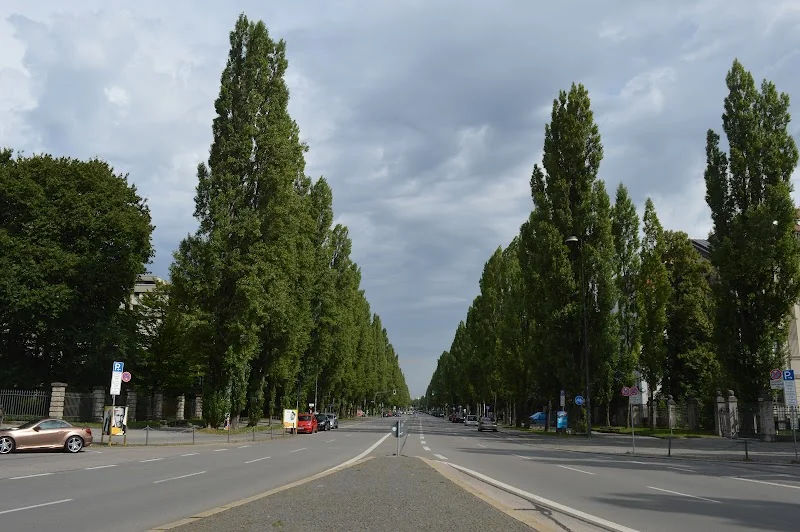
The Leopoldstraße is much more than just a well-known address in Munich. It connects the historic transition at the Siegestor with the vibrant north of the city and represents what many love about Schwabing: strolling, watching, going out, culture, and an urban landscape that has retained its character despite all changes. Officially, the street is described as a four-kilometer-long boulevard that runs through Maxvorstadt, Schwabing, and Milbertshofen. It was named in 1891 after Prince Leopold of Bavaria, following the incorporation of Schwabing. Today, anyone traveling along the Leopoldstraße experiences one of the most distinctive urban axes in Munich, where history, architecture, gastronomy, and everyday life come together in close proximity. This is precisely why many users search for maps, directions, restaurants, public transport, and sights around the Leopoldstraße. The boulevard is a good starting point for walks, but also a place where one can feel the rhythm of the city directly: sometimes calm and stylish, sometimes loud and festive, sometimes elegant, sometimes improvised. ([munich.travel](https://www.munich.travel/en/topics/urban-districts/munichs-magnificent-boulevards))
Map, Location, and Orientation at Leopoldstraße
Those looking for the Leopoldstraße on a map should first remember the Siegestor, as this is where the street begins in the urban transition from Ludwigstraße. This is an important point of orientation because the two axes in Munich are closely related, and the transition feels almost seamless for many visitors. From here, the Leopoldstraße stretches beyond the northern part of the city center and crosses several city areas, each with its own character. The boulevard runs through Maxvorstadt, Schwabing, and Milbertshofen; thus, it connects academic, classical, and more urban residential and commercial structures. For visitors who work with house numbers or are looking for a specific address, this location is crucial, as the street is long enough to clearly distinguish different sections. To the south, representative buildings and well-known art venues shape the image, while the middle and northern parts are more influenced by gastronomy, retail, traffic, and everyday life. Specific points of orientation include the Academy of Fine Arts, Leopold Park, and Munich Freedom as a central reference point at the northern end of the most famous section. In practice, this means that anyone looking for a specific spot on the Leopoldstraße should not only look for the street itself but always also for the nearest intersections, squares, or institutions. This mix of length, diversity, and clear landmarks makes the street so interesting for map and location searches. ([munich.travel](https://www.munich.travel/en/topics/urban-districts/munichs-magnificent-boulevards))
The northern part around Munich Freedom is particularly helpful for orientation, as it serves as a well-known hub and simultaneously marks the transition into the Schwabing everyday scene. Many use the street as a common meeting point for shopping, dining, transferring, and going out. This is convenient for visitors, as one can easily continue from Munich Freedom into other Schwabing streets, towards the English Garden, or into the adjacent neighborhoods. Leopold Park is also a useful anchor point in this context: The small city park lies between Friedrichstraße and Leopoldstraße at the level of the Giselastraße subway station and offers a green pause in the middle of Schwabing with its 3.2 hectares. This is particularly helpful when viewing the Leopoldstraße not just as a traffic axis but as part of a whole urban space. So, anyone looking for an address, a coffee bar, a shop, or a meeting point on the Leopoldstraße can easily structure the street through its prominent hubs. The map thus becomes not only a technical aid but a small city history in street form. ([muenchen.de](https://www.muenchen.de/sehenswuerdigkeiten/parks-und-gaerten/leopoldpark?utm_source=openai))
Restaurants, Cafés, and the Leopoldstraße as a Strolling Mile
The Leopoldstraße is not accidentally considered one of the most famous promenades in Munich. The official tourism description highlights that the boulevard is lined with cafés and restaurants, offering exactly the urban mix that has characterized Schwabing for decades: people sitting outside, observing the happenings, shopping, or spontaneously meeting for a coffee, dinner, or a drink. This gastronomic density is a central reason why search queries around Leopoldstraße and restaurants appear so frequently. Those who are out and about here find no isolated individual attraction but a street that itself becomes an experience. Historically, this fits very well with Schwabing's culture, as cafés, shop windows, and bookstores have always been important attractions. The cultural history path describes the Leopoldstraße as a place where shop window displays have always enticed, whether with fashion or books. This mix of consumption, encounters, and urban observation is still palpable today. Additionally, the street does not only function during the day: around Munich Freedom, which lies at the northern end of the famous promenade, bars, restaurants, and other nightlife venues become denser. For many Munich residents, this is the area where an afternoon stroll almost automatically transitions into an evening of dining or drinks. Thus, the Leopoldstraße is an excellent destination for anyone specifically looking for restaurants, cafés, or a lively neighborhood with short travel times. ([munich.travel](https://www.munich.travel/en/topics/urban-districts/munichs-magnificent-boulevards))
Particularly interesting is the Leopoldstraße also because it shows gastronomy not detached from culture but closely connected to the character of the neighborhood. The southern part of the street features famous buildings and art references, while further north, the street becomes increasingly everyday-oriented and leisure-focused. This mix ensures that one can find both a quick lunch and an extended evening here. The boulevard is also a place where one can observe how Munich city life unfolds in public space: people stop at shop windows, sit in street cafés, walk past the boulevard scene, or transition directly from shopping to the evening. Although the tourist description no longer calls the Leopoldstraße a classic boulevard in the sense of historical representation, it emphasizes its legendary aura and vibrant atmosphere. This is exactly what makes it so attractive for visitors: the street is not only beautiful to look at but is also socially and gastronomically intensively used. So, anyone searching for the term Leopoldstraße restaurant is often actually looking for a place where food, city feeling, and strolling can be combined. And that is exactly what Schwabing has been known for along the Leopoldstraße for a long time. ([munich.travel](https://www.munich.travel/en/topics/urban-districts/munichs-magnificent-boulevards))
Munich Freedom, U3/U6, and the Best Way to Arrive
For practical arrival, Munich Freedom is the most important point on the Leopoldstraße. The official city and tourism website describes it as one of the busiest squares in Munich and as a transport hub where the subway, buses, and trams converge. Here, the U3 and U6 run, as well as tram 23 and several bus lines, including 53, 54, 59, 142, and various night lines. Those wishing to visit the Leopoldstraße can thus conveniently reach their destination by public transport without having to worry about the complex search for parking in the dense urban area. The history of the station is also particularly interesting: the Munich Freedom subway station was opened in 1971 and renovated in 2008/2009 with a new lighting concept by Ingo Maurer. Additionally, the station was modernized at the surface as an important transfer center. For visitors, this is important because Munich Freedom is not just a place to arrive but also a place to linger. Shopping opportunities, gastronomy, and local transport converge here, making the entire northern Leopoldstraße area particularly accessible. The city’s website also describes the location as a bottleneck for drivers, which underscores the recommendation to arrive by public transport whenever possible. This is often the most relaxed solution for events, weekly markets, or evening appointments on the Leopoldstraße. ([muenchen.de](https://www.muenchen.de/sehenswuerdigkeiten/sehenswerte-plaetze/muenchner-freiheit?utm_source=openai))
The surroundings are also well organized for taxis and short distances. The city of Munich operates a taxi stand on Leopoldstraße at the Munich Freedom subway station with 13 spaces. This is a small but practical detail that can be particularly relevant for visitors with luggage, for late-night returns, or for people with limited mobility. At the same time, it is worth taking a look at the general parking situation in Munich: the city provides information on parking permit areas, parking spaces, and parking permits and recommends checking the respective zone in advance. This is sensible for the Leopoldstraße because the entire area around Munich Freedom is in high demand, and traffic volume, delivery traffic, street space, and pedestrian movement overlap closely. So, anyone coming by car should not wait until they arrive to look for a solution but should find out about parking options in advance. Nevertheless, for the visit itself, the Leopoldstraße is a typical Munich street for short walks. Especially between Siegestor, Academy, Leopold Park, Munich Freedom, and the surrounding cafés, much can be best enjoyed at a leisurely pace. Therefore, the combination of subway, tram, and walking is often the best way to experience the street in practice. ([stadt.muenchen.de](https://stadt.muenchen.de/service/info/taxistand-leopoldstrasse-u-bahnhof-muenchner-freiheit/1065384/?utm_source=openai))
History of Leopoldstraße: From Siegestor to Schwabinger Bohemia
The history of the Leopoldstraße is closely linked to the development of Schwabing. A central point is the Siegestor, which was built between 1843 and 1852 and separates the Leopoldstraße from Ludwigstraße. In historical perspective, it marks not only a structural threshold but also the transition between different urban spaces and eras. Before the incorporation of Schwabing in 1890, the boundary of the old city area ran even further north; only later did the Leopoldstraße become the well-known axis that many visitors associate with Schwabing today. The name itself was created in 1891 and refers to Prince Leopold of Bavaria, the son of the later regent Luitpold. This naming shows that the street did not simply grow randomly but became part of the urban expansion and symbolic order of Munich. The official tourism site also emphasizes that one almost imperceptibly transitions from Ludwigstraße to Leopoldstraße at the Siegestor. This almost fluid quality of transition makes the street so exciting for walkers: it feels like a continuation of classic Munich axes on one hand, and on the other, like entering a different, younger, and distinctly urban atmosphere. Over time, the Leopoldstraße thus became a stage for urban development that oscillates between representation, everyday life, culture, and nightlife. ([munich.travel](https://www.munich.travel/en/topics/urban-districts/munichs-magnificent-boulevards))
Culturally, the street also carries the history of Schwabing within it. The cultural history path describes the area around the Leopoldstraße as a place of bohemia, art, and education. Around 1900, artists and writers shaped the neighborhood, and Schwabing developed into a way of life, not just a district. This cultural imprint is still noticeable on the Leopoldstraße today, even as the neighborhood has changed. In the city’s texts, the street is described as a place where shop windows, cafés, and encounters have always played an important role. This is more than a nostalgic memory, as it explains why the boulevard still receives so much attention today: it was and is a public space for observation, exchange, and self-expression. Those who view the Leopoldstraße only as a traffic street see only part of it. Those who understand it as a cultural corridor recognize the connection between Art Nouveau, artist history, urban consumption, and Schwabinger public life. This is particularly visible in the area of Munich Freedom and in the side streets, where Schwabing has preserved its unique tone. Therefore, the history of the Leopoldstraße is not a closed past but a vibrant part of today’s urban landscape. ([stadt.muenchen.de](https://stadt.muenchen.de/dam/jcr%3A61ca7c8f-9988-4cf2-850b-8a3e9480e111/KulturGeschichtsPfad-12-Schwabing-Freimann.pdf))
Events, Highlights, and Tips for Visitors
The Leopoldstraße is not only a place for everyday life but also a fixed event address. The official tourism site mentions the Munich Marathon, Corso Leopold, and the St. Patrick's Day Parade as regular major events on the street. Particularly, the Corso Leopold is closely linked to the axis between Siegestor and Munich Freedom and illustrates how flexibly the boulevard can be used as an event space. For visitors, this means that the street is not a static place but changes its face depending on the season and occasion. On some days, the calm stroll under the trees dominates, while on others, the density of stalls, music, crowds, and detours takes over. Additionally, the area around Munich Freedom, which according to the official description forms the northern end of the entertainment mile, hosts a weekly market on Thursdays and a Christmas market in December. This makes the Leopoldstraße interesting even outside of major events, as it regularly generates a city feeling that alternates between everyday life and festivity. Particularly striking in this context is the 17-meter-high sculpture The Walking Man by Jonathan Borofsky, which stands on the street and is described as a symbol of dynamism and new beginnings. It fits well with a boulevard that is always in motion and thus appears so distinctive. ([munich.travel](https://www.munich.travel/en/topics/urban-districts/munichs-magnificent-boulevards))
For visitors planning an appointment or event on the Leopoldstraße, timing is important. During major events or on weekends, the area around Munich Freedom can quickly become very busy, making early arrival advisable. The proximity to public transport is a real advantage, as the street can be conveniently reached without a car. Those wanting to fully enjoy the experience can combine their visit with a stroll through Schwabing, for example, with a detour to Leopold Park or a longer walk towards the academic and cultural sites at the southern part of the boulevard. This is precisely why the Leopoldstraße often serves as more than just a destination: it acts as a common thread through a piece of Munich that unfolds between history, gastronomy, movement, and urban joy of life. Therefore, for many, it is not a single place but a recurring meeting point where one appears for concerts, markets, parades, or simply for a spontaneous city stroll. Those searching for atmosphere will find not only beautiful facades and well-known names here but a boulevard that continues to shape Schwabing's self-image to this day. ([munich.travel](https://www.munich.travel/en/topics/urban-districts/munichs-magnificent-boulevards))
Practical Tips for Leopoldstraße in Munich
To fully experience the Leopoldstraße, one should plan the visit according to their own goal. For a quiet stroll, mornings or early afternoons are suitable when the boulevard is less crowded, allowing for better appreciation of the trees, facades, and the interplay between the street and side neighborhoods. In contrast, those seeking the gastronomic and social side will find the liveliest atmosphere in the evenings and on weekends. It is important in any case not to see the street merely as a linear path but as a sequence of sections. To the south, architecture, art, and classic Munich references are more prominent, while around Munich Freedom, traffic, shopping, cafés, and nightlife take center stage. This spatial layering makes the Leopoldstraße so versatile. For drivers: the city of Munich provides general information on parking zones and parking spaces, but due to the heavy traffic around Munich Freedom, public transport is usually the clearly more relaxed choice. Those who want to be safe should check in advance where parking is allowed in the respective urban area and whether there are enough free parking spaces available. This is not only a matter of comfort but often also of saving time. Additionally, the taxi stand at Munich Freedom is a practical solution for the last stretch. In summary, the Leopoldstraße is one of the best streets in Munich to experience urban life, history, and mobility simultaneously. It is a boulevard, meeting point, event venue, promenade, and urban connection all in one. Those searching for it on the map will find not just a path but a piece of Munich with a distinctive character. ([stadt.muenchen.de](https://stadt.muenchen.de/en/buergerservice/verkehr-mobilitaet/parken.html?utm_source=openai))
Sources:
Show moreShow less
Leopoldstraße Munich | Map & Restaurants
The Leopoldstraße is much more than just a well-known address in Munich. It connects the historic transition at the Siegestor with the vibrant north of the city and represents what many love about Schwabing: strolling, watching, going out, culture, and an urban landscape that has retained its character despite all changes. Officially, the street is described as a four-kilometer-long boulevard that runs through Maxvorstadt, Schwabing, and Milbertshofen. It was named in 1891 after Prince Leopold of Bavaria, following the incorporation of Schwabing. Today, anyone traveling along the Leopoldstraße experiences one of the most distinctive urban axes in Munich, where history, architecture, gastronomy, and everyday life come together in close proximity. This is precisely why many users search for maps, directions, restaurants, public transport, and sights around the Leopoldstraße. The boulevard is a good starting point for walks, but also a place where one can feel the rhythm of the city directly: sometimes calm and stylish, sometimes loud and festive, sometimes elegant, sometimes improvised. ([munich.travel](https://www.munich.travel/en/topics/urban-districts/munichs-magnificent-boulevards))
Map, Location, and Orientation at Leopoldstraße
Those looking for the Leopoldstraße on a map should first remember the Siegestor, as this is where the street begins in the urban transition from Ludwigstraße. This is an important point of orientation because the two axes in Munich are closely related, and the transition feels almost seamless for many visitors. From here, the Leopoldstraße stretches beyond the northern part of the city center and crosses several city areas, each with its own character. The boulevard runs through Maxvorstadt, Schwabing, and Milbertshofen; thus, it connects academic, classical, and more urban residential and commercial structures. For visitors who work with house numbers or are looking for a specific address, this location is crucial, as the street is long enough to clearly distinguish different sections. To the south, representative buildings and well-known art venues shape the image, while the middle and northern parts are more influenced by gastronomy, retail, traffic, and everyday life. Specific points of orientation include the Academy of Fine Arts, Leopold Park, and Munich Freedom as a central reference point at the northern end of the most famous section. In practice, this means that anyone looking for a specific spot on the Leopoldstraße should not only look for the street itself but always also for the nearest intersections, squares, or institutions. This mix of length, diversity, and clear landmarks makes the street so interesting for map and location searches. ([munich.travel](https://www.munich.travel/en/topics/urban-districts/munichs-magnificent-boulevards))
The northern part around Munich Freedom is particularly helpful for orientation, as it serves as a well-known hub and simultaneously marks the transition into the Schwabing everyday scene. Many use the street as a common meeting point for shopping, dining, transferring, and going out. This is convenient for visitors, as one can easily continue from Munich Freedom into other Schwabing streets, towards the English Garden, or into the adjacent neighborhoods. Leopold Park is also a useful anchor point in this context: The small city park lies between Friedrichstraße and Leopoldstraße at the level of the Giselastraße subway station and offers a green pause in the middle of Schwabing with its 3.2 hectares. This is particularly helpful when viewing the Leopoldstraße not just as a traffic axis but as part of a whole urban space. So, anyone looking for an address, a coffee bar, a shop, or a meeting point on the Leopoldstraße can easily structure the street through its prominent hubs. The map thus becomes not only a technical aid but a small city history in street form. ([muenchen.de](https://www.muenchen.de/sehenswuerdigkeiten/parks-und-gaerten/leopoldpark?utm_source=openai))
Restaurants, Cafés, and the Leopoldstraße as a Strolling Mile
The Leopoldstraße is not accidentally considered one of the most famous promenades in Munich. The official tourism description highlights that the boulevard is lined with cafés and restaurants, offering exactly the urban mix that has characterized Schwabing for decades: people sitting outside, observing the happenings, shopping, or spontaneously meeting for a coffee, dinner, or a drink. This gastronomic density is a central reason why search queries around Leopoldstraße and restaurants appear so frequently. Those who are out and about here find no isolated individual attraction but a street that itself becomes an experience. Historically, this fits very well with Schwabing's culture, as cafés, shop windows, and bookstores have always been important attractions. The cultural history path describes the Leopoldstraße as a place where shop window displays have always enticed, whether with fashion or books. This mix of consumption, encounters, and urban observation is still palpable today. Additionally, the street does not only function during the day: around Munich Freedom, which lies at the northern end of the famous promenade, bars, restaurants, and other nightlife venues become denser. For many Munich residents, this is the area where an afternoon stroll almost automatically transitions into an evening of dining or drinks. Thus, the Leopoldstraße is an excellent destination for anyone specifically looking for restaurants, cafés, or a lively neighborhood with short travel times. ([munich.travel](https://www.munich.travel/en/topics/urban-districts/munichs-magnificent-boulevards))
Particularly interesting is the Leopoldstraße also because it shows gastronomy not detached from culture but closely connected to the character of the neighborhood. The southern part of the street features famous buildings and art references, while further north, the street becomes increasingly everyday-oriented and leisure-focused. This mix ensures that one can find both a quick lunch and an extended evening here. The boulevard is also a place where one can observe how Munich city life unfolds in public space: people stop at shop windows, sit in street cafés, walk past the boulevard scene, or transition directly from shopping to the evening. Although the tourist description no longer calls the Leopoldstraße a classic boulevard in the sense of historical representation, it emphasizes its legendary aura and vibrant atmosphere. This is exactly what makes it so attractive for visitors: the street is not only beautiful to look at but is also socially and gastronomically intensively used. So, anyone searching for the term Leopoldstraße restaurant is often actually looking for a place where food, city feeling, and strolling can be combined. And that is exactly what Schwabing has been known for along the Leopoldstraße for a long time. ([munich.travel](https://www.munich.travel/en/topics/urban-districts/munichs-magnificent-boulevards))
Munich Freedom, U3/U6, and the Best Way to Arrive
For practical arrival, Munich Freedom is the most important point on the Leopoldstraße. The official city and tourism website describes it as one of the busiest squares in Munich and as a transport hub where the subway, buses, and trams converge. Here, the U3 and U6 run, as well as tram 23 and several bus lines, including 53, 54, 59, 142, and various night lines. Those wishing to visit the Leopoldstraße can thus conveniently reach their destination by public transport without having to worry about the complex search for parking in the dense urban area. The history of the station is also particularly interesting: the Munich Freedom subway station was opened in 1971 and renovated in 2008/2009 with a new lighting concept by Ingo Maurer. Additionally, the station was modernized at the surface as an important transfer center. For visitors, this is important because Munich Freedom is not just a place to arrive but also a place to linger. Shopping opportunities, gastronomy, and local transport converge here, making the entire northern Leopoldstraße area particularly accessible. The city’s website also describes the location as a bottleneck for drivers, which underscores the recommendation to arrive by public transport whenever possible. This is often the most relaxed solution for events, weekly markets, or evening appointments on the Leopoldstraße. ([muenchen.de](https://www.muenchen.de/sehenswuerdigkeiten/sehenswerte-plaetze/muenchner-freiheit?utm_source=openai))
The surroundings are also well organized for taxis and short distances. The city of Munich operates a taxi stand on Leopoldstraße at the Munich Freedom subway station with 13 spaces. This is a small but practical detail that can be particularly relevant for visitors with luggage, for late-night returns, or for people with limited mobility. At the same time, it is worth taking a look at the general parking situation in Munich: the city provides information on parking permit areas, parking spaces, and parking permits and recommends checking the respective zone in advance. This is sensible for the Leopoldstraße because the entire area around Munich Freedom is in high demand, and traffic volume, delivery traffic, street space, and pedestrian movement overlap closely. So, anyone coming by car should not wait until they arrive to look for a solution but should find out about parking options in advance. Nevertheless, for the visit itself, the Leopoldstraße is a typical Munich street for short walks. Especially between Siegestor, Academy, Leopold Park, Munich Freedom, and the surrounding cafés, much can be best enjoyed at a leisurely pace. Therefore, the combination of subway, tram, and walking is often the best way to experience the street in practice. ([stadt.muenchen.de](https://stadt.muenchen.de/service/info/taxistand-leopoldstrasse-u-bahnhof-muenchner-freiheit/1065384/?utm_source=openai))
History of Leopoldstraße: From Siegestor to Schwabinger Bohemia
The history of the Leopoldstraße is closely linked to the development of Schwabing. A central point is the Siegestor, which was built between 1843 and 1852 and separates the Leopoldstraße from Ludwigstraße. In historical perspective, it marks not only a structural threshold but also the transition between different urban spaces and eras. Before the incorporation of Schwabing in 1890, the boundary of the old city area ran even further north; only later did the Leopoldstraße become the well-known axis that many visitors associate with Schwabing today. The name itself was created in 1891 and refers to Prince Leopold of Bavaria, the son of the later regent Luitpold. This naming shows that the street did not simply grow randomly but became part of the urban expansion and symbolic order of Munich. The official tourism site also emphasizes that one almost imperceptibly transitions from Ludwigstraße to Leopoldstraße at the Siegestor. This almost fluid quality of transition makes the street so exciting for walkers: it feels like a continuation of classic Munich axes on one hand, and on the other, like entering a different, younger, and distinctly urban atmosphere. Over time, the Leopoldstraße thus became a stage for urban development that oscillates between representation, everyday life, culture, and nightlife. ([munich.travel](https://www.munich.travel/en/topics/urban-districts/munichs-magnificent-boulevards))
Culturally, the street also carries the history of Schwabing within it. The cultural history path describes the area around the Leopoldstraße as a place of bohemia, art, and education. Around 1900, artists and writers shaped the neighborhood, and Schwabing developed into a way of life, not just a district. This cultural imprint is still noticeable on the Leopoldstraße today, even as the neighborhood has changed. In the city’s texts, the street is described as a place where shop windows, cafés, and encounters have always played an important role. This is more than a nostalgic memory, as it explains why the boulevard still receives so much attention today: it was and is a public space for observation, exchange, and self-expression. Those who view the Leopoldstraße only as a traffic street see only part of it. Those who understand it as a cultural corridor recognize the connection between Art Nouveau, artist history, urban consumption, and Schwabinger public life. This is particularly visible in the area of Munich Freedom and in the side streets, where Schwabing has preserved its unique tone. Therefore, the history of the Leopoldstraße is not a closed past but a vibrant part of today’s urban landscape. ([stadt.muenchen.de](https://stadt.muenchen.de/dam/jcr%3A61ca7c8f-9988-4cf2-850b-8a3e9480e111/KulturGeschichtsPfad-12-Schwabing-Freimann.pdf))
Events, Highlights, and Tips for Visitors
The Leopoldstraße is not only a place for everyday life but also a fixed event address. The official tourism site mentions the Munich Marathon, Corso Leopold, and the St. Patrick's Day Parade as regular major events on the street. Particularly, the Corso Leopold is closely linked to the axis between Siegestor and Munich Freedom and illustrates how flexibly the boulevard can be used as an event space. For visitors, this means that the street is not a static place but changes its face depending on the season and occasion. On some days, the calm stroll under the trees dominates, while on others, the density of stalls, music, crowds, and detours takes over. Additionally, the area around Munich Freedom, which according to the official description forms the northern end of the entertainment mile, hosts a weekly market on Thursdays and a Christmas market in December. This makes the Leopoldstraße interesting even outside of major events, as it regularly generates a city feeling that alternates between everyday life and festivity. Particularly striking in this context is the 17-meter-high sculpture The Walking Man by Jonathan Borofsky, which stands on the street and is described as a symbol of dynamism and new beginnings. It fits well with a boulevard that is always in motion and thus appears so distinctive. ([munich.travel](https://www.munich.travel/en/topics/urban-districts/munichs-magnificent-boulevards))
For visitors planning an appointment or event on the Leopoldstraße, timing is important. During major events or on weekends, the area around Munich Freedom can quickly become very busy, making early arrival advisable. The proximity to public transport is a real advantage, as the street can be conveniently reached without a car. Those wanting to fully enjoy the experience can combine their visit with a stroll through Schwabing, for example, with a detour to Leopold Park or a longer walk towards the academic and cultural sites at the southern part of the boulevard. This is precisely why the Leopoldstraße often serves as more than just a destination: it acts as a common thread through a piece of Munich that unfolds between history, gastronomy, movement, and urban joy of life. Therefore, for many, it is not a single place but a recurring meeting point where one appears for concerts, markets, parades, or simply for a spontaneous city stroll. Those searching for atmosphere will find not only beautiful facades and well-known names here but a boulevard that continues to shape Schwabing's self-image to this day. ([munich.travel](https://www.munich.travel/en/topics/urban-districts/munichs-magnificent-boulevards))
Practical Tips for Leopoldstraße in Munich
To fully experience the Leopoldstraße, one should plan the visit according to their own goal. For a quiet stroll, mornings or early afternoons are suitable when the boulevard is less crowded, allowing for better appreciation of the trees, facades, and the interplay between the street and side neighborhoods. In contrast, those seeking the gastronomic and social side will find the liveliest atmosphere in the evenings and on weekends. It is important in any case not to see the street merely as a linear path but as a sequence of sections. To the south, architecture, art, and classic Munich references are more prominent, while around Munich Freedom, traffic, shopping, cafés, and nightlife take center stage. This spatial layering makes the Leopoldstraße so versatile. For drivers: the city of Munich provides general information on parking zones and parking spaces, but due to the heavy traffic around Munich Freedom, public transport is usually the clearly more relaxed choice. Those who want to be safe should check in advance where parking is allowed in the respective urban area and whether there are enough free parking spaces available. This is not only a matter of comfort but often also of saving time. Additionally, the taxi stand at Munich Freedom is a practical solution for the last stretch. In summary, the Leopoldstraße is one of the best streets in Munich to experience urban life, history, and mobility simultaneously. It is a boulevard, meeting point, event venue, promenade, and urban connection all in one. Those searching for it on the map will find not just a path but a piece of Munich with a distinctive character. ([stadt.muenchen.de](https://stadt.muenchen.de/en/buergerservice/verkehr-mobilitaet/parken.html?utm_source=openai))
Sources:
Leopoldstraße Munich | Map & Restaurants
The Leopoldstraße is much more than just a well-known address in Munich. It connects the historic transition at the Siegestor with the vibrant north of the city and represents what many love about Schwabing: strolling, watching, going out, culture, and an urban landscape that has retained its character despite all changes. Officially, the street is described as a four-kilometer-long boulevard that runs through Maxvorstadt, Schwabing, and Milbertshofen. It was named in 1891 after Prince Leopold of Bavaria, following the incorporation of Schwabing. Today, anyone traveling along the Leopoldstraße experiences one of the most distinctive urban axes in Munich, where history, architecture, gastronomy, and everyday life come together in close proximity. This is precisely why many users search for maps, directions, restaurants, public transport, and sights around the Leopoldstraße. The boulevard is a good starting point for walks, but also a place where one can feel the rhythm of the city directly: sometimes calm and stylish, sometimes loud and festive, sometimes elegant, sometimes improvised. ([munich.travel](https://www.munich.travel/en/topics/urban-districts/munichs-magnificent-boulevards))
Map, Location, and Orientation at Leopoldstraße
Those looking for the Leopoldstraße on a map should first remember the Siegestor, as this is where the street begins in the urban transition from Ludwigstraße. This is an important point of orientation because the two axes in Munich are closely related, and the transition feels almost seamless for many visitors. From here, the Leopoldstraße stretches beyond the northern part of the city center and crosses several city areas, each with its own character. The boulevard runs through Maxvorstadt, Schwabing, and Milbertshofen; thus, it connects academic, classical, and more urban residential and commercial structures. For visitors who work with house numbers or are looking for a specific address, this location is crucial, as the street is long enough to clearly distinguish different sections. To the south, representative buildings and well-known art venues shape the image, while the middle and northern parts are more influenced by gastronomy, retail, traffic, and everyday life. Specific points of orientation include the Academy of Fine Arts, Leopold Park, and Munich Freedom as a central reference point at the northern end of the most famous section. In practice, this means that anyone looking for a specific spot on the Leopoldstraße should not only look for the street itself but always also for the nearest intersections, squares, or institutions. This mix of length, diversity, and clear landmarks makes the street so interesting for map and location searches. ([munich.travel](https://www.munich.travel/en/topics/urban-districts/munichs-magnificent-boulevards))
The northern part around Munich Freedom is particularly helpful for orientation, as it serves as a well-known hub and simultaneously marks the transition into the Schwabing everyday scene. Many use the street as a common meeting point for shopping, dining, transferring, and going out. This is convenient for visitors, as one can easily continue from Munich Freedom into other Schwabing streets, towards the English Garden, or into the adjacent neighborhoods. Leopold Park is also a useful anchor point in this context: The small city park lies between Friedrichstraße and Leopoldstraße at the level of the Giselastraße subway station and offers a green pause in the middle of Schwabing with its 3.2 hectares. This is particularly helpful when viewing the Leopoldstraße not just as a traffic axis but as part of a whole urban space. So, anyone looking for an address, a coffee bar, a shop, or a meeting point on the Leopoldstraße can easily structure the street through its prominent hubs. The map thus becomes not only a technical aid but a small city history in street form. ([muenchen.de](https://www.muenchen.de/sehenswuerdigkeiten/parks-und-gaerten/leopoldpark?utm_source=openai))
Restaurants, Cafés, and the Leopoldstraße as a Strolling Mile
The Leopoldstraße is not accidentally considered one of the most famous promenades in Munich. The official tourism description highlights that the boulevard is lined with cafés and restaurants, offering exactly the urban mix that has characterized Schwabing for decades: people sitting outside, observing the happenings, shopping, or spontaneously meeting for a coffee, dinner, or a drink. This gastronomic density is a central reason why search queries around Leopoldstraße and restaurants appear so frequently. Those who are out and about here find no isolated individual attraction but a street that itself becomes an experience. Historically, this fits very well with Schwabing's culture, as cafés, shop windows, and bookstores have always been important attractions. The cultural history path describes the Leopoldstraße as a place where shop window displays have always enticed, whether with fashion or books. This mix of consumption, encounters, and urban observation is still palpable today. Additionally, the street does not only function during the day: around Munich Freedom, which lies at the northern end of the famous promenade, bars, restaurants, and other nightlife venues become denser. For many Munich residents, this is the area where an afternoon stroll almost automatically transitions into an evening of dining or drinks. Thus, the Leopoldstraße is an excellent destination for anyone specifically looking for restaurants, cafés, or a lively neighborhood with short travel times. ([munich.travel](https://www.munich.travel/en/topics/urban-districts/munichs-magnificent-boulevards))
Particularly interesting is the Leopoldstraße also because it shows gastronomy not detached from culture but closely connected to the character of the neighborhood. The southern part of the street features famous buildings and art references, while further north, the street becomes increasingly everyday-oriented and leisure-focused. This mix ensures that one can find both a quick lunch and an extended evening here. The boulevard is also a place where one can observe how Munich city life unfolds in public space: people stop at shop windows, sit in street cafés, walk past the boulevard scene, or transition directly from shopping to the evening. Although the tourist description no longer calls the Leopoldstraße a classic boulevard in the sense of historical representation, it emphasizes its legendary aura and vibrant atmosphere. This is exactly what makes it so attractive for visitors: the street is not only beautiful to look at but is also socially and gastronomically intensively used. So, anyone searching for the term Leopoldstraße restaurant is often actually looking for a place where food, city feeling, and strolling can be combined. And that is exactly what Schwabing has been known for along the Leopoldstraße for a long time. ([munich.travel](https://www.munich.travel/en/topics/urban-districts/munichs-magnificent-boulevards))
Munich Freedom, U3/U6, and the Best Way to Arrive
For practical arrival, Munich Freedom is the most important point on the Leopoldstraße. The official city and tourism website describes it as one of the busiest squares in Munich and as a transport hub where the subway, buses, and trams converge. Here, the U3 and U6 run, as well as tram 23 and several bus lines, including 53, 54, 59, 142, and various night lines. Those wishing to visit the Leopoldstraße can thus conveniently reach their destination by public transport without having to worry about the complex search for parking in the dense urban area. The history of the station is also particularly interesting: the Munich Freedom subway station was opened in 1971 and renovated in 2008/2009 with a new lighting concept by Ingo Maurer. Additionally, the station was modernized at the surface as an important transfer center. For visitors, this is important because Munich Freedom is not just a place to arrive but also a place to linger. Shopping opportunities, gastronomy, and local transport converge here, making the entire northern Leopoldstraße area particularly accessible. The city’s website also describes the location as a bottleneck for drivers, which underscores the recommendation to arrive by public transport whenever possible. This is often the most relaxed solution for events, weekly markets, or evening appointments on the Leopoldstraße. ([muenchen.de](https://www.muenchen.de/sehenswuerdigkeiten/sehenswerte-plaetze/muenchner-freiheit?utm_source=openai))
The surroundings are also well organized for taxis and short distances. The city of Munich operates a taxi stand on Leopoldstraße at the Munich Freedom subway station with 13 spaces. This is a small but practical detail that can be particularly relevant for visitors with luggage, for late-night returns, or for people with limited mobility. At the same time, it is worth taking a look at the general parking situation in Munich: the city provides information on parking permit areas, parking spaces, and parking permits and recommends checking the respective zone in advance. This is sensible for the Leopoldstraße because the entire area around Munich Freedom is in high demand, and traffic volume, delivery traffic, street space, and pedestrian movement overlap closely. So, anyone coming by car should not wait until they arrive to look for a solution but should find out about parking options in advance. Nevertheless, for the visit itself, the Leopoldstraße is a typical Munich street for short walks. Especially between Siegestor, Academy, Leopold Park, Munich Freedom, and the surrounding cafés, much can be best enjoyed at a leisurely pace. Therefore, the combination of subway, tram, and walking is often the best way to experience the street in practice. ([stadt.muenchen.de](https://stadt.muenchen.de/service/info/taxistand-leopoldstrasse-u-bahnhof-muenchner-freiheit/1065384/?utm_source=openai))
History of Leopoldstraße: From Siegestor to Schwabinger Bohemia
The history of the Leopoldstraße is closely linked to the development of Schwabing. A central point is the Siegestor, which was built between 1843 and 1852 and separates the Leopoldstraße from Ludwigstraße. In historical perspective, it marks not only a structural threshold but also the transition between different urban spaces and eras. Before the incorporation of Schwabing in 1890, the boundary of the old city area ran even further north; only later did the Leopoldstraße become the well-known axis that many visitors associate with Schwabing today. The name itself was created in 1891 and refers to Prince Leopold of Bavaria, the son of the later regent Luitpold. This naming shows that the street did not simply grow randomly but became part of the urban expansion and symbolic order of Munich. The official tourism site also emphasizes that one almost imperceptibly transitions from Ludwigstraße to Leopoldstraße at the Siegestor. This almost fluid quality of transition makes the street so exciting for walkers: it feels like a continuation of classic Munich axes on one hand, and on the other, like entering a different, younger, and distinctly urban atmosphere. Over time, the Leopoldstraße thus became a stage for urban development that oscillates between representation, everyday life, culture, and nightlife. ([munich.travel](https://www.munich.travel/en/topics/urban-districts/munichs-magnificent-boulevards))
Culturally, the street also carries the history of Schwabing within it. The cultural history path describes the area around the Leopoldstraße as a place of bohemia, art, and education. Around 1900, artists and writers shaped the neighborhood, and Schwabing developed into a way of life, not just a district. This cultural imprint is still noticeable on the Leopoldstraße today, even as the neighborhood has changed. In the city’s texts, the street is described as a place where shop windows, cafés, and encounters have always played an important role. This is more than a nostalgic memory, as it explains why the boulevard still receives so much attention today: it was and is a public space for observation, exchange, and self-expression. Those who view the Leopoldstraße only as a traffic street see only part of it. Those who understand it as a cultural corridor recognize the connection between Art Nouveau, artist history, urban consumption, and Schwabinger public life. This is particularly visible in the area of Munich Freedom and in the side streets, where Schwabing has preserved its unique tone. Therefore, the history of the Leopoldstraße is not a closed past but a vibrant part of today’s urban landscape. ([stadt.muenchen.de](https://stadt.muenchen.de/dam/jcr%3A61ca7c8f-9988-4cf2-850b-8a3e9480e111/KulturGeschichtsPfad-12-Schwabing-Freimann.pdf))
Events, Highlights, and Tips for Visitors
The Leopoldstraße is not only a place for everyday life but also a fixed event address. The official tourism site mentions the Munich Marathon, Corso Leopold, and the St. Patrick's Day Parade as regular major events on the street. Particularly, the Corso Leopold is closely linked to the axis between Siegestor and Munich Freedom and illustrates how flexibly the boulevard can be used as an event space. For visitors, this means that the street is not a static place but changes its face depending on the season and occasion. On some days, the calm stroll under the trees dominates, while on others, the density of stalls, music, crowds, and detours takes over. Additionally, the area around Munich Freedom, which according to the official description forms the northern end of the entertainment mile, hosts a weekly market on Thursdays and a Christmas market in December. This makes the Leopoldstraße interesting even outside of major events, as it regularly generates a city feeling that alternates between everyday life and festivity. Particularly striking in this context is the 17-meter-high sculpture The Walking Man by Jonathan Borofsky, which stands on the street and is described as a symbol of dynamism and new beginnings. It fits well with a boulevard that is always in motion and thus appears so distinctive. ([munich.travel](https://www.munich.travel/en/topics/urban-districts/munichs-magnificent-boulevards))
For visitors planning an appointment or event on the Leopoldstraße, timing is important. During major events or on weekends, the area around Munich Freedom can quickly become very busy, making early arrival advisable. The proximity to public transport is a real advantage, as the street can be conveniently reached without a car. Those wanting to fully enjoy the experience can combine their visit with a stroll through Schwabing, for example, with a detour to Leopold Park or a longer walk towards the academic and cultural sites at the southern part of the boulevard. This is precisely why the Leopoldstraße often serves as more than just a destination: it acts as a common thread through a piece of Munich that unfolds between history, gastronomy, movement, and urban joy of life. Therefore, for many, it is not a single place but a recurring meeting point where one appears for concerts, markets, parades, or simply for a spontaneous city stroll. Those searching for atmosphere will find not only beautiful facades and well-known names here but a boulevard that continues to shape Schwabing's self-image to this day. ([munich.travel](https://www.munich.travel/en/topics/urban-districts/munichs-magnificent-boulevards))
Practical Tips for Leopoldstraße in Munich
To fully experience the Leopoldstraße, one should plan the visit according to their own goal. For a quiet stroll, mornings or early afternoons are suitable when the boulevard is less crowded, allowing for better appreciation of the trees, facades, and the interplay between the street and side neighborhoods. In contrast, those seeking the gastronomic and social side will find the liveliest atmosphere in the evenings and on weekends. It is important in any case not to see the street merely as a linear path but as a sequence of sections. To the south, architecture, art, and classic Munich references are more prominent, while around Munich Freedom, traffic, shopping, cafés, and nightlife take center stage. This spatial layering makes the Leopoldstraße so versatile. For drivers: the city of Munich provides general information on parking zones and parking spaces, but due to the heavy traffic around Munich Freedom, public transport is usually the clearly more relaxed choice. Those who want to be safe should check in advance where parking is allowed in the respective urban area and whether there are enough free parking spaces available. This is not only a matter of comfort but often also of saving time. Additionally, the taxi stand at Munich Freedom is a practical solution for the last stretch. In summary, the Leopoldstraße is one of the best streets in Munich to experience urban life, history, and mobility simultaneously. It is a boulevard, meeting point, event venue, promenade, and urban connection all in one. Those searching for it on the map will find not just a path but a piece of Munich with a distinctive character. ([stadt.muenchen.de](https://stadt.muenchen.de/en/buergerservice/verkehr-mobilitaet/parken.html?utm_source=openai))
Sources:
Upcoming Events
No events found
Frequently Asked Questions
Reviews
Stefanie Kowalski
22. May 2022
Nice area, we walked around for hours and always felt safe.
Konstantina Kalimeri
25. July 2023
Explore one of Munich's charming streets that beautifully merges history and modernity. Lined with inviting restaurants and bars, it's an ideal place to dine and unwind. Along the way, you'll see the impressive Siegestor. As you continue on Ludwigstraße, you'll come across the prestigious LMU and iconic landmarks like the beautiful Hofgarten and the famous Feldherrnhalle.
Mohammad AL HUSBAN
11. June 2022
Very beautiful place
MARIA PAVALACHE - ILIE
16. December 2025
Excellent 👌🏻!!!
Jessie Anne Romero
16. July 2022
Love to walk around in this street. Very clean