
Maria-Eich-Straße 56, Gräfelfing
Maria-Eich-Straße 56, 82166 Gräfelfing, Germany
Literary Society Gräfelfing | Program & Lectures
The Literary Society Gräfelfing is a non-profit cultural association with a long tradition and a clear profile: literature, art, music, and social issues are not treated as marginal topics here, but as lively subjects for discussion. The association was founded in 1921, developed over many decades, and is now firmly anchored in the cultural life of the Würmtal. The association's website regularly publishes new events, retrospectives, and archival material, allowing interested parties not only to inform themselves about the next program but also to get a good impression of the thematic range of the house. Currently, the evenings take place at the Kurt-Huber-Gymnasium in Gräfelfing because the community center is being renovated; previously, the community center was the well-known venue for many years. This blend of tradition, continuity, and current cultural activity continues to shape the Literary Society to this day. ([literarische.de](https://www.literarische.de/))
Program, Lectures, and Readings in Gräfelfing
Those looking for the program of the Literary Society Gräfelfing will find a well-established and surprisingly broad series of events on the website. The association describes its offerings as a sequence of about 14 readings or lectures per year, spread over two half-year programs. This is a remarkable pace for a cultural association, as it leads to regularly new topics, new guests, and new perspectives throughout the year. The program booklet is sent to members in advance; additionally, copies are available for interested parties on the event evening. This keeps the format both classic and digital: those who prefer to plan can check online; those who prefer to browse can take the booklet in hand. The content ranges from literature and author discussions to scientific and social topics, as well as scenic or musical forms. The association's description makes it clear that the evenings are intended not only to inform but also to inspire and invite conversation. This is precisely the appeal: the program is not merely a list of dates but a consciously curated cultural offering for Gräfelfing and the Würmtal. ([literarische.de](https://www.literarische.de/))
A look into the archived programs shows how versatile the Literary Society has worked over the years. The current and historical material includes readings, lectures on historically-political topics, literary evenings, music formats, and performances with a scenic character. The association states on its website that its topics encompass not only literature and its authors but also the sciences and questions of our time. This open approach makes the program accessible to an audience that is not only looking for classic readings but also for context and perspectives on contemporary issues. The program page also documents current and past events, so the website serves both as an information page and as a memory of the association. For the search query literary society gräfelfing program, this is particularly relevant because the program becomes visible not as a mere calendar but as a cultural line. Therefore, those interested in literature gräfelfing will find not just individual dates but a continuous tradition of dialogue, education, and encounter here. ([literarische.de](https://www.literarische.de/))
History since 1921: from Krailling to Gräfelfing
The history of the Literary Society begins on October 12, 1921, in Krailling. There, about 20 people met at the invitation of Dr. Adolf Stamm to found the Literary Society Planegg–Krailling–Gräfelfing. In the founding year, 62 members were recruited, primarily from Gräfelfing, and soon the current name Literary Society Gräfelfing became established. In the early years, lectures on literature, art, and music were the focus; later, external speakers were added, and the events took place at changing locations in the town. The association's history also emphasizes that since 1921, the association has created not only an audience for books and lectures but also a space for conversations. Particularly interesting is the continuity over very different historical phases: the website documents early years, the time of National Socialism, the resumption after the war, and the later development up to the present. For a cultural institution in the southwest of Munich, this is a rarely dense and long-documented history that can be read directly in the archive and in the retrospectives of the association. ([literarische.de](https://www.literarische.de/geschichte))
The burdensome and difficult years are also visible in the association's history. Between 1933 and 1944, Theodor Engelmann led the Literary Society; during this time, notable literary and politically significant personalities also appeared. The website mentions, for example, Professor Kurt Huber, who was able to speak in the 1942/43 season. After the war, events resumed in 1947. In the following decades, further chairpersons such as Dr. Frank Höfer, Werner Lehmann, and later Wolfgang Pollner led the association. Under Pollner, who took over the chair in 1973, numerous big names from the literary scene came to Gräfelfing. The official history mentions, among others, Elias Canetti, Herbert Rosendorfer, Sarah Kirsch, Marieluise Fleißer, Monika Maron, Hermann Lenz, Sten Nadolny, and Herta Müller. In 1980, Pollner, together with Sinda Dimroth, founded the Art Circle of the Literary Society; in 1995, this became its own association. The archive pages also show that the association can now look back on more than 1,200 documented evenings. This is not just a number but evidence of remarkable continuity. ([literarische.de](https://www.literarische.de/programm))
Event Location at Kurt-Huber-Gymnasium
The current event location of the Literary Society Gräfelfing is the Kurt-Huber-Gymnasium at Adalbert-Stifter-Platz 2 in 82166 Gräfelfing. The association's website explicitly names this location for upcoming and current dates; it also explains that the evenings currently take place there because the community center is being renovated. This is important for visitors, as the venue of a cultural institution with a long tradition can change over the years while the profile of the association remains the same. Historically, the society played at the community center starting in 1970, and for this reason, this location is firmly part of the memory of many guests. The fact that the Kurt-Huber-Gymnasium is currently stepping in shows the practical side of the association's operations: culture in Gräfelfing remains visible and accessible, even when construction changes are pending. The location is also thematically consistent, as the literary evenings take place in a school-related, open, and easily accessible environment. The website also refers to pictures from the building, which enhances the impression of a lively, not purely formal event framework. ([literarische.de](https://www.literarische.de/))
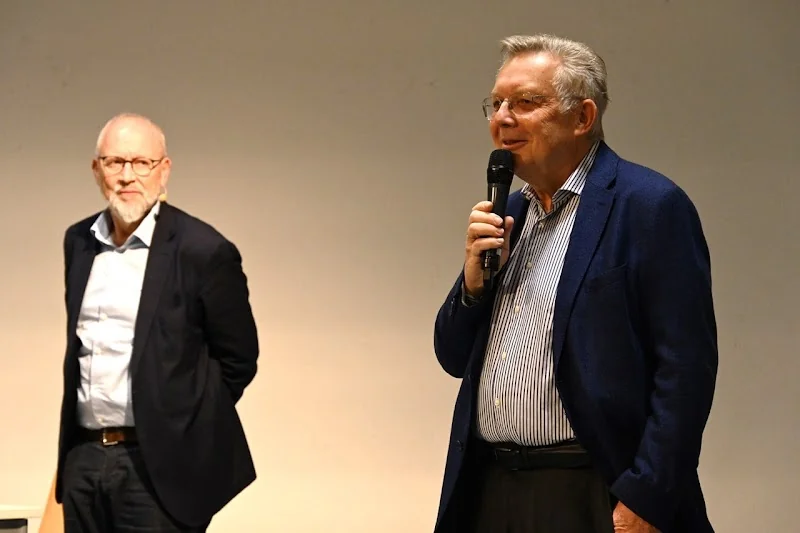
For the question about the location, it is also important that the Literary Society does not present itself as a classic event hall but as a cultural association with changing but well-documented venues. This means: the stage, the space, and the atmosphere serve the content, not the other way around. The association's page emphasizes that the evenings should provide inspiration, material for conversations, and also a challenge. This statement fits very well with an event location like the Kurt-Huber-Gymnasium, whose address, location, and accessibility are already clearly indicated on the school website. At the same time, the connection to the historical community center is maintained, which served as the central cultural venue of the society for decades. Those searching for literary society gräfelfing photos will also find image material from various events and rooms on the website, which keeps the location from being abstract but fills it with faces, audiences, and scenes. Especially for a local cultural brand, this combination of place, history, and visible presence is a strong profile feature. ([literarische.de](https://www.literarische.de/))
Directions and Parking in Gräfelfing
According to the Kurt-Huber-Gymnasium, access to the current event location is easily possible by public transport. The S-Bahn S6 to Lochham is mentioned; from there, a short walk leads to the school. The school also points out bus lines 160, 258, 267, and 268. Those arriving by car will find parking spaces on Adalbert-Stifter-Straße, which branches off from Rottenbucherstraße. At the same time, there is a clear indication of the construction situation and the limited number of parking spaces. For visitors to the Literary Society, this is useful information, as it allows for better planning: those who want to arrive on time should plan for public transport or allow sufficient time for parking. Especially on lecture and reading evenings, when many guests arrive together, this is a practical advantage. The directions are concise but helpful, and they show that the current venue remains accessible without long distances. ([khg.net](https://www.khg.net/anfahrt?utm_source=openai))
For the search for parking in connection with the Literary Society Gräfelfing, it is also important that the information does not stem from assumptions but directly from the institution of the current venue. This makes the information reliable and practical. Those coming from the Würmtal or the western part of Munich can use the S6 and plan for the short walk; those driving from the surrounding area should keep a close eye on the parking situation due to the construction site. Since the association has historically played at various locations in the town, mobility is also part of its history: the location was once the community center, now it is the KHG, and the routes remain locally manageable. For an event location, this is a plus because access and parking are often just as important in practice as the program and content. The official school website provides the most specific information on this, making it the best orientation for visitors. ([khg.net](https://www.khg.net/anfahrt?utm_source=openai))
Topics between Literature, Science, and Questions of Our Time
The thematic profile of the Literary Society Gräfelfing is deliberately broad. The official self-description names not only literature and its authors but also the sciences and questions of our time as central fields. On the program page, these lines are further differentiated: literature, authors and biographies, politics and current events, society, science, and scenic performances form recurring thematic areas. This creates a program that is not only interesting for classic literature enthusiasts but also for visitors interested in history, politics, medicine, humanities, and social debates. This connection makes the association in Gräfelfing so distinctive. Instead of serving a narrow niche, it consciously opens itself to questions that go beyond the literary scene. Thus, it remains both tradition-conscious and current. The association's website states the goal of providing inspiration, initiating conversations, and also setting challenges. This sounds ambitious, but it is precisely what many high-quality cultural events are about: they not only inform but also stimulate thinking. ([literarische.de](https://www.literarische.de/))
The historical retrospective shows that this profile is not a new marketing formula but is deeply rooted in the association's history. The archives contain lectures and evenings on literature and books, but also on politics, democracy, emergency laws, German unity, humanities, medicine, everyday life, and integration. Additionally, there are scenic and musical formats, such as readings with music or concert-like evenings. The association also refers to notable guests from various times, including Erich Kästner, Ilse Aichinger, Elias Canetti, Martin Walser, Harald Lesch, Joachim Gauck, and many others. Such names show that the Literary Society Gräfelfing has been a serious place for cultural exchange for decades. At the same time, the association remains open in its self-understanding: politically independent and interdenominational, but clearly culture-oriented. This combination is particularly strong in the local context because it brings together different generations and interests without appearing arbitrary. Therefore, those searching for literature gräfelfing do not encounter a single genre but a whole cultural understanding. ([literarische.de](https://www.literarische.de/programm))
Members, Audience, and Cultural Profile in the Würmtal
The Literary Society Gräfelfing is not only historically significant but also organizationally solidly established. The website mentions over 440 members, more than 1,200 evenings, and an average of over 100 guests per lecture. This shows that the association is not a small marginal phenomenon but has become a reliable meeting point for a loyal audience over many years. This also fits with the structure of the events: a program booklet, regular dates, and a clear annual rhythm create orientation for members and guests. The association also emphasizes that it feels committed to the cultural life in Gräfelfing and the Würmtal. The fact that the page points out the need for voluntary support in organization, advertising, and social media makes it clear how much work goes into such a cultural program. The numbers are therefore not just statistics but expressions of a vibrant club culture that is driven by commitment. For those searching for cultural associations, readings, or lectures in Gräfelfing, this is an important indication: culture does not arise here by chance but continuously and collaboratively. ([literarische.de](https://www.literarische.de/))
The cultural profile is further sharpened by the statutes. It states that the association pursues non-profit purposes, is based in Gräfelfing, and aims to familiarize all interested citizens with the topics of our time. The activities are politically independent and interdenominational. This formulation explains why the Literary Society is so enduring: it combines openness with a clear substantive mission. The proximity to friendly associations such as the Art Circle Gräfelfing or the Lochhamer Laien-Bauern-Bühne shows that the association is embedded in a broader local cultural network. Therefore, those searching for photos, archives, history, or programs receive not only individual data but a comprehensive picture of cultural continuity. The Literary Society is thus a piece of Gräfelfinger identity: literary-shaped, historically grown, and at the same time relevant to the present. For visitors, this is an invitation not only to attend an event but to discover a place with history. ([literarische.de](https://www.literarische.de/ueber-uns))
Sources:
Show moreShow less
Literary Society Gräfelfing | Program & Lectures
The Literary Society Gräfelfing is a non-profit cultural association with a long tradition and a clear profile: literature, art, music, and social issues are not treated as marginal topics here, but as lively subjects for discussion. The association was founded in 1921, developed over many decades, and is now firmly anchored in the cultural life of the Würmtal. The association's website regularly publishes new events, retrospectives, and archival material, allowing interested parties not only to inform themselves about the next program but also to get a good impression of the thematic range of the house. Currently, the evenings take place at the Kurt-Huber-Gymnasium in Gräfelfing because the community center is being renovated; previously, the community center was the well-known venue for many years. This blend of tradition, continuity, and current cultural activity continues to shape the Literary Society to this day. ([literarische.de](https://www.literarische.de/))
Program, Lectures, and Readings in Gräfelfing
Those looking for the program of the Literary Society Gräfelfing will find a well-established and surprisingly broad series of events on the website. The association describes its offerings as a sequence of about 14 readings or lectures per year, spread over two half-year programs. This is a remarkable pace for a cultural association, as it leads to regularly new topics, new guests, and new perspectives throughout the year. The program booklet is sent to members in advance; additionally, copies are available for interested parties on the event evening. This keeps the format both classic and digital: those who prefer to plan can check online; those who prefer to browse can take the booklet in hand. The content ranges from literature and author discussions to scientific and social topics, as well as scenic or musical forms. The association's description makes it clear that the evenings are intended not only to inform but also to inspire and invite conversation. This is precisely the appeal: the program is not merely a list of dates but a consciously curated cultural offering for Gräfelfing and the Würmtal. ([literarische.de](https://www.literarische.de/))
A look into the archived programs shows how versatile the Literary Society has worked over the years. The current and historical material includes readings, lectures on historically-political topics, literary evenings, music formats, and performances with a scenic character. The association states on its website that its topics encompass not only literature and its authors but also the sciences and questions of our time. This open approach makes the program accessible to an audience that is not only looking for classic readings but also for context and perspectives on contemporary issues. The program page also documents current and past events, so the website serves both as an information page and as a memory of the association. For the search query literary society gräfelfing program, this is particularly relevant because the program becomes visible not as a mere calendar but as a cultural line. Therefore, those interested in literature gräfelfing will find not just individual dates but a continuous tradition of dialogue, education, and encounter here. ([literarische.de](https://www.literarische.de/))
History since 1921: from Krailling to Gräfelfing
The history of the Literary Society begins on October 12, 1921, in Krailling. There, about 20 people met at the invitation of Dr. Adolf Stamm to found the Literary Society Planegg–Krailling–Gräfelfing. In the founding year, 62 members were recruited, primarily from Gräfelfing, and soon the current name Literary Society Gräfelfing became established. In the early years, lectures on literature, art, and music were the focus; later, external speakers were added, and the events took place at changing locations in the town. The association's history also emphasizes that since 1921, the association has created not only an audience for books and lectures but also a space for conversations. Particularly interesting is the continuity over very different historical phases: the website documents early years, the time of National Socialism, the resumption after the war, and the later development up to the present. For a cultural institution in the southwest of Munich, this is a rarely dense and long-documented history that can be read directly in the archive and in the retrospectives of the association. ([literarische.de](https://www.literarische.de/geschichte))
The burdensome and difficult years are also visible in the association's history. Between 1933 and 1944, Theodor Engelmann led the Literary Society; during this time, notable literary and politically significant personalities also appeared. The website mentions, for example, Professor Kurt Huber, who was able to speak in the 1942/43 season. After the war, events resumed in 1947. In the following decades, further chairpersons such as Dr. Frank Höfer, Werner Lehmann, and later Wolfgang Pollner led the association. Under Pollner, who took over the chair in 1973, numerous big names from the literary scene came to Gräfelfing. The official history mentions, among others, Elias Canetti, Herbert Rosendorfer, Sarah Kirsch, Marieluise Fleißer, Monika Maron, Hermann Lenz, Sten Nadolny, and Herta Müller. In 1980, Pollner, together with Sinda Dimroth, founded the Art Circle of the Literary Society; in 1995, this became its own association. The archive pages also show that the association can now look back on more than 1,200 documented evenings. This is not just a number but evidence of remarkable continuity. ([literarische.de](https://www.literarische.de/programm))
Event Location at Kurt-Huber-Gymnasium
The current event location of the Literary Society Gräfelfing is the Kurt-Huber-Gymnasium at Adalbert-Stifter-Platz 2 in 82166 Gräfelfing. The association's website explicitly names this location for upcoming and current dates; it also explains that the evenings currently take place there because the community center is being renovated. This is important for visitors, as the venue of a cultural institution with a long tradition can change over the years while the profile of the association remains the same. Historically, the society played at the community center starting in 1970, and for this reason, this location is firmly part of the memory of many guests. The fact that the Kurt-Huber-Gymnasium is currently stepping in shows the practical side of the association's operations: culture in Gräfelfing remains visible and accessible, even when construction changes are pending. The location is also thematically consistent, as the literary evenings take place in a school-related, open, and easily accessible environment. The website also refers to pictures from the building, which enhances the impression of a lively, not purely formal event framework. ([literarische.de](https://www.literarische.de/))
For the question about the location, it is also important that the Literary Society does not present itself as a classic event hall but as a cultural association with changing but well-documented venues. This means: the stage, the space, and the atmosphere serve the content, not the other way around. The association's page emphasizes that the evenings should provide inspiration, material for conversations, and also a challenge. This statement fits very well with an event location like the Kurt-Huber-Gymnasium, whose address, location, and accessibility are already clearly indicated on the school website. At the same time, the connection to the historical community center is maintained, which served as the central cultural venue of the society for decades. Those searching for literary society gräfelfing photos will also find image material from various events and rooms on the website, which keeps the location from being abstract but fills it with faces, audiences, and scenes. Especially for a local cultural brand, this combination of place, history, and visible presence is a strong profile feature. ([literarische.de](https://www.literarische.de/))
Directions and Parking in Gräfelfing
According to the Kurt-Huber-Gymnasium, access to the current event location is easily possible by public transport. The S-Bahn S6 to Lochham is mentioned; from there, a short walk leads to the school. The school also points out bus lines 160, 258, 267, and 268. Those arriving by car will find parking spaces on Adalbert-Stifter-Straße, which branches off from Rottenbucherstraße. At the same time, there is a clear indication of the construction situation and the limited number of parking spaces. For visitors to the Literary Society, this is useful information, as it allows for better planning: those who want to arrive on time should plan for public transport or allow sufficient time for parking. Especially on lecture and reading evenings, when many guests arrive together, this is a practical advantage. The directions are concise but helpful, and they show that the current venue remains accessible without long distances. ([khg.net](https://www.khg.net/anfahrt?utm_source=openai))
For the search for parking in connection with the Literary Society Gräfelfing, it is also important that the information does not stem from assumptions but directly from the institution of the current venue. This makes the information reliable and practical. Those coming from the Würmtal or the western part of Munich can use the S6 and plan for the short walk; those driving from the surrounding area should keep a close eye on the parking situation due to the construction site. Since the association has historically played at various locations in the town, mobility is also part of its history: the location was once the community center, now it is the KHG, and the routes remain locally manageable. For an event location, this is a plus because access and parking are often just as important in practice as the program and content. The official school website provides the most specific information on this, making it the best orientation for visitors. ([khg.net](https://www.khg.net/anfahrt?utm_source=openai))
Topics between Literature, Science, and Questions of Our Time
The thematic profile of the Literary Society Gräfelfing is deliberately broad. The official self-description names not only literature and its authors but also the sciences and questions of our time as central fields. On the program page, these lines are further differentiated: literature, authors and biographies, politics and current events, society, science, and scenic performances form recurring thematic areas. This creates a program that is not only interesting for classic literature enthusiasts but also for visitors interested in history, politics, medicine, humanities, and social debates. This connection makes the association in Gräfelfing so distinctive. Instead of serving a narrow niche, it consciously opens itself to questions that go beyond the literary scene. Thus, it remains both tradition-conscious and current. The association's website states the goal of providing inspiration, initiating conversations, and also setting challenges. This sounds ambitious, but it is precisely what many high-quality cultural events are about: they not only inform but also stimulate thinking. ([literarische.de](https://www.literarische.de/))
The historical retrospective shows that this profile is not a new marketing formula but is deeply rooted in the association's history. The archives contain lectures and evenings on literature and books, but also on politics, democracy, emergency laws, German unity, humanities, medicine, everyday life, and integration. Additionally, there are scenic and musical formats, such as readings with music or concert-like evenings. The association also refers to notable guests from various times, including Erich Kästner, Ilse Aichinger, Elias Canetti, Martin Walser, Harald Lesch, Joachim Gauck, and many others. Such names show that the Literary Society Gräfelfing has been a serious place for cultural exchange for decades. At the same time, the association remains open in its self-understanding: politically independent and interdenominational, but clearly culture-oriented. This combination is particularly strong in the local context because it brings together different generations and interests without appearing arbitrary. Therefore, those searching for literature gräfelfing do not encounter a single genre but a whole cultural understanding. ([literarische.de](https://www.literarische.de/programm))
Members, Audience, and Cultural Profile in the Würmtal
The Literary Society Gräfelfing is not only historically significant but also organizationally solidly established. The website mentions over 440 members, more than 1,200 evenings, and an average of over 100 guests per lecture. This shows that the association is not a small marginal phenomenon but has become a reliable meeting point for a loyal audience over many years. This also fits with the structure of the events: a program booklet, regular dates, and a clear annual rhythm create orientation for members and guests. The association also emphasizes that it feels committed to the cultural life in Gräfelfing and the Würmtal. The fact that the page points out the need for voluntary support in organization, advertising, and social media makes it clear how much work goes into such a cultural program. The numbers are therefore not just statistics but expressions of a vibrant club culture that is driven by commitment. For those searching for cultural associations, readings, or lectures in Gräfelfing, this is an important indication: culture does not arise here by chance but continuously and collaboratively. ([literarische.de](https://www.literarische.de/))
The cultural profile is further sharpened by the statutes. It states that the association pursues non-profit purposes, is based in Gräfelfing, and aims to familiarize all interested citizens with the topics of our time. The activities are politically independent and interdenominational. This formulation explains why the Literary Society is so enduring: it combines openness with a clear substantive mission. The proximity to friendly associations such as the Art Circle Gräfelfing or the Lochhamer Laien-Bauern-Bühne shows that the association is embedded in a broader local cultural network. Therefore, those searching for photos, archives, history, or programs receive not only individual data but a comprehensive picture of cultural continuity. The Literary Society is thus a piece of Gräfelfinger identity: literary-shaped, historically grown, and at the same time relevant to the present. For visitors, this is an invitation not only to attend an event but to discover a place with history. ([literarische.de](https://www.literarische.de/ueber-uns))
Sources:
Literary Society Gräfelfing | Program & Lectures
The Literary Society Gräfelfing is a non-profit cultural association with a long tradition and a clear profile: literature, art, music, and social issues are not treated as marginal topics here, but as lively subjects for discussion. The association was founded in 1921, developed over many decades, and is now firmly anchored in the cultural life of the Würmtal. The association's website regularly publishes new events, retrospectives, and archival material, allowing interested parties not only to inform themselves about the next program but also to get a good impression of the thematic range of the house. Currently, the evenings take place at the Kurt-Huber-Gymnasium in Gräfelfing because the community center is being renovated; previously, the community center was the well-known venue for many years. This blend of tradition, continuity, and current cultural activity continues to shape the Literary Society to this day. ([literarische.de](https://www.literarische.de/))
Program, Lectures, and Readings in Gräfelfing
Those looking for the program of the Literary Society Gräfelfing will find a well-established and surprisingly broad series of events on the website. The association describes its offerings as a sequence of about 14 readings or lectures per year, spread over two half-year programs. This is a remarkable pace for a cultural association, as it leads to regularly new topics, new guests, and new perspectives throughout the year. The program booklet is sent to members in advance; additionally, copies are available for interested parties on the event evening. This keeps the format both classic and digital: those who prefer to plan can check online; those who prefer to browse can take the booklet in hand. The content ranges from literature and author discussions to scientific and social topics, as well as scenic or musical forms. The association's description makes it clear that the evenings are intended not only to inform but also to inspire and invite conversation. This is precisely the appeal: the program is not merely a list of dates but a consciously curated cultural offering for Gräfelfing and the Würmtal. ([literarische.de](https://www.literarische.de/))
A look into the archived programs shows how versatile the Literary Society has worked over the years. The current and historical material includes readings, lectures on historically-political topics, literary evenings, music formats, and performances with a scenic character. The association states on its website that its topics encompass not only literature and its authors but also the sciences and questions of our time. This open approach makes the program accessible to an audience that is not only looking for classic readings but also for context and perspectives on contemporary issues. The program page also documents current and past events, so the website serves both as an information page and as a memory of the association. For the search query literary society gräfelfing program, this is particularly relevant because the program becomes visible not as a mere calendar but as a cultural line. Therefore, those interested in literature gräfelfing will find not just individual dates but a continuous tradition of dialogue, education, and encounter here. ([literarische.de](https://www.literarische.de/))
History since 1921: from Krailling to Gräfelfing
The history of the Literary Society begins on October 12, 1921, in Krailling. There, about 20 people met at the invitation of Dr. Adolf Stamm to found the Literary Society Planegg–Krailling–Gräfelfing. In the founding year, 62 members were recruited, primarily from Gräfelfing, and soon the current name Literary Society Gräfelfing became established. In the early years, lectures on literature, art, and music were the focus; later, external speakers were added, and the events took place at changing locations in the town. The association's history also emphasizes that since 1921, the association has created not only an audience for books and lectures but also a space for conversations. Particularly interesting is the continuity over very different historical phases: the website documents early years, the time of National Socialism, the resumption after the war, and the later development up to the present. For a cultural institution in the southwest of Munich, this is a rarely dense and long-documented history that can be read directly in the archive and in the retrospectives of the association. ([literarische.de](https://www.literarische.de/geschichte))
The burdensome and difficult years are also visible in the association's history. Between 1933 and 1944, Theodor Engelmann led the Literary Society; during this time, notable literary and politically significant personalities also appeared. The website mentions, for example, Professor Kurt Huber, who was able to speak in the 1942/43 season. After the war, events resumed in 1947. In the following decades, further chairpersons such as Dr. Frank Höfer, Werner Lehmann, and later Wolfgang Pollner led the association. Under Pollner, who took over the chair in 1973, numerous big names from the literary scene came to Gräfelfing. The official history mentions, among others, Elias Canetti, Herbert Rosendorfer, Sarah Kirsch, Marieluise Fleißer, Monika Maron, Hermann Lenz, Sten Nadolny, and Herta Müller. In 1980, Pollner, together with Sinda Dimroth, founded the Art Circle of the Literary Society; in 1995, this became its own association. The archive pages also show that the association can now look back on more than 1,200 documented evenings. This is not just a number but evidence of remarkable continuity. ([literarische.de](https://www.literarische.de/programm))
Event Location at Kurt-Huber-Gymnasium
The current event location of the Literary Society Gräfelfing is the Kurt-Huber-Gymnasium at Adalbert-Stifter-Platz 2 in 82166 Gräfelfing. The association's website explicitly names this location for upcoming and current dates; it also explains that the evenings currently take place there because the community center is being renovated. This is important for visitors, as the venue of a cultural institution with a long tradition can change over the years while the profile of the association remains the same. Historically, the society played at the community center starting in 1970, and for this reason, this location is firmly part of the memory of many guests. The fact that the Kurt-Huber-Gymnasium is currently stepping in shows the practical side of the association's operations: culture in Gräfelfing remains visible and accessible, even when construction changes are pending. The location is also thematically consistent, as the literary evenings take place in a school-related, open, and easily accessible environment. The website also refers to pictures from the building, which enhances the impression of a lively, not purely formal event framework. ([literarische.de](https://www.literarische.de/))
For the question about the location, it is also important that the Literary Society does not present itself as a classic event hall but as a cultural association with changing but well-documented venues. This means: the stage, the space, and the atmosphere serve the content, not the other way around. The association's page emphasizes that the evenings should provide inspiration, material for conversations, and also a challenge. This statement fits very well with an event location like the Kurt-Huber-Gymnasium, whose address, location, and accessibility are already clearly indicated on the school website. At the same time, the connection to the historical community center is maintained, which served as the central cultural venue of the society for decades. Those searching for literary society gräfelfing photos will also find image material from various events and rooms on the website, which keeps the location from being abstract but fills it with faces, audiences, and scenes. Especially for a local cultural brand, this combination of place, history, and visible presence is a strong profile feature. ([literarische.de](https://www.literarische.de/))
Directions and Parking in Gräfelfing
According to the Kurt-Huber-Gymnasium, access to the current event location is easily possible by public transport. The S-Bahn S6 to Lochham is mentioned; from there, a short walk leads to the school. The school also points out bus lines 160, 258, 267, and 268. Those arriving by car will find parking spaces on Adalbert-Stifter-Straße, which branches off from Rottenbucherstraße. At the same time, there is a clear indication of the construction situation and the limited number of parking spaces. For visitors to the Literary Society, this is useful information, as it allows for better planning: those who want to arrive on time should plan for public transport or allow sufficient time for parking. Especially on lecture and reading evenings, when many guests arrive together, this is a practical advantage. The directions are concise but helpful, and they show that the current venue remains accessible without long distances. ([khg.net](https://www.khg.net/anfahrt?utm_source=openai))
For the search for parking in connection with the Literary Society Gräfelfing, it is also important that the information does not stem from assumptions but directly from the institution of the current venue. This makes the information reliable and practical. Those coming from the Würmtal or the western part of Munich can use the S6 and plan for the short walk; those driving from the surrounding area should keep a close eye on the parking situation due to the construction site. Since the association has historically played at various locations in the town, mobility is also part of its history: the location was once the community center, now it is the KHG, and the routes remain locally manageable. For an event location, this is a plus because access and parking are often just as important in practice as the program and content. The official school website provides the most specific information on this, making it the best orientation for visitors. ([khg.net](https://www.khg.net/anfahrt?utm_source=openai))
Topics between Literature, Science, and Questions of Our Time
The thematic profile of the Literary Society Gräfelfing is deliberately broad. The official self-description names not only literature and its authors but also the sciences and questions of our time as central fields. On the program page, these lines are further differentiated: literature, authors and biographies, politics and current events, society, science, and scenic performances form recurring thematic areas. This creates a program that is not only interesting for classic literature enthusiasts but also for visitors interested in history, politics, medicine, humanities, and social debates. This connection makes the association in Gräfelfing so distinctive. Instead of serving a narrow niche, it consciously opens itself to questions that go beyond the literary scene. Thus, it remains both tradition-conscious and current. The association's website states the goal of providing inspiration, initiating conversations, and also setting challenges. This sounds ambitious, but it is precisely what many high-quality cultural events are about: they not only inform but also stimulate thinking. ([literarische.de](https://www.literarische.de/))
The historical retrospective shows that this profile is not a new marketing formula but is deeply rooted in the association's history. The archives contain lectures and evenings on literature and books, but also on politics, democracy, emergency laws, German unity, humanities, medicine, everyday life, and integration. Additionally, there are scenic and musical formats, such as readings with music or concert-like evenings. The association also refers to notable guests from various times, including Erich Kästner, Ilse Aichinger, Elias Canetti, Martin Walser, Harald Lesch, Joachim Gauck, and many others. Such names show that the Literary Society Gräfelfing has been a serious place for cultural exchange for decades. At the same time, the association remains open in its self-understanding: politically independent and interdenominational, but clearly culture-oriented. This combination is particularly strong in the local context because it brings together different generations and interests without appearing arbitrary. Therefore, those searching for literature gräfelfing do not encounter a single genre but a whole cultural understanding. ([literarische.de](https://www.literarische.de/programm))
Members, Audience, and Cultural Profile in the Würmtal
The Literary Society Gräfelfing is not only historically significant but also organizationally solidly established. The website mentions over 440 members, more than 1,200 evenings, and an average of over 100 guests per lecture. This shows that the association is not a small marginal phenomenon but has become a reliable meeting point for a loyal audience over many years. This also fits with the structure of the events: a program booklet, regular dates, and a clear annual rhythm create orientation for members and guests. The association also emphasizes that it feels committed to the cultural life in Gräfelfing and the Würmtal. The fact that the page points out the need for voluntary support in organization, advertising, and social media makes it clear how much work goes into such a cultural program. The numbers are therefore not just statistics but expressions of a vibrant club culture that is driven by commitment. For those searching for cultural associations, readings, or lectures in Gräfelfing, this is an important indication: culture does not arise here by chance but continuously and collaboratively. ([literarische.de](https://www.literarische.de/))
The cultural profile is further sharpened by the statutes. It states that the association pursues non-profit purposes, is based in Gräfelfing, and aims to familiarize all interested citizens with the topics of our time. The activities are politically independent and interdenominational. This formulation explains why the Literary Society is so enduring: it combines openness with a clear substantive mission. The proximity to friendly associations such as the Art Circle Gräfelfing or the Lochhamer Laien-Bauern-Bühne shows that the association is embedded in a broader local cultural network. Therefore, those searching for photos, archives, history, or programs receive not only individual data but a comprehensive picture of cultural continuity. The Literary Society is thus a piece of Gräfelfinger identity: literary-shaped, historically grown, and at the same time relevant to the present. For visitors, this is an invitation not only to attend an event but to discover a place with history. ([literarische.de](https://www.literarische.de/ueber-uns))
Sources:
Upcoming Events
No events found
Frequently Asked Questions
Reviews
Angi Eins
10. April 2024