
München
85, Germany
Mallertshofer Holz with Heiden | Hiking & Parking
The Mallertshofer Holz with Heiden is one of the largest and most diverse nature reserves in the north of Munich. Located between Eching, Garching, and Oberschleißheim, it protects a mosaic of approximately 609 hectares of pine forests, open heath meadows, and gravel areas. Those who venture here experience quiet paths, wide horizons, and a heath landscape that has become rare in Central Europe. Information boards on site explain the ecological features, the history of the area, and the proper behavior rules in the protected area. Entry points are located near the small church of St. Martin and at designated parking lots outside the sensitive core zones, for example, around Hollerner See. As part of the European Natura 2000 network, the area has been protected since 1995; the maintenance is coordinated by the Heideflächenverein in collaboration with authorities and landowners. For visitors, this means enjoying nature on marked circular paths – with respect for rare species and habitats.
Hiking on the Heide Path Mallertshofer Holz
The heath landscapes north of Munich are connected by the so-called Heide Path. This overarching path connection opens up several protected areas, including Garchinger Heide, Echinger Lohe, and Mallertshofer Holz with Heiden. Those who want to get an impression of the area can choose one of the common circular tours in Mallertshofer Holz. They mostly run on wide, easily walkable forest and field paths, which are also suitable for a relaxed family outing. Depending on the variant, the distances range from about 7 to 9 kilometers. Along the paths, numerous information boards provide information about geological formation, previous use, and current maintenance of the areas. Contrasts are typical: sections in the light pine forest suddenly transition into open heath meadows; in between are gravel areas where heat accumulates, creating a habitat for specialized insect life. The path network is clear, but does not always follow marked symbol routes. Orientation is provided by the information boards, forest paths, and notable points such as the small church of St. Martin on the eastern edge of the old deserted village of Mallertshofen. Many visitors start their round from here. Those seeking tranquility will find it at any time of the year – on clear winter days, the heath appears particularly vast and quiet, while in summer, it buzzes with thyme, wound clover, and other dry grass plants. Please stay on the paths, as just a few steps into the dry grass can destroy sensitive plant populations. Fences and pasture gates mark areas that are temporarily used for sheep grazing; special consideration is required here. Bicycles are also suitable for covering the long distances between the parts of the heath landscape in northern Munich. Those looking for even more variety can plan their round to reach transitions to neighboring heath areas – the prerequisite is to pay attention to the signage and avoid sensitive core zones.
Parking and Access to Mallertshofer Holz
The nature reserve is conveniently located between the municipalities of Eching, Garching, and Oberschleißheim north of Munich. It can be accessed environmentally friendly by bike via well-developed connections in the northern part of the city region or by public transport to the mentioned towns and then on foot or by bike. For car access, official parking lots outside the sensitive core zones should be used. The area around Hollerner See, especially on the access road Am Fretz, where designated parking spaces are located, has proven to be effective. From there, short footpaths lead to the path network in the protected area. Designated parking options near the church of St. Martin also serve as orientation points. Important: Field and forest paths within the nature reserve are not parking areas. To avoid disturbances in ecologically valuable areas, barriers are installed at several points to prevent unauthorized entry, while bicycle traffic can pass. The background is that in the past, vehicles have repeatedly been directed into protected areas and parked there – with negative consequences for species and habitats. The municipalities and the Heideflächenverein are working to direct visitor flows in such a way that nature conservation and recreation remain balanced. Therefore, those arriving by car should always follow local signage, park only in marked zones, and respect pasture fences as well as temporary barriers. It is also advisable to plan a tour with sufficient time: The path network is extensive, and it is worth reading the information boards, making short detours to viewpoints along the open heath, and letting the special lighting conditions take effect. For larger groups, the following applies: maintain parking discipline, keep access routes clear, and choose meeting points so that neither residents nor maintenance measures are disturbed.
Mallertshofer Heide: Habitats, Species, and Natura 2000
The charm of the Mallertshofer Holz lies in the juxtaposition of different habitats in a small area. Dense and light pine forests alternate with heath meadows and open gravel areas. This mosaic was created on the gravel surfaces of the Munich gravel plain and is now purposefully maintained to preserve typical species. The area is part of the European protected area network Natura 2000 as a FFH area of heaths and deciduous forests north of Munich. The combination of dry sites, light forests, and former extraction areas creates niches from sun-warmed gravel to semi-shaded undergrowth. A notable special site is the Kastner Grube, a former gravel extraction site, where a variety of small-scale biotopes have developed after the cessation of use. In ponds, depressions, and on bare soil areas, amphibians and insects find refuge. An example of the faunistic significance is the common toad, which is mentioned in the literature. The management goals in the forest areas aim to develop structurally rich deciduous mixed forests in the long term, while open areas and transition zones are kept free through clearing, mowing, and extensive grazing with sheep. These measures are necessary because without them, competitive woody plants would displace the light- and heat-loving species of the heath. The heath areas are among the most species-rich biotopes in the region; typical plants of dry, calcareous sites and specialized insects benefit from the open soil spots and warmth. During grazing, mobile fences mark the grazing areas; they protect both the herds and visitors by setting clear boundaries. Those who stay on the paths can observe all this from a respectful distance. Information boards explain the peculiarities of the heath landscape and the objectives of the maintenance – a glance is worthwhile to contextualize the natural phenomena at the roadside.
History and Special Features: From Training Ground to Protected Area
The landscape of Mallertshofer Holz is not only ecologically but also historically remarkable. For centuries, extensive use and open maintenance shaped the heath areas north of Munich. In the 20th century, large parts of the current protected area were used for military purposes: about 430 hectares served as a troop and tank training ground. This use left wide tracks and bare soil areas that later provided a basis for pioneer plants and heath types. On October 20, 1995, the area was designated as a nature reserve; the responsible authority is the government of Upper Bavaria. In 2013, formerly federally owned areas were transferred to the municipalities as part of the National Natural Heritage program, and since then, management has been carried out in close cooperation with the Heideflächenverein. A special cultural-historical detail is the deserted village of Mallertshofen: from the abandoned hamlet, the small Romanesque church of St. Martin has been preserved, which now stands freely in the landscape and serves as a notable orientation point. It reminds us that the heath is not an untouched primeval forest but a cultural landscape shaped by human activity and natural processes. The intertwining of old usage knowledge (such as sheep grazing) and modern nature conservation is key to preserving biodiversity. Maintenance and development plans, scientific support from universities, and collaboration among municipalities show what long-term security can look like. Those who walk through the area encounter these traces: former tank tracks, light pine hall forests, open gravel areas, and in between heath meadows rich in insects. Ensuring that these qualities remain visible and experienceable is the goal of the protected status and ongoing maintenance.
Orientation on Site: Entry Points, Information Boards, and St. Martin
Orientation in Mallertshofer Holz is easy if you know some fixed points. A good choice for entry is the area around the small church of St. Martin. Here begins or crosses one of the popular circular tours, and the clearing of the church amidst heath meadows makes the cultural-historical dimension tangible. Those starting from the official parking zones at Hollerner See (Am Fretz) reach the open areas of the protected area via short footpaths. Along the paths, there are information boards that explain the peculiarities of the heath landscape, the former military use, and the current maintenance goals. Classic marking signs are less present away from the Heide Path; however, the easy, wide paths follow a logical structure, and notable lines such as forest edges, clearings, or former tracks facilitate orientation. With pasture fences, the rule is: close gates carefully, heed the shepherd's instructions, and pass herds at a distance. Those who take photographs will find motifs in the interplay of light pine trees, cleared heath areas, and open gravel strips. In the Kastner Grube, a look for details is worthwhile – here, small biotopes change within a meter's distance. Especially on warm days, there is a lot happening in sunny sections: dragonflies over water-filled depressions, grasshoppers on bare soil strips, butterflies at flower edges. Please stay on the paths despite all curiosity, as just a few steps off the paths can disturb the sensitive vegetation. For a safe tour, it is advisable to check a map or a reliable route description in advance; various route variants are documented on external platforms. On site, the compass of the information boards helps to locate the major lines – forest, heath, gravel – and choose your round according to the desired distance.
Best Visiting Time and Nature-Friendly Behavior in the Nature Reserve
Mallertshofer Holz is a worthwhile destination year-round. Those who are out in winter experience the heath in a special silence; the open areas appear vast, and the structures of forest edges and pines become clear. In the warm season, flowers and insect diversity contribute to the liveliness of the landscape. Regardless of the season, the protection of rare species is paramount. Stay on the paths, keep your distance from grazing animals, and respect fences and temporary closures. Where a leash requirement is indicated, it serves to protect wildlife, ground-nesting birds, and the sheep herds that keep the heath areas open. The paths are wide enough to allow others to pass respectfully. Official parking lots outside sensitive areas relieve the protected area; parking vehicles on field paths within the nature reserve is prohibited and prevented by barriers. A tip for a particularly relaxed tour: plan enough time, bring water and sun protection – it can get warm in the open areas – and inform yourself on site at the information boards about the peculiarities of your route. In the vicinity, there are other protected areas of the Munich heath, with which the Mallertshofer Holz is connected through biotope networks; those traveling by bike can thus create entire day rounds without burdening sensitive core zones. The neighboring Mallertshofer See borders the protected area; please observe local notices there and respect the guidelines for the protection of shore zones and species. This way, the unique heath landscape will remain experienceable in the future – for nature, local recreation, and future generations.
Sources:
- Mallertshofer Holz with Heiden – Wikipedia (accessed 2025-11-29)
- Heideflächenverein – Project Mallertshofer Holz
- Süddeutsche Zeitung – Barriers and Pasture Fences, 01.06.2022
- RouteYou – Heide Path Mallertshofer Holz (Circular Tour)
- Government of Upper Bavaria – FFH Area Heiden and Deciduous Forests North of Munich (Handout)
- District Freising – Protected Areas in the District (including NSG Mallertshofer Holz with Heiden)
Show moreShow less
Mallertshofer Holz with Heiden | Hiking & Parking
The Mallertshofer Holz with Heiden is one of the largest and most diverse nature reserves in the north of Munich. Located between Eching, Garching, and Oberschleißheim, it protects a mosaic of approximately 609 hectares of pine forests, open heath meadows, and gravel areas. Those who venture here experience quiet paths, wide horizons, and a heath landscape that has become rare in Central Europe. Information boards on site explain the ecological features, the history of the area, and the proper behavior rules in the protected area. Entry points are located near the small church of St. Martin and at designated parking lots outside the sensitive core zones, for example, around Hollerner See. As part of the European Natura 2000 network, the area has been protected since 1995; the maintenance is coordinated by the Heideflächenverein in collaboration with authorities and landowners. For visitors, this means enjoying nature on marked circular paths – with respect for rare species and habitats.
Hiking on the Heide Path Mallertshofer Holz
The heath landscapes north of Munich are connected by the so-called Heide Path. This overarching path connection opens up several protected areas, including Garchinger Heide, Echinger Lohe, and Mallertshofer Holz with Heiden. Those who want to get an impression of the area can choose one of the common circular tours in Mallertshofer Holz. They mostly run on wide, easily walkable forest and field paths, which are also suitable for a relaxed family outing. Depending on the variant, the distances range from about 7 to 9 kilometers. Along the paths, numerous information boards provide information about geological formation, previous use, and current maintenance of the areas. Contrasts are typical: sections in the light pine forest suddenly transition into open heath meadows; in between are gravel areas where heat accumulates, creating a habitat for specialized insect life. The path network is clear, but does not always follow marked symbol routes. Orientation is provided by the information boards, forest paths, and notable points such as the small church of St. Martin on the eastern edge of the old deserted village of Mallertshofen. Many visitors start their round from here. Those seeking tranquility will find it at any time of the year – on clear winter days, the heath appears particularly vast and quiet, while in summer, it buzzes with thyme, wound clover, and other dry grass plants. Please stay on the paths, as just a few steps into the dry grass can destroy sensitive plant populations. Fences and pasture gates mark areas that are temporarily used for sheep grazing; special consideration is required here. Bicycles are also suitable for covering the long distances between the parts of the heath landscape in northern Munich. Those looking for even more variety can plan their round to reach transitions to neighboring heath areas – the prerequisite is to pay attention to the signage and avoid sensitive core zones.
Parking and Access to Mallertshofer Holz
The nature reserve is conveniently located between the municipalities of Eching, Garching, and Oberschleißheim north of Munich. It can be accessed environmentally friendly by bike via well-developed connections in the northern part of the city region or by public transport to the mentioned towns and then on foot or by bike. For car access, official parking lots outside the sensitive core zones should be used. The area around Hollerner See, especially on the access road Am Fretz, where designated parking spaces are located, has proven to be effective. From there, short footpaths lead to the path network in the protected area. Designated parking options near the church of St. Martin also serve as orientation points. Important: Field and forest paths within the nature reserve are not parking areas. To avoid disturbances in ecologically valuable areas, barriers are installed at several points to prevent unauthorized entry, while bicycle traffic can pass. The background is that in the past, vehicles have repeatedly been directed into protected areas and parked there – with negative consequences for species and habitats. The municipalities and the Heideflächenverein are working to direct visitor flows in such a way that nature conservation and recreation remain balanced. Therefore, those arriving by car should always follow local signage, park only in marked zones, and respect pasture fences as well as temporary barriers. It is also advisable to plan a tour with sufficient time: The path network is extensive, and it is worth reading the information boards, making short detours to viewpoints along the open heath, and letting the special lighting conditions take effect. For larger groups, the following applies: maintain parking discipline, keep access routes clear, and choose meeting points so that neither residents nor maintenance measures are disturbed.
Mallertshofer Heide: Habitats, Species, and Natura 2000
The charm of the Mallertshofer Holz lies in the juxtaposition of different habitats in a small area. Dense and light pine forests alternate with heath meadows and open gravel areas. This mosaic was created on the gravel surfaces of the Munich gravel plain and is now purposefully maintained to preserve typical species. The area is part of the European protected area network Natura 2000 as a FFH area of heaths and deciduous forests north of Munich. The combination of dry sites, light forests, and former extraction areas creates niches from sun-warmed gravel to semi-shaded undergrowth. A notable special site is the Kastner Grube, a former gravel extraction site, where a variety of small-scale biotopes have developed after the cessation of use. In ponds, depressions, and on bare soil areas, amphibians and insects find refuge. An example of the faunistic significance is the common toad, which is mentioned in the literature. The management goals in the forest areas aim to develop structurally rich deciduous mixed forests in the long term, while open areas and transition zones are kept free through clearing, mowing, and extensive grazing with sheep. These measures are necessary because without them, competitive woody plants would displace the light- and heat-loving species of the heath. The heath areas are among the most species-rich biotopes in the region; typical plants of dry, calcareous sites and specialized insects benefit from the open soil spots and warmth. During grazing, mobile fences mark the grazing areas; they protect both the herds and visitors by setting clear boundaries. Those who stay on the paths can observe all this from a respectful distance. Information boards explain the peculiarities of the heath landscape and the objectives of the maintenance – a glance is worthwhile to contextualize the natural phenomena at the roadside.
History and Special Features: From Training Ground to Protected Area
The landscape of Mallertshofer Holz is not only ecologically but also historically remarkable. For centuries, extensive use and open maintenance shaped the heath areas north of Munich. In the 20th century, large parts of the current protected area were used for military purposes: about 430 hectares served as a troop and tank training ground. This use left wide tracks and bare soil areas that later provided a basis for pioneer plants and heath types. On October 20, 1995, the area was designated as a nature reserve; the responsible authority is the government of Upper Bavaria. In 2013, formerly federally owned areas were transferred to the municipalities as part of the National Natural Heritage program, and since then, management has been carried out in close cooperation with the Heideflächenverein. A special cultural-historical detail is the deserted village of Mallertshofen: from the abandoned hamlet, the small Romanesque church of St. Martin has been preserved, which now stands freely in the landscape and serves as a notable orientation point. It reminds us that the heath is not an untouched primeval forest but a cultural landscape shaped by human activity and natural processes. The intertwining of old usage knowledge (such as sheep grazing) and modern nature conservation is key to preserving biodiversity. Maintenance and development plans, scientific support from universities, and collaboration among municipalities show what long-term security can look like. Those who walk through the area encounter these traces: former tank tracks, light pine hall forests, open gravel areas, and in between heath meadows rich in insects. Ensuring that these qualities remain visible and experienceable is the goal of the protected status and ongoing maintenance.
Orientation on Site: Entry Points, Information Boards, and St. Martin
Orientation in Mallertshofer Holz is easy if you know some fixed points. A good choice for entry is the area around the small church of St. Martin. Here begins or crosses one of the popular circular tours, and the clearing of the church amidst heath meadows makes the cultural-historical dimension tangible. Those starting from the official parking zones at Hollerner See (Am Fretz) reach the open areas of the protected area via short footpaths. Along the paths, there are information boards that explain the peculiarities of the heath landscape, the former military use, and the current maintenance goals. Classic marking signs are less present away from the Heide Path; however, the easy, wide paths follow a logical structure, and notable lines such as forest edges, clearings, or former tracks facilitate orientation. With pasture fences, the rule is: close gates carefully, heed the shepherd's instructions, and pass herds at a distance. Those who take photographs will find motifs in the interplay of light pine trees, cleared heath areas, and open gravel strips. In the Kastner Grube, a look for details is worthwhile – here, small biotopes change within a meter's distance. Especially on warm days, there is a lot happening in sunny sections: dragonflies over water-filled depressions, grasshoppers on bare soil strips, butterflies at flower edges. Please stay on the paths despite all curiosity, as just a few steps off the paths can disturb the sensitive vegetation. For a safe tour, it is advisable to check a map or a reliable route description in advance; various route variants are documented on external platforms. On site, the compass of the information boards helps to locate the major lines – forest, heath, gravel – and choose your round according to the desired distance.
Best Visiting Time and Nature-Friendly Behavior in the Nature Reserve
Mallertshofer Holz is a worthwhile destination year-round. Those who are out in winter experience the heath in a special silence; the open areas appear vast, and the structures of forest edges and pines become clear. In the warm season, flowers and insect diversity contribute to the liveliness of the landscape. Regardless of the season, the protection of rare species is paramount. Stay on the paths, keep your distance from grazing animals, and respect fences and temporary closures. Where a leash requirement is indicated, it serves to protect wildlife, ground-nesting birds, and the sheep herds that keep the heath areas open. The paths are wide enough to allow others to pass respectfully. Official parking lots outside sensitive areas relieve the protected area; parking vehicles on field paths within the nature reserve is prohibited and prevented by barriers. A tip for a particularly relaxed tour: plan enough time, bring water and sun protection – it can get warm in the open areas – and inform yourself on site at the information boards about the peculiarities of your route. In the vicinity, there are other protected areas of the Munich heath, with which the Mallertshofer Holz is connected through biotope networks; those traveling by bike can thus create entire day rounds without burdening sensitive core zones. The neighboring Mallertshofer See borders the protected area; please observe local notices there and respect the guidelines for the protection of shore zones and species. This way, the unique heath landscape will remain experienceable in the future – for nature, local recreation, and future generations.
Sources:
- Mallertshofer Holz with Heiden – Wikipedia (accessed 2025-11-29)
- Heideflächenverein – Project Mallertshofer Holz
- Süddeutsche Zeitung – Barriers and Pasture Fences, 01.06.2022
- RouteYou – Heide Path Mallertshofer Holz (Circular Tour)
- Government of Upper Bavaria – FFH Area Heiden and Deciduous Forests North of Munich (Handout)
- District Freising – Protected Areas in the District (including NSG Mallertshofer Holz with Heiden)
Mallertshofer Holz with Heiden | Hiking & Parking
The Mallertshofer Holz with Heiden is one of the largest and most diverse nature reserves in the north of Munich. Located between Eching, Garching, and Oberschleißheim, it protects a mosaic of approximately 609 hectares of pine forests, open heath meadows, and gravel areas. Those who venture here experience quiet paths, wide horizons, and a heath landscape that has become rare in Central Europe. Information boards on site explain the ecological features, the history of the area, and the proper behavior rules in the protected area. Entry points are located near the small church of St. Martin and at designated parking lots outside the sensitive core zones, for example, around Hollerner See. As part of the European Natura 2000 network, the area has been protected since 1995; the maintenance is coordinated by the Heideflächenverein in collaboration with authorities and landowners. For visitors, this means enjoying nature on marked circular paths – with respect for rare species and habitats.
Hiking on the Heide Path Mallertshofer Holz
The heath landscapes north of Munich are connected by the so-called Heide Path. This overarching path connection opens up several protected areas, including Garchinger Heide, Echinger Lohe, and Mallertshofer Holz with Heiden. Those who want to get an impression of the area can choose one of the common circular tours in Mallertshofer Holz. They mostly run on wide, easily walkable forest and field paths, which are also suitable for a relaxed family outing. Depending on the variant, the distances range from about 7 to 9 kilometers. Along the paths, numerous information boards provide information about geological formation, previous use, and current maintenance of the areas. Contrasts are typical: sections in the light pine forest suddenly transition into open heath meadows; in between are gravel areas where heat accumulates, creating a habitat for specialized insect life. The path network is clear, but does not always follow marked symbol routes. Orientation is provided by the information boards, forest paths, and notable points such as the small church of St. Martin on the eastern edge of the old deserted village of Mallertshofen. Many visitors start their round from here. Those seeking tranquility will find it at any time of the year – on clear winter days, the heath appears particularly vast and quiet, while in summer, it buzzes with thyme, wound clover, and other dry grass plants. Please stay on the paths, as just a few steps into the dry grass can destroy sensitive plant populations. Fences and pasture gates mark areas that are temporarily used for sheep grazing; special consideration is required here. Bicycles are also suitable for covering the long distances between the parts of the heath landscape in northern Munich. Those looking for even more variety can plan their round to reach transitions to neighboring heath areas – the prerequisite is to pay attention to the signage and avoid sensitive core zones.
Parking and Access to Mallertshofer Holz
The nature reserve is conveniently located between the municipalities of Eching, Garching, and Oberschleißheim north of Munich. It can be accessed environmentally friendly by bike via well-developed connections in the northern part of the city region or by public transport to the mentioned towns and then on foot or by bike. For car access, official parking lots outside the sensitive core zones should be used. The area around Hollerner See, especially on the access road Am Fretz, where designated parking spaces are located, has proven to be effective. From there, short footpaths lead to the path network in the protected area. Designated parking options near the church of St. Martin also serve as orientation points. Important: Field and forest paths within the nature reserve are not parking areas. To avoid disturbances in ecologically valuable areas, barriers are installed at several points to prevent unauthorized entry, while bicycle traffic can pass. The background is that in the past, vehicles have repeatedly been directed into protected areas and parked there – with negative consequences for species and habitats. The municipalities and the Heideflächenverein are working to direct visitor flows in such a way that nature conservation and recreation remain balanced. Therefore, those arriving by car should always follow local signage, park only in marked zones, and respect pasture fences as well as temporary barriers. It is also advisable to plan a tour with sufficient time: The path network is extensive, and it is worth reading the information boards, making short detours to viewpoints along the open heath, and letting the special lighting conditions take effect. For larger groups, the following applies: maintain parking discipline, keep access routes clear, and choose meeting points so that neither residents nor maintenance measures are disturbed.
Mallertshofer Heide: Habitats, Species, and Natura 2000
The charm of the Mallertshofer Holz lies in the juxtaposition of different habitats in a small area. Dense and light pine forests alternate with heath meadows and open gravel areas. This mosaic was created on the gravel surfaces of the Munich gravel plain and is now purposefully maintained to preserve typical species. The area is part of the European protected area network Natura 2000 as a FFH area of heaths and deciduous forests north of Munich. The combination of dry sites, light forests, and former extraction areas creates niches from sun-warmed gravel to semi-shaded undergrowth. A notable special site is the Kastner Grube, a former gravel extraction site, where a variety of small-scale biotopes have developed after the cessation of use. In ponds, depressions, and on bare soil areas, amphibians and insects find refuge. An example of the faunistic significance is the common toad, which is mentioned in the literature. The management goals in the forest areas aim to develop structurally rich deciduous mixed forests in the long term, while open areas and transition zones are kept free through clearing, mowing, and extensive grazing with sheep. These measures are necessary because without them, competitive woody plants would displace the light- and heat-loving species of the heath. The heath areas are among the most species-rich biotopes in the region; typical plants of dry, calcareous sites and specialized insects benefit from the open soil spots and warmth. During grazing, mobile fences mark the grazing areas; they protect both the herds and visitors by setting clear boundaries. Those who stay on the paths can observe all this from a respectful distance. Information boards explain the peculiarities of the heath landscape and the objectives of the maintenance – a glance is worthwhile to contextualize the natural phenomena at the roadside.
History and Special Features: From Training Ground to Protected Area
The landscape of Mallertshofer Holz is not only ecologically but also historically remarkable. For centuries, extensive use and open maintenance shaped the heath areas north of Munich. In the 20th century, large parts of the current protected area were used for military purposes: about 430 hectares served as a troop and tank training ground. This use left wide tracks and bare soil areas that later provided a basis for pioneer plants and heath types. On October 20, 1995, the area was designated as a nature reserve; the responsible authority is the government of Upper Bavaria. In 2013, formerly federally owned areas were transferred to the municipalities as part of the National Natural Heritage program, and since then, management has been carried out in close cooperation with the Heideflächenverein. A special cultural-historical detail is the deserted village of Mallertshofen: from the abandoned hamlet, the small Romanesque church of St. Martin has been preserved, which now stands freely in the landscape and serves as a notable orientation point. It reminds us that the heath is not an untouched primeval forest but a cultural landscape shaped by human activity and natural processes. The intertwining of old usage knowledge (such as sheep grazing) and modern nature conservation is key to preserving biodiversity. Maintenance and development plans, scientific support from universities, and collaboration among municipalities show what long-term security can look like. Those who walk through the area encounter these traces: former tank tracks, light pine hall forests, open gravel areas, and in between heath meadows rich in insects. Ensuring that these qualities remain visible and experienceable is the goal of the protected status and ongoing maintenance.
Orientation on Site: Entry Points, Information Boards, and St. Martin
Orientation in Mallertshofer Holz is easy if you know some fixed points. A good choice for entry is the area around the small church of St. Martin. Here begins or crosses one of the popular circular tours, and the clearing of the church amidst heath meadows makes the cultural-historical dimension tangible. Those starting from the official parking zones at Hollerner See (Am Fretz) reach the open areas of the protected area via short footpaths. Along the paths, there are information boards that explain the peculiarities of the heath landscape, the former military use, and the current maintenance goals. Classic marking signs are less present away from the Heide Path; however, the easy, wide paths follow a logical structure, and notable lines such as forest edges, clearings, or former tracks facilitate orientation. With pasture fences, the rule is: close gates carefully, heed the shepherd's instructions, and pass herds at a distance. Those who take photographs will find motifs in the interplay of light pine trees, cleared heath areas, and open gravel strips. In the Kastner Grube, a look for details is worthwhile – here, small biotopes change within a meter's distance. Especially on warm days, there is a lot happening in sunny sections: dragonflies over water-filled depressions, grasshoppers on bare soil strips, butterflies at flower edges. Please stay on the paths despite all curiosity, as just a few steps off the paths can disturb the sensitive vegetation. For a safe tour, it is advisable to check a map or a reliable route description in advance; various route variants are documented on external platforms. On site, the compass of the information boards helps to locate the major lines – forest, heath, gravel – and choose your round according to the desired distance.
Best Visiting Time and Nature-Friendly Behavior in the Nature Reserve
Mallertshofer Holz is a worthwhile destination year-round. Those who are out in winter experience the heath in a special silence; the open areas appear vast, and the structures of forest edges and pines become clear. In the warm season, flowers and insect diversity contribute to the liveliness of the landscape. Regardless of the season, the protection of rare species is paramount. Stay on the paths, keep your distance from grazing animals, and respect fences and temporary closures. Where a leash requirement is indicated, it serves to protect wildlife, ground-nesting birds, and the sheep herds that keep the heath areas open. The paths are wide enough to allow others to pass respectfully. Official parking lots outside sensitive areas relieve the protected area; parking vehicles on field paths within the nature reserve is prohibited and prevented by barriers. A tip for a particularly relaxed tour: plan enough time, bring water and sun protection – it can get warm in the open areas – and inform yourself on site at the information boards about the peculiarities of your route. In the vicinity, there are other protected areas of the Munich heath, with which the Mallertshofer Holz is connected through biotope networks; those traveling by bike can thus create entire day rounds without burdening sensitive core zones. The neighboring Mallertshofer See borders the protected area; please observe local notices there and respect the guidelines for the protection of shore zones and species. This way, the unique heath landscape will remain experienceable in the future – for nature, local recreation, and future generations.
Sources:
- Mallertshofer Holz with Heiden – Wikipedia (accessed 2025-11-29)
- Heideflächenverein – Project Mallertshofer Holz
- Süddeutsche Zeitung – Barriers and Pasture Fences, 01.06.2022
- RouteYou – Heide Path Mallertshofer Holz (Circular Tour)
- Government of Upper Bavaria – FFH Area Heiden and Deciduous Forests North of Munich (Handout)
- District Freising – Protected Areas in the District (including NSG Mallertshofer Holz with Heiden)
Upcoming Events
No events found
Frequently Asked Questions
Reviews
Gerhard Drechsler
4. January 2026
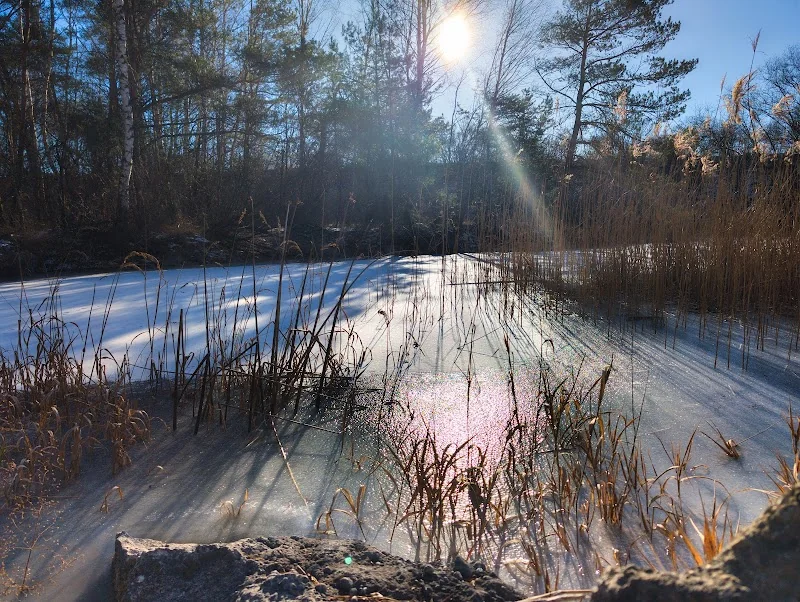
Winter heathland. Particularly well-suited for a walk in winter.