
Ingolstädter Landstraße 96, Garching bei München-Hochbrück
Ingolstädter Landstraße 96, 85748 Garching bei München, Germany
Mallertshofer Church St. Martin | History & Pictures
The Mallertshofer Church St. Martin is not a major pilgrimage site and not a representative city church, but a quiet, historically charged gem on the edge of the Munich heath. Those searching for the Mallertshofer Kircherl will not find a loud place bustling with activity, but a solitary little church that today lies like a mental anchor in the greenery. It is precisely this mix of seclusion, historical depth, and landscape expanse that makes the church one of the special destinations in the north of Munich. The municipality of Oberschleißheim describes it as the only remaining building of the former Mallertshofen, while the Garching historical presentation classifies the site as a remnant of a vanished settlement in an ancient cultural landscape. This makes the church equally interesting for walkers, cyclists, history enthusiasts, and people looking for a quiet place. Those interested in pictures of St. Martin Mallertshofen, the way there, or the historical context of the site will find not only a beautiful viewpoint here but also a piece of local memory culture. ([oberschleissheim.de](https://www.oberschleissheim.de/Ortsteil-Mallertshofen.o195.html))
The History of the Mallertshofer Church and the Vanished Hamlet
The history of Mallertshofen begins long before it became a place for walks and excursions. The Garching presentation of historical traces describes the hamlet as a remnant of settlement on the gravel plain north of Munich, east of the connection between Ingolstädter Landstraße and the road to Oberschleißheim and Eching. It is even suggested that the site may have been located at a Roman road station. In the same source, the Romanesque Church of St. Martin is read as a hint of early developmental contexts; it is also stated that the church and two farms once belonged to the Freising bishopric. Later, the properties were transferred to the Weihenstephan monastery, which maintained an administrative farm in Mallertshofen. For regional church history, this is significant because Mallertshofen was even the seat of a parish for Garching, Fröttmaning, Freimann, and Schleißheim around 1300, before the parish was moved to Garching. This shows that today's quiet place was once a church center with considerable influence. ([garching.de](https://www.garching.de/stadtportr%C3%A4t-leben/stadtportr%C3%A4t/_spuren-der-geschichte_/_/Latersheim.pdf))
The later history is also closely linked to the transformation of the landscape. In 1628, the Elector of Bavaria purchased the hamlet as a farm for the Schleißheim palace, and around 1880 the last residents left the place as the military training area of the Munich garrison expanded. The municipality of Oberschleißheim soberly notes that in the 19th century, the remaining buildings gradually disappeared, and only the church dedicated to Saint Martin remained. This formulation is important because it accurately explains the current character of the place: The church is not simply an isolated village church, but the last visible remnant of an abandoned settlement. This is precisely why the site appears so impressive. Standing there, one is not only in front of a building but in front of a gap in the landscape, where the history of an entire hamlet can be read. Thus, the Mallertshofer Kircherl tells its story not through size but through what is no longer there. ([oberschleissheim.de](https://www.oberschleissheim.de/Ortsteil-Mallertshofen.o195.html))
For SEO seekers looking for St. Martin Mallertshofen or the history of Mallertshofen, the historical context is therefore central. The site is an example of a vanished village, whose memory lives on through a church, a former cemetery, and the landscape itself. In local historical texts, the church is seen as a Romanesque building and as a connecting line between early medieval settlement, church organization, and later transformation of the surroundings. Thus, it stands alongside those places where the Munich region has preserved its old settlement structure not in street names but still directly in the terrain. This is often surprising for visitors: One expects little archaic tranquility in a metropolitan area but finds here a place clearly shaped by centuries of agricultural and ecclesiastical history. It is precisely this tension between urban environment and rural past that gives St. Martin Mallertshofen its charm. ([garching.de](https://www.garching.de/stadtportr%C3%A4t-leben/stadtportr%C3%A4t/_spuren-der-geschichte_/_/Latersheim.pdf))
Those who take a closer look at the development of the local landscape also recognize the role of the military training area and the associated landscape changes. The fact that the last residents left around 1880 and only the church remained is not just a historical detail but the key to today's perception of the place. The way there does not lead through a developed village with an inn, fire station, and village square, but through an open landscape where the church appears as a remnant of the past. This explains why the Kircherl still appeals to so many people today: It is small but symbolically large. It represents continuity, even though the settlement has disappeared, and memory, even though the original village structure has been erased. In this sense, the Mallertshofer Kircherl is an impressive example of how Bavarian local history remains visible not only in archives but also in the landscape itself. ([oberschleissheim.de](https://www.oberschleissheim.de/Ortsteil-Mallertshofen.o195.html))
Mallertshofer Wood with Heaths: Nature Reserve, Paths, and Rules
The location of the church cannot be understood without the nature reserve. The Mallertshofer Wood with Heaths is officially designated as a nature reserve in northern Munich, extending over areas of the municipality of Eching, the city of Garching b. Munich, and the municipality of Oberschleißheim. The regulation states a size of 609.42 hectares and describes the area as a FFH area. The reason for protection is not only a beautiful landscape but a landscape-historically significant and nature-close remnant of the heath landscape in the Munich gravel plain. For this reason, the area belongs to the valuable nature and cultural landscapes in the north of Munich. Therefore, anyone traveling to the Mallertshofer Church St. Martin is not moving in an arbitrary open space but in a legally protected natural area with clear rules. This is important for planning a visit because here, consideration for flora, fauna, and path management takes top priority. ([oberschleissheim.de](https://www.oberschleissheim.de/verordnung-nsg-mallertshofer-holz-mit-heiden))
The nature reserve regulation is very clear on this point. It prohibits motor vehicles outside the roads and paths designated for public traffic, prohibits cycling outside marked bike paths, and prohibits entering certain areas outside of roads, marked paths, and trails. Free-running dogs are also not allowed in the area. This leads to a simple rule for visitors: Those who want to visit the Mallertshofer Kircherl should not leave the paths and should not misunderstand nature as a shortcut. These restrictions help ensure that the area retains its quiet character. The municipality of Oberschleißheim and the protection regulation make it clear that the site is not designed for mass tourism but for careful use. This fits perfectly with the atmosphere of the church itself, which is precisely characterized by silence and seclusion. ([oberschleissheim.de](https://www.oberschleissheim.de/verordnung-nsg-mallertshofer-holz-mit-heiden))
The purpose of the protection area is also explicitly formulated: It protects light pine forests of heather, grass heaths, and the animal and plant species living there. This also explains the landscape surrounding the church, where one experiences open, bright, partly wide heath areas and forest patches. The Heath Area Association describes the heath path, which runs between Eching, Neufahrn, Garching, and Schleißheim, as a connection between several heath areas, including the Mallertshofer Wood with Heaths. It is accessible via several entrances by public transport, bicycle, or car. For visitors, this means: Although the church is somewhat remote, it is still integrated into a well-developed network of nature paths. Therefore, anyone planning a hike can easily combine a visit to the church with a walk through the heath landscape. This is also the reason why search queries like mallertshofer wood with heaths or heath path mallertshofen often coincide with the church. ([oberschleissheim.de](https://www.oberschleissheim.de/verordnung-nsg-mallertshofer-holz-mit-heiden))
It is particularly interesting that the nature reserve regulation explicitly mentions the Mallertshofer Kircherl. It lists the use and maintenance of the Kircherl as a permissible exception and even allows for an annual midsummer fire within the church enclosure. This is a remarkable detail because it shows that the historical sacred site is not only museum-like preserved but continues to exist as a living part of the landscape. The site is therefore neither a pure monument nor a mere backdrop but a space with limited but real use. In an age when many historical sites only function as photo backdrops, a form of lived care is preserved here. This is precisely what makes it so appealing: The church is part of the protected area, and the protected area, in turn, protects the framework that makes the church appear so impressive. ([oberschleissheim.de](https://www.oberschleissheim.de/verordnung-nsg-mallertshofer-holz-mit-heiden))
From a tourist perspective, the natural embedding is also important. The Mallertshofer Wood with Heaths is one of those places where one does not just visit a destination but takes away a whole impression: quiet paths, open heath, historical traces, and a church that appears like a fixed point from another time. The protection rules ensure that this experience is not disturbed by traffic, noise, or mass use. For visitors, this is initially a restriction, but in the long run, it is a gain because it is precisely the tranquility that makes the place so special. The municipality of Oberschleißheim deliberately points out in its local article that the church remained northeast of the inn Kreuzhof. This brief description of the location almost suffices as a hint about the landscape: Here lies a building on the edge of meadows and heath areas, not in a densely built town center. Those who understand this also understand why the Mallertshofer Kircherl still attracts so many people today, even though it does not have a classic event character. ([oberschleissheim.de](https://www.oberschleissheim.de/Ortsteil-Mallertshofen.o195.html))
Access, Orientation, and the Question of Parking
The access to the Mallertshofer Church St. Martin is one of the first search topics for many users because the site is not located in the center but on the edge of a wide nature and heath zone. The official description in the municipality of Oberschleißheim primarily mentions the location: northeast of the inn Kreuzhof. The Garching historical presentation also locates Mallertshofen east of the intersection of Ingolstädter Landstraße and the road to Oberschleißheim-Eching. Those who orient themselves to these points quickly understand that the destination lies in a transitional zone between the edge of settlement, traffic axes, and nature reserve. This is not a typical city center visit but rather a small excursion into the periphery of the Munich heath. For this reason, it is worthwhile to plan the route in advance and to consider the last meters as part of the experience. ([oberschleissheim.de](https://www.oberschleissheim.de/Ortsteil-Mallertshofen.o195.html))
Regarding parking, it is important to distinguish between official sources and practical orientation. The official sources found do not highlight a dedicated parking lot at the Kircherl as a visitor parking area. Instead, the Heath Area Association describes the heath path as accessible via several entrances by public transport, bicycle, or car, and the nature reserve regulation also stipulates that vehicles may only drive or park on designated roads and paths. This means: Those arriving by car should adhere to the existing access and entrance situations and should not expect to park directly at the church as one would in front of a theme park or museum. For many visitors, the combination of driving by car to a suitable entry point and then taking a short walk is the most sensible solution. This not only protects the area but also fits the quiet surroundings of the Kircherl. ([heideflaechenverein.de](https://heideflaechenverein.de/freizeit/heidepfad_2.html?utm_source=openai))
It is interesting in this context that local church use rather functions via bike and footpaths. In the Oberschleißheim community news, a family service in the open air at the Mallertshofener Kircherl was announced, with a meeting point for cyclists at the Trinity Church. This shows that the church is not primarily intended as a place for a large influx of visitors but as a destination for conscious, slow paths. Those traveling by bicycle experience their arrival much more intensely than with a quick passage. For this reason, search intentions like mallertshofer church access or parking mallertshofen are usually not searches for a classic parking space but for a practical access. Here, the official hints about paths, entrances, and nature reserve rules are most helpful. ([oberschleissheim.de](https://www.oberschleissheim.de/oberschleissheimer-gemeindenachrichten-mai-2025))
For visitors from Garching, Hochbrück, Oberschleißheim, or the northern Munich area, the site can be well combined with a small round tour. The heath path connects several natural areas, and the church lies in a landscape area that can be well explored on foot or by bike. Those traveling with children or older people should plan the tour to be relatively short and respect the path management, as the nature reserve is not designed for spontaneous short stops directly next to the building. However, this is not a disadvantage but part of the special character: The journey becomes part of the experience. The Mallertshofer Kircherl thus does not appear as just any excursion destination with many parking spaces but as a place that one has to earn. This enhances the impression of tranquility and seclusion that many visitors perceive positively. ([heideflaechenverein.de](https://heideflaechenverein.de/freizeit/heidepfad_2.html?utm_source=openai))
In summary, the most important recommendation for access is: first clarify the location in the Kreuzhof and heath path region, then plan the last stretch sensibly on foot or by bike, and use only the permitted areas and paths for parking. Since the area is organized as a protected space, the question of parking is not answered with a single fixed parking spot but with a small understanding of the locality. For seekers, this is often more useful than a false, overly precise indication. The Mallertshofer Kircherl thus remains a place for slow approaches and not for quick passage. ([oberschleissheim.de](https://www.oberschleissheim.de/Ortsteil-Mallertshofen.o195.html))
Pictures of St. Martin Mallertshofen: Quiet Motifs, Light, and Atmosphere
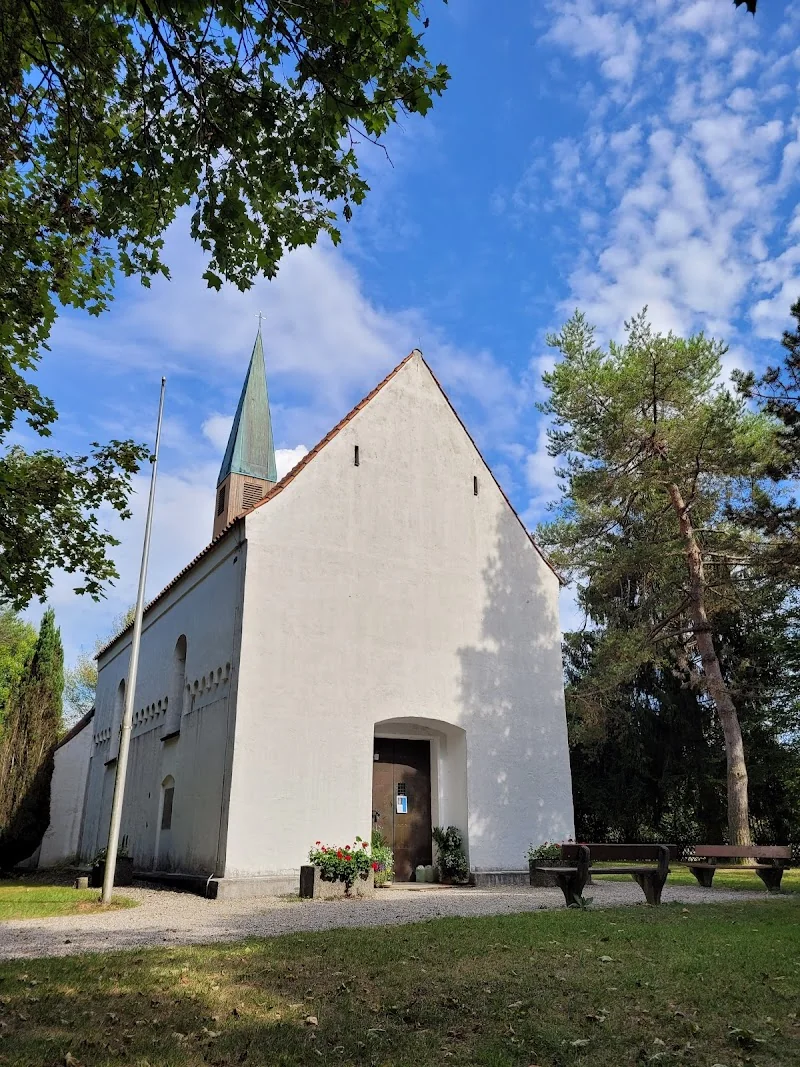
Those searching for pictures of St. Martin Mallertshofen are usually looking for not just a motif but a mood. The Mallertshofer Kircherl is photogenic because it appears so different from many churches in the town center. It stands freely in the landscape, surrounded by tranquility, heath, and the traces of a vanished hamlet. The official community website explicitly emphasizes the seclusion, and visitor reports describe the site as very quiet, well-maintained, and somewhat remote. This combination of well-kept simplicity and landscape expanse creates an image that works very well in photos: clear sky, open space, a small historical building, and a frame that is neither overloaded nor urban. For amateur photographers, families, or walkers, this is a special quality because here one does not compete for strong perspectives but can work with light, line, and silence. This makes the motif both factual and emotional. ([oberschleissheim.de](https://www.oberschleissheim.de/Ortsteil-Mallertshofen.o195.html))
The building itself benefits from its reduced appearance. It is not a church with a monumental facade but a small church that convinces precisely through its simplicity. In the landscape, it almost appears as a sign marking the place where settlement once was. For the eye, this creates a strong composition: low building, open environment, few disturbing elements. Those who visit the site during the golden hour or on a slightly cloudy day often get particularly clear images because the atmosphere is not overshadowed by harsh traffic or urban backdrop. The wide surroundings of the Mallertshofer Wood with Heaths further enhance this impression. The area is not a decorative park but a protected natural space where one can still feel genuine expanse. It is precisely this expanse that makes the photos so credible and so calm. ([oberschleissheim.de](https://www.oberschleissheim.de/verordnung-nsg-mallertshofer-holz-mit-heiden))
For the visual language, the historical traces around the church are also important. The Mallertshofer Kircherl is not just a single motif but the last testimony of an abandoned place. This connects the interest in pictures of St. Martin Mallertshofen often with a search for history, loss, and memory. Even if not all historical details are visible in the photo, the history of the vanished hamlet resonates. The municipality of Oberschleißheim reminds us that the entire property was demolished in the late 19th century, and only the church remained. This reduction to the essential gives the place its special pictorial power. The photo thus shows not only a pretty little house of worship but a piece of local history that condenses in a single glance. ([oberschleissheim.de](https://www.oberschleissheim.de/Ortsteil-Mallertshofen.o195.html))
Practically, a walk around the Kircherl is worthwhile, provided one uses the paths and observes the protection rules. The surroundings offer various viewpoints: once the classic front view, then side perspectives with open landscape, and finally details like the enclosure, the transition to the heath landscape, or the embedding in the quiet surroundings. Because the area is protected, images are not created in noisy passing but in a consciously chosen moment. This is an advantage for all those seeking quiet motifs. Those who want to connect people, architecture, and nature will find an unusually harmonious ensemble here. It is precisely this balance of sacred building, natural space, and abandonment that makes the photos so impressive. For this reason, the Mallertshofer Kircherl is equally attractive for social media and private photo albums. ([oberschleissheim.de](https://www.oberschleissheim.de/verordnung-nsg-mallertshofer-holz-mit-heiden))
The visitor comments from the dataset fit well with this image. They speak of a place far from noise, very remote, quiet, and well-maintained. Such impressions are not the most important argument for marketing a place, but they explain why pictures and memories often go hand in hand here. Those who visit the Mallertshofer Kircherl rarely seek just a pretty motif; often, they seek a place to pause. It is precisely in this connection of photogenicity and tranquility that the strength of the place lies. Therefore, for the search for images, not only the architecture is interesting but the entire experience: the expanse of the heath, the quiet church, and the hint of a vanished settlement. ([oberschleissheim.de](https://www.oberschleissheim.de/Ortsteil-Mallertshofen.o195.html))
The Mallertshofer Kircherl Today: Use, Services, and Special Moments
Even today, the Mallertshofer Kircherl is not a dead monument but a place with limited but real use. Particularly noteworthy is the nature reserve regulation, which explicitly allows the use and maintenance of the Kircherl. This is not a given for a place in a nature reserve and shows how closely culture and nature are intertwined here. Additionally, the regulation even allows for an annual midsummer fire within the church enclosure. Such details make it clear that the church is not only preserved but continues to be taken seriously in its role as a local place of memory and encounter. It remains a place where history, tradition, and landscape intersect. ([oberschleissheim.de](https://www.oberschleissheim.de/verordnung-nsg-mallertshofer-holz-mit-heiden))
Another indication of today's use is the family service in the open air, which was announced in the Oberschleißheim community news for May 29, 2025, at the Mallertshofener Kircherl. A meeting point for cyclists at the Trinity Church was even mentioned. This form of event fits perfectly with the character of the place: not large, not loud, but consciously simple and nature-connected. The church is thus not only perceived as a historical backdrop but as a space for communal, religious, and contemplative use. This distinguishes it from many purely monument objects. The place continues to live on in a small but meaningful framework. For search queries like mallertshofer kircherl or st martin mallertshofen, this current use is therefore an important signal. ([oberschleissheim.de](https://www.oberschleissheim.de/oberschleissheimer-gemeindenachrichten-mai-2025))
The special effect of the place is evident in that many visitors come not for a single attraction but for the overall experience. The last remaining church of an abandoned hamlet, embedded in a protected heath area, creates a rare mix of expanse and intimacy. Those standing here experience silence not as emptiness but as an expression of a long history. This is precisely where the emotional quality of the place lies. The Garching presentation and the Oberschleißheim community page make it clear that a fragmentary remnant of the past has been preserved here. However, this fragmentariness is not a flaw but part of the effect. For it leaves room for thoughts, memories, and also for a very personal interpretation of the place. ([oberschleissheim.de](https://www.oberschleissheim.de/Ortsteil-Mallertshofen.o195.html))
For visitors seeking a walk or a small break, the Mallertshofer Kircherl is therefore particularly valuable. It is close enough to Munich to function as a short excursion, and far enough away to feel like another place. Those who engage with the paths not only take a photo with them but also an impression of landscape history. The combination of heath, nature reserve, ecclesiastical tradition, and the memory of a vanished hamlet is rare and therefore all the more impressive. Even though the Kircherl is small, it has great narrative power. It is a place where one does not receive much explanation but understands a lot. ([oberschleissheim.de](https://www.oberschleissheim.de/verordnung-nsg-mallertshofer-holz-mit-heiden))
Those visiting the Mallertshofer Church St. Martin should therefore take their time. Not for long queues or large program points, but for observation, tranquility, and a close look at the surroundings. The church is strongest when one does not quickly check it off but reads it as part of a landscape that makes history visible. This is its current value: It is a monument, a natural site, and a quiet meeting point at the same time. For this reason, the Mallertshofer Kircherl remains a destination that one does not forget, even though it seems so small. ([oberschleissheim.de](https://www.oberschleissheim.de/Ortsteil-Mallertshofen.o195.html))
Sources:
- Municipality of Oberschleißheim – District Mallertshofen
- City of Garching – Traces of Garching History: Latersheim and Mallertshofen (PDF)
- Municipality of Oberschleißheim – Regulation on the Nature Reserve Mallertshofer Wood with Heaths (PDF)
- Heath Area Association Munich North – Heath Path
- Municipality of Oberschleißheim – Oberschleißheim Community News May 2025 (PDF)
Show moreShow less
Mallertshofer Church St. Martin | History & Pictures
The Mallertshofer Church St. Martin is not a major pilgrimage site and not a representative city church, but a quiet, historically charged gem on the edge of the Munich heath. Those searching for the Mallertshofer Kircherl will not find a loud place bustling with activity, but a solitary little church that today lies like a mental anchor in the greenery. It is precisely this mix of seclusion, historical depth, and landscape expanse that makes the church one of the special destinations in the north of Munich. The municipality of Oberschleißheim describes it as the only remaining building of the former Mallertshofen, while the Garching historical presentation classifies the site as a remnant of a vanished settlement in an ancient cultural landscape. This makes the church equally interesting for walkers, cyclists, history enthusiasts, and people looking for a quiet place. Those interested in pictures of St. Martin Mallertshofen, the way there, or the historical context of the site will find not only a beautiful viewpoint here but also a piece of local memory culture. ([oberschleissheim.de](https://www.oberschleissheim.de/Ortsteil-Mallertshofen.o195.html))
The History of the Mallertshofer Church and the Vanished Hamlet
The history of Mallertshofen begins long before it became a place for walks and excursions. The Garching presentation of historical traces describes the hamlet as a remnant of settlement on the gravel plain north of Munich, east of the connection between Ingolstädter Landstraße and the road to Oberschleißheim and Eching. It is even suggested that the site may have been located at a Roman road station. In the same source, the Romanesque Church of St. Martin is read as a hint of early developmental contexts; it is also stated that the church and two farms once belonged to the Freising bishopric. Later, the properties were transferred to the Weihenstephan monastery, which maintained an administrative farm in Mallertshofen. For regional church history, this is significant because Mallertshofen was even the seat of a parish for Garching, Fröttmaning, Freimann, and Schleißheim around 1300, before the parish was moved to Garching. This shows that today's quiet place was once a church center with considerable influence. ([garching.de](https://www.garching.de/stadtportr%C3%A4t-leben/stadtportr%C3%A4t/_spuren-der-geschichte_/_/Latersheim.pdf))
The later history is also closely linked to the transformation of the landscape. In 1628, the Elector of Bavaria purchased the hamlet as a farm for the Schleißheim palace, and around 1880 the last residents left the place as the military training area of the Munich garrison expanded. The municipality of Oberschleißheim soberly notes that in the 19th century, the remaining buildings gradually disappeared, and only the church dedicated to Saint Martin remained. This formulation is important because it accurately explains the current character of the place: The church is not simply an isolated village church, but the last visible remnant of an abandoned settlement. This is precisely why the site appears so impressive. Standing there, one is not only in front of a building but in front of a gap in the landscape, where the history of an entire hamlet can be read. Thus, the Mallertshofer Kircherl tells its story not through size but through what is no longer there. ([oberschleissheim.de](https://www.oberschleissheim.de/Ortsteil-Mallertshofen.o195.html))
For SEO seekers looking for St. Martin Mallertshofen or the history of Mallertshofen, the historical context is therefore central. The site is an example of a vanished village, whose memory lives on through a church, a former cemetery, and the landscape itself. In local historical texts, the church is seen as a Romanesque building and as a connecting line between early medieval settlement, church organization, and later transformation of the surroundings. Thus, it stands alongside those places where the Munich region has preserved its old settlement structure not in street names but still directly in the terrain. This is often surprising for visitors: One expects little archaic tranquility in a metropolitan area but finds here a place clearly shaped by centuries of agricultural and ecclesiastical history. It is precisely this tension between urban environment and rural past that gives St. Martin Mallertshofen its charm. ([garching.de](https://www.garching.de/stadtportr%C3%A4t-leben/stadtportr%C3%A4t/_spuren-der-geschichte_/_/Latersheim.pdf))
Those who take a closer look at the development of the local landscape also recognize the role of the military training area and the associated landscape changes. The fact that the last residents left around 1880 and only the church remained is not just a historical detail but the key to today's perception of the place. The way there does not lead through a developed village with an inn, fire station, and village square, but through an open landscape where the church appears as a remnant of the past. This explains why the Kircherl still appeals to so many people today: It is small but symbolically large. It represents continuity, even though the settlement has disappeared, and memory, even though the original village structure has been erased. In this sense, the Mallertshofer Kircherl is an impressive example of how Bavarian local history remains visible not only in archives but also in the landscape itself. ([oberschleissheim.de](https://www.oberschleissheim.de/Ortsteil-Mallertshofen.o195.html))
Mallertshofer Wood with Heaths: Nature Reserve, Paths, and Rules
The location of the church cannot be understood without the nature reserve. The Mallertshofer Wood with Heaths is officially designated as a nature reserve in northern Munich, extending over areas of the municipality of Eching, the city of Garching b. Munich, and the municipality of Oberschleißheim. The regulation states a size of 609.42 hectares and describes the area as a FFH area. The reason for protection is not only a beautiful landscape but a landscape-historically significant and nature-close remnant of the heath landscape in the Munich gravel plain. For this reason, the area belongs to the valuable nature and cultural landscapes in the north of Munich. Therefore, anyone traveling to the Mallertshofer Church St. Martin is not moving in an arbitrary open space but in a legally protected natural area with clear rules. This is important for planning a visit because here, consideration for flora, fauna, and path management takes top priority. ([oberschleissheim.de](https://www.oberschleissheim.de/verordnung-nsg-mallertshofer-holz-mit-heiden))
The nature reserve regulation is very clear on this point. It prohibits motor vehicles outside the roads and paths designated for public traffic, prohibits cycling outside marked bike paths, and prohibits entering certain areas outside of roads, marked paths, and trails. Free-running dogs are also not allowed in the area. This leads to a simple rule for visitors: Those who want to visit the Mallertshofer Kircherl should not leave the paths and should not misunderstand nature as a shortcut. These restrictions help ensure that the area retains its quiet character. The municipality of Oberschleißheim and the protection regulation make it clear that the site is not designed for mass tourism but for careful use. This fits perfectly with the atmosphere of the church itself, which is precisely characterized by silence and seclusion. ([oberschleissheim.de](https://www.oberschleissheim.de/verordnung-nsg-mallertshofer-holz-mit-heiden))
The purpose of the protection area is also explicitly formulated: It protects light pine forests of heather, grass heaths, and the animal and plant species living there. This also explains the landscape surrounding the church, where one experiences open, bright, partly wide heath areas and forest patches. The Heath Area Association describes the heath path, which runs between Eching, Neufahrn, Garching, and Schleißheim, as a connection between several heath areas, including the Mallertshofer Wood with Heaths. It is accessible via several entrances by public transport, bicycle, or car. For visitors, this means: Although the church is somewhat remote, it is still integrated into a well-developed network of nature paths. Therefore, anyone planning a hike can easily combine a visit to the church with a walk through the heath landscape. This is also the reason why search queries like mallertshofer wood with heaths or heath path mallertshofen often coincide with the church. ([oberschleissheim.de](https://www.oberschleissheim.de/verordnung-nsg-mallertshofer-holz-mit-heiden))
It is particularly interesting that the nature reserve regulation explicitly mentions the Mallertshofer Kircherl. It lists the use and maintenance of the Kircherl as a permissible exception and even allows for an annual midsummer fire within the church enclosure. This is a remarkable detail because it shows that the historical sacred site is not only museum-like preserved but continues to exist as a living part of the landscape. The site is therefore neither a pure monument nor a mere backdrop but a space with limited but real use. In an age when many historical sites only function as photo backdrops, a form of lived care is preserved here. This is precisely what makes it so appealing: The church is part of the protected area, and the protected area, in turn, protects the framework that makes the church appear so impressive. ([oberschleissheim.de](https://www.oberschleissheim.de/verordnung-nsg-mallertshofer-holz-mit-heiden))
From a tourist perspective, the natural embedding is also important. The Mallertshofer Wood with Heaths is one of those places where one does not just visit a destination but takes away a whole impression: quiet paths, open heath, historical traces, and a church that appears like a fixed point from another time. The protection rules ensure that this experience is not disturbed by traffic, noise, or mass use. For visitors, this is initially a restriction, but in the long run, it is a gain because it is precisely the tranquility that makes the place so special. The municipality of Oberschleißheim deliberately points out in its local article that the church remained northeast of the inn Kreuzhof. This brief description of the location almost suffices as a hint about the landscape: Here lies a building on the edge of meadows and heath areas, not in a densely built town center. Those who understand this also understand why the Mallertshofer Kircherl still attracts so many people today, even though it does not have a classic event character. ([oberschleissheim.de](https://www.oberschleissheim.de/Ortsteil-Mallertshofen.o195.html))
Access, Orientation, and the Question of Parking
The access to the Mallertshofer Church St. Martin is one of the first search topics for many users because the site is not located in the center but on the edge of a wide nature and heath zone. The official description in the municipality of Oberschleißheim primarily mentions the location: northeast of the inn Kreuzhof. The Garching historical presentation also locates Mallertshofen east of the intersection of Ingolstädter Landstraße and the road to Oberschleißheim-Eching. Those who orient themselves to these points quickly understand that the destination lies in a transitional zone between the edge of settlement, traffic axes, and nature reserve. This is not a typical city center visit but rather a small excursion into the periphery of the Munich heath. For this reason, it is worthwhile to plan the route in advance and to consider the last meters as part of the experience. ([oberschleissheim.de](https://www.oberschleissheim.de/Ortsteil-Mallertshofen.o195.html))
Regarding parking, it is important to distinguish between official sources and practical orientation. The official sources found do not highlight a dedicated parking lot at the Kircherl as a visitor parking area. Instead, the Heath Area Association describes the heath path as accessible via several entrances by public transport, bicycle, or car, and the nature reserve regulation also stipulates that vehicles may only drive or park on designated roads and paths. This means: Those arriving by car should adhere to the existing access and entrance situations and should not expect to park directly at the church as one would in front of a theme park or museum. For many visitors, the combination of driving by car to a suitable entry point and then taking a short walk is the most sensible solution. This not only protects the area but also fits the quiet surroundings of the Kircherl. ([heideflaechenverein.de](https://heideflaechenverein.de/freizeit/heidepfad_2.html?utm_source=openai))
It is interesting in this context that local church use rather functions via bike and footpaths. In the Oberschleißheim community news, a family service in the open air at the Mallertshofener Kircherl was announced, with a meeting point for cyclists at the Trinity Church. This shows that the church is not primarily intended as a place for a large influx of visitors but as a destination for conscious, slow paths. Those traveling by bicycle experience their arrival much more intensely than with a quick passage. For this reason, search intentions like mallertshofer church access or parking mallertshofen are usually not searches for a classic parking space but for a practical access. Here, the official hints about paths, entrances, and nature reserve rules are most helpful. ([oberschleissheim.de](https://www.oberschleissheim.de/oberschleissheimer-gemeindenachrichten-mai-2025))
For visitors from Garching, Hochbrück, Oberschleißheim, or the northern Munich area, the site can be well combined with a small round tour. The heath path connects several natural areas, and the church lies in a landscape area that can be well explored on foot or by bike. Those traveling with children or older people should plan the tour to be relatively short and respect the path management, as the nature reserve is not designed for spontaneous short stops directly next to the building. However, this is not a disadvantage but part of the special character: The journey becomes part of the experience. The Mallertshofer Kircherl thus does not appear as just any excursion destination with many parking spaces but as a place that one has to earn. This enhances the impression of tranquility and seclusion that many visitors perceive positively. ([heideflaechenverein.de](https://heideflaechenverein.de/freizeit/heidepfad_2.html?utm_source=openai))
In summary, the most important recommendation for access is: first clarify the location in the Kreuzhof and heath path region, then plan the last stretch sensibly on foot or by bike, and use only the permitted areas and paths for parking. Since the area is organized as a protected space, the question of parking is not answered with a single fixed parking spot but with a small understanding of the locality. For seekers, this is often more useful than a false, overly precise indication. The Mallertshofer Kircherl thus remains a place for slow approaches and not for quick passage. ([oberschleissheim.de](https://www.oberschleissheim.de/Ortsteil-Mallertshofen.o195.html))
Pictures of St. Martin Mallertshofen: Quiet Motifs, Light, and Atmosphere
Those searching for pictures of St. Martin Mallertshofen are usually looking for not just a motif but a mood. The Mallertshofer Kircherl is photogenic because it appears so different from many churches in the town center. It stands freely in the landscape, surrounded by tranquility, heath, and the traces of a vanished hamlet. The official community website explicitly emphasizes the seclusion, and visitor reports describe the site as very quiet, well-maintained, and somewhat remote. This combination of well-kept simplicity and landscape expanse creates an image that works very well in photos: clear sky, open space, a small historical building, and a frame that is neither overloaded nor urban. For amateur photographers, families, or walkers, this is a special quality because here one does not compete for strong perspectives but can work with light, line, and silence. This makes the motif both factual and emotional. ([oberschleissheim.de](https://www.oberschleissheim.de/Ortsteil-Mallertshofen.o195.html))
The building itself benefits from its reduced appearance. It is not a church with a monumental facade but a small church that convinces precisely through its simplicity. In the landscape, it almost appears as a sign marking the place where settlement once was. For the eye, this creates a strong composition: low building, open environment, few disturbing elements. Those who visit the site during the golden hour or on a slightly cloudy day often get particularly clear images because the atmosphere is not overshadowed by harsh traffic or urban backdrop. The wide surroundings of the Mallertshofer Wood with Heaths further enhance this impression. The area is not a decorative park but a protected natural space where one can still feel genuine expanse. It is precisely this expanse that makes the photos so credible and so calm. ([oberschleissheim.de](https://www.oberschleissheim.de/verordnung-nsg-mallertshofer-holz-mit-heiden))
For the visual language, the historical traces around the church are also important. The Mallertshofer Kircherl is not just a single motif but the last testimony of an abandoned place. This connects the interest in pictures of St. Martin Mallertshofen often with a search for history, loss, and memory. Even if not all historical details are visible in the photo, the history of the vanished hamlet resonates. The municipality of Oberschleißheim reminds us that the entire property was demolished in the late 19th century, and only the church remained. This reduction to the essential gives the place its special pictorial power. The photo thus shows not only a pretty little house of worship but a piece of local history that condenses in a single glance. ([oberschleissheim.de](https://www.oberschleissheim.de/Ortsteil-Mallertshofen.o195.html))
Practically, a walk around the Kircherl is worthwhile, provided one uses the paths and observes the protection rules. The surroundings offer various viewpoints: once the classic front view, then side perspectives with open landscape, and finally details like the enclosure, the transition to the heath landscape, or the embedding in the quiet surroundings. Because the area is protected, images are not created in noisy passing but in a consciously chosen moment. This is an advantage for all those seeking quiet motifs. Those who want to connect people, architecture, and nature will find an unusually harmonious ensemble here. It is precisely this balance of sacred building, natural space, and abandonment that makes the photos so impressive. For this reason, the Mallertshofer Kircherl is equally attractive for social media and private photo albums. ([oberschleissheim.de](https://www.oberschleissheim.de/verordnung-nsg-mallertshofer-holz-mit-heiden))
The visitor comments from the dataset fit well with this image. They speak of a place far from noise, very remote, quiet, and well-maintained. Such impressions are not the most important argument for marketing a place, but they explain why pictures and memories often go hand in hand here. Those who visit the Mallertshofer Kircherl rarely seek just a pretty motif; often, they seek a place to pause. It is precisely in this connection of photogenicity and tranquility that the strength of the place lies. Therefore, for the search for images, not only the architecture is interesting but the entire experience: the expanse of the heath, the quiet church, and the hint of a vanished settlement. ([oberschleissheim.de](https://www.oberschleissheim.de/Ortsteil-Mallertshofen.o195.html))
The Mallertshofer Kircherl Today: Use, Services, and Special Moments
Even today, the Mallertshofer Kircherl is not a dead monument but a place with limited but real use. Particularly noteworthy is the nature reserve regulation, which explicitly allows the use and maintenance of the Kircherl. This is not a given for a place in a nature reserve and shows how closely culture and nature are intertwined here. Additionally, the regulation even allows for an annual midsummer fire within the church enclosure. Such details make it clear that the church is not only preserved but continues to be taken seriously in its role as a local place of memory and encounter. It remains a place where history, tradition, and landscape intersect. ([oberschleissheim.de](https://www.oberschleissheim.de/verordnung-nsg-mallertshofer-holz-mit-heiden))
Another indication of today's use is the family service in the open air, which was announced in the Oberschleißheim community news for May 29, 2025, at the Mallertshofener Kircherl. A meeting point for cyclists at the Trinity Church was even mentioned. This form of event fits perfectly with the character of the place: not large, not loud, but consciously simple and nature-connected. The church is thus not only perceived as a historical backdrop but as a space for communal, religious, and contemplative use. This distinguishes it from many purely monument objects. The place continues to live on in a small but meaningful framework. For search queries like mallertshofer kircherl or st martin mallertshofen, this current use is therefore an important signal. ([oberschleissheim.de](https://www.oberschleissheim.de/oberschleissheimer-gemeindenachrichten-mai-2025))
The special effect of the place is evident in that many visitors come not for a single attraction but for the overall experience. The last remaining church of an abandoned hamlet, embedded in a protected heath area, creates a rare mix of expanse and intimacy. Those standing here experience silence not as emptiness but as an expression of a long history. This is precisely where the emotional quality of the place lies. The Garching presentation and the Oberschleißheim community page make it clear that a fragmentary remnant of the past has been preserved here. However, this fragmentariness is not a flaw but part of the effect. For it leaves room for thoughts, memories, and also for a very personal interpretation of the place. ([oberschleissheim.de](https://www.oberschleissheim.de/Ortsteil-Mallertshofen.o195.html))
For visitors seeking a walk or a small break, the Mallertshofer Kircherl is therefore particularly valuable. It is close enough to Munich to function as a short excursion, and far enough away to feel like another place. Those who engage with the paths not only take a photo with them but also an impression of landscape history. The combination of heath, nature reserve, ecclesiastical tradition, and the memory of a vanished hamlet is rare and therefore all the more impressive. Even though the Kircherl is small, it has great narrative power. It is a place where one does not receive much explanation but understands a lot. ([oberschleissheim.de](https://www.oberschleissheim.de/verordnung-nsg-mallertshofer-holz-mit-heiden))
Those visiting the Mallertshofer Church St. Martin should therefore take their time. Not for long queues or large program points, but for observation, tranquility, and a close look at the surroundings. The church is strongest when one does not quickly check it off but reads it as part of a landscape that makes history visible. This is its current value: It is a monument, a natural site, and a quiet meeting point at the same time. For this reason, the Mallertshofer Kircherl remains a destination that one does not forget, even though it seems so small. ([oberschleissheim.de](https://www.oberschleissheim.de/Ortsteil-Mallertshofen.o195.html))
Sources:
- Municipality of Oberschleißheim – District Mallertshofen
- City of Garching – Traces of Garching History: Latersheim and Mallertshofen (PDF)
- Municipality of Oberschleißheim – Regulation on the Nature Reserve Mallertshofer Wood with Heaths (PDF)
- Heath Area Association Munich North – Heath Path
- Municipality of Oberschleißheim – Oberschleißheim Community News May 2025 (PDF)
Mallertshofer Church St. Martin | History & Pictures
The Mallertshofer Church St. Martin is not a major pilgrimage site and not a representative city church, but a quiet, historically charged gem on the edge of the Munich heath. Those searching for the Mallertshofer Kircherl will not find a loud place bustling with activity, but a solitary little church that today lies like a mental anchor in the greenery. It is precisely this mix of seclusion, historical depth, and landscape expanse that makes the church one of the special destinations in the north of Munich. The municipality of Oberschleißheim describes it as the only remaining building of the former Mallertshofen, while the Garching historical presentation classifies the site as a remnant of a vanished settlement in an ancient cultural landscape. This makes the church equally interesting for walkers, cyclists, history enthusiasts, and people looking for a quiet place. Those interested in pictures of St. Martin Mallertshofen, the way there, or the historical context of the site will find not only a beautiful viewpoint here but also a piece of local memory culture. ([oberschleissheim.de](https://www.oberschleissheim.de/Ortsteil-Mallertshofen.o195.html))
The History of the Mallertshofer Church and the Vanished Hamlet
The history of Mallertshofen begins long before it became a place for walks and excursions. The Garching presentation of historical traces describes the hamlet as a remnant of settlement on the gravel plain north of Munich, east of the connection between Ingolstädter Landstraße and the road to Oberschleißheim and Eching. It is even suggested that the site may have been located at a Roman road station. In the same source, the Romanesque Church of St. Martin is read as a hint of early developmental contexts; it is also stated that the church and two farms once belonged to the Freising bishopric. Later, the properties were transferred to the Weihenstephan monastery, which maintained an administrative farm in Mallertshofen. For regional church history, this is significant because Mallertshofen was even the seat of a parish for Garching, Fröttmaning, Freimann, and Schleißheim around 1300, before the parish was moved to Garching. This shows that today's quiet place was once a church center with considerable influence. ([garching.de](https://www.garching.de/stadtportr%C3%A4t-leben/stadtportr%C3%A4t/_spuren-der-geschichte_/_/Latersheim.pdf))
The later history is also closely linked to the transformation of the landscape. In 1628, the Elector of Bavaria purchased the hamlet as a farm for the Schleißheim palace, and around 1880 the last residents left the place as the military training area of the Munich garrison expanded. The municipality of Oberschleißheim soberly notes that in the 19th century, the remaining buildings gradually disappeared, and only the church dedicated to Saint Martin remained. This formulation is important because it accurately explains the current character of the place: The church is not simply an isolated village church, but the last visible remnant of an abandoned settlement. This is precisely why the site appears so impressive. Standing there, one is not only in front of a building but in front of a gap in the landscape, where the history of an entire hamlet can be read. Thus, the Mallertshofer Kircherl tells its story not through size but through what is no longer there. ([oberschleissheim.de](https://www.oberschleissheim.de/Ortsteil-Mallertshofen.o195.html))
For SEO seekers looking for St. Martin Mallertshofen or the history of Mallertshofen, the historical context is therefore central. The site is an example of a vanished village, whose memory lives on through a church, a former cemetery, and the landscape itself. In local historical texts, the church is seen as a Romanesque building and as a connecting line between early medieval settlement, church organization, and later transformation of the surroundings. Thus, it stands alongside those places where the Munich region has preserved its old settlement structure not in street names but still directly in the terrain. This is often surprising for visitors: One expects little archaic tranquility in a metropolitan area but finds here a place clearly shaped by centuries of agricultural and ecclesiastical history. It is precisely this tension between urban environment and rural past that gives St. Martin Mallertshofen its charm. ([garching.de](https://www.garching.de/stadtportr%C3%A4t-leben/stadtportr%C3%A4t/_spuren-der-geschichte_/_/Latersheim.pdf))
Those who take a closer look at the development of the local landscape also recognize the role of the military training area and the associated landscape changes. The fact that the last residents left around 1880 and only the church remained is not just a historical detail but the key to today's perception of the place. The way there does not lead through a developed village with an inn, fire station, and village square, but through an open landscape where the church appears as a remnant of the past. This explains why the Kircherl still appeals to so many people today: It is small but symbolically large. It represents continuity, even though the settlement has disappeared, and memory, even though the original village structure has been erased. In this sense, the Mallertshofer Kircherl is an impressive example of how Bavarian local history remains visible not only in archives but also in the landscape itself. ([oberschleissheim.de](https://www.oberschleissheim.de/Ortsteil-Mallertshofen.o195.html))
Mallertshofer Wood with Heaths: Nature Reserve, Paths, and Rules
The location of the church cannot be understood without the nature reserve. The Mallertshofer Wood with Heaths is officially designated as a nature reserve in northern Munich, extending over areas of the municipality of Eching, the city of Garching b. Munich, and the municipality of Oberschleißheim. The regulation states a size of 609.42 hectares and describes the area as a FFH area. The reason for protection is not only a beautiful landscape but a landscape-historically significant and nature-close remnant of the heath landscape in the Munich gravel plain. For this reason, the area belongs to the valuable nature and cultural landscapes in the north of Munich. Therefore, anyone traveling to the Mallertshofer Church St. Martin is not moving in an arbitrary open space but in a legally protected natural area with clear rules. This is important for planning a visit because here, consideration for flora, fauna, and path management takes top priority. ([oberschleissheim.de](https://www.oberschleissheim.de/verordnung-nsg-mallertshofer-holz-mit-heiden))
The nature reserve regulation is very clear on this point. It prohibits motor vehicles outside the roads and paths designated for public traffic, prohibits cycling outside marked bike paths, and prohibits entering certain areas outside of roads, marked paths, and trails. Free-running dogs are also not allowed in the area. This leads to a simple rule for visitors: Those who want to visit the Mallertshofer Kircherl should not leave the paths and should not misunderstand nature as a shortcut. These restrictions help ensure that the area retains its quiet character. The municipality of Oberschleißheim and the protection regulation make it clear that the site is not designed for mass tourism but for careful use. This fits perfectly with the atmosphere of the church itself, which is precisely characterized by silence and seclusion. ([oberschleissheim.de](https://www.oberschleissheim.de/verordnung-nsg-mallertshofer-holz-mit-heiden))
The purpose of the protection area is also explicitly formulated: It protects light pine forests of heather, grass heaths, and the animal and plant species living there. This also explains the landscape surrounding the church, where one experiences open, bright, partly wide heath areas and forest patches. The Heath Area Association describes the heath path, which runs between Eching, Neufahrn, Garching, and Schleißheim, as a connection between several heath areas, including the Mallertshofer Wood with Heaths. It is accessible via several entrances by public transport, bicycle, or car. For visitors, this means: Although the church is somewhat remote, it is still integrated into a well-developed network of nature paths. Therefore, anyone planning a hike can easily combine a visit to the church with a walk through the heath landscape. This is also the reason why search queries like mallertshofer wood with heaths or heath path mallertshofen often coincide with the church. ([oberschleissheim.de](https://www.oberschleissheim.de/verordnung-nsg-mallertshofer-holz-mit-heiden))
It is particularly interesting that the nature reserve regulation explicitly mentions the Mallertshofer Kircherl. It lists the use and maintenance of the Kircherl as a permissible exception and even allows for an annual midsummer fire within the church enclosure. This is a remarkable detail because it shows that the historical sacred site is not only museum-like preserved but continues to exist as a living part of the landscape. The site is therefore neither a pure monument nor a mere backdrop but a space with limited but real use. In an age when many historical sites only function as photo backdrops, a form of lived care is preserved here. This is precisely what makes it so appealing: The church is part of the protected area, and the protected area, in turn, protects the framework that makes the church appear so impressive. ([oberschleissheim.de](https://www.oberschleissheim.de/verordnung-nsg-mallertshofer-holz-mit-heiden))
From a tourist perspective, the natural embedding is also important. The Mallertshofer Wood with Heaths is one of those places where one does not just visit a destination but takes away a whole impression: quiet paths, open heath, historical traces, and a church that appears like a fixed point from another time. The protection rules ensure that this experience is not disturbed by traffic, noise, or mass use. For visitors, this is initially a restriction, but in the long run, it is a gain because it is precisely the tranquility that makes the place so special. The municipality of Oberschleißheim deliberately points out in its local article that the church remained northeast of the inn Kreuzhof. This brief description of the location almost suffices as a hint about the landscape: Here lies a building on the edge of meadows and heath areas, not in a densely built town center. Those who understand this also understand why the Mallertshofer Kircherl still attracts so many people today, even though it does not have a classic event character. ([oberschleissheim.de](https://www.oberschleissheim.de/Ortsteil-Mallertshofen.o195.html))
Access, Orientation, and the Question of Parking
The access to the Mallertshofer Church St. Martin is one of the first search topics for many users because the site is not located in the center but on the edge of a wide nature and heath zone. The official description in the municipality of Oberschleißheim primarily mentions the location: northeast of the inn Kreuzhof. The Garching historical presentation also locates Mallertshofen east of the intersection of Ingolstädter Landstraße and the road to Oberschleißheim-Eching. Those who orient themselves to these points quickly understand that the destination lies in a transitional zone between the edge of settlement, traffic axes, and nature reserve. This is not a typical city center visit but rather a small excursion into the periphery of the Munich heath. For this reason, it is worthwhile to plan the route in advance and to consider the last meters as part of the experience. ([oberschleissheim.de](https://www.oberschleissheim.de/Ortsteil-Mallertshofen.o195.html))
Regarding parking, it is important to distinguish between official sources and practical orientation. The official sources found do not highlight a dedicated parking lot at the Kircherl as a visitor parking area. Instead, the Heath Area Association describes the heath path as accessible via several entrances by public transport, bicycle, or car, and the nature reserve regulation also stipulates that vehicles may only drive or park on designated roads and paths. This means: Those arriving by car should adhere to the existing access and entrance situations and should not expect to park directly at the church as one would in front of a theme park or museum. For many visitors, the combination of driving by car to a suitable entry point and then taking a short walk is the most sensible solution. This not only protects the area but also fits the quiet surroundings of the Kircherl. ([heideflaechenverein.de](https://heideflaechenverein.de/freizeit/heidepfad_2.html?utm_source=openai))
It is interesting in this context that local church use rather functions via bike and footpaths. In the Oberschleißheim community news, a family service in the open air at the Mallertshofener Kircherl was announced, with a meeting point for cyclists at the Trinity Church. This shows that the church is not primarily intended as a place for a large influx of visitors but as a destination for conscious, slow paths. Those traveling by bicycle experience their arrival much more intensely than with a quick passage. For this reason, search intentions like mallertshofer church access or parking mallertshofen are usually not searches for a classic parking space but for a practical access. Here, the official hints about paths, entrances, and nature reserve rules are most helpful. ([oberschleissheim.de](https://www.oberschleissheim.de/oberschleissheimer-gemeindenachrichten-mai-2025))
For visitors from Garching, Hochbrück, Oberschleißheim, or the northern Munich area, the site can be well combined with a small round tour. The heath path connects several natural areas, and the church lies in a landscape area that can be well explored on foot or by bike. Those traveling with children or older people should plan the tour to be relatively short and respect the path management, as the nature reserve is not designed for spontaneous short stops directly next to the building. However, this is not a disadvantage but part of the special character: The journey becomes part of the experience. The Mallertshofer Kircherl thus does not appear as just any excursion destination with many parking spaces but as a place that one has to earn. This enhances the impression of tranquility and seclusion that many visitors perceive positively. ([heideflaechenverein.de](https://heideflaechenverein.de/freizeit/heidepfad_2.html?utm_source=openai))
In summary, the most important recommendation for access is: first clarify the location in the Kreuzhof and heath path region, then plan the last stretch sensibly on foot or by bike, and use only the permitted areas and paths for parking. Since the area is organized as a protected space, the question of parking is not answered with a single fixed parking spot but with a small understanding of the locality. For seekers, this is often more useful than a false, overly precise indication. The Mallertshofer Kircherl thus remains a place for slow approaches and not for quick passage. ([oberschleissheim.de](https://www.oberschleissheim.de/Ortsteil-Mallertshofen.o195.html))
Pictures of St. Martin Mallertshofen: Quiet Motifs, Light, and Atmosphere
Those searching for pictures of St. Martin Mallertshofen are usually looking for not just a motif but a mood. The Mallertshofer Kircherl is photogenic because it appears so different from many churches in the town center. It stands freely in the landscape, surrounded by tranquility, heath, and the traces of a vanished hamlet. The official community website explicitly emphasizes the seclusion, and visitor reports describe the site as very quiet, well-maintained, and somewhat remote. This combination of well-kept simplicity and landscape expanse creates an image that works very well in photos: clear sky, open space, a small historical building, and a frame that is neither overloaded nor urban. For amateur photographers, families, or walkers, this is a special quality because here one does not compete for strong perspectives but can work with light, line, and silence. This makes the motif both factual and emotional. ([oberschleissheim.de](https://www.oberschleissheim.de/Ortsteil-Mallertshofen.o195.html))
The building itself benefits from its reduced appearance. It is not a church with a monumental facade but a small church that convinces precisely through its simplicity. In the landscape, it almost appears as a sign marking the place where settlement once was. For the eye, this creates a strong composition: low building, open environment, few disturbing elements. Those who visit the site during the golden hour or on a slightly cloudy day often get particularly clear images because the atmosphere is not overshadowed by harsh traffic or urban backdrop. The wide surroundings of the Mallertshofer Wood with Heaths further enhance this impression. The area is not a decorative park but a protected natural space where one can still feel genuine expanse. It is precisely this expanse that makes the photos so credible and so calm. ([oberschleissheim.de](https://www.oberschleissheim.de/verordnung-nsg-mallertshofer-holz-mit-heiden))
For the visual language, the historical traces around the church are also important. The Mallertshofer Kircherl is not just a single motif but the last testimony of an abandoned place. This connects the interest in pictures of St. Martin Mallertshofen often with a search for history, loss, and memory. Even if not all historical details are visible in the photo, the history of the vanished hamlet resonates. The municipality of Oberschleißheim reminds us that the entire property was demolished in the late 19th century, and only the church remained. This reduction to the essential gives the place its special pictorial power. The photo thus shows not only a pretty little house of worship but a piece of local history that condenses in a single glance. ([oberschleissheim.de](https://www.oberschleissheim.de/Ortsteil-Mallertshofen.o195.html))
Practically, a walk around the Kircherl is worthwhile, provided one uses the paths and observes the protection rules. The surroundings offer various viewpoints: once the classic front view, then side perspectives with open landscape, and finally details like the enclosure, the transition to the heath landscape, or the embedding in the quiet surroundings. Because the area is protected, images are not created in noisy passing but in a consciously chosen moment. This is an advantage for all those seeking quiet motifs. Those who want to connect people, architecture, and nature will find an unusually harmonious ensemble here. It is precisely this balance of sacred building, natural space, and abandonment that makes the photos so impressive. For this reason, the Mallertshofer Kircherl is equally attractive for social media and private photo albums. ([oberschleissheim.de](https://www.oberschleissheim.de/verordnung-nsg-mallertshofer-holz-mit-heiden))
The visitor comments from the dataset fit well with this image. They speak of a place far from noise, very remote, quiet, and well-maintained. Such impressions are not the most important argument for marketing a place, but they explain why pictures and memories often go hand in hand here. Those who visit the Mallertshofer Kircherl rarely seek just a pretty motif; often, they seek a place to pause. It is precisely in this connection of photogenicity and tranquility that the strength of the place lies. Therefore, for the search for images, not only the architecture is interesting but the entire experience: the expanse of the heath, the quiet church, and the hint of a vanished settlement. ([oberschleissheim.de](https://www.oberschleissheim.de/Ortsteil-Mallertshofen.o195.html))
The Mallertshofer Kircherl Today: Use, Services, and Special Moments
Even today, the Mallertshofer Kircherl is not a dead monument but a place with limited but real use. Particularly noteworthy is the nature reserve regulation, which explicitly allows the use and maintenance of the Kircherl. This is not a given for a place in a nature reserve and shows how closely culture and nature are intertwined here. Additionally, the regulation even allows for an annual midsummer fire within the church enclosure. Such details make it clear that the church is not only preserved but continues to be taken seriously in its role as a local place of memory and encounter. It remains a place where history, tradition, and landscape intersect. ([oberschleissheim.de](https://www.oberschleissheim.de/verordnung-nsg-mallertshofer-holz-mit-heiden))
Another indication of today's use is the family service in the open air, which was announced in the Oberschleißheim community news for May 29, 2025, at the Mallertshofener Kircherl. A meeting point for cyclists at the Trinity Church was even mentioned. This form of event fits perfectly with the character of the place: not large, not loud, but consciously simple and nature-connected. The church is thus not only perceived as a historical backdrop but as a space for communal, religious, and contemplative use. This distinguishes it from many purely monument objects. The place continues to live on in a small but meaningful framework. For search queries like mallertshofer kircherl or st martin mallertshofen, this current use is therefore an important signal. ([oberschleissheim.de](https://www.oberschleissheim.de/oberschleissheimer-gemeindenachrichten-mai-2025))
The special effect of the place is evident in that many visitors come not for a single attraction but for the overall experience. The last remaining church of an abandoned hamlet, embedded in a protected heath area, creates a rare mix of expanse and intimacy. Those standing here experience silence not as emptiness but as an expression of a long history. This is precisely where the emotional quality of the place lies. The Garching presentation and the Oberschleißheim community page make it clear that a fragmentary remnant of the past has been preserved here. However, this fragmentariness is not a flaw but part of the effect. For it leaves room for thoughts, memories, and also for a very personal interpretation of the place. ([oberschleissheim.de](https://www.oberschleissheim.de/Ortsteil-Mallertshofen.o195.html))
For visitors seeking a walk or a small break, the Mallertshofer Kircherl is therefore particularly valuable. It is close enough to Munich to function as a short excursion, and far enough away to feel like another place. Those who engage with the paths not only take a photo with them but also an impression of landscape history. The combination of heath, nature reserve, ecclesiastical tradition, and the memory of a vanished hamlet is rare and therefore all the more impressive. Even though the Kircherl is small, it has great narrative power. It is a place where one does not receive much explanation but understands a lot. ([oberschleissheim.de](https://www.oberschleissheim.de/verordnung-nsg-mallertshofer-holz-mit-heiden))
Those visiting the Mallertshofer Church St. Martin should therefore take their time. Not for long queues or large program points, but for observation, tranquility, and a close look at the surroundings. The church is strongest when one does not quickly check it off but reads it as part of a landscape that makes history visible. This is its current value: It is a monument, a natural site, and a quiet meeting point at the same time. For this reason, the Mallertshofer Kircherl remains a destination that one does not forget, even though it seems so small. ([oberschleissheim.de](https://www.oberschleissheim.de/Ortsteil-Mallertshofen.o195.html))
Sources:
- Municipality of Oberschleißheim – District Mallertshofen
- City of Garching – Traces of Garching History: Latersheim and Mallertshofen (PDF)
- Municipality of Oberschleißheim – Regulation on the Nature Reserve Mallertshofer Wood with Heaths (PDF)
- Heath Area Association Munich North – Heath Path
- Municipality of Oberschleißheim – Oberschleißheim Community News May 2025 (PDF)
Upcoming Events
No events found
Frequently Asked Questions
Reviews
Barbara Araújo
18. April 2022
Yes, it's a church. Perhaps it's been made more special, as we can learn about its history from a plaque. Completely deserted and quiet, well-maintained! Unfortunately, I couldn't join it. A great find after a walk through the nature reserve :)
Jens-Gunther ./.
21. September 2020
A place away from noise and very remote, ideal for reflection.
Josef Schuster
8. September 2025
You should definitely cycle past here...
Dan Miel
13. August 2023
Interesting place, as it's a deserted settlement. But the church is closed to the public and, in my opinion, has been restored in a way that's too "modern".
Bast
9. September 2020
Beautifully situated, surrounded by nature. Usually very quiet.