
München
Marienplatz, 80331 München, Deutschland
Marienplatz Munich | Glockenspiel & Access
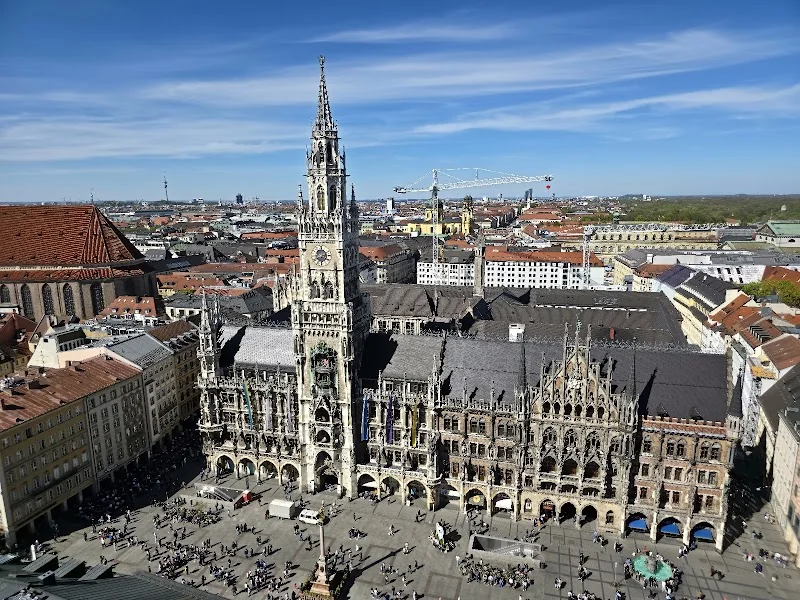
Marienplatz is the heart of Munich and has been the central square of the city since 1158. Between the New Town Hall, the Old Town Hall, the Mariensäule, and the beginning of the pedestrian zone, it bundles history, orientation, and everyday life in one place. Those who visit Marienplatz will find not only the most famous photo motif of the city but also one of the most important starting points for city strolls, tours, and public gatherings. The square lies between important axes of the old town and is still the point from which distances in Munich are measured. At the same time, it is a place where tourists, commuters, and locals meet daily. The mix of urban representation, vibrant everyday life, and a large number of visitors makes Marienplatz one of the most significant addresses in the city. ([munich.travel](https://www.munich.travel/en/topics/sports-leisure/englischer-garten-tour-by-bike/marienplatz?utm_source=openai))
Marienplatz and its History: The Square Where Munich Converges
Marienplatz originated as a central market and meeting point in the early development of Munich and was already in the Middle Ages the place where important paths converged. The official city and tourism description emphasizes that Marienplatz has been at the center of city life since the founding of the city by Henry the Lion in 1158. So, those who walk across the square today are moving through a place that is not only of tourist significance but also makes the historical logic of Munich visible to this day. From the square, the most important axes of the old town branch out, and that is why Marienplatz remains so important for orientation, meeting points, and route planning. It is traditionally the starting point for everything one wants to experience on foot in the old town. ([munich.travel](https://www.munich.travel/en/topics/sports-leisure/englischer-garten-tour-by-bike/marienplatz?utm_source=openai))
Among the most important symbols of the square is the Mariensäule, which has commemorated the happy outcome of the Thirty Years' War for Munich since 1638. The column is considered the center of the city and even serves as a starting point for signposts to other districts. Right next to it, the Old and New Town Halls shape the silhouette of the square. The Old Town Hall was destroyed in World War II and rebuilt starting in 1952; later, the reconstruction of the tower followed, which now rises 56 meters above Marienplatz. This mix of religious remembrance, urban representation, and war-related reconstruction makes the square historically particularly multifaceted and explains why it is much more than just a traffic or tourism point. ([muenchen.de](https://www.muenchen.de/sehenswuerdigkeiten/bauwerke-und-denkmaeler/mariensaeule?utm_source=openai))
Glockenspiel at Marienplatz: Times, History, and the New Town Hall
The Glockenspiel in the tower of the New Town Hall is the most famous attraction at Marienplatz. It is world-renowned, attracts visitors daily, and is one of the most famous sights in Munich. According to the official presentation, the Glockenspiel runs daily at 11 and 12 o'clock, and from March to October additionally at 5 o'clock. Four different pieces or songs can be heard and seen, which change monthly. Technically noteworthy is that the Glockenspiel consists of 43 bells and is powered by solar energy. After a renovation and cleaning in 2007, it was tuned for the first time in nearly 100 years. These details show that the attraction is not only a historical showcase but also a well-maintained and developed piece of urban culture. ([muenchen.de](https://www.muenchen.de/sehenswuerdigkeiten/glockenspiel?utm_source=openai))
Content-wise, the Glockenspiel reenacts two events from Munich's city history: the wedding of Duke Wilhelm V to Renate of Lorraine in February 1568 and the traditional Schäfflertanz. The first scene recalls a knight tournament at Marienplatz, the second the dance of the coopers after a plague period. This combination of city history, tradition, and lively staging is what makes the Glockenspiel appealing. The New Town Hall itself is not just a backdrop but a central part of the experience. The official city describes the building complex as an asymmetrical structure with a front length of 98.5 meters at Marienplatz and an area of 9,159 square meters. The town information center is also located in the town hall, which is an important point of contact for guests and locals. So, those looking for Marienplatz will find not just a monument but a functioning urban center. ([stadt.muenchen.de](https://stadt.muenchen.de/infos/neues-rathaus-aussen.html?lang=en&utm_source=openai))
Access to Marienplatz: Route, S-Bahn, U-Bahn, and Pedestrian Zone
For access, Marienplatz is one of the best-connected places in Munich's city center. The Marienplatz station is considered the most important transfer station in the city. All S-Bahn lines as well as the U-Bahn lines U3 and U6 stop there, and the station is located directly beneath the square. Therefore, those arriving by public transport can get off very close to their destination and reach the square without long walks. This is a clear advantage for visitors searching for Marienplatz Munich route or Marienplatz Munich maps: The journey is uncomplicated, central, and very well signposted. The U-surrounding plan of the MVV also shows the square as a tightly connected mobility hub in the old town. ([pc35.redaktion.mvv-muenchen.de](https://www.pc35.redaktion.mvv-muenchen.de/plaene-bahnhoefe/bahnhofsinformation/station/marienplatz-muenchen/index.html?utm_source=openai))
Additionally, Marienplatz is the starting point of the pedestrian zone and lies on the most important inner-city promenade axis of Munich. From here, Kaufingerstraße and Neuhauser Straße lead towards Karlsplatz-Stachus and together form the most famous shopping area of the city. The tourism site describes Marienplatz as a place where important streets of the new city once met and where the life of the old town continues to converge to this day. In practice, this means: Those who use the square as a point of orientation can easily connect the old town, shops, cafés, town hall, gallery, and other sights on foot. That is why Marienplatz is not just a destination but for many also the best starting point for a route through the center. ([munich.travel](https://www.munich.travel/en/topics/sports-leisure/englischer-garten-tour-by-bike/marienplatz?utm_source=openai))
Parking at Marienplatz: Underground Garage, City Center, and Practical Tips
Those coming by car should plan the parking options around Marienplatz in advance. The official underground garage at Marienplatz is located at Rindermarkt 16, so directly near the square in the city center. According to city information, there are 265 parking spaces available. Additionally, the description points out that the garage provides direct access to Marienplatz and Kaufingerstraße. For vehicles, it is important that the maximum vehicle width is 2.30 meters and the maximum height is 1.80 meters. Therefore, especially for larger cars, it is worth taking a close look at the dimensions before entering the old town. For a visit to the city center, this garage is the most straightforward solution when looking to park at Marienplatz. ([muenchen.de](https://www.muenchen.de/verkehr/tiefgarage-marienplatz?utm_source=openai))
According to city documents, there are no regular parking options directly at the town halls; there, loading and unloading is only an issue in special cases. Therefore, those heading to Marienplatz, the New Town Hall, or the Old Town Hall should not expect a classic parking space right at the door. The official city generally informs about parking spaces, parking permit areas, and special zones for people with disabilities as well as about pick-up and drop-off zones for tour buses. For buses, it is also true that while there are drop-off and pick-up zones along the old town ring, parking there is not possible. Those who want to arrive relaxed are usually much better advised to use public transport or a central underground garage than to search for a parking space directly at the square. ([stadt.muenchen.de](https://stadt.muenchen.de/dam/jcr%3Af8519129-a419-41c9-818b-c4559590effe/Informationen%20zum%20Alten%20Rathaus%20M%C3%BCnchen%20-Technische%20Daten%20und%20Ma%C3%9Fe-.pdf?utm_source=openai))
Marienplatz and its Sights: Mariensäule, Old Town Hall, and Town Hall Gallery
Several sights are closely located around Marienplatz, making the square culturally valuable. The Old Town Hall is located at Marienplatz 15 and is one of the oldest and most famous buildings in the old town. The official city describes it as a building with a great history that was destroyed in World War II and later rebuilt. Right next to it stands the Mariensäule, which has commemorated the protection of the city since 1638 and is still one of the most prominent points of the square. The New Town Hall, in turn, is not only a town hall but also an attraction for visitors interested in architecture, city history, and the view of the square. Together, these buildings form a compact historical ensemble that enhances Marienplatz far beyond its function as a traffic and meeting point. ([muenchen.de](https://www.muenchen.de/sehenswuerdigkeiten/bauwerke-und-denkmaeler/altes-rathaus?utm_source=openai))
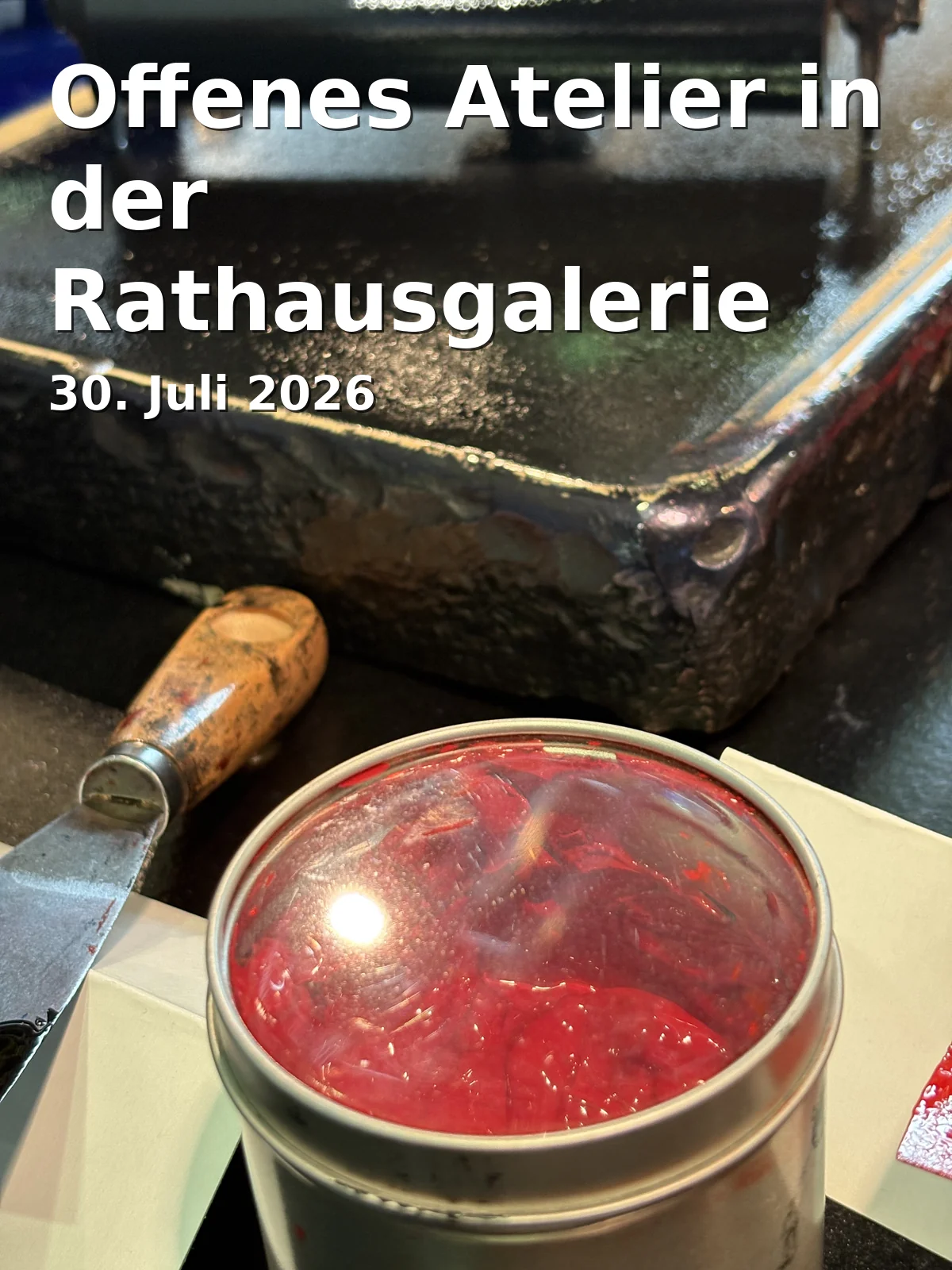
Those looking for Marienplatz Gallery will find a special address in the Town Hall Gallery. The municipal gallery at Marienplatz 8 mainly shows exhibitions of contemporary art and hosts solo and themed exhibitions. This connects the city's central square with a changing cultural program that can be easily integrated into a visit to the old town. The town information center in the town hall is also one of the practical points of contact on site and offers brochures, informational materials, and forms. Additionally, the old town around Marienplatz is very densely built with shops, walking paths, and sightlines while also being open enough to connect culture and everyday life. This mix makes the square not only touristically interesting but also relevant for locals in everyday life. ([stadt.muenchen.de](https://stadt.muenchen.de/infos/rathausgalerie-kunsthalle.html?utm_source=openai))
Shopping, Restaurants, and Events at Marienplatz
Marienplatz is not only a historical square but also a starting point for shopping, restaurants, and urban events. According to Munich Tourism, numerous paths to the central shopping and dining scene of the old town begin from here. Kaufingerstraße and Neuhauser Straße form one of the busiest pedestrian zones in Germany and connect the square with other shopping addresses up to Karlsplatz-Stachus. Therefore, those looking for a restaurant near Marienplatz will not find a single, isolated zone but a dense network of shops, cafés, and eateries in the immediate vicinity. The square itself is thus less a single destination than a pivot from which a complete city center visit is composed. ([muenchen.de](https://www.muenchen.de/en/sights/attractions/marienplatz-munichs-old-town?utm_source=openai))
Marienplatz also plays a prominent role in events. The official descriptions mention the Christkindlmarkt, city anniversaries, championship celebrations of FC Bayern, and public gatherings as typical events at the square. For this reason, Marienplatz is considered a place where something is always happening and not just a backdrop for photos. Those interested in a Marienplatz festival or other seasonal events should always consider the square in connection with the current city event calendar, as dates and formats can change quickly. For visitors, however, this is an advantage: The same place can appear very differently depending on the time of day and occasion, from a quiet meeting point in the morning to a lively festival stage in the evening. Thus, Marienplatz remains one of the few places where history, mobility, shopping, and event culture come together in close proximity. ([munich.travel](https://www.munich.travel/en/topics/sports-leisure/englischer-garten-tour-by-bike/marienplatz?utm_source=openai))
Sources:
Show moreShow less
Marienplatz Munich | Glockenspiel & Access
Marienplatz is the heart of Munich and has been the central square of the city since 1158. Between the New Town Hall, the Old Town Hall, the Mariensäule, and the beginning of the pedestrian zone, it bundles history, orientation, and everyday life in one place. Those who visit Marienplatz will find not only the most famous photo motif of the city but also one of the most important starting points for city strolls, tours, and public gatherings. The square lies between important axes of the old town and is still the point from which distances in Munich are measured. At the same time, it is a place where tourists, commuters, and locals meet daily. The mix of urban representation, vibrant everyday life, and a large number of visitors makes Marienplatz one of the most significant addresses in the city. ([munich.travel](https://www.munich.travel/en/topics/sports-leisure/englischer-garten-tour-by-bike/marienplatz?utm_source=openai))
Marienplatz and its History: The Square Where Munich Converges
Marienplatz originated as a central market and meeting point in the early development of Munich and was already in the Middle Ages the place where important paths converged. The official city and tourism description emphasizes that Marienplatz has been at the center of city life since the founding of the city by Henry the Lion in 1158. So, those who walk across the square today are moving through a place that is not only of tourist significance but also makes the historical logic of Munich visible to this day. From the square, the most important axes of the old town branch out, and that is why Marienplatz remains so important for orientation, meeting points, and route planning. It is traditionally the starting point for everything one wants to experience on foot in the old town. ([munich.travel](https://www.munich.travel/en/topics/sports-leisure/englischer-garten-tour-by-bike/marienplatz?utm_source=openai))
Among the most important symbols of the square is the Mariensäule, which has commemorated the happy outcome of the Thirty Years' War for Munich since 1638. The column is considered the center of the city and even serves as a starting point for signposts to other districts. Right next to it, the Old and New Town Halls shape the silhouette of the square. The Old Town Hall was destroyed in World War II and rebuilt starting in 1952; later, the reconstruction of the tower followed, which now rises 56 meters above Marienplatz. This mix of religious remembrance, urban representation, and war-related reconstruction makes the square historically particularly multifaceted and explains why it is much more than just a traffic or tourism point. ([muenchen.de](https://www.muenchen.de/sehenswuerdigkeiten/bauwerke-und-denkmaeler/mariensaeule?utm_source=openai))
Glockenspiel at Marienplatz: Times, History, and the New Town Hall
The Glockenspiel in the tower of the New Town Hall is the most famous attraction at Marienplatz. It is world-renowned, attracts visitors daily, and is one of the most famous sights in Munich. According to the official presentation, the Glockenspiel runs daily at 11 and 12 o'clock, and from March to October additionally at 5 o'clock. Four different pieces or songs can be heard and seen, which change monthly. Technically noteworthy is that the Glockenspiel consists of 43 bells and is powered by solar energy. After a renovation and cleaning in 2007, it was tuned for the first time in nearly 100 years. These details show that the attraction is not only a historical showcase but also a well-maintained and developed piece of urban culture. ([muenchen.de](https://www.muenchen.de/sehenswuerdigkeiten/glockenspiel?utm_source=openai))
Content-wise, the Glockenspiel reenacts two events from Munich's city history: the wedding of Duke Wilhelm V to Renate of Lorraine in February 1568 and the traditional Schäfflertanz. The first scene recalls a knight tournament at Marienplatz, the second the dance of the coopers after a plague period. This combination of city history, tradition, and lively staging is what makes the Glockenspiel appealing. The New Town Hall itself is not just a backdrop but a central part of the experience. The official city describes the building complex as an asymmetrical structure with a front length of 98.5 meters at Marienplatz and an area of 9,159 square meters. The town information center is also located in the town hall, which is an important point of contact for guests and locals. So, those looking for Marienplatz will find not just a monument but a functioning urban center. ([stadt.muenchen.de](https://stadt.muenchen.de/infos/neues-rathaus-aussen.html?lang=en&utm_source=openai))
Access to Marienplatz: Route, S-Bahn, U-Bahn, and Pedestrian Zone
For access, Marienplatz is one of the best-connected places in Munich's city center. The Marienplatz station is considered the most important transfer station in the city. All S-Bahn lines as well as the U-Bahn lines U3 and U6 stop there, and the station is located directly beneath the square. Therefore, those arriving by public transport can get off very close to their destination and reach the square without long walks. This is a clear advantage for visitors searching for Marienplatz Munich route or Marienplatz Munich maps: The journey is uncomplicated, central, and very well signposted. The U-surrounding plan of the MVV also shows the square as a tightly connected mobility hub in the old town. ([pc35.redaktion.mvv-muenchen.de](https://www.pc35.redaktion.mvv-muenchen.de/plaene-bahnhoefe/bahnhofsinformation/station/marienplatz-muenchen/index.html?utm_source=openai))
Additionally, Marienplatz is the starting point of the pedestrian zone and lies on the most important inner-city promenade axis of Munich. From here, Kaufingerstraße and Neuhauser Straße lead towards Karlsplatz-Stachus and together form the most famous shopping area of the city. The tourism site describes Marienplatz as a place where important streets of the new city once met and where the life of the old town continues to converge to this day. In practice, this means: Those who use the square as a point of orientation can easily connect the old town, shops, cafés, town hall, gallery, and other sights on foot. That is why Marienplatz is not just a destination but for many also the best starting point for a route through the center. ([munich.travel](https://www.munich.travel/en/topics/sports-leisure/englischer-garten-tour-by-bike/marienplatz?utm_source=openai))
Parking at Marienplatz: Underground Garage, City Center, and Practical Tips
Those coming by car should plan the parking options around Marienplatz in advance. The official underground garage at Marienplatz is located at Rindermarkt 16, so directly near the square in the city center. According to city information, there are 265 parking spaces available. Additionally, the description points out that the garage provides direct access to Marienplatz and Kaufingerstraße. For vehicles, it is important that the maximum vehicle width is 2.30 meters and the maximum height is 1.80 meters. Therefore, especially for larger cars, it is worth taking a close look at the dimensions before entering the old town. For a visit to the city center, this garage is the most straightforward solution when looking to park at Marienplatz. ([muenchen.de](https://www.muenchen.de/verkehr/tiefgarage-marienplatz?utm_source=openai))
According to city documents, there are no regular parking options directly at the town halls; there, loading and unloading is only an issue in special cases. Therefore, those heading to Marienplatz, the New Town Hall, or the Old Town Hall should not expect a classic parking space right at the door. The official city generally informs about parking spaces, parking permit areas, and special zones for people with disabilities as well as about pick-up and drop-off zones for tour buses. For buses, it is also true that while there are drop-off and pick-up zones along the old town ring, parking there is not possible. Those who want to arrive relaxed are usually much better advised to use public transport or a central underground garage than to search for a parking space directly at the square. ([stadt.muenchen.de](https://stadt.muenchen.de/dam/jcr%3Af8519129-a419-41c9-818b-c4559590effe/Informationen%20zum%20Alten%20Rathaus%20M%C3%BCnchen%20-Technische%20Daten%20und%20Ma%C3%9Fe-.pdf?utm_source=openai))
Marienplatz and its Sights: Mariensäule, Old Town Hall, and Town Hall Gallery
Several sights are closely located around Marienplatz, making the square culturally valuable. The Old Town Hall is located at Marienplatz 15 and is one of the oldest and most famous buildings in the old town. The official city describes it as a building with a great history that was destroyed in World War II and later rebuilt. Right next to it stands the Mariensäule, which has commemorated the protection of the city since 1638 and is still one of the most prominent points of the square. The New Town Hall, in turn, is not only a town hall but also an attraction for visitors interested in architecture, city history, and the view of the square. Together, these buildings form a compact historical ensemble that enhances Marienplatz far beyond its function as a traffic and meeting point. ([muenchen.de](https://www.muenchen.de/sehenswuerdigkeiten/bauwerke-und-denkmaeler/altes-rathaus?utm_source=openai))
Those looking for Marienplatz Gallery will find a special address in the Town Hall Gallery. The municipal gallery at Marienplatz 8 mainly shows exhibitions of contemporary art and hosts solo and themed exhibitions. This connects the city's central square with a changing cultural program that can be easily integrated into a visit to the old town. The town information center in the town hall is also one of the practical points of contact on site and offers brochures, informational materials, and forms. Additionally, the old town around Marienplatz is very densely built with shops, walking paths, and sightlines while also being open enough to connect culture and everyday life. This mix makes the square not only touristically interesting but also relevant for locals in everyday life. ([stadt.muenchen.de](https://stadt.muenchen.de/infos/rathausgalerie-kunsthalle.html?utm_source=openai))
Shopping, Restaurants, and Events at Marienplatz
Marienplatz is not only a historical square but also a starting point for shopping, restaurants, and urban events. According to Munich Tourism, numerous paths to the central shopping and dining scene of the old town begin from here. Kaufingerstraße and Neuhauser Straße form one of the busiest pedestrian zones in Germany and connect the square with other shopping addresses up to Karlsplatz-Stachus. Therefore, those looking for a restaurant near Marienplatz will not find a single, isolated zone but a dense network of shops, cafés, and eateries in the immediate vicinity. The square itself is thus less a single destination than a pivot from which a complete city center visit is composed. ([muenchen.de](https://www.muenchen.de/en/sights/attractions/marienplatz-munichs-old-town?utm_source=openai))
Marienplatz also plays a prominent role in events. The official descriptions mention the Christkindlmarkt, city anniversaries, championship celebrations of FC Bayern, and public gatherings as typical events at the square. For this reason, Marienplatz is considered a place where something is always happening and not just a backdrop for photos. Those interested in a Marienplatz festival or other seasonal events should always consider the square in connection with the current city event calendar, as dates and formats can change quickly. For visitors, however, this is an advantage: The same place can appear very differently depending on the time of day and occasion, from a quiet meeting point in the morning to a lively festival stage in the evening. Thus, Marienplatz remains one of the few places where history, mobility, shopping, and event culture come together in close proximity. ([munich.travel](https://www.munich.travel/en/topics/sports-leisure/englischer-garten-tour-by-bike/marienplatz?utm_source=openai))
Sources:
Marienplatz Munich | Glockenspiel & Access
Marienplatz is the heart of Munich and has been the central square of the city since 1158. Between the New Town Hall, the Old Town Hall, the Mariensäule, and the beginning of the pedestrian zone, it bundles history, orientation, and everyday life in one place. Those who visit Marienplatz will find not only the most famous photo motif of the city but also one of the most important starting points for city strolls, tours, and public gatherings. The square lies between important axes of the old town and is still the point from which distances in Munich are measured. At the same time, it is a place where tourists, commuters, and locals meet daily. The mix of urban representation, vibrant everyday life, and a large number of visitors makes Marienplatz one of the most significant addresses in the city. ([munich.travel](https://www.munich.travel/en/topics/sports-leisure/englischer-garten-tour-by-bike/marienplatz?utm_source=openai))
Marienplatz and its History: The Square Where Munich Converges
Marienplatz originated as a central market and meeting point in the early development of Munich and was already in the Middle Ages the place where important paths converged. The official city and tourism description emphasizes that Marienplatz has been at the center of city life since the founding of the city by Henry the Lion in 1158. So, those who walk across the square today are moving through a place that is not only of tourist significance but also makes the historical logic of Munich visible to this day. From the square, the most important axes of the old town branch out, and that is why Marienplatz remains so important for orientation, meeting points, and route planning. It is traditionally the starting point for everything one wants to experience on foot in the old town. ([munich.travel](https://www.munich.travel/en/topics/sports-leisure/englischer-garten-tour-by-bike/marienplatz?utm_source=openai))
Among the most important symbols of the square is the Mariensäule, which has commemorated the happy outcome of the Thirty Years' War for Munich since 1638. The column is considered the center of the city and even serves as a starting point for signposts to other districts. Right next to it, the Old and New Town Halls shape the silhouette of the square. The Old Town Hall was destroyed in World War II and rebuilt starting in 1952; later, the reconstruction of the tower followed, which now rises 56 meters above Marienplatz. This mix of religious remembrance, urban representation, and war-related reconstruction makes the square historically particularly multifaceted and explains why it is much more than just a traffic or tourism point. ([muenchen.de](https://www.muenchen.de/sehenswuerdigkeiten/bauwerke-und-denkmaeler/mariensaeule?utm_source=openai))
Glockenspiel at Marienplatz: Times, History, and the New Town Hall
The Glockenspiel in the tower of the New Town Hall is the most famous attraction at Marienplatz. It is world-renowned, attracts visitors daily, and is one of the most famous sights in Munich. According to the official presentation, the Glockenspiel runs daily at 11 and 12 o'clock, and from March to October additionally at 5 o'clock. Four different pieces or songs can be heard and seen, which change monthly. Technically noteworthy is that the Glockenspiel consists of 43 bells and is powered by solar energy. After a renovation and cleaning in 2007, it was tuned for the first time in nearly 100 years. These details show that the attraction is not only a historical showcase but also a well-maintained and developed piece of urban culture. ([muenchen.de](https://www.muenchen.de/sehenswuerdigkeiten/glockenspiel?utm_source=openai))
Content-wise, the Glockenspiel reenacts two events from Munich's city history: the wedding of Duke Wilhelm V to Renate of Lorraine in February 1568 and the traditional Schäfflertanz. The first scene recalls a knight tournament at Marienplatz, the second the dance of the coopers after a plague period. This combination of city history, tradition, and lively staging is what makes the Glockenspiel appealing. The New Town Hall itself is not just a backdrop but a central part of the experience. The official city describes the building complex as an asymmetrical structure with a front length of 98.5 meters at Marienplatz and an area of 9,159 square meters. The town information center is also located in the town hall, which is an important point of contact for guests and locals. So, those looking for Marienplatz will find not just a monument but a functioning urban center. ([stadt.muenchen.de](https://stadt.muenchen.de/infos/neues-rathaus-aussen.html?lang=en&utm_source=openai))
Access to Marienplatz: Route, S-Bahn, U-Bahn, and Pedestrian Zone
For access, Marienplatz is one of the best-connected places in Munich's city center. The Marienplatz station is considered the most important transfer station in the city. All S-Bahn lines as well as the U-Bahn lines U3 and U6 stop there, and the station is located directly beneath the square. Therefore, those arriving by public transport can get off very close to their destination and reach the square without long walks. This is a clear advantage for visitors searching for Marienplatz Munich route or Marienplatz Munich maps: The journey is uncomplicated, central, and very well signposted. The U-surrounding plan of the MVV also shows the square as a tightly connected mobility hub in the old town. ([pc35.redaktion.mvv-muenchen.de](https://www.pc35.redaktion.mvv-muenchen.de/plaene-bahnhoefe/bahnhofsinformation/station/marienplatz-muenchen/index.html?utm_source=openai))
Additionally, Marienplatz is the starting point of the pedestrian zone and lies on the most important inner-city promenade axis of Munich. From here, Kaufingerstraße and Neuhauser Straße lead towards Karlsplatz-Stachus and together form the most famous shopping area of the city. The tourism site describes Marienplatz as a place where important streets of the new city once met and where the life of the old town continues to converge to this day. In practice, this means: Those who use the square as a point of orientation can easily connect the old town, shops, cafés, town hall, gallery, and other sights on foot. That is why Marienplatz is not just a destination but for many also the best starting point for a route through the center. ([munich.travel](https://www.munich.travel/en/topics/sports-leisure/englischer-garten-tour-by-bike/marienplatz?utm_source=openai))
Parking at Marienplatz: Underground Garage, City Center, and Practical Tips
Those coming by car should plan the parking options around Marienplatz in advance. The official underground garage at Marienplatz is located at Rindermarkt 16, so directly near the square in the city center. According to city information, there are 265 parking spaces available. Additionally, the description points out that the garage provides direct access to Marienplatz and Kaufingerstraße. For vehicles, it is important that the maximum vehicle width is 2.30 meters and the maximum height is 1.80 meters. Therefore, especially for larger cars, it is worth taking a close look at the dimensions before entering the old town. For a visit to the city center, this garage is the most straightforward solution when looking to park at Marienplatz. ([muenchen.de](https://www.muenchen.de/verkehr/tiefgarage-marienplatz?utm_source=openai))
According to city documents, there are no regular parking options directly at the town halls; there, loading and unloading is only an issue in special cases. Therefore, those heading to Marienplatz, the New Town Hall, or the Old Town Hall should not expect a classic parking space right at the door. The official city generally informs about parking spaces, parking permit areas, and special zones for people with disabilities as well as about pick-up and drop-off zones for tour buses. For buses, it is also true that while there are drop-off and pick-up zones along the old town ring, parking there is not possible. Those who want to arrive relaxed are usually much better advised to use public transport or a central underground garage than to search for a parking space directly at the square. ([stadt.muenchen.de](https://stadt.muenchen.de/dam/jcr%3Af8519129-a419-41c9-818b-c4559590effe/Informationen%20zum%20Alten%20Rathaus%20M%C3%BCnchen%20-Technische%20Daten%20und%20Ma%C3%9Fe-.pdf?utm_source=openai))
Marienplatz and its Sights: Mariensäule, Old Town Hall, and Town Hall Gallery
Several sights are closely located around Marienplatz, making the square culturally valuable. The Old Town Hall is located at Marienplatz 15 and is one of the oldest and most famous buildings in the old town. The official city describes it as a building with a great history that was destroyed in World War II and later rebuilt. Right next to it stands the Mariensäule, which has commemorated the protection of the city since 1638 and is still one of the most prominent points of the square. The New Town Hall, in turn, is not only a town hall but also an attraction for visitors interested in architecture, city history, and the view of the square. Together, these buildings form a compact historical ensemble that enhances Marienplatz far beyond its function as a traffic and meeting point. ([muenchen.de](https://www.muenchen.de/sehenswuerdigkeiten/bauwerke-und-denkmaeler/altes-rathaus?utm_source=openai))
Those looking for Marienplatz Gallery will find a special address in the Town Hall Gallery. The municipal gallery at Marienplatz 8 mainly shows exhibitions of contemporary art and hosts solo and themed exhibitions. This connects the city's central square with a changing cultural program that can be easily integrated into a visit to the old town. The town information center in the town hall is also one of the practical points of contact on site and offers brochures, informational materials, and forms. Additionally, the old town around Marienplatz is very densely built with shops, walking paths, and sightlines while also being open enough to connect culture and everyday life. This mix makes the square not only touristically interesting but also relevant for locals in everyday life. ([stadt.muenchen.de](https://stadt.muenchen.de/infos/rathausgalerie-kunsthalle.html?utm_source=openai))
Shopping, Restaurants, and Events at Marienplatz
Marienplatz is not only a historical square but also a starting point for shopping, restaurants, and urban events. According to Munich Tourism, numerous paths to the central shopping and dining scene of the old town begin from here. Kaufingerstraße and Neuhauser Straße form one of the busiest pedestrian zones in Germany and connect the square with other shopping addresses up to Karlsplatz-Stachus. Therefore, those looking for a restaurant near Marienplatz will not find a single, isolated zone but a dense network of shops, cafés, and eateries in the immediate vicinity. The square itself is thus less a single destination than a pivot from which a complete city center visit is composed. ([muenchen.de](https://www.muenchen.de/en/sights/attractions/marienplatz-munichs-old-town?utm_source=openai))
Marienplatz also plays a prominent role in events. The official descriptions mention the Christkindlmarkt, city anniversaries, championship celebrations of FC Bayern, and public gatherings as typical events at the square. For this reason, Marienplatz is considered a place where something is always happening and not just a backdrop for photos. Those interested in a Marienplatz festival or other seasonal events should always consider the square in connection with the current city event calendar, as dates and formats can change quickly. For visitors, however, this is an advantage: The same place can appear very differently depending on the time of day and occasion, from a quiet meeting point in the morning to a lively festival stage in the evening. Thus, Marienplatz remains one of the few places where history, mobility, shopping, and event culture come together in close proximity. ([munich.travel](https://www.munich.travel/en/topics/sports-leisure/englischer-garten-tour-by-bike/marienplatz?utm_source=openai))
Sources:
Upcoming Events
Frequently Asked Questions
Reviews
No reviews found