
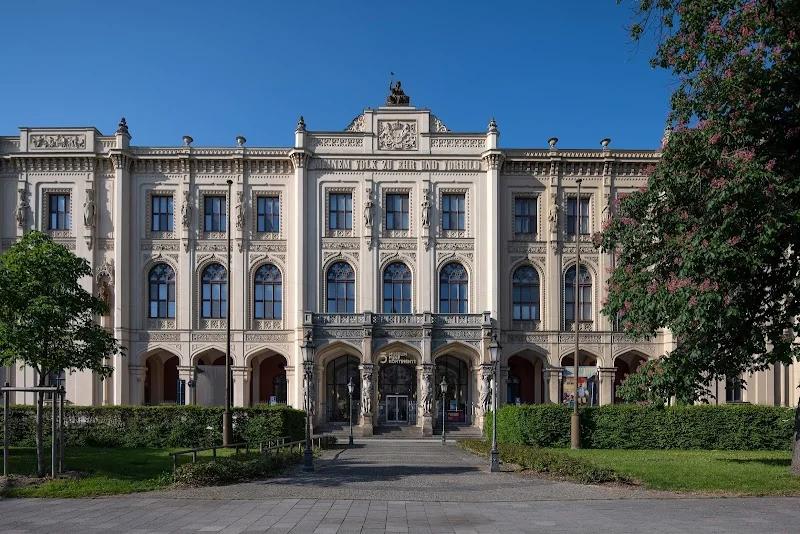
Maximilianstraße 42, München-Altstadt-Lehel
Maximilianstraße 42, 80538 München, Germany
Museum Five Continents | Tickets & Opening Hours
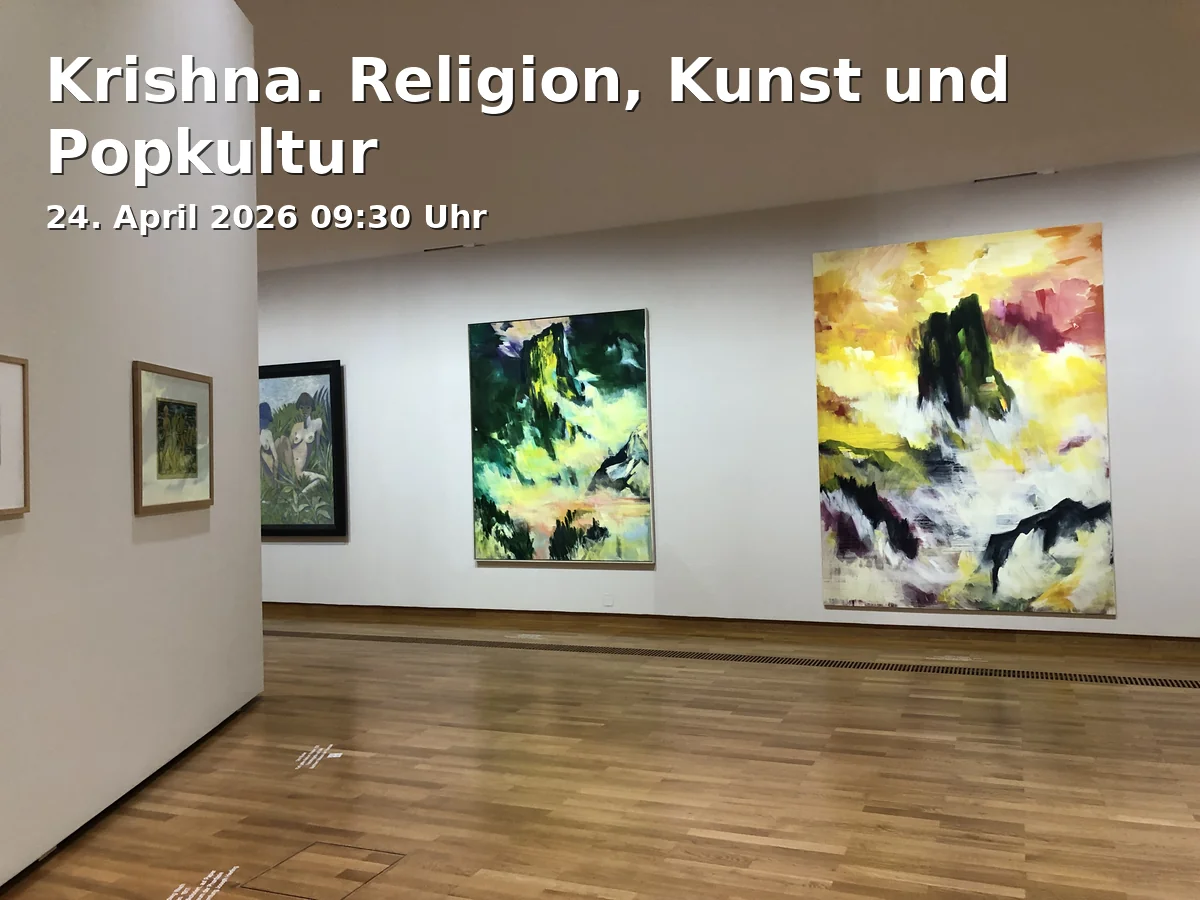
The Museum Five Continents in Munich's Maximilianstraße is a house with a great history, high research depth, and an unusually broad view of the cultural diversity of the world. Those searching for Museum Five Continents Munich, tickets, photos, reviews, or museum five continents will not find a classic event location here, but rather an ethnological museum that has existed since 1862 and has been operating under its current name since September 2014. According to its own statement, it is the first ethnological museum in Germany, and this historical role continues to shape the profile of the house today. The website connects scientific collection, mediation, current special exhibitions, and a wide range of offerings for different target groups. This is particularly evident in the permanent exhibitions on Myanmar, North America, Oceania, Sub-Saharan Africa, Southwest Asia, and North Africa, as well as Central and South America, which together form a very broad geographical and thematic framework. This profile is complemented by changing special exhibitions, such as He Toi Ora. Soulful Art of the Māori and the exhibition Krishna. Religion, Art, and Pop Culture, announced for April 24, 2026. Thus, the museum offers not only a place to look but also a place to understand, compare, and discover. ([museum-fuenf-kontinente.de](https://www.museum-fuenf-kontinente.de/museum/geschichte-des-museums.html))
Tickets and Opening Hours at Museum Five Continents
For visitor planning, tickets and opening hours are one of the most important topics, as the official website makes access deliberately uncomplicated. The museum recommends purchasing tickets online through the ticket shop of the Bavarian State Museums to avoid waiting times. At the same time, tickets are also available at the museum box office, which is practical for spontaneous visits. It is particularly helpful that free tickets for annual pass holders as well as for children and teenagers under 18 can also be booked online, along with discounts and the one-euro Sunday ticket. Those using a discount should bring a valid photo ID in case proof is required at the box office. The prices are clearly structured: for permanent exhibitions, adults pay 5 euros, reduced tickets 4 euros, and 1 euro on Sundays; children, teenagers up to 18 years, and students have free admission. Different rates apply for special exhibitions, with 6 euros for adults and 5 euros reduced. Additionally, there is a combo ticket for visiting the permanent exhibitions and a special exhibition, as well as annual passes for regular visitors. The regular opening hours are Tuesday to Sunday from 9:30 AM to 5:30 PM. On certain holidays, the museum is closed, while it is open on other holidays; there is also a special regulation on the first Wiesn Sunday, when the museum is open from 11 AM to 7 PM. So, those looking for tickets for Museum Five Continents will find a clear, planable, and at the same time flexible visiting structure. ([museum-fuenf-kontinente.de](https://www.museum-fuenf-kontinente.de/services/%C3%B6ffnungszeiten.html))
Directions, Subway, and Accessibility
For access, the Museum Five Continents relies on a central location at Maximilianstraße 42, 80538 Munich, and explicitly recommends using public transportation. This is as convenient for visitors from Munich as it is for guests who want to combine the Altstadt-Lehel area with a cultural tour. The official site lists the nearest stations as U4 and U5 to Lehel, the S-Bahn to Isartor, and tram 17, 19, and 21 to Maxmonument. Thus, the museum is easily accessible from several directions without the need for complicated transfers. For people with mobility impairments, the barrier-free access via Knöbelstraße is particularly important. The museum staff is happy to assist if requested and asks for a short call in advance if needed. The English short description additionally confirms that the house is accessible. For SEO research, this information is relevant because many users search for directions, parking, accessibility, or subway. Although the official directions page does not mention any dedicated parking spaces or a separate parking garage, this makes the recommendation for public transport all the more clear. Those traveling with family, friends, or groups can therefore easily combine the location with a visit to other museums, a walk along Maximilianstraße, or a detour towards the Isar. The museum is thus not only thematically rich but also logistically a very accessible destination in the center of Munich. ([museum-fuenf-kontinente.de](https://www.museum-fuenf-kontinente.de/services/anfahrt.html))
History of the Museum Five Continents in Munich
The history of Museum Five Continents begins long before its current name and is closely linked to the development of ethnological research in Europe. The website describes that the Würzburg doctor and naturalist Philipp Franz von Siebold already proposed an ethnological museum in Munich in 1835, long before the idea was actually realized. The plan was finally realized in 1862 under King Maximilian II, who wanted to strengthen Munich as a center for science and art. As early as 1820, the first ethnological collections had arrived in Munich at the instigation of the House of Wittelsbach, including so-called transatlantic collections from research trips to Brazil, the South Sea, and Russian America. The house was initially housed in the gallery building in the Hofgarten arcades before moving to its current building in Maximilianstraße in 1925 and 1926. This building was originally constructed between 1859 and 1865 by Eduard Riedel for a Bavarian National Museum, which gives the current location additional historical depth. The museum has also been renamed several times: from the Royal Ethnographic Collection to the Royal Ethnographic Museum and the Museum of Ethnology to the State Museum of Ethnology. It has only been called Museum Five Continents since September 2014. The dual role of Lucian Scherman, who was director from 1916 to 1933 and also professor of ethnology at Ludwig Maximilians University, was also particularly influential for scientific work. After his dismissal in 1933, the connection between the museum and university ethnology remained a topic in the history of the house in a changed form. Today, the museum explicitly refers to its over 150-year development, which is closely intertwined with local, national, and international contexts and remains a subject of historical research to this day. ([museum-fuenf-kontinente.de](https://www.museum-fuenf-kontinente.de/museum/geschichte-des-museums.html))
Collections, Permanent Exhibitions, and Special Exhibitions
Those entering the keywords museum five continents exhibitions, north america, oceania, sub-saharan africa, or central and south america into the search will quickly land at the content strengths of the house. The museum describes its total inventory with about 160,000 objects, along with around 135,000 photographs and a scientifically oriented collection that includes not only art and ritual objects but also everyday items, photographic documents, and written materials. The collection of Southwest Asia and North Africa is very extensive with more than 20,000 items and includes pre-Islamic archaeological objects as well as ethnographica from the late 19th and early 20th centuries; a particular focus is on over 1300 carpets and carpet fragments, which are described as unique in Europe. The collection of Central and South America includes more than 30,000 objects and focuses on the Aztecs, Maya, Inca, and the colonial period in Peru, while the collection of North America unites about 5000 objects from the First Nations, Native Americans, Inuit, and Arctic cultures. The collection of Oceania ranges from early holdings from Polynesia, which arrived in Munich between 1821 and 1841 on behalf of King Ludwig I, to contemporary objects. The photographic documentation is also particularly strong, with early images dating back to 1870 and outstanding collections from the Amazon, Burma, India, Ceylon, and East Africa. For visitors, this results in an exhibition situation that is not only geographically wide-ranging but also chronologically spans from historical objects to contemporary art. The website also emphasizes that the museum conducts provenance research and engages with the colonial history of its collections. This makes the house today not a static display depot, but a place where the origin, context, and meaning of objects are continuously re-examined. ([museum-fuenf-kontinente.de](https://www.museum-fuenf-kontinente.de/forschung/die-sammlungen.html?utm_source=openai))
The current and planned exhibitions also show that the museum does not only rely on collections from the past but intentionally incorporates present and contemporary relevance. Currently, the homepage announces the special exhibitions He Toi Ora. Soulful Art of the Māori. In the Footsteps of the Carvings in Museum Five Continents and Krishna. Religion, Art, and Pop Culture. In addition, the site refers to permanent exhibition spaces that specifically highlight themes and regions. This is important for SEO logic because search queries for Museum Five Continents photos or reviews are often associated with the question of what one can actually see there. The answer is: much more than individual showcases. Visitors experience an exhibition practice that ranges from art and everyday culture to religious and ritual objects, as well as photography, manuscripts, and contemporary works. Additionally, the museum also makes its collections accessible online, thus reaching users who want to inform themselves beforehand or connect a visit with deeper research. The thematic range is intentionally broad: from North America to Oceania to Southwest Asia and North Africa, from Sub-Saharan Africa to Central and South America. This global perspective makes the house one of the most interesting museums in Munich for culture enthusiasts, families, school classes, researchers, and travelers seeking an understandable yet demanding access to world cultures. ([museum-fuenf-kontinente.de](https://www.museum-fuenf-kontinente.de/))
Mediaguide, Tours, and Family Programs
In addition to tickets and exhibitions, many visitors are also interested in educational offerings such as mediaguide, tours, and family programs. This is precisely where the Museum Five Continents positions itself very actively. The mediaguide is available as an app for iOS and Android and guides through the house based on 27 selected objects. There are three different tours: a tour through a single exhibition, a highlights tour through the entire museum, and a free tour where additional information can be retrieved by entering numbers. This is particularly helpful for guests who do not just want to walk through rooms but want to better understand the objects in content. The museum also points out that tours are possible upon request and lists foreign language tours, such as in English, on the registration and pricing page. This is a clear advantage for groups, school classes, or international visitors, as topics can not only be seen but also linguistically conveyed. Families benefit from a dedicated program for children and families, and the website describes the theme and family day as a large festival that takes place twice a year. This format is dedicated to a specific region or theme, such as Día de Muertos, Mongolia, Japan, or the New Year and Spring Festival Nouruz. The program includes music and dance, local specialties, lectures, tours, films, and workshops. This makes the museum a lively place that not only informs but also enables encounters. Those searching for museum five continents program, tours, or mediaguide will find a house that cleverly combines digital orientation, personal mediation, and family offerings. ([museum-fuenf-kontinente.de](https://www.museum-fuenf-kontinente.de/veranstaltungen/mediaguide.html?utm_source=openai))
Library, Photography, and Research
For a deep understanding of the museum, the research area is particularly important, as the Museum Five Continents explicitly sees itself as a scientific institution. The library is accessible as a public reference library and provides over 100,000 volumes of ethnological literature. In addition, there are 120 periodicals as well as an online and a card catalog that facilitates research in literature before and after 1999. The opening hours of the library are clearly regulated, so that students, researchers, or general interested parties can use it well. Particularly for those searching for museum five continents history, photos, or collections, the photography collection is a central treasure: it includes about 135,000 image documents in the form of glass plates, paper prints, slides, and photo albums. The earliest images date back to 1870, and the collection is continuously expanded. A first selection is already searchable via an online database, which facilitates digital access. The museum also conducts provenance research and collaborations to explore the origin and history of objects more precisely and to place them in current debates. This work is also visible to the public, for example, in events and special exhibitions that address colonial contexts, historical collection paths, and contemporary references. The scientific side of the house is thus not background noise but a central part of its identity. Therefore, when visiting the museum, one encounters not only beautiful or rare objects but also an institution that critically questions, documents, and develops itself further. This is precisely what makes the combination of research, mediation, collection, and exhibition so strong and so permanently relevant. ([museum-fuenf-kontinente.de](https://www.museum-fuenf-kontinente.de/museum/bibliothek.html?utm_source=openai))
In summary, the Museum Five Continents in Munich is a destination for all who want to not only see cultural diversity but also understand it. The central location on Maximilianstraße, the clear opening hours, the well-calculable admission prices, and the connection to public transport make the visit uncomplicated. Thematically, the house impresses with an extraordinarily broad collection that ranges from America to Africa and Asia to Oceania, and with educational work that addresses very different target groups from the mediaguide to the family day. The historical depth of the museum, founded in 1862, is now intertwined with current questions about origin, colonial history, photography, research, and contemporary art. That is why the Museum Five Continents is a strong destination for search queries related to tickets, opening hours, directions, photos, reviews, and exhibitions. It is a museum that culturally expands Munich while simultaneously opening a global horizon. ([museum-fuenf-kontinente.de](https://www.museum-fuenf-kontinente.de/museum/geschichte-des-museums.html))
Sources:
- Museum Five Continents - Official Website ([museum-fuenf-kontinente.de](https://www.museum-fuenf-kontinente.de/))
- Museum Five Continents - Opening Hours & Tickets ([museum-fuenf-kontinente.de](https://www.museum-fuenf-kontinente.de/services/%C3%B6ffnungszeiten.html))
- Museum Five Continents - Directions ([museum-fuenf-kontinente.de](https://www.museum-fuenf-kontinente.de/services/anfahrt.html))
- Museum Five Continents - History of the Museum ([museum-fuenf-kontinente.de](https://www.museum-fuenf-kontinente.de/museum/geschichte-des-museums.html))
- Museum Five Continents - The Collections ([museum-fuenf-kontinente.de](https://www.museum-fuenf-kontinente.de/forschung/die-sammlungen.html?utm_source=openai))
- Museum Five Continents - Photography Collection ([museum-fuenf-kontinente.de](https://www.museum-fuenf-kontinente.de/forschung/sammlung-fotografie.html?utm_source=openai))
Show moreShow less
Museum Five Continents | Tickets & Opening Hours
The Museum Five Continents in Munich's Maximilianstraße is a house with a great history, high research depth, and an unusually broad view of the cultural diversity of the world. Those searching for Museum Five Continents Munich, tickets, photos, reviews, or museum five continents will not find a classic event location here, but rather an ethnological museum that has existed since 1862 and has been operating under its current name since September 2014. According to its own statement, it is the first ethnological museum in Germany, and this historical role continues to shape the profile of the house today. The website connects scientific collection, mediation, current special exhibitions, and a wide range of offerings for different target groups. This is particularly evident in the permanent exhibitions on Myanmar, North America, Oceania, Sub-Saharan Africa, Southwest Asia, and North Africa, as well as Central and South America, which together form a very broad geographical and thematic framework. This profile is complemented by changing special exhibitions, such as He Toi Ora. Soulful Art of the Māori and the exhibition Krishna. Religion, Art, and Pop Culture, announced for April 24, 2026. Thus, the museum offers not only a place to look but also a place to understand, compare, and discover. ([museum-fuenf-kontinente.de](https://www.museum-fuenf-kontinente.de/museum/geschichte-des-museums.html))
Tickets and Opening Hours at Museum Five Continents
For visitor planning, tickets and opening hours are one of the most important topics, as the official website makes access deliberately uncomplicated. The museum recommends purchasing tickets online through the ticket shop of the Bavarian State Museums to avoid waiting times. At the same time, tickets are also available at the museum box office, which is practical for spontaneous visits. It is particularly helpful that free tickets for annual pass holders as well as for children and teenagers under 18 can also be booked online, along with discounts and the one-euro Sunday ticket. Those using a discount should bring a valid photo ID in case proof is required at the box office. The prices are clearly structured: for permanent exhibitions, adults pay 5 euros, reduced tickets 4 euros, and 1 euro on Sundays; children, teenagers up to 18 years, and students have free admission. Different rates apply for special exhibitions, with 6 euros for adults and 5 euros reduced. Additionally, there is a combo ticket for visiting the permanent exhibitions and a special exhibition, as well as annual passes for regular visitors. The regular opening hours are Tuesday to Sunday from 9:30 AM to 5:30 PM. On certain holidays, the museum is closed, while it is open on other holidays; there is also a special regulation on the first Wiesn Sunday, when the museum is open from 11 AM to 7 PM. So, those looking for tickets for Museum Five Continents will find a clear, planable, and at the same time flexible visiting structure. ([museum-fuenf-kontinente.de](https://www.museum-fuenf-kontinente.de/services/%C3%B6ffnungszeiten.html))
Directions, Subway, and Accessibility
For access, the Museum Five Continents relies on a central location at Maximilianstraße 42, 80538 Munich, and explicitly recommends using public transportation. This is as convenient for visitors from Munich as it is for guests who want to combine the Altstadt-Lehel area with a cultural tour. The official site lists the nearest stations as U4 and U5 to Lehel, the S-Bahn to Isartor, and tram 17, 19, and 21 to Maxmonument. Thus, the museum is easily accessible from several directions without the need for complicated transfers. For people with mobility impairments, the barrier-free access via Knöbelstraße is particularly important. The museum staff is happy to assist if requested and asks for a short call in advance if needed. The English short description additionally confirms that the house is accessible. For SEO research, this information is relevant because many users search for directions, parking, accessibility, or subway. Although the official directions page does not mention any dedicated parking spaces or a separate parking garage, this makes the recommendation for public transport all the more clear. Those traveling with family, friends, or groups can therefore easily combine the location with a visit to other museums, a walk along Maximilianstraße, or a detour towards the Isar. The museum is thus not only thematically rich but also logistically a very accessible destination in the center of Munich. ([museum-fuenf-kontinente.de](https://www.museum-fuenf-kontinente.de/services/anfahrt.html))
History of the Museum Five Continents in Munich
The history of Museum Five Continents begins long before its current name and is closely linked to the development of ethnological research in Europe. The website describes that the Würzburg doctor and naturalist Philipp Franz von Siebold already proposed an ethnological museum in Munich in 1835, long before the idea was actually realized. The plan was finally realized in 1862 under King Maximilian II, who wanted to strengthen Munich as a center for science and art. As early as 1820, the first ethnological collections had arrived in Munich at the instigation of the House of Wittelsbach, including so-called transatlantic collections from research trips to Brazil, the South Sea, and Russian America. The house was initially housed in the gallery building in the Hofgarten arcades before moving to its current building in Maximilianstraße in 1925 and 1926. This building was originally constructed between 1859 and 1865 by Eduard Riedel for a Bavarian National Museum, which gives the current location additional historical depth. The museum has also been renamed several times: from the Royal Ethnographic Collection to the Royal Ethnographic Museum and the Museum of Ethnology to the State Museum of Ethnology. It has only been called Museum Five Continents since September 2014. The dual role of Lucian Scherman, who was director from 1916 to 1933 and also professor of ethnology at Ludwig Maximilians University, was also particularly influential for scientific work. After his dismissal in 1933, the connection between the museum and university ethnology remained a topic in the history of the house in a changed form. Today, the museum explicitly refers to its over 150-year development, which is closely intertwined with local, national, and international contexts and remains a subject of historical research to this day. ([museum-fuenf-kontinente.de](https://www.museum-fuenf-kontinente.de/museum/geschichte-des-museums.html))
Collections, Permanent Exhibitions, and Special Exhibitions
Those entering the keywords museum five continents exhibitions, north america, oceania, sub-saharan africa, or central and south america into the search will quickly land at the content strengths of the house. The museum describes its total inventory with about 160,000 objects, along with around 135,000 photographs and a scientifically oriented collection that includes not only art and ritual objects but also everyday items, photographic documents, and written materials. The collection of Southwest Asia and North Africa is very extensive with more than 20,000 items and includes pre-Islamic archaeological objects as well as ethnographica from the late 19th and early 20th centuries; a particular focus is on over 1300 carpets and carpet fragments, which are described as unique in Europe. The collection of Central and South America includes more than 30,000 objects and focuses on the Aztecs, Maya, Inca, and the colonial period in Peru, while the collection of North America unites about 5000 objects from the First Nations, Native Americans, Inuit, and Arctic cultures. The collection of Oceania ranges from early holdings from Polynesia, which arrived in Munich between 1821 and 1841 on behalf of King Ludwig I, to contemporary objects. The photographic documentation is also particularly strong, with early images dating back to 1870 and outstanding collections from the Amazon, Burma, India, Ceylon, and East Africa. For visitors, this results in an exhibition situation that is not only geographically wide-ranging but also chronologically spans from historical objects to contemporary art. The website also emphasizes that the museum conducts provenance research and engages with the colonial history of its collections. This makes the house today not a static display depot, but a place where the origin, context, and meaning of objects are continuously re-examined. ([museum-fuenf-kontinente.de](https://www.museum-fuenf-kontinente.de/forschung/die-sammlungen.html?utm_source=openai))
The current and planned exhibitions also show that the museum does not only rely on collections from the past but intentionally incorporates present and contemporary relevance. Currently, the homepage announces the special exhibitions He Toi Ora. Soulful Art of the Māori. In the Footsteps of the Carvings in Museum Five Continents and Krishna. Religion, Art, and Pop Culture. In addition, the site refers to permanent exhibition spaces that specifically highlight themes and regions. This is important for SEO logic because search queries for Museum Five Continents photos or reviews are often associated with the question of what one can actually see there. The answer is: much more than individual showcases. Visitors experience an exhibition practice that ranges from art and everyday culture to religious and ritual objects, as well as photography, manuscripts, and contemporary works. Additionally, the museum also makes its collections accessible online, thus reaching users who want to inform themselves beforehand or connect a visit with deeper research. The thematic range is intentionally broad: from North America to Oceania to Southwest Asia and North Africa, from Sub-Saharan Africa to Central and South America. This global perspective makes the house one of the most interesting museums in Munich for culture enthusiasts, families, school classes, researchers, and travelers seeking an understandable yet demanding access to world cultures. ([museum-fuenf-kontinente.de](https://www.museum-fuenf-kontinente.de/))
Mediaguide, Tours, and Family Programs
In addition to tickets and exhibitions, many visitors are also interested in educational offerings such as mediaguide, tours, and family programs. This is precisely where the Museum Five Continents positions itself very actively. The mediaguide is available as an app for iOS and Android and guides through the house based on 27 selected objects. There are three different tours: a tour through a single exhibition, a highlights tour through the entire museum, and a free tour where additional information can be retrieved by entering numbers. This is particularly helpful for guests who do not just want to walk through rooms but want to better understand the objects in content. The museum also points out that tours are possible upon request and lists foreign language tours, such as in English, on the registration and pricing page. This is a clear advantage for groups, school classes, or international visitors, as topics can not only be seen but also linguistically conveyed. Families benefit from a dedicated program for children and families, and the website describes the theme and family day as a large festival that takes place twice a year. This format is dedicated to a specific region or theme, such as Día de Muertos, Mongolia, Japan, or the New Year and Spring Festival Nouruz. The program includes music and dance, local specialties, lectures, tours, films, and workshops. This makes the museum a lively place that not only informs but also enables encounters. Those searching for museum five continents program, tours, or mediaguide will find a house that cleverly combines digital orientation, personal mediation, and family offerings. ([museum-fuenf-kontinente.de](https://www.museum-fuenf-kontinente.de/veranstaltungen/mediaguide.html?utm_source=openai))
Library, Photography, and Research
For a deep understanding of the museum, the research area is particularly important, as the Museum Five Continents explicitly sees itself as a scientific institution. The library is accessible as a public reference library and provides over 100,000 volumes of ethnological literature. In addition, there are 120 periodicals as well as an online and a card catalog that facilitates research in literature before and after 1999. The opening hours of the library are clearly regulated, so that students, researchers, or general interested parties can use it well. Particularly for those searching for museum five continents history, photos, or collections, the photography collection is a central treasure: it includes about 135,000 image documents in the form of glass plates, paper prints, slides, and photo albums. The earliest images date back to 1870, and the collection is continuously expanded. A first selection is already searchable via an online database, which facilitates digital access. The museum also conducts provenance research and collaborations to explore the origin and history of objects more precisely and to place them in current debates. This work is also visible to the public, for example, in events and special exhibitions that address colonial contexts, historical collection paths, and contemporary references. The scientific side of the house is thus not background noise but a central part of its identity. Therefore, when visiting the museum, one encounters not only beautiful or rare objects but also an institution that critically questions, documents, and develops itself further. This is precisely what makes the combination of research, mediation, collection, and exhibition so strong and so permanently relevant. ([museum-fuenf-kontinente.de](https://www.museum-fuenf-kontinente.de/museum/bibliothek.html?utm_source=openai))
In summary, the Museum Five Continents in Munich is a destination for all who want to not only see cultural diversity but also understand it. The central location on Maximilianstraße, the clear opening hours, the well-calculable admission prices, and the connection to public transport make the visit uncomplicated. Thematically, the house impresses with an extraordinarily broad collection that ranges from America to Africa and Asia to Oceania, and with educational work that addresses very different target groups from the mediaguide to the family day. The historical depth of the museum, founded in 1862, is now intertwined with current questions about origin, colonial history, photography, research, and contemporary art. That is why the Museum Five Continents is a strong destination for search queries related to tickets, opening hours, directions, photos, reviews, and exhibitions. It is a museum that culturally expands Munich while simultaneously opening a global horizon. ([museum-fuenf-kontinente.de](https://www.museum-fuenf-kontinente.de/museum/geschichte-des-museums.html))
Sources:
- Museum Five Continents - Official Website ([museum-fuenf-kontinente.de](https://www.museum-fuenf-kontinente.de/))
- Museum Five Continents - Opening Hours & Tickets ([museum-fuenf-kontinente.de](https://www.museum-fuenf-kontinente.de/services/%C3%B6ffnungszeiten.html))
- Museum Five Continents - Directions ([museum-fuenf-kontinente.de](https://www.museum-fuenf-kontinente.de/services/anfahrt.html))
- Museum Five Continents - History of the Museum ([museum-fuenf-kontinente.de](https://www.museum-fuenf-kontinente.de/museum/geschichte-des-museums.html))
- Museum Five Continents - The Collections ([museum-fuenf-kontinente.de](https://www.museum-fuenf-kontinente.de/forschung/die-sammlungen.html?utm_source=openai))
- Museum Five Continents - Photography Collection ([museum-fuenf-kontinente.de](https://www.museum-fuenf-kontinente.de/forschung/sammlung-fotografie.html?utm_source=openai))
Museum Five Continents | Tickets & Opening Hours
The Museum Five Continents in Munich's Maximilianstraße is a house with a great history, high research depth, and an unusually broad view of the cultural diversity of the world. Those searching for Museum Five Continents Munich, tickets, photos, reviews, or museum five continents will not find a classic event location here, but rather an ethnological museum that has existed since 1862 and has been operating under its current name since September 2014. According to its own statement, it is the first ethnological museum in Germany, and this historical role continues to shape the profile of the house today. The website connects scientific collection, mediation, current special exhibitions, and a wide range of offerings for different target groups. This is particularly evident in the permanent exhibitions on Myanmar, North America, Oceania, Sub-Saharan Africa, Southwest Asia, and North Africa, as well as Central and South America, which together form a very broad geographical and thematic framework. This profile is complemented by changing special exhibitions, such as He Toi Ora. Soulful Art of the Māori and the exhibition Krishna. Religion, Art, and Pop Culture, announced for April 24, 2026. Thus, the museum offers not only a place to look but also a place to understand, compare, and discover. ([museum-fuenf-kontinente.de](https://www.museum-fuenf-kontinente.de/museum/geschichte-des-museums.html))
Tickets and Opening Hours at Museum Five Continents
For visitor planning, tickets and opening hours are one of the most important topics, as the official website makes access deliberately uncomplicated. The museum recommends purchasing tickets online through the ticket shop of the Bavarian State Museums to avoid waiting times. At the same time, tickets are also available at the museum box office, which is practical for spontaneous visits. It is particularly helpful that free tickets for annual pass holders as well as for children and teenagers under 18 can also be booked online, along with discounts and the one-euro Sunday ticket. Those using a discount should bring a valid photo ID in case proof is required at the box office. The prices are clearly structured: for permanent exhibitions, adults pay 5 euros, reduced tickets 4 euros, and 1 euro on Sundays; children, teenagers up to 18 years, and students have free admission. Different rates apply for special exhibitions, with 6 euros for adults and 5 euros reduced. Additionally, there is a combo ticket for visiting the permanent exhibitions and a special exhibition, as well as annual passes for regular visitors. The regular opening hours are Tuesday to Sunday from 9:30 AM to 5:30 PM. On certain holidays, the museum is closed, while it is open on other holidays; there is also a special regulation on the first Wiesn Sunday, when the museum is open from 11 AM to 7 PM. So, those looking for tickets for Museum Five Continents will find a clear, planable, and at the same time flexible visiting structure. ([museum-fuenf-kontinente.de](https://www.museum-fuenf-kontinente.de/services/%C3%B6ffnungszeiten.html))
Directions, Subway, and Accessibility
For access, the Museum Five Continents relies on a central location at Maximilianstraße 42, 80538 Munich, and explicitly recommends using public transportation. This is as convenient for visitors from Munich as it is for guests who want to combine the Altstadt-Lehel area with a cultural tour. The official site lists the nearest stations as U4 and U5 to Lehel, the S-Bahn to Isartor, and tram 17, 19, and 21 to Maxmonument. Thus, the museum is easily accessible from several directions without the need for complicated transfers. For people with mobility impairments, the barrier-free access via Knöbelstraße is particularly important. The museum staff is happy to assist if requested and asks for a short call in advance if needed. The English short description additionally confirms that the house is accessible. For SEO research, this information is relevant because many users search for directions, parking, accessibility, or subway. Although the official directions page does not mention any dedicated parking spaces or a separate parking garage, this makes the recommendation for public transport all the more clear. Those traveling with family, friends, or groups can therefore easily combine the location with a visit to other museums, a walk along Maximilianstraße, or a detour towards the Isar. The museum is thus not only thematically rich but also logistically a very accessible destination in the center of Munich. ([museum-fuenf-kontinente.de](https://www.museum-fuenf-kontinente.de/services/anfahrt.html))
History of the Museum Five Continents in Munich
The history of Museum Five Continents begins long before its current name and is closely linked to the development of ethnological research in Europe. The website describes that the Würzburg doctor and naturalist Philipp Franz von Siebold already proposed an ethnological museum in Munich in 1835, long before the idea was actually realized. The plan was finally realized in 1862 under King Maximilian II, who wanted to strengthen Munich as a center for science and art. As early as 1820, the first ethnological collections had arrived in Munich at the instigation of the House of Wittelsbach, including so-called transatlantic collections from research trips to Brazil, the South Sea, and Russian America. The house was initially housed in the gallery building in the Hofgarten arcades before moving to its current building in Maximilianstraße in 1925 and 1926. This building was originally constructed between 1859 and 1865 by Eduard Riedel for a Bavarian National Museum, which gives the current location additional historical depth. The museum has also been renamed several times: from the Royal Ethnographic Collection to the Royal Ethnographic Museum and the Museum of Ethnology to the State Museum of Ethnology. It has only been called Museum Five Continents since September 2014. The dual role of Lucian Scherman, who was director from 1916 to 1933 and also professor of ethnology at Ludwig Maximilians University, was also particularly influential for scientific work. After his dismissal in 1933, the connection between the museum and university ethnology remained a topic in the history of the house in a changed form. Today, the museum explicitly refers to its over 150-year development, which is closely intertwined with local, national, and international contexts and remains a subject of historical research to this day. ([museum-fuenf-kontinente.de](https://www.museum-fuenf-kontinente.de/museum/geschichte-des-museums.html))
Collections, Permanent Exhibitions, and Special Exhibitions
Those entering the keywords museum five continents exhibitions, north america, oceania, sub-saharan africa, or central and south america into the search will quickly land at the content strengths of the house. The museum describes its total inventory with about 160,000 objects, along with around 135,000 photographs and a scientifically oriented collection that includes not only art and ritual objects but also everyday items, photographic documents, and written materials. The collection of Southwest Asia and North Africa is very extensive with more than 20,000 items and includes pre-Islamic archaeological objects as well as ethnographica from the late 19th and early 20th centuries; a particular focus is on over 1300 carpets and carpet fragments, which are described as unique in Europe. The collection of Central and South America includes more than 30,000 objects and focuses on the Aztecs, Maya, Inca, and the colonial period in Peru, while the collection of North America unites about 5000 objects from the First Nations, Native Americans, Inuit, and Arctic cultures. The collection of Oceania ranges from early holdings from Polynesia, which arrived in Munich between 1821 and 1841 on behalf of King Ludwig I, to contemporary objects. The photographic documentation is also particularly strong, with early images dating back to 1870 and outstanding collections from the Amazon, Burma, India, Ceylon, and East Africa. For visitors, this results in an exhibition situation that is not only geographically wide-ranging but also chronologically spans from historical objects to contemporary art. The website also emphasizes that the museum conducts provenance research and engages with the colonial history of its collections. This makes the house today not a static display depot, but a place where the origin, context, and meaning of objects are continuously re-examined. ([museum-fuenf-kontinente.de](https://www.museum-fuenf-kontinente.de/forschung/die-sammlungen.html?utm_source=openai))
The current and planned exhibitions also show that the museum does not only rely on collections from the past but intentionally incorporates present and contemporary relevance. Currently, the homepage announces the special exhibitions He Toi Ora. Soulful Art of the Māori. In the Footsteps of the Carvings in Museum Five Continents and Krishna. Religion, Art, and Pop Culture. In addition, the site refers to permanent exhibition spaces that specifically highlight themes and regions. This is important for SEO logic because search queries for Museum Five Continents photos or reviews are often associated with the question of what one can actually see there. The answer is: much more than individual showcases. Visitors experience an exhibition practice that ranges from art and everyday culture to religious and ritual objects, as well as photography, manuscripts, and contemporary works. Additionally, the museum also makes its collections accessible online, thus reaching users who want to inform themselves beforehand or connect a visit with deeper research. The thematic range is intentionally broad: from North America to Oceania to Southwest Asia and North Africa, from Sub-Saharan Africa to Central and South America. This global perspective makes the house one of the most interesting museums in Munich for culture enthusiasts, families, school classes, researchers, and travelers seeking an understandable yet demanding access to world cultures. ([museum-fuenf-kontinente.de](https://www.museum-fuenf-kontinente.de/))
Mediaguide, Tours, and Family Programs
In addition to tickets and exhibitions, many visitors are also interested in educational offerings such as mediaguide, tours, and family programs. This is precisely where the Museum Five Continents positions itself very actively. The mediaguide is available as an app for iOS and Android and guides through the house based on 27 selected objects. There are three different tours: a tour through a single exhibition, a highlights tour through the entire museum, and a free tour where additional information can be retrieved by entering numbers. This is particularly helpful for guests who do not just want to walk through rooms but want to better understand the objects in content. The museum also points out that tours are possible upon request and lists foreign language tours, such as in English, on the registration and pricing page. This is a clear advantage for groups, school classes, or international visitors, as topics can not only be seen but also linguistically conveyed. Families benefit from a dedicated program for children and families, and the website describes the theme and family day as a large festival that takes place twice a year. This format is dedicated to a specific region or theme, such as Día de Muertos, Mongolia, Japan, or the New Year and Spring Festival Nouruz. The program includes music and dance, local specialties, lectures, tours, films, and workshops. This makes the museum a lively place that not only informs but also enables encounters. Those searching for museum five continents program, tours, or mediaguide will find a house that cleverly combines digital orientation, personal mediation, and family offerings. ([museum-fuenf-kontinente.de](https://www.museum-fuenf-kontinente.de/veranstaltungen/mediaguide.html?utm_source=openai))
Library, Photography, and Research
For a deep understanding of the museum, the research area is particularly important, as the Museum Five Continents explicitly sees itself as a scientific institution. The library is accessible as a public reference library and provides over 100,000 volumes of ethnological literature. In addition, there are 120 periodicals as well as an online and a card catalog that facilitates research in literature before and after 1999. The opening hours of the library are clearly regulated, so that students, researchers, or general interested parties can use it well. Particularly for those searching for museum five continents history, photos, or collections, the photography collection is a central treasure: it includes about 135,000 image documents in the form of glass plates, paper prints, slides, and photo albums. The earliest images date back to 1870, and the collection is continuously expanded. A first selection is already searchable via an online database, which facilitates digital access. The museum also conducts provenance research and collaborations to explore the origin and history of objects more precisely and to place them in current debates. This work is also visible to the public, for example, in events and special exhibitions that address colonial contexts, historical collection paths, and contemporary references. The scientific side of the house is thus not background noise but a central part of its identity. Therefore, when visiting the museum, one encounters not only beautiful or rare objects but also an institution that critically questions, documents, and develops itself further. This is precisely what makes the combination of research, mediation, collection, and exhibition so strong and so permanently relevant. ([museum-fuenf-kontinente.de](https://www.museum-fuenf-kontinente.de/museum/bibliothek.html?utm_source=openai))
In summary, the Museum Five Continents in Munich is a destination for all who want to not only see cultural diversity but also understand it. The central location on Maximilianstraße, the clear opening hours, the well-calculable admission prices, and the connection to public transport make the visit uncomplicated. Thematically, the house impresses with an extraordinarily broad collection that ranges from America to Africa and Asia to Oceania, and with educational work that addresses very different target groups from the mediaguide to the family day. The historical depth of the museum, founded in 1862, is now intertwined with current questions about origin, colonial history, photography, research, and contemporary art. That is why the Museum Five Continents is a strong destination for search queries related to tickets, opening hours, directions, photos, reviews, and exhibitions. It is a museum that culturally expands Munich while simultaneously opening a global horizon. ([museum-fuenf-kontinente.de](https://www.museum-fuenf-kontinente.de/museum/geschichte-des-museums.html))
Sources:
- Museum Five Continents - Official Website ([museum-fuenf-kontinente.de](https://www.museum-fuenf-kontinente.de/))
- Museum Five Continents - Opening Hours & Tickets ([museum-fuenf-kontinente.de](https://www.museum-fuenf-kontinente.de/services/%C3%B6ffnungszeiten.html))
- Museum Five Continents - Directions ([museum-fuenf-kontinente.de](https://www.museum-fuenf-kontinente.de/services/anfahrt.html))
- Museum Five Continents - History of the Museum ([museum-fuenf-kontinente.de](https://www.museum-fuenf-kontinente.de/museum/geschichte-des-museums.html))
- Museum Five Continents - The Collections ([museum-fuenf-kontinente.de](https://www.museum-fuenf-kontinente.de/forschung/die-sammlungen.html?utm_source=openai))
- Museum Five Continents - Photography Collection ([museum-fuenf-kontinente.de](https://www.museum-fuenf-kontinente.de/forschung/sammlung-fotografie.html?utm_source=openai))
Frequently Asked Questions
Reviews
Krishna Char
18. January 2026
A really well designed museum. I found the Punjab/Nuruistan sections very interesting. I did get overwhelmed with the amount of artifacts (in the Pacific islands section for example) but they have done an amazing job. The best part was the temporary exhibition on Hiroshima & Nagasaki which was very eye-opening & raw.
Mary-Lynne Stepan
21. October 2025
Used city pass was great. Good displays from the Orient, Africa, Miramar, Polynesia, etc. The North American area could be organized a bit more so that the Coastal, Inuit, Plains tribes or areas were grouped together not so mixed. Great artifacts of the North American tribes. Bathrooms here were nice and not busy! Thanks from Canada 🇨🇦
Sylvia Gkerzeli
7. December 2025
My absolutely favourite museum!!! Excellent!! You have to visit!! And the good thing is, that it's very affordable and visitable for more than one time!!!
Timothy Noakes
5. November 2025
The museum itself is very interesting and worth a visit. Plenty of artifacts to see. One drawback: The male staff member at the front desk is quite unfriendly and not very forthcoming. I understand German standards of politeness differ, but how hard is it for customer service staff to DO THEIR JOB and be welcoming and helpful? Leaves a poor impression on international visitors.
ULAS UZER
22. December 2025
We are delighted to welcome you to the Museum of Five Continents. You will find a diverse collection of artifacts and artworks from across the globe. We encourage you to explore the rich history and cultural significance of each exhibit. Our staff is available to assist you with any questions you may have during your visit. We hope you have an enriching and memorable experience here.