
München
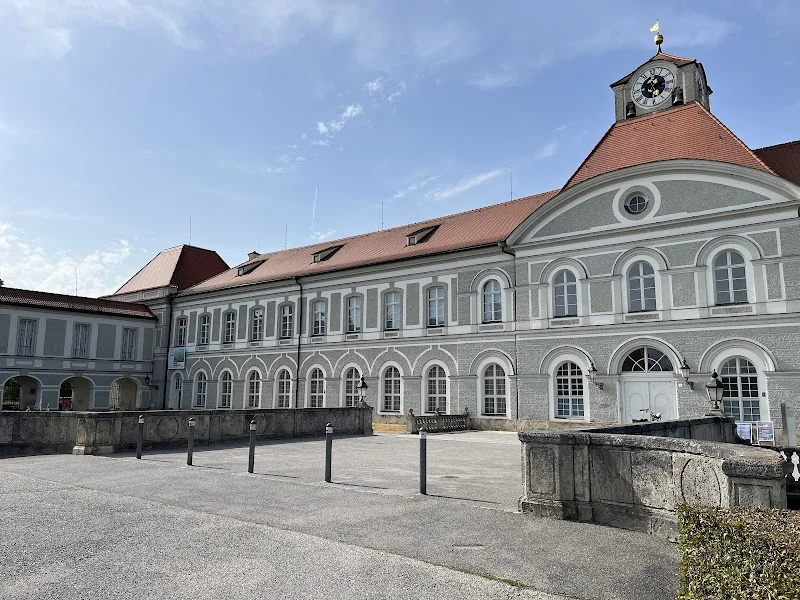
Schloß Nymphenburg, 80638 München, Deutschland
Museum Human and Nature | Opening Hours & Admission Prices
The Museum Human and Nature in Nymphenburg Palace has been a special place in Munich for years for all those who want to understand nature, not just look at it. The house was opened in 1990 as the central exhibition forum of the Bavarian State Collections of Natural Sciences and presents scientific content from biological and geosciences as well as life sciences in a form that remains accessible without prior knowledge. With its interactive, educationally structured exhibitions, impressive dioramas, and authentic natural objects, it ranks among the most visited natural history museums in Germany, with around 200,000 visitors per year. This combination of knowledge transfer, experience, and family-friendliness makes the house in the western part of the city so relevant for a day trip, a school trip, or a spontaneous museum visit in between. ([mmn-muenchen.snsb.de](https://mmn-muenchen.snsb.de/ueber-uns/))
Opening Hours, Admission Prices, and Tickets for the Museum Human and Nature
The current visitor planning is clearly structured and thus very pleasant for all those who want to time their Munich museum visit well. From Tuesday to Friday, the museum is open from 9 am to 5 pm, and on Saturdays, Sundays, and public holidays from 10 am to 6 pm. It is important to note that entry ends 30 minutes before the museum closes, so visits should not be left to the last minute. The house is closed on December 24 and 25, December 31, and January 1. On other public holidays, including Easter Monday and Whit Monday, the museum is open. Those who plan in advance can reliably combine their visit with a walk through Nymphenburg Palace or a café visit. ([mmn-muenchen.snsb.de](https://mmn-muenchen.snsb.de/oeffnungszeiten-tickets/))
When purchasing tickets, the museum relies on a simple solution: tickets are available at the box office, but purchasing through MünchenTicket is recommended because a fixed entry time is booked there. This is particularly practical on weekends and during holiday periods, as travel and starting at the museum can be better planned. The admission prices remain pleasantly low: for the permanent exhibition, adults pay 3.50 euros, reduced 2.50 euros, and on Sundays 1.00 euro. Children and teenagers under 18 have free admission. Additionally important for on-site organization: card payments are not possible in the museum. School classes, kindergartens, and larger groups of 20 or more should register directly via the booking phone to ensure a smooth visit. ([mmn-muenchen.snsb.de](https://mmn-muenchen.snsb.de/oeffnungszeiten-tickets/))
Directions, Parking, and Address in Nymphenburg Palace
The museum is located at an address that is easy to remember: Nymphenburg Palace, 80638 Munich. This location is already a strong argument, as the paths around the palace are scenically appealing and well developed. The museum can be reached by public transport via tram 17 and bus lines 51 and 151 to the Nymphenburg Palace stop. This makes the house comfortably accessible even without a car, which is particularly practical for families, school groups, and visitors from downtown Munich. Those coming from another district can easily connect their museum visit with public transport and do not have to rely on road traffic around the palace. ([mmn-muenchen.snsb.de](https://mmn-muenchen.snsb.de/besucherinfos/))
For those arriving by car, there are also clear instructions: Drive as if heading to the main portal of Nymphenburg Palace and then via the Northern Access Avenue to the northern palace rondel; there are parking spaces for cars there. Tour buses are directed via the Southern Access Avenue to the southern palace rondel, where the bus parking is located. This separation is extremely helpful for groups, as delivery, disembarking, and parking can occur in an orderly manner. This location also fits very well with the museum's profile, as the house is located in the Nymphenburg Palace complex, one of Munich's most famous cultural-historical addresses. Those who come here experience not just an exhibition but a complete place with historical ambiance and its own character. ([mmn-muenchen.snsb.de](https://mmn-muenchen.snsb.de/anfahrt/))
Exhibitions, Special Exhibitions, and BIOTOPIA Lab
The heart of the museum is the permanent exhibition, which covers different areas of biological and geosciences as well as life sciences in nine departments. The website displays several themes, including Unresting Planet Earth with volcanism, earthquakes, and continental drift, Colorful World of Minerals with quartz and gemstones, and History of Life, which vividly illustrates the development of life and early humans. Additional topics include Happy to Eat, Bon Appétit, Nerves and Brain, JJ1 – aka Bruno, and Playful Natural History ... not just for children. Thus, the museum is much more than a classic showcase; it works with a diversity of content that connects natural history, human history, nutrition, brain research, and animal life. ([mmn-muenchen.snsb.de](https://mmn-muenchen.snsb.de/ausstellungen/))
Particularly relevant for inquiries about special exhibitions is the fact that the museum regularly shows changing special exhibitions, thereby creating new reasons for a visit. Currently, several projects are listed on the official page, including NOW IT'S GOING ROUND – Cycles instead of Waste, Future Lab Natural History Museum Bavaria, and Molassic Park. Molassic Park is dedicated to Bavaria's great apes, ancient elephants, and subtropical forests, showing that the museum can also convey paleontological topics very vividly. Additionally, there is the photo competition Nature in Focus, whose best images are presented in the museum and which targets children and teenagers aged 7 to 18. This competition has been held annually since 2007, making the museum a visible place for young nature photography. ([mmn-muenchen.snsb.de](https://mmn-muenchen.snsb.de/))
Another important feature is the BIOTOPIA Lab. It is understood as a dynamic experimental and exhibition space at the intersection of science, art, design, and the public, offering workshops, raised beds, an experimental workshop, changing mystery objects, and pop-up exhibitions. This is exciting for visitors because a preview of the future museum project is already taking shape here. The museum can also be explored from home, for example, through virtual tours, growing crystals, or crafting mineral shapes. For SEO-relevant search terms like exhibition, special exhibition, and photo exhibition, the house is particularly well positioned because it not only shows stationary content but also offers a constantly evolving experience and educational program. ([mmn-muenchen.snsb.de](https://mmn-muenchen.snsb.de/biotopia-digital/))
CaféBar Limulus, Children's Birthdays, and Family Offers
For those needing a break after the tour, the CaféBar Limulus offers a very suitable option right at the museum. Since March 2020, the café has been offering coffee specialties, homemade cakes, fresh snacks, and warm dishes. There is also a special offer for young guests, and in warm weather, food and drinks are additionally served in the back garden. This is not only practical but makes the museum visit significantly more relaxed, as one does not have to search for external gastronomy before or after the exhibition. Particularly pleasant is that the CaféBar also shows changing art exhibitions and offers joint events with the Museum Human and Nature. This makes the café area itself a small cultural venue within the museum context. ([mmn-muenchen.snsb.de](https://mmn-muenchen.snsb.de/museumscafe/))
For families and children's birthdays, this is also attractive: children's birthdays can be celebrated in the café, and other visitor groups are welcome after a tour. Additionally, there is a clear family profile in the museum environment, as the programs are designed for children aged 5 to 13 and are offered at times that are easy to plan. An example is the two-hour tour It’s Not All Gold That Glitters for children aged 9 to 13; it is designed for 10 children, each additional child costs 10 euros, and the price is 110 euros from Tuesday to Friday and 120 euros on Saturdays, Sundays, and public holidays. The programs start according to the family page at 10:15 am, 12:45 pm, and 3:15 pm, which further simplifies planning for birthdays and groups. ([mmn-muenchen.snsb.de](https://mmn-muenchen.snsb.de/museumscafe/))
At what age is a visit worthwhile?
The frequently asked question about age can be answered quite clearly at the Museum Human and Nature. For regular museum visits, children under 12 years may only enter the museum accompanied by adults and may only remain there in their company. This fits well with a house that works strongly with real objects, open learning formats, and independent exploration. At the same time, the visit is very suitable for families, as children and teenagers under 18 have free admission, and the exhibition presents many topics in a way that remains understandable even without a scientific background. Especially dioramas, models, and interactive stations make it easy to engage in conversation with children and not just passively absorb the content. ([mmn-muenchen.snsb.de](https://mmn-muenchen.snsb.de/oeffnungszeiten-tickets/))
For organized family and children's offers, the age structure is even more precisely defined. According to the official site, the museum education is aimed at children aged 5 to 13; individual tours begin at 8 years. Additionally, there are clear rules in the museum's daily operations that are intended to keep the visit pleasant for everyone: photographing is allowed with flash but without a tripod, the consumption of food and drinks is not permitted in the exhibition rooms, and dogs are not allowed in the museum except for guide and assistance dogs. These rules are particularly helpful as they focus attention on the exhibits and promote a relaxed, considerate museum visit. Therefore, those looking for the optimal age can say: as a family destination, the museum works well even with young children, but it becomes really strong from elementary school age and for all those who want to consciously experience natural history. ([mmn-muenchen.snsb.de](https://mmn-muenchen.snsb.de/besucherordnung/?utm_source=openai))
History, Mission, and Special Features of the Museum
The history of the museum explains why the house has so much identity today. Its predecessors were natural history exhibition rooms in the Wilhelminum on Neuhauser Straße, which was largely destroyed in a bombing raid in 1944. After that, Munich had no natural history museum for many years. Only in 1970 did the Bavarian State Collections of Natural Sciences receive the mandate to plan a new modern natural history museum. A competition followed in 1980, but the original new building could not be realized financially. Finally, rooms became available in Nymphenburg Palace, which were converted into temporary accommodation starting in 1985. In 1990, the Museum Human and Nature opened in the northern part of the palace with about 2,500 square meters of exhibition space, instead of the originally planned 10,000 square meters. ([mmn-muenchen.snsb.de](https://mmn-muenchen.snsb.de/ueber-uns/geschichte/))
Today, the house is closely connected with the SNSB and sees itself as a place where scientific collections become accessible to the public. On the about us page, it mentions nearly 30 permanent staff members who secure the conception, setup, maintenance of exhibitions, and operation. The SNSB itself belongs to the significant natural history research collections, and the museum is in close exchange with regional museums in Bamberg, Bayreuth, Eichstätt, Nördlingen, and Nuremberg through the Natural History Network Bavaria. At the same time, the official history already describes the transformation into the Natural History Museum Bavaria. For people looking for museum human and nature jobs, this is also relevant, as current job postings appear on the SNSB pages and were recently published for public relations, event organization, and project collaboration. Thus, the museum remains not only an exhibition site but also an actively developed work and educational location. ([mmn-muenchen.snsb.de](https://mmn-muenchen.snsb.de/ueber-uns/))
In summary, the Museum Human and Nature clearly shows why it is so often sought after: it combines a strong location in Nymphenburg Palace with clear opening hours, affordable admission prices, a well-accessible travel system, a café, family-friendly programs, and a diverse exhibition profile. Whether one is looking for opening hours, directions, parking, exhibitions, special exhibitions, café, children's birthdays, at what age, Nymphenburg, photo exhibitions, or jobs, the house provides real, concrete, and well-utilizable information on each of these topics. This combination of educational mission, experiential value, and practical visitor orientation is what makes this museum particularly appealing. ([mmn-muenchen.snsb.de](https://mmn-muenchen.snsb.de/oeffnungszeiten-tickets/))
Sources:
Show moreShow less
Museum Human and Nature | Opening Hours & Admission Prices
The Museum Human and Nature in Nymphenburg Palace has been a special place in Munich for years for all those who want to understand nature, not just look at it. The house was opened in 1990 as the central exhibition forum of the Bavarian State Collections of Natural Sciences and presents scientific content from biological and geosciences as well as life sciences in a form that remains accessible without prior knowledge. With its interactive, educationally structured exhibitions, impressive dioramas, and authentic natural objects, it ranks among the most visited natural history museums in Germany, with around 200,000 visitors per year. This combination of knowledge transfer, experience, and family-friendliness makes the house in the western part of the city so relevant for a day trip, a school trip, or a spontaneous museum visit in between. ([mmn-muenchen.snsb.de](https://mmn-muenchen.snsb.de/ueber-uns/))
Opening Hours, Admission Prices, and Tickets for the Museum Human and Nature
The current visitor planning is clearly structured and thus very pleasant for all those who want to time their Munich museum visit well. From Tuesday to Friday, the museum is open from 9 am to 5 pm, and on Saturdays, Sundays, and public holidays from 10 am to 6 pm. It is important to note that entry ends 30 minutes before the museum closes, so visits should not be left to the last minute. The house is closed on December 24 and 25, December 31, and January 1. On other public holidays, including Easter Monday and Whit Monday, the museum is open. Those who plan in advance can reliably combine their visit with a walk through Nymphenburg Palace or a café visit. ([mmn-muenchen.snsb.de](https://mmn-muenchen.snsb.de/oeffnungszeiten-tickets/))
When purchasing tickets, the museum relies on a simple solution: tickets are available at the box office, but purchasing through MünchenTicket is recommended because a fixed entry time is booked there. This is particularly practical on weekends and during holiday periods, as travel and starting at the museum can be better planned. The admission prices remain pleasantly low: for the permanent exhibition, adults pay 3.50 euros, reduced 2.50 euros, and on Sundays 1.00 euro. Children and teenagers under 18 have free admission. Additionally important for on-site organization: card payments are not possible in the museum. School classes, kindergartens, and larger groups of 20 or more should register directly via the booking phone to ensure a smooth visit. ([mmn-muenchen.snsb.de](https://mmn-muenchen.snsb.de/oeffnungszeiten-tickets/))
Directions, Parking, and Address in Nymphenburg Palace
The museum is located at an address that is easy to remember: Nymphenburg Palace, 80638 Munich. This location is already a strong argument, as the paths around the palace are scenically appealing and well developed. The museum can be reached by public transport via tram 17 and bus lines 51 and 151 to the Nymphenburg Palace stop. This makes the house comfortably accessible even without a car, which is particularly practical for families, school groups, and visitors from downtown Munich. Those coming from another district can easily connect their museum visit with public transport and do not have to rely on road traffic around the palace. ([mmn-muenchen.snsb.de](https://mmn-muenchen.snsb.de/besucherinfos/))
For those arriving by car, there are also clear instructions: Drive as if heading to the main portal of Nymphenburg Palace and then via the Northern Access Avenue to the northern palace rondel; there are parking spaces for cars there. Tour buses are directed via the Southern Access Avenue to the southern palace rondel, where the bus parking is located. This separation is extremely helpful for groups, as delivery, disembarking, and parking can occur in an orderly manner. This location also fits very well with the museum's profile, as the house is located in the Nymphenburg Palace complex, one of Munich's most famous cultural-historical addresses. Those who come here experience not just an exhibition but a complete place with historical ambiance and its own character. ([mmn-muenchen.snsb.de](https://mmn-muenchen.snsb.de/anfahrt/))
Exhibitions, Special Exhibitions, and BIOTOPIA Lab
The heart of the museum is the permanent exhibition, which covers different areas of biological and geosciences as well as life sciences in nine departments. The website displays several themes, including Unresting Planet Earth with volcanism, earthquakes, and continental drift, Colorful World of Minerals with quartz and gemstones, and History of Life, which vividly illustrates the development of life and early humans. Additional topics include Happy to Eat, Bon Appétit, Nerves and Brain, JJ1 – aka Bruno, and Playful Natural History ... not just for children. Thus, the museum is much more than a classic showcase; it works with a diversity of content that connects natural history, human history, nutrition, brain research, and animal life. ([mmn-muenchen.snsb.de](https://mmn-muenchen.snsb.de/ausstellungen/))
Particularly relevant for inquiries about special exhibitions is the fact that the museum regularly shows changing special exhibitions, thereby creating new reasons for a visit. Currently, several projects are listed on the official page, including NOW IT'S GOING ROUND – Cycles instead of Waste, Future Lab Natural History Museum Bavaria, and Molassic Park. Molassic Park is dedicated to Bavaria's great apes, ancient elephants, and subtropical forests, showing that the museum can also convey paleontological topics very vividly. Additionally, there is the photo competition Nature in Focus, whose best images are presented in the museum and which targets children and teenagers aged 7 to 18. This competition has been held annually since 2007, making the museum a visible place for young nature photography. ([mmn-muenchen.snsb.de](https://mmn-muenchen.snsb.de/))
Another important feature is the BIOTOPIA Lab. It is understood as a dynamic experimental and exhibition space at the intersection of science, art, design, and the public, offering workshops, raised beds, an experimental workshop, changing mystery objects, and pop-up exhibitions. This is exciting for visitors because a preview of the future museum project is already taking shape here. The museum can also be explored from home, for example, through virtual tours, growing crystals, or crafting mineral shapes. For SEO-relevant search terms like exhibition, special exhibition, and photo exhibition, the house is particularly well positioned because it not only shows stationary content but also offers a constantly evolving experience and educational program. ([mmn-muenchen.snsb.de](https://mmn-muenchen.snsb.de/biotopia-digital/))
CaféBar Limulus, Children's Birthdays, and Family Offers
For those needing a break after the tour, the CaféBar Limulus offers a very suitable option right at the museum. Since March 2020, the café has been offering coffee specialties, homemade cakes, fresh snacks, and warm dishes. There is also a special offer for young guests, and in warm weather, food and drinks are additionally served in the back garden. This is not only practical but makes the museum visit significantly more relaxed, as one does not have to search for external gastronomy before or after the exhibition. Particularly pleasant is that the CaféBar also shows changing art exhibitions and offers joint events with the Museum Human and Nature. This makes the café area itself a small cultural venue within the museum context. ([mmn-muenchen.snsb.de](https://mmn-muenchen.snsb.de/museumscafe/))
For families and children's birthdays, this is also attractive: children's birthdays can be celebrated in the café, and other visitor groups are welcome after a tour. Additionally, there is a clear family profile in the museum environment, as the programs are designed for children aged 5 to 13 and are offered at times that are easy to plan. An example is the two-hour tour It’s Not All Gold That Glitters for children aged 9 to 13; it is designed for 10 children, each additional child costs 10 euros, and the price is 110 euros from Tuesday to Friday and 120 euros on Saturdays, Sundays, and public holidays. The programs start according to the family page at 10:15 am, 12:45 pm, and 3:15 pm, which further simplifies planning for birthdays and groups. ([mmn-muenchen.snsb.de](https://mmn-muenchen.snsb.de/museumscafe/))
At what age is a visit worthwhile?
The frequently asked question about age can be answered quite clearly at the Museum Human and Nature. For regular museum visits, children under 12 years may only enter the museum accompanied by adults and may only remain there in their company. This fits well with a house that works strongly with real objects, open learning formats, and independent exploration. At the same time, the visit is very suitable for families, as children and teenagers under 18 have free admission, and the exhibition presents many topics in a way that remains understandable even without a scientific background. Especially dioramas, models, and interactive stations make it easy to engage in conversation with children and not just passively absorb the content. ([mmn-muenchen.snsb.de](https://mmn-muenchen.snsb.de/oeffnungszeiten-tickets/))
For organized family and children's offers, the age structure is even more precisely defined. According to the official site, the museum education is aimed at children aged 5 to 13; individual tours begin at 8 years. Additionally, there are clear rules in the museum's daily operations that are intended to keep the visit pleasant for everyone: photographing is allowed with flash but without a tripod, the consumption of food and drinks is not permitted in the exhibition rooms, and dogs are not allowed in the museum except for guide and assistance dogs. These rules are particularly helpful as they focus attention on the exhibits and promote a relaxed, considerate museum visit. Therefore, those looking for the optimal age can say: as a family destination, the museum works well even with young children, but it becomes really strong from elementary school age and for all those who want to consciously experience natural history. ([mmn-muenchen.snsb.de](https://mmn-muenchen.snsb.de/besucherordnung/?utm_source=openai))
History, Mission, and Special Features of the Museum
The history of the museum explains why the house has so much identity today. Its predecessors were natural history exhibition rooms in the Wilhelminum on Neuhauser Straße, which was largely destroyed in a bombing raid in 1944. After that, Munich had no natural history museum for many years. Only in 1970 did the Bavarian State Collections of Natural Sciences receive the mandate to plan a new modern natural history museum. A competition followed in 1980, but the original new building could not be realized financially. Finally, rooms became available in Nymphenburg Palace, which were converted into temporary accommodation starting in 1985. In 1990, the Museum Human and Nature opened in the northern part of the palace with about 2,500 square meters of exhibition space, instead of the originally planned 10,000 square meters. ([mmn-muenchen.snsb.de](https://mmn-muenchen.snsb.de/ueber-uns/geschichte/))
Today, the house is closely connected with the SNSB and sees itself as a place where scientific collections become accessible to the public. On the about us page, it mentions nearly 30 permanent staff members who secure the conception, setup, maintenance of exhibitions, and operation. The SNSB itself belongs to the significant natural history research collections, and the museum is in close exchange with regional museums in Bamberg, Bayreuth, Eichstätt, Nördlingen, and Nuremberg through the Natural History Network Bavaria. At the same time, the official history already describes the transformation into the Natural History Museum Bavaria. For people looking for museum human and nature jobs, this is also relevant, as current job postings appear on the SNSB pages and were recently published for public relations, event organization, and project collaboration. Thus, the museum remains not only an exhibition site but also an actively developed work and educational location. ([mmn-muenchen.snsb.de](https://mmn-muenchen.snsb.de/ueber-uns/))
In summary, the Museum Human and Nature clearly shows why it is so often sought after: it combines a strong location in Nymphenburg Palace with clear opening hours, affordable admission prices, a well-accessible travel system, a café, family-friendly programs, and a diverse exhibition profile. Whether one is looking for opening hours, directions, parking, exhibitions, special exhibitions, café, children's birthdays, at what age, Nymphenburg, photo exhibitions, or jobs, the house provides real, concrete, and well-utilizable information on each of these topics. This combination of educational mission, experiential value, and practical visitor orientation is what makes this museum particularly appealing. ([mmn-muenchen.snsb.de](https://mmn-muenchen.snsb.de/oeffnungszeiten-tickets/))
Sources:
Museum Human and Nature | Opening Hours & Admission Prices
The Museum Human and Nature in Nymphenburg Palace has been a special place in Munich for years for all those who want to understand nature, not just look at it. The house was opened in 1990 as the central exhibition forum of the Bavarian State Collections of Natural Sciences and presents scientific content from biological and geosciences as well as life sciences in a form that remains accessible without prior knowledge. With its interactive, educationally structured exhibitions, impressive dioramas, and authentic natural objects, it ranks among the most visited natural history museums in Germany, with around 200,000 visitors per year. This combination of knowledge transfer, experience, and family-friendliness makes the house in the western part of the city so relevant for a day trip, a school trip, or a spontaneous museum visit in between. ([mmn-muenchen.snsb.de](https://mmn-muenchen.snsb.de/ueber-uns/))
Opening Hours, Admission Prices, and Tickets for the Museum Human and Nature
The current visitor planning is clearly structured and thus very pleasant for all those who want to time their Munich museum visit well. From Tuesday to Friday, the museum is open from 9 am to 5 pm, and on Saturdays, Sundays, and public holidays from 10 am to 6 pm. It is important to note that entry ends 30 minutes before the museum closes, so visits should not be left to the last minute. The house is closed on December 24 and 25, December 31, and January 1. On other public holidays, including Easter Monday and Whit Monday, the museum is open. Those who plan in advance can reliably combine their visit with a walk through Nymphenburg Palace or a café visit. ([mmn-muenchen.snsb.de](https://mmn-muenchen.snsb.de/oeffnungszeiten-tickets/))
When purchasing tickets, the museum relies on a simple solution: tickets are available at the box office, but purchasing through MünchenTicket is recommended because a fixed entry time is booked there. This is particularly practical on weekends and during holiday periods, as travel and starting at the museum can be better planned. The admission prices remain pleasantly low: for the permanent exhibition, adults pay 3.50 euros, reduced 2.50 euros, and on Sundays 1.00 euro. Children and teenagers under 18 have free admission. Additionally important for on-site organization: card payments are not possible in the museum. School classes, kindergartens, and larger groups of 20 or more should register directly via the booking phone to ensure a smooth visit. ([mmn-muenchen.snsb.de](https://mmn-muenchen.snsb.de/oeffnungszeiten-tickets/))
Directions, Parking, and Address in Nymphenburg Palace
The museum is located at an address that is easy to remember: Nymphenburg Palace, 80638 Munich. This location is already a strong argument, as the paths around the palace are scenically appealing and well developed. The museum can be reached by public transport via tram 17 and bus lines 51 and 151 to the Nymphenburg Palace stop. This makes the house comfortably accessible even without a car, which is particularly practical for families, school groups, and visitors from downtown Munich. Those coming from another district can easily connect their museum visit with public transport and do not have to rely on road traffic around the palace. ([mmn-muenchen.snsb.de](https://mmn-muenchen.snsb.de/besucherinfos/))
For those arriving by car, there are also clear instructions: Drive as if heading to the main portal of Nymphenburg Palace and then via the Northern Access Avenue to the northern palace rondel; there are parking spaces for cars there. Tour buses are directed via the Southern Access Avenue to the southern palace rondel, where the bus parking is located. This separation is extremely helpful for groups, as delivery, disembarking, and parking can occur in an orderly manner. This location also fits very well with the museum's profile, as the house is located in the Nymphenburg Palace complex, one of Munich's most famous cultural-historical addresses. Those who come here experience not just an exhibition but a complete place with historical ambiance and its own character. ([mmn-muenchen.snsb.de](https://mmn-muenchen.snsb.de/anfahrt/))
Exhibitions, Special Exhibitions, and BIOTOPIA Lab
The heart of the museum is the permanent exhibition, which covers different areas of biological and geosciences as well as life sciences in nine departments. The website displays several themes, including Unresting Planet Earth with volcanism, earthquakes, and continental drift, Colorful World of Minerals with quartz and gemstones, and History of Life, which vividly illustrates the development of life and early humans. Additional topics include Happy to Eat, Bon Appétit, Nerves and Brain, JJ1 – aka Bruno, and Playful Natural History ... not just for children. Thus, the museum is much more than a classic showcase; it works with a diversity of content that connects natural history, human history, nutrition, brain research, and animal life. ([mmn-muenchen.snsb.de](https://mmn-muenchen.snsb.de/ausstellungen/))
Particularly relevant for inquiries about special exhibitions is the fact that the museum regularly shows changing special exhibitions, thereby creating new reasons for a visit. Currently, several projects are listed on the official page, including NOW IT'S GOING ROUND – Cycles instead of Waste, Future Lab Natural History Museum Bavaria, and Molassic Park. Molassic Park is dedicated to Bavaria's great apes, ancient elephants, and subtropical forests, showing that the museum can also convey paleontological topics very vividly. Additionally, there is the photo competition Nature in Focus, whose best images are presented in the museum and which targets children and teenagers aged 7 to 18. This competition has been held annually since 2007, making the museum a visible place for young nature photography. ([mmn-muenchen.snsb.de](https://mmn-muenchen.snsb.de/))
Another important feature is the BIOTOPIA Lab. It is understood as a dynamic experimental and exhibition space at the intersection of science, art, design, and the public, offering workshops, raised beds, an experimental workshop, changing mystery objects, and pop-up exhibitions. This is exciting for visitors because a preview of the future museum project is already taking shape here. The museum can also be explored from home, for example, through virtual tours, growing crystals, or crafting mineral shapes. For SEO-relevant search terms like exhibition, special exhibition, and photo exhibition, the house is particularly well positioned because it not only shows stationary content but also offers a constantly evolving experience and educational program. ([mmn-muenchen.snsb.de](https://mmn-muenchen.snsb.de/biotopia-digital/))
CaféBar Limulus, Children's Birthdays, and Family Offers
For those needing a break after the tour, the CaféBar Limulus offers a very suitable option right at the museum. Since March 2020, the café has been offering coffee specialties, homemade cakes, fresh snacks, and warm dishes. There is also a special offer for young guests, and in warm weather, food and drinks are additionally served in the back garden. This is not only practical but makes the museum visit significantly more relaxed, as one does not have to search for external gastronomy before or after the exhibition. Particularly pleasant is that the CaféBar also shows changing art exhibitions and offers joint events with the Museum Human and Nature. This makes the café area itself a small cultural venue within the museum context. ([mmn-muenchen.snsb.de](https://mmn-muenchen.snsb.de/museumscafe/))
For families and children's birthdays, this is also attractive: children's birthdays can be celebrated in the café, and other visitor groups are welcome after a tour. Additionally, there is a clear family profile in the museum environment, as the programs are designed for children aged 5 to 13 and are offered at times that are easy to plan. An example is the two-hour tour It’s Not All Gold That Glitters for children aged 9 to 13; it is designed for 10 children, each additional child costs 10 euros, and the price is 110 euros from Tuesday to Friday and 120 euros on Saturdays, Sundays, and public holidays. The programs start according to the family page at 10:15 am, 12:45 pm, and 3:15 pm, which further simplifies planning for birthdays and groups. ([mmn-muenchen.snsb.de](https://mmn-muenchen.snsb.de/museumscafe/))
At what age is a visit worthwhile?
The frequently asked question about age can be answered quite clearly at the Museum Human and Nature. For regular museum visits, children under 12 years may only enter the museum accompanied by adults and may only remain there in their company. This fits well with a house that works strongly with real objects, open learning formats, and independent exploration. At the same time, the visit is very suitable for families, as children and teenagers under 18 have free admission, and the exhibition presents many topics in a way that remains understandable even without a scientific background. Especially dioramas, models, and interactive stations make it easy to engage in conversation with children and not just passively absorb the content. ([mmn-muenchen.snsb.de](https://mmn-muenchen.snsb.de/oeffnungszeiten-tickets/))
For organized family and children's offers, the age structure is even more precisely defined. According to the official site, the museum education is aimed at children aged 5 to 13; individual tours begin at 8 years. Additionally, there are clear rules in the museum's daily operations that are intended to keep the visit pleasant for everyone: photographing is allowed with flash but without a tripod, the consumption of food and drinks is not permitted in the exhibition rooms, and dogs are not allowed in the museum except for guide and assistance dogs. These rules are particularly helpful as they focus attention on the exhibits and promote a relaxed, considerate museum visit. Therefore, those looking for the optimal age can say: as a family destination, the museum works well even with young children, but it becomes really strong from elementary school age and for all those who want to consciously experience natural history. ([mmn-muenchen.snsb.de](https://mmn-muenchen.snsb.de/besucherordnung/?utm_source=openai))
History, Mission, and Special Features of the Museum
The history of the museum explains why the house has so much identity today. Its predecessors were natural history exhibition rooms in the Wilhelminum on Neuhauser Straße, which was largely destroyed in a bombing raid in 1944. After that, Munich had no natural history museum for many years. Only in 1970 did the Bavarian State Collections of Natural Sciences receive the mandate to plan a new modern natural history museum. A competition followed in 1980, but the original new building could not be realized financially. Finally, rooms became available in Nymphenburg Palace, which were converted into temporary accommodation starting in 1985. In 1990, the Museum Human and Nature opened in the northern part of the palace with about 2,500 square meters of exhibition space, instead of the originally planned 10,000 square meters. ([mmn-muenchen.snsb.de](https://mmn-muenchen.snsb.de/ueber-uns/geschichte/))
Today, the house is closely connected with the SNSB and sees itself as a place where scientific collections become accessible to the public. On the about us page, it mentions nearly 30 permanent staff members who secure the conception, setup, maintenance of exhibitions, and operation. The SNSB itself belongs to the significant natural history research collections, and the museum is in close exchange with regional museums in Bamberg, Bayreuth, Eichstätt, Nördlingen, and Nuremberg through the Natural History Network Bavaria. At the same time, the official history already describes the transformation into the Natural History Museum Bavaria. For people looking for museum human and nature jobs, this is also relevant, as current job postings appear on the SNSB pages and were recently published for public relations, event organization, and project collaboration. Thus, the museum remains not only an exhibition site but also an actively developed work and educational location. ([mmn-muenchen.snsb.de](https://mmn-muenchen.snsb.de/ueber-uns/))
In summary, the Museum Human and Nature clearly shows why it is so often sought after: it combines a strong location in Nymphenburg Palace with clear opening hours, affordable admission prices, a well-accessible travel system, a café, family-friendly programs, and a diverse exhibition profile. Whether one is looking for opening hours, directions, parking, exhibitions, special exhibitions, café, children's birthdays, at what age, Nymphenburg, photo exhibitions, or jobs, the house provides real, concrete, and well-utilizable information on each of these topics. This combination of educational mission, experiential value, and practical visitor orientation is what makes this museum particularly appealing. ([mmn-muenchen.snsb.de](https://mmn-muenchen.snsb.de/oeffnungszeiten-tickets/))
Sources:
Upcoming Events
No events found
Frequently Asked Questions
Reviews
Devina Limanto
12. February 2026
Visited on a Saturday mid-afternoon, and it was quite crowded, but still very enjoyable. The museum is well laid out and easy to explore even with many visitors around. Most of the explanations are in German, which might be challenging for non-German speakers. However, since I’m more of a visual person and don’t read every description in detail, I still had a great time. The exhibits themselves are engaging and visually interesting. At €3.50, the ticket price is very reasonable and definitely worth it for the experience.
Reka Chi
21. February 2026
I like the exhibits overall some of the information is a bit dated. Though I think it may be a stylistic choice like for the iguanodon fossil. Over had a good experience, I wish there would have been more signage to let one know this is a cash only ticketing service as in some places it is a walk to get to the entrance. So an ATM would have also been a benefit. There is some restrictions as some parts of the museum is only obtainable with special tickets so the €3.50 is just for the standard museum, but overall the price you pay for basic you get a good fun experience.
david antoun
23. February 2026
The ticket is separate from the castle. 2 floors of interactive activities with lot of informations on earth, animals and humans. They have also a special exhibition that changes from time to time. Very family friendly and educational. Expect 2-3 hours.
Jeniffer Mazariegos
21. January 2026
I went there on a Saturday and during winter. The entrance fee was around 3.40EU but is around 7EU on Sundays. You can only pay with cash. There were lots of kids and families. There is a Café where you can buy food but there's also a table area where you can eat your own food. You'll need an 1 EU coin for the lockers, but you can hang your coat for free. The stuffed animal exhibit was interesting.
Jisna John
6. March 2026
Museum Mensch und Natur is a very interesting and educational museum located near Nymphenburg Palace in Munich. The displays are well organized, and many of them are interactive, which makes learning fun for both children and adults.