
Max-Joseph-Platz 2, München-Altstadt-Lehel
Max-Joseph-Platz 2, 80539 München, Germany
National Theatre Munich | Tickets & Seating Plan
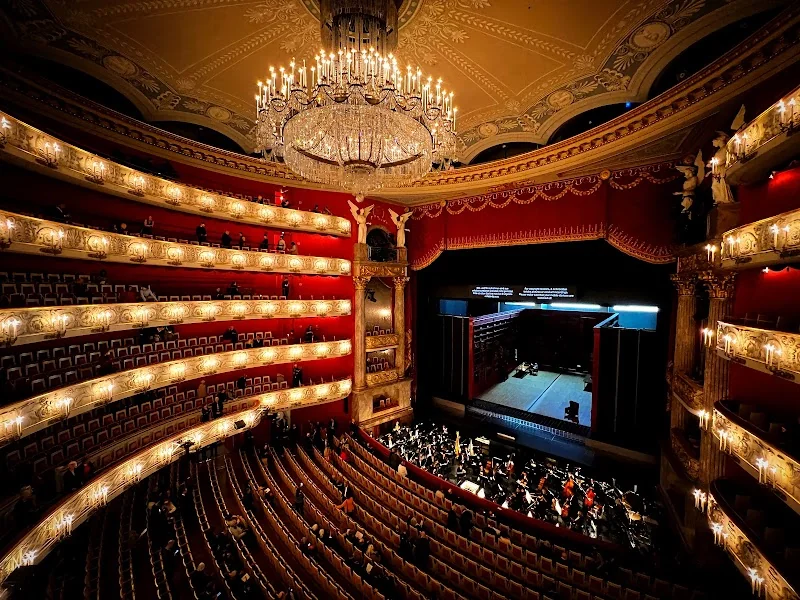
The National Theatre Munich, better known as the Munich National Theatre, is one of those places where architecture, music, and city history merge. The house at Max-Joseph-Platz 2 is located in the heart of Munich's old town, just about a five-minute walk from Marienplatz, and is the main venue for the Bavarian State Opera, the Bavarian State Ballet, and the Bavarian State Orchestra. With 2,101 seats, a neoclassical facade, and a stage of 2,500 square meters rebuilt after World War II, it is one of the most impressive opera houses in Europe. Spending an evening here means experiencing not just a performance but a piece of living cultural history, shaped by its opening in 1818, its destruction in the war, and its reconstruction until its reopening in 1963. This is precisely why many visitors seek tickets, seating plans, directions, parking, and tours related to this house, and these topics are crucial for a successful visit. ([staatsoper.de](https://www.staatsoper.de/en/visit/))
Tickets and Ticket Purchase at the National Theatre Munich
Those wishing to visit the National Theatre Munich should start by looking at the official ticket sales of the Bavarian State Opera. Tickets can be purchased online, by phone, or at the box office; in the seating plan, seats can be selected individually, and TicketDirect allows for easy display of the ticket on a smartphone. For spontaneous visitors, the box office at the main entrance of the National Theatre is also important, as it usually opens one hour before the performance begins. This is particularly convenient if one decides on a performance at short notice or if a visit to downtown Munich is only confirmed on the same day. The ticket sales also point out that regular sales start after fixed deadlines and that external platforms do not collaborate with the Bavarian State Theatres, making the official sales the safest source. This clarity is important for guests searching for nationaltheater tickets, bayerische staatsoper tickets, or evening box office and who do not want to click through various third-party providers. The use of MVV is also interesting for many visitors, as regular admission tickets with the note 'With MVV' are considered tickets for the round trip within the entire MVV area. Thus, the ticket serves not only as an admission ticket but also as a comfortable means of transportation. ([staatsoper.de](https://www.staatsoper.de/karten))
In practice, this means: If you plan an evening at the National Theatre, you should select the desired performance early, check the seating plan, and then book the best category instead of just taking the first available seat. This is sensible because the house has a historical audience situation where sightlines, distance, and portal height significantly influence perception. Those coming with children, as a group, or with special needs benefit from the fact that the Bavarian State Opera explicitly names its colleagues from sales and visitor communication as advisory points. This advice is helpful if one wants to avoid uncertain seating positions, have a good view of the surtitles, or check alternatives for sold-out performances. Additionally, the house has opened itself to various audience groups: from the classic opera evening to spontaneous participation in a performance through standing or listening places. This is particularly important for search queries like tickets, online, box office, or best seats because the official sales consider not only the booking but also the orientation in the house. Therefore, anyone planning a pleasant and reliable theater evening should view ticket purchase, arrival, and seat selection as interconnected decisions. This way, a single ticket purchase becomes a significantly better-prepared visit. ([staatsoper.de](https://www.staatsoper.de/karten))
Seating Plan, Seats, and Sightlines
The seating plan of the National Theatre Munich is much more than a graphical overview of rows and categories. The Bavarian State Opera explicitly states that the seating plans provide information about seating and standing places, wheelchair spaces, and seats with restricted visibility. This is particularly important because the auditorium is shaped like a horseshoe due to its historical construction as a court theater. This architectural form is part of the charm but also brings the disadvantage that visibility in the side tiers can be architecturally restricted. Therefore, those searching for nationaltheater seating plan, hall plan, or best seats should pay attention not only to the price category but also to the sightline in the respective area. According to the State Opera, the price subdivision also reflects the quality of the view of the stage. This is a crucial difference from modern multipurpose halls, where almost every seat functions similarly. In the National Theatre, the space itself is part of the theater experience, and the decision for a seat directly influences the perception of stage, light, and movement space. Especially in large opera productions and ballet performances, the stage design itself can create additional visibility barriers when singers or dancers act at the edges or in the back stage area. ([staatsoper.de](https://www.staatsoper.de/saalplaene))
The surtitles situation is also part of the seating plan topic. The Bavarian State Opera offers surtitles in German and English but also points out that they are not visible from all seats due to the architectural design. For certain areas, the FAQ page specifies concrete restrictions, such as in parts of the balconies, tiers, standing places, and some parquet sections, where only German surtitles appear on extra monitors. This is important for visitors who are coming for the first time or attending foreign-language works and therefore rely on clear readability. Those who want to sit particularly comfortably should read the seating plan with visibility and title information before booking and contact the ticket sales in case of uncertainties. Additionally, the National Theatre also offers wheelchair spaces in the parquet, specifically in row 19 with accompanying seats in rows 19 and 20. This way, the house combines historical architecture with a differentiated seating system that aims to meet various needs. For this reason, the seating plan is central not only for price comparisons but for the entire visitor experience. It answers the classic question of whether one seeks proximity, overview, or the best possible view of the surtitles in the opera house. ([staatsoper.de](https://www.staatsoper.de/faq))
Directions, Parking, and MVV
The journey to the National Theatre Munich is pleasantly simple, as the house is located right in the old town and can be easily reached by several means of transportation. The Bavarian State Opera recommends using public transport, including tram lines 19 and 21 to National Theatre, S-Bahn lines S1 to S8, as well as U-Bahn U3 and U6 to Marienplatz, and buses 52 and 62 to Rindermarkt, bus 132 to Tal, and U3/U6 and bus 100/153 to Odeonsplatz. For many visitors, this is an advantage because an opera evening can seamlessly combine with a restaurant visit, a walk through the old town, or a look at the squares around the Residence and Maximilianstraße. It is also particularly interesting that regular admission tickets with MVV note are valid as tickets for the entire MVV on performance days, starting from 3 PM or three hours before the performance until 6 AM the following day. This significantly facilitates the combination of culture and public transport and makes the journey stress-free. For search queries like directions, mvv, or nationaltheater mvv, this information is therefore the most important basis. ([staatsoper.de](https://www.staatsoper.de/en/visit/))
Those who prefer to come by bike will find bike racks directly behind the National Theatre at Marstallplatz. For those arriving by car, the State Opera recommends the route via the Altstadtring into Maximilianstraße and refers to the MüHoGa parking garage at Max-Joseph-Platz. This garage is open daily from 6 AM to 2 AM; additionally, the official site mentions a night flat rate of 11 euros. For people with mobility impairments, there are also disabled parking spaces on Maximilianstraße in front of the side entrance of the National Theatre and on Max-Joseph-Platz in front of the Residence. These are important practical pieces of information because Munich's city center is excellently connected but can become heavily frequented, especially during performance times. Therefore, those who prefer a relaxed arrival should plan enough time for the last meters, the cloakroom path, and the short walk to the entrance. Thus, it can be avoided that a good cultural decision turns into unnecessary time pressure. Therefore, a clear recommendation applies to parking and arrival at the National Theatre: if possible, use MVV, if necessary, use the central opera garage, and always allow for some buffer time. ([staatsoper.de](https://www.staatsoper.de/en/visit/))
History and Architecture of the National Theatre
The history of the Munich National Theatre is closely linked to the major breaks in the city's history. The house was opened in 1818 and was initially part of a classicism idea that aimed to create a representative music theater in Munich. Shortly after the first opening, it was destroyed by a fire in 1823, subsequently rebuilt by Leo von Klenze, and reopened in 1825. This rebirth is important because it shows that the theater was not simply built once but was from the beginning a building with changing fates. World War II brought the next deep cut: The opera house at Max-Joseph-Platz was heavily damaged or destroyed by bombs in 1943. After the war, the decision was made not to construct a radically new building but to reconstruct the historical house. Friends of the National Theatre formed from a citizens' initiative starting in 1951, and in 1963, the reconstructed National Theatre was ceremoniously reopened. This sequence of opening, fire, reconstruction, destruction, and reconstruction makes the house one of the most symbolic cultural sites in Munich. For search queries like history, architecture, or nationaltheater munich, this is the core of the narrative. ([staatsoper.de](https://www.staatsoper.de/en/about-1/translate-to-english-die-geschichte-der-bso?utm_source=openai))
Architecturally, the National Theatre is as remarkable as it is historically significant. According to the Bavarian State Opera, the neoclassical building is considered the largest opera house in Germany and one of the most beautiful theaters in Europe. With 2,101 spectator seats and a 2,500 square meter stage, it is also one of those houses whose dimensions are not immediately fully grasped in the auditorium because the space is elegantly but also complexly structured. The Bavarian State Opera also emphasizes that works such as Richard Wagner's Tristan and Isolde and Die Walküre premiered here, placing the house in the history of opera in Europe beyond Munich's city history. Upon entering the theater, one quickly notices that not only the auditorium but also the grand halls, the Ionic halls, and the stage itself are part of the overall production. The building thus tells not only of music but also of power, representation, reconstruction, and cultural persistence. For this reason, it is worthwhile to view the facade not in isolation but to understand the house as a living organism that today serves as a monument, performance venue, and modern event space. This mixture is what makes the National Theatre's special appeal. ([staatsoper.de](https://www.staatsoper.de/ueber-uns))
Guided Tours, Portrait Gallery, and Behind-the-Scenes Look
A visit to the National Theatre Munich does not have to end with the performance, as the Bavarian State Opera offers numerous opportunities to experience the house outside of actual performances. Public and private tours provide insights into the history, architecture, and daily work of the opera house. According to the official site, such tours include the National Theatre, the Royal Hall, the adjacent Ionic halls, the auditorium, the prompt box, and the area beneath the stage. For interested parties, this is particularly exciting because it allows one to understand not only the representative spaces but also the technical dimension of a large opera house. Private tours can focus on opera, orchestra, personalities, or ballet; school classes and student groups receive reduced prices. For search queries like tour, behind-the-scenes look, or cultural experience, this is a central added value, as the house itself becomes the content. The tour offerings also show how closely the history of the Bavarian State Opera is intertwined with the development of Munich, not only in retrospect but as a living part of the present. ([staatsoper.de](https://www.staatsoper.de/fuehrungen))
Additionally, the Bavarian State Opera offers a virtual National Theatre through Google Arts & Culture. This 360-degree tour is particularly interesting for guests who want to orient themselves before the real visit or explore the architecture in advance. Furthermore, the portrait gallery in the corridors and entrance areas of the National Theatre commemorates personalities associated with the house, dating back to the 18th century. The collection was established in 1899 by Ernst von Possart as an artist ancestor gallery of the Royal Court Theatre in Munich; later, as part of a research project, 23 audio biographies of significant personalities of the State Opera were created. Visitors can borrow these audio guides before performances and during intermissions for a deposit at the opera shop in the parquet. The opera shop itself is also part of the experience, as it opens one hour before the performance begins and remains open during intermissions. This is relevant for anyone looking for a souvenir, a program booklet, or simply a small service point in the house. Thus, the term service becomes not only an organizational category but a genuine visitor experience with added value. ([staatsoper.de](https://www.staatsoper.de/nationaltheater))
Accessibility, Surtitles, and Visitor Services
The National Theatre Munich is a historic house but still has several important service elements for a comfortable visit. For wheelchair users, the Bavarian State Opera designates specific seats in the parquet row 19, with accompanying seats in the same and the following row. Additionally, the official visitor page points out disabled parking spaces on Maximilianstraße and Max-Joseph-Platz. Another significant advantage is the induction system throughout the house, which can assist people with hearing aids when the device is set to T. Such details are valuable not only for guests interested in accessibility but also for families or visitor groups who want to combine a historic theater with modern infrastructure. The ticket sales and visitor communication are explicitly named on the website as contacts when it comes to choosing the right seat or special requirements. This makes it clear that accessibility is not considered an addition here but as part of the visit. ([staatsoper.de](https://www.staatsoper.de/en/visit/))
Also regarding the surtitles, the blend of tradition and adaptation is evident. The Bavarian State Opera offers surtitles in German and English but points out that they are not visible from all seats due to the historical building form. For certain seats, the FAQ even specifies concrete areas where visibility is completely or partially restricted. This is important because guests with language or perception needs can select their seats accordingly. Additionally, entry usually begins one hour before the performance, and there is no late entry, so one should consider cloakroom and restroom visits. This rule is not only relevant organizationally but directly affects the comfort factor. Those who arrive on time can still use the grand halls, the portrait gallery, or the service in the foyer before the performance, thereby experiencing the visit more consciously. The National Theatre demonstrates that a historic opera house does not have to be old-fashioned but can become very accessible with good planning, clear information, and reliable service pathways. This balance of monument and functional theater is what makes the house particularly appealing. ([staatsoper.de](https://www.staatsoper.de/faq))
Sources:
Show moreShow less
National Theatre Munich | Tickets & Seating Plan
The National Theatre Munich, better known as the Munich National Theatre, is one of those places where architecture, music, and city history merge. The house at Max-Joseph-Platz 2 is located in the heart of Munich's old town, just about a five-minute walk from Marienplatz, and is the main venue for the Bavarian State Opera, the Bavarian State Ballet, and the Bavarian State Orchestra. With 2,101 seats, a neoclassical facade, and a stage of 2,500 square meters rebuilt after World War II, it is one of the most impressive opera houses in Europe. Spending an evening here means experiencing not just a performance but a piece of living cultural history, shaped by its opening in 1818, its destruction in the war, and its reconstruction until its reopening in 1963. This is precisely why many visitors seek tickets, seating plans, directions, parking, and tours related to this house, and these topics are crucial for a successful visit. ([staatsoper.de](https://www.staatsoper.de/en/visit/))
Tickets and Ticket Purchase at the National Theatre Munich
Those wishing to visit the National Theatre Munich should start by looking at the official ticket sales of the Bavarian State Opera. Tickets can be purchased online, by phone, or at the box office; in the seating plan, seats can be selected individually, and TicketDirect allows for easy display of the ticket on a smartphone. For spontaneous visitors, the box office at the main entrance of the National Theatre is also important, as it usually opens one hour before the performance begins. This is particularly convenient if one decides on a performance at short notice or if a visit to downtown Munich is only confirmed on the same day. The ticket sales also point out that regular sales start after fixed deadlines and that external platforms do not collaborate with the Bavarian State Theatres, making the official sales the safest source. This clarity is important for guests searching for nationaltheater tickets, bayerische staatsoper tickets, or evening box office and who do not want to click through various third-party providers. The use of MVV is also interesting for many visitors, as regular admission tickets with the note 'With MVV' are considered tickets for the round trip within the entire MVV area. Thus, the ticket serves not only as an admission ticket but also as a comfortable means of transportation. ([staatsoper.de](https://www.staatsoper.de/karten))
In practice, this means: If you plan an evening at the National Theatre, you should select the desired performance early, check the seating plan, and then book the best category instead of just taking the first available seat. This is sensible because the house has a historical audience situation where sightlines, distance, and portal height significantly influence perception. Those coming with children, as a group, or with special needs benefit from the fact that the Bavarian State Opera explicitly names its colleagues from sales and visitor communication as advisory points. This advice is helpful if one wants to avoid uncertain seating positions, have a good view of the surtitles, or check alternatives for sold-out performances. Additionally, the house has opened itself to various audience groups: from the classic opera evening to spontaneous participation in a performance through standing or listening places. This is particularly important for search queries like tickets, online, box office, or best seats because the official sales consider not only the booking but also the orientation in the house. Therefore, anyone planning a pleasant and reliable theater evening should view ticket purchase, arrival, and seat selection as interconnected decisions. This way, a single ticket purchase becomes a significantly better-prepared visit. ([staatsoper.de](https://www.staatsoper.de/karten))
Seating Plan, Seats, and Sightlines
The seating plan of the National Theatre Munich is much more than a graphical overview of rows and categories. The Bavarian State Opera explicitly states that the seating plans provide information about seating and standing places, wheelchair spaces, and seats with restricted visibility. This is particularly important because the auditorium is shaped like a horseshoe due to its historical construction as a court theater. This architectural form is part of the charm but also brings the disadvantage that visibility in the side tiers can be architecturally restricted. Therefore, those searching for nationaltheater seating plan, hall plan, or best seats should pay attention not only to the price category but also to the sightline in the respective area. According to the State Opera, the price subdivision also reflects the quality of the view of the stage. This is a crucial difference from modern multipurpose halls, where almost every seat functions similarly. In the National Theatre, the space itself is part of the theater experience, and the decision for a seat directly influences the perception of stage, light, and movement space. Especially in large opera productions and ballet performances, the stage design itself can create additional visibility barriers when singers or dancers act at the edges or in the back stage area. ([staatsoper.de](https://www.staatsoper.de/saalplaene))
The surtitles situation is also part of the seating plan topic. The Bavarian State Opera offers surtitles in German and English but also points out that they are not visible from all seats due to the architectural design. For certain areas, the FAQ page specifies concrete restrictions, such as in parts of the balconies, tiers, standing places, and some parquet sections, where only German surtitles appear on extra monitors. This is important for visitors who are coming for the first time or attending foreign-language works and therefore rely on clear readability. Those who want to sit particularly comfortably should read the seating plan with visibility and title information before booking and contact the ticket sales in case of uncertainties. Additionally, the National Theatre also offers wheelchair spaces in the parquet, specifically in row 19 with accompanying seats in rows 19 and 20. This way, the house combines historical architecture with a differentiated seating system that aims to meet various needs. For this reason, the seating plan is central not only for price comparisons but for the entire visitor experience. It answers the classic question of whether one seeks proximity, overview, or the best possible view of the surtitles in the opera house. ([staatsoper.de](https://www.staatsoper.de/faq))
Directions, Parking, and MVV
The journey to the National Theatre Munich is pleasantly simple, as the house is located right in the old town and can be easily reached by several means of transportation. The Bavarian State Opera recommends using public transport, including tram lines 19 and 21 to National Theatre, S-Bahn lines S1 to S8, as well as U-Bahn U3 and U6 to Marienplatz, and buses 52 and 62 to Rindermarkt, bus 132 to Tal, and U3/U6 and bus 100/153 to Odeonsplatz. For many visitors, this is an advantage because an opera evening can seamlessly combine with a restaurant visit, a walk through the old town, or a look at the squares around the Residence and Maximilianstraße. It is also particularly interesting that regular admission tickets with MVV note are valid as tickets for the entire MVV on performance days, starting from 3 PM or three hours before the performance until 6 AM the following day. This significantly facilitates the combination of culture and public transport and makes the journey stress-free. For search queries like directions, mvv, or nationaltheater mvv, this information is therefore the most important basis. ([staatsoper.de](https://www.staatsoper.de/en/visit/))
Those who prefer to come by bike will find bike racks directly behind the National Theatre at Marstallplatz. For those arriving by car, the State Opera recommends the route via the Altstadtring into Maximilianstraße and refers to the MüHoGa parking garage at Max-Joseph-Platz. This garage is open daily from 6 AM to 2 AM; additionally, the official site mentions a night flat rate of 11 euros. For people with mobility impairments, there are also disabled parking spaces on Maximilianstraße in front of the side entrance of the National Theatre and on Max-Joseph-Platz in front of the Residence. These are important practical pieces of information because Munich's city center is excellently connected but can become heavily frequented, especially during performance times. Therefore, those who prefer a relaxed arrival should plan enough time for the last meters, the cloakroom path, and the short walk to the entrance. Thus, it can be avoided that a good cultural decision turns into unnecessary time pressure. Therefore, a clear recommendation applies to parking and arrival at the National Theatre: if possible, use MVV, if necessary, use the central opera garage, and always allow for some buffer time. ([staatsoper.de](https://www.staatsoper.de/en/visit/))
History and Architecture of the National Theatre
The history of the Munich National Theatre is closely linked to the major breaks in the city's history. The house was opened in 1818 and was initially part of a classicism idea that aimed to create a representative music theater in Munich. Shortly after the first opening, it was destroyed by a fire in 1823, subsequently rebuilt by Leo von Klenze, and reopened in 1825. This rebirth is important because it shows that the theater was not simply built once but was from the beginning a building with changing fates. World War II brought the next deep cut: The opera house at Max-Joseph-Platz was heavily damaged or destroyed by bombs in 1943. After the war, the decision was made not to construct a radically new building but to reconstruct the historical house. Friends of the National Theatre formed from a citizens' initiative starting in 1951, and in 1963, the reconstructed National Theatre was ceremoniously reopened. This sequence of opening, fire, reconstruction, destruction, and reconstruction makes the house one of the most symbolic cultural sites in Munich. For search queries like history, architecture, or nationaltheater munich, this is the core of the narrative. ([staatsoper.de](https://www.staatsoper.de/en/about-1/translate-to-english-die-geschichte-der-bso?utm_source=openai))
Architecturally, the National Theatre is as remarkable as it is historically significant. According to the Bavarian State Opera, the neoclassical building is considered the largest opera house in Germany and one of the most beautiful theaters in Europe. With 2,101 spectator seats and a 2,500 square meter stage, it is also one of those houses whose dimensions are not immediately fully grasped in the auditorium because the space is elegantly but also complexly structured. The Bavarian State Opera also emphasizes that works such as Richard Wagner's Tristan and Isolde and Die Walküre premiered here, placing the house in the history of opera in Europe beyond Munich's city history. Upon entering the theater, one quickly notices that not only the auditorium but also the grand halls, the Ionic halls, and the stage itself are part of the overall production. The building thus tells not only of music but also of power, representation, reconstruction, and cultural persistence. For this reason, it is worthwhile to view the facade not in isolation but to understand the house as a living organism that today serves as a monument, performance venue, and modern event space. This mixture is what makes the National Theatre's special appeal. ([staatsoper.de](https://www.staatsoper.de/ueber-uns))
Guided Tours, Portrait Gallery, and Behind-the-Scenes Look
A visit to the National Theatre Munich does not have to end with the performance, as the Bavarian State Opera offers numerous opportunities to experience the house outside of actual performances. Public and private tours provide insights into the history, architecture, and daily work of the opera house. According to the official site, such tours include the National Theatre, the Royal Hall, the adjacent Ionic halls, the auditorium, the prompt box, and the area beneath the stage. For interested parties, this is particularly exciting because it allows one to understand not only the representative spaces but also the technical dimension of a large opera house. Private tours can focus on opera, orchestra, personalities, or ballet; school classes and student groups receive reduced prices. For search queries like tour, behind-the-scenes look, or cultural experience, this is a central added value, as the house itself becomes the content. The tour offerings also show how closely the history of the Bavarian State Opera is intertwined with the development of Munich, not only in retrospect but as a living part of the present. ([staatsoper.de](https://www.staatsoper.de/fuehrungen))
Additionally, the Bavarian State Opera offers a virtual National Theatre through Google Arts & Culture. This 360-degree tour is particularly interesting for guests who want to orient themselves before the real visit or explore the architecture in advance. Furthermore, the portrait gallery in the corridors and entrance areas of the National Theatre commemorates personalities associated with the house, dating back to the 18th century. The collection was established in 1899 by Ernst von Possart as an artist ancestor gallery of the Royal Court Theatre in Munich; later, as part of a research project, 23 audio biographies of significant personalities of the State Opera were created. Visitors can borrow these audio guides before performances and during intermissions for a deposit at the opera shop in the parquet. The opera shop itself is also part of the experience, as it opens one hour before the performance begins and remains open during intermissions. This is relevant for anyone looking for a souvenir, a program booklet, or simply a small service point in the house. Thus, the term service becomes not only an organizational category but a genuine visitor experience with added value. ([staatsoper.de](https://www.staatsoper.de/nationaltheater))
Accessibility, Surtitles, and Visitor Services
The National Theatre Munich is a historic house but still has several important service elements for a comfortable visit. For wheelchair users, the Bavarian State Opera designates specific seats in the parquet row 19, with accompanying seats in the same and the following row. Additionally, the official visitor page points out disabled parking spaces on Maximilianstraße and Max-Joseph-Platz. Another significant advantage is the induction system throughout the house, which can assist people with hearing aids when the device is set to T. Such details are valuable not only for guests interested in accessibility but also for families or visitor groups who want to combine a historic theater with modern infrastructure. The ticket sales and visitor communication are explicitly named on the website as contacts when it comes to choosing the right seat or special requirements. This makes it clear that accessibility is not considered an addition here but as part of the visit. ([staatsoper.de](https://www.staatsoper.de/en/visit/))
Also regarding the surtitles, the blend of tradition and adaptation is evident. The Bavarian State Opera offers surtitles in German and English but points out that they are not visible from all seats due to the historical building form. For certain seats, the FAQ even specifies concrete areas where visibility is completely or partially restricted. This is important because guests with language or perception needs can select their seats accordingly. Additionally, entry usually begins one hour before the performance, and there is no late entry, so one should consider cloakroom and restroom visits. This rule is not only relevant organizationally but directly affects the comfort factor. Those who arrive on time can still use the grand halls, the portrait gallery, or the service in the foyer before the performance, thereby experiencing the visit more consciously. The National Theatre demonstrates that a historic opera house does not have to be old-fashioned but can become very accessible with good planning, clear information, and reliable service pathways. This balance of monument and functional theater is what makes the house particularly appealing. ([staatsoper.de](https://www.staatsoper.de/faq))
Sources:
National Theatre Munich | Tickets & Seating Plan
The National Theatre Munich, better known as the Munich National Theatre, is one of those places where architecture, music, and city history merge. The house at Max-Joseph-Platz 2 is located in the heart of Munich's old town, just about a five-minute walk from Marienplatz, and is the main venue for the Bavarian State Opera, the Bavarian State Ballet, and the Bavarian State Orchestra. With 2,101 seats, a neoclassical facade, and a stage of 2,500 square meters rebuilt after World War II, it is one of the most impressive opera houses in Europe. Spending an evening here means experiencing not just a performance but a piece of living cultural history, shaped by its opening in 1818, its destruction in the war, and its reconstruction until its reopening in 1963. This is precisely why many visitors seek tickets, seating plans, directions, parking, and tours related to this house, and these topics are crucial for a successful visit. ([staatsoper.de](https://www.staatsoper.de/en/visit/))
Tickets and Ticket Purchase at the National Theatre Munich
Those wishing to visit the National Theatre Munich should start by looking at the official ticket sales of the Bavarian State Opera. Tickets can be purchased online, by phone, or at the box office; in the seating plan, seats can be selected individually, and TicketDirect allows for easy display of the ticket on a smartphone. For spontaneous visitors, the box office at the main entrance of the National Theatre is also important, as it usually opens one hour before the performance begins. This is particularly convenient if one decides on a performance at short notice or if a visit to downtown Munich is only confirmed on the same day. The ticket sales also point out that regular sales start after fixed deadlines and that external platforms do not collaborate with the Bavarian State Theatres, making the official sales the safest source. This clarity is important for guests searching for nationaltheater tickets, bayerische staatsoper tickets, or evening box office and who do not want to click through various third-party providers. The use of MVV is also interesting for many visitors, as regular admission tickets with the note 'With MVV' are considered tickets for the round trip within the entire MVV area. Thus, the ticket serves not only as an admission ticket but also as a comfortable means of transportation. ([staatsoper.de](https://www.staatsoper.de/karten))
In practice, this means: If you plan an evening at the National Theatre, you should select the desired performance early, check the seating plan, and then book the best category instead of just taking the first available seat. This is sensible because the house has a historical audience situation where sightlines, distance, and portal height significantly influence perception. Those coming with children, as a group, or with special needs benefit from the fact that the Bavarian State Opera explicitly names its colleagues from sales and visitor communication as advisory points. This advice is helpful if one wants to avoid uncertain seating positions, have a good view of the surtitles, or check alternatives for sold-out performances. Additionally, the house has opened itself to various audience groups: from the classic opera evening to spontaneous participation in a performance through standing or listening places. This is particularly important for search queries like tickets, online, box office, or best seats because the official sales consider not only the booking but also the orientation in the house. Therefore, anyone planning a pleasant and reliable theater evening should view ticket purchase, arrival, and seat selection as interconnected decisions. This way, a single ticket purchase becomes a significantly better-prepared visit. ([staatsoper.de](https://www.staatsoper.de/karten))
Seating Plan, Seats, and Sightlines
The seating plan of the National Theatre Munich is much more than a graphical overview of rows and categories. The Bavarian State Opera explicitly states that the seating plans provide information about seating and standing places, wheelchair spaces, and seats with restricted visibility. This is particularly important because the auditorium is shaped like a horseshoe due to its historical construction as a court theater. This architectural form is part of the charm but also brings the disadvantage that visibility in the side tiers can be architecturally restricted. Therefore, those searching for nationaltheater seating plan, hall plan, or best seats should pay attention not only to the price category but also to the sightline in the respective area. According to the State Opera, the price subdivision also reflects the quality of the view of the stage. This is a crucial difference from modern multipurpose halls, where almost every seat functions similarly. In the National Theatre, the space itself is part of the theater experience, and the decision for a seat directly influences the perception of stage, light, and movement space. Especially in large opera productions and ballet performances, the stage design itself can create additional visibility barriers when singers or dancers act at the edges or in the back stage area. ([staatsoper.de](https://www.staatsoper.de/saalplaene))
The surtitles situation is also part of the seating plan topic. The Bavarian State Opera offers surtitles in German and English but also points out that they are not visible from all seats due to the architectural design. For certain areas, the FAQ page specifies concrete restrictions, such as in parts of the balconies, tiers, standing places, and some parquet sections, where only German surtitles appear on extra monitors. This is important for visitors who are coming for the first time or attending foreign-language works and therefore rely on clear readability. Those who want to sit particularly comfortably should read the seating plan with visibility and title information before booking and contact the ticket sales in case of uncertainties. Additionally, the National Theatre also offers wheelchair spaces in the parquet, specifically in row 19 with accompanying seats in rows 19 and 20. This way, the house combines historical architecture with a differentiated seating system that aims to meet various needs. For this reason, the seating plan is central not only for price comparisons but for the entire visitor experience. It answers the classic question of whether one seeks proximity, overview, or the best possible view of the surtitles in the opera house. ([staatsoper.de](https://www.staatsoper.de/faq))
Directions, Parking, and MVV
The journey to the National Theatre Munich is pleasantly simple, as the house is located right in the old town and can be easily reached by several means of transportation. The Bavarian State Opera recommends using public transport, including tram lines 19 and 21 to National Theatre, S-Bahn lines S1 to S8, as well as U-Bahn U3 and U6 to Marienplatz, and buses 52 and 62 to Rindermarkt, bus 132 to Tal, and U3/U6 and bus 100/153 to Odeonsplatz. For many visitors, this is an advantage because an opera evening can seamlessly combine with a restaurant visit, a walk through the old town, or a look at the squares around the Residence and Maximilianstraße. It is also particularly interesting that regular admission tickets with MVV note are valid as tickets for the entire MVV on performance days, starting from 3 PM or three hours before the performance until 6 AM the following day. This significantly facilitates the combination of culture and public transport and makes the journey stress-free. For search queries like directions, mvv, or nationaltheater mvv, this information is therefore the most important basis. ([staatsoper.de](https://www.staatsoper.de/en/visit/))
Those who prefer to come by bike will find bike racks directly behind the National Theatre at Marstallplatz. For those arriving by car, the State Opera recommends the route via the Altstadtring into Maximilianstraße and refers to the MüHoGa parking garage at Max-Joseph-Platz. This garage is open daily from 6 AM to 2 AM; additionally, the official site mentions a night flat rate of 11 euros. For people with mobility impairments, there are also disabled parking spaces on Maximilianstraße in front of the side entrance of the National Theatre and on Max-Joseph-Platz in front of the Residence. These are important practical pieces of information because Munich's city center is excellently connected but can become heavily frequented, especially during performance times. Therefore, those who prefer a relaxed arrival should plan enough time for the last meters, the cloakroom path, and the short walk to the entrance. Thus, it can be avoided that a good cultural decision turns into unnecessary time pressure. Therefore, a clear recommendation applies to parking and arrival at the National Theatre: if possible, use MVV, if necessary, use the central opera garage, and always allow for some buffer time. ([staatsoper.de](https://www.staatsoper.de/en/visit/))
History and Architecture of the National Theatre
The history of the Munich National Theatre is closely linked to the major breaks in the city's history. The house was opened in 1818 and was initially part of a classicism idea that aimed to create a representative music theater in Munich. Shortly after the first opening, it was destroyed by a fire in 1823, subsequently rebuilt by Leo von Klenze, and reopened in 1825. This rebirth is important because it shows that the theater was not simply built once but was from the beginning a building with changing fates. World War II brought the next deep cut: The opera house at Max-Joseph-Platz was heavily damaged or destroyed by bombs in 1943. After the war, the decision was made not to construct a radically new building but to reconstruct the historical house. Friends of the National Theatre formed from a citizens' initiative starting in 1951, and in 1963, the reconstructed National Theatre was ceremoniously reopened. This sequence of opening, fire, reconstruction, destruction, and reconstruction makes the house one of the most symbolic cultural sites in Munich. For search queries like history, architecture, or nationaltheater munich, this is the core of the narrative. ([staatsoper.de](https://www.staatsoper.de/en/about-1/translate-to-english-die-geschichte-der-bso?utm_source=openai))
Architecturally, the National Theatre is as remarkable as it is historically significant. According to the Bavarian State Opera, the neoclassical building is considered the largest opera house in Germany and one of the most beautiful theaters in Europe. With 2,101 spectator seats and a 2,500 square meter stage, it is also one of those houses whose dimensions are not immediately fully grasped in the auditorium because the space is elegantly but also complexly structured. The Bavarian State Opera also emphasizes that works such as Richard Wagner's Tristan and Isolde and Die Walküre premiered here, placing the house in the history of opera in Europe beyond Munich's city history. Upon entering the theater, one quickly notices that not only the auditorium but also the grand halls, the Ionic halls, and the stage itself are part of the overall production. The building thus tells not only of music but also of power, representation, reconstruction, and cultural persistence. For this reason, it is worthwhile to view the facade not in isolation but to understand the house as a living organism that today serves as a monument, performance venue, and modern event space. This mixture is what makes the National Theatre's special appeal. ([staatsoper.de](https://www.staatsoper.de/ueber-uns))
Guided Tours, Portrait Gallery, and Behind-the-Scenes Look
A visit to the National Theatre Munich does not have to end with the performance, as the Bavarian State Opera offers numerous opportunities to experience the house outside of actual performances. Public and private tours provide insights into the history, architecture, and daily work of the opera house. According to the official site, such tours include the National Theatre, the Royal Hall, the adjacent Ionic halls, the auditorium, the prompt box, and the area beneath the stage. For interested parties, this is particularly exciting because it allows one to understand not only the representative spaces but also the technical dimension of a large opera house. Private tours can focus on opera, orchestra, personalities, or ballet; school classes and student groups receive reduced prices. For search queries like tour, behind-the-scenes look, or cultural experience, this is a central added value, as the house itself becomes the content. The tour offerings also show how closely the history of the Bavarian State Opera is intertwined with the development of Munich, not only in retrospect but as a living part of the present. ([staatsoper.de](https://www.staatsoper.de/fuehrungen))
Additionally, the Bavarian State Opera offers a virtual National Theatre through Google Arts & Culture. This 360-degree tour is particularly interesting for guests who want to orient themselves before the real visit or explore the architecture in advance. Furthermore, the portrait gallery in the corridors and entrance areas of the National Theatre commemorates personalities associated with the house, dating back to the 18th century. The collection was established in 1899 by Ernst von Possart as an artist ancestor gallery of the Royal Court Theatre in Munich; later, as part of a research project, 23 audio biographies of significant personalities of the State Opera were created. Visitors can borrow these audio guides before performances and during intermissions for a deposit at the opera shop in the parquet. The opera shop itself is also part of the experience, as it opens one hour before the performance begins and remains open during intermissions. This is relevant for anyone looking for a souvenir, a program booklet, or simply a small service point in the house. Thus, the term service becomes not only an organizational category but a genuine visitor experience with added value. ([staatsoper.de](https://www.staatsoper.de/nationaltheater))
Accessibility, Surtitles, and Visitor Services
The National Theatre Munich is a historic house but still has several important service elements for a comfortable visit. For wheelchair users, the Bavarian State Opera designates specific seats in the parquet row 19, with accompanying seats in the same and the following row. Additionally, the official visitor page points out disabled parking spaces on Maximilianstraße and Max-Joseph-Platz. Another significant advantage is the induction system throughout the house, which can assist people with hearing aids when the device is set to T. Such details are valuable not only for guests interested in accessibility but also for families or visitor groups who want to combine a historic theater with modern infrastructure. The ticket sales and visitor communication are explicitly named on the website as contacts when it comes to choosing the right seat or special requirements. This makes it clear that accessibility is not considered an addition here but as part of the visit. ([staatsoper.de](https://www.staatsoper.de/en/visit/))
Also regarding the surtitles, the blend of tradition and adaptation is evident. The Bavarian State Opera offers surtitles in German and English but points out that they are not visible from all seats due to the historical building form. For certain seats, the FAQ even specifies concrete areas where visibility is completely or partially restricted. This is important because guests with language or perception needs can select their seats accordingly. Additionally, entry usually begins one hour before the performance, and there is no late entry, so one should consider cloakroom and restroom visits. This rule is not only relevant organizationally but directly affects the comfort factor. Those who arrive on time can still use the grand halls, the portrait gallery, or the service in the foyer before the performance, thereby experiencing the visit more consciously. The National Theatre demonstrates that a historic opera house does not have to be old-fashioned but can become very accessible with good planning, clear information, and reliable service pathways. This balance of monument and functional theater is what makes the house particularly appealing. ([staatsoper.de](https://www.staatsoper.de/faq))
Sources:
Upcoming Events
No events found
Frequently Asked Questions
Reviews
Mert
31. May 2025
A Night at the National Theatre: Majestic Architecture, Questionable Seating The National Theatre in Munich is undeniably a cultural gem—historical, grand, and home to some truly high-quality performances. I attended a show at the Bayerische Staatsoper and, by mistake, purchased a standing ticket. Honestly, I still don’t understand why a venue this modern continues to sell standing-only options. It feels outdated and slightly disrespectful to the audience’s comfort. The exterior and interior design are breathtaking—ornate, classical, and full of old-world charm. However, the seating layout could really use some thoughtful renovation. Similar to what’s been done in some metro stations, modern comfort can absolutely be integrated without sacrificing the building’s historical character. Another odd detail: From my seat (right wing), I could only see half the stage due to a large curtain or divider. I couldn’t help but wonder—why obstruct the view like that in a place designed for visual storytelling? That said, it was still a fun Friday evening. If you’re planning to go, try to book a proper seat—ideally from the main square side of the theatre—for the best experience. The Staatsoper occasionally offers surprisingly affordable tickets, so it’s definitely worth checking. For culture lovers and curious minds, it’s a great way to spend an evening in Munich.
Olivia Yap
20. November 2025
Great evening here, enjoying the wonderful performance of Cavalleria rusticana / Pagliacci
Gaeun Jeong
11. April 2025
We arrived 5 mins late to the opera and as it already started, the staff offered us a room where we could watch the first act on a screen. We could go in for the second act. Overall, the experience was great. The show is of a high quality and the subtitles, offered both in English and German were a big help as well. I would definitely visit again.
Gretchen G
3. February 2026
Aggressive staff. Audience appears art and culture proud but it’s truly a conservative audience who were predominantly born of the generation here that allowed you know who and you know what to do the worse crimes in history. This place can’t last the pace of the age of the audience... Find a way to engage the rest of us younger generations and be nice to those who aren’t German, or at least pretend!
Frank Finding
24. June 2025
Had a 1 hr tour with Suzanne and it was excellent. Learned the history, saw the theatre including sitting in the Kings suite, went back stage and side stage and even saw below the stage.