
Schäftlarn
Hohenschäftlarn, 82069 Schäftlarn, Deutschland
Neuchl Estate | Opening Hours & History
The Neuchl Estate in Hohenschäftlarn is the home house of the municipality of Schäftlarn and at the same time a rare example of how a historic small farmhouse can become a vibrant place of remembrance. In the official municipal information, it appears under the house name Stallwastl, with the address Oberdorf 6 in 82069 Hohenschäftlarn. Those searching for Neuchl Estate Schäftlarn, home house or local museum will find here not just an address, but a piece of local history that is further narrated within the building itself. Particularly defining is the combination of original-like rooms, seasonal opening days, free admission, and a clear connection to rural everyday culture. As a result, the estate is suitable for visitors interested in history, regional identity, small museums, and authentic village architecture. The available online presentation of the municipality and the museum directories shows one thing above all: The Neuchl Estate is not a spectacular large building, but a quiet, carefully maintained historical site with a strong sense of home. ([schaeftlarn.de](https://www.schaeftlarn.de/heimathaus/))
History of the Neuchl Estate and the House Name Stallwastl
The historical depth of the Neuchl Estate is one of the most important reasons for its current significance. The municipality of Schäftlarn cites the earliest mention as the year 1492. This means that the documented history reaches far back into the late Middle Ages and anchors the estate in a long local development that has remained visible over several generations, uses, and renovations. Another turning point was the fire of 1828, after which the building was almost completely destroyed. Subsequently, reconstruction took place, allowing a threatened building substance to become a habitable and usable house once again. That the municipality acquired the estate in 1992 after the death of the last owner shows the transition from private to public responsibility. The house was thus not only preserved but consciously continued as part of community life. ([schaeftlarn.de](https://www.schaeftlarn.de/heimathaus/))
In this context, the house name Stallwastl, which the municipality explicitly mentions, is also important. Such house names are often more than mere nicknames in rural areas, as they connect family history, local memory, and identity. This is precisely what makes the Neuchl Estate interesting for visitors who do not just want to see a house, but a place where village life has condensed over centuries. The municipality also describes that a working group consisting of seven retirees aims to present how people lived and worked in the past within the house. This is a strong signal that this is about lived home care and not just about museum preservation. The house thus exemplifies a form of historical care where volunteer engagement and historical substance directly interact. ([schaeftlarn.de](https://www.schaeftlarn.de/heimathaus/))
The Cultural Portal Bavaria adds another important point to this history: In the Neuchl Estate, a small local museum with an event barn was opened in 1998. Additionally, the original room functions of the former residential house with living room, kitchen, and pantry on the ground floor were restored, while the upper floor was reserved for additional exhibition areas. Among other things, folk piety, traditional clothing parts, and school items are mentioned there. This information shows that the Neuchl Estate is not only interesting from a monument preservation perspective but has also been consciously staged from a cultural-historical standpoint. The restoration of the room functions makes the history of the house not abstract, but spatially tangible. Anyone walking through such a building quickly understands how closely living, working, storing supplies, and local tradition were once connected. ([kulturportal-bayern.de](https://kulturportal-bayern.de/veranstalter/heimathaus-neuchl-anwesen/))
Opening Hours, Admission, and Tours at the Home House
For everyone planning a visit, the opening hours are the most important practical information. The municipality of Schäftlarn currently states that the season is from May to October, every 1st Saturday from 2:00 PM to 4:00 PM. There is also a particularly attractive point: Admission is free. Tours are possible by appointment. Thus, the Neuchl Estate is not a museum with daily regular operations, but a cultural address consciously opened during the season, intended more for targeted visits than for spontaneous walk-in traffic. This fits well with the character of the house, as it is a historic home house with personal care and manageable size. Those who know the opening days can plan their visit well and experience the estate in a quiet, uncrowded atmosphere. ([schaeftlarn.de](https://www.schaeftlarn.de/heimathaus/))
A community newsletter from the municipality of Schäftlarn confirms this opening pattern with specific dates in 2024 and additionally states that visits for groups and school classes are possible by arrangement. This is important because it describes the Neuchl Estate not only as a place for individual visitors but also as a learning location for organized visits. Especially school classes, clubs, or history enthusiasts benefit when a historic house can be explained in a manageable framework. The combination of fixed opening days and arranged tours ensures that the visit remains planable while providing enough space for personal communication. For the search terms opening hours, tours, and free admission, this is the most reliable information basis. ([schaeftlarn.de](https://www.schaeftlarn.de/wp-content/uploads/2025/02/04April4Seiten.pdf))
The seasonal rhythm is also culturally and historically sensible. A house like the Neuchl Estate does not thrive on mass operations but on closeness, tranquility, and the feeling of entering a carefully preserved everyday world. The limited opening hours underscore the character of a volunteer-run home house that operates with limited but clearly communicated dates. This is often more pleasant for visitors than a permanent public operation, as visits occur more consciously. Those who prepare for the appointment have more time to truly absorb the rooms, objects, and historical references. At the same time, the effort for the local working group remains manageable, which is an important factor for such a house in a smaller community. ([schaeftlarn.de](https://www.schaeftlarn.de/heimathaus/))
Rooms, Collection, and Exhibition at the Neuchl Estate
The greatest charm of the Neuchl Estate lies in the way the rooms are furnished. The municipality describes that the apartment contains furnishings from the 19th century. The kitchen, cellar, and washhouse show the household condition of the early 20th century. This combination is particularly valuable for a local museum because it not only shows decorative objects but also makes the practical organization of everyday life comprehensible. One can imagine how food was prepared, supplies stored, water and laundry moved, and domestic work structured. Precisely because the rooms do not act as mere backdrops, a credible picture of rural and small-village life emerges. For search queries regarding exhibitions, interiors, or photos, this is the decisive substantive content. ([schaeftlarn.de](https://www.schaeftlarn.de/heimathaus/))
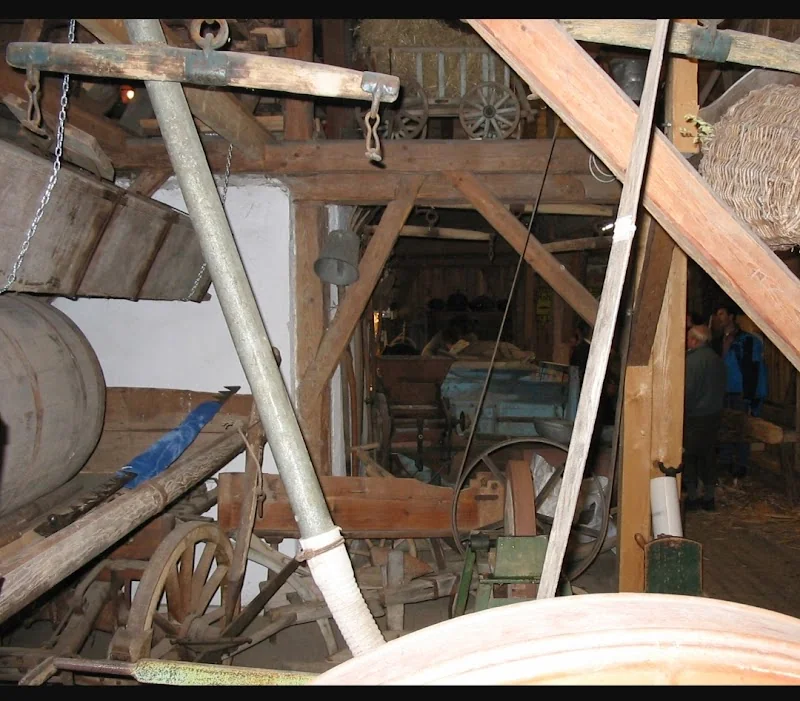
The barn and the stable are also important in this concept. The municipality mentions the tools of a small farming estate there. This broadens the view of the working side of the house, as a farmhouse was not only living space but also a place of production, storage, workshop, and economic space. For visitors, this is enlightening because it makes the spatial unity of living and working visible. In many historical households, everyday life, agriculture, and craftsmanship were closely intertwined. The Neuchl Estate precisely shows this connection at a place where one can still switch between the living room, kitchen, stable, and barn today. This makes the tour vivid and easy to understand, even for people who have hardly dealt with regional architectural history before. ([schaeftlarn.de](https://www.schaeftlarn.de/heimathaus/))
The Cultural Portal Bavaria describes the room division a bit further and mentions additional exhibition areas on the upper floor besides the living room, kitchen, and pantry. There, folk piety, traditional clothing parts, and school items are housed. This mixture shows that the home house is not limited to household goods but also makes visible the cultural and social worlds of life in the area. Folk piety refers to religious practice in everyday life, traditional clothing parts to regional clothing and self-understanding, and school items to education and childhood. Together, this results in a very broad but still compact overview of the living environment of earlier generations in Schäftlarn. For visitors, this means: The Neuchl Estate is not just a house, but a small collection of thematic rooms that tell the village life in its different facets. ([kulturportal-bayern.de](https://kulturportal-bayern.de/veranstalter/heimathaus-neuchl-anwesen/))
The living rooms are furnished as farmers' parlors according to the municipality's information and house a collection of pictures, religious and secular objects. They also serve as meeting places for the preservation of customs. This is an important point because it shows that the house is also used socially. A museum that is also a meeting place remains lively and involves the people on site. This is precisely the strength of a home house: It not only creates distance from the past but also closeness to the present of the community. Therefore, those who visit the Neuchl Estate see not only old objects but also the way a community identifies with its history and consciously carries it forward. ([schaeftlarn.de](https://www.schaeftlarn.de/heimathaus/))
The museum directories further emphasize this character. Museen.de lists the Neuchl Estate as a museum, providing the address, contact details, and the seasonal opening rhythm. The Cultural Portal Bavaria classifies it as a cultural organizer with an event barn. This dual classification is revealing because it makes the function of the house visible between museum and event venue. It is thus neither just an exhibition space nor just an event space, but a mix of both. For visitors, this connection is particularly interesting because they experience a house that remains in its historical substance while being open for encounters and mediation. ([museen.de](https://museen.de/heimathaus-schaeftlarn-hohenschaeftlarn.html))
Location in Hohenschäftlarn and Visit On-Site
The official address of the Neuchl Estate is Oberdorf 6 in 82069 Hohenschäftlarn. As a contact, the municipality of Schäftlarn mentions the town hall at Starnberger Straße 50 with telephone number and email address. This is helpful for planning visits, as tours and viewings take place by appointment or arrangement. Anyone wishing to make an appointment thus has a concrete municipal contact point. The location in Hohenschäftlarn is also important from a search perspective because many users inquire about the address or local reference before deciding to visit. Especially at smaller cultural sites, the precise address is often more valuable than long directions, as it can be directly entered into navigation systems and local maps. ([schaeftlarn.de](https://www.schaeftlarn.de/heimathaus/))
The Cultural Portal Bavaria emphasizes that the Neuchl Estate is located in the middle of Hohenschäftlarn and is one of the last small farmhouses in the area. This classification makes the location immediately understandable: It is not an isolated open-air object on the outskirts, but a historic building that is anchored in the village itself. This gives the visit a special quality because one experiences the house not detached from its surroundings. The everyday proximity of the location strongly contributes to its authenticity. One does not stand in front of an artificially constructed museum complex but in front of a real place where former ways of life have remained visible. For people visiting Schäftlarn, this is a good reason to include the home house in a tour of the village. ([kulturportal-bayern.de](https://kulturportal-bayern.de/veranstalter/heimathaus-neuchl-anwesen/))
In the reviewed municipal sources, no own parking spaces, no parking fees, and no number of parking spaces are indicated. This does not mean that arriving by car is impossible, but it does mean that the official texts clearly emphasize the address, opening hours, and contact. Therefore, those planning their visit should check the local map of the municipality and the local situation in advance. This cautious conclusion is important because it does not invent details but makes visible exactly what is mentioned in the published information. For seekers with the keyword parking, this is an honest classification: The focus is on the cultural site itself, not on detailed infrastructure information. ([schaeftlarn.de](https://www.schaeftlarn.de/heimathaus/))
Even without long directions, orientation remains simple because the house is clearly named and distinctly addressed. Those arriving on foot or after a village tour move within an immediate, rural framework. This fits well with the character of the house, as a home house does not thrive on spectacular distance but on local closeness and recognizability. The Neuchl Estate is therefore a place that one visits consciously, not discovered by chance. This makes it particularly suitable for families, school groups, local history enthusiasts, and visitors interested in regional history. The concentration on a few, precise communication data is an advantage in this context because it keeps planning simple and reliable. ([schaeftlarn.de](https://www.schaeftlarn.de/heimathaus/))
Customs, Volunteer Work, and Special Projects Around the Estate
A significant part of the importance of the Neuchl Estate lies in its role as a place of community. The municipality explicitly states that the parlors also serve as meeting places for the preservation of customs. This makes it clear that the house is not only exhibited but also animated. Especially at local home sites, this is a great advantage because history is then not perceived as a rigid past but as part of today's community life. Such places help ensure that traditions, memories, and regional forms of togetherness are passed on. For search terms like customs Schäftlarn or home house Schäftlarn, this function is crucial because it shows that the estate is more than just a collection of old things. ([schaeftlarn.de](https://www.schaeftlarn.de/heimathaus/))
The volunteer structure is particularly noteworthy. The municipality mentions a working group of seven retirees who want to present the house as it was lived and worked in the past. This form of care is often the key to the success of local museums in smaller communities because personal knowledge, memory work, and practical care come together here. Visitors often notice that such houses are not backed by an anonymous operation but by people with local knowledge and genuine connection. This creates trust and atmosphere. The Neuchl Estate thus appears less like a standardized museum and more like a carefully maintained piece of community culture that is preserved with much patience and local commitment. ([schaeftlarn.de](https://www.schaeftlarn.de/heimathaus/))
An interesting additional chapter is the model beehive at the Neuchl Estate, which was reported by Merkur in 2007. At that time, a wooden house was created next to the local museum to inspire children for beekeeping and convey knowledge about beekeeping and honey production. The reporting also mentioned that no bees would be kept there because the property is located in the middle of a residential area. Even though this project does not form the core of the museum, it illustrates very well how the estate can be used as a starting point for educational and mediation work. The topic of beekeeping also fits sensibly into the rural history of the area and connects to traditional knowledge bases. ([merkur.de](https://www.merkur.de/lokales/muenchen-lk/modell-bienenhaus-neuchl-anwesen-341692.html))
Such projects are more than just nice additions for a home house. They connect historical substance with practical mediation and show that home care does not stand still but evolves. The Neuchl Estate thus exemplifies a form of cultural work that is close to the people: it explains, shows, collects, and invites. The historical credibility of the house is not weakened by this but strengthened because the municipality and the volunteers make it clear that the place should remain lively. For visitors, this creates an image of Schäftlarn that consists not only of data and dates but of concrete stories, activities, and communal memory. ([schaeftlarn.de](https://www.schaeftlarn.de/heimathaus/))
Why the Neuchl Estate is Important for Schäftlarn
The Neuchl Estate is important for Schäftlarn primarily because it fulfills several functions simultaneously: It is a monument, home house, small museum site, and meeting point for cultural remembrance. This very multipurpose role makes it attractive for different search queries, from historical background to opening hours to tours and free admission. The official description shows a house that has grown out of the agricultural past of the area and today consciously lives on as an authentic place of mediation. Museen.de and the Cultural Portal Bavaria confirm this classification from a museum and cultural perspective. For visitors, this means a compact but content-rich insight into the history of a place that does not exhibit its roots but cares for them. ([schaeftlarn.de](https://www.schaeftlarn.de/heimathaus/))
Those searching for photos, history, opening hours, or tours will find in the Neuchl Estate a place that convinces precisely because of its restraint. The house is not a large exhibition center but a quiet, carefully preserved small farmhouse with a clear historical statement. It makes visible how living, working, customs, and everyday culture can be interconnected. The restoration of the rooms, the collection of pictures and objects, the use for customs meetings, and the volunteer care together create a convincing overall picture. This is precisely the charm of the Neuchl Estate: It tells the story of Schäftlarn not loudly but credibly, spatially, and close to real life. ([schaeftlarn.de](https://www.schaeftlarn.de/heimathaus/))
Sources:
Show moreShow less
Neuchl Estate | Opening Hours & History
The Neuchl Estate in Hohenschäftlarn is the home house of the municipality of Schäftlarn and at the same time a rare example of how a historic small farmhouse can become a vibrant place of remembrance. In the official municipal information, it appears under the house name Stallwastl, with the address Oberdorf 6 in 82069 Hohenschäftlarn. Those searching for Neuchl Estate Schäftlarn, home house or local museum will find here not just an address, but a piece of local history that is further narrated within the building itself. Particularly defining is the combination of original-like rooms, seasonal opening days, free admission, and a clear connection to rural everyday culture. As a result, the estate is suitable for visitors interested in history, regional identity, small museums, and authentic village architecture. The available online presentation of the municipality and the museum directories shows one thing above all: The Neuchl Estate is not a spectacular large building, but a quiet, carefully maintained historical site with a strong sense of home. ([schaeftlarn.de](https://www.schaeftlarn.de/heimathaus/))
History of the Neuchl Estate and the House Name Stallwastl
The historical depth of the Neuchl Estate is one of the most important reasons for its current significance. The municipality of Schäftlarn cites the earliest mention as the year 1492. This means that the documented history reaches far back into the late Middle Ages and anchors the estate in a long local development that has remained visible over several generations, uses, and renovations. Another turning point was the fire of 1828, after which the building was almost completely destroyed. Subsequently, reconstruction took place, allowing a threatened building substance to become a habitable and usable house once again. That the municipality acquired the estate in 1992 after the death of the last owner shows the transition from private to public responsibility. The house was thus not only preserved but consciously continued as part of community life. ([schaeftlarn.de](https://www.schaeftlarn.de/heimathaus/))
In this context, the house name Stallwastl, which the municipality explicitly mentions, is also important. Such house names are often more than mere nicknames in rural areas, as they connect family history, local memory, and identity. This is precisely what makes the Neuchl Estate interesting for visitors who do not just want to see a house, but a place where village life has condensed over centuries. The municipality also describes that a working group consisting of seven retirees aims to present how people lived and worked in the past within the house. This is a strong signal that this is about lived home care and not just about museum preservation. The house thus exemplifies a form of historical care where volunteer engagement and historical substance directly interact. ([schaeftlarn.de](https://www.schaeftlarn.de/heimathaus/))
The Cultural Portal Bavaria adds another important point to this history: In the Neuchl Estate, a small local museum with an event barn was opened in 1998. Additionally, the original room functions of the former residential house with living room, kitchen, and pantry on the ground floor were restored, while the upper floor was reserved for additional exhibition areas. Among other things, folk piety, traditional clothing parts, and school items are mentioned there. This information shows that the Neuchl Estate is not only interesting from a monument preservation perspective but has also been consciously staged from a cultural-historical standpoint. The restoration of the room functions makes the history of the house not abstract, but spatially tangible. Anyone walking through such a building quickly understands how closely living, working, storing supplies, and local tradition were once connected. ([kulturportal-bayern.de](https://kulturportal-bayern.de/veranstalter/heimathaus-neuchl-anwesen/))
Opening Hours, Admission, and Tours at the Home House
For everyone planning a visit, the opening hours are the most important practical information. The municipality of Schäftlarn currently states that the season is from May to October, every 1st Saturday from 2:00 PM to 4:00 PM. There is also a particularly attractive point: Admission is free. Tours are possible by appointment. Thus, the Neuchl Estate is not a museum with daily regular operations, but a cultural address consciously opened during the season, intended more for targeted visits than for spontaneous walk-in traffic. This fits well with the character of the house, as it is a historic home house with personal care and manageable size. Those who know the opening days can plan their visit well and experience the estate in a quiet, uncrowded atmosphere. ([schaeftlarn.de](https://www.schaeftlarn.de/heimathaus/))
A community newsletter from the municipality of Schäftlarn confirms this opening pattern with specific dates in 2024 and additionally states that visits for groups and school classes are possible by arrangement. This is important because it describes the Neuchl Estate not only as a place for individual visitors but also as a learning location for organized visits. Especially school classes, clubs, or history enthusiasts benefit when a historic house can be explained in a manageable framework. The combination of fixed opening days and arranged tours ensures that the visit remains planable while providing enough space for personal communication. For the search terms opening hours, tours, and free admission, this is the most reliable information basis. ([schaeftlarn.de](https://www.schaeftlarn.de/wp-content/uploads/2025/02/04April4Seiten.pdf))
The seasonal rhythm is also culturally and historically sensible. A house like the Neuchl Estate does not thrive on mass operations but on closeness, tranquility, and the feeling of entering a carefully preserved everyday world. The limited opening hours underscore the character of a volunteer-run home house that operates with limited but clearly communicated dates. This is often more pleasant for visitors than a permanent public operation, as visits occur more consciously. Those who prepare for the appointment have more time to truly absorb the rooms, objects, and historical references. At the same time, the effort for the local working group remains manageable, which is an important factor for such a house in a smaller community. ([schaeftlarn.de](https://www.schaeftlarn.de/heimathaus/))
Rooms, Collection, and Exhibition at the Neuchl Estate
The greatest charm of the Neuchl Estate lies in the way the rooms are furnished. The municipality describes that the apartment contains furnishings from the 19th century. The kitchen, cellar, and washhouse show the household condition of the early 20th century. This combination is particularly valuable for a local museum because it not only shows decorative objects but also makes the practical organization of everyday life comprehensible. One can imagine how food was prepared, supplies stored, water and laundry moved, and domestic work structured. Precisely because the rooms do not act as mere backdrops, a credible picture of rural and small-village life emerges. For search queries regarding exhibitions, interiors, or photos, this is the decisive substantive content. ([schaeftlarn.de](https://www.schaeftlarn.de/heimathaus/))
The barn and the stable are also important in this concept. The municipality mentions the tools of a small farming estate there. This broadens the view of the working side of the house, as a farmhouse was not only living space but also a place of production, storage, workshop, and economic space. For visitors, this is enlightening because it makes the spatial unity of living and working visible. In many historical households, everyday life, agriculture, and craftsmanship were closely intertwined. The Neuchl Estate precisely shows this connection at a place where one can still switch between the living room, kitchen, stable, and barn today. This makes the tour vivid and easy to understand, even for people who have hardly dealt with regional architectural history before. ([schaeftlarn.de](https://www.schaeftlarn.de/heimathaus/))
The Cultural Portal Bavaria describes the room division a bit further and mentions additional exhibition areas on the upper floor besides the living room, kitchen, and pantry. There, folk piety, traditional clothing parts, and school items are housed. This mixture shows that the home house is not limited to household goods but also makes visible the cultural and social worlds of life in the area. Folk piety refers to religious practice in everyday life, traditional clothing parts to regional clothing and self-understanding, and school items to education and childhood. Together, this results in a very broad but still compact overview of the living environment of earlier generations in Schäftlarn. For visitors, this means: The Neuchl Estate is not just a house, but a small collection of thematic rooms that tell the village life in its different facets. ([kulturportal-bayern.de](https://kulturportal-bayern.de/veranstalter/heimathaus-neuchl-anwesen/))
The living rooms are furnished as farmers' parlors according to the municipality's information and house a collection of pictures, religious and secular objects. They also serve as meeting places for the preservation of customs. This is an important point because it shows that the house is also used socially. A museum that is also a meeting place remains lively and involves the people on site. This is precisely the strength of a home house: It not only creates distance from the past but also closeness to the present of the community. Therefore, those who visit the Neuchl Estate see not only old objects but also the way a community identifies with its history and consciously carries it forward. ([schaeftlarn.de](https://www.schaeftlarn.de/heimathaus/))
The museum directories further emphasize this character. Museen.de lists the Neuchl Estate as a museum, providing the address, contact details, and the seasonal opening rhythm. The Cultural Portal Bavaria classifies it as a cultural organizer with an event barn. This dual classification is revealing because it makes the function of the house visible between museum and event venue. It is thus neither just an exhibition space nor just an event space, but a mix of both. For visitors, this connection is particularly interesting because they experience a house that remains in its historical substance while being open for encounters and mediation. ([museen.de](https://museen.de/heimathaus-schaeftlarn-hohenschaeftlarn.html))
Location in Hohenschäftlarn and Visit On-Site
The official address of the Neuchl Estate is Oberdorf 6 in 82069 Hohenschäftlarn. As a contact, the municipality of Schäftlarn mentions the town hall at Starnberger Straße 50 with telephone number and email address. This is helpful for planning visits, as tours and viewings take place by appointment or arrangement. Anyone wishing to make an appointment thus has a concrete municipal contact point. The location in Hohenschäftlarn is also important from a search perspective because many users inquire about the address or local reference before deciding to visit. Especially at smaller cultural sites, the precise address is often more valuable than long directions, as it can be directly entered into navigation systems and local maps. ([schaeftlarn.de](https://www.schaeftlarn.de/heimathaus/))
The Cultural Portal Bavaria emphasizes that the Neuchl Estate is located in the middle of Hohenschäftlarn and is one of the last small farmhouses in the area. This classification makes the location immediately understandable: It is not an isolated open-air object on the outskirts, but a historic building that is anchored in the village itself. This gives the visit a special quality because one experiences the house not detached from its surroundings. The everyday proximity of the location strongly contributes to its authenticity. One does not stand in front of an artificially constructed museum complex but in front of a real place where former ways of life have remained visible. For people visiting Schäftlarn, this is a good reason to include the home house in a tour of the village. ([kulturportal-bayern.de](https://kulturportal-bayern.de/veranstalter/heimathaus-neuchl-anwesen/))
In the reviewed municipal sources, no own parking spaces, no parking fees, and no number of parking spaces are indicated. This does not mean that arriving by car is impossible, but it does mean that the official texts clearly emphasize the address, opening hours, and contact. Therefore, those planning their visit should check the local map of the municipality and the local situation in advance. This cautious conclusion is important because it does not invent details but makes visible exactly what is mentioned in the published information. For seekers with the keyword parking, this is an honest classification: The focus is on the cultural site itself, not on detailed infrastructure information. ([schaeftlarn.de](https://www.schaeftlarn.de/heimathaus/))
Even without long directions, orientation remains simple because the house is clearly named and distinctly addressed. Those arriving on foot or after a village tour move within an immediate, rural framework. This fits well with the character of the house, as a home house does not thrive on spectacular distance but on local closeness and recognizability. The Neuchl Estate is therefore a place that one visits consciously, not discovered by chance. This makes it particularly suitable for families, school groups, local history enthusiasts, and visitors interested in regional history. The concentration on a few, precise communication data is an advantage in this context because it keeps planning simple and reliable. ([schaeftlarn.de](https://www.schaeftlarn.de/heimathaus/))
Customs, Volunteer Work, and Special Projects Around the Estate
A significant part of the importance of the Neuchl Estate lies in its role as a place of community. The municipality explicitly states that the parlors also serve as meeting places for the preservation of customs. This makes it clear that the house is not only exhibited but also animated. Especially at local home sites, this is a great advantage because history is then not perceived as a rigid past but as part of today's community life. Such places help ensure that traditions, memories, and regional forms of togetherness are passed on. For search terms like customs Schäftlarn or home house Schäftlarn, this function is crucial because it shows that the estate is more than just a collection of old things. ([schaeftlarn.de](https://www.schaeftlarn.de/heimathaus/))
The volunteer structure is particularly noteworthy. The municipality mentions a working group of seven retirees who want to present the house as it was lived and worked in the past. This form of care is often the key to the success of local museums in smaller communities because personal knowledge, memory work, and practical care come together here. Visitors often notice that such houses are not backed by an anonymous operation but by people with local knowledge and genuine connection. This creates trust and atmosphere. The Neuchl Estate thus appears less like a standardized museum and more like a carefully maintained piece of community culture that is preserved with much patience and local commitment. ([schaeftlarn.de](https://www.schaeftlarn.de/heimathaus/))
An interesting additional chapter is the model beehive at the Neuchl Estate, which was reported by Merkur in 2007. At that time, a wooden house was created next to the local museum to inspire children for beekeeping and convey knowledge about beekeeping and honey production. The reporting also mentioned that no bees would be kept there because the property is located in the middle of a residential area. Even though this project does not form the core of the museum, it illustrates very well how the estate can be used as a starting point for educational and mediation work. The topic of beekeeping also fits sensibly into the rural history of the area and connects to traditional knowledge bases. ([merkur.de](https://www.merkur.de/lokales/muenchen-lk/modell-bienenhaus-neuchl-anwesen-341692.html))
Such projects are more than just nice additions for a home house. They connect historical substance with practical mediation and show that home care does not stand still but evolves. The Neuchl Estate thus exemplifies a form of cultural work that is close to the people: it explains, shows, collects, and invites. The historical credibility of the house is not weakened by this but strengthened because the municipality and the volunteers make it clear that the place should remain lively. For visitors, this creates an image of Schäftlarn that consists not only of data and dates but of concrete stories, activities, and communal memory. ([schaeftlarn.de](https://www.schaeftlarn.de/heimathaus/))
Why the Neuchl Estate is Important for Schäftlarn
The Neuchl Estate is important for Schäftlarn primarily because it fulfills several functions simultaneously: It is a monument, home house, small museum site, and meeting point for cultural remembrance. This very multipurpose role makes it attractive for different search queries, from historical background to opening hours to tours and free admission. The official description shows a house that has grown out of the agricultural past of the area and today consciously lives on as an authentic place of mediation. Museen.de and the Cultural Portal Bavaria confirm this classification from a museum and cultural perspective. For visitors, this means a compact but content-rich insight into the history of a place that does not exhibit its roots but cares for them. ([schaeftlarn.de](https://www.schaeftlarn.de/heimathaus/))
Those searching for photos, history, opening hours, or tours will find in the Neuchl Estate a place that convinces precisely because of its restraint. The house is not a large exhibition center but a quiet, carefully preserved small farmhouse with a clear historical statement. It makes visible how living, working, customs, and everyday culture can be interconnected. The restoration of the rooms, the collection of pictures and objects, the use for customs meetings, and the volunteer care together create a convincing overall picture. This is precisely the charm of the Neuchl Estate: It tells the story of Schäftlarn not loudly but credibly, spatially, and close to real life. ([schaeftlarn.de](https://www.schaeftlarn.de/heimathaus/))
Sources:
Neuchl Estate | Opening Hours & History
The Neuchl Estate in Hohenschäftlarn is the home house of the municipality of Schäftlarn and at the same time a rare example of how a historic small farmhouse can become a vibrant place of remembrance. In the official municipal information, it appears under the house name Stallwastl, with the address Oberdorf 6 in 82069 Hohenschäftlarn. Those searching for Neuchl Estate Schäftlarn, home house or local museum will find here not just an address, but a piece of local history that is further narrated within the building itself. Particularly defining is the combination of original-like rooms, seasonal opening days, free admission, and a clear connection to rural everyday culture. As a result, the estate is suitable for visitors interested in history, regional identity, small museums, and authentic village architecture. The available online presentation of the municipality and the museum directories shows one thing above all: The Neuchl Estate is not a spectacular large building, but a quiet, carefully maintained historical site with a strong sense of home. ([schaeftlarn.de](https://www.schaeftlarn.de/heimathaus/))
History of the Neuchl Estate and the House Name Stallwastl
The historical depth of the Neuchl Estate is one of the most important reasons for its current significance. The municipality of Schäftlarn cites the earliest mention as the year 1492. This means that the documented history reaches far back into the late Middle Ages and anchors the estate in a long local development that has remained visible over several generations, uses, and renovations. Another turning point was the fire of 1828, after which the building was almost completely destroyed. Subsequently, reconstruction took place, allowing a threatened building substance to become a habitable and usable house once again. That the municipality acquired the estate in 1992 after the death of the last owner shows the transition from private to public responsibility. The house was thus not only preserved but consciously continued as part of community life. ([schaeftlarn.de](https://www.schaeftlarn.de/heimathaus/))
In this context, the house name Stallwastl, which the municipality explicitly mentions, is also important. Such house names are often more than mere nicknames in rural areas, as they connect family history, local memory, and identity. This is precisely what makes the Neuchl Estate interesting for visitors who do not just want to see a house, but a place where village life has condensed over centuries. The municipality also describes that a working group consisting of seven retirees aims to present how people lived and worked in the past within the house. This is a strong signal that this is about lived home care and not just about museum preservation. The house thus exemplifies a form of historical care where volunteer engagement and historical substance directly interact. ([schaeftlarn.de](https://www.schaeftlarn.de/heimathaus/))
The Cultural Portal Bavaria adds another important point to this history: In the Neuchl Estate, a small local museum with an event barn was opened in 1998. Additionally, the original room functions of the former residential house with living room, kitchen, and pantry on the ground floor were restored, while the upper floor was reserved for additional exhibition areas. Among other things, folk piety, traditional clothing parts, and school items are mentioned there. This information shows that the Neuchl Estate is not only interesting from a monument preservation perspective but has also been consciously staged from a cultural-historical standpoint. The restoration of the room functions makes the history of the house not abstract, but spatially tangible. Anyone walking through such a building quickly understands how closely living, working, storing supplies, and local tradition were once connected. ([kulturportal-bayern.de](https://kulturportal-bayern.de/veranstalter/heimathaus-neuchl-anwesen/))
Opening Hours, Admission, and Tours at the Home House
For everyone planning a visit, the opening hours are the most important practical information. The municipality of Schäftlarn currently states that the season is from May to October, every 1st Saturday from 2:00 PM to 4:00 PM. There is also a particularly attractive point: Admission is free. Tours are possible by appointment. Thus, the Neuchl Estate is not a museum with daily regular operations, but a cultural address consciously opened during the season, intended more for targeted visits than for spontaneous walk-in traffic. This fits well with the character of the house, as it is a historic home house with personal care and manageable size. Those who know the opening days can plan their visit well and experience the estate in a quiet, uncrowded atmosphere. ([schaeftlarn.de](https://www.schaeftlarn.de/heimathaus/))
A community newsletter from the municipality of Schäftlarn confirms this opening pattern with specific dates in 2024 and additionally states that visits for groups and school classes are possible by arrangement. This is important because it describes the Neuchl Estate not only as a place for individual visitors but also as a learning location for organized visits. Especially school classes, clubs, or history enthusiasts benefit when a historic house can be explained in a manageable framework. The combination of fixed opening days and arranged tours ensures that the visit remains planable while providing enough space for personal communication. For the search terms opening hours, tours, and free admission, this is the most reliable information basis. ([schaeftlarn.de](https://www.schaeftlarn.de/wp-content/uploads/2025/02/04April4Seiten.pdf))
The seasonal rhythm is also culturally and historically sensible. A house like the Neuchl Estate does not thrive on mass operations but on closeness, tranquility, and the feeling of entering a carefully preserved everyday world. The limited opening hours underscore the character of a volunteer-run home house that operates with limited but clearly communicated dates. This is often more pleasant for visitors than a permanent public operation, as visits occur more consciously. Those who prepare for the appointment have more time to truly absorb the rooms, objects, and historical references. At the same time, the effort for the local working group remains manageable, which is an important factor for such a house in a smaller community. ([schaeftlarn.de](https://www.schaeftlarn.de/heimathaus/))
Rooms, Collection, and Exhibition at the Neuchl Estate
The greatest charm of the Neuchl Estate lies in the way the rooms are furnished. The municipality describes that the apartment contains furnishings from the 19th century. The kitchen, cellar, and washhouse show the household condition of the early 20th century. This combination is particularly valuable for a local museum because it not only shows decorative objects but also makes the practical organization of everyday life comprehensible. One can imagine how food was prepared, supplies stored, water and laundry moved, and domestic work structured. Precisely because the rooms do not act as mere backdrops, a credible picture of rural and small-village life emerges. For search queries regarding exhibitions, interiors, or photos, this is the decisive substantive content. ([schaeftlarn.de](https://www.schaeftlarn.de/heimathaus/))
The barn and the stable are also important in this concept. The municipality mentions the tools of a small farming estate there. This broadens the view of the working side of the house, as a farmhouse was not only living space but also a place of production, storage, workshop, and economic space. For visitors, this is enlightening because it makes the spatial unity of living and working visible. In many historical households, everyday life, agriculture, and craftsmanship were closely intertwined. The Neuchl Estate precisely shows this connection at a place where one can still switch between the living room, kitchen, stable, and barn today. This makes the tour vivid and easy to understand, even for people who have hardly dealt with regional architectural history before. ([schaeftlarn.de](https://www.schaeftlarn.de/heimathaus/))
The Cultural Portal Bavaria describes the room division a bit further and mentions additional exhibition areas on the upper floor besides the living room, kitchen, and pantry. There, folk piety, traditional clothing parts, and school items are housed. This mixture shows that the home house is not limited to household goods but also makes visible the cultural and social worlds of life in the area. Folk piety refers to religious practice in everyday life, traditional clothing parts to regional clothing and self-understanding, and school items to education and childhood. Together, this results in a very broad but still compact overview of the living environment of earlier generations in Schäftlarn. For visitors, this means: The Neuchl Estate is not just a house, but a small collection of thematic rooms that tell the village life in its different facets. ([kulturportal-bayern.de](https://kulturportal-bayern.de/veranstalter/heimathaus-neuchl-anwesen/))
The living rooms are furnished as farmers' parlors according to the municipality's information and house a collection of pictures, religious and secular objects. They also serve as meeting places for the preservation of customs. This is an important point because it shows that the house is also used socially. A museum that is also a meeting place remains lively and involves the people on site. This is precisely the strength of a home house: It not only creates distance from the past but also closeness to the present of the community. Therefore, those who visit the Neuchl Estate see not only old objects but also the way a community identifies with its history and consciously carries it forward. ([schaeftlarn.de](https://www.schaeftlarn.de/heimathaus/))
The museum directories further emphasize this character. Museen.de lists the Neuchl Estate as a museum, providing the address, contact details, and the seasonal opening rhythm. The Cultural Portal Bavaria classifies it as a cultural organizer with an event barn. This dual classification is revealing because it makes the function of the house visible between museum and event venue. It is thus neither just an exhibition space nor just an event space, but a mix of both. For visitors, this connection is particularly interesting because they experience a house that remains in its historical substance while being open for encounters and mediation. ([museen.de](https://museen.de/heimathaus-schaeftlarn-hohenschaeftlarn.html))
Location in Hohenschäftlarn and Visit On-Site
The official address of the Neuchl Estate is Oberdorf 6 in 82069 Hohenschäftlarn. As a contact, the municipality of Schäftlarn mentions the town hall at Starnberger Straße 50 with telephone number and email address. This is helpful for planning visits, as tours and viewings take place by appointment or arrangement. Anyone wishing to make an appointment thus has a concrete municipal contact point. The location in Hohenschäftlarn is also important from a search perspective because many users inquire about the address or local reference before deciding to visit. Especially at smaller cultural sites, the precise address is often more valuable than long directions, as it can be directly entered into navigation systems and local maps. ([schaeftlarn.de](https://www.schaeftlarn.de/heimathaus/))
The Cultural Portal Bavaria emphasizes that the Neuchl Estate is located in the middle of Hohenschäftlarn and is one of the last small farmhouses in the area. This classification makes the location immediately understandable: It is not an isolated open-air object on the outskirts, but a historic building that is anchored in the village itself. This gives the visit a special quality because one experiences the house not detached from its surroundings. The everyday proximity of the location strongly contributes to its authenticity. One does not stand in front of an artificially constructed museum complex but in front of a real place where former ways of life have remained visible. For people visiting Schäftlarn, this is a good reason to include the home house in a tour of the village. ([kulturportal-bayern.de](https://kulturportal-bayern.de/veranstalter/heimathaus-neuchl-anwesen/))
In the reviewed municipal sources, no own parking spaces, no parking fees, and no number of parking spaces are indicated. This does not mean that arriving by car is impossible, but it does mean that the official texts clearly emphasize the address, opening hours, and contact. Therefore, those planning their visit should check the local map of the municipality and the local situation in advance. This cautious conclusion is important because it does not invent details but makes visible exactly what is mentioned in the published information. For seekers with the keyword parking, this is an honest classification: The focus is on the cultural site itself, not on detailed infrastructure information. ([schaeftlarn.de](https://www.schaeftlarn.de/heimathaus/))
Even without long directions, orientation remains simple because the house is clearly named and distinctly addressed. Those arriving on foot or after a village tour move within an immediate, rural framework. This fits well with the character of the house, as a home house does not thrive on spectacular distance but on local closeness and recognizability. The Neuchl Estate is therefore a place that one visits consciously, not discovered by chance. This makes it particularly suitable for families, school groups, local history enthusiasts, and visitors interested in regional history. The concentration on a few, precise communication data is an advantage in this context because it keeps planning simple and reliable. ([schaeftlarn.de](https://www.schaeftlarn.de/heimathaus/))
Customs, Volunteer Work, and Special Projects Around the Estate
A significant part of the importance of the Neuchl Estate lies in its role as a place of community. The municipality explicitly states that the parlors also serve as meeting places for the preservation of customs. This makes it clear that the house is not only exhibited but also animated. Especially at local home sites, this is a great advantage because history is then not perceived as a rigid past but as part of today's community life. Such places help ensure that traditions, memories, and regional forms of togetherness are passed on. For search terms like customs Schäftlarn or home house Schäftlarn, this function is crucial because it shows that the estate is more than just a collection of old things. ([schaeftlarn.de](https://www.schaeftlarn.de/heimathaus/))
The volunteer structure is particularly noteworthy. The municipality mentions a working group of seven retirees who want to present the house as it was lived and worked in the past. This form of care is often the key to the success of local museums in smaller communities because personal knowledge, memory work, and practical care come together here. Visitors often notice that such houses are not backed by an anonymous operation but by people with local knowledge and genuine connection. This creates trust and atmosphere. The Neuchl Estate thus appears less like a standardized museum and more like a carefully maintained piece of community culture that is preserved with much patience and local commitment. ([schaeftlarn.de](https://www.schaeftlarn.de/heimathaus/))
An interesting additional chapter is the model beehive at the Neuchl Estate, which was reported by Merkur in 2007. At that time, a wooden house was created next to the local museum to inspire children for beekeeping and convey knowledge about beekeeping and honey production. The reporting also mentioned that no bees would be kept there because the property is located in the middle of a residential area. Even though this project does not form the core of the museum, it illustrates very well how the estate can be used as a starting point for educational and mediation work. The topic of beekeeping also fits sensibly into the rural history of the area and connects to traditional knowledge bases. ([merkur.de](https://www.merkur.de/lokales/muenchen-lk/modell-bienenhaus-neuchl-anwesen-341692.html))
Such projects are more than just nice additions for a home house. They connect historical substance with practical mediation and show that home care does not stand still but evolves. The Neuchl Estate thus exemplifies a form of cultural work that is close to the people: it explains, shows, collects, and invites. The historical credibility of the house is not weakened by this but strengthened because the municipality and the volunteers make it clear that the place should remain lively. For visitors, this creates an image of Schäftlarn that consists not only of data and dates but of concrete stories, activities, and communal memory. ([schaeftlarn.de](https://www.schaeftlarn.de/heimathaus/))
Why the Neuchl Estate is Important for Schäftlarn
The Neuchl Estate is important for Schäftlarn primarily because it fulfills several functions simultaneously: It is a monument, home house, small museum site, and meeting point for cultural remembrance. This very multipurpose role makes it attractive for different search queries, from historical background to opening hours to tours and free admission. The official description shows a house that has grown out of the agricultural past of the area and today consciously lives on as an authentic place of mediation. Museen.de and the Cultural Portal Bavaria confirm this classification from a museum and cultural perspective. For visitors, this means a compact but content-rich insight into the history of a place that does not exhibit its roots but cares for them. ([schaeftlarn.de](https://www.schaeftlarn.de/heimathaus/))
Those searching for photos, history, opening hours, or tours will find in the Neuchl Estate a place that convinces precisely because of its restraint. The house is not a large exhibition center but a quiet, carefully preserved small farmhouse with a clear historical statement. It makes visible how living, working, customs, and everyday culture can be interconnected. The restoration of the rooms, the collection of pictures and objects, the use for customs meetings, and the volunteer care together create a convincing overall picture. This is precisely the charm of the Neuchl Estate: It tells the story of Schäftlarn not loudly but credibly, spatially, and close to real life. ([schaeftlarn.de](https://www.schaeftlarn.de/heimathaus/))
Sources:
Frequently Asked Questions
Reviews
No reviews found