
München
Odeonspl. 1, 80539 München, Deutschland
Odeonsplatz | U-Bahn & Parking
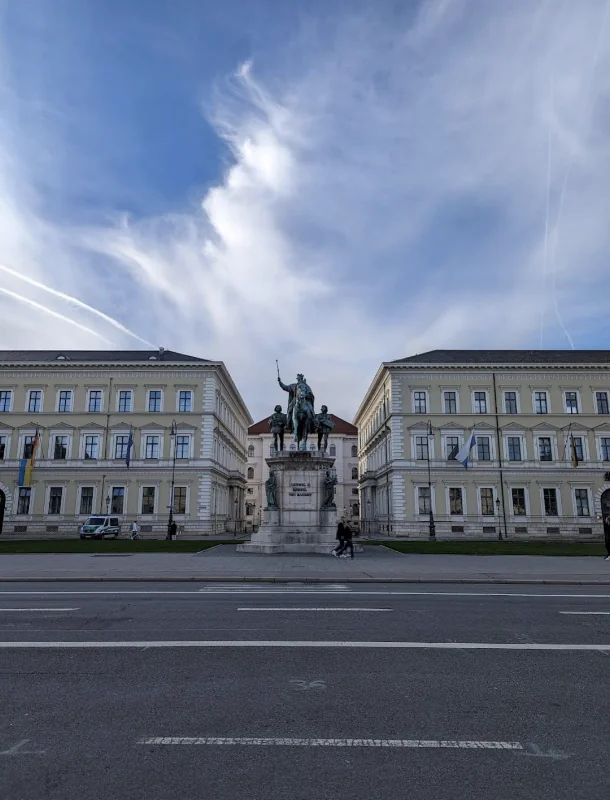
The Odeonsplatz is one of the defining places in Munich and is much more than just a busy square in the city center. Located at Odeonsplatz 1 in 80539 Munich, it is exactly where the Old Town, Residence, Hofgarten, Theatiner Church, and Feldherrnhalle meet in close proximity. Munich Tourism describes the Odeonsplatz as one of the most beautiful and impressive squares in the city; at the same time, it marks the northern boundary of the pedestrian zone and the beginning of Ludwigstraße. Those arriving here find themselves in an architecturally extraordinary backdrop that combines baroque church architecture, classical monuments, royal history, and modern mobility in a single cityscape. This mixture makes the square equally attractive for walks, photo stops, city tours, subway arrivals, and cultural events. ([muenchen.de](https://www.muenchen.de/en/sights/odeonsplatz?utm_source=openai))
Subway, Route, and Directions to Odeonsplatz
For arrival, the Odeonsplatz subway station is the most important point of orientation. According to MVV, the lines U3, U4, U5, and U6 intersect there on two levels, and bus lines N40, N41, and N45 are also served. The station is located in Zone M, providing a central, well-connected starting point for visits to the Old Town. Particularly convenient is the direct connection with the U5 from Munich Central Station, allowing easy access to the square without detours. Just a few steps from the platform lead to the pedestrian zone around Theatinerstraße, making the Odeonsplatz attractive not only for tourists but also for commuters, appointments in the city center, and spontaneous visits. Those searching for routes, maps, or directions will find a clear hub in Munich's public transport, where transfers, orientation, and onward travel can be easily connected. ([prod-redaktion.mvv-muenchen.de](https://prod-redaktion.mvv-muenchen.de/plaene-bahnhoefe/bahnhofsinformation/station/odeonsplatz/index.html))
The station's infrastructure is also interesting for visitors. MVV points out that access to the subway is possible via a step of ten centimeters; the station is therefore designed for daily use by many passengers, although one should pay attention to the current operational status of escalators and elevators on site. Historically, the station is also fascinating, as it was opened on October 19, 1971, and is one of the subway stations in the city planned by Paolo Nestler, characterized by clear, functional design and typical ceramic and fiber cement elements that create a recognizable style. Additionally, there is a wall mosaic by Karl Knappe in the southern barrier-free level. For orientation, this means: The subway station is not only a transport hub but also part of Munich's city history. Therefore, when searching for Odeonsplatz on the map, one should always consider the station, Theatinerstraße, and Ludwigstraße as the most important reference points. ([prod-redaktion.mvv-muenchen.de](https://prod-redaktion.mvv-muenchen.de/plaene-bahnhoefe/bahnhofsinformation/station/odeonsplatz/index.html))
Parking at Odeonsplatz and in the Old Town
When it comes to parking, the special location of the Odeonsplatz in the heart of the Old Town becomes apparent. The most convenient solution is the parking garage at Salvatorplatz, located directly behind Theatiner Church and offering a large capacity of 452 parking spaces for visitors. Munich Tourism explicitly describes this underground garage as an ideal starting point for a shopping tour or a small city walk in the Old Town. The location speaks for itself: next to Theatiner Church are the Odeonsplatz with Feldherrnhalle, the Residence, and Hofgarten in close proximity. The entrance height is around two meters, which is relevant for many but not all vehicles. Therefore, those specifically looking to park at Odeonsplatz will find a central and comparatively convenient solution without having to navigate through the narrow streets of the Old Town and the often limited parking zones. ([muenchen.de](https://www.muenchen.de/verkehr/parkgarage-am-salvatorplatz?utm_source=openai))
Another central option is the underground garage in front of the opera at Max-Joseph-Platz. Munich explicitly recommends it as a parking option for a city tour towards Odeonsplatz or Marienplatz. The garage is open daily from 6 AM to 1 AM, with exit possible around the clock, and the entrance height is 2.10 meters. This makes it suitable for visitors planning their walk through the Residence, Hofgarten, or the northern Old Town. It remains important in all parking matters in Munich that the respective rules posted on site apply; the city points out its parking space management and paid areas, which are regulated differently depending on the zone. For this reason, the large downtown garages are often the less stressful choice: they save time, reduce search traffic, and make the way to Odeonsplatz easier to plan, especially when traveling with family, luggage, or in bad weather. ([muenchen.de](https://www.muenchen.de/verkehr/tiefgarage-vor-der-oper?utm_source=openai))
Sights and History at Odeonsplatz
Surrounding the Odeonsplatz are several of Munich's most important sights in close proximity. On the west side stands Theatiner Church, described by Munich Tourism as Bavaria's first baroque church. Its construction began in 1663 under Agostino Barelli, it was consecrated in 1675 while still in the raw state, and only in 1768 did Cuvilliés the Younger complete the facade in the rococo style. Right next to it is the Feldherrnhalle at the southern end of the square. It is also a landmark with strong historical and architectural character, as it is modeled after the Loggia dei Lanzi in Florence and provides one of the most famous meeting points in the city center with its steps. Opposite rises the Residence, which Munich Tourism describes as Germany's largest inner-city palace. From Odeonsplatz, one can reach the western wing as well as the courtyards Kaiserhof and Kapellenhof. The ensemble is complemented by the Hofgarten, which borders the square to the east and is accessible via the Hofgartentor. ([muenchen.de](https://www.muenchen.de/en/sights/churches/theatiner-church-st-kajetan-odeonsplatz-all-you-need-know?utm_source=openai))
The name of the square also tells a story. Munich Tourism explains that the name Odeonsplatz is derived from the former concert hall Odeon, which once stood at this location, was destroyed in World War II, and now only resonates indirectly in the cityscape. This historical layer makes the square so exciting: here, baroque church art, classical monumental architecture, and royal residence history intersect. The location at the entrance of Ludwigstraße enhances the impression of a representative axis that was deliberately designed for effect. Standing in the square, one does not only see individual buildings but understands the idea behind them: Munich has staged itself here for centuries as a residence and cultural city with international aspirations. Therefore, despite its current function as a transport hub, Odeonsplatz does not feel like just a transfer point, but like an open-air ensemble where architecture, urban planning, and cultural memory complement each other. ([muenchen.de](https://www.muenchen.de/en/sights/odeonsplatz?utm_source=openai))
Odeonsplatz Today: Events, Festivals, and Meeting Point
Those searching for Odeonsplatz today often mean not only the architecture but also the current life on the square. And this is where the special role of Odeonsplatz in Munich becomes evident: Munich Tourism names it, along with Marienplatz, as one of the most important places for concerts and cultural events. During the city founding festival in June, the square regularly becomes part of a large festival mile. For 2026, the city has designated June 13 and 14 as dates; in the Old Town, there will be celebrations with music, dance, crafts, family programs, and city tours, and traditionally, crafts and showman offerings are part of the events at Odeonsplatz. This makes the square not only a photo motif on such days but also a vibrant stage for urban society, history, and the present. This is particularly attractive for visitors, as Odeonsplatz thus continually presents new faces: sometimes representative, sometimes festive, sometimes urban and dynamic. ([muenchen.de](https://www.muenchen.de/en/sights/odeonsplatz?utm_source=openai))
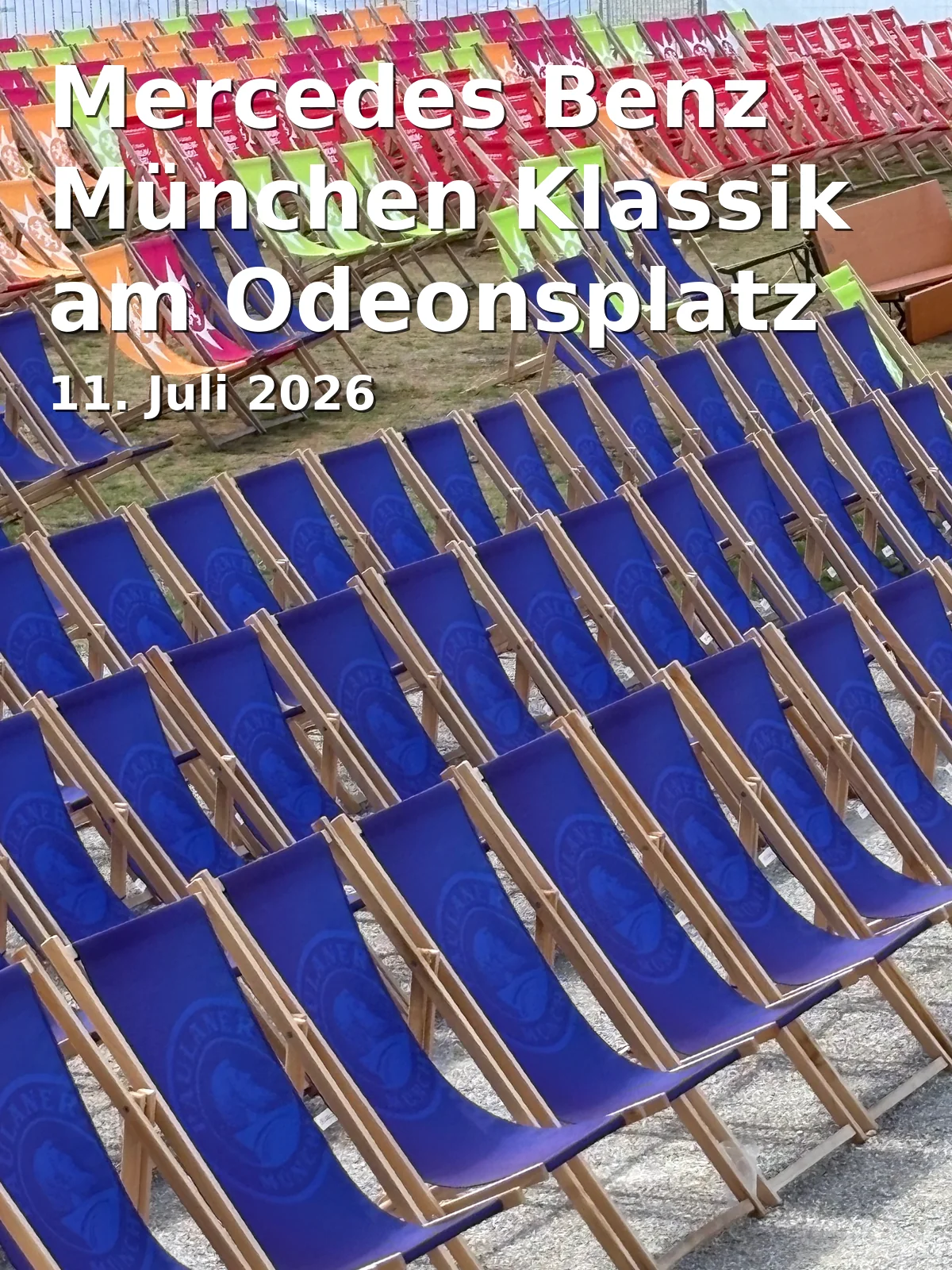
Additionally, recurring cultural formats make the square well-known far beyond Munich. Munich Tourism describes Klassik am Odeonsplatz as an annual open-air series at the beginning of July. The Streetlife Festival takes place twice a year and stretches to Odeonsplatz. The Ander Art Festival, according to the official description, takes place every year on the second Wiesn Saturday in the square and combines music, art, open-air stages, and international culture. The Europe format Zamanand also recently utilized Odeonsplatz with a colorful program of discussions, workshops, and live music. Taken together, this shows that the square is not simply an area between buildings but an event hub with a changing program that is suitable for both large public festivals and spontaneous stays. Therefore, those wanting to know what is currently happening here will usually find a changing offer between culture, city festival, open-air experiences, and public stage. ([muenchen.de](https://www.muenchen.de/en/sights/odeonsplatz?utm_source=openai))
Map, Orientation, and Cafés and Restaurants around Odeonsplatz
For orientation on the map, Odeonsplatz is surprisingly simple, even though it bundles so many paths. The most important principle is: The square is located in the heart of the Old Town between the Residence, Feldherrnhalle, Theatiner Church, and Hofgarten, and from here the main lines lead in very different directions. The Theatinerstraße connects Odeonsplatz via Weinstraße with Marienplatz and is considered one of the most elegant streets in the Old Town. Munich Tourism describes it as a nearly 400-meter-long connection with sights, shopping, culture, and a very high quality of stay. For this reason, the route between Odeonsplatz and Marienplatz is not only a matter of paths but also a small city walk where architecture, shop windows, and gastronomy alternate in close quarters. Therefore, those looking for a map or plan should not only consider the square itself but also the adjacent axes, especially Theatinerstraße, Residenzstraße, and the transition into Hofgarten. ([muenchen.de](https://www.muenchen.de/sehenswuerdigkeiten/theatinerstrasse?utm_source=openai))
The immediate surroundings of Odeonsplatz are also interesting for cafés and restaurants. Munich Tourism explicitly points out cafés on Theatinerstraße for a short break during a city walk. In the street itself and in the adjacent area, there are also shopping opportunities, cultural venues, and access to the Five Courtyards, making a visit easily combinable with a coffee, a small snack, or a shopping round. This is important for anyone specifically searching for Odeonsplatz restaurant or Odeonsplatz café, as the immediate vicinity does not offer the classic restaurant mile on the square itself, but rather a dense network of gastronomy within a few minutes' walk. The paths into the Old Town are also clear: south leads to Feldherrnhalle, east to Hofgarten, west to Theatiner Church, and further south into the city center. Those planning this into their route will experience Odeonsplatz not as a transit point but as a starting point for a compact, very varied city visit with short distances and many opportunities for breaks, photos, and discoveries. ([muenchen.de](https://www.muenchen.de/en/sights/munich-2-days-itinerary-weekend-trip?utm_source=openai))
Sources:
- muenchen.de - Odeonsplatz Munich: Information about the square, Feldherrnhalle, church and Residence
- MVV - Odeonsplatz station information
- muenchen.de - Parking garage at Salvatorplatz
- muenchen.de - Theatiner Church (St. Kajetan) at Odeonsplatz
- muenchen.de - Munich City Birthday / City Founding Festival
- muenchen.de - Ander Art Festival
- muenchen.de - Theatinerstraße: Sights between Odeonsplatz and Marienplatz
- muenchen.de - Underground garage in front of the opera
Show moreShow less
Odeonsplatz | U-Bahn & Parking
The Odeonsplatz is one of the defining places in Munich and is much more than just a busy square in the city center. Located at Odeonsplatz 1 in 80539 Munich, it is exactly where the Old Town, Residence, Hofgarten, Theatiner Church, and Feldherrnhalle meet in close proximity. Munich Tourism describes the Odeonsplatz as one of the most beautiful and impressive squares in the city; at the same time, it marks the northern boundary of the pedestrian zone and the beginning of Ludwigstraße. Those arriving here find themselves in an architecturally extraordinary backdrop that combines baroque church architecture, classical monuments, royal history, and modern mobility in a single cityscape. This mixture makes the square equally attractive for walks, photo stops, city tours, subway arrivals, and cultural events. ([muenchen.de](https://www.muenchen.de/en/sights/odeonsplatz?utm_source=openai))
Subway, Route, and Directions to Odeonsplatz
For arrival, the Odeonsplatz subway station is the most important point of orientation. According to MVV, the lines U3, U4, U5, and U6 intersect there on two levels, and bus lines N40, N41, and N45 are also served. The station is located in Zone M, providing a central, well-connected starting point for visits to the Old Town. Particularly convenient is the direct connection with the U5 from Munich Central Station, allowing easy access to the square without detours. Just a few steps from the platform lead to the pedestrian zone around Theatinerstraße, making the Odeonsplatz attractive not only for tourists but also for commuters, appointments in the city center, and spontaneous visits. Those searching for routes, maps, or directions will find a clear hub in Munich's public transport, where transfers, orientation, and onward travel can be easily connected. ([prod-redaktion.mvv-muenchen.de](https://prod-redaktion.mvv-muenchen.de/plaene-bahnhoefe/bahnhofsinformation/station/odeonsplatz/index.html))
The station's infrastructure is also interesting for visitors. MVV points out that access to the subway is possible via a step of ten centimeters; the station is therefore designed for daily use by many passengers, although one should pay attention to the current operational status of escalators and elevators on site. Historically, the station is also fascinating, as it was opened on October 19, 1971, and is one of the subway stations in the city planned by Paolo Nestler, characterized by clear, functional design and typical ceramic and fiber cement elements that create a recognizable style. Additionally, there is a wall mosaic by Karl Knappe in the southern barrier-free level. For orientation, this means: The subway station is not only a transport hub but also part of Munich's city history. Therefore, when searching for Odeonsplatz on the map, one should always consider the station, Theatinerstraße, and Ludwigstraße as the most important reference points. ([prod-redaktion.mvv-muenchen.de](https://prod-redaktion.mvv-muenchen.de/plaene-bahnhoefe/bahnhofsinformation/station/odeonsplatz/index.html))
Parking at Odeonsplatz and in the Old Town
When it comes to parking, the special location of the Odeonsplatz in the heart of the Old Town becomes apparent. The most convenient solution is the parking garage at Salvatorplatz, located directly behind Theatiner Church and offering a large capacity of 452 parking spaces for visitors. Munich Tourism explicitly describes this underground garage as an ideal starting point for a shopping tour or a small city walk in the Old Town. The location speaks for itself: next to Theatiner Church are the Odeonsplatz with Feldherrnhalle, the Residence, and Hofgarten in close proximity. The entrance height is around two meters, which is relevant for many but not all vehicles. Therefore, those specifically looking to park at Odeonsplatz will find a central and comparatively convenient solution without having to navigate through the narrow streets of the Old Town and the often limited parking zones. ([muenchen.de](https://www.muenchen.de/verkehr/parkgarage-am-salvatorplatz?utm_source=openai))
Another central option is the underground garage in front of the opera at Max-Joseph-Platz. Munich explicitly recommends it as a parking option for a city tour towards Odeonsplatz or Marienplatz. The garage is open daily from 6 AM to 1 AM, with exit possible around the clock, and the entrance height is 2.10 meters. This makes it suitable for visitors planning their walk through the Residence, Hofgarten, or the northern Old Town. It remains important in all parking matters in Munich that the respective rules posted on site apply; the city points out its parking space management and paid areas, which are regulated differently depending on the zone. For this reason, the large downtown garages are often the less stressful choice: they save time, reduce search traffic, and make the way to Odeonsplatz easier to plan, especially when traveling with family, luggage, or in bad weather. ([muenchen.de](https://www.muenchen.de/verkehr/tiefgarage-vor-der-oper?utm_source=openai))
Sights and History at Odeonsplatz
Surrounding the Odeonsplatz are several of Munich's most important sights in close proximity. On the west side stands Theatiner Church, described by Munich Tourism as Bavaria's first baroque church. Its construction began in 1663 under Agostino Barelli, it was consecrated in 1675 while still in the raw state, and only in 1768 did Cuvilliés the Younger complete the facade in the rococo style. Right next to it is the Feldherrnhalle at the southern end of the square. It is also a landmark with strong historical and architectural character, as it is modeled after the Loggia dei Lanzi in Florence and provides one of the most famous meeting points in the city center with its steps. Opposite rises the Residence, which Munich Tourism describes as Germany's largest inner-city palace. From Odeonsplatz, one can reach the western wing as well as the courtyards Kaiserhof and Kapellenhof. The ensemble is complemented by the Hofgarten, which borders the square to the east and is accessible via the Hofgartentor. ([muenchen.de](https://www.muenchen.de/en/sights/churches/theatiner-church-st-kajetan-odeonsplatz-all-you-need-know?utm_source=openai))
The name of the square also tells a story. Munich Tourism explains that the name Odeonsplatz is derived from the former concert hall Odeon, which once stood at this location, was destroyed in World War II, and now only resonates indirectly in the cityscape. This historical layer makes the square so exciting: here, baroque church art, classical monumental architecture, and royal residence history intersect. The location at the entrance of Ludwigstraße enhances the impression of a representative axis that was deliberately designed for effect. Standing in the square, one does not only see individual buildings but understands the idea behind them: Munich has staged itself here for centuries as a residence and cultural city with international aspirations. Therefore, despite its current function as a transport hub, Odeonsplatz does not feel like just a transfer point, but like an open-air ensemble where architecture, urban planning, and cultural memory complement each other. ([muenchen.de](https://www.muenchen.de/en/sights/odeonsplatz?utm_source=openai))
Odeonsplatz Today: Events, Festivals, and Meeting Point
Those searching for Odeonsplatz today often mean not only the architecture but also the current life on the square. And this is where the special role of Odeonsplatz in Munich becomes evident: Munich Tourism names it, along with Marienplatz, as one of the most important places for concerts and cultural events. During the city founding festival in June, the square regularly becomes part of a large festival mile. For 2026, the city has designated June 13 and 14 as dates; in the Old Town, there will be celebrations with music, dance, crafts, family programs, and city tours, and traditionally, crafts and showman offerings are part of the events at Odeonsplatz. This makes the square not only a photo motif on such days but also a vibrant stage for urban society, history, and the present. This is particularly attractive for visitors, as Odeonsplatz thus continually presents new faces: sometimes representative, sometimes festive, sometimes urban and dynamic. ([muenchen.de](https://www.muenchen.de/en/sights/odeonsplatz?utm_source=openai))
Additionally, recurring cultural formats make the square well-known far beyond Munich. Munich Tourism describes Klassik am Odeonsplatz as an annual open-air series at the beginning of July. The Streetlife Festival takes place twice a year and stretches to Odeonsplatz. The Ander Art Festival, according to the official description, takes place every year on the second Wiesn Saturday in the square and combines music, art, open-air stages, and international culture. The Europe format Zamanand also recently utilized Odeonsplatz with a colorful program of discussions, workshops, and live music. Taken together, this shows that the square is not simply an area between buildings but an event hub with a changing program that is suitable for both large public festivals and spontaneous stays. Therefore, those wanting to know what is currently happening here will usually find a changing offer between culture, city festival, open-air experiences, and public stage. ([muenchen.de](https://www.muenchen.de/en/sights/odeonsplatz?utm_source=openai))
Map, Orientation, and Cafés and Restaurants around Odeonsplatz
For orientation on the map, Odeonsplatz is surprisingly simple, even though it bundles so many paths. The most important principle is: The square is located in the heart of the Old Town between the Residence, Feldherrnhalle, Theatiner Church, and Hofgarten, and from here the main lines lead in very different directions. The Theatinerstraße connects Odeonsplatz via Weinstraße with Marienplatz and is considered one of the most elegant streets in the Old Town. Munich Tourism describes it as a nearly 400-meter-long connection with sights, shopping, culture, and a very high quality of stay. For this reason, the route between Odeonsplatz and Marienplatz is not only a matter of paths but also a small city walk where architecture, shop windows, and gastronomy alternate in close quarters. Therefore, those looking for a map or plan should not only consider the square itself but also the adjacent axes, especially Theatinerstraße, Residenzstraße, and the transition into Hofgarten. ([muenchen.de](https://www.muenchen.de/sehenswuerdigkeiten/theatinerstrasse?utm_source=openai))
The immediate surroundings of Odeonsplatz are also interesting for cafés and restaurants. Munich Tourism explicitly points out cafés on Theatinerstraße for a short break during a city walk. In the street itself and in the adjacent area, there are also shopping opportunities, cultural venues, and access to the Five Courtyards, making a visit easily combinable with a coffee, a small snack, or a shopping round. This is important for anyone specifically searching for Odeonsplatz restaurant or Odeonsplatz café, as the immediate vicinity does not offer the classic restaurant mile on the square itself, but rather a dense network of gastronomy within a few minutes' walk. The paths into the Old Town are also clear: south leads to Feldherrnhalle, east to Hofgarten, west to Theatiner Church, and further south into the city center. Those planning this into their route will experience Odeonsplatz not as a transit point but as a starting point for a compact, very varied city visit with short distances and many opportunities for breaks, photos, and discoveries. ([muenchen.de](https://www.muenchen.de/en/sights/munich-2-days-itinerary-weekend-trip?utm_source=openai))
Sources:
- muenchen.de - Odeonsplatz Munich: Information about the square, Feldherrnhalle, church and Residence
- MVV - Odeonsplatz station information
- muenchen.de - Parking garage at Salvatorplatz
- muenchen.de - Theatiner Church (St. Kajetan) at Odeonsplatz
- muenchen.de - Munich City Birthday / City Founding Festival
- muenchen.de - Ander Art Festival
- muenchen.de - Theatinerstraße: Sights between Odeonsplatz and Marienplatz
- muenchen.de - Underground garage in front of the opera
Odeonsplatz | U-Bahn & Parking
The Odeonsplatz is one of the defining places in Munich and is much more than just a busy square in the city center. Located at Odeonsplatz 1 in 80539 Munich, it is exactly where the Old Town, Residence, Hofgarten, Theatiner Church, and Feldherrnhalle meet in close proximity. Munich Tourism describes the Odeonsplatz as one of the most beautiful and impressive squares in the city; at the same time, it marks the northern boundary of the pedestrian zone and the beginning of Ludwigstraße. Those arriving here find themselves in an architecturally extraordinary backdrop that combines baroque church architecture, classical monuments, royal history, and modern mobility in a single cityscape. This mixture makes the square equally attractive for walks, photo stops, city tours, subway arrivals, and cultural events. ([muenchen.de](https://www.muenchen.de/en/sights/odeonsplatz?utm_source=openai))
Subway, Route, and Directions to Odeonsplatz
For arrival, the Odeonsplatz subway station is the most important point of orientation. According to MVV, the lines U3, U4, U5, and U6 intersect there on two levels, and bus lines N40, N41, and N45 are also served. The station is located in Zone M, providing a central, well-connected starting point for visits to the Old Town. Particularly convenient is the direct connection with the U5 from Munich Central Station, allowing easy access to the square without detours. Just a few steps from the platform lead to the pedestrian zone around Theatinerstraße, making the Odeonsplatz attractive not only for tourists but also for commuters, appointments in the city center, and spontaneous visits. Those searching for routes, maps, or directions will find a clear hub in Munich's public transport, where transfers, orientation, and onward travel can be easily connected. ([prod-redaktion.mvv-muenchen.de](https://prod-redaktion.mvv-muenchen.de/plaene-bahnhoefe/bahnhofsinformation/station/odeonsplatz/index.html))
The station's infrastructure is also interesting for visitors. MVV points out that access to the subway is possible via a step of ten centimeters; the station is therefore designed for daily use by many passengers, although one should pay attention to the current operational status of escalators and elevators on site. Historically, the station is also fascinating, as it was opened on October 19, 1971, and is one of the subway stations in the city planned by Paolo Nestler, characterized by clear, functional design and typical ceramic and fiber cement elements that create a recognizable style. Additionally, there is a wall mosaic by Karl Knappe in the southern barrier-free level. For orientation, this means: The subway station is not only a transport hub but also part of Munich's city history. Therefore, when searching for Odeonsplatz on the map, one should always consider the station, Theatinerstraße, and Ludwigstraße as the most important reference points. ([prod-redaktion.mvv-muenchen.de](https://prod-redaktion.mvv-muenchen.de/plaene-bahnhoefe/bahnhofsinformation/station/odeonsplatz/index.html))
Parking at Odeonsplatz and in the Old Town
When it comes to parking, the special location of the Odeonsplatz in the heart of the Old Town becomes apparent. The most convenient solution is the parking garage at Salvatorplatz, located directly behind Theatiner Church and offering a large capacity of 452 parking spaces for visitors. Munich Tourism explicitly describes this underground garage as an ideal starting point for a shopping tour or a small city walk in the Old Town. The location speaks for itself: next to Theatiner Church are the Odeonsplatz with Feldherrnhalle, the Residence, and Hofgarten in close proximity. The entrance height is around two meters, which is relevant for many but not all vehicles. Therefore, those specifically looking to park at Odeonsplatz will find a central and comparatively convenient solution without having to navigate through the narrow streets of the Old Town and the often limited parking zones. ([muenchen.de](https://www.muenchen.de/verkehr/parkgarage-am-salvatorplatz?utm_source=openai))
Another central option is the underground garage in front of the opera at Max-Joseph-Platz. Munich explicitly recommends it as a parking option for a city tour towards Odeonsplatz or Marienplatz. The garage is open daily from 6 AM to 1 AM, with exit possible around the clock, and the entrance height is 2.10 meters. This makes it suitable for visitors planning their walk through the Residence, Hofgarten, or the northern Old Town. It remains important in all parking matters in Munich that the respective rules posted on site apply; the city points out its parking space management and paid areas, which are regulated differently depending on the zone. For this reason, the large downtown garages are often the less stressful choice: they save time, reduce search traffic, and make the way to Odeonsplatz easier to plan, especially when traveling with family, luggage, or in bad weather. ([muenchen.de](https://www.muenchen.de/verkehr/tiefgarage-vor-der-oper?utm_source=openai))
Sights and History at Odeonsplatz
Surrounding the Odeonsplatz are several of Munich's most important sights in close proximity. On the west side stands Theatiner Church, described by Munich Tourism as Bavaria's first baroque church. Its construction began in 1663 under Agostino Barelli, it was consecrated in 1675 while still in the raw state, and only in 1768 did Cuvilliés the Younger complete the facade in the rococo style. Right next to it is the Feldherrnhalle at the southern end of the square. It is also a landmark with strong historical and architectural character, as it is modeled after the Loggia dei Lanzi in Florence and provides one of the most famous meeting points in the city center with its steps. Opposite rises the Residence, which Munich Tourism describes as Germany's largest inner-city palace. From Odeonsplatz, one can reach the western wing as well as the courtyards Kaiserhof and Kapellenhof. The ensemble is complemented by the Hofgarten, which borders the square to the east and is accessible via the Hofgartentor. ([muenchen.de](https://www.muenchen.de/en/sights/churches/theatiner-church-st-kajetan-odeonsplatz-all-you-need-know?utm_source=openai))
The name of the square also tells a story. Munich Tourism explains that the name Odeonsplatz is derived from the former concert hall Odeon, which once stood at this location, was destroyed in World War II, and now only resonates indirectly in the cityscape. This historical layer makes the square so exciting: here, baroque church art, classical monumental architecture, and royal residence history intersect. The location at the entrance of Ludwigstraße enhances the impression of a representative axis that was deliberately designed for effect. Standing in the square, one does not only see individual buildings but understands the idea behind them: Munich has staged itself here for centuries as a residence and cultural city with international aspirations. Therefore, despite its current function as a transport hub, Odeonsplatz does not feel like just a transfer point, but like an open-air ensemble where architecture, urban planning, and cultural memory complement each other. ([muenchen.de](https://www.muenchen.de/en/sights/odeonsplatz?utm_source=openai))
Odeonsplatz Today: Events, Festivals, and Meeting Point
Those searching for Odeonsplatz today often mean not only the architecture but also the current life on the square. And this is where the special role of Odeonsplatz in Munich becomes evident: Munich Tourism names it, along with Marienplatz, as one of the most important places for concerts and cultural events. During the city founding festival in June, the square regularly becomes part of a large festival mile. For 2026, the city has designated June 13 and 14 as dates; in the Old Town, there will be celebrations with music, dance, crafts, family programs, and city tours, and traditionally, crafts and showman offerings are part of the events at Odeonsplatz. This makes the square not only a photo motif on such days but also a vibrant stage for urban society, history, and the present. This is particularly attractive for visitors, as Odeonsplatz thus continually presents new faces: sometimes representative, sometimes festive, sometimes urban and dynamic. ([muenchen.de](https://www.muenchen.de/en/sights/odeonsplatz?utm_source=openai))
Additionally, recurring cultural formats make the square well-known far beyond Munich. Munich Tourism describes Klassik am Odeonsplatz as an annual open-air series at the beginning of July. The Streetlife Festival takes place twice a year and stretches to Odeonsplatz. The Ander Art Festival, according to the official description, takes place every year on the second Wiesn Saturday in the square and combines music, art, open-air stages, and international culture. The Europe format Zamanand also recently utilized Odeonsplatz with a colorful program of discussions, workshops, and live music. Taken together, this shows that the square is not simply an area between buildings but an event hub with a changing program that is suitable for both large public festivals and spontaneous stays. Therefore, those wanting to know what is currently happening here will usually find a changing offer between culture, city festival, open-air experiences, and public stage. ([muenchen.de](https://www.muenchen.de/en/sights/odeonsplatz?utm_source=openai))
Map, Orientation, and Cafés and Restaurants around Odeonsplatz
For orientation on the map, Odeonsplatz is surprisingly simple, even though it bundles so many paths. The most important principle is: The square is located in the heart of the Old Town between the Residence, Feldherrnhalle, Theatiner Church, and Hofgarten, and from here the main lines lead in very different directions. The Theatinerstraße connects Odeonsplatz via Weinstraße with Marienplatz and is considered one of the most elegant streets in the Old Town. Munich Tourism describes it as a nearly 400-meter-long connection with sights, shopping, culture, and a very high quality of stay. For this reason, the route between Odeonsplatz and Marienplatz is not only a matter of paths but also a small city walk where architecture, shop windows, and gastronomy alternate in close quarters. Therefore, those looking for a map or plan should not only consider the square itself but also the adjacent axes, especially Theatinerstraße, Residenzstraße, and the transition into Hofgarten. ([muenchen.de](https://www.muenchen.de/sehenswuerdigkeiten/theatinerstrasse?utm_source=openai))
The immediate surroundings of Odeonsplatz are also interesting for cafés and restaurants. Munich Tourism explicitly points out cafés on Theatinerstraße for a short break during a city walk. In the street itself and in the adjacent area, there are also shopping opportunities, cultural venues, and access to the Five Courtyards, making a visit easily combinable with a coffee, a small snack, or a shopping round. This is important for anyone specifically searching for Odeonsplatz restaurant or Odeonsplatz café, as the immediate vicinity does not offer the classic restaurant mile on the square itself, but rather a dense network of gastronomy within a few minutes' walk. The paths into the Old Town are also clear: south leads to Feldherrnhalle, east to Hofgarten, west to Theatiner Church, and further south into the city center. Those planning this into their route will experience Odeonsplatz not as a transit point but as a starting point for a compact, very varied city visit with short distances and many opportunities for breaks, photos, and discoveries. ([muenchen.de](https://www.muenchen.de/en/sights/munich-2-days-itinerary-weekend-trip?utm_source=openai))
Sources:
- muenchen.de - Odeonsplatz Munich: Information about the square, Feldherrnhalle, church and Residence
- MVV - Odeonsplatz station information
- muenchen.de - Parking garage at Salvatorplatz
- muenchen.de - Theatiner Church (St. Kajetan) at Odeonsplatz
- muenchen.de - Munich City Birthday / City Founding Festival
- muenchen.de - Ander Art Festival
- muenchen.de - Theatinerstraße: Sights between Odeonsplatz and Marienplatz
- muenchen.de - Underground garage in front of the opera
Frequently Asked Questions
Reviews
No reviews found