
Potsdam
An d. Orangerie 3-5, 14469 Potsdam, Deutschland
Orangery Palace | Opening Hours & Directions
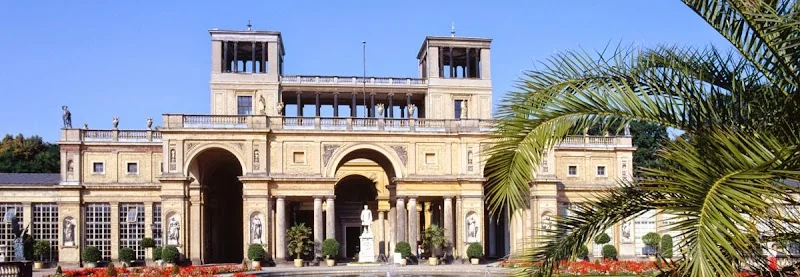
The Orangery Palace in Potsdam is one of the most prominent buildings in the Sanssouci Park and uniquely combines palace architecture, orangery culture, and garden art. It was built between 1851 and 1864 on the orders of Frederick William IV and, with its plant halls, central building, arcades, terraces, and Raphael Hall, stands as the last and largest palace building erected in Sanssouci Park, a striking testament to Prussian longing for Italy. The SPSG describes the ensemble as an impressive example of the king's constructions and points out that its length of over 300 meters allows the building to overshadow the New Palace itself. For visitors, it is important: The Orangery Palace is currently closed due to renovation work, but the surrounding area in Sanssouci Park remains a central attraction. Those interested in architecture, photographic motifs, history, pathways in the park, or later again in interiors and events will find here an extraordinary destination with great historical depth. At the same time, the palace is situated in a World Heritage context, as Sanssouci is part of the UNESCO World Heritage site Palaces and Parks of Potsdam and Berlin. ([spsg.de](https://www.spsg.de/schloesser-gaerten/objekt/orangerieschloss))
Opening Hours, Renovation, and Current Visitor Status
For current planning, the most important point is that the Orangery Palace is closed until further notice. According to the SPSG, the closure is part of the renovation work of the master plan. This does not mean that the area loses relevance as a destination; rather, the opposite: Those visiting Potsdam should understand the Orangery Palace as part of a larger tour through Sanssouci. The Sanssouci Park itself is open daily from 8 AM until dusk, and admission is free. This keeps the surroundings accessible at all times for walks, outdoor photos, and exploration of the adjacent garden axes. Additionally, the SPSG operates visitor centers at the Historical Mill and the New Palace with seasonally adjusted opening hours, which can be helpful for daily planning. Therefore, it is important for everyone searching for opening hours to distinguish: The palace is closed, but the park is open. Those who want to orient themselves in advance can use the SANSSOUCI app as a digital companion; it offers various tours, including classic and barrier-free tours. Thus, the Orangery Palace can be meaningfully integrated into the visit despite the renovation and connected with other stations in the park. ([spsg.de](https://www.spsg.de/schloesser-gaerten/objekt/orangerieschloss))
The renovation is not just a technical measure but part of a long-term preservation program. The SPSG indicates a period from 2019 to 2029 for the Orangery Palace within the framework of the master plan, with total costs of 29.97 million euros. Planned are, among other things, the restoration of roof and facade areas, modernization of the plant halls, and the creation of additional functional areas for future uses. For search queries such as Orangery Palace Potsdam opening hours or Orangery Palace renovation, the current status is therefore crucial: Those who come today experience a significant monument in motion, whose substance is being protected and simultaneously prepared for the future. This also fits the perception on-site. The palace remains visible, its external impact continues to shape the northern edge of the park, and the ongoing restoration makes the building an exciting example of how monument protection, use, and public access come together. For visitors, this is especially practical: Instead of focusing solely on interiors, a tour considering construction logic, park space, and the surrounding paths is worthwhile. ([spsg.de](https://www.spsg.de/schloesser-gaerten/masterplan/sip2-projekte/orangerieschloss-sanierung-der-fassaden-und-daecher-sowie-modernisierung-der-pflanzenhallen/))
Directions & Parking for the Orangery Palace in Potsdam
The directions to the Orangery Palace are clearly regulated and very helpful for planning. By public transport, the stop Potsdam, Orangery/Botanical Garden is the appropriate destination address. From there, the palace and the park area around the Mulberry Alley and the Orangery can be easily reached on foot. Those arriving by car will find paid parking spaces for cars and buses at parking lot P1 at the Historical Mill and at P3 at the New Palace. This is particularly relevant for visitors searching for route, parking, or directions, as these areas are located at the main access points to Sanssouci Park. Additionally, the SPSG points out current traffic information via mobil-potsdam.de, which can be useful during construction work, weekend traffic, or heavily frequented days. Especially for an area of this size, good travel planning is sensible, as Sanssouci Park extends over approximately 300 hectares and measures more than two kilometers from east to west. Therefore, those visiting the Orangery Palace are not just moving to a single building but within a vast historical landscape. ([spsg.de](https://www.spsg.de/en/palaces-gardens/object/orangery-palace))
Particularly pleasant is that the SPSG also offers a free shuttle service for Sanssouci. From April to October, it connects the Green Gate with the New Palace daily between 11 AM and 5:30 PM along the Economics Path, provided the voluntarily operated service is available and the weather permits. This can be helpful for visitors who do not want to walk through the entire park or want to connect several stations. Additionally, the SPSG recommends a barrier-free route through Sanssouci Park for guests with mobility impairments. The Orangery Palace itself is only partially wheelchair accessible; the palace rooms are wheelchair-friendly, but the Orangery observation tower is not. Strollers are also not allowed in the exhibition rooms for conservation reasons, and assistance dogs are welcome. These notes are not just technical details but genuine search intentions behind keywords like route, parking, and weather, as they answer the question of how relaxed a trip to Sanssouci actually is. Those who arrive well-prepared experience a much more comfortable and manageable visitor experience. ([spsg.de](https://www.spsg.de/en/palaces-gardens/object/orangery-palace))
History of the Orangery Palace in Sanssouci Park
The history of the Orangery Palace is closely linked to the building will of Frederick William IV, who had the ensemble created as an expression of his enthusiasm for Italy and his representative understanding of architecture. The designs come from Ludwig Persius and Friedrich August Stüler, and later Ludwig Ferdinand Hesse was also involved. The building is oriented towards Italian models, which were translated into an independent Prussian form in Potsdam. The city of Potsdam vividly describes that the king drew inspiration from Rome, Florence, and the Vatican, but the builders had to create a harmonious whole from them. The result is a palace with an orangery that not only appears decorative but embodies the idea of a southern-looking residence landscape in northern Germany. With its length of over 300 meters and its position as the last built house in Sanssouci Park, the Orangery Palace occupies a special role. It marks the transition from courtly residential architecture to functional plant wintering and combines both into a single ensemble. That is precisely why the building is so prominently present in search queries about Sanssouci, history, and peculiarities. ([potsdam.de](https://www.potsdam.de/de/orangerie-im-park-sanssouci))
However, the palace is important not only because of its construction but also due to its symbolic and landscape function. The side plant halls housed and still house frost-sensitive potted plants that need protection during the winter months. In summer, however, the halls are prepared for different uses or opened, while the ensemble creates an almost Mediterranean impression with figures, arcades, and terraces. The sculptural figures on the side wings represent months and seasons, thus establishing a consciously staged relationship with nature and time. The central building is designed as the actual palace area and contains a guest apartment specifically set up for Frederick William's sister Charlotte. This combination of representation, family use, and plant culture makes the Orangery Palace more than just a mere outbuilding. It is a built program that visibly expresses the king's claim to art, landscape, and courtly culture. In the UNESCO perspective, it thus belongs to a larger, internationally protected cultural space that understands Sanssouci as part of an extraordinary ensemble of palaces and gardens in Potsdam and Berlin. ([potsdam.de](https://www.potsdam.de/de/orangerie-im-park-sanssouci))
Plant Halls, Raphael Hall & Events
One of the most important SEO questions surrounding the Orangery Palace concerns the plant halls, and for good reason. The two halls are each over 100 meters long, together about 3,000 square meters in size, and are described in the event location presentation with about 1,500 square meters per hall, at a length of 106 meters and a width of 16 meters. They are among the largest indoor event spaces in the Berlin-Brandenburg area. According to the SPSG, each hall can accommodate up to 500 seated or 1,000 standing guests, and the location is indicated for over 300 people in total. The space can be used for receptions, gala dinners, concerts, readings, and lectures. Additionally, there are ancillary details that are important for organizers in practice: restrooms are available, catering is possible, and the caterer can be freely chosen in coordination with the foundation. At the same time, conservation rules apply, such as a ban on open flames, light, and smoking. This combination of historical space, logistical requirements, and generous capacities makes the plant halls a special place for cultural and event formats. ([spsg.de](https://www.spsg.de/tagen-feiern/eventlocation/orangerieschloss-pflanzenhallen/))
Inside the central building, there are also notable rooms that sustain interest in the location. The Raphael Hall houses a collection of more than 50 copies of Raphael's paintings from the 19th century, including reproductions of famous works such as the Sistine Madonna and the Transfiguration. The red silk upholstery and the gilded frames create a particularly opulent spatial effect. Additionally, there is the Malachite Room of the guest apartment, which, according to the SPSG, is equipped with sculptures, gilded decor, and artisanal objects. For visitors and event interested parties, it is also relevant that the usage times of the plant halls within the framework of event rentals are primarily oriented towards the summer months from July to September, while the current renovation aims to prepare these halls for permanent event use. The master plan information also states that the interiors of the halls are to be restored and technical measures implemented so that future uses can be permanently approved. In the northeast pavilion, service areas for events are to be created, and in the former palace kitchen, a small event room for up to 180 people is planned for year-round use. Thus, the Orangery Palace remains a highly interesting location for event planning, monument preservation, and cultural history even during the renovation phase. ([spsg.de](https://www.spsg.de/schloesser-gaerten/objekt/orangerieschloss))
Photos, Tours & Weddings around the Orangery Palace
Many users are not only looking for data but for experiences, motifs, and specific forms of use. Therefore, the topic of photos around the Orangery Palace is so important. For wedding photos in the park facilities of the SPSG, no special permission is generally required as long as visitor traffic is not impaired and the park rules are observed. Lawn areas, sculptures, and architectural elements must not be entered or touched, and bridal couple photos should remain focused on publicly accessible areas. It is different for photos in palace rooms: there, prior appointment, a valid contract, and adherence to conservation rules are required. During opening hours, photos are only intended for the bridal couple for organizational reasons. So, those searching for Orangery Palace photos or Orangery Palace weddings should clearly distinguish between the park and the interior. Additionally, it is stipulated that requests for photo appointments for the palace itself must be made at least four to six weeks in advance. These rules are strict but understandable, as they protect the historical heritage while allowing for controlled photo appointments. ([spsg.de](https://www.spsg.de/tagen-feiern/hochzeitsfotos))
Also, in terms of tours and guided tours, the Orangery Palace is an exciting search term. The SPSG offers the SANSSOUCI app as a digital companion, with tours in German, English, German Sign Language, Easy Language, and with a barrier-free focus. This is particularly useful for visitors who want to orient themselves in advance or explore the area without a traditional group tour. Additionally, there are always special formats and construction site tours that deal with the state of renovation and explain access to individual areas. Such formats are interesting for people who not only want to photograph but also want to understand how a monument is preserved over the years. Especially under the search terms tours, photos, and weather, there is often a desire for a good time for the visit. In the case of the Orangery Palace, this means: In nice weather, the outdoor area is particularly worthwhile; in changeable weather, the app can help flexibly adjust the route in the park, and for special construction dates, it is worth checking the SPSG event calendar. Thus, a simple search for a palace visit becomes a versatile cultural walk that can be planned. ([spsg.de](https://www.spsg.de/schloesser-gaerten/objekt/park-sanssouci/))
Cave below the Mulberry Alley & the Orangery Ensemble
The Orangery includes more than just the actual palace. Particularly striking is the Orangery Cave below the Mulberry Alley, which lies as an artificially created cave in the garden parterre at the foot of the stair and terrace structures. It is part of the Jubilee Terrace, which Emperor Wilhelm II had laid out in 1913 on the occasion of his 25th anniversary on the throne. The SPSG describes the cave as a romantic place with grottoed walls, a small fore-lake, water features, and wide views of the garden landscape. For events, it is suitable as an original and atmospheric location, especially for receptions, concerts, readings, and lectures. The capacity is up to 150 people, but here, too, the historical conditions of the place must be observed. Open flames are not allowed, lawn and shrub areas must not be entered, and umbrellas or tents are only permitted with prior approval. Such details make the cave interesting for users searching for the cave below the Mulberry Alley, who need not only a photographic motif but a clearly described place with conditions. ([spsg.de](https://www.spsg.de/tagen-feiern/eventlocation/orangerieschloss-grotte-unterhalb-der-maulbeerallee/))
The entire Orangery ensemble is being gradually modernized as part of the master plan. The SPSG names the completion of the roof renovation, the restoration of the facades, and the renovation of the two plant halls as the core of the measure. In addition, parts of the northeast pavilion are to be developed as a service area for events, with restrooms, catering, cloakroom, and storage areas. In the former palace kitchen, a small event room for up to 180 people is planned for year-round use. The open spaces in the immediate vicinity of the Orangery Palace will also be restored. This makes it clear that the location consists not only of an iconic main building but of a functionally and historically finely tuned ensemble. Those searching for Orangery Palace Potsdam, Orangery Palace Sanssouci, or Orangery Palace tours are often actually looking for a combination of architecture, garden, pathways, and event use. That is precisely why the palace is so attractive for SEO and for visitors: It is a monument, park motif, renovation object, event space, and part of a UNESCO World Heritage site at the same time. For Potsdam and Sanssouci, it is therefore much more than a peripheral building; it is a key location of the entire complex. ([spsg.de](https://www.spsg.de/schloesser-gaerten/masterplan/sip2-projekte/orangerieschloss-sanierung-der-fassaden-und-daecher-sowie-modernisierung-der-pflanzenhallen/))
Sources:
- SPSG - Orangery Palace: Potted Plants and Italian Masters
- SPSG - Renovation of Facades and Roofs as well as Modernization of Plant Halls
- State Capital Potsdam - Orangery in Sanssouci Park
- SPSG - Event Location Orangery Palace Plant Halls
- SPSG - Orangery Palace Cave below the Mulberry Alley
- UNESCO World Heritage Centre - Palaces and Parks of Potsdam and Berlin
Show moreShow less
Orangery Palace | Opening Hours & Directions
The Orangery Palace in Potsdam is one of the most prominent buildings in the Sanssouci Park and uniquely combines palace architecture, orangery culture, and garden art. It was built between 1851 and 1864 on the orders of Frederick William IV and, with its plant halls, central building, arcades, terraces, and Raphael Hall, stands as the last and largest palace building erected in Sanssouci Park, a striking testament to Prussian longing for Italy. The SPSG describes the ensemble as an impressive example of the king's constructions and points out that its length of over 300 meters allows the building to overshadow the New Palace itself. For visitors, it is important: The Orangery Palace is currently closed due to renovation work, but the surrounding area in Sanssouci Park remains a central attraction. Those interested in architecture, photographic motifs, history, pathways in the park, or later again in interiors and events will find here an extraordinary destination with great historical depth. At the same time, the palace is situated in a World Heritage context, as Sanssouci is part of the UNESCO World Heritage site Palaces and Parks of Potsdam and Berlin. ([spsg.de](https://www.spsg.de/schloesser-gaerten/objekt/orangerieschloss))
Opening Hours, Renovation, and Current Visitor Status
For current planning, the most important point is that the Orangery Palace is closed until further notice. According to the SPSG, the closure is part of the renovation work of the master plan. This does not mean that the area loses relevance as a destination; rather, the opposite: Those visiting Potsdam should understand the Orangery Palace as part of a larger tour through Sanssouci. The Sanssouci Park itself is open daily from 8 AM until dusk, and admission is free. This keeps the surroundings accessible at all times for walks, outdoor photos, and exploration of the adjacent garden axes. Additionally, the SPSG operates visitor centers at the Historical Mill and the New Palace with seasonally adjusted opening hours, which can be helpful for daily planning. Therefore, it is important for everyone searching for opening hours to distinguish: The palace is closed, but the park is open. Those who want to orient themselves in advance can use the SANSSOUCI app as a digital companion; it offers various tours, including classic and barrier-free tours. Thus, the Orangery Palace can be meaningfully integrated into the visit despite the renovation and connected with other stations in the park. ([spsg.de](https://www.spsg.de/schloesser-gaerten/objekt/orangerieschloss))
The renovation is not just a technical measure but part of a long-term preservation program. The SPSG indicates a period from 2019 to 2029 for the Orangery Palace within the framework of the master plan, with total costs of 29.97 million euros. Planned are, among other things, the restoration of roof and facade areas, modernization of the plant halls, and the creation of additional functional areas for future uses. For search queries such as Orangery Palace Potsdam opening hours or Orangery Palace renovation, the current status is therefore crucial: Those who come today experience a significant monument in motion, whose substance is being protected and simultaneously prepared for the future. This also fits the perception on-site. The palace remains visible, its external impact continues to shape the northern edge of the park, and the ongoing restoration makes the building an exciting example of how monument protection, use, and public access come together. For visitors, this is especially practical: Instead of focusing solely on interiors, a tour considering construction logic, park space, and the surrounding paths is worthwhile. ([spsg.de](https://www.spsg.de/schloesser-gaerten/masterplan/sip2-projekte/orangerieschloss-sanierung-der-fassaden-und-daecher-sowie-modernisierung-der-pflanzenhallen/))
Directions & Parking for the Orangery Palace in Potsdam
The directions to the Orangery Palace are clearly regulated and very helpful for planning. By public transport, the stop Potsdam, Orangery/Botanical Garden is the appropriate destination address. From there, the palace and the park area around the Mulberry Alley and the Orangery can be easily reached on foot. Those arriving by car will find paid parking spaces for cars and buses at parking lot P1 at the Historical Mill and at P3 at the New Palace. This is particularly relevant for visitors searching for route, parking, or directions, as these areas are located at the main access points to Sanssouci Park. Additionally, the SPSG points out current traffic information via mobil-potsdam.de, which can be useful during construction work, weekend traffic, or heavily frequented days. Especially for an area of this size, good travel planning is sensible, as Sanssouci Park extends over approximately 300 hectares and measures more than two kilometers from east to west. Therefore, those visiting the Orangery Palace are not just moving to a single building but within a vast historical landscape. ([spsg.de](https://www.spsg.de/en/palaces-gardens/object/orangery-palace))
Particularly pleasant is that the SPSG also offers a free shuttle service for Sanssouci. From April to October, it connects the Green Gate with the New Palace daily between 11 AM and 5:30 PM along the Economics Path, provided the voluntarily operated service is available and the weather permits. This can be helpful for visitors who do not want to walk through the entire park or want to connect several stations. Additionally, the SPSG recommends a barrier-free route through Sanssouci Park for guests with mobility impairments. The Orangery Palace itself is only partially wheelchair accessible; the palace rooms are wheelchair-friendly, but the Orangery observation tower is not. Strollers are also not allowed in the exhibition rooms for conservation reasons, and assistance dogs are welcome. These notes are not just technical details but genuine search intentions behind keywords like route, parking, and weather, as they answer the question of how relaxed a trip to Sanssouci actually is. Those who arrive well-prepared experience a much more comfortable and manageable visitor experience. ([spsg.de](https://www.spsg.de/en/palaces-gardens/object/orangery-palace))
History of the Orangery Palace in Sanssouci Park
The history of the Orangery Palace is closely linked to the building will of Frederick William IV, who had the ensemble created as an expression of his enthusiasm for Italy and his representative understanding of architecture. The designs come from Ludwig Persius and Friedrich August Stüler, and later Ludwig Ferdinand Hesse was also involved. The building is oriented towards Italian models, which were translated into an independent Prussian form in Potsdam. The city of Potsdam vividly describes that the king drew inspiration from Rome, Florence, and the Vatican, but the builders had to create a harmonious whole from them. The result is a palace with an orangery that not only appears decorative but embodies the idea of a southern-looking residence landscape in northern Germany. With its length of over 300 meters and its position as the last built house in Sanssouci Park, the Orangery Palace occupies a special role. It marks the transition from courtly residential architecture to functional plant wintering and combines both into a single ensemble. That is precisely why the building is so prominently present in search queries about Sanssouci, history, and peculiarities. ([potsdam.de](https://www.potsdam.de/de/orangerie-im-park-sanssouci))
However, the palace is important not only because of its construction but also due to its symbolic and landscape function. The side plant halls housed and still house frost-sensitive potted plants that need protection during the winter months. In summer, however, the halls are prepared for different uses or opened, while the ensemble creates an almost Mediterranean impression with figures, arcades, and terraces. The sculptural figures on the side wings represent months and seasons, thus establishing a consciously staged relationship with nature and time. The central building is designed as the actual palace area and contains a guest apartment specifically set up for Frederick William's sister Charlotte. This combination of representation, family use, and plant culture makes the Orangery Palace more than just a mere outbuilding. It is a built program that visibly expresses the king's claim to art, landscape, and courtly culture. In the UNESCO perspective, it thus belongs to a larger, internationally protected cultural space that understands Sanssouci as part of an extraordinary ensemble of palaces and gardens in Potsdam and Berlin. ([potsdam.de](https://www.potsdam.de/de/orangerie-im-park-sanssouci))
Plant Halls, Raphael Hall & Events
One of the most important SEO questions surrounding the Orangery Palace concerns the plant halls, and for good reason. The two halls are each over 100 meters long, together about 3,000 square meters in size, and are described in the event location presentation with about 1,500 square meters per hall, at a length of 106 meters and a width of 16 meters. They are among the largest indoor event spaces in the Berlin-Brandenburg area. According to the SPSG, each hall can accommodate up to 500 seated or 1,000 standing guests, and the location is indicated for over 300 people in total. The space can be used for receptions, gala dinners, concerts, readings, and lectures. Additionally, there are ancillary details that are important for organizers in practice: restrooms are available, catering is possible, and the caterer can be freely chosen in coordination with the foundation. At the same time, conservation rules apply, such as a ban on open flames, light, and smoking. This combination of historical space, logistical requirements, and generous capacities makes the plant halls a special place for cultural and event formats. ([spsg.de](https://www.spsg.de/tagen-feiern/eventlocation/orangerieschloss-pflanzenhallen/))
Inside the central building, there are also notable rooms that sustain interest in the location. The Raphael Hall houses a collection of more than 50 copies of Raphael's paintings from the 19th century, including reproductions of famous works such as the Sistine Madonna and the Transfiguration. The red silk upholstery and the gilded frames create a particularly opulent spatial effect. Additionally, there is the Malachite Room of the guest apartment, which, according to the SPSG, is equipped with sculptures, gilded decor, and artisanal objects. For visitors and event interested parties, it is also relevant that the usage times of the plant halls within the framework of event rentals are primarily oriented towards the summer months from July to September, while the current renovation aims to prepare these halls for permanent event use. The master plan information also states that the interiors of the halls are to be restored and technical measures implemented so that future uses can be permanently approved. In the northeast pavilion, service areas for events are to be created, and in the former palace kitchen, a small event room for up to 180 people is planned for year-round use. Thus, the Orangery Palace remains a highly interesting location for event planning, monument preservation, and cultural history even during the renovation phase. ([spsg.de](https://www.spsg.de/schloesser-gaerten/objekt/orangerieschloss))
Photos, Tours & Weddings around the Orangery Palace
Many users are not only looking for data but for experiences, motifs, and specific forms of use. Therefore, the topic of photos around the Orangery Palace is so important. For wedding photos in the park facilities of the SPSG, no special permission is generally required as long as visitor traffic is not impaired and the park rules are observed. Lawn areas, sculptures, and architectural elements must not be entered or touched, and bridal couple photos should remain focused on publicly accessible areas. It is different for photos in palace rooms: there, prior appointment, a valid contract, and adherence to conservation rules are required. During opening hours, photos are only intended for the bridal couple for organizational reasons. So, those searching for Orangery Palace photos or Orangery Palace weddings should clearly distinguish between the park and the interior. Additionally, it is stipulated that requests for photo appointments for the palace itself must be made at least four to six weeks in advance. These rules are strict but understandable, as they protect the historical heritage while allowing for controlled photo appointments. ([spsg.de](https://www.spsg.de/tagen-feiern/hochzeitsfotos))
Also, in terms of tours and guided tours, the Orangery Palace is an exciting search term. The SPSG offers the SANSSOUCI app as a digital companion, with tours in German, English, German Sign Language, Easy Language, and with a barrier-free focus. This is particularly useful for visitors who want to orient themselves in advance or explore the area without a traditional group tour. Additionally, there are always special formats and construction site tours that deal with the state of renovation and explain access to individual areas. Such formats are interesting for people who not only want to photograph but also want to understand how a monument is preserved over the years. Especially under the search terms tours, photos, and weather, there is often a desire for a good time for the visit. In the case of the Orangery Palace, this means: In nice weather, the outdoor area is particularly worthwhile; in changeable weather, the app can help flexibly adjust the route in the park, and for special construction dates, it is worth checking the SPSG event calendar. Thus, a simple search for a palace visit becomes a versatile cultural walk that can be planned. ([spsg.de](https://www.spsg.de/schloesser-gaerten/objekt/park-sanssouci/))
Cave below the Mulberry Alley & the Orangery Ensemble
The Orangery includes more than just the actual palace. Particularly striking is the Orangery Cave below the Mulberry Alley, which lies as an artificially created cave in the garden parterre at the foot of the stair and terrace structures. It is part of the Jubilee Terrace, which Emperor Wilhelm II had laid out in 1913 on the occasion of his 25th anniversary on the throne. The SPSG describes the cave as a romantic place with grottoed walls, a small fore-lake, water features, and wide views of the garden landscape. For events, it is suitable as an original and atmospheric location, especially for receptions, concerts, readings, and lectures. The capacity is up to 150 people, but here, too, the historical conditions of the place must be observed. Open flames are not allowed, lawn and shrub areas must not be entered, and umbrellas or tents are only permitted with prior approval. Such details make the cave interesting for users searching for the cave below the Mulberry Alley, who need not only a photographic motif but a clearly described place with conditions. ([spsg.de](https://www.spsg.de/tagen-feiern/eventlocation/orangerieschloss-grotte-unterhalb-der-maulbeerallee/))
The entire Orangery ensemble is being gradually modernized as part of the master plan. The SPSG names the completion of the roof renovation, the restoration of the facades, and the renovation of the two plant halls as the core of the measure. In addition, parts of the northeast pavilion are to be developed as a service area for events, with restrooms, catering, cloakroom, and storage areas. In the former palace kitchen, a small event room for up to 180 people is planned for year-round use. The open spaces in the immediate vicinity of the Orangery Palace will also be restored. This makes it clear that the location consists not only of an iconic main building but of a functionally and historically finely tuned ensemble. Those searching for Orangery Palace Potsdam, Orangery Palace Sanssouci, or Orangery Palace tours are often actually looking for a combination of architecture, garden, pathways, and event use. That is precisely why the palace is so attractive for SEO and for visitors: It is a monument, park motif, renovation object, event space, and part of a UNESCO World Heritage site at the same time. For Potsdam and Sanssouci, it is therefore much more than a peripheral building; it is a key location of the entire complex. ([spsg.de](https://www.spsg.de/schloesser-gaerten/masterplan/sip2-projekte/orangerieschloss-sanierung-der-fassaden-und-daecher-sowie-modernisierung-der-pflanzenhallen/))
Sources:
- SPSG - Orangery Palace: Potted Plants and Italian Masters
- SPSG - Renovation of Facades and Roofs as well as Modernization of Plant Halls
- State Capital Potsdam - Orangery in Sanssouci Park
- SPSG - Event Location Orangery Palace Plant Halls
- SPSG - Orangery Palace Cave below the Mulberry Alley
- UNESCO World Heritage Centre - Palaces and Parks of Potsdam and Berlin
Orangery Palace | Opening Hours & Directions
The Orangery Palace in Potsdam is one of the most prominent buildings in the Sanssouci Park and uniquely combines palace architecture, orangery culture, and garden art. It was built between 1851 and 1864 on the orders of Frederick William IV and, with its plant halls, central building, arcades, terraces, and Raphael Hall, stands as the last and largest palace building erected in Sanssouci Park, a striking testament to Prussian longing for Italy. The SPSG describes the ensemble as an impressive example of the king's constructions and points out that its length of over 300 meters allows the building to overshadow the New Palace itself. For visitors, it is important: The Orangery Palace is currently closed due to renovation work, but the surrounding area in Sanssouci Park remains a central attraction. Those interested in architecture, photographic motifs, history, pathways in the park, or later again in interiors and events will find here an extraordinary destination with great historical depth. At the same time, the palace is situated in a World Heritage context, as Sanssouci is part of the UNESCO World Heritage site Palaces and Parks of Potsdam and Berlin. ([spsg.de](https://www.spsg.de/schloesser-gaerten/objekt/orangerieschloss))
Opening Hours, Renovation, and Current Visitor Status
For current planning, the most important point is that the Orangery Palace is closed until further notice. According to the SPSG, the closure is part of the renovation work of the master plan. This does not mean that the area loses relevance as a destination; rather, the opposite: Those visiting Potsdam should understand the Orangery Palace as part of a larger tour through Sanssouci. The Sanssouci Park itself is open daily from 8 AM until dusk, and admission is free. This keeps the surroundings accessible at all times for walks, outdoor photos, and exploration of the adjacent garden axes. Additionally, the SPSG operates visitor centers at the Historical Mill and the New Palace with seasonally adjusted opening hours, which can be helpful for daily planning. Therefore, it is important for everyone searching for opening hours to distinguish: The palace is closed, but the park is open. Those who want to orient themselves in advance can use the SANSSOUCI app as a digital companion; it offers various tours, including classic and barrier-free tours. Thus, the Orangery Palace can be meaningfully integrated into the visit despite the renovation and connected with other stations in the park. ([spsg.de](https://www.spsg.de/schloesser-gaerten/objekt/orangerieschloss))
The renovation is not just a technical measure but part of a long-term preservation program. The SPSG indicates a period from 2019 to 2029 for the Orangery Palace within the framework of the master plan, with total costs of 29.97 million euros. Planned are, among other things, the restoration of roof and facade areas, modernization of the plant halls, and the creation of additional functional areas for future uses. For search queries such as Orangery Palace Potsdam opening hours or Orangery Palace renovation, the current status is therefore crucial: Those who come today experience a significant monument in motion, whose substance is being protected and simultaneously prepared for the future. This also fits the perception on-site. The palace remains visible, its external impact continues to shape the northern edge of the park, and the ongoing restoration makes the building an exciting example of how monument protection, use, and public access come together. For visitors, this is especially practical: Instead of focusing solely on interiors, a tour considering construction logic, park space, and the surrounding paths is worthwhile. ([spsg.de](https://www.spsg.de/schloesser-gaerten/masterplan/sip2-projekte/orangerieschloss-sanierung-der-fassaden-und-daecher-sowie-modernisierung-der-pflanzenhallen/))
Directions & Parking for the Orangery Palace in Potsdam
The directions to the Orangery Palace are clearly regulated and very helpful for planning. By public transport, the stop Potsdam, Orangery/Botanical Garden is the appropriate destination address. From there, the palace and the park area around the Mulberry Alley and the Orangery can be easily reached on foot. Those arriving by car will find paid parking spaces for cars and buses at parking lot P1 at the Historical Mill and at P3 at the New Palace. This is particularly relevant for visitors searching for route, parking, or directions, as these areas are located at the main access points to Sanssouci Park. Additionally, the SPSG points out current traffic information via mobil-potsdam.de, which can be useful during construction work, weekend traffic, or heavily frequented days. Especially for an area of this size, good travel planning is sensible, as Sanssouci Park extends over approximately 300 hectares and measures more than two kilometers from east to west. Therefore, those visiting the Orangery Palace are not just moving to a single building but within a vast historical landscape. ([spsg.de](https://www.spsg.de/en/palaces-gardens/object/orangery-palace))
Particularly pleasant is that the SPSG also offers a free shuttle service for Sanssouci. From April to October, it connects the Green Gate with the New Palace daily between 11 AM and 5:30 PM along the Economics Path, provided the voluntarily operated service is available and the weather permits. This can be helpful for visitors who do not want to walk through the entire park or want to connect several stations. Additionally, the SPSG recommends a barrier-free route through Sanssouci Park for guests with mobility impairments. The Orangery Palace itself is only partially wheelchair accessible; the palace rooms are wheelchair-friendly, but the Orangery observation tower is not. Strollers are also not allowed in the exhibition rooms for conservation reasons, and assistance dogs are welcome. These notes are not just technical details but genuine search intentions behind keywords like route, parking, and weather, as they answer the question of how relaxed a trip to Sanssouci actually is. Those who arrive well-prepared experience a much more comfortable and manageable visitor experience. ([spsg.de](https://www.spsg.de/en/palaces-gardens/object/orangery-palace))
History of the Orangery Palace in Sanssouci Park
The history of the Orangery Palace is closely linked to the building will of Frederick William IV, who had the ensemble created as an expression of his enthusiasm for Italy and his representative understanding of architecture. The designs come from Ludwig Persius and Friedrich August Stüler, and later Ludwig Ferdinand Hesse was also involved. The building is oriented towards Italian models, which were translated into an independent Prussian form in Potsdam. The city of Potsdam vividly describes that the king drew inspiration from Rome, Florence, and the Vatican, but the builders had to create a harmonious whole from them. The result is a palace with an orangery that not only appears decorative but embodies the idea of a southern-looking residence landscape in northern Germany. With its length of over 300 meters and its position as the last built house in Sanssouci Park, the Orangery Palace occupies a special role. It marks the transition from courtly residential architecture to functional plant wintering and combines both into a single ensemble. That is precisely why the building is so prominently present in search queries about Sanssouci, history, and peculiarities. ([potsdam.de](https://www.potsdam.de/de/orangerie-im-park-sanssouci))
However, the palace is important not only because of its construction but also due to its symbolic and landscape function. The side plant halls housed and still house frost-sensitive potted plants that need protection during the winter months. In summer, however, the halls are prepared for different uses or opened, while the ensemble creates an almost Mediterranean impression with figures, arcades, and terraces. The sculptural figures on the side wings represent months and seasons, thus establishing a consciously staged relationship with nature and time. The central building is designed as the actual palace area and contains a guest apartment specifically set up for Frederick William's sister Charlotte. This combination of representation, family use, and plant culture makes the Orangery Palace more than just a mere outbuilding. It is a built program that visibly expresses the king's claim to art, landscape, and courtly culture. In the UNESCO perspective, it thus belongs to a larger, internationally protected cultural space that understands Sanssouci as part of an extraordinary ensemble of palaces and gardens in Potsdam and Berlin. ([potsdam.de](https://www.potsdam.de/de/orangerie-im-park-sanssouci))
Plant Halls, Raphael Hall & Events
One of the most important SEO questions surrounding the Orangery Palace concerns the plant halls, and for good reason. The two halls are each over 100 meters long, together about 3,000 square meters in size, and are described in the event location presentation with about 1,500 square meters per hall, at a length of 106 meters and a width of 16 meters. They are among the largest indoor event spaces in the Berlin-Brandenburg area. According to the SPSG, each hall can accommodate up to 500 seated or 1,000 standing guests, and the location is indicated for over 300 people in total. The space can be used for receptions, gala dinners, concerts, readings, and lectures. Additionally, there are ancillary details that are important for organizers in practice: restrooms are available, catering is possible, and the caterer can be freely chosen in coordination with the foundation. At the same time, conservation rules apply, such as a ban on open flames, light, and smoking. This combination of historical space, logistical requirements, and generous capacities makes the plant halls a special place for cultural and event formats. ([spsg.de](https://www.spsg.de/tagen-feiern/eventlocation/orangerieschloss-pflanzenhallen/))
Inside the central building, there are also notable rooms that sustain interest in the location. The Raphael Hall houses a collection of more than 50 copies of Raphael's paintings from the 19th century, including reproductions of famous works such as the Sistine Madonna and the Transfiguration. The red silk upholstery and the gilded frames create a particularly opulent spatial effect. Additionally, there is the Malachite Room of the guest apartment, which, according to the SPSG, is equipped with sculptures, gilded decor, and artisanal objects. For visitors and event interested parties, it is also relevant that the usage times of the plant halls within the framework of event rentals are primarily oriented towards the summer months from July to September, while the current renovation aims to prepare these halls for permanent event use. The master plan information also states that the interiors of the halls are to be restored and technical measures implemented so that future uses can be permanently approved. In the northeast pavilion, service areas for events are to be created, and in the former palace kitchen, a small event room for up to 180 people is planned for year-round use. Thus, the Orangery Palace remains a highly interesting location for event planning, monument preservation, and cultural history even during the renovation phase. ([spsg.de](https://www.spsg.de/schloesser-gaerten/objekt/orangerieschloss))
Photos, Tours & Weddings around the Orangery Palace
Many users are not only looking for data but for experiences, motifs, and specific forms of use. Therefore, the topic of photos around the Orangery Palace is so important. For wedding photos in the park facilities of the SPSG, no special permission is generally required as long as visitor traffic is not impaired and the park rules are observed. Lawn areas, sculptures, and architectural elements must not be entered or touched, and bridal couple photos should remain focused on publicly accessible areas. It is different for photos in palace rooms: there, prior appointment, a valid contract, and adherence to conservation rules are required. During opening hours, photos are only intended for the bridal couple for organizational reasons. So, those searching for Orangery Palace photos or Orangery Palace weddings should clearly distinguish between the park and the interior. Additionally, it is stipulated that requests for photo appointments for the palace itself must be made at least four to six weeks in advance. These rules are strict but understandable, as they protect the historical heritage while allowing for controlled photo appointments. ([spsg.de](https://www.spsg.de/tagen-feiern/hochzeitsfotos))
Also, in terms of tours and guided tours, the Orangery Palace is an exciting search term. The SPSG offers the SANSSOUCI app as a digital companion, with tours in German, English, German Sign Language, Easy Language, and with a barrier-free focus. This is particularly useful for visitors who want to orient themselves in advance or explore the area without a traditional group tour. Additionally, there are always special formats and construction site tours that deal with the state of renovation and explain access to individual areas. Such formats are interesting for people who not only want to photograph but also want to understand how a monument is preserved over the years. Especially under the search terms tours, photos, and weather, there is often a desire for a good time for the visit. In the case of the Orangery Palace, this means: In nice weather, the outdoor area is particularly worthwhile; in changeable weather, the app can help flexibly adjust the route in the park, and for special construction dates, it is worth checking the SPSG event calendar. Thus, a simple search for a palace visit becomes a versatile cultural walk that can be planned. ([spsg.de](https://www.spsg.de/schloesser-gaerten/objekt/park-sanssouci/))
Cave below the Mulberry Alley & the Orangery Ensemble
The Orangery includes more than just the actual palace. Particularly striking is the Orangery Cave below the Mulberry Alley, which lies as an artificially created cave in the garden parterre at the foot of the stair and terrace structures. It is part of the Jubilee Terrace, which Emperor Wilhelm II had laid out in 1913 on the occasion of his 25th anniversary on the throne. The SPSG describes the cave as a romantic place with grottoed walls, a small fore-lake, water features, and wide views of the garden landscape. For events, it is suitable as an original and atmospheric location, especially for receptions, concerts, readings, and lectures. The capacity is up to 150 people, but here, too, the historical conditions of the place must be observed. Open flames are not allowed, lawn and shrub areas must not be entered, and umbrellas or tents are only permitted with prior approval. Such details make the cave interesting for users searching for the cave below the Mulberry Alley, who need not only a photographic motif but a clearly described place with conditions. ([spsg.de](https://www.spsg.de/tagen-feiern/eventlocation/orangerieschloss-grotte-unterhalb-der-maulbeerallee/))
The entire Orangery ensemble is being gradually modernized as part of the master plan. The SPSG names the completion of the roof renovation, the restoration of the facades, and the renovation of the two plant halls as the core of the measure. In addition, parts of the northeast pavilion are to be developed as a service area for events, with restrooms, catering, cloakroom, and storage areas. In the former palace kitchen, a small event room for up to 180 people is planned for year-round use. The open spaces in the immediate vicinity of the Orangery Palace will also be restored. This makes it clear that the location consists not only of an iconic main building but of a functionally and historically finely tuned ensemble. Those searching for Orangery Palace Potsdam, Orangery Palace Sanssouci, or Orangery Palace tours are often actually looking for a combination of architecture, garden, pathways, and event use. That is precisely why the palace is so attractive for SEO and for visitors: It is a monument, park motif, renovation object, event space, and part of a UNESCO World Heritage site at the same time. For Potsdam and Sanssouci, it is therefore much more than a peripheral building; it is a key location of the entire complex. ([spsg.de](https://www.spsg.de/schloesser-gaerten/masterplan/sip2-projekte/orangerieschloss-sanierung-der-fassaden-und-daecher-sowie-modernisierung-der-pflanzenhallen/))
Sources:
- SPSG - Orangery Palace: Potted Plants and Italian Masters
- SPSG - Renovation of Facades and Roofs as well as Modernization of Plant Halls
- State Capital Potsdam - Orangery in Sanssouci Park
- SPSG - Event Location Orangery Palace Plant Halls
- SPSG - Orangery Palace Cave below the Mulberry Alley
- UNESCO World Heritage Centre - Palaces and Parks of Potsdam and Berlin
Frequently Asked Questions
Reviews
Yusuf Elbir
3. October 2025
The Orangerieschloss is without a doubt one of the most breathtaking places I’ve ever visited. The sheer scale and elegance of its architecture make you feel as if you’ve stepped into another world. Every detail, from the grand facade to the harmonious symmetry, radiates a sense of timeless beauty. The gardens surrounding the palace are equally mesmerizing, perfectly manicured, lush, and full of life. Walking through them, with the magnificent building rising behind, truly feels like being in paradise. The combination of vibrant greenery, peaceful paths, and stunning architecture creates an atmosphere that is both inspiring and deeply calming. An absolute gem in Potsdam. If you want to experience a place that feels like heaven on earth, the Orangerieschloss is it.
Konstantin
15. September 2025
Truly the most beautiful sight I've seen in the Netherlands. Decor that you'd expect from Iberian Peninsula grand mansions. Perfect place to relax and forget about day-to-day troubles while listening to the soft trickle of the fountain water and admiring the bounteous flowerbed. Sadly it's being renovated at the moment so I couldn't step inside, but the outside still makes up for it.
tabassu
19. March 2024
I visited this historical place last summer. I visited from outside but it is one of the most beautiful architectural designs in Germany. You can sit here and enjoy a balcony view. There is a beautiful garden in front of the castle. Definitely a worth visit.
Khairur Azhan
13. June 2023
The Orangery Palace has a beautiful and symmetrical design with a central pavilion and wings. Its exterior features impressive columns, statues, and a dome with a lantern on top. The palace is surrounded by stunning gardens and terraces, perfect for relaxing and enjoying nature. The gardens offer a picturesque backdrop for outdoor activities like picnics and photography. The palace's gardens are meticulously maintained and provide a peaceful and tranquil atmosphere. You can explore the gardens, discover hidden pathways, and find scenic viewpoints. The palace's exterior and gardens make it a great spot for capturing Instagram-worthy photos. Visiting the Orangery Palace allows you to immerse yourself in the beauty of its architecture and the serenity of its gardens.
Tilman Benecke
1. July 2024
The Orangery Palace in Potsdam is a true treasure of Prussian history - a magnificent example of Italian Renaissance architecture with imposing size and elegant colonnades. Despite the high number of visitors in peak season and the lack of accessibility, the architectural beauty is undeniable. It reflects the taste of Frederick William IV and now houses a museum that offers insights into the life and art of the 19th century.