
München
Feichtstr. 19, 81735 München, Deutschland
Ostpark Munich | Ice Skating & Access
The Ostpark is one of the most defining green and recreational spaces in eastern Munich. Those traveling from the city center to Neuperlach encounter a wide-open meadow valley, wooded hills, water, paths, and many open spaces that are not designated for a single purpose. This mix of tranquility, movement, and surprisingly much variety makes the park so popular. It is considered the largest park facility in southeastern Munich, covering 56 hectares, and is experienced by many visitors as pleasantly quiet compared to other Munich parks. Directly within the park are the East Ice and Fun Sports Center, the Michaeligarten by the lake, and various sports and play areas. Those looking for a place to stroll, grill, and sit in the summer and ice skate or sled in the winter will find a very suitable address at the edge of Feichtstraße and Michaelibad. ([muenchen.de](https://www.muenchen.de/en/sights/parks/ostpark?utm_source=openai))
Ostpark Munich: Location, Size, and Character
The Ostpark is not a classic ornamental park with a strict layout, but a deliberately large urban landscape. The official description highlights the open meadow valley running east-west, framed by a densely wooded hilly landscape. In between are open areas, winding paths, water, and repeatedly perspectives that make the park appear larger than it already is. This openness is crucial, as it makes the Ostpark attractive for very different types of use: short walks, longer running routes, meetings with friends, family afternoons, or sporting activities. Those who are out and about here quickly feel that the park was not only meant to be looked at but to be engaged with. The official garden site describes this attitude very clearly when it portrays the park as a place that people should use individually. This is exactly what creates the special atmosphere that distinguishes the Ostpark from many other green spaces in Munich. ([stadt.muenchen.de](https://stadt.muenchen.de/infos/muenchner-parks-gruenanlagen.html))
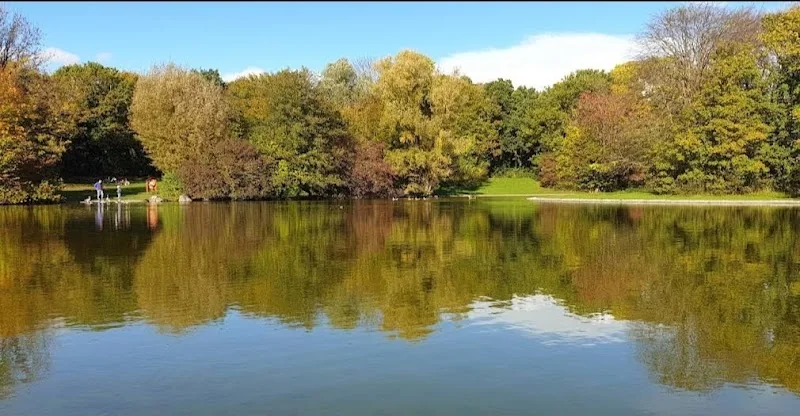
The landscape elements are also deliberately placed. At the end of the meadow valley lies a large body of water that visually holds the park together and gives it a distinctive focal point. Poplars and willows give the shore a floodplain character, while the Hachinger Bach, redirected to the west, adds an additional natural level. This makes the park appear both spacious and lively. For search queries like “ostpark munich” or “ostpark recreation,” this profile is relevant: The Ostpark is a green infrastructure for everyday life, but with a high recreational value. Those who arrive here can choose between open meadows and dense greenery, let their gaze wander, or become active at the edges of the park. The fact that this park in eastern Munich offers so much space is no coincidence but the result of a planning process that connects early urban development goals with today's needs for freedom of movement and relaxation. ([stadt.muenchen.de](https://stadt.muenchen.de/infos/muenchner-parks-gruenanlagen.html))
Ice Skating at Ostpark and the East Ice and Fun Sports Center
For many, the Ostpark is primarily a destination for ice skating in winter. The directly integrated East Ice and Fun Sports Center is located in the middle of the park landscape and offers outdoor ice skating fun on both the large indoor rink and the 400-meter-long outdoor rink. This location makes the place special: you are not in an anonymous hall but moving among trees, air, and the surrounding area. According to city information, ice skates can be rented on-site, and the facility is embedded as a sports and recreational location so that a park walk and a round on the ice go seamlessly together. This fits very well with search queries around “ice skating ostpark” or “ice and fun sports center east,” because it is not just about an ice surface but a whole winter experience in the green. ([muenchen.de](https://www.muenchen.de/freizeit/eislaufstadien/eis-und-funsportzentrum-ost?utm_source=openai))
Even outside of ice skating, the Ostpark remains active in winter. The official park description mentions sledding and ice skating as fixed recreational offerings, and it becomes clear from the search results on the park page that the park invites movement in the cold season. For visitors, this is practical because a single outing combines different needs: children who want to move, adults who want to be outdoors, and everyone looking for a place where winter does not feel still but alive. Those who like to come with sports gear can combine their visit with additional offerings like skateboarding, inline skating, or scootering at the fun sports center. This makes the Ostpark an address that is not coincidentally associated with ice skating, sports, and recreation in search engines. It is one of those places where the season changes the character of the park without losing its identity. ([muenchen.de](https://www.muenchen.de/en/sights/parks/ostpark?utm_source=openai))
Access, Subway, and Parking at Ostpark
Access is uncomplicated: The official park information recommends taking the U5 to Michaelibad and then a short onward journey or a short walk to the address Feichtstraße 19, 81735 Munich. For the East Ice and Fun Sports Center, the city also mentions U5 or U7 to Michaelibad, then bus 199 to “Ostpark Ice Skating Center” or a roughly 900-meter walk. This makes the park easily accessible for visitors without a car. Those visiting the Ostpark for the first time benefit from the fact that the main destinations – lake, Michaeligarten, ice center, and western park edge – are not far apart. This reduces the search effort on-site and makes orientation easier, especially when planning an outing with children or in winter. The idea of starting the visit at the right spot also helps: for the ice center, the sports area is sensible; for walks and the lakeshore, the area around the Michaeligarten is more appropriate. ([muenchen.de](https://www.muenchen.de/en/sights/parks/ostpark?utm_source=openai))
The Ostpark is also accessible by car, but the question of parking and footpaths remains important, especially during larger visits. The official ice center page indicates on-site parking, which is practical for ice skating visitors. However, for a relaxed park visit, it is worthwhile not only to rely on the car but to consciously plan the respective destinations in the park. Those heading to the ice center should start near the sports area; those wanting to go to the lake, beer garden, or barbecue area should choose the paths around Michaelibad, Michaeligarten, and the northern shore. In this way, access becomes not a logistical problem but part of a well-structured outing. Search queries like “ostpark access” or “ostpark parking” can be answered clearly because the park is well connected to public transport and also prepared for drivers. Those wanting to extend their walk can also start at the western end near Quiddestraße. ([muenchen.de](https://www.muenchen.de/freizeit/eislaufstadien/eis-und-funsportzentrum-ost?utm_source=openai))
Michaeligarten, Ostpark Lake, and Barbecue Area
The Michaeligarten is one of the most popular destinations at Ostpark Lake. Located directly by the water, it connects a tavern, beer garden, and lakeside bar, making the park also culinarily attractive. The official website describes it as a tavern and beer garden in the heart of eastern Munich; especially the terrace with a view of the lake is a real plus for all who want to stop by after a walk. For SEO searches for “ostpark lake,” “michaeligarten,” or simply for a nice break in the green, this is important because the Ostpark is not just a green space but also a place to stay. Those who stay longer will experience the special mix of chestnuts, water view, and urban relaxation by the lakeshore. This creates that typical Ostpark moment in Munich, where a simple afternoon outing suddenly looks like a vacation. The place stands for genuine quality of stay, not for show. ([michaeligarten.de](https://www.michaeligarten.de/))
The barbecue area is also part of the park's profile. In the northwestern part by the lake, there is a designated barbecue area established by the City of Munich, which is heavily used on warm days. The official city information mentions families, young people, and groups from the area as typical guests; in close proximity are also the skate park and Michaelibad. This makes it clear why search terms like “grilling ostpark,” “ostparkbad,” or “drinks” keep clustering around the park: The Ostpark is more than a green passage; it is a social meeting point with water, food, resting areas, and recreational use in one place. Those traveling with several people will quickly find a spot that is suitable for both arriving and staying. Especially in the summer months, it becomes evident how well the combination of lake, gastronomy, and open meadow works. ([muenchen.de](https://www.muenchen.de/en/sights/parks/ostpark?utm_source=openai))
Playgrounds, Maulwurfshausen, and Sports Offerings
For families and young people, the Ostpark offers several clearly recognizable destinations. At the far east of the park lies the large adventure playground Maulwurfshausen, and the city also mentions a public playground with a fitness course aimed at teenagers and adults. This is particularly important for search queries around “playgrounds ostpark” or “ostpark recreation” because the park is not limited to strolling adults. The mix of play, movement, and open spaces makes it practical for everyday use: children can let off steam, older children and teenagers receive more active offerings, and adults find ways to combine movement and tranquility. Especially in eastern Munich, where many residential areas are close together, this type of open space is particularly valuable. Therefore, the Ostpark is not only a destination for Sunday outings but also a practical space for everyday life in the neighborhood. ([muenchen.de](https://www.muenchen.de/en/sights/parks/ostpark?utm_source=openai))
The Ostpark is also versatile for sports. The park description mentions table tennis, volleyball, jogging, sledding, and the ice center as recurring uses, and the official city site highlights the park concept as open and robust to allow for many different forms of recreation. Those who prefer to be on wheels will find a space for skateboarding, inline skating, and scootering at the East Ice and Fun Sports Center. This covers both classic park use and active movement without losing its calm basic mood. This balance explains why it is one of the places in Munich that can be experienced quite differently depending on the season: sometimes as a jogging and walking park, sometimes as a meeting point for young families, sometimes as a winter destination with ice and slopes. For keyword logic, this is ideal because the park serves multiple search intentions without appearing artificially overloaded. ([muenchen.de](https://www.muenchen.de/en/sights/parks/ostpark?utm_source=openai))
History and Development of Ostpark
The history of the Ostpark is closely linked to Neuperlach. As early as the 1960s, the city considered a local recreation area for eastern Munich because the new district was planned from the beginning with a large park. On a former agricultural area, an artificially shaped landscape was created over a 13-year construction period, which was not intended to resemble a representative Baroque garden but rather an open public park for all. The official garden and park representation describes this very claim: Visitors should be able to use the space individually without a strict guideline determining its use. This planning idea is still palpable today because the park does not appear too formal or overloaded. Instead, it opens up with meadows, hills, lakes, and paths as an urban landscape experience. Those who know the history see the park with different eyes because the current tranquility is the result of a very conscious urban planning decision. ([stadt.muenchen.de](https://stadt.muenchen.de/infos/muenchner-parks-gruenanlagen.html))
Concrete dates help with the classification: The city council decided on the construction in 1962, the first construction phase covered just under 16 hectares, the first eastern park section was opened in 1975, the second construction phase followed in 1979, and in 1982 the Ostpark was officially opened in its entirety of 56 hectares. This chronology shows why the park still appears as a consciously developed urban project and not as a random piece of green. For SEO and visitor information, this is important because the history explains why the Ostpark has remained so generous, open, and versatile. Those visiting the park today are not just walking through a recreational area but through a landscape that has emerged from urban planning, social aspirations, and ecological ideas. This gives the Ostpark its special significance in eastern Munich. This development also explains why the park can be meaningfully used throughout the year and why it is anchored in many minds as a reliable green address. ([stadt.muenchen.de](https://stadt.muenchen.de/infos/muenchner-parks-gruenanlagen.html))
Today, it is precisely this history that keeps the Ostpark relevant. The facility functions as a large open space because it was never designated for just one use. In summer, people meet by the lake, at the barbecue area, or in the Michaeligarten; in winter, ice skaters, sledding fans, and walkers come. In between are open meadows, paths, play points, and quiet corners that do not loudly vie for attention but prove themselves through use. For visitors, this means: those who want to truly experience the Ostpark should not just look at a single highlight but read the park as a whole. Then it becomes visible how well location, history, recreational offerings, and public accessibility fit together. This combination makes it a search and excursion destination that offers both practical benefits and genuine quality of stay. ([muenchen.de](https://www.muenchen.de/en/sights/parks/ostpark?utm_source=openai))
Sources:
- City of Munich – Munich Parks and Green Spaces ([stadt.muenchen.de](https://stadt.muenchen.de/infos/muenchner-parks-gruenanlagen.html))
- Ostpark - muenchen.de ([muenchen.de](https://www.muenchen.de/sehenswuerdigkeiten/orte/120226.html?utm_source=openai))
- Munich's Ostpark: Location, recreation, barbecue and sports - muenchen.de ([muenchen.de](https://www.muenchen.de/en/sights/parks/ostpark?utm_source=openai))
- East Ice and Fun Sports Center – City of Munich ([stadt.muenchen.de](https://stadt.muenchen.de/service/info/eis-und-funsportzentrum-ost/1081742/?utm_source=openai))
- Michaeligarten Home ([michaeligarten.de](https://www.michaeligarten.de/))
- Grilling in the City – City of Munich ([stadt.muenchen.de](https://stadt.muenchen.de/infos/grillen-stadt.html?utm_source=openai))
- Adventure Playground Maulwurfshausen – City of Munich ([stadt.muenchen.de](https://stadt.muenchen.de/service/info/abenteuerspielplatz-maulwurfshausen/1082130/?utm_source=openai))
- Playground Ostpark, Fitness Course – City of Munich ([stadt.muenchen.de](https://stadt.muenchen.de/service/info/spielplatz-ostpark-fitnessparcours/10387763/?utm_source=openai))
Show moreShow less
Ostpark Munich | Ice Skating & Access
The Ostpark is one of the most defining green and recreational spaces in eastern Munich. Those traveling from the city center to Neuperlach encounter a wide-open meadow valley, wooded hills, water, paths, and many open spaces that are not designated for a single purpose. This mix of tranquility, movement, and surprisingly much variety makes the park so popular. It is considered the largest park facility in southeastern Munich, covering 56 hectares, and is experienced by many visitors as pleasantly quiet compared to other Munich parks. Directly within the park are the East Ice and Fun Sports Center, the Michaeligarten by the lake, and various sports and play areas. Those looking for a place to stroll, grill, and sit in the summer and ice skate or sled in the winter will find a very suitable address at the edge of Feichtstraße and Michaelibad. ([muenchen.de](https://www.muenchen.de/en/sights/parks/ostpark?utm_source=openai))
Ostpark Munich: Location, Size, and Character
The Ostpark is not a classic ornamental park with a strict layout, but a deliberately large urban landscape. The official description highlights the open meadow valley running east-west, framed by a densely wooded hilly landscape. In between are open areas, winding paths, water, and repeatedly perspectives that make the park appear larger than it already is. This openness is crucial, as it makes the Ostpark attractive for very different types of use: short walks, longer running routes, meetings with friends, family afternoons, or sporting activities. Those who are out and about here quickly feel that the park was not only meant to be looked at but to be engaged with. The official garden site describes this attitude very clearly when it portrays the park as a place that people should use individually. This is exactly what creates the special atmosphere that distinguishes the Ostpark from many other green spaces in Munich. ([stadt.muenchen.de](https://stadt.muenchen.de/infos/muenchner-parks-gruenanlagen.html))
The landscape elements are also deliberately placed. At the end of the meadow valley lies a large body of water that visually holds the park together and gives it a distinctive focal point. Poplars and willows give the shore a floodplain character, while the Hachinger Bach, redirected to the west, adds an additional natural level. This makes the park appear both spacious and lively. For search queries like “ostpark munich” or “ostpark recreation,” this profile is relevant: The Ostpark is a green infrastructure for everyday life, but with a high recreational value. Those who arrive here can choose between open meadows and dense greenery, let their gaze wander, or become active at the edges of the park. The fact that this park in eastern Munich offers so much space is no coincidence but the result of a planning process that connects early urban development goals with today's needs for freedom of movement and relaxation. ([stadt.muenchen.de](https://stadt.muenchen.de/infos/muenchner-parks-gruenanlagen.html))
Ice Skating at Ostpark and the East Ice and Fun Sports Center
For many, the Ostpark is primarily a destination for ice skating in winter. The directly integrated East Ice and Fun Sports Center is located in the middle of the park landscape and offers outdoor ice skating fun on both the large indoor rink and the 400-meter-long outdoor rink. This location makes the place special: you are not in an anonymous hall but moving among trees, air, and the surrounding area. According to city information, ice skates can be rented on-site, and the facility is embedded as a sports and recreational location so that a park walk and a round on the ice go seamlessly together. This fits very well with search queries around “ice skating ostpark” or “ice and fun sports center east,” because it is not just about an ice surface but a whole winter experience in the green. ([muenchen.de](https://www.muenchen.de/freizeit/eislaufstadien/eis-und-funsportzentrum-ost?utm_source=openai))
Even outside of ice skating, the Ostpark remains active in winter. The official park description mentions sledding and ice skating as fixed recreational offerings, and it becomes clear from the search results on the park page that the park invites movement in the cold season. For visitors, this is practical because a single outing combines different needs: children who want to move, adults who want to be outdoors, and everyone looking for a place where winter does not feel still but alive. Those who like to come with sports gear can combine their visit with additional offerings like skateboarding, inline skating, or scootering at the fun sports center. This makes the Ostpark an address that is not coincidentally associated with ice skating, sports, and recreation in search engines. It is one of those places where the season changes the character of the park without losing its identity. ([muenchen.de](https://www.muenchen.de/en/sights/parks/ostpark?utm_source=openai))
Access, Subway, and Parking at Ostpark
Access is uncomplicated: The official park information recommends taking the U5 to Michaelibad and then a short onward journey or a short walk to the address Feichtstraße 19, 81735 Munich. For the East Ice and Fun Sports Center, the city also mentions U5 or U7 to Michaelibad, then bus 199 to “Ostpark Ice Skating Center” or a roughly 900-meter walk. This makes the park easily accessible for visitors without a car. Those visiting the Ostpark for the first time benefit from the fact that the main destinations – lake, Michaeligarten, ice center, and western park edge – are not far apart. This reduces the search effort on-site and makes orientation easier, especially when planning an outing with children or in winter. The idea of starting the visit at the right spot also helps: for the ice center, the sports area is sensible; for walks and the lakeshore, the area around the Michaeligarten is more appropriate. ([muenchen.de](https://www.muenchen.de/en/sights/parks/ostpark?utm_source=openai))
The Ostpark is also accessible by car, but the question of parking and footpaths remains important, especially during larger visits. The official ice center page indicates on-site parking, which is practical for ice skating visitors. However, for a relaxed park visit, it is worthwhile not only to rely on the car but to consciously plan the respective destinations in the park. Those heading to the ice center should start near the sports area; those wanting to go to the lake, beer garden, or barbecue area should choose the paths around Michaelibad, Michaeligarten, and the northern shore. In this way, access becomes not a logistical problem but part of a well-structured outing. Search queries like “ostpark access” or “ostpark parking” can be answered clearly because the park is well connected to public transport and also prepared for drivers. Those wanting to extend their walk can also start at the western end near Quiddestraße. ([muenchen.de](https://www.muenchen.de/freizeit/eislaufstadien/eis-und-funsportzentrum-ost?utm_source=openai))
Michaeligarten, Ostpark Lake, and Barbecue Area
The Michaeligarten is one of the most popular destinations at Ostpark Lake. Located directly by the water, it connects a tavern, beer garden, and lakeside bar, making the park also culinarily attractive. The official website describes it as a tavern and beer garden in the heart of eastern Munich; especially the terrace with a view of the lake is a real plus for all who want to stop by after a walk. For SEO searches for “ostpark lake,” “michaeligarten,” or simply for a nice break in the green, this is important because the Ostpark is not just a green space but also a place to stay. Those who stay longer will experience the special mix of chestnuts, water view, and urban relaxation by the lakeshore. This creates that typical Ostpark moment in Munich, where a simple afternoon outing suddenly looks like a vacation. The place stands for genuine quality of stay, not for show. ([michaeligarten.de](https://www.michaeligarten.de/))
The barbecue area is also part of the park's profile. In the northwestern part by the lake, there is a designated barbecue area established by the City of Munich, which is heavily used on warm days. The official city information mentions families, young people, and groups from the area as typical guests; in close proximity are also the skate park and Michaelibad. This makes it clear why search terms like “grilling ostpark,” “ostparkbad,” or “drinks” keep clustering around the park: The Ostpark is more than a green passage; it is a social meeting point with water, food, resting areas, and recreational use in one place. Those traveling with several people will quickly find a spot that is suitable for both arriving and staying. Especially in the summer months, it becomes evident how well the combination of lake, gastronomy, and open meadow works. ([muenchen.de](https://www.muenchen.de/en/sights/parks/ostpark?utm_source=openai))
Playgrounds, Maulwurfshausen, and Sports Offerings
For families and young people, the Ostpark offers several clearly recognizable destinations. At the far east of the park lies the large adventure playground Maulwurfshausen, and the city also mentions a public playground with a fitness course aimed at teenagers and adults. This is particularly important for search queries around “playgrounds ostpark” or “ostpark recreation” because the park is not limited to strolling adults. The mix of play, movement, and open spaces makes it practical for everyday use: children can let off steam, older children and teenagers receive more active offerings, and adults find ways to combine movement and tranquility. Especially in eastern Munich, where many residential areas are close together, this type of open space is particularly valuable. Therefore, the Ostpark is not only a destination for Sunday outings but also a practical space for everyday life in the neighborhood. ([muenchen.de](https://www.muenchen.de/en/sights/parks/ostpark?utm_source=openai))
The Ostpark is also versatile for sports. The park description mentions table tennis, volleyball, jogging, sledding, and the ice center as recurring uses, and the official city site highlights the park concept as open and robust to allow for many different forms of recreation. Those who prefer to be on wheels will find a space for skateboarding, inline skating, and scootering at the East Ice and Fun Sports Center. This covers both classic park use and active movement without losing its calm basic mood. This balance explains why it is one of the places in Munich that can be experienced quite differently depending on the season: sometimes as a jogging and walking park, sometimes as a meeting point for young families, sometimes as a winter destination with ice and slopes. For keyword logic, this is ideal because the park serves multiple search intentions without appearing artificially overloaded. ([muenchen.de](https://www.muenchen.de/en/sights/parks/ostpark?utm_source=openai))
History and Development of Ostpark
The history of the Ostpark is closely linked to Neuperlach. As early as the 1960s, the city considered a local recreation area for eastern Munich because the new district was planned from the beginning with a large park. On a former agricultural area, an artificially shaped landscape was created over a 13-year construction period, which was not intended to resemble a representative Baroque garden but rather an open public park for all. The official garden and park representation describes this very claim: Visitors should be able to use the space individually without a strict guideline determining its use. This planning idea is still palpable today because the park does not appear too formal or overloaded. Instead, it opens up with meadows, hills, lakes, and paths as an urban landscape experience. Those who know the history see the park with different eyes because the current tranquility is the result of a very conscious urban planning decision. ([stadt.muenchen.de](https://stadt.muenchen.de/infos/muenchner-parks-gruenanlagen.html))
Concrete dates help with the classification: The city council decided on the construction in 1962, the first construction phase covered just under 16 hectares, the first eastern park section was opened in 1975, the second construction phase followed in 1979, and in 1982 the Ostpark was officially opened in its entirety of 56 hectares. This chronology shows why the park still appears as a consciously developed urban project and not as a random piece of green. For SEO and visitor information, this is important because the history explains why the Ostpark has remained so generous, open, and versatile. Those visiting the park today are not just walking through a recreational area but through a landscape that has emerged from urban planning, social aspirations, and ecological ideas. This gives the Ostpark its special significance in eastern Munich. This development also explains why the park can be meaningfully used throughout the year and why it is anchored in many minds as a reliable green address. ([stadt.muenchen.de](https://stadt.muenchen.de/infos/muenchner-parks-gruenanlagen.html))
Today, it is precisely this history that keeps the Ostpark relevant. The facility functions as a large open space because it was never designated for just one use. In summer, people meet by the lake, at the barbecue area, or in the Michaeligarten; in winter, ice skaters, sledding fans, and walkers come. In between are open meadows, paths, play points, and quiet corners that do not loudly vie for attention but prove themselves through use. For visitors, this means: those who want to truly experience the Ostpark should not just look at a single highlight but read the park as a whole. Then it becomes visible how well location, history, recreational offerings, and public accessibility fit together. This combination makes it a search and excursion destination that offers both practical benefits and genuine quality of stay. ([muenchen.de](https://www.muenchen.de/en/sights/parks/ostpark?utm_source=openai))
Sources:
- City of Munich – Munich Parks and Green Spaces ([stadt.muenchen.de](https://stadt.muenchen.de/infos/muenchner-parks-gruenanlagen.html))
- Ostpark - muenchen.de ([muenchen.de](https://www.muenchen.de/sehenswuerdigkeiten/orte/120226.html?utm_source=openai))
- Munich's Ostpark: Location, recreation, barbecue and sports - muenchen.de ([muenchen.de](https://www.muenchen.de/en/sights/parks/ostpark?utm_source=openai))
- East Ice and Fun Sports Center – City of Munich ([stadt.muenchen.de](https://stadt.muenchen.de/service/info/eis-und-funsportzentrum-ost/1081742/?utm_source=openai))
- Michaeligarten Home ([michaeligarten.de](https://www.michaeligarten.de/))
- Grilling in the City – City of Munich ([stadt.muenchen.de](https://stadt.muenchen.de/infos/grillen-stadt.html?utm_source=openai))
- Adventure Playground Maulwurfshausen – City of Munich ([stadt.muenchen.de](https://stadt.muenchen.de/service/info/abenteuerspielplatz-maulwurfshausen/1082130/?utm_source=openai))
- Playground Ostpark, Fitness Course – City of Munich ([stadt.muenchen.de](https://stadt.muenchen.de/service/info/spielplatz-ostpark-fitnessparcours/10387763/?utm_source=openai))
Ostpark Munich | Ice Skating & Access
The Ostpark is one of the most defining green and recreational spaces in eastern Munich. Those traveling from the city center to Neuperlach encounter a wide-open meadow valley, wooded hills, water, paths, and many open spaces that are not designated for a single purpose. This mix of tranquility, movement, and surprisingly much variety makes the park so popular. It is considered the largest park facility in southeastern Munich, covering 56 hectares, and is experienced by many visitors as pleasantly quiet compared to other Munich parks. Directly within the park are the East Ice and Fun Sports Center, the Michaeligarten by the lake, and various sports and play areas. Those looking for a place to stroll, grill, and sit in the summer and ice skate or sled in the winter will find a very suitable address at the edge of Feichtstraße and Michaelibad. ([muenchen.de](https://www.muenchen.de/en/sights/parks/ostpark?utm_source=openai))
Ostpark Munich: Location, Size, and Character
The Ostpark is not a classic ornamental park with a strict layout, but a deliberately large urban landscape. The official description highlights the open meadow valley running east-west, framed by a densely wooded hilly landscape. In between are open areas, winding paths, water, and repeatedly perspectives that make the park appear larger than it already is. This openness is crucial, as it makes the Ostpark attractive for very different types of use: short walks, longer running routes, meetings with friends, family afternoons, or sporting activities. Those who are out and about here quickly feel that the park was not only meant to be looked at but to be engaged with. The official garden site describes this attitude very clearly when it portrays the park as a place that people should use individually. This is exactly what creates the special atmosphere that distinguishes the Ostpark from many other green spaces in Munich. ([stadt.muenchen.de](https://stadt.muenchen.de/infos/muenchner-parks-gruenanlagen.html))
The landscape elements are also deliberately placed. At the end of the meadow valley lies a large body of water that visually holds the park together and gives it a distinctive focal point. Poplars and willows give the shore a floodplain character, while the Hachinger Bach, redirected to the west, adds an additional natural level. This makes the park appear both spacious and lively. For search queries like “ostpark munich” or “ostpark recreation,” this profile is relevant: The Ostpark is a green infrastructure for everyday life, but with a high recreational value. Those who arrive here can choose between open meadows and dense greenery, let their gaze wander, or become active at the edges of the park. The fact that this park in eastern Munich offers so much space is no coincidence but the result of a planning process that connects early urban development goals with today's needs for freedom of movement and relaxation. ([stadt.muenchen.de](https://stadt.muenchen.de/infos/muenchner-parks-gruenanlagen.html))
Ice Skating at Ostpark and the East Ice and Fun Sports Center
For many, the Ostpark is primarily a destination for ice skating in winter. The directly integrated East Ice and Fun Sports Center is located in the middle of the park landscape and offers outdoor ice skating fun on both the large indoor rink and the 400-meter-long outdoor rink. This location makes the place special: you are not in an anonymous hall but moving among trees, air, and the surrounding area. According to city information, ice skates can be rented on-site, and the facility is embedded as a sports and recreational location so that a park walk and a round on the ice go seamlessly together. This fits very well with search queries around “ice skating ostpark” or “ice and fun sports center east,” because it is not just about an ice surface but a whole winter experience in the green. ([muenchen.de](https://www.muenchen.de/freizeit/eislaufstadien/eis-und-funsportzentrum-ost?utm_source=openai))
Even outside of ice skating, the Ostpark remains active in winter. The official park description mentions sledding and ice skating as fixed recreational offerings, and it becomes clear from the search results on the park page that the park invites movement in the cold season. For visitors, this is practical because a single outing combines different needs: children who want to move, adults who want to be outdoors, and everyone looking for a place where winter does not feel still but alive. Those who like to come with sports gear can combine their visit with additional offerings like skateboarding, inline skating, or scootering at the fun sports center. This makes the Ostpark an address that is not coincidentally associated with ice skating, sports, and recreation in search engines. It is one of those places where the season changes the character of the park without losing its identity. ([muenchen.de](https://www.muenchen.de/en/sights/parks/ostpark?utm_source=openai))
Access, Subway, and Parking at Ostpark
Access is uncomplicated: The official park information recommends taking the U5 to Michaelibad and then a short onward journey or a short walk to the address Feichtstraße 19, 81735 Munich. For the East Ice and Fun Sports Center, the city also mentions U5 or U7 to Michaelibad, then bus 199 to “Ostpark Ice Skating Center” or a roughly 900-meter walk. This makes the park easily accessible for visitors without a car. Those visiting the Ostpark for the first time benefit from the fact that the main destinations – lake, Michaeligarten, ice center, and western park edge – are not far apart. This reduces the search effort on-site and makes orientation easier, especially when planning an outing with children or in winter. The idea of starting the visit at the right spot also helps: for the ice center, the sports area is sensible; for walks and the lakeshore, the area around the Michaeligarten is more appropriate. ([muenchen.de](https://www.muenchen.de/en/sights/parks/ostpark?utm_source=openai))
The Ostpark is also accessible by car, but the question of parking and footpaths remains important, especially during larger visits. The official ice center page indicates on-site parking, which is practical for ice skating visitors. However, for a relaxed park visit, it is worthwhile not only to rely on the car but to consciously plan the respective destinations in the park. Those heading to the ice center should start near the sports area; those wanting to go to the lake, beer garden, or barbecue area should choose the paths around Michaelibad, Michaeligarten, and the northern shore. In this way, access becomes not a logistical problem but part of a well-structured outing. Search queries like “ostpark access” or “ostpark parking” can be answered clearly because the park is well connected to public transport and also prepared for drivers. Those wanting to extend their walk can also start at the western end near Quiddestraße. ([muenchen.de](https://www.muenchen.de/freizeit/eislaufstadien/eis-und-funsportzentrum-ost?utm_source=openai))
Michaeligarten, Ostpark Lake, and Barbecue Area
The Michaeligarten is one of the most popular destinations at Ostpark Lake. Located directly by the water, it connects a tavern, beer garden, and lakeside bar, making the park also culinarily attractive. The official website describes it as a tavern and beer garden in the heart of eastern Munich; especially the terrace with a view of the lake is a real plus for all who want to stop by after a walk. For SEO searches for “ostpark lake,” “michaeligarten,” or simply for a nice break in the green, this is important because the Ostpark is not just a green space but also a place to stay. Those who stay longer will experience the special mix of chestnuts, water view, and urban relaxation by the lakeshore. This creates that typical Ostpark moment in Munich, where a simple afternoon outing suddenly looks like a vacation. The place stands for genuine quality of stay, not for show. ([michaeligarten.de](https://www.michaeligarten.de/))
The barbecue area is also part of the park's profile. In the northwestern part by the lake, there is a designated barbecue area established by the City of Munich, which is heavily used on warm days. The official city information mentions families, young people, and groups from the area as typical guests; in close proximity are also the skate park and Michaelibad. This makes it clear why search terms like “grilling ostpark,” “ostparkbad,” or “drinks” keep clustering around the park: The Ostpark is more than a green passage; it is a social meeting point with water, food, resting areas, and recreational use in one place. Those traveling with several people will quickly find a spot that is suitable for both arriving and staying. Especially in the summer months, it becomes evident how well the combination of lake, gastronomy, and open meadow works. ([muenchen.de](https://www.muenchen.de/en/sights/parks/ostpark?utm_source=openai))
Playgrounds, Maulwurfshausen, and Sports Offerings
For families and young people, the Ostpark offers several clearly recognizable destinations. At the far east of the park lies the large adventure playground Maulwurfshausen, and the city also mentions a public playground with a fitness course aimed at teenagers and adults. This is particularly important for search queries around “playgrounds ostpark” or “ostpark recreation” because the park is not limited to strolling adults. The mix of play, movement, and open spaces makes it practical for everyday use: children can let off steam, older children and teenagers receive more active offerings, and adults find ways to combine movement and tranquility. Especially in eastern Munich, where many residential areas are close together, this type of open space is particularly valuable. Therefore, the Ostpark is not only a destination for Sunday outings but also a practical space for everyday life in the neighborhood. ([muenchen.de](https://www.muenchen.de/en/sights/parks/ostpark?utm_source=openai))
The Ostpark is also versatile for sports. The park description mentions table tennis, volleyball, jogging, sledding, and the ice center as recurring uses, and the official city site highlights the park concept as open and robust to allow for many different forms of recreation. Those who prefer to be on wheels will find a space for skateboarding, inline skating, and scootering at the East Ice and Fun Sports Center. This covers both classic park use and active movement without losing its calm basic mood. This balance explains why it is one of the places in Munich that can be experienced quite differently depending on the season: sometimes as a jogging and walking park, sometimes as a meeting point for young families, sometimes as a winter destination with ice and slopes. For keyword logic, this is ideal because the park serves multiple search intentions without appearing artificially overloaded. ([muenchen.de](https://www.muenchen.de/en/sights/parks/ostpark?utm_source=openai))
History and Development of Ostpark
The history of the Ostpark is closely linked to Neuperlach. As early as the 1960s, the city considered a local recreation area for eastern Munich because the new district was planned from the beginning with a large park. On a former agricultural area, an artificially shaped landscape was created over a 13-year construction period, which was not intended to resemble a representative Baroque garden but rather an open public park for all. The official garden and park representation describes this very claim: Visitors should be able to use the space individually without a strict guideline determining its use. This planning idea is still palpable today because the park does not appear too formal or overloaded. Instead, it opens up with meadows, hills, lakes, and paths as an urban landscape experience. Those who know the history see the park with different eyes because the current tranquility is the result of a very conscious urban planning decision. ([stadt.muenchen.de](https://stadt.muenchen.de/infos/muenchner-parks-gruenanlagen.html))
Concrete dates help with the classification: The city council decided on the construction in 1962, the first construction phase covered just under 16 hectares, the first eastern park section was opened in 1975, the second construction phase followed in 1979, and in 1982 the Ostpark was officially opened in its entirety of 56 hectares. This chronology shows why the park still appears as a consciously developed urban project and not as a random piece of green. For SEO and visitor information, this is important because the history explains why the Ostpark has remained so generous, open, and versatile. Those visiting the park today are not just walking through a recreational area but through a landscape that has emerged from urban planning, social aspirations, and ecological ideas. This gives the Ostpark its special significance in eastern Munich. This development also explains why the park can be meaningfully used throughout the year and why it is anchored in many minds as a reliable green address. ([stadt.muenchen.de](https://stadt.muenchen.de/infos/muenchner-parks-gruenanlagen.html))
Today, it is precisely this history that keeps the Ostpark relevant. The facility functions as a large open space because it was never designated for just one use. In summer, people meet by the lake, at the barbecue area, or in the Michaeligarten; in winter, ice skaters, sledding fans, and walkers come. In between are open meadows, paths, play points, and quiet corners that do not loudly vie for attention but prove themselves through use. For visitors, this means: those who want to truly experience the Ostpark should not just look at a single highlight but read the park as a whole. Then it becomes visible how well location, history, recreational offerings, and public accessibility fit together. This combination makes it a search and excursion destination that offers both practical benefits and genuine quality of stay. ([muenchen.de](https://www.muenchen.de/en/sights/parks/ostpark?utm_source=openai))
Sources:
- City of Munich – Munich Parks and Green Spaces ([stadt.muenchen.de](https://stadt.muenchen.de/infos/muenchner-parks-gruenanlagen.html))
- Ostpark - muenchen.de ([muenchen.de](https://www.muenchen.de/sehenswuerdigkeiten/orte/120226.html?utm_source=openai))
- Munich's Ostpark: Location, recreation, barbecue and sports - muenchen.de ([muenchen.de](https://www.muenchen.de/en/sights/parks/ostpark?utm_source=openai))
- East Ice and Fun Sports Center – City of Munich ([stadt.muenchen.de](https://stadt.muenchen.de/service/info/eis-und-funsportzentrum-ost/1081742/?utm_source=openai))
- Michaeligarten Home ([michaeligarten.de](https://www.michaeligarten.de/))
- Grilling in the City – City of Munich ([stadt.muenchen.de](https://stadt.muenchen.de/infos/grillen-stadt.html?utm_source=openai))
- Adventure Playground Maulwurfshausen – City of Munich ([stadt.muenchen.de](https://stadt.muenchen.de/service/info/abenteuerspielplatz-maulwurfshausen/1082130/?utm_source=openai))
- Playground Ostpark, Fitness Course – City of Munich ([stadt.muenchen.de](https://stadt.muenchen.de/service/info/spielplatz-ostpark-fitnessparcours/10387763/?utm_source=openai))
Upcoming Events
No events found
Frequently Asked Questions
Reviews
Charlie Jameson
12. October 2025
Home for Gaelic4Mothers & Gaelic4Girls Munich! Fantastic park with loads of space for training and family fun. Great playground for the kids, a lovely beer garden for the parents — and we don’t even mind all the geese! Always a brilliant community vibe and one of Munich’s best outdoor spots.
david antoun
11. August 2024
big park, skateboard/football/basketball complex is available. a lake and a bier garden. banks to sit between trees/flowers. a high observation point, large green areas. and awesome roads for bicycle ride, not too much crowded, parking is easy and it is next to swimming pool.
Anup Tigadi
22. January 2024
We visited in winter. The lake at park was frozen, people were enjoying ice skating there. The park has lot of slopes where sledging can be enjoyed. In summer it has nice walking track, children play area, beer garden. Its complete family fun place. Ample free parking.
Tina Hazboun
29. March 2024
Great park. Clean and well kept. Loved the atmosphere there. It's a great place to cycle, play ball, have a picnic, and more. The park is big enough that even on the most busy days, you can find a quiet place to sit and read a book without disturbance.
Steef
30. April 2024
This is a lovely park with lots of different kinds of paths from family-friendly-with-a stroller to couple-in-love-hiking! Lots of benches as well for good rest. This park features meadows, woods and lakes! For being in Munich, this park is pretty big! If you want to, you can also get some traditional Bavarian food at the “Michaeligarten” Biergarden!