
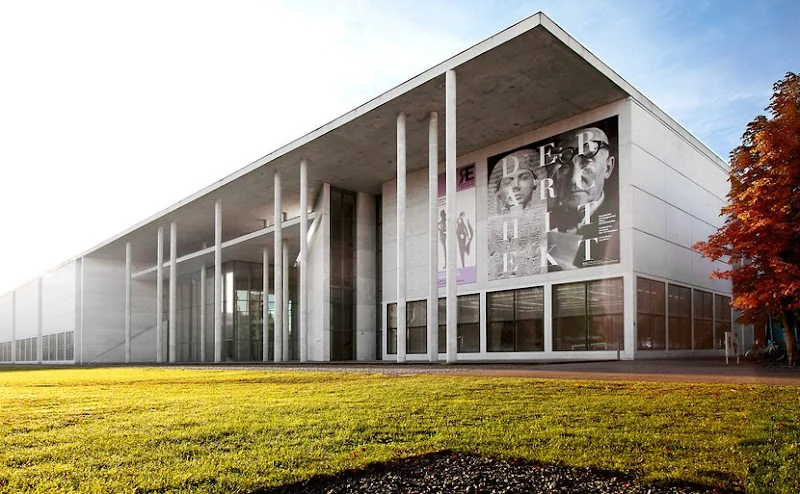
Barer Str. 40, München-Maxvorstadt
Barer Str. 40, 80333 München, Germany
Pinakothek der Moderne | Tickets & Opening Hours
The Pinakothek der Moderne is not a single museum, but a whole cultural cosmos in the heart of Munich. Those who come here experience four museums under one roof: Art, Graphics, Architecture, and Design together form one of the largest collection houses in Europe and make the place one of the most exciting addresses for anyone interested in modernity, contemporary issues, and design diversity. The decisive appeal lies not only in the collections themselves but in the idea of the house: instead of separating the disciplines, they are consciously related to each other. A single ticket opens access to four perspectives on the world, and it is precisely from this that the special radiance of the Pinakothek der Moderne emerges. The building is designed as an open place for encounters, education, and discourse, with a glass rotunda as the center that consolidates the tour through all levels and repeatedly opens new lines of sight. Therefore, those visiting for the first time experience not only exhibitions but also an architectural staging of space, light, and movement, making the museum visit itself an experience. ([pinakothek-der-moderne.de](https://www.pinakothek-der-moderne.de/))
Tickets, Admission, and Opening Hours for the Pinakothek der Moderne
For most visitors, the question of admission and opening hours is the first impulse to search, and this is where the house provides clear, practical information. The Pinakothek der Moderne is open daily except Mondays from 10:00 AM to 6:00 PM, and on Thursdays until 8:00 PM. The regular admission fee is 10 euros, reduced 7 euros, and on Sundays, the admission is particularly attractive at only 1 euro. Children and teenagers under 18 have free admission, and further reductions are offered for certain groups. Those who wish to combine several houses of the art area in one day can use a combination ticket that covers admission to the Alte Pinakothek, the Pinakothek der Moderne, the Museum Brandhorst, and the Sammlung Schack. This is particularly interesting for visitors planning a concentrated art tour of Munich and wanting to keep the distances between the houses short. Tickets can be purchased online in advance from the webshop; those who book digitally receive the ticket via email and can present it at the entrance either printed or on their smartphone. This is not only convenient but also helps to start the visit in a more relaxed manner. Especially on Sundays, early planning is worthwhile because the low admission makes the house additionally attractive, and the crowds can be correspondingly higher. Special prices may also apply for special exhibitions, so a quick look at the respective program is always advisable. Therefore, those searching for admission, tickets, or opening hours will find the most important points compactly summarized here: clear opening hours, a fair standard price, an extremely low Sunday admission, and an easy online booking process. ([pinakothek-der-moderne.de](https://www.pinakothek-der-moderne.de/en/planning-your-visit/))
Directions, Parking, and Accessibility
The location of the Pinakothek der Moderne in the Munich art area is a great advantage for anyone traveling by public transport or on foot. The house is located in close proximity to the Alte and Neue Pinakothek and is well connected to public transport: with the U-Bahn lines U3 or U6, one travels to Odeonsplatz, from there the city bus 100 goes towards Hauptbahnhof Nord to the stop Pinakotheken. Those coming from the direction of Karlsplatz or Stachus can use tram lines 27 or 28 to the Pinakotheken station. However, the museum's own parking lot is only available to persons with a disabled parking permit; all others are explicitly advised by the museum to arrive by public transport or on foot. This clear rule is relevant for many visitors because the area around the art area is very central but not ideal for spontaneous parking. There are also important and helpful details regarding accessibility: The barrier-free access is possible via Barer Straße; additionally, there is another barrier-free access from Gabelsbergerstraße or at the corner of Türkenstraße. Special tours are offered for hearing-impaired visitors, and a tactile orientation map is available at the information desk for blind or visually impaired guests. Assistance dogs are permitted, provided the appropriate documentation is available. Those traveling with a group should also note that group visits with up to 26 people including a guide are possible in the large exhibition rooms, but different rules may apply for special exhibitions. It is also practical that group registrations should be made in advance, as a processing time of about 14 days is planned. Thus, the Pinakothek der Moderne is not only centrally located but also structured to be planned for families, school classes, travel groups, and individual visitors. ([pinakothek-der-moderne.de](https://www.pinakothek-der-moderne.de/en/planning-your-visit/))
Current Exhibitions, Programs, and Family Offers
The current exhibition and program work is one of the strongest reasons why people specifically search for the Pinakothek der Moderne. The official site features changing projects, rotunda works, tours, and family formats side by side, making a visit worthwhile for very different interests. Currently, the exhibition Sweeter than Honey. A Panorama of the Written Art is particularly visible, which comprehensively dedicates itself to the scriptural and text-based works of the collection of modern art for the first time. On an exhibition area of about 1,200 square meters, around 60 artistic positions are shown that make writing experienceable as image, gesture, material, and social means of expression. The theme fits excellently with a house that thinks interconnectedly in all four disciplines, as it is not only about artworks but also about the question of how language, signs, and visual culture interact. In parallel, Robotic Worlds is running as part of the reorientation of the design collection for the 100th anniversary of the Neue Sammlung; here, robots from the 1970s to the present are in focus, supplemented by loans from research and adjacent areas of technology and everyday culture. Therefore, those searching for robotics, design, and the future will find a strong content connection between collection, science, and pop culture. Additionally, formats like X-D-E-P-O-T, a publicly accessible 600 square meter space for the Neue Sammlung, as well as changing tours that take place several times a week through the collections and special exhibitions are offered. For families, there is a particularly wide range of offers: family tours from six years old, children's programs like PIN.O, PIN.A digital for the younger ones, and other participatory offers that playfully open up the museum visit. The Pinakothek der Moderne is thus not only a place for quiet contemplation but also a vibrant program house where current topics, young target groups, and classic museum expertise come together. Those looking for a current exhibition, a family program, or a special mediation format will find almost every type of visit at a high level here. ([pinakothek-der-moderne.de](https://www.pinakothek-der-moderne.de/ausstellungen/sweeter-than-honey/?utm_source=openai))
Architecture, Rotunda, and History of the House
The architecture of the Pinakothek der Moderne is an essential part of its appeal and explains why many people specifically search for the architect, the history, or the rotunda. The Munich architect Stephan Braunfels won the open competition for the building in 1992. The area between the Alte Pinakothek, Neue Pinakothek, and the city center posed the question of how to integrate a large museum ensemble into a historically grown environment without overwhelming the existing urban order. His answer was a museum complex that is accessible from two sides: through the pillar hall in the northwest and through the glazed loggia of the winter garden in the southeast. In the center stands the rotunda, a central hall with over 30 meters in diameter, serving as a junction for all tours. All exhibition rooms are grouped around this space, creating an extraordinary sequence of sightlines, perspectives, and transitions. Particularly striking is the large, funnel-shaped staircase that leads visitors from the basement to the upper floor and runs through the entire interior like a sculpture. According to the official architectural description, it extends over approximately 100 meters in length and overcomes a height difference of 12 meters. The external appearance of the building is deliberately calm and powerful: exposed concrete, glass, and steel characterize the rectangular structure, which, however, unfolds an astonishing spatial lightness inside. For the history of the house, it is also important that the Pinakothek der Moderne was opened in September 2002 and has since been not only a museum but also a programmatic symbol for the Munich art area. With its opening, the term Munich Art Area was communicated for the first time, and the house has since been regarded as the largest institution of the area and, in a way, its seed cell. This connection of architecture, urban space, and cultural networking makes the Pinakothek der Moderne much more than a collection shell: it is a consciously built statement for modernity in Munich. ([pinakothek-der-moderne.de](https://www.pinakothek-der-moderne.de/architektur-des-gebaeudes/))
Four Museums Under One Roof: Art, Graphics, Architecture, and Design
The special SEO value of the Pinakothek der Moderne lies in the diversity of its content, as it can serve several search intentions simultaneously. The Collection of Modern Art comprises more than 20,000 works and picks up where the Neue Pinakothek ends, namely with art after about 1900. It is one of the internationally leading institutions for painting, sculpture, photography, and new media, ranging from the important avant-gardes of the early 20th century to the present. The State Graphic Collection Munich is one of the most significant museums for drawing and print graphics in Germany and is among the largest institutions of its kind worldwide; its holdings comprise about 400,000 sheets and cover a period from the 12th to the 21st century. The connection between old and modern graphics, from classical schools to contemporary drawing art, is particularly strong here. The architecture department of the house goes back to the architecture museum of TUM, which has had its own presentation spaces in the Pinakothek der Moderne since September 2002 and shows exhibitions on the historical and current perspectives of built projects. In the field of design, Die Neue Sammlung – The Design Museum is particularly exciting: its roots lie in the Werkbund movement, in the model collection established since 1912, in the collection established as a state institution in 1925, and in the museum opening in 1926. Today, it reflects the current discourses of design in exhibitions and mediation, from everyday objects to experimental forms to topics such as sustainability, inclusion, or digital living environments. It is precisely these four content poles that make the Pinakothek der Moderne so strong in search: those searching for art, graphics, architecture, design, robotics, or current special topics will find very different but interconnected offerings in one place. Therefore, the house functions not only as a museum but also as a knowledge platform where epochs, media, and perspectives consciously interweave. ([pinakothek-der-moderne.de](https://www.pinakothek-der-moderne.de/kunst/))
Café, Shop, Photos, and Practical Visitor Tips
Even with the small but very important questions for the visit, the Pinakothek der Moderne provides concrete answers. The museum shop CEDON offers publications from the Pinakothek der Moderne and has its own opening hours; currently, it is open daily except Mondays and longer on Thursdays. The café is located in the winter garden and has separate opening hours, which are indicated on the visitor page. Particularly interesting is the current note on the ongoing renovation or project work around FLUX: access to the museum is currently only possible through the entrance on Barer Straße, the café remains open, and seating is currently only available in the outdoor area and in the cube above the counter. For many visitors, this is a useful hint as it makes the path through the house and the stay on-site more immediately planable. Those searching for photos should know the house rules: private photography is allowed without flash, tripod, or smartphone selfie stick, as long as there are no special prohibitions on individual artworks or exhibition sections. Commercial photo and film shoots must be approved in advance by the press department. This is an important detail for content production, creators, media, and professional shoots. Additionally, it is advisable to take a look at the app of the Pinakothek der Moderne, which offers thematic walks through all four collections and provides information on over 100 objects as well as over 80 artists, architects, and designers. For visitors who desire more orientation or depth, this is a real added value before, during, and after the tour. Mediation also plays a significant role: the Open4 program aims to encourage people of all ages to participate and open the four museums as a space for experience. Therefore, those searching for café, shop, photos, or practical visitor tips receive not only a service answer but also a sense of how consistently the Pinakothek der Moderne is designed for participation, orientation, and multiple use. This is exactly what makes the place so attractive for a broad audience: it is neither a pure showcase nor a classic art museum but an open system of collection, mediation, and urban encounter. ([pinakothek-der-moderne.de](https://www.pinakothek-der-moderne.de/en/planning-your-visit/))
Sources:
- Pinakothek der Moderne – Homepage
- Pinakothek der Moderne – Plan Your Visit
- Pinakothek der Moderne – Architecture of the Building
- Pinakothek der Moderne – Collection of Modern Art
- Pinakothek der Moderne – State Graphic Collection Munich
- Pinakothek der Moderne – The New Collection / Design
- Pinakothek der Moderne – Sweeter than Honey
- Pinakothek der Moderne – Robotic Worlds
Show moreShow less
Pinakothek der Moderne | Tickets & Opening Hours
The Pinakothek der Moderne is not a single museum, but a whole cultural cosmos in the heart of Munich. Those who come here experience four museums under one roof: Art, Graphics, Architecture, and Design together form one of the largest collection houses in Europe and make the place one of the most exciting addresses for anyone interested in modernity, contemporary issues, and design diversity. The decisive appeal lies not only in the collections themselves but in the idea of the house: instead of separating the disciplines, they are consciously related to each other. A single ticket opens access to four perspectives on the world, and it is precisely from this that the special radiance of the Pinakothek der Moderne emerges. The building is designed as an open place for encounters, education, and discourse, with a glass rotunda as the center that consolidates the tour through all levels and repeatedly opens new lines of sight. Therefore, those visiting for the first time experience not only exhibitions but also an architectural staging of space, light, and movement, making the museum visit itself an experience. ([pinakothek-der-moderne.de](https://www.pinakothek-der-moderne.de/))
Tickets, Admission, and Opening Hours for the Pinakothek der Moderne
For most visitors, the question of admission and opening hours is the first impulse to search, and this is where the house provides clear, practical information. The Pinakothek der Moderne is open daily except Mondays from 10:00 AM to 6:00 PM, and on Thursdays until 8:00 PM. The regular admission fee is 10 euros, reduced 7 euros, and on Sundays, the admission is particularly attractive at only 1 euro. Children and teenagers under 18 have free admission, and further reductions are offered for certain groups. Those who wish to combine several houses of the art area in one day can use a combination ticket that covers admission to the Alte Pinakothek, the Pinakothek der Moderne, the Museum Brandhorst, and the Sammlung Schack. This is particularly interesting for visitors planning a concentrated art tour of Munich and wanting to keep the distances between the houses short. Tickets can be purchased online in advance from the webshop; those who book digitally receive the ticket via email and can present it at the entrance either printed or on their smartphone. This is not only convenient but also helps to start the visit in a more relaxed manner. Especially on Sundays, early planning is worthwhile because the low admission makes the house additionally attractive, and the crowds can be correspondingly higher. Special prices may also apply for special exhibitions, so a quick look at the respective program is always advisable. Therefore, those searching for admission, tickets, or opening hours will find the most important points compactly summarized here: clear opening hours, a fair standard price, an extremely low Sunday admission, and an easy online booking process. ([pinakothek-der-moderne.de](https://www.pinakothek-der-moderne.de/en/planning-your-visit/))
Directions, Parking, and Accessibility
The location of the Pinakothek der Moderne in the Munich art area is a great advantage for anyone traveling by public transport or on foot. The house is located in close proximity to the Alte and Neue Pinakothek and is well connected to public transport: with the U-Bahn lines U3 or U6, one travels to Odeonsplatz, from there the city bus 100 goes towards Hauptbahnhof Nord to the stop Pinakotheken. Those coming from the direction of Karlsplatz or Stachus can use tram lines 27 or 28 to the Pinakotheken station. However, the museum's own parking lot is only available to persons with a disabled parking permit; all others are explicitly advised by the museum to arrive by public transport or on foot. This clear rule is relevant for many visitors because the area around the art area is very central but not ideal for spontaneous parking. There are also important and helpful details regarding accessibility: The barrier-free access is possible via Barer Straße; additionally, there is another barrier-free access from Gabelsbergerstraße or at the corner of Türkenstraße. Special tours are offered for hearing-impaired visitors, and a tactile orientation map is available at the information desk for blind or visually impaired guests. Assistance dogs are permitted, provided the appropriate documentation is available. Those traveling with a group should also note that group visits with up to 26 people including a guide are possible in the large exhibition rooms, but different rules may apply for special exhibitions. It is also practical that group registrations should be made in advance, as a processing time of about 14 days is planned. Thus, the Pinakothek der Moderne is not only centrally located but also structured to be planned for families, school classes, travel groups, and individual visitors. ([pinakothek-der-moderne.de](https://www.pinakothek-der-moderne.de/en/planning-your-visit/))
Current Exhibitions, Programs, and Family Offers
The current exhibition and program work is one of the strongest reasons why people specifically search for the Pinakothek der Moderne. The official site features changing projects, rotunda works, tours, and family formats side by side, making a visit worthwhile for very different interests. Currently, the exhibition Sweeter than Honey. A Panorama of the Written Art is particularly visible, which comprehensively dedicates itself to the scriptural and text-based works of the collection of modern art for the first time. On an exhibition area of about 1,200 square meters, around 60 artistic positions are shown that make writing experienceable as image, gesture, material, and social means of expression. The theme fits excellently with a house that thinks interconnectedly in all four disciplines, as it is not only about artworks but also about the question of how language, signs, and visual culture interact. In parallel, Robotic Worlds is running as part of the reorientation of the design collection for the 100th anniversary of the Neue Sammlung; here, robots from the 1970s to the present are in focus, supplemented by loans from research and adjacent areas of technology and everyday culture. Therefore, those searching for robotics, design, and the future will find a strong content connection between collection, science, and pop culture. Additionally, formats like X-D-E-P-O-T, a publicly accessible 600 square meter space for the Neue Sammlung, as well as changing tours that take place several times a week through the collections and special exhibitions are offered. For families, there is a particularly wide range of offers: family tours from six years old, children's programs like PIN.O, PIN.A digital for the younger ones, and other participatory offers that playfully open up the museum visit. The Pinakothek der Moderne is thus not only a place for quiet contemplation but also a vibrant program house where current topics, young target groups, and classic museum expertise come together. Those looking for a current exhibition, a family program, or a special mediation format will find almost every type of visit at a high level here. ([pinakothek-der-moderne.de](https://www.pinakothek-der-moderne.de/ausstellungen/sweeter-than-honey/?utm_source=openai))
Architecture, Rotunda, and History of the House
The architecture of the Pinakothek der Moderne is an essential part of its appeal and explains why many people specifically search for the architect, the history, or the rotunda. The Munich architect Stephan Braunfels won the open competition for the building in 1992. The area between the Alte Pinakothek, Neue Pinakothek, and the city center posed the question of how to integrate a large museum ensemble into a historically grown environment without overwhelming the existing urban order. His answer was a museum complex that is accessible from two sides: through the pillar hall in the northwest and through the glazed loggia of the winter garden in the southeast. In the center stands the rotunda, a central hall with over 30 meters in diameter, serving as a junction for all tours. All exhibition rooms are grouped around this space, creating an extraordinary sequence of sightlines, perspectives, and transitions. Particularly striking is the large, funnel-shaped staircase that leads visitors from the basement to the upper floor and runs through the entire interior like a sculpture. According to the official architectural description, it extends over approximately 100 meters in length and overcomes a height difference of 12 meters. The external appearance of the building is deliberately calm and powerful: exposed concrete, glass, and steel characterize the rectangular structure, which, however, unfolds an astonishing spatial lightness inside. For the history of the house, it is also important that the Pinakothek der Moderne was opened in September 2002 and has since been not only a museum but also a programmatic symbol for the Munich art area. With its opening, the term Munich Art Area was communicated for the first time, and the house has since been regarded as the largest institution of the area and, in a way, its seed cell. This connection of architecture, urban space, and cultural networking makes the Pinakothek der Moderne much more than a collection shell: it is a consciously built statement for modernity in Munich. ([pinakothek-der-moderne.de](https://www.pinakothek-der-moderne.de/architektur-des-gebaeudes/))
Four Museums Under One Roof: Art, Graphics, Architecture, and Design
The special SEO value of the Pinakothek der Moderne lies in the diversity of its content, as it can serve several search intentions simultaneously. The Collection of Modern Art comprises more than 20,000 works and picks up where the Neue Pinakothek ends, namely with art after about 1900. It is one of the internationally leading institutions for painting, sculpture, photography, and new media, ranging from the important avant-gardes of the early 20th century to the present. The State Graphic Collection Munich is one of the most significant museums for drawing and print graphics in Germany and is among the largest institutions of its kind worldwide; its holdings comprise about 400,000 sheets and cover a period from the 12th to the 21st century. The connection between old and modern graphics, from classical schools to contemporary drawing art, is particularly strong here. The architecture department of the house goes back to the architecture museum of TUM, which has had its own presentation spaces in the Pinakothek der Moderne since September 2002 and shows exhibitions on the historical and current perspectives of built projects. In the field of design, Die Neue Sammlung – The Design Museum is particularly exciting: its roots lie in the Werkbund movement, in the model collection established since 1912, in the collection established as a state institution in 1925, and in the museum opening in 1926. Today, it reflects the current discourses of design in exhibitions and mediation, from everyday objects to experimental forms to topics such as sustainability, inclusion, or digital living environments. It is precisely these four content poles that make the Pinakothek der Moderne so strong in search: those searching for art, graphics, architecture, design, robotics, or current special topics will find very different but interconnected offerings in one place. Therefore, the house functions not only as a museum but also as a knowledge platform where epochs, media, and perspectives consciously interweave. ([pinakothek-der-moderne.de](https://www.pinakothek-der-moderne.de/kunst/))
Café, Shop, Photos, and Practical Visitor Tips
Even with the small but very important questions for the visit, the Pinakothek der Moderne provides concrete answers. The museum shop CEDON offers publications from the Pinakothek der Moderne and has its own opening hours; currently, it is open daily except Mondays and longer on Thursdays. The café is located in the winter garden and has separate opening hours, which are indicated on the visitor page. Particularly interesting is the current note on the ongoing renovation or project work around FLUX: access to the museum is currently only possible through the entrance on Barer Straße, the café remains open, and seating is currently only available in the outdoor area and in the cube above the counter. For many visitors, this is a useful hint as it makes the path through the house and the stay on-site more immediately planable. Those searching for photos should know the house rules: private photography is allowed without flash, tripod, or smartphone selfie stick, as long as there are no special prohibitions on individual artworks or exhibition sections. Commercial photo and film shoots must be approved in advance by the press department. This is an important detail for content production, creators, media, and professional shoots. Additionally, it is advisable to take a look at the app of the Pinakothek der Moderne, which offers thematic walks through all four collections and provides information on over 100 objects as well as over 80 artists, architects, and designers. For visitors who desire more orientation or depth, this is a real added value before, during, and after the tour. Mediation also plays a significant role: the Open4 program aims to encourage people of all ages to participate and open the four museums as a space for experience. Therefore, those searching for café, shop, photos, or practical visitor tips receive not only a service answer but also a sense of how consistently the Pinakothek der Moderne is designed for participation, orientation, and multiple use. This is exactly what makes the place so attractive for a broad audience: it is neither a pure showcase nor a classic art museum but an open system of collection, mediation, and urban encounter. ([pinakothek-der-moderne.de](https://www.pinakothek-der-moderne.de/en/planning-your-visit/))
Sources:
- Pinakothek der Moderne – Homepage
- Pinakothek der Moderne – Plan Your Visit
- Pinakothek der Moderne – Architecture of the Building
- Pinakothek der Moderne – Collection of Modern Art
- Pinakothek der Moderne – State Graphic Collection Munich
- Pinakothek der Moderne – The New Collection / Design
- Pinakothek der Moderne – Sweeter than Honey
- Pinakothek der Moderne – Robotic Worlds
Pinakothek der Moderne | Tickets & Opening Hours
The Pinakothek der Moderne is not a single museum, but a whole cultural cosmos in the heart of Munich. Those who come here experience four museums under one roof: Art, Graphics, Architecture, and Design together form one of the largest collection houses in Europe and make the place one of the most exciting addresses for anyone interested in modernity, contemporary issues, and design diversity. The decisive appeal lies not only in the collections themselves but in the idea of the house: instead of separating the disciplines, they are consciously related to each other. A single ticket opens access to four perspectives on the world, and it is precisely from this that the special radiance of the Pinakothek der Moderne emerges. The building is designed as an open place for encounters, education, and discourse, with a glass rotunda as the center that consolidates the tour through all levels and repeatedly opens new lines of sight. Therefore, those visiting for the first time experience not only exhibitions but also an architectural staging of space, light, and movement, making the museum visit itself an experience. ([pinakothek-der-moderne.de](https://www.pinakothek-der-moderne.de/))
Tickets, Admission, and Opening Hours for the Pinakothek der Moderne
For most visitors, the question of admission and opening hours is the first impulse to search, and this is where the house provides clear, practical information. The Pinakothek der Moderne is open daily except Mondays from 10:00 AM to 6:00 PM, and on Thursdays until 8:00 PM. The regular admission fee is 10 euros, reduced 7 euros, and on Sundays, the admission is particularly attractive at only 1 euro. Children and teenagers under 18 have free admission, and further reductions are offered for certain groups. Those who wish to combine several houses of the art area in one day can use a combination ticket that covers admission to the Alte Pinakothek, the Pinakothek der Moderne, the Museum Brandhorst, and the Sammlung Schack. This is particularly interesting for visitors planning a concentrated art tour of Munich and wanting to keep the distances between the houses short. Tickets can be purchased online in advance from the webshop; those who book digitally receive the ticket via email and can present it at the entrance either printed or on their smartphone. This is not only convenient but also helps to start the visit in a more relaxed manner. Especially on Sundays, early planning is worthwhile because the low admission makes the house additionally attractive, and the crowds can be correspondingly higher. Special prices may also apply for special exhibitions, so a quick look at the respective program is always advisable. Therefore, those searching for admission, tickets, or opening hours will find the most important points compactly summarized here: clear opening hours, a fair standard price, an extremely low Sunday admission, and an easy online booking process. ([pinakothek-der-moderne.de](https://www.pinakothek-der-moderne.de/en/planning-your-visit/))
Directions, Parking, and Accessibility
The location of the Pinakothek der Moderne in the Munich art area is a great advantage for anyone traveling by public transport or on foot. The house is located in close proximity to the Alte and Neue Pinakothek and is well connected to public transport: with the U-Bahn lines U3 or U6, one travels to Odeonsplatz, from there the city bus 100 goes towards Hauptbahnhof Nord to the stop Pinakotheken. Those coming from the direction of Karlsplatz or Stachus can use tram lines 27 or 28 to the Pinakotheken station. However, the museum's own parking lot is only available to persons with a disabled parking permit; all others are explicitly advised by the museum to arrive by public transport or on foot. This clear rule is relevant for many visitors because the area around the art area is very central but not ideal for spontaneous parking. There are also important and helpful details regarding accessibility: The barrier-free access is possible via Barer Straße; additionally, there is another barrier-free access from Gabelsbergerstraße or at the corner of Türkenstraße. Special tours are offered for hearing-impaired visitors, and a tactile orientation map is available at the information desk for blind or visually impaired guests. Assistance dogs are permitted, provided the appropriate documentation is available. Those traveling with a group should also note that group visits with up to 26 people including a guide are possible in the large exhibition rooms, but different rules may apply for special exhibitions. It is also practical that group registrations should be made in advance, as a processing time of about 14 days is planned. Thus, the Pinakothek der Moderne is not only centrally located but also structured to be planned for families, school classes, travel groups, and individual visitors. ([pinakothek-der-moderne.de](https://www.pinakothek-der-moderne.de/en/planning-your-visit/))
Current Exhibitions, Programs, and Family Offers
The current exhibition and program work is one of the strongest reasons why people specifically search for the Pinakothek der Moderne. The official site features changing projects, rotunda works, tours, and family formats side by side, making a visit worthwhile for very different interests. Currently, the exhibition Sweeter than Honey. A Panorama of the Written Art is particularly visible, which comprehensively dedicates itself to the scriptural and text-based works of the collection of modern art for the first time. On an exhibition area of about 1,200 square meters, around 60 artistic positions are shown that make writing experienceable as image, gesture, material, and social means of expression. The theme fits excellently with a house that thinks interconnectedly in all four disciplines, as it is not only about artworks but also about the question of how language, signs, and visual culture interact. In parallel, Robotic Worlds is running as part of the reorientation of the design collection for the 100th anniversary of the Neue Sammlung; here, robots from the 1970s to the present are in focus, supplemented by loans from research and adjacent areas of technology and everyday culture. Therefore, those searching for robotics, design, and the future will find a strong content connection between collection, science, and pop culture. Additionally, formats like X-D-E-P-O-T, a publicly accessible 600 square meter space for the Neue Sammlung, as well as changing tours that take place several times a week through the collections and special exhibitions are offered. For families, there is a particularly wide range of offers: family tours from six years old, children's programs like PIN.O, PIN.A digital for the younger ones, and other participatory offers that playfully open up the museum visit. The Pinakothek der Moderne is thus not only a place for quiet contemplation but also a vibrant program house where current topics, young target groups, and classic museum expertise come together. Those looking for a current exhibition, a family program, or a special mediation format will find almost every type of visit at a high level here. ([pinakothek-der-moderne.de](https://www.pinakothek-der-moderne.de/ausstellungen/sweeter-than-honey/?utm_source=openai))
Architecture, Rotunda, and History of the House
The architecture of the Pinakothek der Moderne is an essential part of its appeal and explains why many people specifically search for the architect, the history, or the rotunda. The Munich architect Stephan Braunfels won the open competition for the building in 1992. The area between the Alte Pinakothek, Neue Pinakothek, and the city center posed the question of how to integrate a large museum ensemble into a historically grown environment without overwhelming the existing urban order. His answer was a museum complex that is accessible from two sides: through the pillar hall in the northwest and through the glazed loggia of the winter garden in the southeast. In the center stands the rotunda, a central hall with over 30 meters in diameter, serving as a junction for all tours. All exhibition rooms are grouped around this space, creating an extraordinary sequence of sightlines, perspectives, and transitions. Particularly striking is the large, funnel-shaped staircase that leads visitors from the basement to the upper floor and runs through the entire interior like a sculpture. According to the official architectural description, it extends over approximately 100 meters in length and overcomes a height difference of 12 meters. The external appearance of the building is deliberately calm and powerful: exposed concrete, glass, and steel characterize the rectangular structure, which, however, unfolds an astonishing spatial lightness inside. For the history of the house, it is also important that the Pinakothek der Moderne was opened in September 2002 and has since been not only a museum but also a programmatic symbol for the Munich art area. With its opening, the term Munich Art Area was communicated for the first time, and the house has since been regarded as the largest institution of the area and, in a way, its seed cell. This connection of architecture, urban space, and cultural networking makes the Pinakothek der Moderne much more than a collection shell: it is a consciously built statement for modernity in Munich. ([pinakothek-der-moderne.de](https://www.pinakothek-der-moderne.de/architektur-des-gebaeudes/))
Four Museums Under One Roof: Art, Graphics, Architecture, and Design
The special SEO value of the Pinakothek der Moderne lies in the diversity of its content, as it can serve several search intentions simultaneously. The Collection of Modern Art comprises more than 20,000 works and picks up where the Neue Pinakothek ends, namely with art after about 1900. It is one of the internationally leading institutions for painting, sculpture, photography, and new media, ranging from the important avant-gardes of the early 20th century to the present. The State Graphic Collection Munich is one of the most significant museums for drawing and print graphics in Germany and is among the largest institutions of its kind worldwide; its holdings comprise about 400,000 sheets and cover a period from the 12th to the 21st century. The connection between old and modern graphics, from classical schools to contemporary drawing art, is particularly strong here. The architecture department of the house goes back to the architecture museum of TUM, which has had its own presentation spaces in the Pinakothek der Moderne since September 2002 and shows exhibitions on the historical and current perspectives of built projects. In the field of design, Die Neue Sammlung – The Design Museum is particularly exciting: its roots lie in the Werkbund movement, in the model collection established since 1912, in the collection established as a state institution in 1925, and in the museum opening in 1926. Today, it reflects the current discourses of design in exhibitions and mediation, from everyday objects to experimental forms to topics such as sustainability, inclusion, or digital living environments. It is precisely these four content poles that make the Pinakothek der Moderne so strong in search: those searching for art, graphics, architecture, design, robotics, or current special topics will find very different but interconnected offerings in one place. Therefore, the house functions not only as a museum but also as a knowledge platform where epochs, media, and perspectives consciously interweave. ([pinakothek-der-moderne.de](https://www.pinakothek-der-moderne.de/kunst/))
Café, Shop, Photos, and Practical Visitor Tips
Even with the small but very important questions for the visit, the Pinakothek der Moderne provides concrete answers. The museum shop CEDON offers publications from the Pinakothek der Moderne and has its own opening hours; currently, it is open daily except Mondays and longer on Thursdays. The café is located in the winter garden and has separate opening hours, which are indicated on the visitor page. Particularly interesting is the current note on the ongoing renovation or project work around FLUX: access to the museum is currently only possible through the entrance on Barer Straße, the café remains open, and seating is currently only available in the outdoor area and in the cube above the counter. For many visitors, this is a useful hint as it makes the path through the house and the stay on-site more immediately planable. Those searching for photos should know the house rules: private photography is allowed without flash, tripod, or smartphone selfie stick, as long as there are no special prohibitions on individual artworks or exhibition sections. Commercial photo and film shoots must be approved in advance by the press department. This is an important detail for content production, creators, media, and professional shoots. Additionally, it is advisable to take a look at the app of the Pinakothek der Moderne, which offers thematic walks through all four collections and provides information on over 100 objects as well as over 80 artists, architects, and designers. For visitors who desire more orientation or depth, this is a real added value before, during, and after the tour. Mediation also plays a significant role: the Open4 program aims to encourage people of all ages to participate and open the four museums as a space for experience. Therefore, those searching for café, shop, photos, or practical visitor tips receive not only a service answer but also a sense of how consistently the Pinakothek der Moderne is designed for participation, orientation, and multiple use. This is exactly what makes the place so attractive for a broad audience: it is neither a pure showcase nor a classic art museum but an open system of collection, mediation, and urban encounter. ([pinakothek-der-moderne.de](https://www.pinakothek-der-moderne.de/en/planning-your-visit/))
Sources:
- Pinakothek der Moderne – Homepage
- Pinakothek der Moderne – Plan Your Visit
- Pinakothek der Moderne – Architecture of the Building
- Pinakothek der Moderne – Collection of Modern Art
- Pinakothek der Moderne – State Graphic Collection Munich
- Pinakothek der Moderne – The New Collection / Design
- Pinakothek der Moderne – Sweeter than Honey
- Pinakothek der Moderne – Robotic Worlds
Upcoming Events
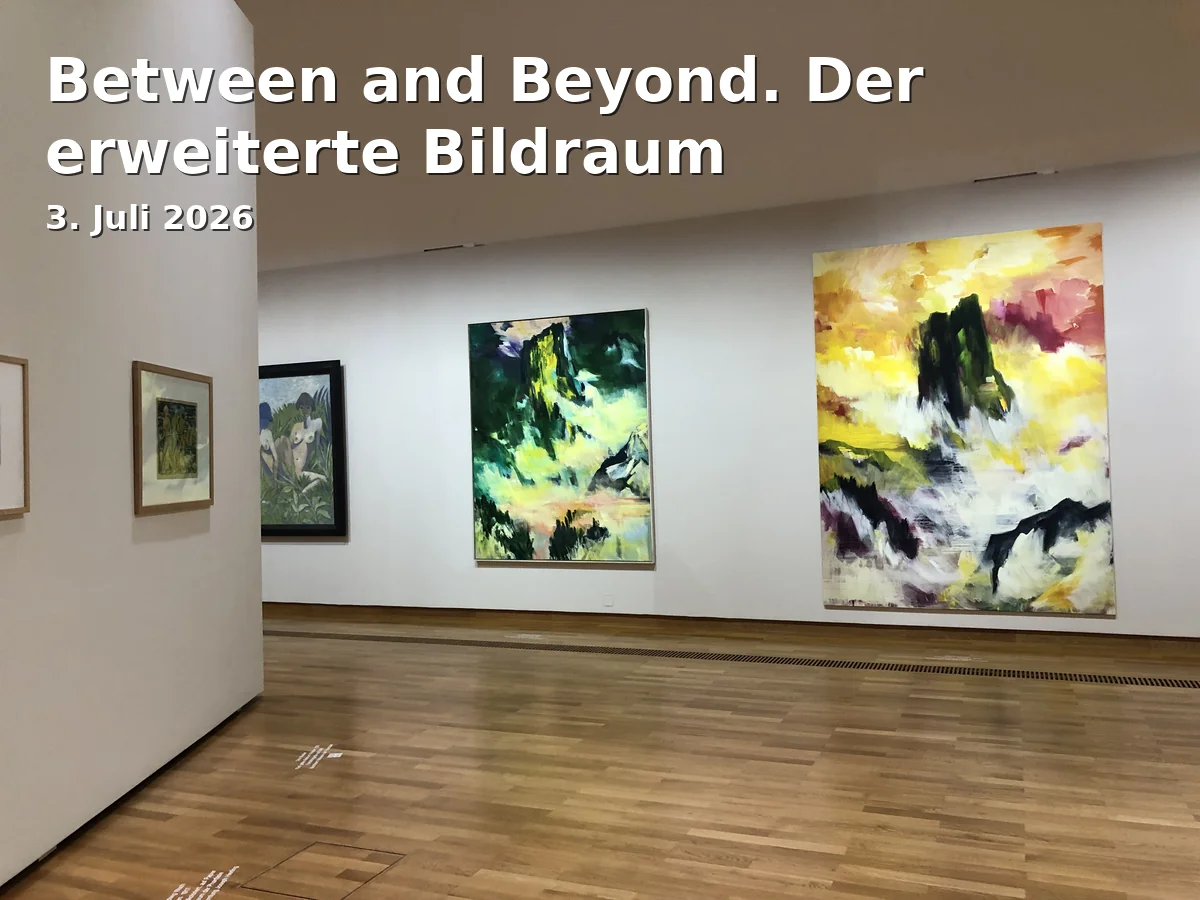
Between and Beyond. The Expanded Visual Space
Visit the exhibition 'Between and Beyond' at the Pinakothek der Moderne and discover artworks from 1960 onwards.
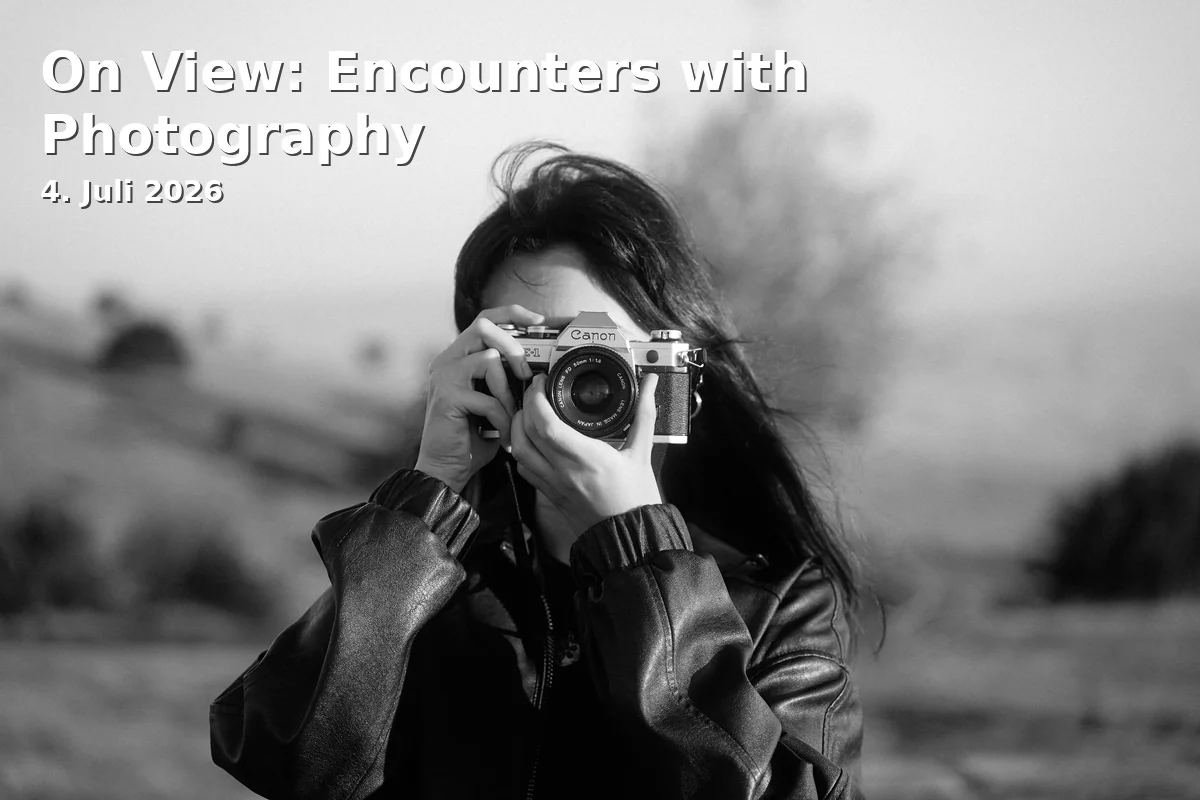
On View: Encounters with Photography
Discover the exciting exhibition 'On View: Encounters with Photography' in Munich with over 250 works by 60 artists starting July 4, 2026.
Frequently Asked Questions
Reviews
Jessalyn Allen-Reyes
4. January 2026
Not usually one for modern art, these galleries were exquisite. Multiple exhibits moved me to tears. Stop for coffee before entering the rotunda to buy your tickets, which were around 11€ (only 1€ on Sundays). We spent around 3 hours here, the museum is vast. I really enjoyed the curation of rooms based on theme rather than era, where works in all mediums from many different centuries were displayed side-by-side. Notable artists including Dalí and Picasso. Beautiful museum.
ioana
27. October 2025
3.5 stars. The museum is huge, complete with a huge bauhaus furniture exhibit downstairs and a huge paintings collection upstairs. The space is not quite well organised though, in my opinion. It lacks a fundamental level of entertainment and it could use some more interactive elements. We visited the temporary exhibition on data cantres, which was interesting but writing and information-heavy. One issue I also have with some modern art museums is that it’s hard to find information on the artworks as the descriptions are scattered about and often lacked. Overall, I’d recommend visiting one time on Sundays as the ticket is only 1€.
Letta Kholodinskaya
30. December 2025
It’s hard to write about art in an evaluative way — it’s a matter of taste. Personally, I liked this museum very much. It’s best to have a couple of euros for the cloakroom, but if you don’t, they let me pay at the same place where I bought the ticket. By the way, on Sunday the entrance fee was very low — just 1 or 2 euros;)
şebnem
30. September 2025
Great museum! On Sundays the entrance fee is only €1, which is amazing. The visit takes around 2–3 hours, and it’s definitely worth it. Especially recommended for industrial/product designers — a truly inspiring place.
Mayumi Makimura
8. February 2026
Stepping into the museum felt like entering a quiet world of thoughts and colors. I especially noticed the Japanese works, which gave me a sense of familiarity and warmth. Thank you for the time to experience art at my own pace. A gentle space to quietly feel and reflect:)