
Potsdam
Am Alten Markt 9, 14467 Potsdam, Deutschland
Potsdam Museum – Forum for Art and History | Opening Hours
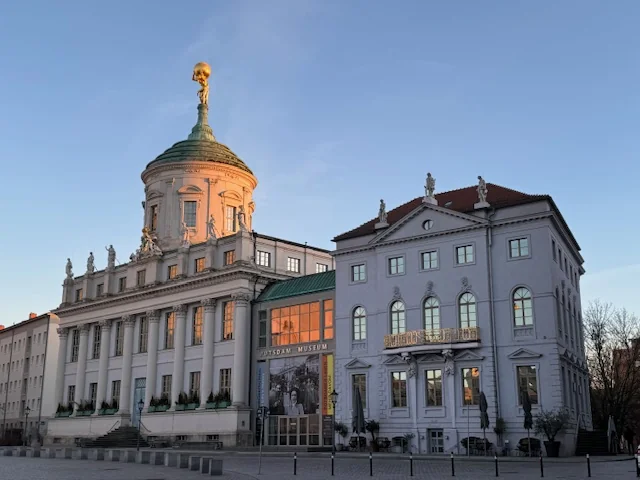
Located in the heart of the Old Market, in the historic center of Potsdam, the Potsdam Museum – Forum for Art and History connects urban history, art, and contemporary life in a striking ensemble of buildings including the Old Town Hall, a modern connector, and the Knobelsdorff House. The museum sees itself as the memory of the city and as an open place for all who want to not only see Potsdam but understand it. Those who come here experience a permanent exhibition with free admission, changing special exhibitions, a vibrant event program, and a location that is itself part of the city's history. This mix of an authentic place, scientifically grounded mediation, and immediate proximity to the historical center makes the visit so special. The museum is not a quiet storage place, but a cultural meeting point where the past, present, and future engage in dialogue. ([potsdam-museum.de](https://www.potsdam-museum.de/de/ueber-uns-0))
Opening Hours, Free Admission, and the Best Time for Your Visit
Those planning a visit benefit from the clear opening hours and the low-threshold access to the permanent exhibition. The museum is regularly open from Tuesday to Sunday and on public holidays from 10 AM to 6 PM; it is closed on Mondays. The visitor service is also available daily from 10 AM to 6 PM, making it easier to plan spontaneous or short-notice visits. Particularly attractive is that the permanent exhibition is freely accessible. This lowers the barrier for a first visit and makes the museum interesting for a quick detour into the city center. Additionally, the museum offers audio guide services and puzzle games for children, appealing to both culture-interested adults and families. Those who like to take their time can ideally combine their museum visit with a walk over the Old Market and then explore the old town on foot. Since the museum is located in the historical center, the visit can be easily combined with other attractions. For guests who experience Potsdam only on a weekend or as part of a day trip, the museum is therefore a very sensible starting point. The combination of free admission, regular programming, and manageable, clearly communicated service hours makes the location particularly reliable and user-friendly. ([potsdam-museum.de](https://www.potsdam-museum.de/))
Directions, Parking, and Barrier-Free Access at the Old Market
The Potsdam Museum is located at one of the most famous addresses in the city: Am Alten Markt 9. According to the museum, arriving by public transport is very convenient. Visitors can reach Potsdam Hbf by S-Bahn or regional train; from there, it is about an 8-minute walk over the Long Bridge. Alternatively, several tram lines, including 91, 92, 93, 96, 98, and 99, stop at Potsdam, Alter Markt/Landtag. Various bus lines and the Potsdam water taxi with the Long Bridge stop are also mentioned. Those arriving by bicycle will find a designated bicycle parking area right next to the museum towards the street Am Alten Markt. For drivers, the museum points out paid parking options in the immediate vicinity; among others, P+R Bahnhofspassagen, Am Kanal, Am Lustgarten, Wilhelm-Galerie, and Am Neuen Markt are mentioned. Additionally, the building is equipped with a barrier-free elevator and a barrier-free restroom, making the visit easier for people with limited mobility. This combination of a central location, good public transport connections, bicycle friendliness, and available parking options makes the museum easily accessible for both city visitors and regional guests. Its location in the historical core, right at the Old Market, reinforces the impression of a true city museum: one does not arrive at a peripheral location, but right in the urban heart of Potsdam. ([potsdam-museum.de](https://www.potsdam-museum.de/de/besucherinfos))
Permanent Exhibition: Potsdam. A City Makes History
The thematic heart of the museum is the permanent exhibition Potsdam. A City Makes History. It tells the development of Potsdam from the Middle Ages to the present with about 500 original objects as well as images, short texts, audio, and film contributions. This creates not a dry chronicle room, but a multifaceted tour through urban development, architecture, art, and everyday culture. The exhibition organizes history thematically and understandably, including topics such as luxury and splendor, immigration and military, kings and bourgeoisie, religion, urban development and architecture, art, crafts, and scientific achievements. Particularly vivid are the many questions that the museum itself raises: How did the city come into being? How did the Old Market develop in the 18th century? How did Casanova or Alexander von Humboldt experience Potsdam? Why did the imported mulberry tree play a role? When did Potsdam become a flourishing manufacturing city, and how did the city navigate the turning point of 1989? These questions bring the exhibition to life and invite visitors to discover connections themselves. For visitors, this means: one does not only see individual objects but a narratively constructed city biography that connects historical knowledge with anecdotes, curiosities, and strong images. Free access is an additional plus, as is the audio guide available in German and English, which facilitates orientation and makes the exhibition accessible to international guests. ([potsdam-museum.de](https://www.potsdam-museum.de/de/potsdam-eine-stadt-macht-geschichte-0))
The Old Town Hall and the History of the House
The Potsdam Museum is not only a museum about Potsdam but is itself a piece of Potsdam history. Its roots go back to 1909 when citizens of the city founded a museum association. The location at the Old Market is also historically charged: The Old Town Hall is considered the oldest building on the square and has had several predecessor buildings. The first town hall was built in 1524 but burned down in 1536. Another new building was erected around 1720/1722 under Frederick William I, before Frederick II commissioned another new building by Jan Boumann the Elder and Christian Ludwig Hildebrandt in 1753. The facade was based on designs by Andrea Palladio, while the tower and atlas figure recall models in Rome and Amsterdam. The building served not only for administration but also as a city court and prison, later as a savings bank and seat of the city council. In April 1945, the ensemble was heavily damaged; during the GDR period, it was transformed into a cultural house. Between 2010 and 2012, the Old Town Hall was extensively restored, and since 2012 it has been a museum again. The Knobelsdorff House, built as a residential building in 1750, complements the ensemble as another historical building block. This architectural and functional development makes it clear why a visit here is more than just a classic museum stop: entering the house means moving through architectural and urban history at the same time. The place itself tells of power, representation, destruction, reconstruction, and cultural recovery. ([potsdam-museum.de](https://www.potsdam-museum.de/de/das-alte-rathaus))
Guided Tours, Events, and Spaces for Special Occasions
The Potsdam Museum is also a lively event venue. The website regularly features guided tours, lectures, discussion formats, and other events that deepen the permanent exhibition or current topics. Additionally, there are special exhibitions and cultural formats that strengthen the museum as a place of dialogue and encounter. Particularly interesting is the event hall: it is located directly near the exhibition rooms, can be flexibly furnished, and is suitable for conferences, workshops, receptions, concerts, and other special occasions. The official description mentions an area of about 180 square meters with a maximum of 180 seats; the room can be divided into two areas, has natural light, is air-conditioned, barrier-free, and equipped with modern lighting, presentation, and sound technology. Additionally, there is a foyer of about 200 square meters with around 150 standing places, which is particularly suitable for catering and standing receptions. This is a strong profile for a location in the heart of the city, as it effectively combines culture and event use. This is also attractive for organizers, as the space can be used both during and outside regular opening hours. The museum communication also shows that the house maintains a diverse program and is understood as a place for the city society. This creates an event venue that is not only functional but offers a special atmosphere with historical ambiance, central location, and museum context. ([potsdam-museum.de](https://www.potsdam-museum.de/de/ueber-uns-0))
Family Offers, Service, Museum Café, and Museum Shop
The Potsdam Museum is also well-equipped for families and groups. The house sees itself as an extracurricular learning place and offers a wide-ranging, interdisciplinary program for primary and secondary schools. For families, there are offers starting from six years old, such as puzzle sheets, flashlights, or museum suitcases that turn the museum visit into a small adventure. This form of mediation fits very well with a house that wants to make urban history not only explainable but also tangible. Additionally, there is the museum café Café Central with coffee specialties, lemonades, cakes, and small dishes. Those looking for souvenirs, catalogs, photo books, or Potsdam books will find suitable offers in the museum shop; according to the homepage, online orders can now also be placed there. Additionally, there are newsletters, social media offers, and regular insights behind the scenes that keep the contact with the audience outside of the museum visit. This aligns with the self-understanding of the house as an open place for all and as a meeting point for the city society. The support association with over 400 members is also a visible sign of this connection and an indication that the museum is strongly anchored in the community. So, for those looking for a museum that appeals to many target groups both in content and organization, this is a very well-rounded mix of education, leisure, culture, and service. Particularly the combination of free admission to the permanent exhibition, family-friendly mediation formats, café, shop, and central location makes the Potsdam Museum an address that one does not only visit once but gladly returns to. ([potsdam-museum.de](https://www.potsdam-museum.de/de/junges-museum?utm_source=openai))
Sources:
Show moreShow less
Potsdam Museum – Forum for Art and History | Opening Hours
Located in the heart of the Old Market, in the historic center of Potsdam, the Potsdam Museum – Forum for Art and History connects urban history, art, and contemporary life in a striking ensemble of buildings including the Old Town Hall, a modern connector, and the Knobelsdorff House. The museum sees itself as the memory of the city and as an open place for all who want to not only see Potsdam but understand it. Those who come here experience a permanent exhibition with free admission, changing special exhibitions, a vibrant event program, and a location that is itself part of the city's history. This mix of an authentic place, scientifically grounded mediation, and immediate proximity to the historical center makes the visit so special. The museum is not a quiet storage place, but a cultural meeting point where the past, present, and future engage in dialogue. ([potsdam-museum.de](https://www.potsdam-museum.de/de/ueber-uns-0))
Opening Hours, Free Admission, and the Best Time for Your Visit
Those planning a visit benefit from the clear opening hours and the low-threshold access to the permanent exhibition. The museum is regularly open from Tuesday to Sunday and on public holidays from 10 AM to 6 PM; it is closed on Mondays. The visitor service is also available daily from 10 AM to 6 PM, making it easier to plan spontaneous or short-notice visits. Particularly attractive is that the permanent exhibition is freely accessible. This lowers the barrier for a first visit and makes the museum interesting for a quick detour into the city center. Additionally, the museum offers audio guide services and puzzle games for children, appealing to both culture-interested adults and families. Those who like to take their time can ideally combine their museum visit with a walk over the Old Market and then explore the old town on foot. Since the museum is located in the historical center, the visit can be easily combined with other attractions. For guests who experience Potsdam only on a weekend or as part of a day trip, the museum is therefore a very sensible starting point. The combination of free admission, regular programming, and manageable, clearly communicated service hours makes the location particularly reliable and user-friendly. ([potsdam-museum.de](https://www.potsdam-museum.de/))
Directions, Parking, and Barrier-Free Access at the Old Market
The Potsdam Museum is located at one of the most famous addresses in the city: Am Alten Markt 9. According to the museum, arriving by public transport is very convenient. Visitors can reach Potsdam Hbf by S-Bahn or regional train; from there, it is about an 8-minute walk over the Long Bridge. Alternatively, several tram lines, including 91, 92, 93, 96, 98, and 99, stop at Potsdam, Alter Markt/Landtag. Various bus lines and the Potsdam water taxi with the Long Bridge stop are also mentioned. Those arriving by bicycle will find a designated bicycle parking area right next to the museum towards the street Am Alten Markt. For drivers, the museum points out paid parking options in the immediate vicinity; among others, P+R Bahnhofspassagen, Am Kanal, Am Lustgarten, Wilhelm-Galerie, and Am Neuen Markt are mentioned. Additionally, the building is equipped with a barrier-free elevator and a barrier-free restroom, making the visit easier for people with limited mobility. This combination of a central location, good public transport connections, bicycle friendliness, and available parking options makes the museum easily accessible for both city visitors and regional guests. Its location in the historical core, right at the Old Market, reinforces the impression of a true city museum: one does not arrive at a peripheral location, but right in the urban heart of Potsdam. ([potsdam-museum.de](https://www.potsdam-museum.de/de/besucherinfos))
Permanent Exhibition: Potsdam. A City Makes History
The thematic heart of the museum is the permanent exhibition Potsdam. A City Makes History. It tells the development of Potsdam from the Middle Ages to the present with about 500 original objects as well as images, short texts, audio, and film contributions. This creates not a dry chronicle room, but a multifaceted tour through urban development, architecture, art, and everyday culture. The exhibition organizes history thematically and understandably, including topics such as luxury and splendor, immigration and military, kings and bourgeoisie, religion, urban development and architecture, art, crafts, and scientific achievements. Particularly vivid are the many questions that the museum itself raises: How did the city come into being? How did the Old Market develop in the 18th century? How did Casanova or Alexander von Humboldt experience Potsdam? Why did the imported mulberry tree play a role? When did Potsdam become a flourishing manufacturing city, and how did the city navigate the turning point of 1989? These questions bring the exhibition to life and invite visitors to discover connections themselves. For visitors, this means: one does not only see individual objects but a narratively constructed city biography that connects historical knowledge with anecdotes, curiosities, and strong images. Free access is an additional plus, as is the audio guide available in German and English, which facilitates orientation and makes the exhibition accessible to international guests. ([potsdam-museum.de](https://www.potsdam-museum.de/de/potsdam-eine-stadt-macht-geschichte-0))
The Old Town Hall and the History of the House
The Potsdam Museum is not only a museum about Potsdam but is itself a piece of Potsdam history. Its roots go back to 1909 when citizens of the city founded a museum association. The location at the Old Market is also historically charged: The Old Town Hall is considered the oldest building on the square and has had several predecessor buildings. The first town hall was built in 1524 but burned down in 1536. Another new building was erected around 1720/1722 under Frederick William I, before Frederick II commissioned another new building by Jan Boumann the Elder and Christian Ludwig Hildebrandt in 1753. The facade was based on designs by Andrea Palladio, while the tower and atlas figure recall models in Rome and Amsterdam. The building served not only for administration but also as a city court and prison, later as a savings bank and seat of the city council. In April 1945, the ensemble was heavily damaged; during the GDR period, it was transformed into a cultural house. Between 2010 and 2012, the Old Town Hall was extensively restored, and since 2012 it has been a museum again. The Knobelsdorff House, built as a residential building in 1750, complements the ensemble as another historical building block. This architectural and functional development makes it clear why a visit here is more than just a classic museum stop: entering the house means moving through architectural and urban history at the same time. The place itself tells of power, representation, destruction, reconstruction, and cultural recovery. ([potsdam-museum.de](https://www.potsdam-museum.de/de/das-alte-rathaus))
Guided Tours, Events, and Spaces for Special Occasions
The Potsdam Museum is also a lively event venue. The website regularly features guided tours, lectures, discussion formats, and other events that deepen the permanent exhibition or current topics. Additionally, there are special exhibitions and cultural formats that strengthen the museum as a place of dialogue and encounter. Particularly interesting is the event hall: it is located directly near the exhibition rooms, can be flexibly furnished, and is suitable for conferences, workshops, receptions, concerts, and other special occasions. The official description mentions an area of about 180 square meters with a maximum of 180 seats; the room can be divided into two areas, has natural light, is air-conditioned, barrier-free, and equipped with modern lighting, presentation, and sound technology. Additionally, there is a foyer of about 200 square meters with around 150 standing places, which is particularly suitable for catering and standing receptions. This is a strong profile for a location in the heart of the city, as it effectively combines culture and event use. This is also attractive for organizers, as the space can be used both during and outside regular opening hours. The museum communication also shows that the house maintains a diverse program and is understood as a place for the city society. This creates an event venue that is not only functional but offers a special atmosphere with historical ambiance, central location, and museum context. ([potsdam-museum.de](https://www.potsdam-museum.de/de/ueber-uns-0))
Family Offers, Service, Museum Café, and Museum Shop
The Potsdam Museum is also well-equipped for families and groups. The house sees itself as an extracurricular learning place and offers a wide-ranging, interdisciplinary program for primary and secondary schools. For families, there are offers starting from six years old, such as puzzle sheets, flashlights, or museum suitcases that turn the museum visit into a small adventure. This form of mediation fits very well with a house that wants to make urban history not only explainable but also tangible. Additionally, there is the museum café Café Central with coffee specialties, lemonades, cakes, and small dishes. Those looking for souvenirs, catalogs, photo books, or Potsdam books will find suitable offers in the museum shop; according to the homepage, online orders can now also be placed there. Additionally, there are newsletters, social media offers, and regular insights behind the scenes that keep the contact with the audience outside of the museum visit. This aligns with the self-understanding of the house as an open place for all and as a meeting point for the city society. The support association with over 400 members is also a visible sign of this connection and an indication that the museum is strongly anchored in the community. So, for those looking for a museum that appeals to many target groups both in content and organization, this is a very well-rounded mix of education, leisure, culture, and service. Particularly the combination of free admission to the permanent exhibition, family-friendly mediation formats, café, shop, and central location makes the Potsdam Museum an address that one does not only visit once but gladly returns to. ([potsdam-museum.de](https://www.potsdam-museum.de/de/junges-museum?utm_source=openai))
Sources:
Potsdam Museum – Forum for Art and History | Opening Hours
Located in the heart of the Old Market, in the historic center of Potsdam, the Potsdam Museum – Forum for Art and History connects urban history, art, and contemporary life in a striking ensemble of buildings including the Old Town Hall, a modern connector, and the Knobelsdorff House. The museum sees itself as the memory of the city and as an open place for all who want to not only see Potsdam but understand it. Those who come here experience a permanent exhibition with free admission, changing special exhibitions, a vibrant event program, and a location that is itself part of the city's history. This mix of an authentic place, scientifically grounded mediation, and immediate proximity to the historical center makes the visit so special. The museum is not a quiet storage place, but a cultural meeting point where the past, present, and future engage in dialogue. ([potsdam-museum.de](https://www.potsdam-museum.de/de/ueber-uns-0))
Opening Hours, Free Admission, and the Best Time for Your Visit
Those planning a visit benefit from the clear opening hours and the low-threshold access to the permanent exhibition. The museum is regularly open from Tuesday to Sunday and on public holidays from 10 AM to 6 PM; it is closed on Mondays. The visitor service is also available daily from 10 AM to 6 PM, making it easier to plan spontaneous or short-notice visits. Particularly attractive is that the permanent exhibition is freely accessible. This lowers the barrier for a first visit and makes the museum interesting for a quick detour into the city center. Additionally, the museum offers audio guide services and puzzle games for children, appealing to both culture-interested adults and families. Those who like to take their time can ideally combine their museum visit with a walk over the Old Market and then explore the old town on foot. Since the museum is located in the historical center, the visit can be easily combined with other attractions. For guests who experience Potsdam only on a weekend or as part of a day trip, the museum is therefore a very sensible starting point. The combination of free admission, regular programming, and manageable, clearly communicated service hours makes the location particularly reliable and user-friendly. ([potsdam-museum.de](https://www.potsdam-museum.de/))
Directions, Parking, and Barrier-Free Access at the Old Market
The Potsdam Museum is located at one of the most famous addresses in the city: Am Alten Markt 9. According to the museum, arriving by public transport is very convenient. Visitors can reach Potsdam Hbf by S-Bahn or regional train; from there, it is about an 8-minute walk over the Long Bridge. Alternatively, several tram lines, including 91, 92, 93, 96, 98, and 99, stop at Potsdam, Alter Markt/Landtag. Various bus lines and the Potsdam water taxi with the Long Bridge stop are also mentioned. Those arriving by bicycle will find a designated bicycle parking area right next to the museum towards the street Am Alten Markt. For drivers, the museum points out paid parking options in the immediate vicinity; among others, P+R Bahnhofspassagen, Am Kanal, Am Lustgarten, Wilhelm-Galerie, and Am Neuen Markt are mentioned. Additionally, the building is equipped with a barrier-free elevator and a barrier-free restroom, making the visit easier for people with limited mobility. This combination of a central location, good public transport connections, bicycle friendliness, and available parking options makes the museum easily accessible for both city visitors and regional guests. Its location in the historical core, right at the Old Market, reinforces the impression of a true city museum: one does not arrive at a peripheral location, but right in the urban heart of Potsdam. ([potsdam-museum.de](https://www.potsdam-museum.de/de/besucherinfos))
Permanent Exhibition: Potsdam. A City Makes History
The thematic heart of the museum is the permanent exhibition Potsdam. A City Makes History. It tells the development of Potsdam from the Middle Ages to the present with about 500 original objects as well as images, short texts, audio, and film contributions. This creates not a dry chronicle room, but a multifaceted tour through urban development, architecture, art, and everyday culture. The exhibition organizes history thematically and understandably, including topics such as luxury and splendor, immigration and military, kings and bourgeoisie, religion, urban development and architecture, art, crafts, and scientific achievements. Particularly vivid are the many questions that the museum itself raises: How did the city come into being? How did the Old Market develop in the 18th century? How did Casanova or Alexander von Humboldt experience Potsdam? Why did the imported mulberry tree play a role? When did Potsdam become a flourishing manufacturing city, and how did the city navigate the turning point of 1989? These questions bring the exhibition to life and invite visitors to discover connections themselves. For visitors, this means: one does not only see individual objects but a narratively constructed city biography that connects historical knowledge with anecdotes, curiosities, and strong images. Free access is an additional plus, as is the audio guide available in German and English, which facilitates orientation and makes the exhibition accessible to international guests. ([potsdam-museum.de](https://www.potsdam-museum.de/de/potsdam-eine-stadt-macht-geschichte-0))
The Old Town Hall and the History of the House
The Potsdam Museum is not only a museum about Potsdam but is itself a piece of Potsdam history. Its roots go back to 1909 when citizens of the city founded a museum association. The location at the Old Market is also historically charged: The Old Town Hall is considered the oldest building on the square and has had several predecessor buildings. The first town hall was built in 1524 but burned down in 1536. Another new building was erected around 1720/1722 under Frederick William I, before Frederick II commissioned another new building by Jan Boumann the Elder and Christian Ludwig Hildebrandt in 1753. The facade was based on designs by Andrea Palladio, while the tower and atlas figure recall models in Rome and Amsterdam. The building served not only for administration but also as a city court and prison, later as a savings bank and seat of the city council. In April 1945, the ensemble was heavily damaged; during the GDR period, it was transformed into a cultural house. Between 2010 and 2012, the Old Town Hall was extensively restored, and since 2012 it has been a museum again. The Knobelsdorff House, built as a residential building in 1750, complements the ensemble as another historical building block. This architectural and functional development makes it clear why a visit here is more than just a classic museum stop: entering the house means moving through architectural and urban history at the same time. The place itself tells of power, representation, destruction, reconstruction, and cultural recovery. ([potsdam-museum.de](https://www.potsdam-museum.de/de/das-alte-rathaus))
Guided Tours, Events, and Spaces for Special Occasions
The Potsdam Museum is also a lively event venue. The website regularly features guided tours, lectures, discussion formats, and other events that deepen the permanent exhibition or current topics. Additionally, there are special exhibitions and cultural formats that strengthen the museum as a place of dialogue and encounter. Particularly interesting is the event hall: it is located directly near the exhibition rooms, can be flexibly furnished, and is suitable for conferences, workshops, receptions, concerts, and other special occasions. The official description mentions an area of about 180 square meters with a maximum of 180 seats; the room can be divided into two areas, has natural light, is air-conditioned, barrier-free, and equipped with modern lighting, presentation, and sound technology. Additionally, there is a foyer of about 200 square meters with around 150 standing places, which is particularly suitable for catering and standing receptions. This is a strong profile for a location in the heart of the city, as it effectively combines culture and event use. This is also attractive for organizers, as the space can be used both during and outside regular opening hours. The museum communication also shows that the house maintains a diverse program and is understood as a place for the city society. This creates an event venue that is not only functional but offers a special atmosphere with historical ambiance, central location, and museum context. ([potsdam-museum.de](https://www.potsdam-museum.de/de/ueber-uns-0))
Family Offers, Service, Museum Café, and Museum Shop
The Potsdam Museum is also well-equipped for families and groups. The house sees itself as an extracurricular learning place and offers a wide-ranging, interdisciplinary program for primary and secondary schools. For families, there are offers starting from six years old, such as puzzle sheets, flashlights, or museum suitcases that turn the museum visit into a small adventure. This form of mediation fits very well with a house that wants to make urban history not only explainable but also tangible. Additionally, there is the museum café Café Central with coffee specialties, lemonades, cakes, and small dishes. Those looking for souvenirs, catalogs, photo books, or Potsdam books will find suitable offers in the museum shop; according to the homepage, online orders can now also be placed there. Additionally, there are newsletters, social media offers, and regular insights behind the scenes that keep the contact with the audience outside of the museum visit. This aligns with the self-understanding of the house as an open place for all and as a meeting point for the city society. The support association with over 400 members is also a visible sign of this connection and an indication that the museum is strongly anchored in the community. So, for those looking for a museum that appeals to many target groups both in content and organization, this is a very well-rounded mix of education, leisure, culture, and service. Particularly the combination of free admission to the permanent exhibition, family-friendly mediation formats, café, shop, and central location makes the Potsdam Museum an address that one does not only visit once but gladly returns to. ([potsdam-museum.de](https://www.potsdam-museum.de/de/junges-museum?utm_source=openai))
Sources:
Frequently Asked Questions
Reviews
Isabella St. Andrews
25. July 2025
Not overwhelming; perfect for a 1-hour visit! The exhibits have English translations. Spans Potsdam history through Prussian kings, the Potsdam Conference, and DDR.
UK Photo Journey
6. January 2024
This beautiful museum is holding the history of more than 1000 years. A historical museum situated in the historic center of Potsdam with remarkable beauty both inside and outside.
Alina Studenova
18. April 2025
I enjoyed both permanent and temporary exhibitions. The entrance for the permanent exhibition is free. The approximate time to go through without rushing is ~2 hours.
Shiks
19. March 2023
Worth a ride! If you are a historian or into past events then this is a place worth visiting. For English speakers you are given an audio device to help you as a guide.
Jon Chen
26. August 2023
Excellent museum on the history of the city of Potsdam, with English translation available. Free entry.