
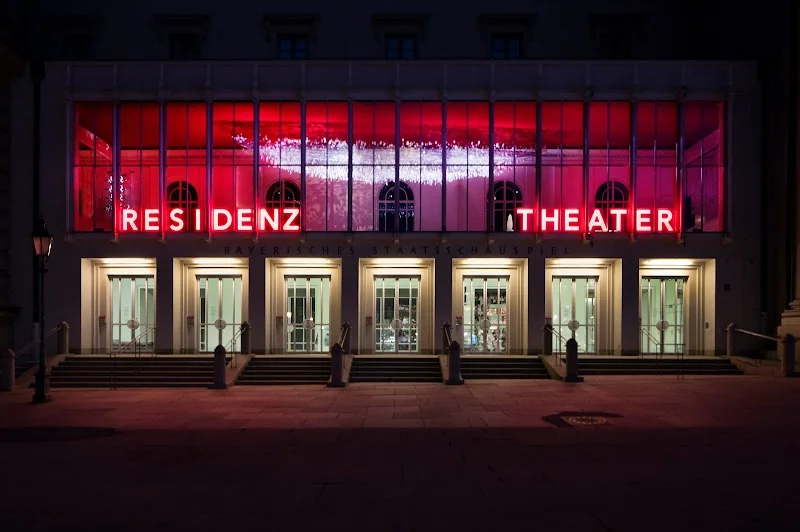
Max-Joseph-Platz 1, München-Altstadt-Lehel
Max-Joseph-Platz 1, 80539 München, Germany
Residenztheater | Schedule & Tickets 2026
The Residenztheater in Munich is much more than just a single stage: It is the main venue of the Bavarian State Theater, a place with great tradition, a strong ensemble, and a schedule that brings together classic works, contemporary drama, and bold reinterpretations. Those searching for Residenztheater Munich, schedule, tickets, or program usually want to quickly know what is being performed today, how to get tickets, where to find the seating plan, and how to best get there. This overview is made exactly for that purpose. The house at Max-Joseph-Platz combines historical depth with a very clear present: three performance venues in close proximity to the Residenz, a large house with 881 seats, English surtitles for selected performances, and a repertoire that ranges from Cabaret to Romeo and Juliet. ([residenztheater.de](https://www.residenztheater.de/en/the-theatre))
Current Schedule, Program, and Upcoming Events
Those who find the Residenztheater Munich through the search for the schedule usually land directly at the heart of the site: the continuously updated monthly program. The official website shows not just a single evening, but the entire ensemble of a large spoken theater with multiple venues. In the current month, the main hall features Cabaret, Kasimir and Karoline, Romeo and Juliet, and Blind; in the further course of the month, productions like The Promised Land and Oedipus will also be added. It is precisely this mix that makes the charm of the house: An evening can be musical, political, classical, or very contemporary, without losing the theater's profile. Therefore, the schedule is not just a list of dates, but a living reflection of the artistic program. ([residenztheater.de](https://www.residenztheater.de/en/))
Particularly typical for the Residenztheater is the combination of a well-maintained repertoire and new scripts. The official self-presentation emphasizes an ensemble theater that presents contemporary pieces, premieres, and new translations alongside classics. This is also reflected in the current program structure: alongside Shakespeare and Horváth, modern works and current interpretations are often complemented by performances with English surtitles. For visitors, this is practical because both today's evening and upcoming events can be found with just a few clicks on the website. Family offerings and youth formats also appear in the season; a good example of this is Pippi Longstocking, which is offered in the current season for young audiences. Thus, the house remains open to various target groups without losing its dramatic core. ([residenztheater.de](https://www.residenztheater.de/en/the-theatre))
Tickets, Advance Sale, and Box Office
When searching for Residenztheater tickets, it usually revolves around the same practical core: Where do I buy tickets, when does the advance sale start, and what about the box office? The official answer is clear and service-oriented. Tickets are available online through the schedule or directly through the pages of individual plays. Additionally, tickets can be purchased by phone via the central ticket number of the house. Those who prefer to buy in person can find the box office at Marstallplatz 5. This is particularly helpful for those who want to get advice on-site or are looking for seats for a performance spontaneously. The box office opens at the respective venue one hour before the performance begins. For the visitor's everyday life, this is a very useful rhythm, as it allows for both planning and spontaneous visits. ([residenztheater.de](https://www.residenztheater.de/karten/))
The advance sale also follows a fixed pattern: It regularly begins on the 1st of a month at 10 a.m. for the entire following month, and on Sundays and public holidays, it starts on the preceding working day. This makes planning for frequent theater visits easily understandable. Additionally, it is important that the admission ticket is valid as a ticket for the MVV under certain conditions. Those traveling within the entire network of the Munich Transport and Tariff Association benefit from the fact that the journey to and from the theater evening is integrated into the ticket logic. There are also clear rules for subscriptions and discount models; various discounts and special conditions are provided in the house. Thus, the Residenztheater is not only a cultural place but also very well organized for regular visits. ([residenztheater.de](https://www.residenztheater.de/service))
Seating Plan, Seats, and English Surtitles
A frequently searched term is Residenztheater seating plan or Residenztheater hall plan. This is understandable, as the auditorium is one of the central factors for the theater experience. The main venue at Max-Joseph-Platz has 881 seats, the Cuvilliés Theater has 437, and the Marstall has around 146. Thus, the Residenztheater is one of the large spoken theaters in the German-speaking area. For people with special needs, the seating situation is also clearly regulated: wheelchair spaces are marked on the seating plan, and for the Residenztheater itself, they are located in the orchestra in rows 16 and 17 on the outer sides. This is important because the house relies on planable and concrete visit situations. ([residenztheater.de](https://www.residenztheater.de/en/the-theatre))
Particularly helpful is the official information about English surtitles. Although the Residenztheater predominantly performs in German, it offers some performances with English surtitles. For the best view, the Residenztheater recommends the orchestra from rows 10 to 16, especially in the middle; also, the middle balcony and all rows in the gallery are suitable. Such details are extremely valuable for international guests, students, exchange groups, or simply for people who want to experience their favorite pieces in mixed language contexts. The fact that the schedule marks these performances accordingly also provides additional orientation. Especially with current titles like Cabaret or Romeo and Juliet, it shows how internationally connected the house is without giving up its German-speaking identity. ([residenztheater.de](https://www.residenztheater.de/service))
Directions, Parking, and MVV
Those searching for Residenztheater directions or Residenztheater parking are moving right in the middle of Munich's center. The main house is located at Max-Joseph-Platz 1 in the Altstadt-Lehel, thus in direct proximity to the Residenz and other cultural points in the city center. Practical for many visitors is especially the good public transport connection: The admission ticket can, if appropriately indicated, be used as a ticket for the MVV. This makes the combination of a theater evening and a city visit very pleasant, as one does not have to think additionally about parking pressure or late return trips. The timing is also well structured: Entry and gastronomy open one hour before the performance begins. ([residenztheater.de](https://www.residenztheater.de/service))
For drivers, there is a nearby parking option: the underground garage in front of the opera at Max-Joseph-Platz 4. It offers 500 parking spaces, is centrally located in the city center, and is open daily from 06:00 to 01:00; exit is possible around the clock. Directly at the theater itself, the service also indicates two disabled parking spaces in front of the entrance. Those wishing to arrive barrier-free can combine these notes with the detailed service information of the house and plan their theater visit accordingly. Thus, the question of parking is well answered in practice: The Residenztheater itself is not a suburban location with large parking areas but an urban theater that primarily functions with public transport and nearby parking options. ([residenztheater.de](https://www.residenztheater.de/service?utm_source=openai))
Accessibility, Service, and Visitor Comfort
The Residenztheater places great importance on making visits as accessible as possible. People with disabilities receive the respective discounts provided at the Bavarian State Theaters, and accompanying persons can also come along at a reduced rate or free of charge under certain conditions. For wheelchair users, seats in the orchestra in rows 16 and 17 are provided at the Residenztheater; the Cuvilliés Theater and the Marstall also have defined solutions. It is important that wheelchair spaces should be reserved in advance, as they are usually no longer available at the box office. This clear organization not only helps with planning but also creates reliability for the visit. ([residenztheater.de](https://www.residenztheater.de/service))
Additionally, the house offers assistance for people with visual and hearing impairments. Guide dogs are allowed, mobile radio receivers are available for hearing systems, and some performances are subtitled in English. The cloakroom and gastronomy structure is also well thought out: free cloakrooms are available in all venues, and the gastronomy opens one hour before the performance begins. Those who want to orient themselves before an evening in the house can also find theater tours that convey the history of the building and the work behind the scenes. These tours make it particularly clear that the Residenztheater is not only a performance venue but also a working and production house with many functions. ([residenztheater.de](https://www.residenztheater.de/service))
History, Architecture, and Artistic Profile
The Residenztheater looks back on an exceptionally long history. Its roots, according to the official presentation, date back to the 18th century when it began as a court and national theater. The current house at Max-Joseph-Platz belongs to post-war architecture and was rebuilt after the destruction of the old building; the opening of the New Residenztheater took place on January 28, 1951. Later, the building was modernized, including a new foyer design and the striking light installation Silver Cloud by Ingo Maurer, which still represents the house's self-understanding today. The interplay of tradition and renewal is therefore visible not only artistically but also architecturally. ([residenztheater.de](https://www.residenztheater.de/en/presse/downloads/detailansicht/75-jahre-neues-residenztheater))
Today, the Residenztheater is one of the most traditional and simultaneously largest spoken theaters in the German-speaking area. With an ensemble of over 50 actors and more than 450 employees, the house operates as a very large production system that plays three venues: the Residenztheater at Max-Joseph-Platz, the Cuvilliés Theater, and the Marstall. This triad also explains why searches like Residenztheater Munich program, Residenztheater schedule 2026, or Residenztheater upcoming events are so often associated with multiple different venues. In terms of content, the house, under the direction of Andreas Beck, focuses on an ensemble theater that intertwines contemporary references, new texts, and classics. It is precisely this that creates the special mix of cultural authority, artistic risk, and urban proximity for which the Residenztheater Munich is so appreciated. ([residenztheater.de](https://www.residenztheater.de/en/the-theatre))
Sources:
Show moreShow less
Residenztheater | Schedule & Tickets 2026
The Residenztheater in Munich is much more than just a single stage: It is the main venue of the Bavarian State Theater, a place with great tradition, a strong ensemble, and a schedule that brings together classic works, contemporary drama, and bold reinterpretations. Those searching for Residenztheater Munich, schedule, tickets, or program usually want to quickly know what is being performed today, how to get tickets, where to find the seating plan, and how to best get there. This overview is made exactly for that purpose. The house at Max-Joseph-Platz combines historical depth with a very clear present: three performance venues in close proximity to the Residenz, a large house with 881 seats, English surtitles for selected performances, and a repertoire that ranges from Cabaret to Romeo and Juliet. ([residenztheater.de](https://www.residenztheater.de/en/the-theatre))
Current Schedule, Program, and Upcoming Events
Those who find the Residenztheater Munich through the search for the schedule usually land directly at the heart of the site: the continuously updated monthly program. The official website shows not just a single evening, but the entire ensemble of a large spoken theater with multiple venues. In the current month, the main hall features Cabaret, Kasimir and Karoline, Romeo and Juliet, and Blind; in the further course of the month, productions like The Promised Land and Oedipus will also be added. It is precisely this mix that makes the charm of the house: An evening can be musical, political, classical, or very contemporary, without losing the theater's profile. Therefore, the schedule is not just a list of dates, but a living reflection of the artistic program. ([residenztheater.de](https://www.residenztheater.de/en/))
Particularly typical for the Residenztheater is the combination of a well-maintained repertoire and new scripts. The official self-presentation emphasizes an ensemble theater that presents contemporary pieces, premieres, and new translations alongside classics. This is also reflected in the current program structure: alongside Shakespeare and Horváth, modern works and current interpretations are often complemented by performances with English surtitles. For visitors, this is practical because both today's evening and upcoming events can be found with just a few clicks on the website. Family offerings and youth formats also appear in the season; a good example of this is Pippi Longstocking, which is offered in the current season for young audiences. Thus, the house remains open to various target groups without losing its dramatic core. ([residenztheater.de](https://www.residenztheater.de/en/the-theatre))
Tickets, Advance Sale, and Box Office
When searching for Residenztheater tickets, it usually revolves around the same practical core: Where do I buy tickets, when does the advance sale start, and what about the box office? The official answer is clear and service-oriented. Tickets are available online through the schedule or directly through the pages of individual plays. Additionally, tickets can be purchased by phone via the central ticket number of the house. Those who prefer to buy in person can find the box office at Marstallplatz 5. This is particularly helpful for those who want to get advice on-site or are looking for seats for a performance spontaneously. The box office opens at the respective venue one hour before the performance begins. For the visitor's everyday life, this is a very useful rhythm, as it allows for both planning and spontaneous visits. ([residenztheater.de](https://www.residenztheater.de/karten/))
The advance sale also follows a fixed pattern: It regularly begins on the 1st of a month at 10 a.m. for the entire following month, and on Sundays and public holidays, it starts on the preceding working day. This makes planning for frequent theater visits easily understandable. Additionally, it is important that the admission ticket is valid as a ticket for the MVV under certain conditions. Those traveling within the entire network of the Munich Transport and Tariff Association benefit from the fact that the journey to and from the theater evening is integrated into the ticket logic. There are also clear rules for subscriptions and discount models; various discounts and special conditions are provided in the house. Thus, the Residenztheater is not only a cultural place but also very well organized for regular visits. ([residenztheater.de](https://www.residenztheater.de/service))
Seating Plan, Seats, and English Surtitles
A frequently searched term is Residenztheater seating plan or Residenztheater hall plan. This is understandable, as the auditorium is one of the central factors for the theater experience. The main venue at Max-Joseph-Platz has 881 seats, the Cuvilliés Theater has 437, and the Marstall has around 146. Thus, the Residenztheater is one of the large spoken theaters in the German-speaking area. For people with special needs, the seating situation is also clearly regulated: wheelchair spaces are marked on the seating plan, and for the Residenztheater itself, they are located in the orchestra in rows 16 and 17 on the outer sides. This is important because the house relies on planable and concrete visit situations. ([residenztheater.de](https://www.residenztheater.de/en/the-theatre))
Particularly helpful is the official information about English surtitles. Although the Residenztheater predominantly performs in German, it offers some performances with English surtitles. For the best view, the Residenztheater recommends the orchestra from rows 10 to 16, especially in the middle; also, the middle balcony and all rows in the gallery are suitable. Such details are extremely valuable for international guests, students, exchange groups, or simply for people who want to experience their favorite pieces in mixed language contexts. The fact that the schedule marks these performances accordingly also provides additional orientation. Especially with current titles like Cabaret or Romeo and Juliet, it shows how internationally connected the house is without giving up its German-speaking identity. ([residenztheater.de](https://www.residenztheater.de/service))
Directions, Parking, and MVV
Those searching for Residenztheater directions or Residenztheater parking are moving right in the middle of Munich's center. The main house is located at Max-Joseph-Platz 1 in the Altstadt-Lehel, thus in direct proximity to the Residenz and other cultural points in the city center. Practical for many visitors is especially the good public transport connection: The admission ticket can, if appropriately indicated, be used as a ticket for the MVV. This makes the combination of a theater evening and a city visit very pleasant, as one does not have to think additionally about parking pressure or late return trips. The timing is also well structured: Entry and gastronomy open one hour before the performance begins. ([residenztheater.de](https://www.residenztheater.de/service))
For drivers, there is a nearby parking option: the underground garage in front of the opera at Max-Joseph-Platz 4. It offers 500 parking spaces, is centrally located in the city center, and is open daily from 06:00 to 01:00; exit is possible around the clock. Directly at the theater itself, the service also indicates two disabled parking spaces in front of the entrance. Those wishing to arrive barrier-free can combine these notes with the detailed service information of the house and plan their theater visit accordingly. Thus, the question of parking is well answered in practice: The Residenztheater itself is not a suburban location with large parking areas but an urban theater that primarily functions with public transport and nearby parking options. ([residenztheater.de](https://www.residenztheater.de/service?utm_source=openai))
Accessibility, Service, and Visitor Comfort
The Residenztheater places great importance on making visits as accessible as possible. People with disabilities receive the respective discounts provided at the Bavarian State Theaters, and accompanying persons can also come along at a reduced rate or free of charge under certain conditions. For wheelchair users, seats in the orchestra in rows 16 and 17 are provided at the Residenztheater; the Cuvilliés Theater and the Marstall also have defined solutions. It is important that wheelchair spaces should be reserved in advance, as they are usually no longer available at the box office. This clear organization not only helps with planning but also creates reliability for the visit. ([residenztheater.de](https://www.residenztheater.de/service))
Additionally, the house offers assistance for people with visual and hearing impairments. Guide dogs are allowed, mobile radio receivers are available for hearing systems, and some performances are subtitled in English. The cloakroom and gastronomy structure is also well thought out: free cloakrooms are available in all venues, and the gastronomy opens one hour before the performance begins. Those who want to orient themselves before an evening in the house can also find theater tours that convey the history of the building and the work behind the scenes. These tours make it particularly clear that the Residenztheater is not only a performance venue but also a working and production house with many functions. ([residenztheater.de](https://www.residenztheater.de/service))
History, Architecture, and Artistic Profile
The Residenztheater looks back on an exceptionally long history. Its roots, according to the official presentation, date back to the 18th century when it began as a court and national theater. The current house at Max-Joseph-Platz belongs to post-war architecture and was rebuilt after the destruction of the old building; the opening of the New Residenztheater took place on January 28, 1951. Later, the building was modernized, including a new foyer design and the striking light installation Silver Cloud by Ingo Maurer, which still represents the house's self-understanding today. The interplay of tradition and renewal is therefore visible not only artistically but also architecturally. ([residenztheater.de](https://www.residenztheater.de/en/presse/downloads/detailansicht/75-jahre-neues-residenztheater))
Today, the Residenztheater is one of the most traditional and simultaneously largest spoken theaters in the German-speaking area. With an ensemble of over 50 actors and more than 450 employees, the house operates as a very large production system that plays three venues: the Residenztheater at Max-Joseph-Platz, the Cuvilliés Theater, and the Marstall. This triad also explains why searches like Residenztheater Munich program, Residenztheater schedule 2026, or Residenztheater upcoming events are so often associated with multiple different venues. In terms of content, the house, under the direction of Andreas Beck, focuses on an ensemble theater that intertwines contemporary references, new texts, and classics. It is precisely this that creates the special mix of cultural authority, artistic risk, and urban proximity for which the Residenztheater Munich is so appreciated. ([residenztheater.de](https://www.residenztheater.de/en/the-theatre))
Sources:
Residenztheater | Schedule & Tickets 2026
The Residenztheater in Munich is much more than just a single stage: It is the main venue of the Bavarian State Theater, a place with great tradition, a strong ensemble, and a schedule that brings together classic works, contemporary drama, and bold reinterpretations. Those searching for Residenztheater Munich, schedule, tickets, or program usually want to quickly know what is being performed today, how to get tickets, where to find the seating plan, and how to best get there. This overview is made exactly for that purpose. The house at Max-Joseph-Platz combines historical depth with a very clear present: three performance venues in close proximity to the Residenz, a large house with 881 seats, English surtitles for selected performances, and a repertoire that ranges from Cabaret to Romeo and Juliet. ([residenztheater.de](https://www.residenztheater.de/en/the-theatre))
Current Schedule, Program, and Upcoming Events
Those who find the Residenztheater Munich through the search for the schedule usually land directly at the heart of the site: the continuously updated monthly program. The official website shows not just a single evening, but the entire ensemble of a large spoken theater with multiple venues. In the current month, the main hall features Cabaret, Kasimir and Karoline, Romeo and Juliet, and Blind; in the further course of the month, productions like The Promised Land and Oedipus will also be added. It is precisely this mix that makes the charm of the house: An evening can be musical, political, classical, or very contemporary, without losing the theater's profile. Therefore, the schedule is not just a list of dates, but a living reflection of the artistic program. ([residenztheater.de](https://www.residenztheater.de/en/))
Particularly typical for the Residenztheater is the combination of a well-maintained repertoire and new scripts. The official self-presentation emphasizes an ensemble theater that presents contemporary pieces, premieres, and new translations alongside classics. This is also reflected in the current program structure: alongside Shakespeare and Horváth, modern works and current interpretations are often complemented by performances with English surtitles. For visitors, this is practical because both today's evening and upcoming events can be found with just a few clicks on the website. Family offerings and youth formats also appear in the season; a good example of this is Pippi Longstocking, which is offered in the current season for young audiences. Thus, the house remains open to various target groups without losing its dramatic core. ([residenztheater.de](https://www.residenztheater.de/en/the-theatre))
Tickets, Advance Sale, and Box Office
When searching for Residenztheater tickets, it usually revolves around the same practical core: Where do I buy tickets, when does the advance sale start, and what about the box office? The official answer is clear and service-oriented. Tickets are available online through the schedule or directly through the pages of individual plays. Additionally, tickets can be purchased by phone via the central ticket number of the house. Those who prefer to buy in person can find the box office at Marstallplatz 5. This is particularly helpful for those who want to get advice on-site or are looking for seats for a performance spontaneously. The box office opens at the respective venue one hour before the performance begins. For the visitor's everyday life, this is a very useful rhythm, as it allows for both planning and spontaneous visits. ([residenztheater.de](https://www.residenztheater.de/karten/))
The advance sale also follows a fixed pattern: It regularly begins on the 1st of a month at 10 a.m. for the entire following month, and on Sundays and public holidays, it starts on the preceding working day. This makes planning for frequent theater visits easily understandable. Additionally, it is important that the admission ticket is valid as a ticket for the MVV under certain conditions. Those traveling within the entire network of the Munich Transport and Tariff Association benefit from the fact that the journey to and from the theater evening is integrated into the ticket logic. There are also clear rules for subscriptions and discount models; various discounts and special conditions are provided in the house. Thus, the Residenztheater is not only a cultural place but also very well organized for regular visits. ([residenztheater.de](https://www.residenztheater.de/service))
Seating Plan, Seats, and English Surtitles
A frequently searched term is Residenztheater seating plan or Residenztheater hall plan. This is understandable, as the auditorium is one of the central factors for the theater experience. The main venue at Max-Joseph-Platz has 881 seats, the Cuvilliés Theater has 437, and the Marstall has around 146. Thus, the Residenztheater is one of the large spoken theaters in the German-speaking area. For people with special needs, the seating situation is also clearly regulated: wheelchair spaces are marked on the seating plan, and for the Residenztheater itself, they are located in the orchestra in rows 16 and 17 on the outer sides. This is important because the house relies on planable and concrete visit situations. ([residenztheater.de](https://www.residenztheater.de/en/the-theatre))
Particularly helpful is the official information about English surtitles. Although the Residenztheater predominantly performs in German, it offers some performances with English surtitles. For the best view, the Residenztheater recommends the orchestra from rows 10 to 16, especially in the middle; also, the middle balcony and all rows in the gallery are suitable. Such details are extremely valuable for international guests, students, exchange groups, or simply for people who want to experience their favorite pieces in mixed language contexts. The fact that the schedule marks these performances accordingly also provides additional orientation. Especially with current titles like Cabaret or Romeo and Juliet, it shows how internationally connected the house is without giving up its German-speaking identity. ([residenztheater.de](https://www.residenztheater.de/service))
Directions, Parking, and MVV
Those searching for Residenztheater directions or Residenztheater parking are moving right in the middle of Munich's center. The main house is located at Max-Joseph-Platz 1 in the Altstadt-Lehel, thus in direct proximity to the Residenz and other cultural points in the city center. Practical for many visitors is especially the good public transport connection: The admission ticket can, if appropriately indicated, be used as a ticket for the MVV. This makes the combination of a theater evening and a city visit very pleasant, as one does not have to think additionally about parking pressure or late return trips. The timing is also well structured: Entry and gastronomy open one hour before the performance begins. ([residenztheater.de](https://www.residenztheater.de/service))
For drivers, there is a nearby parking option: the underground garage in front of the opera at Max-Joseph-Platz 4. It offers 500 parking spaces, is centrally located in the city center, and is open daily from 06:00 to 01:00; exit is possible around the clock. Directly at the theater itself, the service also indicates two disabled parking spaces in front of the entrance. Those wishing to arrive barrier-free can combine these notes with the detailed service information of the house and plan their theater visit accordingly. Thus, the question of parking is well answered in practice: The Residenztheater itself is not a suburban location with large parking areas but an urban theater that primarily functions with public transport and nearby parking options. ([residenztheater.de](https://www.residenztheater.de/service?utm_source=openai))
Accessibility, Service, and Visitor Comfort
The Residenztheater places great importance on making visits as accessible as possible. People with disabilities receive the respective discounts provided at the Bavarian State Theaters, and accompanying persons can also come along at a reduced rate or free of charge under certain conditions. For wheelchair users, seats in the orchestra in rows 16 and 17 are provided at the Residenztheater; the Cuvilliés Theater and the Marstall also have defined solutions. It is important that wheelchair spaces should be reserved in advance, as they are usually no longer available at the box office. This clear organization not only helps with planning but also creates reliability for the visit. ([residenztheater.de](https://www.residenztheater.de/service))
Additionally, the house offers assistance for people with visual and hearing impairments. Guide dogs are allowed, mobile radio receivers are available for hearing systems, and some performances are subtitled in English. The cloakroom and gastronomy structure is also well thought out: free cloakrooms are available in all venues, and the gastronomy opens one hour before the performance begins. Those who want to orient themselves before an evening in the house can also find theater tours that convey the history of the building and the work behind the scenes. These tours make it particularly clear that the Residenztheater is not only a performance venue but also a working and production house with many functions. ([residenztheater.de](https://www.residenztheater.de/service))
History, Architecture, and Artistic Profile
The Residenztheater looks back on an exceptionally long history. Its roots, according to the official presentation, date back to the 18th century when it began as a court and national theater. The current house at Max-Joseph-Platz belongs to post-war architecture and was rebuilt after the destruction of the old building; the opening of the New Residenztheater took place on January 28, 1951. Later, the building was modernized, including a new foyer design and the striking light installation Silver Cloud by Ingo Maurer, which still represents the house's self-understanding today. The interplay of tradition and renewal is therefore visible not only artistically but also architecturally. ([residenztheater.de](https://www.residenztheater.de/en/presse/downloads/detailansicht/75-jahre-neues-residenztheater))
Today, the Residenztheater is one of the most traditional and simultaneously largest spoken theaters in the German-speaking area. With an ensemble of over 50 actors and more than 450 employees, the house operates as a very large production system that plays three venues: the Residenztheater at Max-Joseph-Platz, the Cuvilliés Theater, and the Marstall. This triad also explains why searches like Residenztheater Munich program, Residenztheater schedule 2026, or Residenztheater upcoming events are so often associated with multiple different venues. In terms of content, the house, under the direction of Andreas Beck, focuses on an ensemble theater that intertwines contemporary references, new texts, and classics. It is precisely this that creates the special mix of cultural authority, artistic risk, and urban proximity for which the Residenztheater Munich is so appreciated. ([residenztheater.de](https://www.residenztheater.de/en/the-theatre))
Sources:
Frequently Asked Questions
Reviews
Osman “Ozzie” G.
6. November 2025
Small but charming theater; we walked around and admired its elegant interior. Beautiful decor and well-preserved details.
Nina Schäfer
27. December 2025
Great drama theatre with a strong actors and regiseur team, offering both classic and modern plays. Some of them are performed with English surtitles, which is quite helpful.
Bogdan Dohotaru
12. November 2025
Well worth going here for a play! I viewed Maria Stuart and it was great! Tickets are also quite cheap for students (only 10€).
Hubert Fischer
16. March 2025
Nice theatre in the heart of Munich. Visit one of the brilliant shows - you‘ll enjoy it!
J- Gm
21. May 2023
Big and splendid ancient theatre. However, not much to see. Finished the visit in 6 minutes.