
München
80638 München, Deutschland
Nymphenburg Palace | Events & Tickets
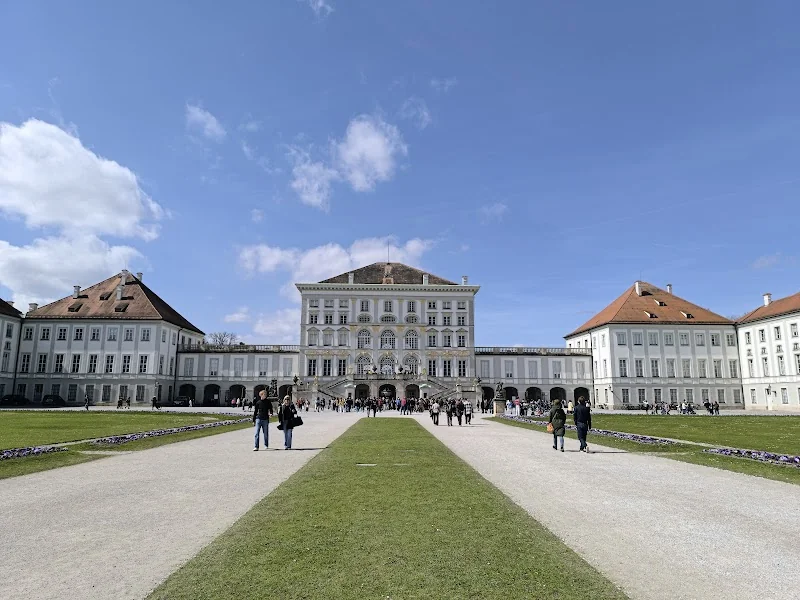
Nymphenburg Palace is one of the places in Munich where history, architecture, park landscape, and cultural use come together in an unusually dense way. The complex is not only a former electoral summer retreat but today a vibrant destination with palace tours, the Marstallmuseum, the Nymphenburg Porcelain Museum, park castles, an extensive palace park, and recurring events in special rooms. Therefore, those looking for events at Nymphenburg Palace or tickets for Nymphenburg Palace usually mean more than just a classic museum visit: It refers to a whole ensemble of baroque representation, landscape expansiveness, and contemporary use, which is still very clearly organized and well accessible for visitors. The current palace complex dates back to the birth of the long-awaited heir to the throne, Max Emanuel, for whom Electress Henriette Adelaide laid the foundation stone for this summer residence; over time, the early pleasure palace became one of the most famous residences in Bavaria. The impression is complemented by the palace park, which developed from a courtly garden to a landscape garden of particular significance. Therefore, those visiting the grounds experience not just a single building but a historical total work of art with paths, water axes, park castles, museum collections, and cultural event formats. This very mixture makes Nymphenburg Palace a strong destination for excursions, culture enthusiasts, architecture fans, families, and guests looking for a classic landmark with plenty of atmosphere in Munich. ([schloss-nymphenburg.de](https://www.schloss-nymphenburg.de/deutsch/schloss/))
Events and Tickets for Nymphenburg Palace
Those who want to experience Nymphenburg Palace as an event venue will find a program that ranges from concerts to exhibitions to special cultural events. The official event page currently lists dates in the Johannissaal and the Eiserne Haus, and the Johannissaal is explicitly described as an ideal setting for musical programs. Thus, Nymphenburg Palace is not only a place for quiet visits but also for evenings with music, conversation, art, or thematic focus. Particularly important for planning a visit is the ticket concept: Time-slot tickets are offered for the palace tour, which are available both online and at the box office. Online tickets can be purchased up to one day before the visit, and entry is possible up to a maximum of one hour after the chosen time. The duration of stay in the palace is not limited. Therefore, those looking for tickets for Nymphenburg Palace benefit from a clear, planable structure without rigid time constraints inside. Additionally, it is recommended to book tickets online in advance to avoid waiting times. The audio guide can also be reserved online in advance and then picked up directly at the distribution point in the palace. This is especially useful for guests who want to explore the rooms at a leisurely pace and wish for a deeper insight into the history. ([schloss-nymphenburg.de](https://www.schloss-nymphenburg.de/deutsch/aktuell/veranst.asp))
For the visit, some practical details are also important, especially during highly demanded dates or weekends. The palace itself is open daily from April 1 to October 15 from 9 AM to 6 PM, and in the winter half-year from October 16 to March daily from 10 AM to 4 PM. The Marstallmuseum and the Nymphenburg Porcelain Museum follow the same opening hours, while the park castles are only open from April to October 15. Last entry and last ticket sales generally occur 30 minutes before the end of opening hours. Additionally, an important current note: The Lacquer Cabinet in the Electress's apartment remains closed for restoration work until autumn 2026, while the other state rooms can still be visited. One should also keep an eye on the park itself, as the fountain in the Great Parterre will be out of operation in 2026 because the water wheel in the Green Fountain House is being repaired. There is also a clear regulation for groups: Visits to the palace or the Marstallmuseum are intended for a maximum of 25 people plus one guide. Therefore, those planning events at Nymphenburg Palace should keep an eye on both the date page and the ticket page, as current information, availability, and special dates are presented in a bundled manner. This keeps the planning transparent and the visit on-site pleasantly relaxed. ([schloss-nymphenburg.de](https://www.schloss-nymphenburg.de/englisch/tourist/opening.htm))
Access, Parking, and Public Transport
Access to Nymphenburg Palace is well documented and clearly described for different routes. By car, the complex can be reached depending on the direction via the A 8, A 96, A 95, or A 9; the official site details the respective junctions and road sequences. For visitors to the museums and the park, there are about 450 free parking spaces for cars and 8 spaces for buses available at the palace. Additionally, there are five designated disabled parking spaces in the parking lot in front of the palace. Therefore, those looking to park at Nymphenburg Palace find a comparatively comfortable parking situation for such a significant excursion destination in Munich. At the same time, the complex is also easily accessible by public transport: By S-Bahn, one travels to Laim and then takes the bus to Nymphenburg Palace, or one travels by U-Bahn to Rotkreuzplatz and transfers there to the tram to the Nymphenburg Palace stop. This connection is particularly practical for guests planning a day trip without searching for parking. The public transport connection is also important for evening event visits, as it allows for a more relaxed arrival at concerts or exhibitions in the Johannissaal, the Eiserne Haus, or the other usable rooms. The fact that the complex is located in the western part of Munich also makes it easily combinable with other excursion destinations without having to engage in complicated routes. ([schloss-nymphenburg.de](https://www.schloss-nymphenburg.de/deutsch/tourist/anfahrt.htm))
Accessibility and orientation are also part of the access and visit planning. For people with mobility impairments, there is a special step-free access to the left of the main entrance; in summer, there is also access from the back of the palace from the park. Inside the palace, the exhibition rooms are located on the upper floor and are accessible via an elevator, while the Marstallmuseum is step-free accessible and the porcelain museum can also be reached by elevator. The paths in the palace park are mostly well navigable with few exceptions and are mostly made of asphalt or compacted gravel. This is a great advantage for families with strollers, older visitors, or guests with limited mobility. The park opening hours are also clearly regulated: The main access is open from January to March, November, and December from 6 AM to 6 PM, in April and October from 6 AM to 8 PM, and from May to September from 6 AM to 9:30 PM. The other park gates close half an hour earlier. This structure shows that Nymphenburg Palace is very visitor-friendly organized not only during arrival but also when moving around on-site. Those planning a quiet walk can easily integrate the palace park into their daily schedule and enjoy the historical backdrop without haste. ([schloss-nymphenburg.de](https://www.schloss-nymphenburg.de/deutsch/tourist/mobilitaet.htm))
History of Nymphenburg Palace and its Summer Residence
The history of Nymphenburg Palace begins with a dynastic event that triggered the construction: After ten years of marriage, the Bavarian Elector couple Ferdinand Maria and Henriette Adelaide of Savoy were gifted the long-awaited heir to the throne, Max Emanuel, in 1662. The site served as the location for the Hofmark Kemnathen, located west of the residence city, and in 1664, construction began according to the plans of the Upper Italian Agostino Barelli, who also designed the Theatinerkirche in Munich. The early pleasure house was initially a powerful cubic pavilion, surrounded by the Hofmark church, ancillary and service buildings, and a small geometrically designed garden. By around 1679, this first form was nearly completed. Under Max Emanuel, Nymphenburg Palace then received its current dimensions: From 1701, staggered pavilions with galleries were built to the north and south of the existing core building. The work was interrupted by the War of the Spanish Succession when Max Emanuel had to leave Bavaria. Nevertheless, this expansion phase significantly shaped the appearance of the palace and transformed the original summer palace into a far-reaching baroque complex. Later, François Cuvilliés the Elder ensured the flourishing of courtly Rococo, and under Max III. Joseph, the festival hall received its current magnificent furnishings. The palace church and the porcelain factory were also closely linked to the complex during this time. Thus, a place emerged where political representation, courtly culture, and artistic ambition were closely intertwined. ([schloss-nymphenburg.de](https://www.schloss-nymphenburg.de/deutsch/schloss/))
In the 18th and 19th centuries, Nymphenburg Palace continued to evolve while remaining closely linked to the Bavarian ruling family. Under Elector Karl Theodor, the gallery wings were widened, and new rooms with contemporary furnishings were created; in 1792, he opened the Nymphenburg Palace Park to the public. This was an important step as the park thus transitioned from an exclusive court area to a place accessible to broader segments of the population. With Bavaria's elevation to a kingdom, Nymphenburg took on a new role: Max IV. Joseph, since 1806 as Max I. Joseph the first king of Bavaria, had parts of the rooms remodeled and furnished with neoclassical furniture. At the same time, Friedrich Ludwig von Sckell transformed the originally strictly geometric garden into a landscape park of English character. This redesign still shapes the current character of the park today. The complex was not simply preserved but further developed in several epochs without losing its historical identity. The fact that Nymphenburg Palace is a place with a vibrant history is also demonstrated by the connection to Ludwig II.: He was born here on August 25, 1845. Thus, the history of the complex does not end with the Baroque period but extends into the royal history of Bavaria and into today's cultural self-understanding of Munich. Those who understand the development of the place see not just facades and rooms during the tour but a political and aesthetic narrative that has grown over centuries. ([schloss-nymphenburg.de](https://www.schloss-nymphenburg.de/deutsch/schloss/))
Nymphenburg Palace Park, Park Castles, and Walking Paths
The Nymphenburg Palace Park is one of the most important arguments for a visit to the complex. It does not merely stand as a green backdrop behind the palace but as an independent historical space of great landscape and art-historical value. Within the park wall, the palace park covers about 180 hectares, while the entire Nymphenburg complex, including the rondel, city-side canal, and green spaces west of the wall, covers around 229 hectares. This makes the area one of the largest historical park facilities in Munich. The park is a testament to the transformation of a baroque garden into a landscape garden of very high artistic quality and is therefore under monument protection. The maintenance is carried out with the aim of keeping the original effect and historical substance visible. Particularly important from a landscape perspective is the redesign that Friedrich Ludwig von Sckell shaped from 1804: He replaced the strict forms of the baroque with naturally appearing trees, meadows, watercourses, winding paths, and harmoniously embedded sight axes, without completely displacing the baroque core components. Thus, a park emerged that appears both historically ordered and landscape-open. The defining elements include the large parterre at the palace, the central canal, the cascade, and the classical Monopteros at the Great Lake, which was built in 1865 in place of earlier wooden structures. Additionally, the park castles Amalienburg, Badenburg, Pagodenburg, and Magdalenenklause are symmetrically or landscape-related to the overall complex and impressively continue the motif of courtly retreat into smaller, specialized garden buildings. ([schloss-nymphenburg.de](https://www.schloss-nymphenburg.de/deutsch/park/pflege.htm))
For the stay in the palace park, not only the history but also the current use is relevant. The main gates of the park have seasonally different opening hours, and the fountains are usually in operation from Easter to mid-October, each from 10 AM to 12 PM and from 2 PM to 4 PM. The historical pumping facilities in the Green Fountain House and the Johannis Fountain House are open daily from Easter to early October from 10 AM to 4 PM. Additionally, the exhibition on Friedrich Ludwig von Sckell in the Geranienhaus facility is freely accessible daily from April to mid-October from 9 AM to 6 PM. Therefore, those looking for Nymphenburg Palace as an excursion destination with a palace park will find much more than a short photo stop here. The park invites longer walks, quiet views of water surfaces, historical perspectives between the palace and park castles, and a transition between strict parterre and nature-oriented landscape. The paths are also largely usable in terms of accessibility, making the park open to many target groups. The combination of historical depth, large green space, and calm atmosphere is one of the reasons why Nymphenburg Palace is perceived in Munich not only as a sight but as an experiential space. Those who want to fully grasp the place should take their time and visit the palace, park, and outbuildings not separately but as a coherent ensemble. ([schloss-nymphenburg.de](https://www.schloss-nymphenburg.de/englisch/tourist/opening.htm))
Marstallmuseum, Porcelain, and Event Spaces
The Marstallmuseum is one of the most significant collections of its kind worldwide and is an essential part of the overall visit to Nymphenburg Palace. It is located in the historic stabling of the royal horses in the southern cavalier buildings of the palace, which was completed in 1740 under Elector Karl Albrecht. There, the valuable riding horses of the Wittelsbach family stood in summer; in winter, horses and carriages were housed in the main stables and coach houses near the Munich residence. Today, the museum displays over forty representative carriages, sleds, and riding accessories from Wittelsbach ownership, documenting around three hundred years of princely carriage craftsmanship as well as driving and riding culture. A special highlight is the coronation carriage of Emperor Charles VII, one of the most beautiful state carriages of the French Rococo. Equally impressive are the gala carriages and sleds of the 19th century, which are associated with the representative lifestyle of King Ludwig II. The exhibition is complemented by harnesses, riding accessories, historical visual documents, and a newly designed room that traces the development of the Munich court marstall from the 16th to the early 20th century. Thus, the courtly world of travel, representation, and service becomes vividly and materially tangible. The Marstallmuseum is therefore much more than a side attraction; it expands the palace visit with a very concrete picture of courtly everyday life and its mobility. ([schloss-nymphenburg.de](https://www.schloss-nymphenburg.de/deutsch/marstall/index.htm))
On the first floor of the Marstallmuseum, there is also the Nymphenburg Porcelain Museum with the Bäuml collection. Here, a unique private collection of Nymphenburg porcelain from the 18th to 20th centuries can be seen. The electoral porcelain factory was founded in 1747 by Max III. Joseph, and the employment of Franz Anton Bustelli as model master was a stroke of luck for the young manufactory. His figures are considered particularly lively and narrative, and the collection was later systematically built up by Albert Bäuml, who took over the management of the manufactory in 1888. Even in the early 19th century, porcelain art remained a topic when King Ludwig I founded an art institute near the art academy to train the best porcelain painters. In the museum, visitors encounter not only artistic ceramics but also a long line of courtly and bourgeois art promotion. The ensemble is also relevant for events, as the Hubertus, Orangerie, and Johannissaal in the Orangerietrakt as well as the Eiserne Haus in the palace park can be rented for events; the Geranienhaus is exclusively intended for exhibitions. Thus, Nymphenburg Palace combines museum, historical, and event-related use in a single complex. Those looking for a place that combines day trips, cultural programs, and special room qualities will find one of the most versatile addresses in Munich here. ([schloss-nymphenburg.de](https://www.schloss-nymphenburg.de/deutsch/marstall/porzell.htm))
Sources:
- Nymphenburg Palace and Park - Current Events
- Nymphenburg Palace - Opening Hours and Tours
- Nymphenburg Palace - Admission Prices and Tickets
- Nymphenburg Palace - Access and Parking
- Nymphenburg Palace - History of Origin
- Nymphenburg Palace Park - History
- Nymphenburg Palace Park - Park Maintenance Today
- Marstallmuseum Nymphenburg Palace
- Nymphenburg Porcelain Museum
- Nymphenburg Palace - Rent Rooms
Show moreShow less
Nymphenburg Palace | Events & Tickets
Nymphenburg Palace is one of the places in Munich where history, architecture, park landscape, and cultural use come together in an unusually dense way. The complex is not only a former electoral summer retreat but today a vibrant destination with palace tours, the Marstallmuseum, the Nymphenburg Porcelain Museum, park castles, an extensive palace park, and recurring events in special rooms. Therefore, those looking for events at Nymphenburg Palace or tickets for Nymphenburg Palace usually mean more than just a classic museum visit: It refers to a whole ensemble of baroque representation, landscape expansiveness, and contemporary use, which is still very clearly organized and well accessible for visitors. The current palace complex dates back to the birth of the long-awaited heir to the throne, Max Emanuel, for whom Electress Henriette Adelaide laid the foundation stone for this summer residence; over time, the early pleasure palace became one of the most famous residences in Bavaria. The impression is complemented by the palace park, which developed from a courtly garden to a landscape garden of particular significance. Therefore, those visiting the grounds experience not just a single building but a historical total work of art with paths, water axes, park castles, museum collections, and cultural event formats. This very mixture makes Nymphenburg Palace a strong destination for excursions, culture enthusiasts, architecture fans, families, and guests looking for a classic landmark with plenty of atmosphere in Munich. ([schloss-nymphenburg.de](https://www.schloss-nymphenburg.de/deutsch/schloss/))
Events and Tickets for Nymphenburg Palace
Those who want to experience Nymphenburg Palace as an event venue will find a program that ranges from concerts to exhibitions to special cultural events. The official event page currently lists dates in the Johannissaal and the Eiserne Haus, and the Johannissaal is explicitly described as an ideal setting for musical programs. Thus, Nymphenburg Palace is not only a place for quiet visits but also for evenings with music, conversation, art, or thematic focus. Particularly important for planning a visit is the ticket concept: Time-slot tickets are offered for the palace tour, which are available both online and at the box office. Online tickets can be purchased up to one day before the visit, and entry is possible up to a maximum of one hour after the chosen time. The duration of stay in the palace is not limited. Therefore, those looking for tickets for Nymphenburg Palace benefit from a clear, planable structure without rigid time constraints inside. Additionally, it is recommended to book tickets online in advance to avoid waiting times. The audio guide can also be reserved online in advance and then picked up directly at the distribution point in the palace. This is especially useful for guests who want to explore the rooms at a leisurely pace and wish for a deeper insight into the history. ([schloss-nymphenburg.de](https://www.schloss-nymphenburg.de/deutsch/aktuell/veranst.asp))
For the visit, some practical details are also important, especially during highly demanded dates or weekends. The palace itself is open daily from April 1 to October 15 from 9 AM to 6 PM, and in the winter half-year from October 16 to March daily from 10 AM to 4 PM. The Marstallmuseum and the Nymphenburg Porcelain Museum follow the same opening hours, while the park castles are only open from April to October 15. Last entry and last ticket sales generally occur 30 minutes before the end of opening hours. Additionally, an important current note: The Lacquer Cabinet in the Electress's apartment remains closed for restoration work until autumn 2026, while the other state rooms can still be visited. One should also keep an eye on the park itself, as the fountain in the Great Parterre will be out of operation in 2026 because the water wheel in the Green Fountain House is being repaired. There is also a clear regulation for groups: Visits to the palace or the Marstallmuseum are intended for a maximum of 25 people plus one guide. Therefore, those planning events at Nymphenburg Palace should keep an eye on both the date page and the ticket page, as current information, availability, and special dates are presented in a bundled manner. This keeps the planning transparent and the visit on-site pleasantly relaxed. ([schloss-nymphenburg.de](https://www.schloss-nymphenburg.de/englisch/tourist/opening.htm))
Access, Parking, and Public Transport
Access to Nymphenburg Palace is well documented and clearly described for different routes. By car, the complex can be reached depending on the direction via the A 8, A 96, A 95, or A 9; the official site details the respective junctions and road sequences. For visitors to the museums and the park, there are about 450 free parking spaces for cars and 8 spaces for buses available at the palace. Additionally, there are five designated disabled parking spaces in the parking lot in front of the palace. Therefore, those looking to park at Nymphenburg Palace find a comparatively comfortable parking situation for such a significant excursion destination in Munich. At the same time, the complex is also easily accessible by public transport: By S-Bahn, one travels to Laim and then takes the bus to Nymphenburg Palace, or one travels by U-Bahn to Rotkreuzplatz and transfers there to the tram to the Nymphenburg Palace stop. This connection is particularly practical for guests planning a day trip without searching for parking. The public transport connection is also important for evening event visits, as it allows for a more relaxed arrival at concerts or exhibitions in the Johannissaal, the Eiserne Haus, or the other usable rooms. The fact that the complex is located in the western part of Munich also makes it easily combinable with other excursion destinations without having to engage in complicated routes. ([schloss-nymphenburg.de](https://www.schloss-nymphenburg.de/deutsch/tourist/anfahrt.htm))
Accessibility and orientation are also part of the access and visit planning. For people with mobility impairments, there is a special step-free access to the left of the main entrance; in summer, there is also access from the back of the palace from the park. Inside the palace, the exhibition rooms are located on the upper floor and are accessible via an elevator, while the Marstallmuseum is step-free accessible and the porcelain museum can also be reached by elevator. The paths in the palace park are mostly well navigable with few exceptions and are mostly made of asphalt or compacted gravel. This is a great advantage for families with strollers, older visitors, or guests with limited mobility. The park opening hours are also clearly regulated: The main access is open from January to March, November, and December from 6 AM to 6 PM, in April and October from 6 AM to 8 PM, and from May to September from 6 AM to 9:30 PM. The other park gates close half an hour earlier. This structure shows that Nymphenburg Palace is very visitor-friendly organized not only during arrival but also when moving around on-site. Those planning a quiet walk can easily integrate the palace park into their daily schedule and enjoy the historical backdrop without haste. ([schloss-nymphenburg.de](https://www.schloss-nymphenburg.de/deutsch/tourist/mobilitaet.htm))
History of Nymphenburg Palace and its Summer Residence
The history of Nymphenburg Palace begins with a dynastic event that triggered the construction: After ten years of marriage, the Bavarian Elector couple Ferdinand Maria and Henriette Adelaide of Savoy were gifted the long-awaited heir to the throne, Max Emanuel, in 1662. The site served as the location for the Hofmark Kemnathen, located west of the residence city, and in 1664, construction began according to the plans of the Upper Italian Agostino Barelli, who also designed the Theatinerkirche in Munich. The early pleasure house was initially a powerful cubic pavilion, surrounded by the Hofmark church, ancillary and service buildings, and a small geometrically designed garden. By around 1679, this first form was nearly completed. Under Max Emanuel, Nymphenburg Palace then received its current dimensions: From 1701, staggered pavilions with galleries were built to the north and south of the existing core building. The work was interrupted by the War of the Spanish Succession when Max Emanuel had to leave Bavaria. Nevertheless, this expansion phase significantly shaped the appearance of the palace and transformed the original summer palace into a far-reaching baroque complex. Later, François Cuvilliés the Elder ensured the flourishing of courtly Rococo, and under Max III. Joseph, the festival hall received its current magnificent furnishings. The palace church and the porcelain factory were also closely linked to the complex during this time. Thus, a place emerged where political representation, courtly culture, and artistic ambition were closely intertwined. ([schloss-nymphenburg.de](https://www.schloss-nymphenburg.de/deutsch/schloss/))
In the 18th and 19th centuries, Nymphenburg Palace continued to evolve while remaining closely linked to the Bavarian ruling family. Under Elector Karl Theodor, the gallery wings were widened, and new rooms with contemporary furnishings were created; in 1792, he opened the Nymphenburg Palace Park to the public. This was an important step as the park thus transitioned from an exclusive court area to a place accessible to broader segments of the population. With Bavaria's elevation to a kingdom, Nymphenburg took on a new role: Max IV. Joseph, since 1806 as Max I. Joseph the first king of Bavaria, had parts of the rooms remodeled and furnished with neoclassical furniture. At the same time, Friedrich Ludwig von Sckell transformed the originally strictly geometric garden into a landscape park of English character. This redesign still shapes the current character of the park today. The complex was not simply preserved but further developed in several epochs without losing its historical identity. The fact that Nymphenburg Palace is a place with a vibrant history is also demonstrated by the connection to Ludwig II.: He was born here on August 25, 1845. Thus, the history of the complex does not end with the Baroque period but extends into the royal history of Bavaria and into today's cultural self-understanding of Munich. Those who understand the development of the place see not just facades and rooms during the tour but a political and aesthetic narrative that has grown over centuries. ([schloss-nymphenburg.de](https://www.schloss-nymphenburg.de/deutsch/schloss/))
Nymphenburg Palace Park, Park Castles, and Walking Paths
The Nymphenburg Palace Park is one of the most important arguments for a visit to the complex. It does not merely stand as a green backdrop behind the palace but as an independent historical space of great landscape and art-historical value. Within the park wall, the palace park covers about 180 hectares, while the entire Nymphenburg complex, including the rondel, city-side canal, and green spaces west of the wall, covers around 229 hectares. This makes the area one of the largest historical park facilities in Munich. The park is a testament to the transformation of a baroque garden into a landscape garden of very high artistic quality and is therefore under monument protection. The maintenance is carried out with the aim of keeping the original effect and historical substance visible. Particularly important from a landscape perspective is the redesign that Friedrich Ludwig von Sckell shaped from 1804: He replaced the strict forms of the baroque with naturally appearing trees, meadows, watercourses, winding paths, and harmoniously embedded sight axes, without completely displacing the baroque core components. Thus, a park emerged that appears both historically ordered and landscape-open. The defining elements include the large parterre at the palace, the central canal, the cascade, and the classical Monopteros at the Great Lake, which was built in 1865 in place of earlier wooden structures. Additionally, the park castles Amalienburg, Badenburg, Pagodenburg, and Magdalenenklause are symmetrically or landscape-related to the overall complex and impressively continue the motif of courtly retreat into smaller, specialized garden buildings. ([schloss-nymphenburg.de](https://www.schloss-nymphenburg.de/deutsch/park/pflege.htm))
For the stay in the palace park, not only the history but also the current use is relevant. The main gates of the park have seasonally different opening hours, and the fountains are usually in operation from Easter to mid-October, each from 10 AM to 12 PM and from 2 PM to 4 PM. The historical pumping facilities in the Green Fountain House and the Johannis Fountain House are open daily from Easter to early October from 10 AM to 4 PM. Additionally, the exhibition on Friedrich Ludwig von Sckell in the Geranienhaus facility is freely accessible daily from April to mid-October from 9 AM to 6 PM. Therefore, those looking for Nymphenburg Palace as an excursion destination with a palace park will find much more than a short photo stop here. The park invites longer walks, quiet views of water surfaces, historical perspectives between the palace and park castles, and a transition between strict parterre and nature-oriented landscape. The paths are also largely usable in terms of accessibility, making the park open to many target groups. The combination of historical depth, large green space, and calm atmosphere is one of the reasons why Nymphenburg Palace is perceived in Munich not only as a sight but as an experiential space. Those who want to fully grasp the place should take their time and visit the palace, park, and outbuildings not separately but as a coherent ensemble. ([schloss-nymphenburg.de](https://www.schloss-nymphenburg.de/englisch/tourist/opening.htm))
Marstallmuseum, Porcelain, and Event Spaces
The Marstallmuseum is one of the most significant collections of its kind worldwide and is an essential part of the overall visit to Nymphenburg Palace. It is located in the historic stabling of the royal horses in the southern cavalier buildings of the palace, which was completed in 1740 under Elector Karl Albrecht. There, the valuable riding horses of the Wittelsbach family stood in summer; in winter, horses and carriages were housed in the main stables and coach houses near the Munich residence. Today, the museum displays over forty representative carriages, sleds, and riding accessories from Wittelsbach ownership, documenting around three hundred years of princely carriage craftsmanship as well as driving and riding culture. A special highlight is the coronation carriage of Emperor Charles VII, one of the most beautiful state carriages of the French Rococo. Equally impressive are the gala carriages and sleds of the 19th century, which are associated with the representative lifestyle of King Ludwig II. The exhibition is complemented by harnesses, riding accessories, historical visual documents, and a newly designed room that traces the development of the Munich court marstall from the 16th to the early 20th century. Thus, the courtly world of travel, representation, and service becomes vividly and materially tangible. The Marstallmuseum is therefore much more than a side attraction; it expands the palace visit with a very concrete picture of courtly everyday life and its mobility. ([schloss-nymphenburg.de](https://www.schloss-nymphenburg.de/deutsch/marstall/index.htm))
On the first floor of the Marstallmuseum, there is also the Nymphenburg Porcelain Museum with the Bäuml collection. Here, a unique private collection of Nymphenburg porcelain from the 18th to 20th centuries can be seen. The electoral porcelain factory was founded in 1747 by Max III. Joseph, and the employment of Franz Anton Bustelli as model master was a stroke of luck for the young manufactory. His figures are considered particularly lively and narrative, and the collection was later systematically built up by Albert Bäuml, who took over the management of the manufactory in 1888. Even in the early 19th century, porcelain art remained a topic when King Ludwig I founded an art institute near the art academy to train the best porcelain painters. In the museum, visitors encounter not only artistic ceramics but also a long line of courtly and bourgeois art promotion. The ensemble is also relevant for events, as the Hubertus, Orangerie, and Johannissaal in the Orangerietrakt as well as the Eiserne Haus in the palace park can be rented for events; the Geranienhaus is exclusively intended for exhibitions. Thus, Nymphenburg Palace combines museum, historical, and event-related use in a single complex. Those looking for a place that combines day trips, cultural programs, and special room qualities will find one of the most versatile addresses in Munich here. ([schloss-nymphenburg.de](https://www.schloss-nymphenburg.de/deutsch/marstall/porzell.htm))
Sources:
- Nymphenburg Palace and Park - Current Events
- Nymphenburg Palace - Opening Hours and Tours
- Nymphenburg Palace - Admission Prices and Tickets
- Nymphenburg Palace - Access and Parking
- Nymphenburg Palace - History of Origin
- Nymphenburg Palace Park - History
- Nymphenburg Palace Park - Park Maintenance Today
- Marstallmuseum Nymphenburg Palace
- Nymphenburg Porcelain Museum
- Nymphenburg Palace - Rent Rooms
Nymphenburg Palace | Events & Tickets
Nymphenburg Palace is one of the places in Munich where history, architecture, park landscape, and cultural use come together in an unusually dense way. The complex is not only a former electoral summer retreat but today a vibrant destination with palace tours, the Marstallmuseum, the Nymphenburg Porcelain Museum, park castles, an extensive palace park, and recurring events in special rooms. Therefore, those looking for events at Nymphenburg Palace or tickets for Nymphenburg Palace usually mean more than just a classic museum visit: It refers to a whole ensemble of baroque representation, landscape expansiveness, and contemporary use, which is still very clearly organized and well accessible for visitors. The current palace complex dates back to the birth of the long-awaited heir to the throne, Max Emanuel, for whom Electress Henriette Adelaide laid the foundation stone for this summer residence; over time, the early pleasure palace became one of the most famous residences in Bavaria. The impression is complemented by the palace park, which developed from a courtly garden to a landscape garden of particular significance. Therefore, those visiting the grounds experience not just a single building but a historical total work of art with paths, water axes, park castles, museum collections, and cultural event formats. This very mixture makes Nymphenburg Palace a strong destination for excursions, culture enthusiasts, architecture fans, families, and guests looking for a classic landmark with plenty of atmosphere in Munich. ([schloss-nymphenburg.de](https://www.schloss-nymphenburg.de/deutsch/schloss/))
Events and Tickets for Nymphenburg Palace
Those who want to experience Nymphenburg Palace as an event venue will find a program that ranges from concerts to exhibitions to special cultural events. The official event page currently lists dates in the Johannissaal and the Eiserne Haus, and the Johannissaal is explicitly described as an ideal setting for musical programs. Thus, Nymphenburg Palace is not only a place for quiet visits but also for evenings with music, conversation, art, or thematic focus. Particularly important for planning a visit is the ticket concept: Time-slot tickets are offered for the palace tour, which are available both online and at the box office. Online tickets can be purchased up to one day before the visit, and entry is possible up to a maximum of one hour after the chosen time. The duration of stay in the palace is not limited. Therefore, those looking for tickets for Nymphenburg Palace benefit from a clear, planable structure without rigid time constraints inside. Additionally, it is recommended to book tickets online in advance to avoid waiting times. The audio guide can also be reserved online in advance and then picked up directly at the distribution point in the palace. This is especially useful for guests who want to explore the rooms at a leisurely pace and wish for a deeper insight into the history. ([schloss-nymphenburg.de](https://www.schloss-nymphenburg.de/deutsch/aktuell/veranst.asp))
For the visit, some practical details are also important, especially during highly demanded dates or weekends. The palace itself is open daily from April 1 to October 15 from 9 AM to 6 PM, and in the winter half-year from October 16 to March daily from 10 AM to 4 PM. The Marstallmuseum and the Nymphenburg Porcelain Museum follow the same opening hours, while the park castles are only open from April to October 15. Last entry and last ticket sales generally occur 30 minutes before the end of opening hours. Additionally, an important current note: The Lacquer Cabinet in the Electress's apartment remains closed for restoration work until autumn 2026, while the other state rooms can still be visited. One should also keep an eye on the park itself, as the fountain in the Great Parterre will be out of operation in 2026 because the water wheel in the Green Fountain House is being repaired. There is also a clear regulation for groups: Visits to the palace or the Marstallmuseum are intended for a maximum of 25 people plus one guide. Therefore, those planning events at Nymphenburg Palace should keep an eye on both the date page and the ticket page, as current information, availability, and special dates are presented in a bundled manner. This keeps the planning transparent and the visit on-site pleasantly relaxed. ([schloss-nymphenburg.de](https://www.schloss-nymphenburg.de/englisch/tourist/opening.htm))
Access, Parking, and Public Transport
Access to Nymphenburg Palace is well documented and clearly described for different routes. By car, the complex can be reached depending on the direction via the A 8, A 96, A 95, or A 9; the official site details the respective junctions and road sequences. For visitors to the museums and the park, there are about 450 free parking spaces for cars and 8 spaces for buses available at the palace. Additionally, there are five designated disabled parking spaces in the parking lot in front of the palace. Therefore, those looking to park at Nymphenburg Palace find a comparatively comfortable parking situation for such a significant excursion destination in Munich. At the same time, the complex is also easily accessible by public transport: By S-Bahn, one travels to Laim and then takes the bus to Nymphenburg Palace, or one travels by U-Bahn to Rotkreuzplatz and transfers there to the tram to the Nymphenburg Palace stop. This connection is particularly practical for guests planning a day trip without searching for parking. The public transport connection is also important for evening event visits, as it allows for a more relaxed arrival at concerts or exhibitions in the Johannissaal, the Eiserne Haus, or the other usable rooms. The fact that the complex is located in the western part of Munich also makes it easily combinable with other excursion destinations without having to engage in complicated routes. ([schloss-nymphenburg.de](https://www.schloss-nymphenburg.de/deutsch/tourist/anfahrt.htm))
Accessibility and orientation are also part of the access and visit planning. For people with mobility impairments, there is a special step-free access to the left of the main entrance; in summer, there is also access from the back of the palace from the park. Inside the palace, the exhibition rooms are located on the upper floor and are accessible via an elevator, while the Marstallmuseum is step-free accessible and the porcelain museum can also be reached by elevator. The paths in the palace park are mostly well navigable with few exceptions and are mostly made of asphalt or compacted gravel. This is a great advantage for families with strollers, older visitors, or guests with limited mobility. The park opening hours are also clearly regulated: The main access is open from January to March, November, and December from 6 AM to 6 PM, in April and October from 6 AM to 8 PM, and from May to September from 6 AM to 9:30 PM. The other park gates close half an hour earlier. This structure shows that Nymphenburg Palace is very visitor-friendly organized not only during arrival but also when moving around on-site. Those planning a quiet walk can easily integrate the palace park into their daily schedule and enjoy the historical backdrop without haste. ([schloss-nymphenburg.de](https://www.schloss-nymphenburg.de/deutsch/tourist/mobilitaet.htm))
History of Nymphenburg Palace and its Summer Residence
The history of Nymphenburg Palace begins with a dynastic event that triggered the construction: After ten years of marriage, the Bavarian Elector couple Ferdinand Maria and Henriette Adelaide of Savoy were gifted the long-awaited heir to the throne, Max Emanuel, in 1662. The site served as the location for the Hofmark Kemnathen, located west of the residence city, and in 1664, construction began according to the plans of the Upper Italian Agostino Barelli, who also designed the Theatinerkirche in Munich. The early pleasure house was initially a powerful cubic pavilion, surrounded by the Hofmark church, ancillary and service buildings, and a small geometrically designed garden. By around 1679, this first form was nearly completed. Under Max Emanuel, Nymphenburg Palace then received its current dimensions: From 1701, staggered pavilions with galleries were built to the north and south of the existing core building. The work was interrupted by the War of the Spanish Succession when Max Emanuel had to leave Bavaria. Nevertheless, this expansion phase significantly shaped the appearance of the palace and transformed the original summer palace into a far-reaching baroque complex. Later, François Cuvilliés the Elder ensured the flourishing of courtly Rococo, and under Max III. Joseph, the festival hall received its current magnificent furnishings. The palace church and the porcelain factory were also closely linked to the complex during this time. Thus, a place emerged where political representation, courtly culture, and artistic ambition were closely intertwined. ([schloss-nymphenburg.de](https://www.schloss-nymphenburg.de/deutsch/schloss/))
In the 18th and 19th centuries, Nymphenburg Palace continued to evolve while remaining closely linked to the Bavarian ruling family. Under Elector Karl Theodor, the gallery wings were widened, and new rooms with contemporary furnishings were created; in 1792, he opened the Nymphenburg Palace Park to the public. This was an important step as the park thus transitioned from an exclusive court area to a place accessible to broader segments of the population. With Bavaria's elevation to a kingdom, Nymphenburg took on a new role: Max IV. Joseph, since 1806 as Max I. Joseph the first king of Bavaria, had parts of the rooms remodeled and furnished with neoclassical furniture. At the same time, Friedrich Ludwig von Sckell transformed the originally strictly geometric garden into a landscape park of English character. This redesign still shapes the current character of the park today. The complex was not simply preserved but further developed in several epochs without losing its historical identity. The fact that Nymphenburg Palace is a place with a vibrant history is also demonstrated by the connection to Ludwig II.: He was born here on August 25, 1845. Thus, the history of the complex does not end with the Baroque period but extends into the royal history of Bavaria and into today's cultural self-understanding of Munich. Those who understand the development of the place see not just facades and rooms during the tour but a political and aesthetic narrative that has grown over centuries. ([schloss-nymphenburg.de](https://www.schloss-nymphenburg.de/deutsch/schloss/))
Nymphenburg Palace Park, Park Castles, and Walking Paths
The Nymphenburg Palace Park is one of the most important arguments for a visit to the complex. It does not merely stand as a green backdrop behind the palace but as an independent historical space of great landscape and art-historical value. Within the park wall, the palace park covers about 180 hectares, while the entire Nymphenburg complex, including the rondel, city-side canal, and green spaces west of the wall, covers around 229 hectares. This makes the area one of the largest historical park facilities in Munich. The park is a testament to the transformation of a baroque garden into a landscape garden of very high artistic quality and is therefore under monument protection. The maintenance is carried out with the aim of keeping the original effect and historical substance visible. Particularly important from a landscape perspective is the redesign that Friedrich Ludwig von Sckell shaped from 1804: He replaced the strict forms of the baroque with naturally appearing trees, meadows, watercourses, winding paths, and harmoniously embedded sight axes, without completely displacing the baroque core components. Thus, a park emerged that appears both historically ordered and landscape-open. The defining elements include the large parterre at the palace, the central canal, the cascade, and the classical Monopteros at the Great Lake, which was built in 1865 in place of earlier wooden structures. Additionally, the park castles Amalienburg, Badenburg, Pagodenburg, and Magdalenenklause are symmetrically or landscape-related to the overall complex and impressively continue the motif of courtly retreat into smaller, specialized garden buildings. ([schloss-nymphenburg.de](https://www.schloss-nymphenburg.de/deutsch/park/pflege.htm))
For the stay in the palace park, not only the history but also the current use is relevant. The main gates of the park have seasonally different opening hours, and the fountains are usually in operation from Easter to mid-October, each from 10 AM to 12 PM and from 2 PM to 4 PM. The historical pumping facilities in the Green Fountain House and the Johannis Fountain House are open daily from Easter to early October from 10 AM to 4 PM. Additionally, the exhibition on Friedrich Ludwig von Sckell in the Geranienhaus facility is freely accessible daily from April to mid-October from 9 AM to 6 PM. Therefore, those looking for Nymphenburg Palace as an excursion destination with a palace park will find much more than a short photo stop here. The park invites longer walks, quiet views of water surfaces, historical perspectives between the palace and park castles, and a transition between strict parterre and nature-oriented landscape. The paths are also largely usable in terms of accessibility, making the park open to many target groups. The combination of historical depth, large green space, and calm atmosphere is one of the reasons why Nymphenburg Palace is perceived in Munich not only as a sight but as an experiential space. Those who want to fully grasp the place should take their time and visit the palace, park, and outbuildings not separately but as a coherent ensemble. ([schloss-nymphenburg.de](https://www.schloss-nymphenburg.de/englisch/tourist/opening.htm))
Marstallmuseum, Porcelain, and Event Spaces
The Marstallmuseum is one of the most significant collections of its kind worldwide and is an essential part of the overall visit to Nymphenburg Palace. It is located in the historic stabling of the royal horses in the southern cavalier buildings of the palace, which was completed in 1740 under Elector Karl Albrecht. There, the valuable riding horses of the Wittelsbach family stood in summer; in winter, horses and carriages were housed in the main stables and coach houses near the Munich residence. Today, the museum displays over forty representative carriages, sleds, and riding accessories from Wittelsbach ownership, documenting around three hundred years of princely carriage craftsmanship as well as driving and riding culture. A special highlight is the coronation carriage of Emperor Charles VII, one of the most beautiful state carriages of the French Rococo. Equally impressive are the gala carriages and sleds of the 19th century, which are associated with the representative lifestyle of King Ludwig II. The exhibition is complemented by harnesses, riding accessories, historical visual documents, and a newly designed room that traces the development of the Munich court marstall from the 16th to the early 20th century. Thus, the courtly world of travel, representation, and service becomes vividly and materially tangible. The Marstallmuseum is therefore much more than a side attraction; it expands the palace visit with a very concrete picture of courtly everyday life and its mobility. ([schloss-nymphenburg.de](https://www.schloss-nymphenburg.de/deutsch/marstall/index.htm))
On the first floor of the Marstallmuseum, there is also the Nymphenburg Porcelain Museum with the Bäuml collection. Here, a unique private collection of Nymphenburg porcelain from the 18th to 20th centuries can be seen. The electoral porcelain factory was founded in 1747 by Max III. Joseph, and the employment of Franz Anton Bustelli as model master was a stroke of luck for the young manufactory. His figures are considered particularly lively and narrative, and the collection was later systematically built up by Albert Bäuml, who took over the management of the manufactory in 1888. Even in the early 19th century, porcelain art remained a topic when King Ludwig I founded an art institute near the art academy to train the best porcelain painters. In the museum, visitors encounter not only artistic ceramics but also a long line of courtly and bourgeois art promotion. The ensemble is also relevant for events, as the Hubertus, Orangerie, and Johannissaal in the Orangerietrakt as well as the Eiserne Haus in the palace park can be rented for events; the Geranienhaus is exclusively intended for exhibitions. Thus, Nymphenburg Palace combines museum, historical, and event-related use in a single complex. Those looking for a place that combines day trips, cultural programs, and special room qualities will find one of the most versatile addresses in Munich here. ([schloss-nymphenburg.de](https://www.schloss-nymphenburg.de/deutsch/marstall/porzell.htm))
Sources:
- Nymphenburg Palace and Park - Current Events
- Nymphenburg Palace - Opening Hours and Tours
- Nymphenburg Palace - Admission Prices and Tickets
- Nymphenburg Palace - Access and Parking
- Nymphenburg Palace - History of Origin
- Nymphenburg Palace Park - History
- Nymphenburg Palace Park - Park Maintenance Today
- Marstallmuseum Nymphenburg Palace
- Nymphenburg Porcelain Museum
- Nymphenburg Palace - Rent Rooms
Upcoming Events
Film Music - Special Edition
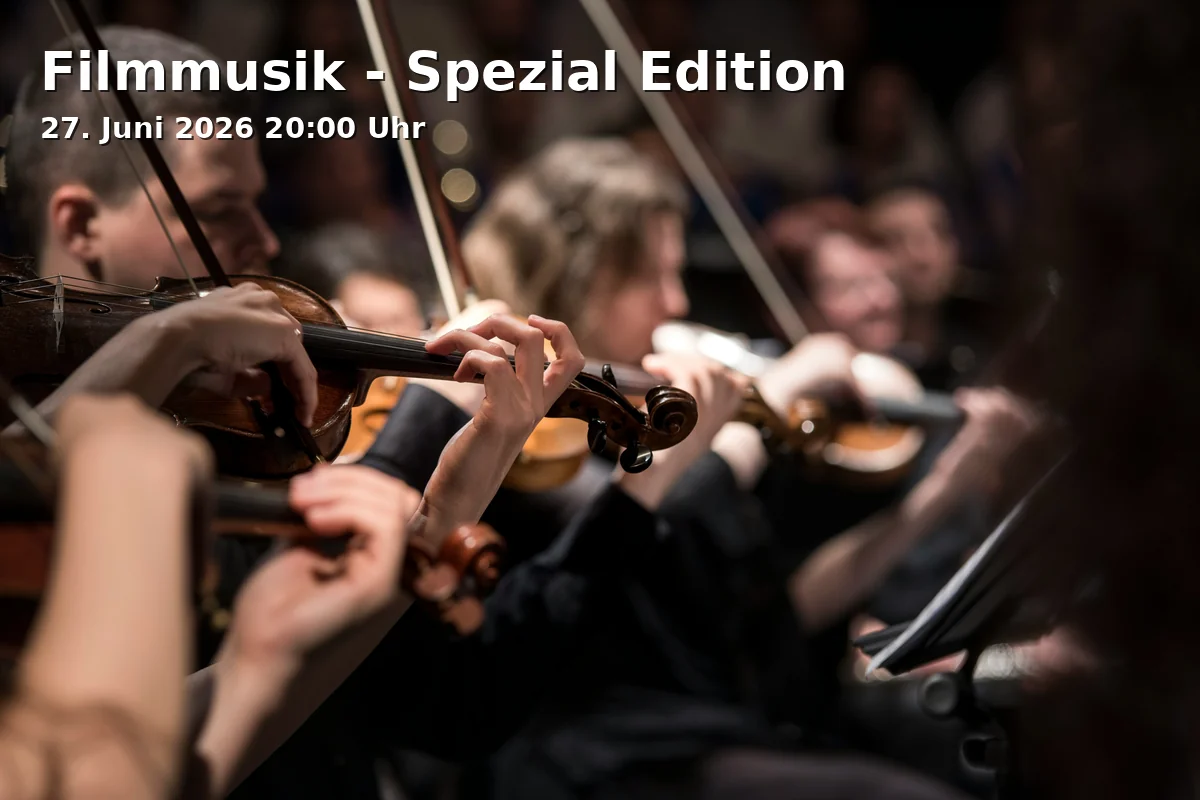
CelloNation transforms the Johannissaal in Munich into a cinema for the ears. Film music, palace ambiance, and great emotions on June 27, 2026. #Munich #FilmMusic
The Visit of the Old Lady
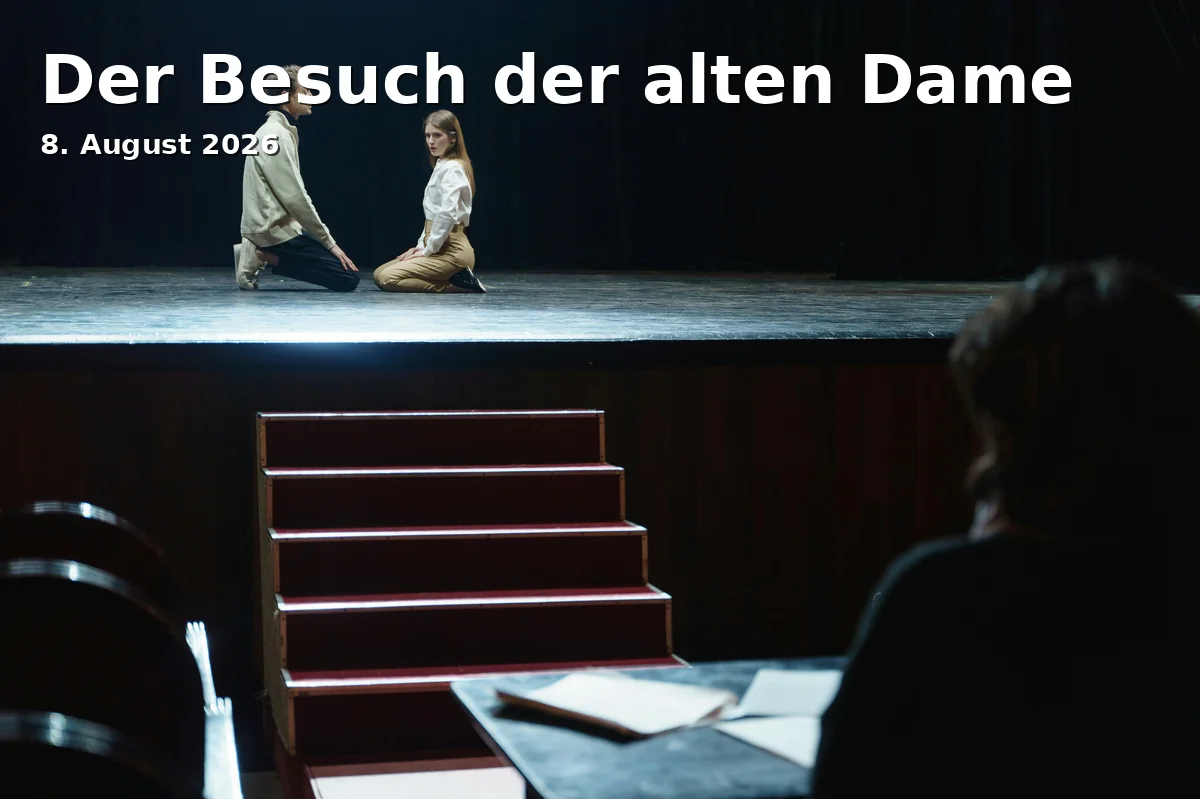
Experience Dürrenmatt's masterpiece at Nymphenburg Palace. A captivating theater evening awaits you on August 8, 2026.
Frequently Asked Questions
Reviews
No reviews found