
Oberschleißheim
Max-Emanuel-Platz 1, 85764 Oberschleißheim, Deutschland
Schleißheim Palace Complex | Opening Hours & Tickets
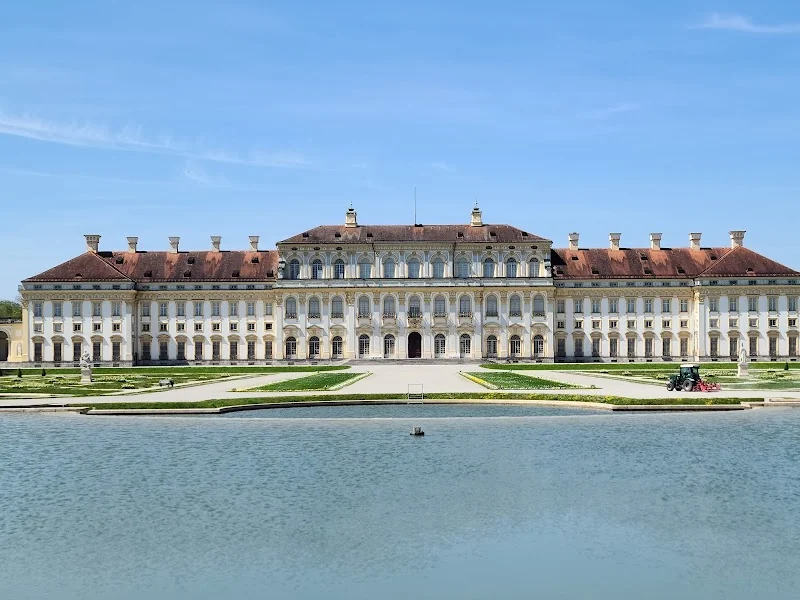
The Schleißheim Palace Complex in Oberschleißheim near Munich is one of the largest and most impressive residences of the Wittelsbach family in Bavaria. Upon arrival, visitors experience not just a single palace, but a baroque ensemble consisting of the Old Palace, New Palace, Lustheim Palace, and the Court Garden. This combination of architecture, garden art, and courtly representation makes the visit particularly special: wide sight axes, artistically staged facades, richly furnished state rooms, and a park that is among the most significant baroque gardens in Europe. The complex serves as a cultural monument, museum, excursion destination, and event venue. For planning a visit, the opening hours, ticket prices, travel options, parking facilities, and various uses of the rooms are particularly important. This overview consolidates these pieces of information in a clear and practical form. ([schloesser.bayern.de](https://www.schloesser.bayern.de/deutsch/schloss/objekte/schl_ns.htm))
Opening Hours, Tickets, and Current Visiting Times
The New Palace and Old Palace have seasonal opening hours. From April to September, both palaces are open daily from 9 AM to 6 PM, and from October to March from 10 AM to 4 PM. The complex is generally closed on Mondays, but there are individual holiday exceptions such as January 6, Easter Monday, May 1, Whit Monday, August 15, October 3, and November 1. Additionally, January 1, Shrove Tuesday, and December 24, 25, and 31 are closed. The Court Garden has its own, longer opening hours: in January, February, November, and December from 8 AM to 5 PM, in March and October from 8 AM to 6 PM, in April and September from 8 AM to 7 PM, and from May to August from 8 AM to 8 PM. This is important for visitors because the tour through the palace and garden can be best aligned with the respective season. ([schloesser.bayern.de](https://www.schloesser.bayern.de/deutsch/schloss/objekte/schl_ns.htm))
The ticket prices are also transparently structured at the palace complex. Admission to the New Palace costs 7 euros regular and 6 euros reduced. The combined ticket for the Old Palace, New Palace, and Lustheim Palace is 11 euros regular and 9 euros reduced. Children and teenagers up to the age of 18 receive free admission. For those who want to enhance their visit, an audio guide is available for a fee; languages available include German, English, Italian, and French. This is particularly useful for those who want to calmly explore the baroque sequences of rooms, the splendid apartments, and the art-historical details. The official pricing structure shows that the complex is designed not only for spontaneous strolls but also for consciously planned cultural visits with a clear ticket logic. ([schloesser.bayern.de](https://www.schloesser.bayern.de/deutsch/schloss/objekte/schl_ns.htm))
Practical use also includes accessibility. According to the official information sheet, elevators and ramps are available in the New and Old Palaces. This significantly facilitates access to essential areas. Lustheim Palace, on the other hand, is less accessible: access on the ground floor is via steps, and stairs are required in the basement. This is a relevant difference for visitors with limited mobility, simplifying planning. Those who want to combine several stations should therefore first plan the New Palace and the Old Palace and then add Lustheim depending on their own mobility. This way, the visit to the historical complex can be comfortably and realistically prepared. ([schloesser.bayern.de](https://www.schloesser.bayern.de/deutsch/service/infomat/screen-pdf/schleissheim_dt.pdf))
Directions, Address, and Parking at the Schleißheim Palace Complex
The official address is Max-Emanuel-Platz 1, 85764 Oberschleißheim. This address already shows how closely the complex is connected to its historical surroundings: it is not isolated but embedded in the town and the baroque axis of palace, garden, and water features. For travel by public transport, the Bavarian Palace Administration recommends taking the S-Bahn to Oberschleißheim and then the bus to the Schloss stop. Additionally, the bus to Lustheim Palace is mentioned for the Court Garden, but only on weekdays. This makes the complex easily accessible without a car, especially for day trips from Munich or the surrounding area. Those planning the route to the Schleißheim Palace Complex can choose between train, bus, and car and flexibly adjust the last stretch depending on their destination. ([schloesser.bayern.de](https://www.schloesser.bayern.de/deutsch/schloss/objekte/schl_ns.htm))
For drivers, parking options are clearly regulated. About 120 paid parking spaces are available at the palace complex. This is a useful practical advantage for a historical site of this size, as it allows the visit to begin without a lengthy search for parking. Additionally, the official information sheet mentions two electric charging stations in the parking lot at the Old Palace, which is a welcome detail for electric cars. Furthermore, parking spaces are listed as part of the infrastructure in the event rooms of the New Palace. Those coming from Munich can reach Oberschleißheim relatively easily via the northern area of the city; thus, the palace complex is suitable for both a short detour and an extended cultural and garden day. Especially during high demand, an early arrival is advisable to start the visit relaxed. ([schloesser.bayern.de](https://www.schloesser.bayern.de/deutsch/schloss/objekte/schl_ns.htm))
History of the Old Palace, New Palace, and Lustheim Palace
The history of the Schleißheim Palace Complex begins with the Old Palace. It is considered the nucleus of the entire complex. Duke Wilhelm V of Bavaria acquired several estates with chapels and cloisters starting in 1595 and had a modest manor house developed from them by 1600. Duke Maximilian I replaced the complex starting in 1617 with a more ambitious new building that was oriented towards the modern upper Italian villa architecture of the late Renaissance. During World War II, the Old Palace with its splendid interior was severely damaged before it was rebuilt in 1971 and 1972. Today, it houses two collections under one roof, including the ecumenical collection of Gertrud Weinhold and an exhibition on the regional studies of East and West Prussia. Thus, the Old Palace is not only a historical starting point but also a vibrant museum location. ([schloesser.bayern.de](https://www.schloesser.bayern.de/deutsch/service/infomat/screen-pdf/schleissheim_dt.pdf))
The New Palace is the monumental center of the baroque overall complex. Elector Max Emanuel had it built in the years after 1701; the shell construction was completed from 1701 to 1704. After his return from exile, he initially planned with the court architect Henrico Zuccalli an even larger four-wing complex but ultimately had to settle for the single-wing new building. The facade design and interior decoration were created from 1719 by the Paris-trained court architect Joseph Effner in the style of the French late baroque. When Max Emanuel died in 1726, the New Palace was just completed. Particularly impressive are the ceremonial sequence of rooms consisting of the grand staircase, festival hall, Victoria Hall, and Great Gallery, as well as the parade apartments of the electoral couple. Their furnishings are still among the most significant room decorations of baroque palace architecture. In the state rooms, the Bavarian State Painting Collections also present works of European baroque painting. ([schloesser.bayern.de](https://www.schloesser.bayern.de/deutsch/service/infomat/screen-pdf/schleissheim_dt.pdf))
Lustheim Palace complements this development as an independent but closely connected building. Max Emanuel had the hunting lodge built between 1684 and 1688 on the occasion of his marriage to the emperor's daughter Maria Antonia. The design was based on Italian casino buildings and creates a striking focal point at the end of the baroque garden axis. The interior rooms of the festival hall and the apartments are characterized by a cycle of frescoes that glorify the hunting goddess Diana. Today, Lustheim Palace houses the second most significant collection of early Meissen porcelain after Dresden as a branch museum of the Bavarian National Museum. The two flanking pavilion buildings with the Beautiful Stable and Renatus Chapel further emphasize the representative character. Together with the New Palace and the Old Palace, Lustheim forms the architectural goal of a complex that uniquely combines baroque power, hunting, and art. ([schloesser.bayern.de](https://www.schloesser.bayern.de/deutsch/service/infomat/screen-pdf/schleissheim_dt.pdf))
Experience the Court Garden and Water Features
The Court Garden Schleißheim is one of the major highlights of the complex because it connects the architecture of the palaces with a strictly composed garden landscape. It is officially described as one of the few, hardly changed gardens from the baroque period. This is precisely where its charm lies: walking through the garden, one does not simply experience a green space, but a historical staging of axes, parterres, canals, and expanses. The address is the same as that of the palaces, and admission is free. This makes the Court Garden ideal for visitors who do not plan a complete museum round but seek a walk in a historical setting. Those who visit the palace and garden together quickly understand how strongly the complex is conceived as a total work of art. ([schloesser.bayern.de](https://www.schloesser.bayern.de/deutsch/garten/objekte/schl_ns.htm?utm_source=openai))
Particularly attractive are the water features. From April to the end of September, they are shown daily from 10 AM to 4 PM, each hour on the hour and lasting about 30 minutes. Combined with the long summer opening hours of the Court Garden, the visit can be well timed. The garden is thus not only a backdrop but an active part of the overall experience. The baroque sight axis from the New Palace over the parterre, cascade, and central canal to Lustheim Palace is among the most well-known images of the complex. So, for those looking for strong photos, wide perspectives, and a calm counterpoint to the state rooms, the Court Garden offers exactly this interplay of formality and openness. Especially in spring and summer, the place unfolds its full effect. ([schloesser.bayern.de](https://www.schloesser.bayern.de/deutsch/service/infomat/screen-pdf/schleissheim_dt.pdf))
Weddings, Concerts, and Event Spaces in the New Palace
The Schleißheim Palace Complex is not only a destination for excursions but also an established event venue. This is especially evident in the New Palace with its rentable rooms. The Maximilian Chapel is suitable for concerts, services, weddings, and baptisms for up to 75 people. The Great Hall is intended for concerts, ceremonial acts, and award ceremonies and can accommodate up to 432 people in row seating. The Sala terrena with vestibule is designed for standing receptions and banquets and can hold up to 700 people. The dining room is suitable for civil weddings and smaller concerts for up to 120 people. This way, the complex covers a wide spectrum, ranging from small private ceremonies to larger cultural formats. This variety makes Schloss Schleißheim interesting for weddings, concerts, and representative occasions. ([schloesser.bayern.de](https://www.schloesser.bayern.de/deutsch/raeume/ueb_ort/sch_heim.htm?utm_source=openai))
The conditions are also clearly described. The Great Hall is only intended for corporate events and is available from April 1 to September 30. For cultural events, there are reduced rental conditions if public tickets are offered in advance and the event is freely accessible and publicly advertised. Additionally, there are regulations in the room such as a smoking ban, candle ban, no heating, and no catering. The infrastructure includes cloakrooms, toilets, artist dressing rooms, and parking spaces. For organizers, this is a helpful signal because the historical setting is not only beautiful but also organizationally precisely regulated. So, for those looking for a location with baroque character, clear rental terms, and real room sizes, this offers an unusually high-quality option. ([schloesser.bayern.de](https://www.schloesser.bayern.de/deutsch/raeume/objekte/schl_fes.htm))
Palace Tavern, Beer Garden, and Practical Visitor Tips
The palace complex also includes the Schleißheim Palace Tavern, located directly next to the palace. The official presentation describes it as a place where Bavarian tavern culture, upscale cuisine, and a special atmosphere come together. The beer garden with a view of the palace is particularly attractive. This allows a visit to be rounded off very pleasantly: first the cultural and architectural experience, then a break in a gastronomic environment with historical ambiance. The palace tavern is thus more than just an additional offer; it is part of the entire day's experience around the palace. For many visitors, this is an important practical point because it allows them to plan their stay not in a hurry but at a leisurely pace. ([schlosswirtschaft-schleissheim.de](https://schlosswirtschaft-schleissheim.de/?utm_source=openai))
Those who want to combine the palace complex sensibly should think of the day in stages: first the New Palace with its state rooms, then the Court Garden with water features, and afterwards, depending on time, the Old Palace or Lustheim Palace. The combined ticket allows for economical connections between several stations. The complex is particularly interesting for visitors who seek more than just a classic museum, as art history, garden art, celebration culture, and excursion atmosphere come together here. Those wanting to take photos will find strong motifs on the facades, along the water axes, and in the parterre. Those attending a wedding or concert experience baroque rooms in contemporary use. And those simply looking for a well-organized day trip near Munich find one of the most representative addresses in the region in Schleißheim. ([schloesser.bayern.de](https://www.schloesser.bayern.de/deutsch/schloss/objekte/schl_ns.htm))
Sources:
- Bavarian Palace Administration - New Palace Schleißheim ([schloesser.bayern.de](https://www.schloesser.bayern.de/deutsch/schloss/objekte/schl_ns.htm))
- Bavarian Palace Administration - Court Garden Schleißheim ([schloesser.bayern.de](https://www.schloesser.bayern.de/deutsch/garten/objekte/schl_ns.htm))
- Bavarian Palace Administration - Great Hall in the New Palace Schleißheim ([schloesser.bayern.de](https://www.schloesser.bayern.de/deutsch/raeume/objekte/schl_fes.htm))
- Bavarian Palace Administration - Information Flyer Schleißheim ([schloesser.bayern.de](https://www.schloesser.bayern.de/deutsch/service/infomat/screen-pdf/schleissheim_dt.pdf))
- Bavarian Palace Administration - Old Palace Schleißheim ([schloesser.bayern.de](https://www.schloesser.bayern.de/deutsch/schloss/objekte/schl_as.htm?utm_source=openai))
- Bavarian Palace Administration - Event Rooms in Schleißheim ([schloesser.bayern.de](https://www.schloesser.bayern.de/deutsch/raeume/ueb_ort/sch_heim.htm?utm_source=openai))
- Bavarian Palace Administration - Dining Room in the New Palace Schleißheim ([schloesser.bayern.de](https://www.schloesser.bayern.de/deutsch/raeume/objekte/schl_spe.htm?utm_source=openai))
- Schleißheim Palace Tavern - Official Website ([schlosswirtschaft-schleissheim.de](https://schlosswirtschaft-schleissheim.de/?utm_source=openai))
- Bavarian Palace Administration - Beer Garden of the Schleißheim Palace Tavern ([schloesser.bayern.de](https://www.schloesser.bayern.de/deutsch/presse/archiv23/schl_heim/biergarten06-07-23_fm.htm?utm_source=openai))
Show moreShow less
Schleißheim Palace Complex | Opening Hours & Tickets
The Schleißheim Palace Complex in Oberschleißheim near Munich is one of the largest and most impressive residences of the Wittelsbach family in Bavaria. Upon arrival, visitors experience not just a single palace, but a baroque ensemble consisting of the Old Palace, New Palace, Lustheim Palace, and the Court Garden. This combination of architecture, garden art, and courtly representation makes the visit particularly special: wide sight axes, artistically staged facades, richly furnished state rooms, and a park that is among the most significant baroque gardens in Europe. The complex serves as a cultural monument, museum, excursion destination, and event venue. For planning a visit, the opening hours, ticket prices, travel options, parking facilities, and various uses of the rooms are particularly important. This overview consolidates these pieces of information in a clear and practical form. ([schloesser.bayern.de](https://www.schloesser.bayern.de/deutsch/schloss/objekte/schl_ns.htm))
Opening Hours, Tickets, and Current Visiting Times
The New Palace and Old Palace have seasonal opening hours. From April to September, both palaces are open daily from 9 AM to 6 PM, and from October to March from 10 AM to 4 PM. The complex is generally closed on Mondays, but there are individual holiday exceptions such as January 6, Easter Monday, May 1, Whit Monday, August 15, October 3, and November 1. Additionally, January 1, Shrove Tuesday, and December 24, 25, and 31 are closed. The Court Garden has its own, longer opening hours: in January, February, November, and December from 8 AM to 5 PM, in March and October from 8 AM to 6 PM, in April and September from 8 AM to 7 PM, and from May to August from 8 AM to 8 PM. This is important for visitors because the tour through the palace and garden can be best aligned with the respective season. ([schloesser.bayern.de](https://www.schloesser.bayern.de/deutsch/schloss/objekte/schl_ns.htm))
The ticket prices are also transparently structured at the palace complex. Admission to the New Palace costs 7 euros regular and 6 euros reduced. The combined ticket for the Old Palace, New Palace, and Lustheim Palace is 11 euros regular and 9 euros reduced. Children and teenagers up to the age of 18 receive free admission. For those who want to enhance their visit, an audio guide is available for a fee; languages available include German, English, Italian, and French. This is particularly useful for those who want to calmly explore the baroque sequences of rooms, the splendid apartments, and the art-historical details. The official pricing structure shows that the complex is designed not only for spontaneous strolls but also for consciously planned cultural visits with a clear ticket logic. ([schloesser.bayern.de](https://www.schloesser.bayern.de/deutsch/schloss/objekte/schl_ns.htm))
Practical use also includes accessibility. According to the official information sheet, elevators and ramps are available in the New and Old Palaces. This significantly facilitates access to essential areas. Lustheim Palace, on the other hand, is less accessible: access on the ground floor is via steps, and stairs are required in the basement. This is a relevant difference for visitors with limited mobility, simplifying planning. Those who want to combine several stations should therefore first plan the New Palace and the Old Palace and then add Lustheim depending on their own mobility. This way, the visit to the historical complex can be comfortably and realistically prepared. ([schloesser.bayern.de](https://www.schloesser.bayern.de/deutsch/service/infomat/screen-pdf/schleissheim_dt.pdf))
Directions, Address, and Parking at the Schleißheim Palace Complex
The official address is Max-Emanuel-Platz 1, 85764 Oberschleißheim. This address already shows how closely the complex is connected to its historical surroundings: it is not isolated but embedded in the town and the baroque axis of palace, garden, and water features. For travel by public transport, the Bavarian Palace Administration recommends taking the S-Bahn to Oberschleißheim and then the bus to the Schloss stop. Additionally, the bus to Lustheim Palace is mentioned for the Court Garden, but only on weekdays. This makes the complex easily accessible without a car, especially for day trips from Munich or the surrounding area. Those planning the route to the Schleißheim Palace Complex can choose between train, bus, and car and flexibly adjust the last stretch depending on their destination. ([schloesser.bayern.de](https://www.schloesser.bayern.de/deutsch/schloss/objekte/schl_ns.htm))
For drivers, parking options are clearly regulated. About 120 paid parking spaces are available at the palace complex. This is a useful practical advantage for a historical site of this size, as it allows the visit to begin without a lengthy search for parking. Additionally, the official information sheet mentions two electric charging stations in the parking lot at the Old Palace, which is a welcome detail for electric cars. Furthermore, parking spaces are listed as part of the infrastructure in the event rooms of the New Palace. Those coming from Munich can reach Oberschleißheim relatively easily via the northern area of the city; thus, the palace complex is suitable for both a short detour and an extended cultural and garden day. Especially during high demand, an early arrival is advisable to start the visit relaxed. ([schloesser.bayern.de](https://www.schloesser.bayern.de/deutsch/schloss/objekte/schl_ns.htm))
History of the Old Palace, New Palace, and Lustheim Palace
The history of the Schleißheim Palace Complex begins with the Old Palace. It is considered the nucleus of the entire complex. Duke Wilhelm V of Bavaria acquired several estates with chapels and cloisters starting in 1595 and had a modest manor house developed from them by 1600. Duke Maximilian I replaced the complex starting in 1617 with a more ambitious new building that was oriented towards the modern upper Italian villa architecture of the late Renaissance. During World War II, the Old Palace with its splendid interior was severely damaged before it was rebuilt in 1971 and 1972. Today, it houses two collections under one roof, including the ecumenical collection of Gertrud Weinhold and an exhibition on the regional studies of East and West Prussia. Thus, the Old Palace is not only a historical starting point but also a vibrant museum location. ([schloesser.bayern.de](https://www.schloesser.bayern.de/deutsch/service/infomat/screen-pdf/schleissheim_dt.pdf))
The New Palace is the monumental center of the baroque overall complex. Elector Max Emanuel had it built in the years after 1701; the shell construction was completed from 1701 to 1704. After his return from exile, he initially planned with the court architect Henrico Zuccalli an even larger four-wing complex but ultimately had to settle for the single-wing new building. The facade design and interior decoration were created from 1719 by the Paris-trained court architect Joseph Effner in the style of the French late baroque. When Max Emanuel died in 1726, the New Palace was just completed. Particularly impressive are the ceremonial sequence of rooms consisting of the grand staircase, festival hall, Victoria Hall, and Great Gallery, as well as the parade apartments of the electoral couple. Their furnishings are still among the most significant room decorations of baroque palace architecture. In the state rooms, the Bavarian State Painting Collections also present works of European baroque painting. ([schloesser.bayern.de](https://www.schloesser.bayern.de/deutsch/service/infomat/screen-pdf/schleissheim_dt.pdf))
Lustheim Palace complements this development as an independent but closely connected building. Max Emanuel had the hunting lodge built between 1684 and 1688 on the occasion of his marriage to the emperor's daughter Maria Antonia. The design was based on Italian casino buildings and creates a striking focal point at the end of the baroque garden axis. The interior rooms of the festival hall and the apartments are characterized by a cycle of frescoes that glorify the hunting goddess Diana. Today, Lustheim Palace houses the second most significant collection of early Meissen porcelain after Dresden as a branch museum of the Bavarian National Museum. The two flanking pavilion buildings with the Beautiful Stable and Renatus Chapel further emphasize the representative character. Together with the New Palace and the Old Palace, Lustheim forms the architectural goal of a complex that uniquely combines baroque power, hunting, and art. ([schloesser.bayern.de](https://www.schloesser.bayern.de/deutsch/service/infomat/screen-pdf/schleissheim_dt.pdf))
Experience the Court Garden and Water Features
The Court Garden Schleißheim is one of the major highlights of the complex because it connects the architecture of the palaces with a strictly composed garden landscape. It is officially described as one of the few, hardly changed gardens from the baroque period. This is precisely where its charm lies: walking through the garden, one does not simply experience a green space, but a historical staging of axes, parterres, canals, and expanses. The address is the same as that of the palaces, and admission is free. This makes the Court Garden ideal for visitors who do not plan a complete museum round but seek a walk in a historical setting. Those who visit the palace and garden together quickly understand how strongly the complex is conceived as a total work of art. ([schloesser.bayern.de](https://www.schloesser.bayern.de/deutsch/garten/objekte/schl_ns.htm?utm_source=openai))
Particularly attractive are the water features. From April to the end of September, they are shown daily from 10 AM to 4 PM, each hour on the hour and lasting about 30 minutes. Combined with the long summer opening hours of the Court Garden, the visit can be well timed. The garden is thus not only a backdrop but an active part of the overall experience. The baroque sight axis from the New Palace over the parterre, cascade, and central canal to Lustheim Palace is among the most well-known images of the complex. So, for those looking for strong photos, wide perspectives, and a calm counterpoint to the state rooms, the Court Garden offers exactly this interplay of formality and openness. Especially in spring and summer, the place unfolds its full effect. ([schloesser.bayern.de](https://www.schloesser.bayern.de/deutsch/service/infomat/screen-pdf/schleissheim_dt.pdf))
Weddings, Concerts, and Event Spaces in the New Palace
The Schleißheim Palace Complex is not only a destination for excursions but also an established event venue. This is especially evident in the New Palace with its rentable rooms. The Maximilian Chapel is suitable for concerts, services, weddings, and baptisms for up to 75 people. The Great Hall is intended for concerts, ceremonial acts, and award ceremonies and can accommodate up to 432 people in row seating. The Sala terrena with vestibule is designed for standing receptions and banquets and can hold up to 700 people. The dining room is suitable for civil weddings and smaller concerts for up to 120 people. This way, the complex covers a wide spectrum, ranging from small private ceremonies to larger cultural formats. This variety makes Schloss Schleißheim interesting for weddings, concerts, and representative occasions. ([schloesser.bayern.de](https://www.schloesser.bayern.de/deutsch/raeume/ueb_ort/sch_heim.htm?utm_source=openai))
The conditions are also clearly described. The Great Hall is only intended for corporate events and is available from April 1 to September 30. For cultural events, there are reduced rental conditions if public tickets are offered in advance and the event is freely accessible and publicly advertised. Additionally, there are regulations in the room such as a smoking ban, candle ban, no heating, and no catering. The infrastructure includes cloakrooms, toilets, artist dressing rooms, and parking spaces. For organizers, this is a helpful signal because the historical setting is not only beautiful but also organizationally precisely regulated. So, for those looking for a location with baroque character, clear rental terms, and real room sizes, this offers an unusually high-quality option. ([schloesser.bayern.de](https://www.schloesser.bayern.de/deutsch/raeume/objekte/schl_fes.htm))
Palace Tavern, Beer Garden, and Practical Visitor Tips
The palace complex also includes the Schleißheim Palace Tavern, located directly next to the palace. The official presentation describes it as a place where Bavarian tavern culture, upscale cuisine, and a special atmosphere come together. The beer garden with a view of the palace is particularly attractive. This allows a visit to be rounded off very pleasantly: first the cultural and architectural experience, then a break in a gastronomic environment with historical ambiance. The palace tavern is thus more than just an additional offer; it is part of the entire day's experience around the palace. For many visitors, this is an important practical point because it allows them to plan their stay not in a hurry but at a leisurely pace. ([schlosswirtschaft-schleissheim.de](https://schlosswirtschaft-schleissheim.de/?utm_source=openai))
Those who want to combine the palace complex sensibly should think of the day in stages: first the New Palace with its state rooms, then the Court Garden with water features, and afterwards, depending on time, the Old Palace or Lustheim Palace. The combined ticket allows for economical connections between several stations. The complex is particularly interesting for visitors who seek more than just a classic museum, as art history, garden art, celebration culture, and excursion atmosphere come together here. Those wanting to take photos will find strong motifs on the facades, along the water axes, and in the parterre. Those attending a wedding or concert experience baroque rooms in contemporary use. And those simply looking for a well-organized day trip near Munich find one of the most representative addresses in the region in Schleißheim. ([schloesser.bayern.de](https://www.schloesser.bayern.de/deutsch/schloss/objekte/schl_ns.htm))
Sources:
- Bavarian Palace Administration - New Palace Schleißheim ([schloesser.bayern.de](https://www.schloesser.bayern.de/deutsch/schloss/objekte/schl_ns.htm))
- Bavarian Palace Administration - Court Garden Schleißheim ([schloesser.bayern.de](https://www.schloesser.bayern.de/deutsch/garten/objekte/schl_ns.htm))
- Bavarian Palace Administration - Great Hall in the New Palace Schleißheim ([schloesser.bayern.de](https://www.schloesser.bayern.de/deutsch/raeume/objekte/schl_fes.htm))
- Bavarian Palace Administration - Information Flyer Schleißheim ([schloesser.bayern.de](https://www.schloesser.bayern.de/deutsch/service/infomat/screen-pdf/schleissheim_dt.pdf))
- Bavarian Palace Administration - Old Palace Schleißheim ([schloesser.bayern.de](https://www.schloesser.bayern.de/deutsch/schloss/objekte/schl_as.htm?utm_source=openai))
- Bavarian Palace Administration - Event Rooms in Schleißheim ([schloesser.bayern.de](https://www.schloesser.bayern.de/deutsch/raeume/ueb_ort/sch_heim.htm?utm_source=openai))
- Bavarian Palace Administration - Dining Room in the New Palace Schleißheim ([schloesser.bayern.de](https://www.schloesser.bayern.de/deutsch/raeume/objekte/schl_spe.htm?utm_source=openai))
- Schleißheim Palace Tavern - Official Website ([schlosswirtschaft-schleissheim.de](https://schlosswirtschaft-schleissheim.de/?utm_source=openai))
- Bavarian Palace Administration - Beer Garden of the Schleißheim Palace Tavern ([schloesser.bayern.de](https://www.schloesser.bayern.de/deutsch/presse/archiv23/schl_heim/biergarten06-07-23_fm.htm?utm_source=openai))
Schleißheim Palace Complex | Opening Hours & Tickets
The Schleißheim Palace Complex in Oberschleißheim near Munich is one of the largest and most impressive residences of the Wittelsbach family in Bavaria. Upon arrival, visitors experience not just a single palace, but a baroque ensemble consisting of the Old Palace, New Palace, Lustheim Palace, and the Court Garden. This combination of architecture, garden art, and courtly representation makes the visit particularly special: wide sight axes, artistically staged facades, richly furnished state rooms, and a park that is among the most significant baroque gardens in Europe. The complex serves as a cultural monument, museum, excursion destination, and event venue. For planning a visit, the opening hours, ticket prices, travel options, parking facilities, and various uses of the rooms are particularly important. This overview consolidates these pieces of information in a clear and practical form. ([schloesser.bayern.de](https://www.schloesser.bayern.de/deutsch/schloss/objekte/schl_ns.htm))
Opening Hours, Tickets, and Current Visiting Times
The New Palace and Old Palace have seasonal opening hours. From April to September, both palaces are open daily from 9 AM to 6 PM, and from October to March from 10 AM to 4 PM. The complex is generally closed on Mondays, but there are individual holiday exceptions such as January 6, Easter Monday, May 1, Whit Monday, August 15, October 3, and November 1. Additionally, January 1, Shrove Tuesday, and December 24, 25, and 31 are closed. The Court Garden has its own, longer opening hours: in January, February, November, and December from 8 AM to 5 PM, in March and October from 8 AM to 6 PM, in April and September from 8 AM to 7 PM, and from May to August from 8 AM to 8 PM. This is important for visitors because the tour through the palace and garden can be best aligned with the respective season. ([schloesser.bayern.de](https://www.schloesser.bayern.de/deutsch/schloss/objekte/schl_ns.htm))
The ticket prices are also transparently structured at the palace complex. Admission to the New Palace costs 7 euros regular and 6 euros reduced. The combined ticket for the Old Palace, New Palace, and Lustheim Palace is 11 euros regular and 9 euros reduced. Children and teenagers up to the age of 18 receive free admission. For those who want to enhance their visit, an audio guide is available for a fee; languages available include German, English, Italian, and French. This is particularly useful for those who want to calmly explore the baroque sequences of rooms, the splendid apartments, and the art-historical details. The official pricing structure shows that the complex is designed not only for spontaneous strolls but also for consciously planned cultural visits with a clear ticket logic. ([schloesser.bayern.de](https://www.schloesser.bayern.de/deutsch/schloss/objekte/schl_ns.htm))
Practical use also includes accessibility. According to the official information sheet, elevators and ramps are available in the New and Old Palaces. This significantly facilitates access to essential areas. Lustheim Palace, on the other hand, is less accessible: access on the ground floor is via steps, and stairs are required in the basement. This is a relevant difference for visitors with limited mobility, simplifying planning. Those who want to combine several stations should therefore first plan the New Palace and the Old Palace and then add Lustheim depending on their own mobility. This way, the visit to the historical complex can be comfortably and realistically prepared. ([schloesser.bayern.de](https://www.schloesser.bayern.de/deutsch/service/infomat/screen-pdf/schleissheim_dt.pdf))
Directions, Address, and Parking at the Schleißheim Palace Complex
The official address is Max-Emanuel-Platz 1, 85764 Oberschleißheim. This address already shows how closely the complex is connected to its historical surroundings: it is not isolated but embedded in the town and the baroque axis of palace, garden, and water features. For travel by public transport, the Bavarian Palace Administration recommends taking the S-Bahn to Oberschleißheim and then the bus to the Schloss stop. Additionally, the bus to Lustheim Palace is mentioned for the Court Garden, but only on weekdays. This makes the complex easily accessible without a car, especially for day trips from Munich or the surrounding area. Those planning the route to the Schleißheim Palace Complex can choose between train, bus, and car and flexibly adjust the last stretch depending on their destination. ([schloesser.bayern.de](https://www.schloesser.bayern.de/deutsch/schloss/objekte/schl_ns.htm))
For drivers, parking options are clearly regulated. About 120 paid parking spaces are available at the palace complex. This is a useful practical advantage for a historical site of this size, as it allows the visit to begin without a lengthy search for parking. Additionally, the official information sheet mentions two electric charging stations in the parking lot at the Old Palace, which is a welcome detail for electric cars. Furthermore, parking spaces are listed as part of the infrastructure in the event rooms of the New Palace. Those coming from Munich can reach Oberschleißheim relatively easily via the northern area of the city; thus, the palace complex is suitable for both a short detour and an extended cultural and garden day. Especially during high demand, an early arrival is advisable to start the visit relaxed. ([schloesser.bayern.de](https://www.schloesser.bayern.de/deutsch/schloss/objekte/schl_ns.htm))
History of the Old Palace, New Palace, and Lustheim Palace
The history of the Schleißheim Palace Complex begins with the Old Palace. It is considered the nucleus of the entire complex. Duke Wilhelm V of Bavaria acquired several estates with chapels and cloisters starting in 1595 and had a modest manor house developed from them by 1600. Duke Maximilian I replaced the complex starting in 1617 with a more ambitious new building that was oriented towards the modern upper Italian villa architecture of the late Renaissance. During World War II, the Old Palace with its splendid interior was severely damaged before it was rebuilt in 1971 and 1972. Today, it houses two collections under one roof, including the ecumenical collection of Gertrud Weinhold and an exhibition on the regional studies of East and West Prussia. Thus, the Old Palace is not only a historical starting point but also a vibrant museum location. ([schloesser.bayern.de](https://www.schloesser.bayern.de/deutsch/service/infomat/screen-pdf/schleissheim_dt.pdf))
The New Palace is the monumental center of the baroque overall complex. Elector Max Emanuel had it built in the years after 1701; the shell construction was completed from 1701 to 1704. After his return from exile, he initially planned with the court architect Henrico Zuccalli an even larger four-wing complex but ultimately had to settle for the single-wing new building. The facade design and interior decoration were created from 1719 by the Paris-trained court architect Joseph Effner in the style of the French late baroque. When Max Emanuel died in 1726, the New Palace was just completed. Particularly impressive are the ceremonial sequence of rooms consisting of the grand staircase, festival hall, Victoria Hall, and Great Gallery, as well as the parade apartments of the electoral couple. Their furnishings are still among the most significant room decorations of baroque palace architecture. In the state rooms, the Bavarian State Painting Collections also present works of European baroque painting. ([schloesser.bayern.de](https://www.schloesser.bayern.de/deutsch/service/infomat/screen-pdf/schleissheim_dt.pdf))
Lustheim Palace complements this development as an independent but closely connected building. Max Emanuel had the hunting lodge built between 1684 and 1688 on the occasion of his marriage to the emperor's daughter Maria Antonia. The design was based on Italian casino buildings and creates a striking focal point at the end of the baroque garden axis. The interior rooms of the festival hall and the apartments are characterized by a cycle of frescoes that glorify the hunting goddess Diana. Today, Lustheim Palace houses the second most significant collection of early Meissen porcelain after Dresden as a branch museum of the Bavarian National Museum. The two flanking pavilion buildings with the Beautiful Stable and Renatus Chapel further emphasize the representative character. Together with the New Palace and the Old Palace, Lustheim forms the architectural goal of a complex that uniquely combines baroque power, hunting, and art. ([schloesser.bayern.de](https://www.schloesser.bayern.de/deutsch/service/infomat/screen-pdf/schleissheim_dt.pdf))
Experience the Court Garden and Water Features
The Court Garden Schleißheim is one of the major highlights of the complex because it connects the architecture of the palaces with a strictly composed garden landscape. It is officially described as one of the few, hardly changed gardens from the baroque period. This is precisely where its charm lies: walking through the garden, one does not simply experience a green space, but a historical staging of axes, parterres, canals, and expanses. The address is the same as that of the palaces, and admission is free. This makes the Court Garden ideal for visitors who do not plan a complete museum round but seek a walk in a historical setting. Those who visit the palace and garden together quickly understand how strongly the complex is conceived as a total work of art. ([schloesser.bayern.de](https://www.schloesser.bayern.de/deutsch/garten/objekte/schl_ns.htm?utm_source=openai))
Particularly attractive are the water features. From April to the end of September, they are shown daily from 10 AM to 4 PM, each hour on the hour and lasting about 30 minutes. Combined with the long summer opening hours of the Court Garden, the visit can be well timed. The garden is thus not only a backdrop but an active part of the overall experience. The baroque sight axis from the New Palace over the parterre, cascade, and central canal to Lustheim Palace is among the most well-known images of the complex. So, for those looking for strong photos, wide perspectives, and a calm counterpoint to the state rooms, the Court Garden offers exactly this interplay of formality and openness. Especially in spring and summer, the place unfolds its full effect. ([schloesser.bayern.de](https://www.schloesser.bayern.de/deutsch/service/infomat/screen-pdf/schleissheim_dt.pdf))
Weddings, Concerts, and Event Spaces in the New Palace
The Schleißheim Palace Complex is not only a destination for excursions but also an established event venue. This is especially evident in the New Palace with its rentable rooms. The Maximilian Chapel is suitable for concerts, services, weddings, and baptisms for up to 75 people. The Great Hall is intended for concerts, ceremonial acts, and award ceremonies and can accommodate up to 432 people in row seating. The Sala terrena with vestibule is designed for standing receptions and banquets and can hold up to 700 people. The dining room is suitable for civil weddings and smaller concerts for up to 120 people. This way, the complex covers a wide spectrum, ranging from small private ceremonies to larger cultural formats. This variety makes Schloss Schleißheim interesting for weddings, concerts, and representative occasions. ([schloesser.bayern.de](https://www.schloesser.bayern.de/deutsch/raeume/ueb_ort/sch_heim.htm?utm_source=openai))
The conditions are also clearly described. The Great Hall is only intended for corporate events and is available from April 1 to September 30. For cultural events, there are reduced rental conditions if public tickets are offered in advance and the event is freely accessible and publicly advertised. Additionally, there are regulations in the room such as a smoking ban, candle ban, no heating, and no catering. The infrastructure includes cloakrooms, toilets, artist dressing rooms, and parking spaces. For organizers, this is a helpful signal because the historical setting is not only beautiful but also organizationally precisely regulated. So, for those looking for a location with baroque character, clear rental terms, and real room sizes, this offers an unusually high-quality option. ([schloesser.bayern.de](https://www.schloesser.bayern.de/deutsch/raeume/objekte/schl_fes.htm))
Palace Tavern, Beer Garden, and Practical Visitor Tips
The palace complex also includes the Schleißheim Palace Tavern, located directly next to the palace. The official presentation describes it as a place where Bavarian tavern culture, upscale cuisine, and a special atmosphere come together. The beer garden with a view of the palace is particularly attractive. This allows a visit to be rounded off very pleasantly: first the cultural and architectural experience, then a break in a gastronomic environment with historical ambiance. The palace tavern is thus more than just an additional offer; it is part of the entire day's experience around the palace. For many visitors, this is an important practical point because it allows them to plan their stay not in a hurry but at a leisurely pace. ([schlosswirtschaft-schleissheim.de](https://schlosswirtschaft-schleissheim.de/?utm_source=openai))
Those who want to combine the palace complex sensibly should think of the day in stages: first the New Palace with its state rooms, then the Court Garden with water features, and afterwards, depending on time, the Old Palace or Lustheim Palace. The combined ticket allows for economical connections between several stations. The complex is particularly interesting for visitors who seek more than just a classic museum, as art history, garden art, celebration culture, and excursion atmosphere come together here. Those wanting to take photos will find strong motifs on the facades, along the water axes, and in the parterre. Those attending a wedding or concert experience baroque rooms in contemporary use. And those simply looking for a well-organized day trip near Munich find one of the most representative addresses in the region in Schleißheim. ([schloesser.bayern.de](https://www.schloesser.bayern.de/deutsch/schloss/objekte/schl_ns.htm))
Sources:
- Bavarian Palace Administration - New Palace Schleißheim ([schloesser.bayern.de](https://www.schloesser.bayern.de/deutsch/schloss/objekte/schl_ns.htm))
- Bavarian Palace Administration - Court Garden Schleißheim ([schloesser.bayern.de](https://www.schloesser.bayern.de/deutsch/garten/objekte/schl_ns.htm))
- Bavarian Palace Administration - Great Hall in the New Palace Schleißheim ([schloesser.bayern.de](https://www.schloesser.bayern.de/deutsch/raeume/objekte/schl_fes.htm))
- Bavarian Palace Administration - Information Flyer Schleißheim ([schloesser.bayern.de](https://www.schloesser.bayern.de/deutsch/service/infomat/screen-pdf/schleissheim_dt.pdf))
- Bavarian Palace Administration - Old Palace Schleißheim ([schloesser.bayern.de](https://www.schloesser.bayern.de/deutsch/schloss/objekte/schl_as.htm?utm_source=openai))
- Bavarian Palace Administration - Event Rooms in Schleißheim ([schloesser.bayern.de](https://www.schloesser.bayern.de/deutsch/raeume/ueb_ort/sch_heim.htm?utm_source=openai))
- Bavarian Palace Administration - Dining Room in the New Palace Schleißheim ([schloesser.bayern.de](https://www.schloesser.bayern.de/deutsch/raeume/objekte/schl_spe.htm?utm_source=openai))
- Schleißheim Palace Tavern - Official Website ([schlosswirtschaft-schleissheim.de](https://schlosswirtschaft-schleissheim.de/?utm_source=openai))
- Bavarian Palace Administration - Beer Garden of the Schleißheim Palace Tavern ([schloesser.bayern.de](https://www.schloesser.bayern.de/deutsch/presse/archiv23/schl_heim/biergarten06-07-23_fm.htm?utm_source=openai))
Upcoming Events
No events found
Frequently Asked Questions
Reviews
Sandra Laz
24. February 2026
Interesting museum complex, with nice collection of arts. Could be great stop while traveling to airport for many tourists, unfortunately no infrastructure for luggage. Otherwise if traveling light a must stop (plan couple hours especially if weather is nice).
John Cross
22. September 2025
The palace complex is a beautiful place to spend a relaxing day on the weekend. I only visited the new palace (don’t let the name fool you - it was built around 1700) and it was spectacular. The marble work was so impressive. The collection of art is also terrific.
Steve Turner
11. November 2025
This must be one of the most under visited palaces complexes in Europe. Which is a crying shame as individually and collectively this is a great place to visit. We were there for about five hours and only saw a handful of other visitors. A magnificent palace complex comprising the separate palaces and extensive gardens. Each are reviewed separately.
reynaldo oioli
27. February 2026
Very impressive. And there is a lot of cafes and restaurants nearby, and also an incredible park which is open after the castle is closed.
T L
5. January 2026
The park is open 8-17 in January. The ice is enough for skating! ⛸️