
München
Nikolaipl. 1B, 80802 München-Schwabing-Freimann, Deutschland
Seidlvilla, Cultural Center | Program & Concerts
The Seidlvilla at Nikolaiplatz 1b is much more than a pretty house in Schwabing. It is a cultural meeting point, a place for community, a framework for discussions, and a house where music, literature, visual arts, and social issues come together. Since April 1, 2026, the cultural center has been run by the social cooperative Bellevue di Monaco eG; at the same time, the Seidlvilla describes itself as a free, open, and non-partisan place where different backgrounds, generations, and lifestyles naturally come together. Those looking for a venue that does not appear smooth and interchangeable, but is shaped by history, attitude, and local anchoring, will find a very distinctive cultural place in Munich here. This mix of community house, program house, and neighborhood center makes the Seidlvilla an address that is interesting for both spontaneous visits and consciously planned cultural evenings. ([seidlvilla.de](https://www.seidlvilla.de/))
Program, Concerts, and Events at the Seidlvilla
The current program clearly shows why the Seidlvilla appears so frequently in search queries related to programs, concerts, and events. On the official program page, you will find music evenings, literature meetings, readings, exhibitions, discussion formats, theater, open groups, and regular neighborhood offers. The range is deliberately broad: one day a listening room with students from the University of Music and Theater Munich may take place, another day a reading with Pierre Jarawan, a German conversation meeting, an open literature circle like LesArt, or a game meeting. Additionally, there are circle dances, painting and drawing, discussion evenings, and exhibition openings. The house does not think of the program as a single premium show but as a permanent cultural web that addresses different target groups and makes Schwabing visible in everyday life. ([seidlvilla.de](https://www.seidlvilla.de/programm))
Especially the musical formats are a good example of this diversity. The current offerings include baroque flute music, a listening room with accordion, concerts with dulcimer, lute, and chitarrone, jazz formats, chanson evenings, and sing-along offers from various cultures. This means that the Seidlvilla does not cover a narrow genre but understands music as an open space for encounters. This openness is important for visitors who are not just looking for a standardized hall but a house with an intimate atmosphere and a program that feels both artistically and humanly approachable. The official monthly brochures also help with planning, as they compactly bundle the individual dates, times, and ticket information. So those specifically looking for Seidlvilla concerts or Seidlvilla programs will discover a house that consciously connects artistic diversity and neighborhood closeness. ([seidlvilla.de](https://www.seidlvilla.de/))
Even beyond individual evenings, the Seidlvilla remains a regular meeting point. Recurring formats such as German conversation meetings, literature meetings, repair cafés, game meetings, circle dances, or open art offers ensure that the house is not only lively during event times but functions as social infrastructure throughout the week. This is precisely what distinguishes the Seidlvilla from many purely event-oriented locations: it is simultaneously a stage, forum, learning place, and neighborhood space. This structure also explains why program interest, concert searches, and general information searches overlap so strongly. Those who end up here are often looking for a place for culture, but in the end, they also find a place for participation, exchange, and recurring encounters. ([seidlvilla.de](https://www.seidlvilla.de/))
History of the Seidlvilla at Nikolaiplatz
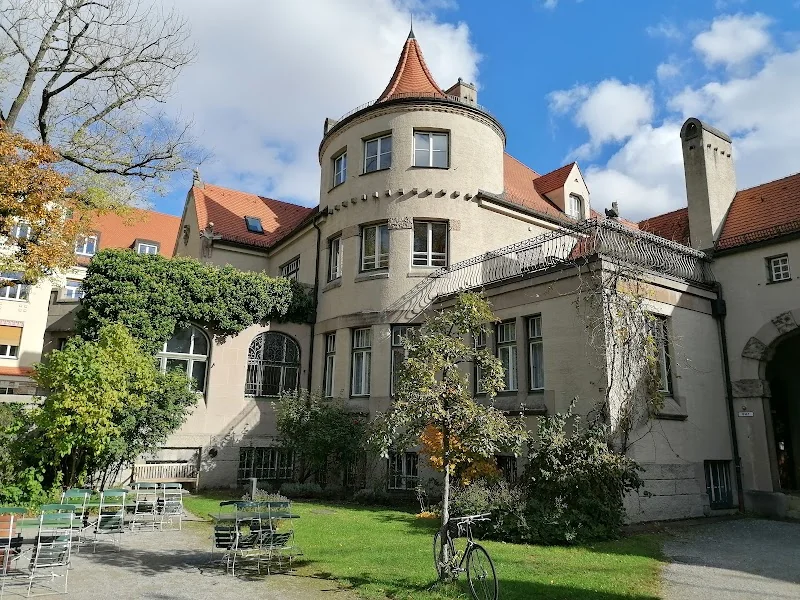
The Seidlvilla begins its history not as a cultural center but as a bourgeois villa. It was built between 1904 and 1906 in what was then still rural Schwabing for Franziska Lautenbacher and her husband Paul Johann Lautenbacher. The construction is closely linked to the economic strength of the Spaten brewery around 1900, and the architect was Emmanuel von Seidl, a nephew of the client, who was known in Munich primarily for representative villas and public buildings. The original complex consisted of a representative residential house with an annex for a carriage house, horse stable, and coachman's apartment. Even this original form shows that the house was originally intended as an expression of an elevated lifestyle and not as a public cultural venue. ([seidlvilla.de](https://www.seidlvilla.de/geschichte))
Throughout the 20th century, the villa lost its character as a private residence and became a speculative object. In the 1970s, it was even threatened with demolition to make way for a larger hotel, office, or department store complex. From this conflict, the Bürgerkomitee Schwabing and the Aktion Nikolaiplatz emerged, which, together with many residents, advocated for the preservation of the ensemble. From this resistance developed the idea of social and cultural use, exactly the form of community center that the Seidlvilla stands for today. After the city acquired the property and a longer interim phase with the Schwabing police station, the Seidlvilla opened in June 1991 as a neighborhood cultural center after thorough renovation. This date marks the actual restart of the house as a public place. ([seidlvilla.de](https://www.seidlvilla.de/geschichte))
Since then, the Seidlvilla has been firmly anchored in Munich and carries the addition House for Schwabing for good reason. According to its own historical account, around 2,000 events with about 50,000 visitors take place there annually. This is not just a statistical figure but an expression of a permanent function in the district: the Seidlvilla is a place of encounter, cultural memory, and civic engagement at the same time. The historical villa has not been museum-frozen but translated into a living common good. That is why it fits so well with search terms like cultural center, Schwabing, and Nikolaiplatz: the house is historically significant but is also clearly oriented towards the present. ([seidlvilla.de](https://www.seidlvilla.de/geschichte))
Rooms, Photos & Equipment in the Cultural Center
Those looking for photos, rooms, or the floor plan of the Seidlvilla will find surprisingly clear orientation on the official website. The rooms page shows the floor structure of the house and refers to image material of the individual areas. Particularly important is the barrier-free access: the Seidlvilla is accessible for wheelchair users up to and including the 1st floor, and there is a disabled toilet in the basement. On the ground floor are the foyer, Zenzl-Mühsam hall, Carry-Brachvogel salon, cafeteria, and Max-Gorbach room. On the 1st floor, there are the foyer, neighborhood room, and bay window room, and on the 2nd floor, the foyer and tower room. The room names already make it clear that the house connects cultural and biographical memory with current use. ([seidlvilla.de](https://www.seidlvilla.de/raeume))
For events, the Zenzl-Mühsam hall is particularly relevant. The city of Munich lists it in its room list with a size of 50 to 100 square meters and a capacity of 50 to 100 people. The equipment includes seating, piano, screen, barrier-free access, and disabled toilet; technically, there are internet access, PC network connections, lighting and sound technology with mixing console, slide projector, and beamer available. There is also an elevator. This mix is ideal for smaller concerts, readings, lectures, discussion rounds, and modular cultural formats because the house does not focus on mass effect but on closeness and flexibility. So those looking for Seidlvilla photos, hall, or capacity will encounter a place that is more designed for atmosphere and versatility than for size in the classic concert hall sense. ([stadt.muenchen.de](https://stadt.muenchen.de/service/info/seidlvillaverein-ev/10102934/))
It is also interesting that the Seidlvilla understands its rooms not only as event spaces but as part of a complex house. The exhibition page explicitly states that the Seidlvilla is not an exclusive exhibition venue but is used in a variety of ways. This means: seminars, workshops, exhibitions, and other events can overlap spatially and temporally. For visitors, this is practical because it explains the flexibility of the house; for organizers, it is a hint at a genuinely lived cultural center and not a rigid rental situation. The official room photos are therefore more than mere illustrations: they help to understand the house in advance and assess the right framework for a visit or booking. ([seidlvilla.de](https://www.seidlvilla.de/ausstellung?utm_source=openai))
Directions, Parking & Barrier-Free Access
The Seidlvilla is centrally located in terms of traffic but not in a classic parking garage location. The barrier-free location information describes the house as situated in Alt-Schwabing between Leopoldstraße and the English Garden. The nearest parking options are side streets around the Seidlvilla, the Karstadt Schwabing parking garage, and a parking lot at the Chinese Tower. This is important for anyone arriving by car who wants to know in advance where the search for parking is realistically worthwhile. At the same time, the location remains attractive because it is in the middle of one of Munich's most famous districts and can therefore be easily combined with a city stroll, a café visit, or a walk in the English Garden. ([kultur-barrierefrei-muenchen.de](https://www.kultur-barrierefrei-muenchen.de/seidlvilla/))
The official contact page adds practical visitor information: Address Nikolaiplatz 1b, 80802 Munich, Phone 089-33 31 39, E-Mail info@seidlvilla.de, and opening hours of the cultural center Monday to Friday from 10 am to 5 pm. The house is open Monday to Friday from 8 am until the end of events, and on weekends usually from 12 pm until after events. Ticket reservations for events are made directly through the Seidlvilla. This is useful for planning because the opening hours should not be confused with a classic museum schedule but are oriented towards the program and evening operations. Anyone wishing to hold workshops or seminars at the Seidlvilla will also be referred to the management on the homepage. ([seidlvilla.de](https://www.seidlvilla.de/kontakt))
Regarding accessibility, the Seidlvilla is comparatively well equipped, but one must consider the historical building substance. The rooms page mentions accessibility up to and including the 1st floor and the disabled toilet in the basement. The barrier-free information page describes an outdoor elevator in the backyard, which is accessible from the parking lot, while the main entrance has steps. Additionally, the city’s room list notes a step-free access but does not mention disabled parking spaces. This leads to a simple practical advice for visitors with special needs: check the route in advance and contact the house in case of uncertainties. The Seidlvilla explicitly refers to further information on visiting for people with disabilities. ([seidlvilla.de](https://www.seidlvilla.de/raeume))
Schwabinger Hof Flea Markets & Neighborhood Offers
A particularly strong search topic around the Seidlvilla is the Schwabinger Hof flea markets. The Seidlvilla neighborhood has coordinated this citizen project since 2000. For 2026, the date is announced for Saturday, July 18, 2026, starting at 10 am, and registration should be completed by May 17, 2026. The important principle is: sales are only allowed on private property, i.e., in the backyard or front garden and only after registration. Sidewalks, parking bays, and other public areas may not be used. This makes the project not a classic city flea market but a decentralized neighborhood format with clear rules and a lot of local responsibility. ([seidlvilla.de](https://www.seidlvilla.de/flohmarkt?utm_source=openai))
The catchment area of the Schwabinger Hof flea markets extends from Georgenstraße to Petuelring and from Barbarasiedlung and Ackermannbogen to the English Garden. This spatial size shows how strongly the project is anchored in the district. Additionally, the recognition by the city of Munich, which awarded the Schwabinger Hof flea markets as a citizen project during the 850th city anniversary in 2008, adds to this. Thus, they are visible not only as a local flea market but also as a form of lived neighborhood. For all those searching for Seidlvilla Schwabing or Seidlvilla Nikolaiplatz, this is important because the place not only offers culture but also shapes neighborhood development. ([seidlvilla.de](https://www.seidlvilla.de/flohmarkt?utm_source=openai))
Neighborhood work also includes recurring open formats such as neighborhood café, German conversation meetings, literature meetings LesArt, game meetings, circle dances, repair cafés, or art offers for young and old. The Seidlvilla describes itself as a place where people with voluntary commitment, self-organized groups, and professional expertise actively shape their lives and take responsibility together. This claim is more than a guiding principle because it becomes visible in the program. So those looking not just for a single appointment but for a house with social and cultural everyday life will find a very clear character here: community-oriented, open, intergenerational, and firmly rooted in the district. This attitude also gives rise to many search queries about photos, reviews, programs, parking, and flea markets. ([seidlvilla.de](https://www.seidlvilla.de/))
The available location data also mentions 4.6 stars from 324 reviews. This fits the impression of an established, heavily frequented cultural venue that is not only historically interesting but also plays a role in the everyday life of many Munich residents. Therefore, those visiting the Seidlvilla do not experience an isolated event but often a piece of neighborhood life in concentrated form. This is exactly what makes the house relevant for search engines and at the same time content-wise independent. ([seidlvilla.de](https://www.seidlvilla.de/))
Sources:
Show moreShow less
Seidlvilla, Cultural Center | Program & Concerts
The Seidlvilla at Nikolaiplatz 1b is much more than a pretty house in Schwabing. It is a cultural meeting point, a place for community, a framework for discussions, and a house where music, literature, visual arts, and social issues come together. Since April 1, 2026, the cultural center has been run by the social cooperative Bellevue di Monaco eG; at the same time, the Seidlvilla describes itself as a free, open, and non-partisan place where different backgrounds, generations, and lifestyles naturally come together. Those looking for a venue that does not appear smooth and interchangeable, but is shaped by history, attitude, and local anchoring, will find a very distinctive cultural place in Munich here. This mix of community house, program house, and neighborhood center makes the Seidlvilla an address that is interesting for both spontaneous visits and consciously planned cultural evenings. ([seidlvilla.de](https://www.seidlvilla.de/))
Program, Concerts, and Events at the Seidlvilla
The current program clearly shows why the Seidlvilla appears so frequently in search queries related to programs, concerts, and events. On the official program page, you will find music evenings, literature meetings, readings, exhibitions, discussion formats, theater, open groups, and regular neighborhood offers. The range is deliberately broad: one day a listening room with students from the University of Music and Theater Munich may take place, another day a reading with Pierre Jarawan, a German conversation meeting, an open literature circle like LesArt, or a game meeting. Additionally, there are circle dances, painting and drawing, discussion evenings, and exhibition openings. The house does not think of the program as a single premium show but as a permanent cultural web that addresses different target groups and makes Schwabing visible in everyday life. ([seidlvilla.de](https://www.seidlvilla.de/programm))
Especially the musical formats are a good example of this diversity. The current offerings include baroque flute music, a listening room with accordion, concerts with dulcimer, lute, and chitarrone, jazz formats, chanson evenings, and sing-along offers from various cultures. This means that the Seidlvilla does not cover a narrow genre but understands music as an open space for encounters. This openness is important for visitors who are not just looking for a standardized hall but a house with an intimate atmosphere and a program that feels both artistically and humanly approachable. The official monthly brochures also help with planning, as they compactly bundle the individual dates, times, and ticket information. So those specifically looking for Seidlvilla concerts or Seidlvilla programs will discover a house that consciously connects artistic diversity and neighborhood closeness. ([seidlvilla.de](https://www.seidlvilla.de/))
Even beyond individual evenings, the Seidlvilla remains a regular meeting point. Recurring formats such as German conversation meetings, literature meetings, repair cafés, game meetings, circle dances, or open art offers ensure that the house is not only lively during event times but functions as social infrastructure throughout the week. This is precisely what distinguishes the Seidlvilla from many purely event-oriented locations: it is simultaneously a stage, forum, learning place, and neighborhood space. This structure also explains why program interest, concert searches, and general information searches overlap so strongly. Those who end up here are often looking for a place for culture, but in the end, they also find a place for participation, exchange, and recurring encounters. ([seidlvilla.de](https://www.seidlvilla.de/))
History of the Seidlvilla at Nikolaiplatz
The Seidlvilla begins its history not as a cultural center but as a bourgeois villa. It was built between 1904 and 1906 in what was then still rural Schwabing for Franziska Lautenbacher and her husband Paul Johann Lautenbacher. The construction is closely linked to the economic strength of the Spaten brewery around 1900, and the architect was Emmanuel von Seidl, a nephew of the client, who was known in Munich primarily for representative villas and public buildings. The original complex consisted of a representative residential house with an annex for a carriage house, horse stable, and coachman's apartment. Even this original form shows that the house was originally intended as an expression of an elevated lifestyle and not as a public cultural venue. ([seidlvilla.de](https://www.seidlvilla.de/geschichte))
Throughout the 20th century, the villa lost its character as a private residence and became a speculative object. In the 1970s, it was even threatened with demolition to make way for a larger hotel, office, or department store complex. From this conflict, the Bürgerkomitee Schwabing and the Aktion Nikolaiplatz emerged, which, together with many residents, advocated for the preservation of the ensemble. From this resistance developed the idea of social and cultural use, exactly the form of community center that the Seidlvilla stands for today. After the city acquired the property and a longer interim phase with the Schwabing police station, the Seidlvilla opened in June 1991 as a neighborhood cultural center after thorough renovation. This date marks the actual restart of the house as a public place. ([seidlvilla.de](https://www.seidlvilla.de/geschichte))
Since then, the Seidlvilla has been firmly anchored in Munich and carries the addition House for Schwabing for good reason. According to its own historical account, around 2,000 events with about 50,000 visitors take place there annually. This is not just a statistical figure but an expression of a permanent function in the district: the Seidlvilla is a place of encounter, cultural memory, and civic engagement at the same time. The historical villa has not been museum-frozen but translated into a living common good. That is why it fits so well with search terms like cultural center, Schwabing, and Nikolaiplatz: the house is historically significant but is also clearly oriented towards the present. ([seidlvilla.de](https://www.seidlvilla.de/geschichte))
Rooms, Photos & Equipment in the Cultural Center
Those looking for photos, rooms, or the floor plan of the Seidlvilla will find surprisingly clear orientation on the official website. The rooms page shows the floor structure of the house and refers to image material of the individual areas. Particularly important is the barrier-free access: the Seidlvilla is accessible for wheelchair users up to and including the 1st floor, and there is a disabled toilet in the basement. On the ground floor are the foyer, Zenzl-Mühsam hall, Carry-Brachvogel salon, cafeteria, and Max-Gorbach room. On the 1st floor, there are the foyer, neighborhood room, and bay window room, and on the 2nd floor, the foyer and tower room. The room names already make it clear that the house connects cultural and biographical memory with current use. ([seidlvilla.de](https://www.seidlvilla.de/raeume))
For events, the Zenzl-Mühsam hall is particularly relevant. The city of Munich lists it in its room list with a size of 50 to 100 square meters and a capacity of 50 to 100 people. The equipment includes seating, piano, screen, barrier-free access, and disabled toilet; technically, there are internet access, PC network connections, lighting and sound technology with mixing console, slide projector, and beamer available. There is also an elevator. This mix is ideal for smaller concerts, readings, lectures, discussion rounds, and modular cultural formats because the house does not focus on mass effect but on closeness and flexibility. So those looking for Seidlvilla photos, hall, or capacity will encounter a place that is more designed for atmosphere and versatility than for size in the classic concert hall sense. ([stadt.muenchen.de](https://stadt.muenchen.de/service/info/seidlvillaverein-ev/10102934/))
It is also interesting that the Seidlvilla understands its rooms not only as event spaces but as part of a complex house. The exhibition page explicitly states that the Seidlvilla is not an exclusive exhibition venue but is used in a variety of ways. This means: seminars, workshops, exhibitions, and other events can overlap spatially and temporally. For visitors, this is practical because it explains the flexibility of the house; for organizers, it is a hint at a genuinely lived cultural center and not a rigid rental situation. The official room photos are therefore more than mere illustrations: they help to understand the house in advance and assess the right framework for a visit or booking. ([seidlvilla.de](https://www.seidlvilla.de/ausstellung?utm_source=openai))
Directions, Parking & Barrier-Free Access
The Seidlvilla is centrally located in terms of traffic but not in a classic parking garage location. The barrier-free location information describes the house as situated in Alt-Schwabing between Leopoldstraße and the English Garden. The nearest parking options are side streets around the Seidlvilla, the Karstadt Schwabing parking garage, and a parking lot at the Chinese Tower. This is important for anyone arriving by car who wants to know in advance where the search for parking is realistically worthwhile. At the same time, the location remains attractive because it is in the middle of one of Munich's most famous districts and can therefore be easily combined with a city stroll, a café visit, or a walk in the English Garden. ([kultur-barrierefrei-muenchen.de](https://www.kultur-barrierefrei-muenchen.de/seidlvilla/))
The official contact page adds practical visitor information: Address Nikolaiplatz 1b, 80802 Munich, Phone 089-33 31 39, E-Mail info@seidlvilla.de, and opening hours of the cultural center Monday to Friday from 10 am to 5 pm. The house is open Monday to Friday from 8 am until the end of events, and on weekends usually from 12 pm until after events. Ticket reservations for events are made directly through the Seidlvilla. This is useful for planning because the opening hours should not be confused with a classic museum schedule but are oriented towards the program and evening operations. Anyone wishing to hold workshops or seminars at the Seidlvilla will also be referred to the management on the homepage. ([seidlvilla.de](https://www.seidlvilla.de/kontakt))
Regarding accessibility, the Seidlvilla is comparatively well equipped, but one must consider the historical building substance. The rooms page mentions accessibility up to and including the 1st floor and the disabled toilet in the basement. The barrier-free information page describes an outdoor elevator in the backyard, which is accessible from the parking lot, while the main entrance has steps. Additionally, the city’s room list notes a step-free access but does not mention disabled parking spaces. This leads to a simple practical advice for visitors with special needs: check the route in advance and contact the house in case of uncertainties. The Seidlvilla explicitly refers to further information on visiting for people with disabilities. ([seidlvilla.de](https://www.seidlvilla.de/raeume))
Schwabinger Hof Flea Markets & Neighborhood Offers
A particularly strong search topic around the Seidlvilla is the Schwabinger Hof flea markets. The Seidlvilla neighborhood has coordinated this citizen project since 2000. For 2026, the date is announced for Saturday, July 18, 2026, starting at 10 am, and registration should be completed by May 17, 2026. The important principle is: sales are only allowed on private property, i.e., in the backyard or front garden and only after registration. Sidewalks, parking bays, and other public areas may not be used. This makes the project not a classic city flea market but a decentralized neighborhood format with clear rules and a lot of local responsibility. ([seidlvilla.de](https://www.seidlvilla.de/flohmarkt?utm_source=openai))
The catchment area of the Schwabinger Hof flea markets extends from Georgenstraße to Petuelring and from Barbarasiedlung and Ackermannbogen to the English Garden. This spatial size shows how strongly the project is anchored in the district. Additionally, the recognition by the city of Munich, which awarded the Schwabinger Hof flea markets as a citizen project during the 850th city anniversary in 2008, adds to this. Thus, they are visible not only as a local flea market but also as a form of lived neighborhood. For all those searching for Seidlvilla Schwabing or Seidlvilla Nikolaiplatz, this is important because the place not only offers culture but also shapes neighborhood development. ([seidlvilla.de](https://www.seidlvilla.de/flohmarkt?utm_source=openai))
Neighborhood work also includes recurring open formats such as neighborhood café, German conversation meetings, literature meetings LesArt, game meetings, circle dances, repair cafés, or art offers for young and old. The Seidlvilla describes itself as a place where people with voluntary commitment, self-organized groups, and professional expertise actively shape their lives and take responsibility together. This claim is more than a guiding principle because it becomes visible in the program. So those looking not just for a single appointment but for a house with social and cultural everyday life will find a very clear character here: community-oriented, open, intergenerational, and firmly rooted in the district. This attitude also gives rise to many search queries about photos, reviews, programs, parking, and flea markets. ([seidlvilla.de](https://www.seidlvilla.de/))
The available location data also mentions 4.6 stars from 324 reviews. This fits the impression of an established, heavily frequented cultural venue that is not only historically interesting but also plays a role in the everyday life of many Munich residents. Therefore, those visiting the Seidlvilla do not experience an isolated event but often a piece of neighborhood life in concentrated form. This is exactly what makes the house relevant for search engines and at the same time content-wise independent. ([seidlvilla.de](https://www.seidlvilla.de/))
Sources:
Seidlvilla, Cultural Center | Program & Concerts
The Seidlvilla at Nikolaiplatz 1b is much more than a pretty house in Schwabing. It is a cultural meeting point, a place for community, a framework for discussions, and a house where music, literature, visual arts, and social issues come together. Since April 1, 2026, the cultural center has been run by the social cooperative Bellevue di Monaco eG; at the same time, the Seidlvilla describes itself as a free, open, and non-partisan place where different backgrounds, generations, and lifestyles naturally come together. Those looking for a venue that does not appear smooth and interchangeable, but is shaped by history, attitude, and local anchoring, will find a very distinctive cultural place in Munich here. This mix of community house, program house, and neighborhood center makes the Seidlvilla an address that is interesting for both spontaneous visits and consciously planned cultural evenings. ([seidlvilla.de](https://www.seidlvilla.de/))
Program, Concerts, and Events at the Seidlvilla
The current program clearly shows why the Seidlvilla appears so frequently in search queries related to programs, concerts, and events. On the official program page, you will find music evenings, literature meetings, readings, exhibitions, discussion formats, theater, open groups, and regular neighborhood offers. The range is deliberately broad: one day a listening room with students from the University of Music and Theater Munich may take place, another day a reading with Pierre Jarawan, a German conversation meeting, an open literature circle like LesArt, or a game meeting. Additionally, there are circle dances, painting and drawing, discussion evenings, and exhibition openings. The house does not think of the program as a single premium show but as a permanent cultural web that addresses different target groups and makes Schwabing visible in everyday life. ([seidlvilla.de](https://www.seidlvilla.de/programm))
Especially the musical formats are a good example of this diversity. The current offerings include baroque flute music, a listening room with accordion, concerts with dulcimer, lute, and chitarrone, jazz formats, chanson evenings, and sing-along offers from various cultures. This means that the Seidlvilla does not cover a narrow genre but understands music as an open space for encounters. This openness is important for visitors who are not just looking for a standardized hall but a house with an intimate atmosphere and a program that feels both artistically and humanly approachable. The official monthly brochures also help with planning, as they compactly bundle the individual dates, times, and ticket information. So those specifically looking for Seidlvilla concerts or Seidlvilla programs will discover a house that consciously connects artistic diversity and neighborhood closeness. ([seidlvilla.de](https://www.seidlvilla.de/))
Even beyond individual evenings, the Seidlvilla remains a regular meeting point. Recurring formats such as German conversation meetings, literature meetings, repair cafés, game meetings, circle dances, or open art offers ensure that the house is not only lively during event times but functions as social infrastructure throughout the week. This is precisely what distinguishes the Seidlvilla from many purely event-oriented locations: it is simultaneously a stage, forum, learning place, and neighborhood space. This structure also explains why program interest, concert searches, and general information searches overlap so strongly. Those who end up here are often looking for a place for culture, but in the end, they also find a place for participation, exchange, and recurring encounters. ([seidlvilla.de](https://www.seidlvilla.de/))
History of the Seidlvilla at Nikolaiplatz
The Seidlvilla begins its history not as a cultural center but as a bourgeois villa. It was built between 1904 and 1906 in what was then still rural Schwabing for Franziska Lautenbacher and her husband Paul Johann Lautenbacher. The construction is closely linked to the economic strength of the Spaten brewery around 1900, and the architect was Emmanuel von Seidl, a nephew of the client, who was known in Munich primarily for representative villas and public buildings. The original complex consisted of a representative residential house with an annex for a carriage house, horse stable, and coachman's apartment. Even this original form shows that the house was originally intended as an expression of an elevated lifestyle and not as a public cultural venue. ([seidlvilla.de](https://www.seidlvilla.de/geschichte))
Throughout the 20th century, the villa lost its character as a private residence and became a speculative object. In the 1970s, it was even threatened with demolition to make way for a larger hotel, office, or department store complex. From this conflict, the Bürgerkomitee Schwabing and the Aktion Nikolaiplatz emerged, which, together with many residents, advocated for the preservation of the ensemble. From this resistance developed the idea of social and cultural use, exactly the form of community center that the Seidlvilla stands for today. After the city acquired the property and a longer interim phase with the Schwabing police station, the Seidlvilla opened in June 1991 as a neighborhood cultural center after thorough renovation. This date marks the actual restart of the house as a public place. ([seidlvilla.de](https://www.seidlvilla.de/geschichte))
Since then, the Seidlvilla has been firmly anchored in Munich and carries the addition House for Schwabing for good reason. According to its own historical account, around 2,000 events with about 50,000 visitors take place there annually. This is not just a statistical figure but an expression of a permanent function in the district: the Seidlvilla is a place of encounter, cultural memory, and civic engagement at the same time. The historical villa has not been museum-frozen but translated into a living common good. That is why it fits so well with search terms like cultural center, Schwabing, and Nikolaiplatz: the house is historically significant but is also clearly oriented towards the present. ([seidlvilla.de](https://www.seidlvilla.de/geschichte))
Rooms, Photos & Equipment in the Cultural Center
Those looking for photos, rooms, or the floor plan of the Seidlvilla will find surprisingly clear orientation on the official website. The rooms page shows the floor structure of the house and refers to image material of the individual areas. Particularly important is the barrier-free access: the Seidlvilla is accessible for wheelchair users up to and including the 1st floor, and there is a disabled toilet in the basement. On the ground floor are the foyer, Zenzl-Mühsam hall, Carry-Brachvogel salon, cafeteria, and Max-Gorbach room. On the 1st floor, there are the foyer, neighborhood room, and bay window room, and on the 2nd floor, the foyer and tower room. The room names already make it clear that the house connects cultural and biographical memory with current use. ([seidlvilla.de](https://www.seidlvilla.de/raeume))
For events, the Zenzl-Mühsam hall is particularly relevant. The city of Munich lists it in its room list with a size of 50 to 100 square meters and a capacity of 50 to 100 people. The equipment includes seating, piano, screen, barrier-free access, and disabled toilet; technically, there are internet access, PC network connections, lighting and sound technology with mixing console, slide projector, and beamer available. There is also an elevator. This mix is ideal for smaller concerts, readings, lectures, discussion rounds, and modular cultural formats because the house does not focus on mass effect but on closeness and flexibility. So those looking for Seidlvilla photos, hall, or capacity will encounter a place that is more designed for atmosphere and versatility than for size in the classic concert hall sense. ([stadt.muenchen.de](https://stadt.muenchen.de/service/info/seidlvillaverein-ev/10102934/))
It is also interesting that the Seidlvilla understands its rooms not only as event spaces but as part of a complex house. The exhibition page explicitly states that the Seidlvilla is not an exclusive exhibition venue but is used in a variety of ways. This means: seminars, workshops, exhibitions, and other events can overlap spatially and temporally. For visitors, this is practical because it explains the flexibility of the house; for organizers, it is a hint at a genuinely lived cultural center and not a rigid rental situation. The official room photos are therefore more than mere illustrations: they help to understand the house in advance and assess the right framework for a visit or booking. ([seidlvilla.de](https://www.seidlvilla.de/ausstellung?utm_source=openai))
Directions, Parking & Barrier-Free Access
The Seidlvilla is centrally located in terms of traffic but not in a classic parking garage location. The barrier-free location information describes the house as situated in Alt-Schwabing between Leopoldstraße and the English Garden. The nearest parking options are side streets around the Seidlvilla, the Karstadt Schwabing parking garage, and a parking lot at the Chinese Tower. This is important for anyone arriving by car who wants to know in advance where the search for parking is realistically worthwhile. At the same time, the location remains attractive because it is in the middle of one of Munich's most famous districts and can therefore be easily combined with a city stroll, a café visit, or a walk in the English Garden. ([kultur-barrierefrei-muenchen.de](https://www.kultur-barrierefrei-muenchen.de/seidlvilla/))
The official contact page adds practical visitor information: Address Nikolaiplatz 1b, 80802 Munich, Phone 089-33 31 39, E-Mail info@seidlvilla.de, and opening hours of the cultural center Monday to Friday from 10 am to 5 pm. The house is open Monday to Friday from 8 am until the end of events, and on weekends usually from 12 pm until after events. Ticket reservations for events are made directly through the Seidlvilla. This is useful for planning because the opening hours should not be confused with a classic museum schedule but are oriented towards the program and evening operations. Anyone wishing to hold workshops or seminars at the Seidlvilla will also be referred to the management on the homepage. ([seidlvilla.de](https://www.seidlvilla.de/kontakt))
Regarding accessibility, the Seidlvilla is comparatively well equipped, but one must consider the historical building substance. The rooms page mentions accessibility up to and including the 1st floor and the disabled toilet in the basement. The barrier-free information page describes an outdoor elevator in the backyard, which is accessible from the parking lot, while the main entrance has steps. Additionally, the city’s room list notes a step-free access but does not mention disabled parking spaces. This leads to a simple practical advice for visitors with special needs: check the route in advance and contact the house in case of uncertainties. The Seidlvilla explicitly refers to further information on visiting for people with disabilities. ([seidlvilla.de](https://www.seidlvilla.de/raeume))
Schwabinger Hof Flea Markets & Neighborhood Offers
A particularly strong search topic around the Seidlvilla is the Schwabinger Hof flea markets. The Seidlvilla neighborhood has coordinated this citizen project since 2000. For 2026, the date is announced for Saturday, July 18, 2026, starting at 10 am, and registration should be completed by May 17, 2026. The important principle is: sales are only allowed on private property, i.e., in the backyard or front garden and only after registration. Sidewalks, parking bays, and other public areas may not be used. This makes the project not a classic city flea market but a decentralized neighborhood format with clear rules and a lot of local responsibility. ([seidlvilla.de](https://www.seidlvilla.de/flohmarkt?utm_source=openai))
The catchment area of the Schwabinger Hof flea markets extends from Georgenstraße to Petuelring and from Barbarasiedlung and Ackermannbogen to the English Garden. This spatial size shows how strongly the project is anchored in the district. Additionally, the recognition by the city of Munich, which awarded the Schwabinger Hof flea markets as a citizen project during the 850th city anniversary in 2008, adds to this. Thus, they are visible not only as a local flea market but also as a form of lived neighborhood. For all those searching for Seidlvilla Schwabing or Seidlvilla Nikolaiplatz, this is important because the place not only offers culture but also shapes neighborhood development. ([seidlvilla.de](https://www.seidlvilla.de/flohmarkt?utm_source=openai))
Neighborhood work also includes recurring open formats such as neighborhood café, German conversation meetings, literature meetings LesArt, game meetings, circle dances, repair cafés, or art offers for young and old. The Seidlvilla describes itself as a place where people with voluntary commitment, self-organized groups, and professional expertise actively shape their lives and take responsibility together. This claim is more than a guiding principle because it becomes visible in the program. So those looking not just for a single appointment but for a house with social and cultural everyday life will find a very clear character here: community-oriented, open, intergenerational, and firmly rooted in the district. This attitude also gives rise to many search queries about photos, reviews, programs, parking, and flea markets. ([seidlvilla.de](https://www.seidlvilla.de/))
The available location data also mentions 4.6 stars from 324 reviews. This fits the impression of an established, heavily frequented cultural venue that is not only historically interesting but also plays a role in the everyday life of many Munich residents. Therefore, those visiting the Seidlvilla do not experience an isolated event but often a piece of neighborhood life in concentrated form. This is exactly what makes the house relevant for search engines and at the same time content-wise independent. ([seidlvilla.de](https://www.seidlvilla.de/))
Sources:
Upcoming Events
No events found
Frequently Asked Questions
Reviews
Lina Maria Avendaño Carvajal
13. March 2025
Went with my son to see a play and it was really good and exciting. Then we participated in some crafts with the other children and parents, which was also really nice.
Anna Staber
21. December 2018
Nice place for art community, or just to drop by and enjoy a coffee or tea.
stanley whelan
29. June 2018
It is a nice and quiet place to sit and read or to look at some quite interesting local free small art works, that are frequently displayed. Oh, and a small cup of comforting coffee. It is placed in some unspoilt places, left in the ever modernizing city of today.
Jack Jones (1Travel.co Go Explore)
7. March 2020
Surprised by the venue... Different rooms with art and a cafe in the building. We attended an event here, was a perfect fit. Would recommend this venue if you are looking to hire a place for doing a presentation.
Shoaib Khan
6. December 2018
I got to know that Siedlvilla club has a collection of events happening throughout the year. I was here on an official visit so also realized that one can “book” rooms for private events. They also have a good cafe. Oh, while you are here don’t forget to take a look at collection of photos on the 1st floor.