
München
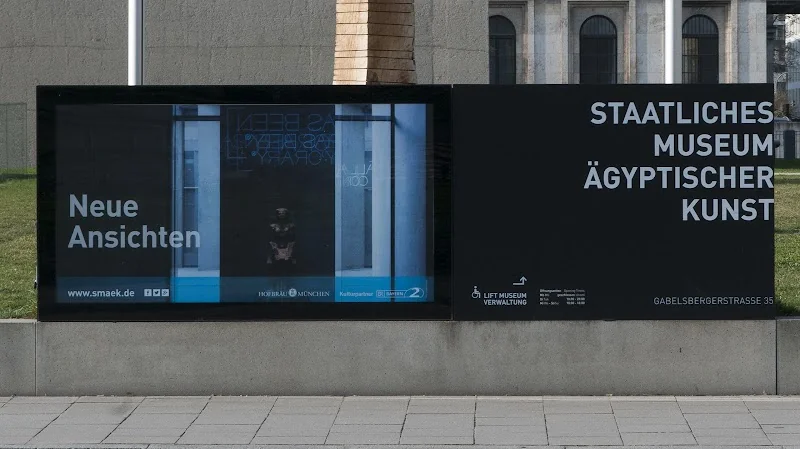
Gabelsbergerstraße 35, 80333 München, Deutschland
Munich Museum of Egyptian Art | Tickets & Opening Hours
The Munich Museum of Egyptian Art, officially the State Museum of Egyptian Art, is one of the most prominent cultural addresses in the art area of Munich. Since 2013, the museum has been located in the new building at Gabelsbergerstraße 35 and showcases the diversity of Ancient Egypt over 5,000 years of art and cultural history in an exceptionally clear and calm environment. The architecture, thematic arrangement of the exhibition, and good accessibility make the location a destination for art enthusiasts, families, school groups, and visitors specifically looking for tickets, photos, reviews, directions, or parking. The focus is on a museum experience that does not feel overloaded but provides orientation: wide paths, thematic rooms, digital media, and barrier-free access characterize the visit. Those who want to experience Munich culturally will find not only ancient Egyptian masterpieces here but also a modern, carefully curated museum space with surprisingly much atmosphere. ([smaek.de](https://smaek.de/en/das-museum/))
Tickets, Opening Hours, and Admission Prices
For many users, the search begins with very practical questions: Where can I get tickets, how much does admission cost, and when is the best time to visit? The official visitor information provides a very clear answer. The museum is open on Tuesdays from 10:00 AM to 8:00 PM, offering a particularly long evening slot for those who want to experience Munich after work or in the late afternoon. From Wednesday to Sunday, the museum is open from 10:00 AM to 6:00 PM; it is closed on Mondays, with exceptions for Easter Monday and Whit Monday. For those who want to plan their time well, this provides a reliable framework. The regular admission is 7 euros for adults, 5 euros reduced, and on Sundays, admission is 1 euro. Children under 18 have free admission, making the museum particularly attractive for families. The admission includes the MediaGuide, which is also available separately at a low cost on Sundays, ensuring that the tour is well accompanied both visually and content-wise. ([smaek.de](https://smaek.de/en/your-visit/))
Even on holidays, the museum is transparent: It is closed on New Year's Day, Christmas Eve, Christmas Day, and New Year's Eve, while many public and religious holidays in Bavaria are open. This makes planning easier for visitors who want to prepare their city trip, a museum afternoon, or a Sunday outing in advance. Tickets can either be ordered in advance from the webshop or purchased directly at the ticket counter; both options are officially provided. This mix of digital pre-booking and classic ticket purchase fits well with a museum that connects modern media with analog collection experiences. Therefore, those specifically searching for munich museum of egyptian art tickets or smäk tickets will find no complicated special logic, but rather a well-structured visitor information with clear prices, understandable times, and a very family-friendly admission policy. This is ideal for SEO and user intent because the most important questions are answered directly before the actual museum visit begins. ([smaek.de](https://smaek.de/en/your-visit/))
Directions, Subway, and Parking
The location of the museum is one of its greatest practical advantages. The address is Gabelsbergerstr. 35, 80333 Munich, and the building is located in the heart of the art area. Those arriving by public transport can easily reach the museum: The subway lines U2 and U8 stop at Königsplatz, tram line 27 at Karolinenplatz, and bus 100 at the Pinakotheken stop. Additionally, the museum is accessible from all S-Bahn lines via the main train station; the walking distance from the main station is about ten minutes. This makes the location easily accessible not only for locals but also for visitors from the surrounding area, day-trippers, and tourists. Particularly for search queries like museum egypt munich or state museum of egyptian art munich, this good public transport connection is an important advantage as it makes travel without a car possible. ([smaek.de](https://smaek.de/en/your-visit/))
For those who still come by car, there are paid parking options in the streets around the museum. For tour buses, the official art area information mentions additional parking spaces in front of the Neue Pinakothek, but only for a limited time with a parking disc between 10:00 AM and 8:00 PM. This is especially relevant for group trips, school classes, and organized tours. The location between Königsplatz, Pinakotheken, and other cultural institutions also makes the visit well combinable with a complete art area tour. The museum benefits from an environment where many attractions are within walking distance. Therefore, those who want to inform themselves in advance about parking, directions, and the ideal starting point get a very clear picture: arriving publicly is uncomplicated, the car is possible but not necessarily required, and for relaxed day planning, the proximity to the main train station, Königsplatz, and the major museums is a real advantage. ([smaek.de](https://smaek.de/en/your-visit/))
Architecture and Spaces in the Underground Museum
The Munich Museum of Egyptian Art is remarkable not only for its collection but also for its architecture. The new building is located beneath a green space in front of the University of Television and Film and is thus completely underground. This spatial idea gives the museum a special atmosphere: the descent into the exhibition feels like a deliberate staging reminiscent of tomb chambers and temple rooms, without becoming historicizing. Visitors enter the building through a distinctive portal wall and then enter large, light-filled rooms with a central atrium. This combination of spaciousness, light, and retreat makes the tour very pleasant and also very memorable. The architecture is designed so that it is not just a neutral frame for objects but also takes on part of the museum's narrative. ([smaek.de](https://smaek.de/en/das-museum/))
The building was designed by Peter and Gottfried Böhm in close coordination with the museum team. The architectural approach directly matches the content concept: instead of a strictly chronological walkthrough of Egyptian history, visitors encounter a sequence of thematic rooms that illuminate individual aspects of ancient Egyptian art and culture. This creates a tour that feels less like a mandatory program and more like a journey of discovery. The varying room sizes, high halls, more intimate areas, and targeted sightlines create new perspectives on both familiar and new exhibits. For users searching for photos, this is particularly interesting: the architecture provides strong photographic motifs, from the monumental entrance situation to the sunken, cathedral-like rooms. The museum is thus not only a place for content but also a space for visual impressions that remain very present during the visit. ([smaek.de](https://smaek.de/en/das-museum/))
Collection, History, and Special Highlights
The museum's collection has its roots in the early 19th century. Crown Prince Ludwig I began acquiring monuments for his planned Glyptothek; later, further significant holdings were added through the Bavarian Academy of Sciences, especially sarcophagi and steles. From this long collection history, an institution has emerged that is now considered one of the most renowned houses for ancient Egyptian objects. The art and cultural period that the museum covers ranges from prehistory in the 4th millennium BC to the early Christian era. This makes the tour not only rich in objects but also historically very broad. Visitors searching for munich egyptian museum or egyptian art munich want to understand this breadth: not just individual pharaohs or treasures, but the development of an entire visual and formal language over millennia. ([smaek.de](https://smaek.de/en/das-museum/))
The institution particularly emphasizes sculpture, especially the tension between portrait and idealization. Additionally, thematic rooms and objects related to the Nubian cultures south of Egypt, as well as Egyptianizing statues from the Roman Empire, are included. This thematic breadth ensures that the visit is not reduced to the classic pop culture idea of mummies and sarcophagi. Instead, the museum shows how diverse the art of Ancient Egypt was and how strongly it is intertwined with neighboring regions and later epochs. This is complemented by a diverse educational program aimed at children, families, and adults. This makes it clear why the location is interesting not only for specialists but also for anyone seeking a well-founded and accessible museum visit in Munich. ([kunstareal.de](https://kunstareal.de/en/buildings-and-institutions/museums-and-collections/staatliches-museum-aegyptischer-kunst?utm_source=openai))
Photos, Visitor Experience, and Digital Media
Many people searching for munich museum of egyptian art photos or reviews primarily want to know how a visit feels and whether the museum also impresses visually. Officially, photography is allowed, but only without flash and without a tripod. This is a typical rule for a house that allows images on one hand while wanting to protect the exhibits and the calm atmosphere. This is ideal for private photos, as the architecture with its large halls, distinctive entrance situation, and light from the atrium provides strong motifs. The rooms do not feel overcrowded but are consciously organized and pleasantly quiet. Therefore, those who want to take pictures will find many spots where individual objects, sightlines, and the spatial staging can be captured well. At the same time, the tour remains relaxed because the design of the house focuses on freedom of movement and clarity. ([smaek.de](https://smaek.de/en/your-visit/))
The museum also relies on digital media that deepen the tour. The official website mentions a MediaGuide that is already included in the admission or can be used at a low cost. Additionally, there are guided tours, events, and other digital offerings that allow visitors to explore the exhibition individually. Especially in a house with 5,000 years of history, this support is helpful because it not only conveys facts but also makes connections visible. Therefore, those searching for reviews often care about orientation, atmosphere, and comprehensibility - exactly these points are convincingly covered by the official exhibition design and the digital mediation offerings. The quiet paths, thematic rooms, and clear visitor guidance ensure that one does not feel rushed but can truly perceive the objects. This is an essential part of the impact of this museum and a reason why it works well for photography enthusiasts, cultural travelers, and families alike. ([smaek.de](https://smaek.de/en/your-visit/))
Families, Accessibility, and Group Visits
The museum is very clearly prepared for different target groups. Families benefit from the fact that children under 18 have free admission and that the museum offers numerous programs specifically for children and families. The official museum website explicitly mentions a diverse educational program tailored to younger visitors. Practically for parents: At the information desk, a limited number of strollers, baby carriers, wheelchairs, walking aids, and canes can be borrowed. However, large or oversized strollers are not allowed in the exhibition. This combination of openness and clear rules makes the visit structured and relaxed. Portable folding chairs are also available at the entrances to the exhibition halls, making the tour more comfortable for people with limited mobility. ([smaek.de](https://smaek.de/en/your-visit/))
Accessibility is overall very well resolved. The museum is fully wheelchair accessible, the elevator is located behind the entrance portal, and all rooms are accessible; there are also barrier-free restrooms on the first underground floor. For groups, the museum recommends a prior appointment, even if no guided tour is booked. Therefore, those arriving with a school class, club, or group of friends should plan ahead. The museum thus combines professional service with a pleasantly open visitor culture. Particularly for search queries like smäk accessibility or smäk parking, this is an important signal: the location is not only strong in content but also well organized. Together with good connections to the subway, tram, bus, and main train station, this creates a museum that is suitable for both spontaneous visits and carefully planned excursions. If you are looking for a place that combines history, architecture, mediation, and practical accessibility, this museum is a very good choice in Munich. ([smaek.de](https://smaek.de/en/your-visit/))
Sources:
Show moreShow less
Munich Museum of Egyptian Art | Tickets & Opening Hours
The Munich Museum of Egyptian Art, officially the State Museum of Egyptian Art, is one of the most prominent cultural addresses in the art area of Munich. Since 2013, the museum has been located in the new building at Gabelsbergerstraße 35 and showcases the diversity of Ancient Egypt over 5,000 years of art and cultural history in an exceptionally clear and calm environment. The architecture, thematic arrangement of the exhibition, and good accessibility make the location a destination for art enthusiasts, families, school groups, and visitors specifically looking for tickets, photos, reviews, directions, or parking. The focus is on a museum experience that does not feel overloaded but provides orientation: wide paths, thematic rooms, digital media, and barrier-free access characterize the visit. Those who want to experience Munich culturally will find not only ancient Egyptian masterpieces here but also a modern, carefully curated museum space with surprisingly much atmosphere. ([smaek.de](https://smaek.de/en/das-museum/))
Tickets, Opening Hours, and Admission Prices
For many users, the search begins with very practical questions: Where can I get tickets, how much does admission cost, and when is the best time to visit? The official visitor information provides a very clear answer. The museum is open on Tuesdays from 10:00 AM to 8:00 PM, offering a particularly long evening slot for those who want to experience Munich after work or in the late afternoon. From Wednesday to Sunday, the museum is open from 10:00 AM to 6:00 PM; it is closed on Mondays, with exceptions for Easter Monday and Whit Monday. For those who want to plan their time well, this provides a reliable framework. The regular admission is 7 euros for adults, 5 euros reduced, and on Sundays, admission is 1 euro. Children under 18 have free admission, making the museum particularly attractive for families. The admission includes the MediaGuide, which is also available separately at a low cost on Sundays, ensuring that the tour is well accompanied both visually and content-wise. ([smaek.de](https://smaek.de/en/your-visit/))
Even on holidays, the museum is transparent: It is closed on New Year's Day, Christmas Eve, Christmas Day, and New Year's Eve, while many public and religious holidays in Bavaria are open. This makes planning easier for visitors who want to prepare their city trip, a museum afternoon, or a Sunday outing in advance. Tickets can either be ordered in advance from the webshop or purchased directly at the ticket counter; both options are officially provided. This mix of digital pre-booking and classic ticket purchase fits well with a museum that connects modern media with analog collection experiences. Therefore, those specifically searching for munich museum of egyptian art tickets or smäk tickets will find no complicated special logic, but rather a well-structured visitor information with clear prices, understandable times, and a very family-friendly admission policy. This is ideal for SEO and user intent because the most important questions are answered directly before the actual museum visit begins. ([smaek.de](https://smaek.de/en/your-visit/))
Directions, Subway, and Parking
The location of the museum is one of its greatest practical advantages. The address is Gabelsbergerstr. 35, 80333 Munich, and the building is located in the heart of the art area. Those arriving by public transport can easily reach the museum: The subway lines U2 and U8 stop at Königsplatz, tram line 27 at Karolinenplatz, and bus 100 at the Pinakotheken stop. Additionally, the museum is accessible from all S-Bahn lines via the main train station; the walking distance from the main station is about ten minutes. This makes the location easily accessible not only for locals but also for visitors from the surrounding area, day-trippers, and tourists. Particularly for search queries like museum egypt munich or state museum of egyptian art munich, this good public transport connection is an important advantage as it makes travel without a car possible. ([smaek.de](https://smaek.de/en/your-visit/))
For those who still come by car, there are paid parking options in the streets around the museum. For tour buses, the official art area information mentions additional parking spaces in front of the Neue Pinakothek, but only for a limited time with a parking disc between 10:00 AM and 8:00 PM. This is especially relevant for group trips, school classes, and organized tours. The location between Königsplatz, Pinakotheken, and other cultural institutions also makes the visit well combinable with a complete art area tour. The museum benefits from an environment where many attractions are within walking distance. Therefore, those who want to inform themselves in advance about parking, directions, and the ideal starting point get a very clear picture: arriving publicly is uncomplicated, the car is possible but not necessarily required, and for relaxed day planning, the proximity to the main train station, Königsplatz, and the major museums is a real advantage. ([smaek.de](https://smaek.de/en/your-visit/))
Architecture and Spaces in the Underground Museum
The Munich Museum of Egyptian Art is remarkable not only for its collection but also for its architecture. The new building is located beneath a green space in front of the University of Television and Film and is thus completely underground. This spatial idea gives the museum a special atmosphere: the descent into the exhibition feels like a deliberate staging reminiscent of tomb chambers and temple rooms, without becoming historicizing. Visitors enter the building through a distinctive portal wall and then enter large, light-filled rooms with a central atrium. This combination of spaciousness, light, and retreat makes the tour very pleasant and also very memorable. The architecture is designed so that it is not just a neutral frame for objects but also takes on part of the museum's narrative. ([smaek.de](https://smaek.de/en/das-museum/))
The building was designed by Peter and Gottfried Böhm in close coordination with the museum team. The architectural approach directly matches the content concept: instead of a strictly chronological walkthrough of Egyptian history, visitors encounter a sequence of thematic rooms that illuminate individual aspects of ancient Egyptian art and culture. This creates a tour that feels less like a mandatory program and more like a journey of discovery. The varying room sizes, high halls, more intimate areas, and targeted sightlines create new perspectives on both familiar and new exhibits. For users searching for photos, this is particularly interesting: the architecture provides strong photographic motifs, from the monumental entrance situation to the sunken, cathedral-like rooms. The museum is thus not only a place for content but also a space for visual impressions that remain very present during the visit. ([smaek.de](https://smaek.de/en/das-museum/))
Collection, History, and Special Highlights
The museum's collection has its roots in the early 19th century. Crown Prince Ludwig I began acquiring monuments for his planned Glyptothek; later, further significant holdings were added through the Bavarian Academy of Sciences, especially sarcophagi and steles. From this long collection history, an institution has emerged that is now considered one of the most renowned houses for ancient Egyptian objects. The art and cultural period that the museum covers ranges from prehistory in the 4th millennium BC to the early Christian era. This makes the tour not only rich in objects but also historically very broad. Visitors searching for munich egyptian museum or egyptian art munich want to understand this breadth: not just individual pharaohs or treasures, but the development of an entire visual and formal language over millennia. ([smaek.de](https://smaek.de/en/das-museum/))
The institution particularly emphasizes sculpture, especially the tension between portrait and idealization. Additionally, thematic rooms and objects related to the Nubian cultures south of Egypt, as well as Egyptianizing statues from the Roman Empire, are included. This thematic breadth ensures that the visit is not reduced to the classic pop culture idea of mummies and sarcophagi. Instead, the museum shows how diverse the art of Ancient Egypt was and how strongly it is intertwined with neighboring regions and later epochs. This is complemented by a diverse educational program aimed at children, families, and adults. This makes it clear why the location is interesting not only for specialists but also for anyone seeking a well-founded and accessible museum visit in Munich. ([kunstareal.de](https://kunstareal.de/en/buildings-and-institutions/museums-and-collections/staatliches-museum-aegyptischer-kunst?utm_source=openai))
Photos, Visitor Experience, and Digital Media
Many people searching for munich museum of egyptian art photos or reviews primarily want to know how a visit feels and whether the museum also impresses visually. Officially, photography is allowed, but only without flash and without a tripod. This is a typical rule for a house that allows images on one hand while wanting to protect the exhibits and the calm atmosphere. This is ideal for private photos, as the architecture with its large halls, distinctive entrance situation, and light from the atrium provides strong motifs. The rooms do not feel overcrowded but are consciously organized and pleasantly quiet. Therefore, those who want to take pictures will find many spots where individual objects, sightlines, and the spatial staging can be captured well. At the same time, the tour remains relaxed because the design of the house focuses on freedom of movement and clarity. ([smaek.de](https://smaek.de/en/your-visit/))
The museum also relies on digital media that deepen the tour. The official website mentions a MediaGuide that is already included in the admission or can be used at a low cost. Additionally, there are guided tours, events, and other digital offerings that allow visitors to explore the exhibition individually. Especially in a house with 5,000 years of history, this support is helpful because it not only conveys facts but also makes connections visible. Therefore, those searching for reviews often care about orientation, atmosphere, and comprehensibility - exactly these points are convincingly covered by the official exhibition design and the digital mediation offerings. The quiet paths, thematic rooms, and clear visitor guidance ensure that one does not feel rushed but can truly perceive the objects. This is an essential part of the impact of this museum and a reason why it works well for photography enthusiasts, cultural travelers, and families alike. ([smaek.de](https://smaek.de/en/your-visit/))
Families, Accessibility, and Group Visits
The museum is very clearly prepared for different target groups. Families benefit from the fact that children under 18 have free admission and that the museum offers numerous programs specifically for children and families. The official museum website explicitly mentions a diverse educational program tailored to younger visitors. Practically for parents: At the information desk, a limited number of strollers, baby carriers, wheelchairs, walking aids, and canes can be borrowed. However, large or oversized strollers are not allowed in the exhibition. This combination of openness and clear rules makes the visit structured and relaxed. Portable folding chairs are also available at the entrances to the exhibition halls, making the tour more comfortable for people with limited mobility. ([smaek.de](https://smaek.de/en/your-visit/))
Accessibility is overall very well resolved. The museum is fully wheelchair accessible, the elevator is located behind the entrance portal, and all rooms are accessible; there are also barrier-free restrooms on the first underground floor. For groups, the museum recommends a prior appointment, even if no guided tour is booked. Therefore, those arriving with a school class, club, or group of friends should plan ahead. The museum thus combines professional service with a pleasantly open visitor culture. Particularly for search queries like smäk accessibility or smäk parking, this is an important signal: the location is not only strong in content but also well organized. Together with good connections to the subway, tram, bus, and main train station, this creates a museum that is suitable for both spontaneous visits and carefully planned excursions. If you are looking for a place that combines history, architecture, mediation, and practical accessibility, this museum is a very good choice in Munich. ([smaek.de](https://smaek.de/en/your-visit/))
Sources:
Munich Museum of Egyptian Art | Tickets & Opening Hours
The Munich Museum of Egyptian Art, officially the State Museum of Egyptian Art, is one of the most prominent cultural addresses in the art area of Munich. Since 2013, the museum has been located in the new building at Gabelsbergerstraße 35 and showcases the diversity of Ancient Egypt over 5,000 years of art and cultural history in an exceptionally clear and calm environment. The architecture, thematic arrangement of the exhibition, and good accessibility make the location a destination for art enthusiasts, families, school groups, and visitors specifically looking for tickets, photos, reviews, directions, or parking. The focus is on a museum experience that does not feel overloaded but provides orientation: wide paths, thematic rooms, digital media, and barrier-free access characterize the visit. Those who want to experience Munich culturally will find not only ancient Egyptian masterpieces here but also a modern, carefully curated museum space with surprisingly much atmosphere. ([smaek.de](https://smaek.de/en/das-museum/))
Tickets, Opening Hours, and Admission Prices
For many users, the search begins with very practical questions: Where can I get tickets, how much does admission cost, and when is the best time to visit? The official visitor information provides a very clear answer. The museum is open on Tuesdays from 10:00 AM to 8:00 PM, offering a particularly long evening slot for those who want to experience Munich after work or in the late afternoon. From Wednesday to Sunday, the museum is open from 10:00 AM to 6:00 PM; it is closed on Mondays, with exceptions for Easter Monday and Whit Monday. For those who want to plan their time well, this provides a reliable framework. The regular admission is 7 euros for adults, 5 euros reduced, and on Sundays, admission is 1 euro. Children under 18 have free admission, making the museum particularly attractive for families. The admission includes the MediaGuide, which is also available separately at a low cost on Sundays, ensuring that the tour is well accompanied both visually and content-wise. ([smaek.de](https://smaek.de/en/your-visit/))
Even on holidays, the museum is transparent: It is closed on New Year's Day, Christmas Eve, Christmas Day, and New Year's Eve, while many public and religious holidays in Bavaria are open. This makes planning easier for visitors who want to prepare their city trip, a museum afternoon, or a Sunday outing in advance. Tickets can either be ordered in advance from the webshop or purchased directly at the ticket counter; both options are officially provided. This mix of digital pre-booking and classic ticket purchase fits well with a museum that connects modern media with analog collection experiences. Therefore, those specifically searching for munich museum of egyptian art tickets or smäk tickets will find no complicated special logic, but rather a well-structured visitor information with clear prices, understandable times, and a very family-friendly admission policy. This is ideal for SEO and user intent because the most important questions are answered directly before the actual museum visit begins. ([smaek.de](https://smaek.de/en/your-visit/))
Directions, Subway, and Parking
The location of the museum is one of its greatest practical advantages. The address is Gabelsbergerstr. 35, 80333 Munich, and the building is located in the heart of the art area. Those arriving by public transport can easily reach the museum: The subway lines U2 and U8 stop at Königsplatz, tram line 27 at Karolinenplatz, and bus 100 at the Pinakotheken stop. Additionally, the museum is accessible from all S-Bahn lines via the main train station; the walking distance from the main station is about ten minutes. This makes the location easily accessible not only for locals but also for visitors from the surrounding area, day-trippers, and tourists. Particularly for search queries like museum egypt munich or state museum of egyptian art munich, this good public transport connection is an important advantage as it makes travel without a car possible. ([smaek.de](https://smaek.de/en/your-visit/))
For those who still come by car, there are paid parking options in the streets around the museum. For tour buses, the official art area information mentions additional parking spaces in front of the Neue Pinakothek, but only for a limited time with a parking disc between 10:00 AM and 8:00 PM. This is especially relevant for group trips, school classes, and organized tours. The location between Königsplatz, Pinakotheken, and other cultural institutions also makes the visit well combinable with a complete art area tour. The museum benefits from an environment where many attractions are within walking distance. Therefore, those who want to inform themselves in advance about parking, directions, and the ideal starting point get a very clear picture: arriving publicly is uncomplicated, the car is possible but not necessarily required, and for relaxed day planning, the proximity to the main train station, Königsplatz, and the major museums is a real advantage. ([smaek.de](https://smaek.de/en/your-visit/))
Architecture and Spaces in the Underground Museum
The Munich Museum of Egyptian Art is remarkable not only for its collection but also for its architecture. The new building is located beneath a green space in front of the University of Television and Film and is thus completely underground. This spatial idea gives the museum a special atmosphere: the descent into the exhibition feels like a deliberate staging reminiscent of tomb chambers and temple rooms, without becoming historicizing. Visitors enter the building through a distinctive portal wall and then enter large, light-filled rooms with a central atrium. This combination of spaciousness, light, and retreat makes the tour very pleasant and also very memorable. The architecture is designed so that it is not just a neutral frame for objects but also takes on part of the museum's narrative. ([smaek.de](https://smaek.de/en/das-museum/))
The building was designed by Peter and Gottfried Böhm in close coordination with the museum team. The architectural approach directly matches the content concept: instead of a strictly chronological walkthrough of Egyptian history, visitors encounter a sequence of thematic rooms that illuminate individual aspects of ancient Egyptian art and culture. This creates a tour that feels less like a mandatory program and more like a journey of discovery. The varying room sizes, high halls, more intimate areas, and targeted sightlines create new perspectives on both familiar and new exhibits. For users searching for photos, this is particularly interesting: the architecture provides strong photographic motifs, from the monumental entrance situation to the sunken, cathedral-like rooms. The museum is thus not only a place for content but also a space for visual impressions that remain very present during the visit. ([smaek.de](https://smaek.de/en/das-museum/))
Collection, History, and Special Highlights
The museum's collection has its roots in the early 19th century. Crown Prince Ludwig I began acquiring monuments for his planned Glyptothek; later, further significant holdings were added through the Bavarian Academy of Sciences, especially sarcophagi and steles. From this long collection history, an institution has emerged that is now considered one of the most renowned houses for ancient Egyptian objects. The art and cultural period that the museum covers ranges from prehistory in the 4th millennium BC to the early Christian era. This makes the tour not only rich in objects but also historically very broad. Visitors searching for munich egyptian museum or egyptian art munich want to understand this breadth: not just individual pharaohs or treasures, but the development of an entire visual and formal language over millennia. ([smaek.de](https://smaek.de/en/das-museum/))
The institution particularly emphasizes sculpture, especially the tension between portrait and idealization. Additionally, thematic rooms and objects related to the Nubian cultures south of Egypt, as well as Egyptianizing statues from the Roman Empire, are included. This thematic breadth ensures that the visit is not reduced to the classic pop culture idea of mummies and sarcophagi. Instead, the museum shows how diverse the art of Ancient Egypt was and how strongly it is intertwined with neighboring regions and later epochs. This is complemented by a diverse educational program aimed at children, families, and adults. This makes it clear why the location is interesting not only for specialists but also for anyone seeking a well-founded and accessible museum visit in Munich. ([kunstareal.de](https://kunstareal.de/en/buildings-and-institutions/museums-and-collections/staatliches-museum-aegyptischer-kunst?utm_source=openai))
Photos, Visitor Experience, and Digital Media
Many people searching for munich museum of egyptian art photos or reviews primarily want to know how a visit feels and whether the museum also impresses visually. Officially, photography is allowed, but only without flash and without a tripod. This is a typical rule for a house that allows images on one hand while wanting to protect the exhibits and the calm atmosphere. This is ideal for private photos, as the architecture with its large halls, distinctive entrance situation, and light from the atrium provides strong motifs. The rooms do not feel overcrowded but are consciously organized and pleasantly quiet. Therefore, those who want to take pictures will find many spots where individual objects, sightlines, and the spatial staging can be captured well. At the same time, the tour remains relaxed because the design of the house focuses on freedom of movement and clarity. ([smaek.de](https://smaek.de/en/your-visit/))
The museum also relies on digital media that deepen the tour. The official website mentions a MediaGuide that is already included in the admission or can be used at a low cost. Additionally, there are guided tours, events, and other digital offerings that allow visitors to explore the exhibition individually. Especially in a house with 5,000 years of history, this support is helpful because it not only conveys facts but also makes connections visible. Therefore, those searching for reviews often care about orientation, atmosphere, and comprehensibility - exactly these points are convincingly covered by the official exhibition design and the digital mediation offerings. The quiet paths, thematic rooms, and clear visitor guidance ensure that one does not feel rushed but can truly perceive the objects. This is an essential part of the impact of this museum and a reason why it works well for photography enthusiasts, cultural travelers, and families alike. ([smaek.de](https://smaek.de/en/your-visit/))
Families, Accessibility, and Group Visits
The museum is very clearly prepared for different target groups. Families benefit from the fact that children under 18 have free admission and that the museum offers numerous programs specifically for children and families. The official museum website explicitly mentions a diverse educational program tailored to younger visitors. Practically for parents: At the information desk, a limited number of strollers, baby carriers, wheelchairs, walking aids, and canes can be borrowed. However, large or oversized strollers are not allowed in the exhibition. This combination of openness and clear rules makes the visit structured and relaxed. Portable folding chairs are also available at the entrances to the exhibition halls, making the tour more comfortable for people with limited mobility. ([smaek.de](https://smaek.de/en/your-visit/))
Accessibility is overall very well resolved. The museum is fully wheelchair accessible, the elevator is located behind the entrance portal, and all rooms are accessible; there are also barrier-free restrooms on the first underground floor. For groups, the museum recommends a prior appointment, even if no guided tour is booked. Therefore, those arriving with a school class, club, or group of friends should plan ahead. The museum thus combines professional service with a pleasantly open visitor culture. Particularly for search queries like smäk accessibility or smäk parking, this is an important signal: the location is not only strong in content but also well organized. Together with good connections to the subway, tram, bus, and main train station, this creates a museum that is suitable for both spontaneous visits and carefully planned excursions. If you are looking for a place that combines history, architecture, mediation, and practical accessibility, this museum is a very good choice in Munich. ([smaek.de](https://smaek.de/en/your-visit/))
Sources:
Upcoming Events
No events found
Frequently Asked Questions
Reviews
Andrew “Andy” Kamel
16. November 2025
One of the best specialized museums in Egyptian history and art. Great place for kids to come and learn. I never get enough from visiting. The audio guide is fantastic. During the week it’s quite compared to the weekends. I like how the museum is done in such a way that you are never feeling too crowded.
Letizia M
26. November 2025
We had the most amazing birthday party for our 9-year old daughter at the SMÄK. She chose the Ancient Egypt Magic menu and it was deeply engaging, fun and also very educational. The kids dressed up with ancient Egyptian clothes and accessories before diving into the core of the museum. Our wonderful guide gave the tour in English, with lots of stories, legends, facts, games and spells. The kids had a super creative workshop after the tour and there was also time for cake (that we were allowed to bring from home)! Highly recommended!!
Nicolas
30. September 2025
This is definitely one of the best museums in Munich! The path is clearly marked and the exhibitions are well organized. There is a lot of small details on each room that makes you take your time without noticing. I also loved the multiple interactive exhibits that let you be a part of history. The sliding translator was by far my favourite one. Very calm and quiet also, I would definitely recommend to visit!
rrroszko rrroszko
23. September 2025
It was a great experience! The amount of displays was impressive and well put together. One of the highlights was the scanned scroll you could digitally explore—it was fascinating to see the details and learn about the various spells used. A very engaging and well-curated exhibit.
Jonas Mace
22. December 2025
This unusual gem of a museum boasts a very fine collection. Very well curated, and not too crowded. The gift shop has great books, and very reasonably priced coffee. The temporary exhibition was fantastic. Interactive and informative, you really got a feeling of what it was like to be an Egyptian. Well done! The staff is friendly, if a bit inept. I'll qualify that with two separate experiences: 1. A few years ago, a guard told a woman in my party she was not allowed to breastfeed her baby in the museum. I found that abhorrent. 2. The museum's one and only mummy is a cat, and 2 out of three of the guards I asked where it was did not know. One sent me to the correct room, and once there, I asked another guard, who sent me to another room. I went back to this last bewildered guard, only to realise he was standing 3 meters in front of the Cat mummy. Overall great experience. Would highly recommend.