
München
Haimhauserstraße 13A, 80802 München-Schwabing-Freimann, Deutschland
Theater am Sozialamt TamS | Schedule & Tickets
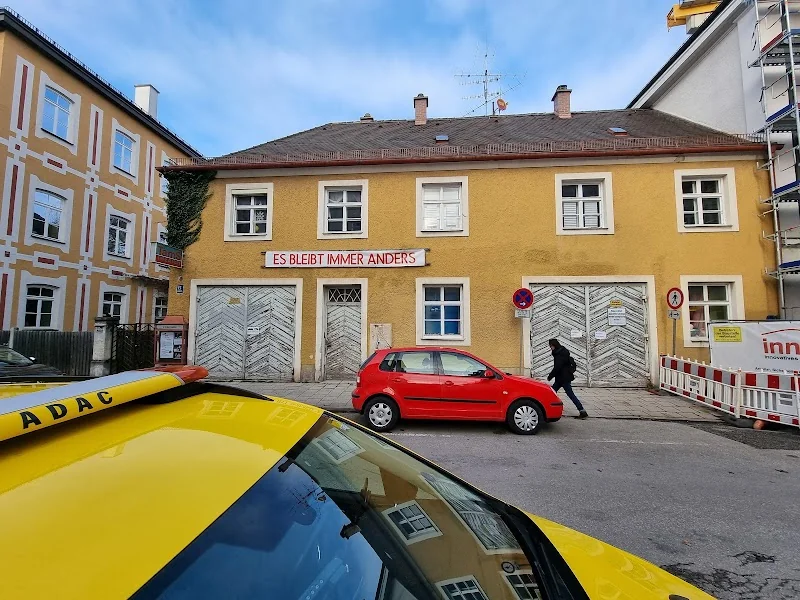
The Theater am Sozialamt TamS is one of those places that you don't forget by chance. In Schwabing, at Haimhauserstraße 13a, there is no large representative theater, but a small, quirky stage that has grown over decades with much history, intimacy, and character. Those who visit the TamS experience not an anonymous mass venue, but a private theater that has stood out since its founding in 1970 with a mix of absurd, literary, political, and inclusive theater. The building dates back to a former municipal shower bath, which was personally converted into a theater by Philip Arp and Anette Spola with the help of friends. Today, the house is not only a cultural venue in Schwabing but also a listed memorial space for Munich's free scene. The strong connection of living room intimacy, backyard charm, and artistic consistency is particularly striking: The TamS remains small, direct, and different. This is exactly what makes the location so exciting for theater fans, culture lovers, and visitors from Munich and beyond. ([tamstheater.de](https://tamstheater.de/das-tams))
Schedule, Tickets & Ticket Purchase at TamS
Those looking for the TamS schedule will find a lively mix of original productions, readings, musical formats, guest performances, and special evenings on the official website, which consciously cannot be pigeonholed into a single category. This fits the history of the house: The TamS has never been a place for rigid standard programs, but always for formats that bring texts, characters, and themes together in unusual ways. The clear ticket logic of the house is particularly helpful. Tickets can be reserved by phone or email and picked up at the box office on the day of the performance. Additionally, tickets for many events are available through München Ticket. The advance sale is therefore pragmatic but consciously kept small and personal. In terms of pricing, the theater lists a regular price, a TamS ticket, and discounts on its ticket page; it is also noted that different prices may apply for concerts and guest performances. Important for visitors: Only cash payments are accepted on-site; credit or debit cards are not accepted. Therefore, those purchasing a ticket at TamS plan classically and directly. This mixture of personal reservation, box office, and regional ticketing makes the house sympathetic and fitting for the size of the stage. For SEO searches, the terms schedule, tickets, box office, München Ticket, and ticket purchase are particularly relevant as they cover the practical core of visitor interest. ([tamstheater.de](https://tamstheater.de/spielplan?utm_source=openai))
The current schedule also shows that the TamS not only offers classic spoken theater but also thinks in the direction of live radio plays, readings, and musical formats. This is important for the positioning of the location because it results in an audience that consciously seeks variety. So, those searching for TamS tickets or the TamS schedule want not only to book an appointment but often also to experience this special mix of intimacy, experimentation, and Schwabing culture. In the small space, every event feels more immediate than in a large multipurpose house. You sit close to the stage, experience reactions more directly, and get more of the nuances of language, rhythm, and performance. This is one of the reasons why purchasing tickets here is worthwhile: You don't just book a seat, but a special form of the evening. For search queries like Theater am Sozialamt München, TamS tickets, or TamS schedule, not only the schedule itself is important but also the feeling that here is a genuine cultural venue with its own handwriting. ([tamstheater.de](https://tamstheater.de/spielplan?utm_source=openai))
Directions, Parking & Location in Munich-Schwabing
The location of the TamS is another reason why the venue works well for many visitors: The house is located in Schwabing, a district that has long been known for cultural venues, pubs, theaters, and urban walks. The official address is Haimhauserstraße 13a, 80802 Munich. For directions, the theater clearly recommends public transport, bicycles, or walking. Particularly important is the Münchner Freiheit with U3 and U6, along with tram and bus lines in the vicinity. Those who know Munich know: This junction is ideal when planning an evening cultural program without parking stress. Because at the TamS, parking spaces are reportedly scarce. An alternative is a parking garage on Occamstraße, but the message is clear: If you want to arrive relaxed, it's better to travel without a car. This is not only practical but also fits with the urban location of the theater in Schwabing. The paths are short, the connections are strong, and the surroundings invite you to eat, drink, or take a short walk before or after the visit. For SEO inquiries like TamS directions, TamS parking, Theater am Sozialamt München address, or Münchner Freiheit Theater, this combination of good public transport location and limited car parking is crucial. ([tamstheater.de](https://tamstheater.de/kontakt))
It is also practical that the theater is not only prepared for quick visits but also for people who need assistance upon arrival. The accessible information page describes a pickup service from the nearest stop that can be organized by phone. This is a valuable addition for visitors with limited mobility, especially in a smaller house without a large visitor operation. In everyday life, this means: The location is urban and charming, but also clearly organized. There are no unnecessarily complicated paths, no huge parking areas, and no anonymous grounds, but a neighborhood theater right in the middle of Schwabing. Those coming from the city center, from the northern districts, or even from the surrounding area benefit from the proximity to the subway. For everyone else, the walk or bike ride is also attractive. The TamS is thus a classic example of a location where the question of directions is closely linked to the character of the house. Small stage, urban environment, good accessibility, and limited parking options go hand in hand here. This realistic visitor information makes the house particularly relevant for inquiries about directions, parking, and location. ([tamstheater.de](https://tamstheater.de/kontakt))
History, Name & Cultural Significance of TamS
The history of the Theater am Sozialamt TamS is closely linked to Munich's cultural awakening period. The official house history mentions the first premiere as January 27, 1970. At that time, an old, previously self-converted shower bath in the Schwabing district became a stage. Behind this step were Philip Arp and Anette Spola, who already had stage experience as pantomimes and were looking for their own house and new performance formats at the end of the 1960s. That a former municipal shower bath became a theater is more than a nice anecdote: it explains the entire identity of the house. The TamS has always been a place of transformation, improvisation, and artistic inventiveness. It survived as one of the few experimental stages from that time and thus became an institutional, but never smooth address in Munich's free scene. The official history also emphasizes that the house was later placed under monument protection. This is important for the cultural significance of the TamS because here not only a performance venue exists, but a piece of city and theater history is preserved. Therefore, those searching for Theater am Sozialamt München or TamS München will encounter much more than a current performance venue: They will meet a Munich institution with a long continuity. ([tamstheater.de](https://tamstheater.de/das-tams))
In terms of content, the TamS has developed a clear profile over the decades. The official house page describes a mix of absurd, literary, and political theater. Early and formative formats such as the Valentinaden developed by Philip Arp, i.e., absurd to ridiculous dialogues that quickly made the house known, are mentioned. Later, productions by Thomas Bernhard, Botho Strauß, Elfriede Jelinek, and Judith Herzberg were added. This shows: The TamS has never been just a charming small theater but has always been a place of literary engagement. The development towards inclusive forms is also important. In the early 1980s, inclusive theater was established, and since 1998, Theater Apropos has become a permanent artistic home in the house. Since 2009, the Grenzgänger festival has also taken place, which connects inclusive theater with international groups. The TamS is thus not only historically interesting but also programmatically open, socially engaged, and aesthetically experimental. Those googling the name Theater am Sozialamt often initially search only for an address or photos. In reality, however, one finds a Munich theater history that tells of transformation, persistence, and cultural independence. ([tamstheater.de](https://tamstheater.de/das-tams))
Seating, Hall, Bar & Accessibility
The TamS is intentionally small, and that is exactly what makes its charm. The accessible information mentions an event space with 70 seats; the house history speaks of over 70 guests in a tiny space with a long, albeit not very deep stage. For visitors, this means a very direct theater experience. There is no distance like in a large stage, but intimacy, attention, and an architecture that makes every detail of the performance more palpable. The performance space is located on the ground floor, which is a plus for many guests. At the same time, one should be honest: The house is not fully accessible. The accessibility information mentions a metal staircase to the restrooms, an uneven floor surface, a step before the restrooms, and explicitly no wheelchair-accessible restroom. However, wheelchair spaces are available upon request, and a pickup service from the nearest stop can also be organized by phone. For people with visual impairments, guide dogs are allowed, and it is also requested to register the visit by phone in advance. This mix of historical structural limitations and pragmatic support is typical for small cultural venues with a grown structure. Those looking for a house with maximum comfort are not in the right place here. However, those who appreciate atmosphere, history, and personal care will find a very distinctive solution at the TamS. ([kultur-barrierefrei-muenchen.de](https://www.kultur-barrierefrei-muenchen.de/tams-theater-am-sozialamt/))
The foyer also contributes to the special effect. According to the house description, there is a bar with seating, and the box office and bar are staffed an hour before the performance begins. This is a nice detail because it does not reduce the visit to the theater moment but to a small social experience beforehand. You arrive, pick up tickets, perhaps have a drink, and already feel the closeness of the house. The official history of the TamS also mentions that an impressive heating system in the foyer still bears witness to its past as a shower bath. Such details make the charm of this house: It is not a smoothly renovated event building but a place with visible traces of its biography. The garage on the street side has expanded the spatial feeling since 2009 with a second, experimental level. Together with the intimate hall and the foyer bar, a compact ensemble of audience space, foyer, and additional performance area is created. For search queries like TamS seating plan, TamS capacity, TamS accessibility, or Theater am Sozialamt seats, the house provides clear facts, but also the insight that here the personal atmosphere is more important than the perfect standard infrastructure. ([tamstheater.de](https://tamstheater.de/kontakt))
Photos, Backyard Charm & the Garage as a Second Stage
Those searching for TamS photos are usually looking for a sense of the atmosphere of the house. And this is exactly where the theater showcases its strength: The TamS is a backyard theater that consciously does not push itself into a representative front facade. The official history describes an old shower bath that was converted into a theater and mentions an unmistakable heating system in the foyer that still recalls its earlier use. This mix of history and everyday life gives the house a very special visual character. The directory entries also show that there are images of the hall, foyer, and building. This is helpful for visitors because it provides an impression of the intimate size and quirky architecture even before the actual visit. Those who see the house in photos quickly recognize: Nothing here is large-scale, smooth, and interchangeable. Instead, the impression of a grown place, where time has visibly remained, dominates. This charm is part of the brand image of the TamS and explains why the location appears so often in search queries for photos, Schwabing theater, or Theater am Sozialamt München. ([tamstheater.de](https://tamstheater.de/das-tams))
A particularly interesting detail is the garage directly on the street. Since 2009, the TamS has also utilized this area, which previously served the Schwabing fire department. Today, there is space for seasonal stage formats, art exhibitions, and experimental uses. This expands the house beyond the classic performance space and shows how flexibly the TamS thinks even on a small scale. This is important for the visual language of the location: Backyard, street, garage, and foyer together form an ensemble that is perceived more as a cultural biotope than as a standardized stage. This is exactly why it is worthwhile to not only look at the actual stage when searching for photos but also at the surroundings. The garage makes it clear that the TamS has continually sought new forms without losing its roots. The house is thus not only a place for theater evenings but also a visible example of repurposing, improvisation, and cultural development. Those looking for a theater with character, corners, traces, and visible history will find a very strong image at the TamS. For SEO, therefore, the terms photos, backyard theater, garage, and Schwabing are not trivial but exactly the language with which visitors find the location online. ([tamstheater.de](https://tamstheater.de/das-tams?utm_source=openai))
Typical Formats, Audience & Why a Visit is Worthwhile
The TamS is remarkably broad in content while not losing its core. The official history describes the house as a stage for absurd, literary, and political theater. In addition, there are literary adaptations, dialogue formats, performances, readings, musical evenings, and inclusive productions. This mix makes the location interesting: it is small but not cramped; experimental but not arbitrary; historical but not museum-like. On the official page and in the schedule, this is reflected in a program that constantly changes and repeatedly connects formats between theater, music, and language. For an audience that is not just looking for classic evening entertainment, the TamS is therefore ideal. Those searching in Munich for a location that offers more personality than routine will find a house with its own tone. This is especially true for visitors who appreciate literary texts, strong acting, and immediate proximity to the stage. The inclusive orientation of the house is also a strong argument. With Theater Apropos and the Grenzgänger festival, the TamS has established firm structures for many years that open the house far beyond standard operations. This is as relevant culturally as it is artistically. ([tamstheater.de](https://tamstheater.de/das-tams))
For first-time visitors, the TamS is particularly recommended when one wants to consciously experience a smaller, more personal, and historically charged location. It is not a house for big show effects but for careful observation and listening. This is exactly why the SEO core around Theater am Sozialamt München, TamS München, TamS schedule, and TamS tickets works so well: The search queries are practical, but behind them lies a very clear promise of a visit. You get a short walk from the subway, a house with history, a bar in the foyer, a small hall, direct proximity to the performers, and an audience that comes precisely because of this atmosphere. Additionally, there is the cultivated quirkiness of the name, which often sparks curiosity and leads many people to first search for the background. The TamS is thus not only a stage but also a conversation starter. Those who go there experience theater in a form that has become rare in Munich: personal, historically grown, and lively enough to continually carry new formats. This is exactly why a visit is worthwhile not only for theater fans but also for anyone looking for a genuine Schwabing cultural venue with a distinctive identity. ([tamstheater.de](https://tamstheater.de/das-tams))
Sources:
Show moreShow less
Theater am Sozialamt TamS | Schedule & Tickets
The Theater am Sozialamt TamS is one of those places that you don't forget by chance. In Schwabing, at Haimhauserstraße 13a, there is no large representative theater, but a small, quirky stage that has grown over decades with much history, intimacy, and character. Those who visit the TamS experience not an anonymous mass venue, but a private theater that has stood out since its founding in 1970 with a mix of absurd, literary, political, and inclusive theater. The building dates back to a former municipal shower bath, which was personally converted into a theater by Philip Arp and Anette Spola with the help of friends. Today, the house is not only a cultural venue in Schwabing but also a listed memorial space for Munich's free scene. The strong connection of living room intimacy, backyard charm, and artistic consistency is particularly striking: The TamS remains small, direct, and different. This is exactly what makes the location so exciting for theater fans, culture lovers, and visitors from Munich and beyond. ([tamstheater.de](https://tamstheater.de/das-tams))
Schedule, Tickets & Ticket Purchase at TamS
Those looking for the TamS schedule will find a lively mix of original productions, readings, musical formats, guest performances, and special evenings on the official website, which consciously cannot be pigeonholed into a single category. This fits the history of the house: The TamS has never been a place for rigid standard programs, but always for formats that bring texts, characters, and themes together in unusual ways. The clear ticket logic of the house is particularly helpful. Tickets can be reserved by phone or email and picked up at the box office on the day of the performance. Additionally, tickets for many events are available through München Ticket. The advance sale is therefore pragmatic but consciously kept small and personal. In terms of pricing, the theater lists a regular price, a TamS ticket, and discounts on its ticket page; it is also noted that different prices may apply for concerts and guest performances. Important for visitors: Only cash payments are accepted on-site; credit or debit cards are not accepted. Therefore, those purchasing a ticket at TamS plan classically and directly. This mixture of personal reservation, box office, and regional ticketing makes the house sympathetic and fitting for the size of the stage. For SEO searches, the terms schedule, tickets, box office, München Ticket, and ticket purchase are particularly relevant as they cover the practical core of visitor interest. ([tamstheater.de](https://tamstheater.de/spielplan?utm_source=openai))
The current schedule also shows that the TamS not only offers classic spoken theater but also thinks in the direction of live radio plays, readings, and musical formats. This is important for the positioning of the location because it results in an audience that consciously seeks variety. So, those searching for TamS tickets or the TamS schedule want not only to book an appointment but often also to experience this special mix of intimacy, experimentation, and Schwabing culture. In the small space, every event feels more immediate than in a large multipurpose house. You sit close to the stage, experience reactions more directly, and get more of the nuances of language, rhythm, and performance. This is one of the reasons why purchasing tickets here is worthwhile: You don't just book a seat, but a special form of the evening. For search queries like Theater am Sozialamt München, TamS tickets, or TamS schedule, not only the schedule itself is important but also the feeling that here is a genuine cultural venue with its own handwriting. ([tamstheater.de](https://tamstheater.de/spielplan?utm_source=openai))
Directions, Parking & Location in Munich-Schwabing
The location of the TamS is another reason why the venue works well for many visitors: The house is located in Schwabing, a district that has long been known for cultural venues, pubs, theaters, and urban walks. The official address is Haimhauserstraße 13a, 80802 Munich. For directions, the theater clearly recommends public transport, bicycles, or walking. Particularly important is the Münchner Freiheit with U3 and U6, along with tram and bus lines in the vicinity. Those who know Munich know: This junction is ideal when planning an evening cultural program without parking stress. Because at the TamS, parking spaces are reportedly scarce. An alternative is a parking garage on Occamstraße, but the message is clear: If you want to arrive relaxed, it's better to travel without a car. This is not only practical but also fits with the urban location of the theater in Schwabing. The paths are short, the connections are strong, and the surroundings invite you to eat, drink, or take a short walk before or after the visit. For SEO inquiries like TamS directions, TamS parking, Theater am Sozialamt München address, or Münchner Freiheit Theater, this combination of good public transport location and limited car parking is crucial. ([tamstheater.de](https://tamstheater.de/kontakt))
It is also practical that the theater is not only prepared for quick visits but also for people who need assistance upon arrival. The accessible information page describes a pickup service from the nearest stop that can be organized by phone. This is a valuable addition for visitors with limited mobility, especially in a smaller house without a large visitor operation. In everyday life, this means: The location is urban and charming, but also clearly organized. There are no unnecessarily complicated paths, no huge parking areas, and no anonymous grounds, but a neighborhood theater right in the middle of Schwabing. Those coming from the city center, from the northern districts, or even from the surrounding area benefit from the proximity to the subway. For everyone else, the walk or bike ride is also attractive. The TamS is thus a classic example of a location where the question of directions is closely linked to the character of the house. Small stage, urban environment, good accessibility, and limited parking options go hand in hand here. This realistic visitor information makes the house particularly relevant for inquiries about directions, parking, and location. ([tamstheater.de](https://tamstheater.de/kontakt))
History, Name & Cultural Significance of TamS
The history of the Theater am Sozialamt TamS is closely linked to Munich's cultural awakening period. The official house history mentions the first premiere as January 27, 1970. At that time, an old, previously self-converted shower bath in the Schwabing district became a stage. Behind this step were Philip Arp and Anette Spola, who already had stage experience as pantomimes and were looking for their own house and new performance formats at the end of the 1960s. That a former municipal shower bath became a theater is more than a nice anecdote: it explains the entire identity of the house. The TamS has always been a place of transformation, improvisation, and artistic inventiveness. It survived as one of the few experimental stages from that time and thus became an institutional, but never smooth address in Munich's free scene. The official history also emphasizes that the house was later placed under monument protection. This is important for the cultural significance of the TamS because here not only a performance venue exists, but a piece of city and theater history is preserved. Therefore, those searching for Theater am Sozialamt München or TamS München will encounter much more than a current performance venue: They will meet a Munich institution with a long continuity. ([tamstheater.de](https://tamstheater.de/das-tams))
In terms of content, the TamS has developed a clear profile over the decades. The official house page describes a mix of absurd, literary, and political theater. Early and formative formats such as the Valentinaden developed by Philip Arp, i.e., absurd to ridiculous dialogues that quickly made the house known, are mentioned. Later, productions by Thomas Bernhard, Botho Strauß, Elfriede Jelinek, and Judith Herzberg were added. This shows: The TamS has never been just a charming small theater but has always been a place of literary engagement. The development towards inclusive forms is also important. In the early 1980s, inclusive theater was established, and since 1998, Theater Apropos has become a permanent artistic home in the house. Since 2009, the Grenzgänger festival has also taken place, which connects inclusive theater with international groups. The TamS is thus not only historically interesting but also programmatically open, socially engaged, and aesthetically experimental. Those googling the name Theater am Sozialamt often initially search only for an address or photos. In reality, however, one finds a Munich theater history that tells of transformation, persistence, and cultural independence. ([tamstheater.de](https://tamstheater.de/das-tams))
Seating, Hall, Bar & Accessibility
The TamS is intentionally small, and that is exactly what makes its charm. The accessible information mentions an event space with 70 seats; the house history speaks of over 70 guests in a tiny space with a long, albeit not very deep stage. For visitors, this means a very direct theater experience. There is no distance like in a large stage, but intimacy, attention, and an architecture that makes every detail of the performance more palpable. The performance space is located on the ground floor, which is a plus for many guests. At the same time, one should be honest: The house is not fully accessible. The accessibility information mentions a metal staircase to the restrooms, an uneven floor surface, a step before the restrooms, and explicitly no wheelchair-accessible restroom. However, wheelchair spaces are available upon request, and a pickup service from the nearest stop can also be organized by phone. For people with visual impairments, guide dogs are allowed, and it is also requested to register the visit by phone in advance. This mix of historical structural limitations and pragmatic support is typical for small cultural venues with a grown structure. Those looking for a house with maximum comfort are not in the right place here. However, those who appreciate atmosphere, history, and personal care will find a very distinctive solution at the TamS. ([kultur-barrierefrei-muenchen.de](https://www.kultur-barrierefrei-muenchen.de/tams-theater-am-sozialamt/))
The foyer also contributes to the special effect. According to the house description, there is a bar with seating, and the box office and bar are staffed an hour before the performance begins. This is a nice detail because it does not reduce the visit to the theater moment but to a small social experience beforehand. You arrive, pick up tickets, perhaps have a drink, and already feel the closeness of the house. The official history of the TamS also mentions that an impressive heating system in the foyer still bears witness to its past as a shower bath. Such details make the charm of this house: It is not a smoothly renovated event building but a place with visible traces of its biography. The garage on the street side has expanded the spatial feeling since 2009 with a second, experimental level. Together with the intimate hall and the foyer bar, a compact ensemble of audience space, foyer, and additional performance area is created. For search queries like TamS seating plan, TamS capacity, TamS accessibility, or Theater am Sozialamt seats, the house provides clear facts, but also the insight that here the personal atmosphere is more important than the perfect standard infrastructure. ([tamstheater.de](https://tamstheater.de/kontakt))
Photos, Backyard Charm & the Garage as a Second Stage
Those searching for TamS photos are usually looking for a sense of the atmosphere of the house. And this is exactly where the theater showcases its strength: The TamS is a backyard theater that consciously does not push itself into a representative front facade. The official history describes an old shower bath that was converted into a theater and mentions an unmistakable heating system in the foyer that still recalls its earlier use. This mix of history and everyday life gives the house a very special visual character. The directory entries also show that there are images of the hall, foyer, and building. This is helpful for visitors because it provides an impression of the intimate size and quirky architecture even before the actual visit. Those who see the house in photos quickly recognize: Nothing here is large-scale, smooth, and interchangeable. Instead, the impression of a grown place, where time has visibly remained, dominates. This charm is part of the brand image of the TamS and explains why the location appears so often in search queries for photos, Schwabing theater, or Theater am Sozialamt München. ([tamstheater.de](https://tamstheater.de/das-tams))
A particularly interesting detail is the garage directly on the street. Since 2009, the TamS has also utilized this area, which previously served the Schwabing fire department. Today, there is space for seasonal stage formats, art exhibitions, and experimental uses. This expands the house beyond the classic performance space and shows how flexibly the TamS thinks even on a small scale. This is important for the visual language of the location: Backyard, street, garage, and foyer together form an ensemble that is perceived more as a cultural biotope than as a standardized stage. This is exactly why it is worthwhile to not only look at the actual stage when searching for photos but also at the surroundings. The garage makes it clear that the TamS has continually sought new forms without losing its roots. The house is thus not only a place for theater evenings but also a visible example of repurposing, improvisation, and cultural development. Those looking for a theater with character, corners, traces, and visible history will find a very strong image at the TamS. For SEO, therefore, the terms photos, backyard theater, garage, and Schwabing are not trivial but exactly the language with which visitors find the location online. ([tamstheater.de](https://tamstheater.de/das-tams?utm_source=openai))
Typical Formats, Audience & Why a Visit is Worthwhile
The TamS is remarkably broad in content while not losing its core. The official history describes the house as a stage for absurd, literary, and political theater. In addition, there are literary adaptations, dialogue formats, performances, readings, musical evenings, and inclusive productions. This mix makes the location interesting: it is small but not cramped; experimental but not arbitrary; historical but not museum-like. On the official page and in the schedule, this is reflected in a program that constantly changes and repeatedly connects formats between theater, music, and language. For an audience that is not just looking for classic evening entertainment, the TamS is therefore ideal. Those searching in Munich for a location that offers more personality than routine will find a house with its own tone. This is especially true for visitors who appreciate literary texts, strong acting, and immediate proximity to the stage. The inclusive orientation of the house is also a strong argument. With Theater Apropos and the Grenzgänger festival, the TamS has established firm structures for many years that open the house far beyond standard operations. This is as relevant culturally as it is artistically. ([tamstheater.de](https://tamstheater.de/das-tams))
For first-time visitors, the TamS is particularly recommended when one wants to consciously experience a smaller, more personal, and historically charged location. It is not a house for big show effects but for careful observation and listening. This is exactly why the SEO core around Theater am Sozialamt München, TamS München, TamS schedule, and TamS tickets works so well: The search queries are practical, but behind them lies a very clear promise of a visit. You get a short walk from the subway, a house with history, a bar in the foyer, a small hall, direct proximity to the performers, and an audience that comes precisely because of this atmosphere. Additionally, there is the cultivated quirkiness of the name, which often sparks curiosity and leads many people to first search for the background. The TamS is thus not only a stage but also a conversation starter. Those who go there experience theater in a form that has become rare in Munich: personal, historically grown, and lively enough to continually carry new formats. This is exactly why a visit is worthwhile not only for theater fans but also for anyone looking for a genuine Schwabing cultural venue with a distinctive identity. ([tamstheater.de](https://tamstheater.de/das-tams))
Sources:
Theater am Sozialamt TamS | Schedule & Tickets
The Theater am Sozialamt TamS is one of those places that you don't forget by chance. In Schwabing, at Haimhauserstraße 13a, there is no large representative theater, but a small, quirky stage that has grown over decades with much history, intimacy, and character. Those who visit the TamS experience not an anonymous mass venue, but a private theater that has stood out since its founding in 1970 with a mix of absurd, literary, political, and inclusive theater. The building dates back to a former municipal shower bath, which was personally converted into a theater by Philip Arp and Anette Spola with the help of friends. Today, the house is not only a cultural venue in Schwabing but also a listed memorial space for Munich's free scene. The strong connection of living room intimacy, backyard charm, and artistic consistency is particularly striking: The TamS remains small, direct, and different. This is exactly what makes the location so exciting for theater fans, culture lovers, and visitors from Munich and beyond. ([tamstheater.de](https://tamstheater.de/das-tams))
Schedule, Tickets & Ticket Purchase at TamS
Those looking for the TamS schedule will find a lively mix of original productions, readings, musical formats, guest performances, and special evenings on the official website, which consciously cannot be pigeonholed into a single category. This fits the history of the house: The TamS has never been a place for rigid standard programs, but always for formats that bring texts, characters, and themes together in unusual ways. The clear ticket logic of the house is particularly helpful. Tickets can be reserved by phone or email and picked up at the box office on the day of the performance. Additionally, tickets for many events are available through München Ticket. The advance sale is therefore pragmatic but consciously kept small and personal. In terms of pricing, the theater lists a regular price, a TamS ticket, and discounts on its ticket page; it is also noted that different prices may apply for concerts and guest performances. Important for visitors: Only cash payments are accepted on-site; credit or debit cards are not accepted. Therefore, those purchasing a ticket at TamS plan classically and directly. This mixture of personal reservation, box office, and regional ticketing makes the house sympathetic and fitting for the size of the stage. For SEO searches, the terms schedule, tickets, box office, München Ticket, and ticket purchase are particularly relevant as they cover the practical core of visitor interest. ([tamstheater.de](https://tamstheater.de/spielplan?utm_source=openai))
The current schedule also shows that the TamS not only offers classic spoken theater but also thinks in the direction of live radio plays, readings, and musical formats. This is important for the positioning of the location because it results in an audience that consciously seeks variety. So, those searching for TamS tickets or the TamS schedule want not only to book an appointment but often also to experience this special mix of intimacy, experimentation, and Schwabing culture. In the small space, every event feels more immediate than in a large multipurpose house. You sit close to the stage, experience reactions more directly, and get more of the nuances of language, rhythm, and performance. This is one of the reasons why purchasing tickets here is worthwhile: You don't just book a seat, but a special form of the evening. For search queries like Theater am Sozialamt München, TamS tickets, or TamS schedule, not only the schedule itself is important but also the feeling that here is a genuine cultural venue with its own handwriting. ([tamstheater.de](https://tamstheater.de/spielplan?utm_source=openai))
Directions, Parking & Location in Munich-Schwabing
The location of the TamS is another reason why the venue works well for many visitors: The house is located in Schwabing, a district that has long been known for cultural venues, pubs, theaters, and urban walks. The official address is Haimhauserstraße 13a, 80802 Munich. For directions, the theater clearly recommends public transport, bicycles, or walking. Particularly important is the Münchner Freiheit with U3 and U6, along with tram and bus lines in the vicinity. Those who know Munich know: This junction is ideal when planning an evening cultural program without parking stress. Because at the TamS, parking spaces are reportedly scarce. An alternative is a parking garage on Occamstraße, but the message is clear: If you want to arrive relaxed, it's better to travel without a car. This is not only practical but also fits with the urban location of the theater in Schwabing. The paths are short, the connections are strong, and the surroundings invite you to eat, drink, or take a short walk before or after the visit. For SEO inquiries like TamS directions, TamS parking, Theater am Sozialamt München address, or Münchner Freiheit Theater, this combination of good public transport location and limited car parking is crucial. ([tamstheater.de](https://tamstheater.de/kontakt))
It is also practical that the theater is not only prepared for quick visits but also for people who need assistance upon arrival. The accessible information page describes a pickup service from the nearest stop that can be organized by phone. This is a valuable addition for visitors with limited mobility, especially in a smaller house without a large visitor operation. In everyday life, this means: The location is urban and charming, but also clearly organized. There are no unnecessarily complicated paths, no huge parking areas, and no anonymous grounds, but a neighborhood theater right in the middle of Schwabing. Those coming from the city center, from the northern districts, or even from the surrounding area benefit from the proximity to the subway. For everyone else, the walk or bike ride is also attractive. The TamS is thus a classic example of a location where the question of directions is closely linked to the character of the house. Small stage, urban environment, good accessibility, and limited parking options go hand in hand here. This realistic visitor information makes the house particularly relevant for inquiries about directions, parking, and location. ([tamstheater.de](https://tamstheater.de/kontakt))
History, Name & Cultural Significance of TamS
The history of the Theater am Sozialamt TamS is closely linked to Munich's cultural awakening period. The official house history mentions the first premiere as January 27, 1970. At that time, an old, previously self-converted shower bath in the Schwabing district became a stage. Behind this step were Philip Arp and Anette Spola, who already had stage experience as pantomimes and were looking for their own house and new performance formats at the end of the 1960s. That a former municipal shower bath became a theater is more than a nice anecdote: it explains the entire identity of the house. The TamS has always been a place of transformation, improvisation, and artistic inventiveness. It survived as one of the few experimental stages from that time and thus became an institutional, but never smooth address in Munich's free scene. The official history also emphasizes that the house was later placed under monument protection. This is important for the cultural significance of the TamS because here not only a performance venue exists, but a piece of city and theater history is preserved. Therefore, those searching for Theater am Sozialamt München or TamS München will encounter much more than a current performance venue: They will meet a Munich institution with a long continuity. ([tamstheater.de](https://tamstheater.de/das-tams))
In terms of content, the TamS has developed a clear profile over the decades. The official house page describes a mix of absurd, literary, and political theater. Early and formative formats such as the Valentinaden developed by Philip Arp, i.e., absurd to ridiculous dialogues that quickly made the house known, are mentioned. Later, productions by Thomas Bernhard, Botho Strauß, Elfriede Jelinek, and Judith Herzberg were added. This shows: The TamS has never been just a charming small theater but has always been a place of literary engagement. The development towards inclusive forms is also important. In the early 1980s, inclusive theater was established, and since 1998, Theater Apropos has become a permanent artistic home in the house. Since 2009, the Grenzgänger festival has also taken place, which connects inclusive theater with international groups. The TamS is thus not only historically interesting but also programmatically open, socially engaged, and aesthetically experimental. Those googling the name Theater am Sozialamt often initially search only for an address or photos. In reality, however, one finds a Munich theater history that tells of transformation, persistence, and cultural independence. ([tamstheater.de](https://tamstheater.de/das-tams))
Seating, Hall, Bar & Accessibility
The TamS is intentionally small, and that is exactly what makes its charm. The accessible information mentions an event space with 70 seats; the house history speaks of over 70 guests in a tiny space with a long, albeit not very deep stage. For visitors, this means a very direct theater experience. There is no distance like in a large stage, but intimacy, attention, and an architecture that makes every detail of the performance more palpable. The performance space is located on the ground floor, which is a plus for many guests. At the same time, one should be honest: The house is not fully accessible. The accessibility information mentions a metal staircase to the restrooms, an uneven floor surface, a step before the restrooms, and explicitly no wheelchair-accessible restroom. However, wheelchair spaces are available upon request, and a pickup service from the nearest stop can also be organized by phone. For people with visual impairments, guide dogs are allowed, and it is also requested to register the visit by phone in advance. This mix of historical structural limitations and pragmatic support is typical for small cultural venues with a grown structure. Those looking for a house with maximum comfort are not in the right place here. However, those who appreciate atmosphere, history, and personal care will find a very distinctive solution at the TamS. ([kultur-barrierefrei-muenchen.de](https://www.kultur-barrierefrei-muenchen.de/tams-theater-am-sozialamt/))
The foyer also contributes to the special effect. According to the house description, there is a bar with seating, and the box office and bar are staffed an hour before the performance begins. This is a nice detail because it does not reduce the visit to the theater moment but to a small social experience beforehand. You arrive, pick up tickets, perhaps have a drink, and already feel the closeness of the house. The official history of the TamS also mentions that an impressive heating system in the foyer still bears witness to its past as a shower bath. Such details make the charm of this house: It is not a smoothly renovated event building but a place with visible traces of its biography. The garage on the street side has expanded the spatial feeling since 2009 with a second, experimental level. Together with the intimate hall and the foyer bar, a compact ensemble of audience space, foyer, and additional performance area is created. For search queries like TamS seating plan, TamS capacity, TamS accessibility, or Theater am Sozialamt seats, the house provides clear facts, but also the insight that here the personal atmosphere is more important than the perfect standard infrastructure. ([tamstheater.de](https://tamstheater.de/kontakt))
Photos, Backyard Charm & the Garage as a Second Stage
Those searching for TamS photos are usually looking for a sense of the atmosphere of the house. And this is exactly where the theater showcases its strength: The TamS is a backyard theater that consciously does not push itself into a representative front facade. The official history describes an old shower bath that was converted into a theater and mentions an unmistakable heating system in the foyer that still recalls its earlier use. This mix of history and everyday life gives the house a very special visual character. The directory entries also show that there are images of the hall, foyer, and building. This is helpful for visitors because it provides an impression of the intimate size and quirky architecture even before the actual visit. Those who see the house in photos quickly recognize: Nothing here is large-scale, smooth, and interchangeable. Instead, the impression of a grown place, where time has visibly remained, dominates. This charm is part of the brand image of the TamS and explains why the location appears so often in search queries for photos, Schwabing theater, or Theater am Sozialamt München. ([tamstheater.de](https://tamstheater.de/das-tams))
A particularly interesting detail is the garage directly on the street. Since 2009, the TamS has also utilized this area, which previously served the Schwabing fire department. Today, there is space for seasonal stage formats, art exhibitions, and experimental uses. This expands the house beyond the classic performance space and shows how flexibly the TamS thinks even on a small scale. This is important for the visual language of the location: Backyard, street, garage, and foyer together form an ensemble that is perceived more as a cultural biotope than as a standardized stage. This is exactly why it is worthwhile to not only look at the actual stage when searching for photos but also at the surroundings. The garage makes it clear that the TamS has continually sought new forms without losing its roots. The house is thus not only a place for theater evenings but also a visible example of repurposing, improvisation, and cultural development. Those looking for a theater with character, corners, traces, and visible history will find a very strong image at the TamS. For SEO, therefore, the terms photos, backyard theater, garage, and Schwabing are not trivial but exactly the language with which visitors find the location online. ([tamstheater.de](https://tamstheater.de/das-tams?utm_source=openai))
Typical Formats, Audience & Why a Visit is Worthwhile
The TamS is remarkably broad in content while not losing its core. The official history describes the house as a stage for absurd, literary, and political theater. In addition, there are literary adaptations, dialogue formats, performances, readings, musical evenings, and inclusive productions. This mix makes the location interesting: it is small but not cramped; experimental but not arbitrary; historical but not museum-like. On the official page and in the schedule, this is reflected in a program that constantly changes and repeatedly connects formats between theater, music, and language. For an audience that is not just looking for classic evening entertainment, the TamS is therefore ideal. Those searching in Munich for a location that offers more personality than routine will find a house with its own tone. This is especially true for visitors who appreciate literary texts, strong acting, and immediate proximity to the stage. The inclusive orientation of the house is also a strong argument. With Theater Apropos and the Grenzgänger festival, the TamS has established firm structures for many years that open the house far beyond standard operations. This is as relevant culturally as it is artistically. ([tamstheater.de](https://tamstheater.de/das-tams))
For first-time visitors, the TamS is particularly recommended when one wants to consciously experience a smaller, more personal, and historically charged location. It is not a house for big show effects but for careful observation and listening. This is exactly why the SEO core around Theater am Sozialamt München, TamS München, TamS schedule, and TamS tickets works so well: The search queries are practical, but behind them lies a very clear promise of a visit. You get a short walk from the subway, a house with history, a bar in the foyer, a small hall, direct proximity to the performers, and an audience that comes precisely because of this atmosphere. Additionally, there is the cultivated quirkiness of the name, which often sparks curiosity and leads many people to first search for the background. The TamS is thus not only a stage but also a conversation starter. Those who go there experience theater in a form that has become rare in Munich: personal, historically grown, and lively enough to continually carry new formats. This is exactly why a visit is worthwhile not only for theater fans but also for anyone looking for a genuine Schwabing cultural venue with a distinctive identity. ([tamstheater.de](https://tamstheater.de/das-tams))
Sources:
Upcoming Events
No events found
Frequently Asked Questions
Reviews
No reviews found