
München
Marstallpl. 4, 80539 München-Altstadt-Lehel, Deutschland
Theater im Marstall | Schedule & Tickets
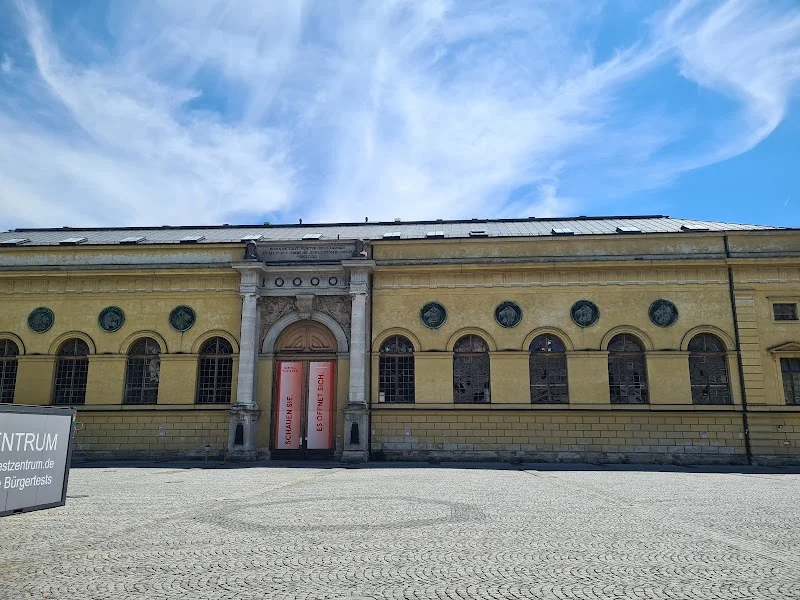
The Theater im Marstall is one of the most exciting venues of the Residenztheater in Munich, combining historic architecture with contemporary stage art. Those looking for theater in Marstall Munich will find not only a compact stage in the heart of the old town but also a place where the Bavarian State Theater continuously experiments with new forms of storytelling. The Marstall is located directly at Marstallplatz 4, just a few steps from the Residence, making it one of the most central theater addresses in the city. With around 146 seats, the space is among the smaller, very immediate performance venues of the house, which often makes the evening feel particularly intense and close. This mixture of history, proximity, and artistic experimentation makes the Marstall so interesting for many visitors. The official website of the Residenztheater shows that the Marstall is now used as a venue for current plays, premieres, guest performances, and special formats. At the same time, the house visibly carries its past within: from the historic Marstall to its use as a storage and workshop area, to its current stage for contemporary theater. ([residenztheater.de](https://www.residenztheater.de/marstall?cHash=0ac12f25ccbb1b4e7a47c63473b08c14&month=2026-06))
Schedule, Events, and Current Productions at Marstall
The search for the Theater im Marstall Munich schedule leads directly to a page that clearly structures the visit. The Residenztheater offers a dedicated schedule for the Marstall with monthly selection, filter functions, and direct links to individual pieces. Visitors can not only view the current month but also filter for premieres, Resi-for-all performances, and productions with English surtitles. Additionally, the official site points out the theater day, which is an important orientation point for many theater guests. This is particularly useful for planning, as the Marstall is a space where new, current, and text-close productions are frequently shown. On the official schedule page, among others, Marat/Sade, Mercury, MOSI - The Bavarian Dream, Recitative, and La Musica - between her and him can be found in June 2026. This shows how broad the spectrum at the Marstall is: from literary materials to musically influenced forms to documentary or socially oriented works. ([residenztheater.de](https://www.residenztheater.de/marstall?cHash=0ac12f25ccbb1b4e7a47c63473b08c14&month=2026-06))
It is particularly striking that the Marstall does not simply function as a classical performance venue but as a stage for lively repertoire work. The Residenztheater emphasizes that the house focuses on premieres, commissioned works, and new interpretations. This orientation is also reflected in the Marstall: here, not only regular evening performances take place, but often productions that play with the present, memory, music, society, and the form of theater itself. The production The Sorcerer's Apprentice, for example, shows how the Marstall can even be used as a setting for a guided, staged tour of the former workshops. In the text of the piece, the location is described as a stage with empty workshops, former technical areas, and a very special spatial situation. This creates a program at the Marstall that does not solely function through titles or names but through the special relationship between space and content. Therefore, those searching for events at the Marstall will find not a rigid event calendar but a performance venue with changing formats, a clear artistic stance, and high content density. ([residenztheater.de](https://www.residenztheater.de/en/stuecke/detail/der-zauberlehrling))
For practice, this means: those currently looking for tickets should regularly check the schedule, as the advance sale is structured and organized in a timely manner. According to service information, the schedule for the month after next is published at the end of the month, while the advance sale for the following month usually begins on the 1st of the month at 10 a.m. This makes planning easy if one wants to visit the Marstall specifically, for example, for a premiere, a revival, or a special Resi-for-all production. Given the small capacity, early reservation is advisable, as the space is manageable and often in high demand. Therefore, those who combine the Marstall as a search term with schedule, events, or current program do not end up on just any theater page but at a place where the season is visibly alive. ([residenztheater.de](https://www.residenztheater.de/service))
Tickets, Advance Sale, and Box Office at Marstallplatz
For Theater im Marstall Munich tickets, the official site is very concrete and user-friendly. Tickets can be purchased online via the schedule or the respective piece pages, by phone at +49 (0)89 2185 1940, or in person at the box office at Marstallplatz 5. The box office is open Monday to Saturday from 10 a.m. to 7 p.m., while the evening box office opens at each performance venue one hour before the start of the show. This means the Marstall is very well adjusted to different visiting habits: those who plan early use the online advance sale; those who decide spontaneously can also inquire about tickets on-site or by phone. The official site also displays price groups and seating, making it easier to calculate the theater evening in advance. This combination of digital advance sale and local box office is an important advantage, especially for a house with a comparatively small but very sought-after hall. ([residenztheater.de](https://www.residenztheater.de/service))
The service structure surrounding ticket purchase is also remarkably clear. The same high visitor standards apply at the Marstall as in the other venues of the Residenztheater: there are free cloakrooms, gastronomic offerings from one hour before the start of the performance, and at many productions, introductions or audience discussions. This means for visitors that the theater visit does not only begin with the curtain opening but can already be prepared in the foyer and at the box office. Particularly practical is the information that admission tickets, under certain conditions, are valid as tickets in the MVV network. According to the service page, subscription cards or admission tickets, provided the MVV use is permitted on the front side, entitle holders to travel to and from all MVV transport services in the entire network on the day of the performance from 3 p.m. until 6 a.m. the following day. So, those who book tickets for the Theater im Marstall not only gain access to the performance but also, depending on the ticket, a significant simplification of arrival and departure. ([residenztheater.de](https://www.residenztheater.de/service))
For many search queries regarding Marstall Munich tickets or Marstall Munich seating plan, it is also important how the seating structure relates to the pricing logic. The official price overview is closely linked to the seating plan, allowing you to see in advance which seats are in which category. Especially in the small Marstall, this transparency feels pleasantly direct, as the distances are short and orientation in the house is easy. If you want to focus your visit on a specific seat or sightline, it is worthwhile to combine the schedule, seating plan, and box office. This is also sensible because many performances at the Marstall have limited availability and the space can fill up quickly. Therefore, for a successful theater visit, not only the piece is important but also the timing of the booking and the choice of the appropriate channel. ([residenztheater.de](https://www.residenztheater.de/marstall?cHash=0ac12f25ccbb1b4e7a47c63473b08c14&month=2026-06))
Seating Plan, Seats, and Capacity at Theater im Marstall
The capacity of the Theater im Marstall is an essential part of its impact. The official site of the Residenztheater states that the Marstall has around 146 seats, while other house descriptions mention a maximum of 160 seats. For practical orientation, one thing is crucial: the space is intentionally small and manageable, creating an immediate relationship between the stage and the audience. The seating plan shows a division into seven rows in front of the stage. Row 1 is directly at the stage and includes the front seats; behind it are rows 2 to 7, which are accessible via steps. The seats are arranged in a straight line, which clarifies the sightlines and makes the space feel very concentrated. This is a significant advantage, especially for acting, text works, and dense productions, as the audience remains very close to the events on stage. ([residenztheater.de](https://www.residenztheater.de/en/the-theatre?utm_source=openai))
The wheelchair spaces are also clearly described on the official site. They are located depending on the configured audience tribune in the first row or in the front areas on the right and left sides. According to service information, a wheelchair-accessible toilet is available in the Marstall, and the wheelchair spaces are marked on the seating plan. In practice, this is particularly helpful for visitors with special requirements, as the orientation does not have to be improvised on-site. At the same time, the Marstall remains flexible enough despite its compact size to accommodate different forms of staging. This is also evident in that the space hosts not only classical evening performances but also special formats such as workshop tours or experimental stage works. Therefore, those interested in the seating plan should not only pay attention to the number of seats but also to the spatial logic of the house: directly in front of the stage, behind the gradually rising rows, and laterally the barrier-free positions. Thus, the Marstall combines the intimacy of a small hall with the functionality of a professional state theater venue. ([residenztheater.de](https://www.residenztheater.de/marstall?cHash=0ac12f25ccbb1b4e7a47c63473b08c14&month=2026-06))
The hall structure is also a good reason why the Marstall is perceived as particularly intense by many visitors. This is not due to a mere aesthetic claim but to the concrete data: seven rows, short distance to the stage, compact capacity, and clear sightlines. In such a space, even a quiet scene is strongly present, while larger movements or musical passages can have an immediate effect. For search queries regarding Marstall Munich seating plan or best seats, the central question is often whether one prefers proximity to the stage or a slightly elevated view. The official information at least allows for the clear statement that row 1 is directly at the stage and the other rows are accessed via steps. Therefore, those who visit the Marstall experience a theater space that consciously focuses on immediacy and is particularly suitable for demanding spoken theater productions. ([residenztheater.de](https://www.residenztheater.de/marstall?cHash=0ac12f25ccbb1b4e7a47c63473b08c14&month=2026-06))
Access, Parking, and Public Transport
Access to the Theater im Marstall is relatively easy due to its central location in Munich. The address is Marstallplatz 4, 80539 Munich, and the venue is located in close proximity to the Residence in the heart of the old town. The Residenztheater explicitly describes the Marstall as a venue in a central location near the Residence, in an area that is easily accessible for pedestrians from the city center. For precise orientation, it is important that the box office is located at Marstallplatz 5, directly next to the performance venue. This additionally facilitates the visit, as one does not have to search long for a separate ticket office. The central location is not only a geographical advantage but also a cultural one: the Marstall is part of a theater network that unites several important venues of the Bavarian State Theater within walking distance of each other. ([residenztheater.de](https://www.residenztheater.de/marstall?cHash=0ac12f25ccbb1b4e7a47c63473b08c14&month=2026-06))
For public transport access, the Residenztheater mentions the stops Marienplatz, Odeonsplatz, and Nationaltheater in its service information. This means the Marstall is well connected to S-Bahn and U-Bahn as well as trams. Those coming from other districts can therefore choose the appropriate stop depending on their route and plan a short walk through the old town. At the same time, the house points out that admission tickets are valid as tickets in the MVV network under certain conditions, which makes arrival and departure even more comfortable. For visitors looking for Marstall Munich access, this is a very practical combination: central location, multiple public transport options, and a ticket model that includes the use of public transport depending on eligibility. ([residenztheater.de](https://www.residenztheater.de/resi-inklusiv/service))
When it comes to parking, the location in the city center is limited as is usual in Munich, but the Residenztheater makes the relevant information transparent. In the immediate vicinity of the Marstall, there are several disabled parking spaces: four spaces on Maximilianstraße at the height of the main entrance of the Bavarian State Opera and two more at the corner of Maximilianstraße and Alfons-Goppel-Straße. Additionally, the house mentions the possibility of parking at Marstallplatz with a specific password for special inclusive offers. Furthermore, it is important that Marstallplatz has a barrier that can be opened by the gatekeeper. These details are particularly helpful for visitors arriving by car who want to know in advance how access is organized. Therefore, those searching for parking at the Theater im Marstall should not only inquire about classic parking garages but also pay particular attention to the official information from the house regarding parking, access, and barrier-free offers. ([residenztheater.de](https://www.residenztheater.de/service))
Accessibility and Visitor Services
Accessibility is clearly part of the official service concept at the Theater im Marstall. The barrier-free access is located at the main entrance at Marstallplatz and is accessible without steps. In the entrance area, ramps with a 4 percent slope lead into the foyer and from there into the auditorium. There is also a wheelchair-accessible toilet with an emergency alarm. The service information mentions wheelchair spaces depending on the tribune setup, and the general notes from the Residenztheater confirm that the placement usually occurs in the front area or on the sides. This is important for people with mobility impairments because the path from the entrance to the seat is clearly described and does not have to be clarified on-site. The proximity to the disabled parking spaces on Maximilianstraße is also a relevant advantage when arriving by car. ([residenztheater.de](https://www.residenztheater.de/en/tickets/prices?utm_source=openai))
However, the visitor service goes beyond mere accessibility. The Residenztheater offers free cloakrooms in the Marstall and opens gastronomy one hour before the start of the performance. Additionally, there are introductions or audience discussions at many performances, and the house regularly organizes additional formats such as theater tours. These tours provide insights into the stage, stage technology, side stage, costume store, tailoring, props, and, if possible, the makeup workshop. Therefore, those who want to not only see a performance but also understand the house better will find a wide range of offerings in the service area. Particularly at a place like the Marstall, which is historically strongly connected with workshops and stage production, this approach fits very well with the identity of the house. For visitors searching for Marstall Munich accessibility or practical service information, the Residenztheater is thus very clearly positioned. ([residenztheater.de](https://www.residenztheater.de/service))
For people with visual or hearing impairments, the house also offers important support. The service information mentions, among other things, discounts, assistance for hearing aids and cochlear implants, as well as the possibility to borrow mobile radio receivers. Some performances are subtitled in English, which is particularly relevant for international guests. Additionally, tickets and information are available by phone, email, and at the box office. In practice, this means: the Marstall is not only a small and atmospheric space but also a well-organized venue where visiting processes are understandable, friendly, and transparently designed. If one wants to understand the Marstall as a stage for modern spoken theater, this service quality is essential, as it makes the visit accessible to a broad audience. This is why the Marstall is not just a place for cultural curiosity but also a place where different needs are taken seriously. ([residenztheater.de](https://www.residenztheater.de/service))
History, Architecture, and Special Use
The history of the Theater im Marstall is closely linked to the history of the city and theater of Munich. The building was constructed by Leo von Klenze and served the noble society as a riding school in the early 19th century. After the end of the monarchy, the space was initially used as a museum where the public could see the splendid carriages of the former king. In World War II, the building was heavily damaged and only hastily rebuilt afterward. Subsequently, the state theaters used the location for many years as an assembly hall, wood storage, and storage area for decoration parts. This past explains why the Marstall does not appear like a classical, historically frozen theater building but rather like a house with many layers that has continually changed its uses. ([residenztheater.de](https://www.residenztheater.de/marstall?cHash=0ac12f25ccbb1b4e7a47c63473b08c14&month=2026-06))
In the late 1960s, the potential of the Marstall as an alternative performance venue was recognized. In 1971, the idea of a studio and experimental stage emerged, and a little over a year later, Walter Schmidinger opened the newly acquired venue with Franz Xaver Kroetz's Global Interest as part of the cultural program of the Olympic Games in Munich. In the following years, international and national artists were also presented there. The official history of the house also shows that workshops and props storage are still located on the upper floors, and stage sets for the Residenztheater are still created there today. This is crucial for the identity of the place: the Marstall is not only an auditorium but also a production site where theater is crafted. Therefore, those searching for Theater Marstall Munich history encounter a space that has grown out of use and continues to connect artistic work and stage practice to this day. ([residenztheater.de](https://www.residenztheater.de/marstall?cHash=0ac12f25ccbb1b4e7a47c63473b08c14&month=2026-06))
Particularly interesting is how the Marstall is being further developed today as a stage. The Residenztheater describes it as a place for contemporary ensemble theater, premieres, and new perspectives on classical materials. The production The Sorcerer's Apprentice illustrates this very clearly: the former workshops themselves become the theater space, and the visitors receive a staged tour of an area that has worked invisibly behind the scenes for many years. This shows how strongly the Marstall remains connected to the idea of behind-the-scenes, even when used as a public stage. This connection of history, artisanal theater practice, and experimental present makes the Marstall in Munich so special. It is not an interchangeable event space but a venue with memory, function, and artistic openness. Therefore, those interested in photos, backgrounds, or reviews usually discover not just a hall but a house with an unmistakable atmosphere and historical depth. ([residenztheater.de](https://www.residenztheater.de/en/stuecke/detail/der-zauberlehrling))
Sources:
- Residenztheater Munich - Marstall ([residenztheater.de](https://www.residenztheater.de/marstall?cHash=0ac12f25ccbb1b4e7a47c63473b08c14&month=2026-06))
- Residenztheater Munich - Service and FAQ ([residenztheater.de](https://www.residenztheater.de/service))
- Residenztheater Munich - Prices and Discounts ([residenztheater.de](https://www.residenztheater.de/en/tickets/prices?utm_source=openai))
- Residenztheater Munich - The theatre ([residenztheater.de](https://www.residenztheater.de/en/the-theatre))
- Residenztheater Munich - The Sorcerer's Apprentice ([residenztheater.de](https://www.residenztheater.de/en/stuecke/detail/der-zauberlehrling))
Show moreShow less
Theater im Marstall | Schedule & Tickets
The Theater im Marstall is one of the most exciting venues of the Residenztheater in Munich, combining historic architecture with contemporary stage art. Those looking for theater in Marstall Munich will find not only a compact stage in the heart of the old town but also a place where the Bavarian State Theater continuously experiments with new forms of storytelling. The Marstall is located directly at Marstallplatz 4, just a few steps from the Residence, making it one of the most central theater addresses in the city. With around 146 seats, the space is among the smaller, very immediate performance venues of the house, which often makes the evening feel particularly intense and close. This mixture of history, proximity, and artistic experimentation makes the Marstall so interesting for many visitors. The official website of the Residenztheater shows that the Marstall is now used as a venue for current plays, premieres, guest performances, and special formats. At the same time, the house visibly carries its past within: from the historic Marstall to its use as a storage and workshop area, to its current stage for contemporary theater. ([residenztheater.de](https://www.residenztheater.de/marstall?cHash=0ac12f25ccbb1b4e7a47c63473b08c14&month=2026-06))
Schedule, Events, and Current Productions at Marstall
The search for the Theater im Marstall Munich schedule leads directly to a page that clearly structures the visit. The Residenztheater offers a dedicated schedule for the Marstall with monthly selection, filter functions, and direct links to individual pieces. Visitors can not only view the current month but also filter for premieres, Resi-for-all performances, and productions with English surtitles. Additionally, the official site points out the theater day, which is an important orientation point for many theater guests. This is particularly useful for planning, as the Marstall is a space where new, current, and text-close productions are frequently shown. On the official schedule page, among others, Marat/Sade, Mercury, MOSI - The Bavarian Dream, Recitative, and La Musica - between her and him can be found in June 2026. This shows how broad the spectrum at the Marstall is: from literary materials to musically influenced forms to documentary or socially oriented works. ([residenztheater.de](https://www.residenztheater.de/marstall?cHash=0ac12f25ccbb1b4e7a47c63473b08c14&month=2026-06))
It is particularly striking that the Marstall does not simply function as a classical performance venue but as a stage for lively repertoire work. The Residenztheater emphasizes that the house focuses on premieres, commissioned works, and new interpretations. This orientation is also reflected in the Marstall: here, not only regular evening performances take place, but often productions that play with the present, memory, music, society, and the form of theater itself. The production The Sorcerer's Apprentice, for example, shows how the Marstall can even be used as a setting for a guided, staged tour of the former workshops. In the text of the piece, the location is described as a stage with empty workshops, former technical areas, and a very special spatial situation. This creates a program at the Marstall that does not solely function through titles or names but through the special relationship between space and content. Therefore, those searching for events at the Marstall will find not a rigid event calendar but a performance venue with changing formats, a clear artistic stance, and high content density. ([residenztheater.de](https://www.residenztheater.de/en/stuecke/detail/der-zauberlehrling))
For practice, this means: those currently looking for tickets should regularly check the schedule, as the advance sale is structured and organized in a timely manner. According to service information, the schedule for the month after next is published at the end of the month, while the advance sale for the following month usually begins on the 1st of the month at 10 a.m. This makes planning easy if one wants to visit the Marstall specifically, for example, for a premiere, a revival, or a special Resi-for-all production. Given the small capacity, early reservation is advisable, as the space is manageable and often in high demand. Therefore, those who combine the Marstall as a search term with schedule, events, or current program do not end up on just any theater page but at a place where the season is visibly alive. ([residenztheater.de](https://www.residenztheater.de/service))
Tickets, Advance Sale, and Box Office at Marstallplatz
For Theater im Marstall Munich tickets, the official site is very concrete and user-friendly. Tickets can be purchased online via the schedule or the respective piece pages, by phone at +49 (0)89 2185 1940, or in person at the box office at Marstallplatz 5. The box office is open Monday to Saturday from 10 a.m. to 7 p.m., while the evening box office opens at each performance venue one hour before the start of the show. This means the Marstall is very well adjusted to different visiting habits: those who plan early use the online advance sale; those who decide spontaneously can also inquire about tickets on-site or by phone. The official site also displays price groups and seating, making it easier to calculate the theater evening in advance. This combination of digital advance sale and local box office is an important advantage, especially for a house with a comparatively small but very sought-after hall. ([residenztheater.de](https://www.residenztheater.de/service))
The service structure surrounding ticket purchase is also remarkably clear. The same high visitor standards apply at the Marstall as in the other venues of the Residenztheater: there are free cloakrooms, gastronomic offerings from one hour before the start of the performance, and at many productions, introductions or audience discussions. This means for visitors that the theater visit does not only begin with the curtain opening but can already be prepared in the foyer and at the box office. Particularly practical is the information that admission tickets, under certain conditions, are valid as tickets in the MVV network. According to the service page, subscription cards or admission tickets, provided the MVV use is permitted on the front side, entitle holders to travel to and from all MVV transport services in the entire network on the day of the performance from 3 p.m. until 6 a.m. the following day. So, those who book tickets for the Theater im Marstall not only gain access to the performance but also, depending on the ticket, a significant simplification of arrival and departure. ([residenztheater.de](https://www.residenztheater.de/service))
For many search queries regarding Marstall Munich tickets or Marstall Munich seating plan, it is also important how the seating structure relates to the pricing logic. The official price overview is closely linked to the seating plan, allowing you to see in advance which seats are in which category. Especially in the small Marstall, this transparency feels pleasantly direct, as the distances are short and orientation in the house is easy. If you want to focus your visit on a specific seat or sightline, it is worthwhile to combine the schedule, seating plan, and box office. This is also sensible because many performances at the Marstall have limited availability and the space can fill up quickly. Therefore, for a successful theater visit, not only the piece is important but also the timing of the booking and the choice of the appropriate channel. ([residenztheater.de](https://www.residenztheater.de/marstall?cHash=0ac12f25ccbb1b4e7a47c63473b08c14&month=2026-06))
Seating Plan, Seats, and Capacity at Theater im Marstall
The capacity of the Theater im Marstall is an essential part of its impact. The official site of the Residenztheater states that the Marstall has around 146 seats, while other house descriptions mention a maximum of 160 seats. For practical orientation, one thing is crucial: the space is intentionally small and manageable, creating an immediate relationship between the stage and the audience. The seating plan shows a division into seven rows in front of the stage. Row 1 is directly at the stage and includes the front seats; behind it are rows 2 to 7, which are accessible via steps. The seats are arranged in a straight line, which clarifies the sightlines and makes the space feel very concentrated. This is a significant advantage, especially for acting, text works, and dense productions, as the audience remains very close to the events on stage. ([residenztheater.de](https://www.residenztheater.de/en/the-theatre?utm_source=openai))
The wheelchair spaces are also clearly described on the official site. They are located depending on the configured audience tribune in the first row or in the front areas on the right and left sides. According to service information, a wheelchair-accessible toilet is available in the Marstall, and the wheelchair spaces are marked on the seating plan. In practice, this is particularly helpful for visitors with special requirements, as the orientation does not have to be improvised on-site. At the same time, the Marstall remains flexible enough despite its compact size to accommodate different forms of staging. This is also evident in that the space hosts not only classical evening performances but also special formats such as workshop tours or experimental stage works. Therefore, those interested in the seating plan should not only pay attention to the number of seats but also to the spatial logic of the house: directly in front of the stage, behind the gradually rising rows, and laterally the barrier-free positions. Thus, the Marstall combines the intimacy of a small hall with the functionality of a professional state theater venue. ([residenztheater.de](https://www.residenztheater.de/marstall?cHash=0ac12f25ccbb1b4e7a47c63473b08c14&month=2026-06))
The hall structure is also a good reason why the Marstall is perceived as particularly intense by many visitors. This is not due to a mere aesthetic claim but to the concrete data: seven rows, short distance to the stage, compact capacity, and clear sightlines. In such a space, even a quiet scene is strongly present, while larger movements or musical passages can have an immediate effect. For search queries regarding Marstall Munich seating plan or best seats, the central question is often whether one prefers proximity to the stage or a slightly elevated view. The official information at least allows for the clear statement that row 1 is directly at the stage and the other rows are accessed via steps. Therefore, those who visit the Marstall experience a theater space that consciously focuses on immediacy and is particularly suitable for demanding spoken theater productions. ([residenztheater.de](https://www.residenztheater.de/marstall?cHash=0ac12f25ccbb1b4e7a47c63473b08c14&month=2026-06))
Access, Parking, and Public Transport
Access to the Theater im Marstall is relatively easy due to its central location in Munich. The address is Marstallplatz 4, 80539 Munich, and the venue is located in close proximity to the Residence in the heart of the old town. The Residenztheater explicitly describes the Marstall as a venue in a central location near the Residence, in an area that is easily accessible for pedestrians from the city center. For precise orientation, it is important that the box office is located at Marstallplatz 5, directly next to the performance venue. This additionally facilitates the visit, as one does not have to search long for a separate ticket office. The central location is not only a geographical advantage but also a cultural one: the Marstall is part of a theater network that unites several important venues of the Bavarian State Theater within walking distance of each other. ([residenztheater.de](https://www.residenztheater.de/marstall?cHash=0ac12f25ccbb1b4e7a47c63473b08c14&month=2026-06))
For public transport access, the Residenztheater mentions the stops Marienplatz, Odeonsplatz, and Nationaltheater in its service information. This means the Marstall is well connected to S-Bahn and U-Bahn as well as trams. Those coming from other districts can therefore choose the appropriate stop depending on their route and plan a short walk through the old town. At the same time, the house points out that admission tickets are valid as tickets in the MVV network under certain conditions, which makes arrival and departure even more comfortable. For visitors looking for Marstall Munich access, this is a very practical combination: central location, multiple public transport options, and a ticket model that includes the use of public transport depending on eligibility. ([residenztheater.de](https://www.residenztheater.de/resi-inklusiv/service))
When it comes to parking, the location in the city center is limited as is usual in Munich, but the Residenztheater makes the relevant information transparent. In the immediate vicinity of the Marstall, there are several disabled parking spaces: four spaces on Maximilianstraße at the height of the main entrance of the Bavarian State Opera and two more at the corner of Maximilianstraße and Alfons-Goppel-Straße. Additionally, the house mentions the possibility of parking at Marstallplatz with a specific password for special inclusive offers. Furthermore, it is important that Marstallplatz has a barrier that can be opened by the gatekeeper. These details are particularly helpful for visitors arriving by car who want to know in advance how access is organized. Therefore, those searching for parking at the Theater im Marstall should not only inquire about classic parking garages but also pay particular attention to the official information from the house regarding parking, access, and barrier-free offers. ([residenztheater.de](https://www.residenztheater.de/service))
Accessibility and Visitor Services
Accessibility is clearly part of the official service concept at the Theater im Marstall. The barrier-free access is located at the main entrance at Marstallplatz and is accessible without steps. In the entrance area, ramps with a 4 percent slope lead into the foyer and from there into the auditorium. There is also a wheelchair-accessible toilet with an emergency alarm. The service information mentions wheelchair spaces depending on the tribune setup, and the general notes from the Residenztheater confirm that the placement usually occurs in the front area or on the sides. This is important for people with mobility impairments because the path from the entrance to the seat is clearly described and does not have to be clarified on-site. The proximity to the disabled parking spaces on Maximilianstraße is also a relevant advantage when arriving by car. ([residenztheater.de](https://www.residenztheater.de/en/tickets/prices?utm_source=openai))
However, the visitor service goes beyond mere accessibility. The Residenztheater offers free cloakrooms in the Marstall and opens gastronomy one hour before the start of the performance. Additionally, there are introductions or audience discussions at many performances, and the house regularly organizes additional formats such as theater tours. These tours provide insights into the stage, stage technology, side stage, costume store, tailoring, props, and, if possible, the makeup workshop. Therefore, those who want to not only see a performance but also understand the house better will find a wide range of offerings in the service area. Particularly at a place like the Marstall, which is historically strongly connected with workshops and stage production, this approach fits very well with the identity of the house. For visitors searching for Marstall Munich accessibility or practical service information, the Residenztheater is thus very clearly positioned. ([residenztheater.de](https://www.residenztheater.de/service))
For people with visual or hearing impairments, the house also offers important support. The service information mentions, among other things, discounts, assistance for hearing aids and cochlear implants, as well as the possibility to borrow mobile radio receivers. Some performances are subtitled in English, which is particularly relevant for international guests. Additionally, tickets and information are available by phone, email, and at the box office. In practice, this means: the Marstall is not only a small and atmospheric space but also a well-organized venue where visiting processes are understandable, friendly, and transparently designed. If one wants to understand the Marstall as a stage for modern spoken theater, this service quality is essential, as it makes the visit accessible to a broad audience. This is why the Marstall is not just a place for cultural curiosity but also a place where different needs are taken seriously. ([residenztheater.de](https://www.residenztheater.de/service))
History, Architecture, and Special Use
The history of the Theater im Marstall is closely linked to the history of the city and theater of Munich. The building was constructed by Leo von Klenze and served the noble society as a riding school in the early 19th century. After the end of the monarchy, the space was initially used as a museum where the public could see the splendid carriages of the former king. In World War II, the building was heavily damaged and only hastily rebuilt afterward. Subsequently, the state theaters used the location for many years as an assembly hall, wood storage, and storage area for decoration parts. This past explains why the Marstall does not appear like a classical, historically frozen theater building but rather like a house with many layers that has continually changed its uses. ([residenztheater.de](https://www.residenztheater.de/marstall?cHash=0ac12f25ccbb1b4e7a47c63473b08c14&month=2026-06))
In the late 1960s, the potential of the Marstall as an alternative performance venue was recognized. In 1971, the idea of a studio and experimental stage emerged, and a little over a year later, Walter Schmidinger opened the newly acquired venue with Franz Xaver Kroetz's Global Interest as part of the cultural program of the Olympic Games in Munich. In the following years, international and national artists were also presented there. The official history of the house also shows that workshops and props storage are still located on the upper floors, and stage sets for the Residenztheater are still created there today. This is crucial for the identity of the place: the Marstall is not only an auditorium but also a production site where theater is crafted. Therefore, those searching for Theater Marstall Munich history encounter a space that has grown out of use and continues to connect artistic work and stage practice to this day. ([residenztheater.de](https://www.residenztheater.de/marstall?cHash=0ac12f25ccbb1b4e7a47c63473b08c14&month=2026-06))
Particularly interesting is how the Marstall is being further developed today as a stage. The Residenztheater describes it as a place for contemporary ensemble theater, premieres, and new perspectives on classical materials. The production The Sorcerer's Apprentice illustrates this very clearly: the former workshops themselves become the theater space, and the visitors receive a staged tour of an area that has worked invisibly behind the scenes for many years. This shows how strongly the Marstall remains connected to the idea of behind-the-scenes, even when used as a public stage. This connection of history, artisanal theater practice, and experimental present makes the Marstall in Munich so special. It is not an interchangeable event space but a venue with memory, function, and artistic openness. Therefore, those interested in photos, backgrounds, or reviews usually discover not just a hall but a house with an unmistakable atmosphere and historical depth. ([residenztheater.de](https://www.residenztheater.de/en/stuecke/detail/der-zauberlehrling))
Sources:
- Residenztheater Munich - Marstall ([residenztheater.de](https://www.residenztheater.de/marstall?cHash=0ac12f25ccbb1b4e7a47c63473b08c14&month=2026-06))
- Residenztheater Munich - Service and FAQ ([residenztheater.de](https://www.residenztheater.de/service))
- Residenztheater Munich - Prices and Discounts ([residenztheater.de](https://www.residenztheater.de/en/tickets/prices?utm_source=openai))
- Residenztheater Munich - The theatre ([residenztheater.de](https://www.residenztheater.de/en/the-theatre))
- Residenztheater Munich - The Sorcerer's Apprentice ([residenztheater.de](https://www.residenztheater.de/en/stuecke/detail/der-zauberlehrling))
Theater im Marstall | Schedule & Tickets
The Theater im Marstall is one of the most exciting venues of the Residenztheater in Munich, combining historic architecture with contemporary stage art. Those looking for theater in Marstall Munich will find not only a compact stage in the heart of the old town but also a place where the Bavarian State Theater continuously experiments with new forms of storytelling. The Marstall is located directly at Marstallplatz 4, just a few steps from the Residence, making it one of the most central theater addresses in the city. With around 146 seats, the space is among the smaller, very immediate performance venues of the house, which often makes the evening feel particularly intense and close. This mixture of history, proximity, and artistic experimentation makes the Marstall so interesting for many visitors. The official website of the Residenztheater shows that the Marstall is now used as a venue for current plays, premieres, guest performances, and special formats. At the same time, the house visibly carries its past within: from the historic Marstall to its use as a storage and workshop area, to its current stage for contemporary theater. ([residenztheater.de](https://www.residenztheater.de/marstall?cHash=0ac12f25ccbb1b4e7a47c63473b08c14&month=2026-06))
Schedule, Events, and Current Productions at Marstall
The search for the Theater im Marstall Munich schedule leads directly to a page that clearly structures the visit. The Residenztheater offers a dedicated schedule for the Marstall with monthly selection, filter functions, and direct links to individual pieces. Visitors can not only view the current month but also filter for premieres, Resi-for-all performances, and productions with English surtitles. Additionally, the official site points out the theater day, which is an important orientation point for many theater guests. This is particularly useful for planning, as the Marstall is a space where new, current, and text-close productions are frequently shown. On the official schedule page, among others, Marat/Sade, Mercury, MOSI - The Bavarian Dream, Recitative, and La Musica - between her and him can be found in June 2026. This shows how broad the spectrum at the Marstall is: from literary materials to musically influenced forms to documentary or socially oriented works. ([residenztheater.de](https://www.residenztheater.de/marstall?cHash=0ac12f25ccbb1b4e7a47c63473b08c14&month=2026-06))
It is particularly striking that the Marstall does not simply function as a classical performance venue but as a stage for lively repertoire work. The Residenztheater emphasizes that the house focuses on premieres, commissioned works, and new interpretations. This orientation is also reflected in the Marstall: here, not only regular evening performances take place, but often productions that play with the present, memory, music, society, and the form of theater itself. The production The Sorcerer's Apprentice, for example, shows how the Marstall can even be used as a setting for a guided, staged tour of the former workshops. In the text of the piece, the location is described as a stage with empty workshops, former technical areas, and a very special spatial situation. This creates a program at the Marstall that does not solely function through titles or names but through the special relationship between space and content. Therefore, those searching for events at the Marstall will find not a rigid event calendar but a performance venue with changing formats, a clear artistic stance, and high content density. ([residenztheater.de](https://www.residenztheater.de/en/stuecke/detail/der-zauberlehrling))
For practice, this means: those currently looking for tickets should regularly check the schedule, as the advance sale is structured and organized in a timely manner. According to service information, the schedule for the month after next is published at the end of the month, while the advance sale for the following month usually begins on the 1st of the month at 10 a.m. This makes planning easy if one wants to visit the Marstall specifically, for example, for a premiere, a revival, or a special Resi-for-all production. Given the small capacity, early reservation is advisable, as the space is manageable and often in high demand. Therefore, those who combine the Marstall as a search term with schedule, events, or current program do not end up on just any theater page but at a place where the season is visibly alive. ([residenztheater.de](https://www.residenztheater.de/service))
Tickets, Advance Sale, and Box Office at Marstallplatz
For Theater im Marstall Munich tickets, the official site is very concrete and user-friendly. Tickets can be purchased online via the schedule or the respective piece pages, by phone at +49 (0)89 2185 1940, or in person at the box office at Marstallplatz 5. The box office is open Monday to Saturday from 10 a.m. to 7 p.m., while the evening box office opens at each performance venue one hour before the start of the show. This means the Marstall is very well adjusted to different visiting habits: those who plan early use the online advance sale; those who decide spontaneously can also inquire about tickets on-site or by phone. The official site also displays price groups and seating, making it easier to calculate the theater evening in advance. This combination of digital advance sale and local box office is an important advantage, especially for a house with a comparatively small but very sought-after hall. ([residenztheater.de](https://www.residenztheater.de/service))
The service structure surrounding ticket purchase is also remarkably clear. The same high visitor standards apply at the Marstall as in the other venues of the Residenztheater: there are free cloakrooms, gastronomic offerings from one hour before the start of the performance, and at many productions, introductions or audience discussions. This means for visitors that the theater visit does not only begin with the curtain opening but can already be prepared in the foyer and at the box office. Particularly practical is the information that admission tickets, under certain conditions, are valid as tickets in the MVV network. According to the service page, subscription cards or admission tickets, provided the MVV use is permitted on the front side, entitle holders to travel to and from all MVV transport services in the entire network on the day of the performance from 3 p.m. until 6 a.m. the following day. So, those who book tickets for the Theater im Marstall not only gain access to the performance but also, depending on the ticket, a significant simplification of arrival and departure. ([residenztheater.de](https://www.residenztheater.de/service))
For many search queries regarding Marstall Munich tickets or Marstall Munich seating plan, it is also important how the seating structure relates to the pricing logic. The official price overview is closely linked to the seating plan, allowing you to see in advance which seats are in which category. Especially in the small Marstall, this transparency feels pleasantly direct, as the distances are short and orientation in the house is easy. If you want to focus your visit on a specific seat or sightline, it is worthwhile to combine the schedule, seating plan, and box office. This is also sensible because many performances at the Marstall have limited availability and the space can fill up quickly. Therefore, for a successful theater visit, not only the piece is important but also the timing of the booking and the choice of the appropriate channel. ([residenztheater.de](https://www.residenztheater.de/marstall?cHash=0ac12f25ccbb1b4e7a47c63473b08c14&month=2026-06))
Seating Plan, Seats, and Capacity at Theater im Marstall
The capacity of the Theater im Marstall is an essential part of its impact. The official site of the Residenztheater states that the Marstall has around 146 seats, while other house descriptions mention a maximum of 160 seats. For practical orientation, one thing is crucial: the space is intentionally small and manageable, creating an immediate relationship between the stage and the audience. The seating plan shows a division into seven rows in front of the stage. Row 1 is directly at the stage and includes the front seats; behind it are rows 2 to 7, which are accessible via steps. The seats are arranged in a straight line, which clarifies the sightlines and makes the space feel very concentrated. This is a significant advantage, especially for acting, text works, and dense productions, as the audience remains very close to the events on stage. ([residenztheater.de](https://www.residenztheater.de/en/the-theatre?utm_source=openai))
The wheelchair spaces are also clearly described on the official site. They are located depending on the configured audience tribune in the first row or in the front areas on the right and left sides. According to service information, a wheelchair-accessible toilet is available in the Marstall, and the wheelchair spaces are marked on the seating plan. In practice, this is particularly helpful for visitors with special requirements, as the orientation does not have to be improvised on-site. At the same time, the Marstall remains flexible enough despite its compact size to accommodate different forms of staging. This is also evident in that the space hosts not only classical evening performances but also special formats such as workshop tours or experimental stage works. Therefore, those interested in the seating plan should not only pay attention to the number of seats but also to the spatial logic of the house: directly in front of the stage, behind the gradually rising rows, and laterally the barrier-free positions. Thus, the Marstall combines the intimacy of a small hall with the functionality of a professional state theater venue. ([residenztheater.de](https://www.residenztheater.de/marstall?cHash=0ac12f25ccbb1b4e7a47c63473b08c14&month=2026-06))
The hall structure is also a good reason why the Marstall is perceived as particularly intense by many visitors. This is not due to a mere aesthetic claim but to the concrete data: seven rows, short distance to the stage, compact capacity, and clear sightlines. In such a space, even a quiet scene is strongly present, while larger movements or musical passages can have an immediate effect. For search queries regarding Marstall Munich seating plan or best seats, the central question is often whether one prefers proximity to the stage or a slightly elevated view. The official information at least allows for the clear statement that row 1 is directly at the stage and the other rows are accessed via steps. Therefore, those who visit the Marstall experience a theater space that consciously focuses on immediacy and is particularly suitable for demanding spoken theater productions. ([residenztheater.de](https://www.residenztheater.de/marstall?cHash=0ac12f25ccbb1b4e7a47c63473b08c14&month=2026-06))
Access, Parking, and Public Transport
Access to the Theater im Marstall is relatively easy due to its central location in Munich. The address is Marstallplatz 4, 80539 Munich, and the venue is located in close proximity to the Residence in the heart of the old town. The Residenztheater explicitly describes the Marstall as a venue in a central location near the Residence, in an area that is easily accessible for pedestrians from the city center. For precise orientation, it is important that the box office is located at Marstallplatz 5, directly next to the performance venue. This additionally facilitates the visit, as one does not have to search long for a separate ticket office. The central location is not only a geographical advantage but also a cultural one: the Marstall is part of a theater network that unites several important venues of the Bavarian State Theater within walking distance of each other. ([residenztheater.de](https://www.residenztheater.de/marstall?cHash=0ac12f25ccbb1b4e7a47c63473b08c14&month=2026-06))
For public transport access, the Residenztheater mentions the stops Marienplatz, Odeonsplatz, and Nationaltheater in its service information. This means the Marstall is well connected to S-Bahn and U-Bahn as well as trams. Those coming from other districts can therefore choose the appropriate stop depending on their route and plan a short walk through the old town. At the same time, the house points out that admission tickets are valid as tickets in the MVV network under certain conditions, which makes arrival and departure even more comfortable. For visitors looking for Marstall Munich access, this is a very practical combination: central location, multiple public transport options, and a ticket model that includes the use of public transport depending on eligibility. ([residenztheater.de](https://www.residenztheater.de/resi-inklusiv/service))
When it comes to parking, the location in the city center is limited as is usual in Munich, but the Residenztheater makes the relevant information transparent. In the immediate vicinity of the Marstall, there are several disabled parking spaces: four spaces on Maximilianstraße at the height of the main entrance of the Bavarian State Opera and two more at the corner of Maximilianstraße and Alfons-Goppel-Straße. Additionally, the house mentions the possibility of parking at Marstallplatz with a specific password for special inclusive offers. Furthermore, it is important that Marstallplatz has a barrier that can be opened by the gatekeeper. These details are particularly helpful for visitors arriving by car who want to know in advance how access is organized. Therefore, those searching for parking at the Theater im Marstall should not only inquire about classic parking garages but also pay particular attention to the official information from the house regarding parking, access, and barrier-free offers. ([residenztheater.de](https://www.residenztheater.de/service))
Accessibility and Visitor Services
Accessibility is clearly part of the official service concept at the Theater im Marstall. The barrier-free access is located at the main entrance at Marstallplatz and is accessible without steps. In the entrance area, ramps with a 4 percent slope lead into the foyer and from there into the auditorium. There is also a wheelchair-accessible toilet with an emergency alarm. The service information mentions wheelchair spaces depending on the tribune setup, and the general notes from the Residenztheater confirm that the placement usually occurs in the front area or on the sides. This is important for people with mobility impairments because the path from the entrance to the seat is clearly described and does not have to be clarified on-site. The proximity to the disabled parking spaces on Maximilianstraße is also a relevant advantage when arriving by car. ([residenztheater.de](https://www.residenztheater.de/en/tickets/prices?utm_source=openai))
However, the visitor service goes beyond mere accessibility. The Residenztheater offers free cloakrooms in the Marstall and opens gastronomy one hour before the start of the performance. Additionally, there are introductions or audience discussions at many performances, and the house regularly organizes additional formats such as theater tours. These tours provide insights into the stage, stage technology, side stage, costume store, tailoring, props, and, if possible, the makeup workshop. Therefore, those who want to not only see a performance but also understand the house better will find a wide range of offerings in the service area. Particularly at a place like the Marstall, which is historically strongly connected with workshops and stage production, this approach fits very well with the identity of the house. For visitors searching for Marstall Munich accessibility or practical service information, the Residenztheater is thus very clearly positioned. ([residenztheater.de](https://www.residenztheater.de/service))
For people with visual or hearing impairments, the house also offers important support. The service information mentions, among other things, discounts, assistance for hearing aids and cochlear implants, as well as the possibility to borrow mobile radio receivers. Some performances are subtitled in English, which is particularly relevant for international guests. Additionally, tickets and information are available by phone, email, and at the box office. In practice, this means: the Marstall is not only a small and atmospheric space but also a well-organized venue where visiting processes are understandable, friendly, and transparently designed. If one wants to understand the Marstall as a stage for modern spoken theater, this service quality is essential, as it makes the visit accessible to a broad audience. This is why the Marstall is not just a place for cultural curiosity but also a place where different needs are taken seriously. ([residenztheater.de](https://www.residenztheater.de/service))
History, Architecture, and Special Use
The history of the Theater im Marstall is closely linked to the history of the city and theater of Munich. The building was constructed by Leo von Klenze and served the noble society as a riding school in the early 19th century. After the end of the monarchy, the space was initially used as a museum where the public could see the splendid carriages of the former king. In World War II, the building was heavily damaged and only hastily rebuilt afterward. Subsequently, the state theaters used the location for many years as an assembly hall, wood storage, and storage area for decoration parts. This past explains why the Marstall does not appear like a classical, historically frozen theater building but rather like a house with many layers that has continually changed its uses. ([residenztheater.de](https://www.residenztheater.de/marstall?cHash=0ac12f25ccbb1b4e7a47c63473b08c14&month=2026-06))
In the late 1960s, the potential of the Marstall as an alternative performance venue was recognized. In 1971, the idea of a studio and experimental stage emerged, and a little over a year later, Walter Schmidinger opened the newly acquired venue with Franz Xaver Kroetz's Global Interest as part of the cultural program of the Olympic Games in Munich. In the following years, international and national artists were also presented there. The official history of the house also shows that workshops and props storage are still located on the upper floors, and stage sets for the Residenztheater are still created there today. This is crucial for the identity of the place: the Marstall is not only an auditorium but also a production site where theater is crafted. Therefore, those searching for Theater Marstall Munich history encounter a space that has grown out of use and continues to connect artistic work and stage practice to this day. ([residenztheater.de](https://www.residenztheater.de/marstall?cHash=0ac12f25ccbb1b4e7a47c63473b08c14&month=2026-06))
Particularly interesting is how the Marstall is being further developed today as a stage. The Residenztheater describes it as a place for contemporary ensemble theater, premieres, and new perspectives on classical materials. The production The Sorcerer's Apprentice illustrates this very clearly: the former workshops themselves become the theater space, and the visitors receive a staged tour of an area that has worked invisibly behind the scenes for many years. This shows how strongly the Marstall remains connected to the idea of behind-the-scenes, even when used as a public stage. This connection of history, artisanal theater practice, and experimental present makes the Marstall in Munich so special. It is not an interchangeable event space but a venue with memory, function, and artistic openness. Therefore, those interested in photos, backgrounds, or reviews usually discover not just a hall but a house with an unmistakable atmosphere and historical depth. ([residenztheater.de](https://www.residenztheater.de/en/stuecke/detail/der-zauberlehrling))
Sources:
- Residenztheater Munich - Marstall ([residenztheater.de](https://www.residenztheater.de/marstall?cHash=0ac12f25ccbb1b4e7a47c63473b08c14&month=2026-06))
- Residenztheater Munich - Service and FAQ ([residenztheater.de](https://www.residenztheater.de/service))
- Residenztheater Munich - Prices and Discounts ([residenztheater.de](https://www.residenztheater.de/en/tickets/prices?utm_source=openai))
- Residenztheater Munich - The theatre ([residenztheater.de](https://www.residenztheater.de/en/the-theatre))
- Residenztheater Munich - The Sorcerer's Apprentice ([residenztheater.de](https://www.residenztheater.de/en/stuecke/detail/der-zauberlehrling))

Frequently Asked Questions
Reviews
No reviews found