
München
August-Exter-Straße 1, 81245 München, Deutschland
theater MUCH ADO ABOUT NOTHING | Schedule & Tickets
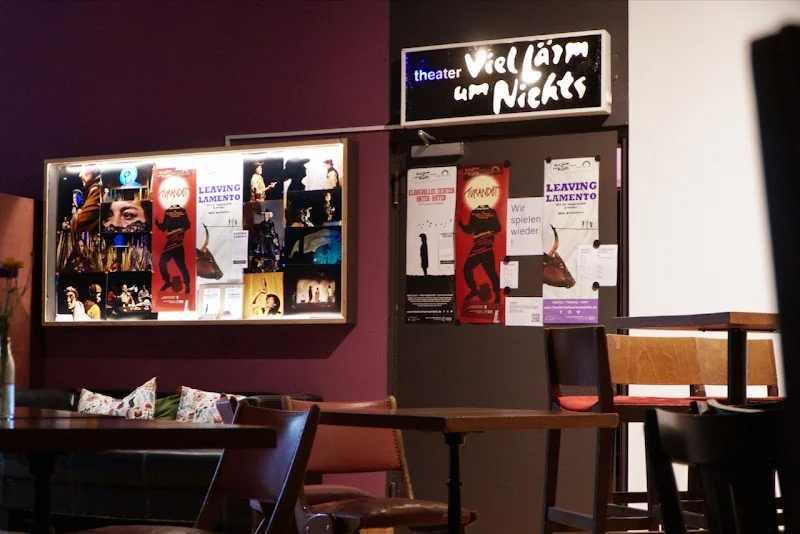
theater MUCH ADO ABOUT NOTHING is a free theater in Munich-Pasing with a permanent home in the Pasinger Fabrik. The stage emerged from a free group founded in 1985 and has been closely linked to the development of the former factory site since its first premiere in 1986. Today, the venue combines acting, music, dance, readings, and special film formats into a program explicitly designed for a broad audience in western Munich. Those looking for an independent theater with character, history, and a lively venue will find here a stage that sees itself not as an anonymous large address but as a concentrated cultural place with a stance. The location at Pasinger Bahnhof makes visiting pleasantly uncomplicated: The Pasinger Fabrik is located directly at the north exit of the station, so arrival, box office, and the walk to the theater are very close together. ([theaterviellaermumnichts.de](https://www.theaterviellaermumnichts.de/geschichte))
Current Events, Schedule, and Tickets
The schedule is intentionally kept diverse: The Pasinger Fabrik describes the theater as an independent, culture department-supported free stage that currently brings two new original productions to the stage each year and supplements the program with revivals, selected guest performances, readings, concerts, cinema for special film formats, video on demand, and discourse formats. This mix is particularly relevant for inquiries about the schedule, upcoming events, and programs because it shows that not only classic theater dates are running here, but also formats that pique curiosity and appeal to regular guests as well as first-time visitors. On the theater's website, this approach is explicitly linked to a process-based, community-oriented working method that thinks together content from Shakespeare to modern materials, from language to music, and from light entertainment to stimulating topics. This is precisely what makes the house special: It does not merely produce dates but a stance that repeatedly manifests itself anew on stage. ([pasinger-fabrik.de](https://pasinger-fabrik.de/theater-viel-laerm-um-nichts-allgemein/))
There are several ways to purchase tickets that make attending flexible. Tickets for events at the Pasinger Fabrik and the theater MUCH ADO ABOUT NOTHING are available at the box office, through MünchenTicket, at affiliated advance sales points, as print-at-home tickets, and in the muenchen app. The theater website also directly refers to booking through the schedule, allowing tickets to be secured quickly and without detours depending on the date. The clear box office structure is particularly practical: The box office is open Tuesday to Sunday from 5:30 PM to 8:30 PM, which is especially helpful for evening performances and spontaneous decisions. For an SEO-oriented perspective, this is important because the combination of schedule, tickets, and current events most strongly consolidates search interest. So, if someone searches for theater much ado about nothing tickets or theater much ado about nothing upcoming events, they end up here at a place with real ticket logic, visible dates, and a pleasantly manageable visit process. ([pasinger-fabrik.de](https://pasinger-fabrik.de/ticket-info/?utm_source=openai))
The thematic range of the schedule also helps to clearly recognize the brand of the house. On the official page, for example, Coriolan and The Turing Machine stand alongside other productions, showing that the stage accommodates both classic dramas and contemporary materials. This is helpful for visitors because it becomes clear at first glance that the theater cannot be reduced to a single genre. Those interested in a date thus receive not only a performance but often also a clear thematic approach to the respective production. This principle also positively affects findability: Terms like program, schedule, events, tickets, and upcoming events do not appear as mere search words but as real user signals that exactly match what the stage actually offers. ([theaterviellaermumnichts.de](https://www.theaterviellaermumnichts.de/spielplan?utm_source=openai))
Directions, Opening Hours, and Parking in Munich-Pasing
The approach is one of the biggest advantages of this venue. According to the official directions, the Pasinger Fabrik is located directly at the north exit of Pasing Bahnhof; from Marienplatz, it takes about 12 minutes with the S-Bahn lines S3, S4, S6, and S8. This proximity also explains why many visitors land here when searching for directions and public transport. Those arriving by train or S-Bahn only need to walk a few steps from the station to the house and reach both the box office and entrance in a very short time. This is often more valuable in everyday life than a theoretically closer but hard-to-find venue. For visitors with a longer journey, this is pleasant because the routes can be well planned and orientation on site remains clear. The opening hours further support this structure: The box office is open Tuesday to Sunday from 5:30 PM to 8:30 PM, making last-minute ticket purchases possible. ([pasinger-fabrik.de](https://pasinger-fabrik.de/besuch/))
When it comes to parking, a differentiated answer is worthwhile. The official pages of the Pasinger Fabrik and the theater emphasize the good accessibility by S-Bahn and do not mention any own visitor parking spaces. The FAQ also explicitly states that currently there are no designated parking spaces for people with disabilities. Therefore, anyone wishing to come by car should consciously plan their visit in advance and not rely on a parking area immediately in front of the door. An external directory lists the nearby option of P+R Westkreuz at Haberlandstraße, about 1.1 kilometers away. In practice, this means: The theater works most comfortably via public transport, while drivers should check their route and possible parking solutions early. This combination of clear train connections and careful parking planning is a typical feature of a cultural venue in a central Munich location. ([pasinger-fabrik.de](https://pasinger-fabrik.de/services/faq/?utm_source=openai))
The orientation at the house itself is also clear. The box office is located at the west entrance at the back end of the terrace, which is particularly helpful if one arrives just before the start or decides spontaneously to attend a performance. For many visitors, this short path is a real comfort factor: One gets off at the station, walks to the house, picks up tickets at the box office if necessary, and can then directly focus on the cultural evening. Those planning a theater visit in Munich benefit here from a rare interplay of city center connection, good service, and a location that does not get lost in traffic. This fits the venue very well to search queries like directions, opening hours, and parking because the answers do not consist of advertising language but of clear, practical information for the day of the visit. ([pasinger-fabrik.de](https://pasinger-fabrik.de/ticket-info/))
Seating Plan, Small Stage, and Accessible Seats
The spatial structure of the Pasinger Fabrik is particularly relevant for theater visits because it shows that here, a large, impersonal multipurpose hall is not used, but a clearly defined play space. The technical equipment states that the Small Stage has an area of 124.5 square meters, a stage width of 6 by 4 meters, and 94 seats. On the own event page of the Small Stage, it is also mentioned that there are over 100 seats. These figures do not contradict each other but rather show that the seating can vary depending on format, sight axis, and type of production. For inquiries about seating plan and seats, this is important information because visitors understand that the space remains manageable and can still be used differently. For theater formats, concerts, and cinema, this is a great strength: proximity to the stage, clear sight, and an atmosphere that does not thrive on size but on presence and concentration. ([pasinger-fabrik.de](https://pasinger-fabrik.de/services/technische-ausstattung-pasinger-fabrik/?utm_source=openai))
Regarding accessibility, the Pasinger Fabrik provides concrete information that is crucial for many guests. The venue is partially accessible, offering a barrier-free access via ramp, an elevator to the galleries on the first floor and to the studios in the basement, as well as accessible toilets in the bar. Two wheelchair spaces are reserved for the Small Stage; however, these must be booked through the box office and not online. Additionally, guide dogs are allowed, and the stairs are color-coded. For people with limited mobility, this is a good, albeit not completely perfect solution, as the operation openly communicates what is possible and what is not. This honesty is helpful for visitors searching for seating plan, accessible or wheelchair spaces. The theater explicitly sells tickets for such seats at the box office, allowing individual questions to be clarified on site. ([pasinger-fabrik.de](https://pasinger-fabrik.de/services/service/?utm_source=openai))
The view of the space is also interesting for regular guests. A smaller stage creates a different perception of acting, music, and language because the distance between the audience and the ensemble remains minimal. This fits very well with the artistic stance of the house, which sees itself as an actor's theater and places great value on presence. When visitors land on theater much ado about nothing seating plan or small stage, it is not only about practical seating arrangements but also about the relationship between space and effect. A limited hall usually leads to a more intense experience because facial expressions, voice, and body work arrive more immediately. This is precisely why the Small Stage is not just a technical space but a central part of the identity of the house. ([theaterviellaermumnichts.de](https://www.theaterviellaermumnichts.de/geschichte))
History since 1985 and the Path to the Pasinger Fabrik
The history of the theater is closely linked to western Munich and the idea of a professional free theater. In autumn 1985, Margrit Carls and Andreas Seyferth founded a free group in Pasing with the aim of establishing a professional theater in the culturally barren west of Munich. They found the suitable location in the former production site of the household goods factory Ritter at Pasinger Bahnhof, which later became part of the development of the Pasinger Fabrik. Already in May 1986, the ensemble brought its first premiere to the stage with Shakespeare's Much Ado About Nothing. The production gave the group its name, and from the initial theater cell, an artistic nucleus of the emerging cultural center developed. For the regional cultural history, this is an important point because the house did not simply move into a finished center but decisively shaped the emergence of this center. ([theaterviellaermumnichts.de](https://www.theaterviellaermumnichts.de/geschichte))
The official historical presentation also emphasizes how strongly the theater has grown over the decades. As of April 2026, the house counts 89 productions, including 18 Shakespeare works. This is remarkable because it not only shows a long performance tradition but also an enormous range of materials, forms, and casts. The history makes it clear that the house has never committed to a rigid assortment: There have been classics, adaptations, original creations, adaptations of stories and epics, as well as productions that ventured into the absurd, convoluted, and musical. The connection to other artists, directors, musicians, and guests has also run through the decades. This has resulted in a theater that, while firmly anchored, never feels like a rigid institution. This mix of continuity and experimentation is what makes the place attractive. ([theaterviellaermumnichts.de](https://www.theaterviellaermumnichts.de/geschichte))
For the classification in Munich, it is also important that the theater has been supported by the culture department of the state capital since its inception and has a permanent venue in the Pasinger Fabrik. The history speaks of politically and architecturally tumultuous years, of renovation phases, and of the transformation of the old Ritter factory into the municipal cultural center Pasinger Fabrik. This cultural foundation explains why the house today functions not as a solitary but as part of a larger cultural and civic center. Just search queries like theater pasing much ado about nothing or theater much ado about nothing munich are therefore historically well-founded: The theater is a Munich district venue with a long continuity but at the same time an open playground for the free scene. ([theaterviellaermumnichts.de](https://www.theaterviellaermumnichts.de/geschichte))
Original Productions, Shakespeare, and the Artistic Profile
The artistic profile of theater MUCH ADO ABOUT NOTHING is clear and at the same time surprisingly flexible. On the official page, the house describes itself as a place with its own translations and versions, with revues, collages, and play developments, as well as a connection of spoken, music, and dance theater. Shakespeare remains the house author and teacher, but not in a museum form, but as a starting point for its own interpretations, linguistic sharpness, and always new spatial designs. This attitude is one reason why many search queries about the theater are not only formulated by name but also by program, schedule, or upcoming events. The audience does not expect an interchangeable repertoire here but a distinctive style. This distinctive style thrives on intellectual curiosity, self-irony, playful joy, and the willingness to seek materials even where they are rarely found on German stages. ([theaterviellaermumnichts.de](https://www.theaterviellaermumnichts.de/ueber-uns))
The thematic range is also remarkable. In the historical presentation, authors such as Beaumarchais, Marivaux, Andersen, Schnitzler, Ostrowski, Panizza, Giraudoux, and Gozzi are mentioned, alongside adaptations of The Chairs, King Ubu, The Rhinoceros, or Victor or the Children in Power. Additionally, there are original creations, adaptations of literary materials, and increasingly also film formats. Since the 2021/22 season, the artistic direction has been expanded by Arno Friedrich, which has supplemented the schedule with further filmic, small discussion, and discourse formats. This development is important for the perception of the house because it shows that the theater does not only manage the past but also tries out new forms in the current production everyday life. This is precisely what feeds the appeal for people searching for theater much ado about nothing program or upcoming events and at the same time expect more than a classic spoken stage. ([theaterviellaermumnichts.de](https://www.theaterviellaermumnichts.de/geschichte))
The guiding idea of the house is clearly formulated: Theater should be a place of encounter, anchored in western Munich and open to the whole city. This attitude connects the location with the artistic claim and explains why the productions often oscillate between banter and profundity, between audience pleasure and intellectual density. The theater sees itself as a space where the human being is at the center and where language, body, music, and image mutually reinforce each other. For visitors, this means a special mix of proximity, recognizability, and surprise. Those who engage with the house usually do not experience standardized theater goods but a form of contemporary art that continually reassembles itself. This is precisely why the name theater MUCH ADO ABOUT NOTHING has such a striking effect: It refers to self-irony but also to a working attitude that creates much expressiveness from little surface. ([theaterviellaermumnichts.de](https://www.theaterviellaermumnichts.de/ueber-uns))
The Pasinger Fabrik as a Cultural Center, Cantina, and Visitor Tips
Those visiting theater MUCH ADO ABOUT NOTHING experience not only a stage but an entire cultural and civic center. The Pasinger Fabrik is a municipal house with theater, concerts, exhibitions, and gastronomy. In addition to the theater, there are other cultural and social actors housed there, including the children's and youth cultural workshop, the Fabi, the Munich Children's and Youth Forum, the Fabrikkinder, Streetwork Pasing, and the Cantina. This mix makes the place a real neighborhood center rather than an isolated cultural island. For visitors, this means: One can eat before the performance, visit exhibitions, or simply absorb the character of the house. The Cantina especially contributes to the fact that the theater evening does not feel abrupt but is pleasantly embedded. ([pasinger-fabrik.de](https://pasinger-fabrik.de/die-fabrik/?utm_source=openai))
The Cantina itself is more than just a quick supply point. According to the official description, it offers a restaurant, café, and bar concept with industrial charm, a terrace, and a wide range of food and drink options. For events, there are different room situations, from smaller restaurant areas to the glass-covered light courtyard and the bar. This is practical for theater guests because it allows the stay to be extended or shortened depending on how much time is left before the start. Additionally, the clear opening hours of the house come into play: The Cantina is open Monday to Wednesday from 10:00 AM to 10:30 PM, Thursday and Friday as well as Saturday from 10:00 AM to 11:00 PM, and Sunday from 10:00 AM to 9:30 PM. This creates a fully-fledged cultural venue where one can not only attend a performance but spend an entire evening. ([pasinger-fabrik.de](https://pasinger-fabrik.de/organizer/gastronomie-cantina/?utm_source=openai))
For the visit on site, a few simple rules are particularly useful. The box office of the Pasinger Fabrik is located at the west entrance at the back end of the terrace and is open Tuesday to Sunday from 5:30 PM to 8:30 PM. This makes orientation easy, especially when coming for the first time or arriving shortly before the performance begins. Those needing accessible assistance should report to the box office, as wheelchair spaces, discounts, companions, and special requests can be best coordinated there. Digital information is also provided: The website offers a clear structure with schedule, ticket info, accessibility, contact, and directions, as well as a program booklet. This fits the house well to the frequently searched terms opening hours, directions, tickets, and seating plan because the paths are short and the information is clear. Thus, those visiting the theater experience not only an art evening but a precisely organized cultural venue with reliable service. ([pasinger-fabrik.de](https://pasinger-fabrik.de/ticket-info/))
Sources:
- theater MUCH ADO ABOUT NOTHING - Official Website
- theater MUCH ADO ABOUT NOTHING - History
- theater MUCH ADO ABOUT NOTHING - Directions and Contact
- theater MUCH ADO ABOUT NOTHING - Tickets
- Pasinger Fabrik - theater MUCH ADO ABOUT NOTHING
- Pasinger Fabrik - Box Office and Ticket Info
- Pasinger Fabrik - Contact and Directions
- Pasinger Fabrik - Accessibility
- Pasinger Fabrik - Technical Equipment
- Pasinger Fabrik - Cultural and Civic Center
Show moreShow less
theater MUCH ADO ABOUT NOTHING | Schedule & Tickets
theater MUCH ADO ABOUT NOTHING is a free theater in Munich-Pasing with a permanent home in the Pasinger Fabrik. The stage emerged from a free group founded in 1985 and has been closely linked to the development of the former factory site since its first premiere in 1986. Today, the venue combines acting, music, dance, readings, and special film formats into a program explicitly designed for a broad audience in western Munich. Those looking for an independent theater with character, history, and a lively venue will find here a stage that sees itself not as an anonymous large address but as a concentrated cultural place with a stance. The location at Pasinger Bahnhof makes visiting pleasantly uncomplicated: The Pasinger Fabrik is located directly at the north exit of the station, so arrival, box office, and the walk to the theater are very close together. ([theaterviellaermumnichts.de](https://www.theaterviellaermumnichts.de/geschichte))
Current Events, Schedule, and Tickets
The schedule is intentionally kept diverse: The Pasinger Fabrik describes the theater as an independent, culture department-supported free stage that currently brings two new original productions to the stage each year and supplements the program with revivals, selected guest performances, readings, concerts, cinema for special film formats, video on demand, and discourse formats. This mix is particularly relevant for inquiries about the schedule, upcoming events, and programs because it shows that not only classic theater dates are running here, but also formats that pique curiosity and appeal to regular guests as well as first-time visitors. On the theater's website, this approach is explicitly linked to a process-based, community-oriented working method that thinks together content from Shakespeare to modern materials, from language to music, and from light entertainment to stimulating topics. This is precisely what makes the house special: It does not merely produce dates but a stance that repeatedly manifests itself anew on stage. ([pasinger-fabrik.de](https://pasinger-fabrik.de/theater-viel-laerm-um-nichts-allgemein/))
There are several ways to purchase tickets that make attending flexible. Tickets for events at the Pasinger Fabrik and the theater MUCH ADO ABOUT NOTHING are available at the box office, through MünchenTicket, at affiliated advance sales points, as print-at-home tickets, and in the muenchen app. The theater website also directly refers to booking through the schedule, allowing tickets to be secured quickly and without detours depending on the date. The clear box office structure is particularly practical: The box office is open Tuesday to Sunday from 5:30 PM to 8:30 PM, which is especially helpful for evening performances and spontaneous decisions. For an SEO-oriented perspective, this is important because the combination of schedule, tickets, and current events most strongly consolidates search interest. So, if someone searches for theater much ado about nothing tickets or theater much ado about nothing upcoming events, they end up here at a place with real ticket logic, visible dates, and a pleasantly manageable visit process. ([pasinger-fabrik.de](https://pasinger-fabrik.de/ticket-info/?utm_source=openai))
The thematic range of the schedule also helps to clearly recognize the brand of the house. On the official page, for example, Coriolan and The Turing Machine stand alongside other productions, showing that the stage accommodates both classic dramas and contemporary materials. This is helpful for visitors because it becomes clear at first glance that the theater cannot be reduced to a single genre. Those interested in a date thus receive not only a performance but often also a clear thematic approach to the respective production. This principle also positively affects findability: Terms like program, schedule, events, tickets, and upcoming events do not appear as mere search words but as real user signals that exactly match what the stage actually offers. ([theaterviellaermumnichts.de](https://www.theaterviellaermumnichts.de/spielplan?utm_source=openai))
Directions, Opening Hours, and Parking in Munich-Pasing
The approach is one of the biggest advantages of this venue. According to the official directions, the Pasinger Fabrik is located directly at the north exit of Pasing Bahnhof; from Marienplatz, it takes about 12 minutes with the S-Bahn lines S3, S4, S6, and S8. This proximity also explains why many visitors land here when searching for directions and public transport. Those arriving by train or S-Bahn only need to walk a few steps from the station to the house and reach both the box office and entrance in a very short time. This is often more valuable in everyday life than a theoretically closer but hard-to-find venue. For visitors with a longer journey, this is pleasant because the routes can be well planned and orientation on site remains clear. The opening hours further support this structure: The box office is open Tuesday to Sunday from 5:30 PM to 8:30 PM, making last-minute ticket purchases possible. ([pasinger-fabrik.de](https://pasinger-fabrik.de/besuch/))
When it comes to parking, a differentiated answer is worthwhile. The official pages of the Pasinger Fabrik and the theater emphasize the good accessibility by S-Bahn and do not mention any own visitor parking spaces. The FAQ also explicitly states that currently there are no designated parking spaces for people with disabilities. Therefore, anyone wishing to come by car should consciously plan their visit in advance and not rely on a parking area immediately in front of the door. An external directory lists the nearby option of P+R Westkreuz at Haberlandstraße, about 1.1 kilometers away. In practice, this means: The theater works most comfortably via public transport, while drivers should check their route and possible parking solutions early. This combination of clear train connections and careful parking planning is a typical feature of a cultural venue in a central Munich location. ([pasinger-fabrik.de](https://pasinger-fabrik.de/services/faq/?utm_source=openai))
The orientation at the house itself is also clear. The box office is located at the west entrance at the back end of the terrace, which is particularly helpful if one arrives just before the start or decides spontaneously to attend a performance. For many visitors, this short path is a real comfort factor: One gets off at the station, walks to the house, picks up tickets at the box office if necessary, and can then directly focus on the cultural evening. Those planning a theater visit in Munich benefit here from a rare interplay of city center connection, good service, and a location that does not get lost in traffic. This fits the venue very well to search queries like directions, opening hours, and parking because the answers do not consist of advertising language but of clear, practical information for the day of the visit. ([pasinger-fabrik.de](https://pasinger-fabrik.de/ticket-info/))
Seating Plan, Small Stage, and Accessible Seats
The spatial structure of the Pasinger Fabrik is particularly relevant for theater visits because it shows that here, a large, impersonal multipurpose hall is not used, but a clearly defined play space. The technical equipment states that the Small Stage has an area of 124.5 square meters, a stage width of 6 by 4 meters, and 94 seats. On the own event page of the Small Stage, it is also mentioned that there are over 100 seats. These figures do not contradict each other but rather show that the seating can vary depending on format, sight axis, and type of production. For inquiries about seating plan and seats, this is important information because visitors understand that the space remains manageable and can still be used differently. For theater formats, concerts, and cinema, this is a great strength: proximity to the stage, clear sight, and an atmosphere that does not thrive on size but on presence and concentration. ([pasinger-fabrik.de](https://pasinger-fabrik.de/services/technische-ausstattung-pasinger-fabrik/?utm_source=openai))
Regarding accessibility, the Pasinger Fabrik provides concrete information that is crucial for many guests. The venue is partially accessible, offering a barrier-free access via ramp, an elevator to the galleries on the first floor and to the studios in the basement, as well as accessible toilets in the bar. Two wheelchair spaces are reserved for the Small Stage; however, these must be booked through the box office and not online. Additionally, guide dogs are allowed, and the stairs are color-coded. For people with limited mobility, this is a good, albeit not completely perfect solution, as the operation openly communicates what is possible and what is not. This honesty is helpful for visitors searching for seating plan, accessible or wheelchair spaces. The theater explicitly sells tickets for such seats at the box office, allowing individual questions to be clarified on site. ([pasinger-fabrik.de](https://pasinger-fabrik.de/services/service/?utm_source=openai))
The view of the space is also interesting for regular guests. A smaller stage creates a different perception of acting, music, and language because the distance between the audience and the ensemble remains minimal. This fits very well with the artistic stance of the house, which sees itself as an actor's theater and places great value on presence. When visitors land on theater much ado about nothing seating plan or small stage, it is not only about practical seating arrangements but also about the relationship between space and effect. A limited hall usually leads to a more intense experience because facial expressions, voice, and body work arrive more immediately. This is precisely why the Small Stage is not just a technical space but a central part of the identity of the house. ([theaterviellaermumnichts.de](https://www.theaterviellaermumnichts.de/geschichte))
History since 1985 and the Path to the Pasinger Fabrik
The history of the theater is closely linked to western Munich and the idea of a professional free theater. In autumn 1985, Margrit Carls and Andreas Seyferth founded a free group in Pasing with the aim of establishing a professional theater in the culturally barren west of Munich. They found the suitable location in the former production site of the household goods factory Ritter at Pasinger Bahnhof, which later became part of the development of the Pasinger Fabrik. Already in May 1986, the ensemble brought its first premiere to the stage with Shakespeare's Much Ado About Nothing. The production gave the group its name, and from the initial theater cell, an artistic nucleus of the emerging cultural center developed. For the regional cultural history, this is an important point because the house did not simply move into a finished center but decisively shaped the emergence of this center. ([theaterviellaermumnichts.de](https://www.theaterviellaermumnichts.de/geschichte))
The official historical presentation also emphasizes how strongly the theater has grown over the decades. As of April 2026, the house counts 89 productions, including 18 Shakespeare works. This is remarkable because it not only shows a long performance tradition but also an enormous range of materials, forms, and casts. The history makes it clear that the house has never committed to a rigid assortment: There have been classics, adaptations, original creations, adaptations of stories and epics, as well as productions that ventured into the absurd, convoluted, and musical. The connection to other artists, directors, musicians, and guests has also run through the decades. This has resulted in a theater that, while firmly anchored, never feels like a rigid institution. This mix of continuity and experimentation is what makes the place attractive. ([theaterviellaermumnichts.de](https://www.theaterviellaermumnichts.de/geschichte))
For the classification in Munich, it is also important that the theater has been supported by the culture department of the state capital since its inception and has a permanent venue in the Pasinger Fabrik. The history speaks of politically and architecturally tumultuous years, of renovation phases, and of the transformation of the old Ritter factory into the municipal cultural center Pasinger Fabrik. This cultural foundation explains why the house today functions not as a solitary but as part of a larger cultural and civic center. Just search queries like theater pasing much ado about nothing or theater much ado about nothing munich are therefore historically well-founded: The theater is a Munich district venue with a long continuity but at the same time an open playground for the free scene. ([theaterviellaermumnichts.de](https://www.theaterviellaermumnichts.de/geschichte))
Original Productions, Shakespeare, and the Artistic Profile
The artistic profile of theater MUCH ADO ABOUT NOTHING is clear and at the same time surprisingly flexible. On the official page, the house describes itself as a place with its own translations and versions, with revues, collages, and play developments, as well as a connection of spoken, music, and dance theater. Shakespeare remains the house author and teacher, but not in a museum form, but as a starting point for its own interpretations, linguistic sharpness, and always new spatial designs. This attitude is one reason why many search queries about the theater are not only formulated by name but also by program, schedule, or upcoming events. The audience does not expect an interchangeable repertoire here but a distinctive style. This distinctive style thrives on intellectual curiosity, self-irony, playful joy, and the willingness to seek materials even where they are rarely found on German stages. ([theaterviellaermumnichts.de](https://www.theaterviellaermumnichts.de/ueber-uns))
The thematic range is also remarkable. In the historical presentation, authors such as Beaumarchais, Marivaux, Andersen, Schnitzler, Ostrowski, Panizza, Giraudoux, and Gozzi are mentioned, alongside adaptations of The Chairs, King Ubu, The Rhinoceros, or Victor or the Children in Power. Additionally, there are original creations, adaptations of literary materials, and increasingly also film formats. Since the 2021/22 season, the artistic direction has been expanded by Arno Friedrich, which has supplemented the schedule with further filmic, small discussion, and discourse formats. This development is important for the perception of the house because it shows that the theater does not only manage the past but also tries out new forms in the current production everyday life. This is precisely what feeds the appeal for people searching for theater much ado about nothing program or upcoming events and at the same time expect more than a classic spoken stage. ([theaterviellaermumnichts.de](https://www.theaterviellaermumnichts.de/geschichte))
The guiding idea of the house is clearly formulated: Theater should be a place of encounter, anchored in western Munich and open to the whole city. This attitude connects the location with the artistic claim and explains why the productions often oscillate between banter and profundity, between audience pleasure and intellectual density. The theater sees itself as a space where the human being is at the center and where language, body, music, and image mutually reinforce each other. For visitors, this means a special mix of proximity, recognizability, and surprise. Those who engage with the house usually do not experience standardized theater goods but a form of contemporary art that continually reassembles itself. This is precisely why the name theater MUCH ADO ABOUT NOTHING has such a striking effect: It refers to self-irony but also to a working attitude that creates much expressiveness from little surface. ([theaterviellaermumnichts.de](https://www.theaterviellaermumnichts.de/ueber-uns))
The Pasinger Fabrik as a Cultural Center, Cantina, and Visitor Tips
Those visiting theater MUCH ADO ABOUT NOTHING experience not only a stage but an entire cultural and civic center. The Pasinger Fabrik is a municipal house with theater, concerts, exhibitions, and gastronomy. In addition to the theater, there are other cultural and social actors housed there, including the children's and youth cultural workshop, the Fabi, the Munich Children's and Youth Forum, the Fabrikkinder, Streetwork Pasing, and the Cantina. This mix makes the place a real neighborhood center rather than an isolated cultural island. For visitors, this means: One can eat before the performance, visit exhibitions, or simply absorb the character of the house. The Cantina especially contributes to the fact that the theater evening does not feel abrupt but is pleasantly embedded. ([pasinger-fabrik.de](https://pasinger-fabrik.de/die-fabrik/?utm_source=openai))
The Cantina itself is more than just a quick supply point. According to the official description, it offers a restaurant, café, and bar concept with industrial charm, a terrace, and a wide range of food and drink options. For events, there are different room situations, from smaller restaurant areas to the glass-covered light courtyard and the bar. This is practical for theater guests because it allows the stay to be extended or shortened depending on how much time is left before the start. Additionally, the clear opening hours of the house come into play: The Cantina is open Monday to Wednesday from 10:00 AM to 10:30 PM, Thursday and Friday as well as Saturday from 10:00 AM to 11:00 PM, and Sunday from 10:00 AM to 9:30 PM. This creates a fully-fledged cultural venue where one can not only attend a performance but spend an entire evening. ([pasinger-fabrik.de](https://pasinger-fabrik.de/organizer/gastronomie-cantina/?utm_source=openai))
For the visit on site, a few simple rules are particularly useful. The box office of the Pasinger Fabrik is located at the west entrance at the back end of the terrace and is open Tuesday to Sunday from 5:30 PM to 8:30 PM. This makes orientation easy, especially when coming for the first time or arriving shortly before the performance begins. Those needing accessible assistance should report to the box office, as wheelchair spaces, discounts, companions, and special requests can be best coordinated there. Digital information is also provided: The website offers a clear structure with schedule, ticket info, accessibility, contact, and directions, as well as a program booklet. This fits the house well to the frequently searched terms opening hours, directions, tickets, and seating plan because the paths are short and the information is clear. Thus, those visiting the theater experience not only an art evening but a precisely organized cultural venue with reliable service. ([pasinger-fabrik.de](https://pasinger-fabrik.de/ticket-info/))
Sources:
- theater MUCH ADO ABOUT NOTHING - Official Website
- theater MUCH ADO ABOUT NOTHING - History
- theater MUCH ADO ABOUT NOTHING - Directions and Contact
- theater MUCH ADO ABOUT NOTHING - Tickets
- Pasinger Fabrik - theater MUCH ADO ABOUT NOTHING
- Pasinger Fabrik - Box Office and Ticket Info
- Pasinger Fabrik - Contact and Directions
- Pasinger Fabrik - Accessibility
- Pasinger Fabrik - Technical Equipment
- Pasinger Fabrik - Cultural and Civic Center
theater MUCH ADO ABOUT NOTHING | Schedule & Tickets
theater MUCH ADO ABOUT NOTHING is a free theater in Munich-Pasing with a permanent home in the Pasinger Fabrik. The stage emerged from a free group founded in 1985 and has been closely linked to the development of the former factory site since its first premiere in 1986. Today, the venue combines acting, music, dance, readings, and special film formats into a program explicitly designed for a broad audience in western Munich. Those looking for an independent theater with character, history, and a lively venue will find here a stage that sees itself not as an anonymous large address but as a concentrated cultural place with a stance. The location at Pasinger Bahnhof makes visiting pleasantly uncomplicated: The Pasinger Fabrik is located directly at the north exit of the station, so arrival, box office, and the walk to the theater are very close together. ([theaterviellaermumnichts.de](https://www.theaterviellaermumnichts.de/geschichte))
Current Events, Schedule, and Tickets
The schedule is intentionally kept diverse: The Pasinger Fabrik describes the theater as an independent, culture department-supported free stage that currently brings two new original productions to the stage each year and supplements the program with revivals, selected guest performances, readings, concerts, cinema for special film formats, video on demand, and discourse formats. This mix is particularly relevant for inquiries about the schedule, upcoming events, and programs because it shows that not only classic theater dates are running here, but also formats that pique curiosity and appeal to regular guests as well as first-time visitors. On the theater's website, this approach is explicitly linked to a process-based, community-oriented working method that thinks together content from Shakespeare to modern materials, from language to music, and from light entertainment to stimulating topics. This is precisely what makes the house special: It does not merely produce dates but a stance that repeatedly manifests itself anew on stage. ([pasinger-fabrik.de](https://pasinger-fabrik.de/theater-viel-laerm-um-nichts-allgemein/))
There are several ways to purchase tickets that make attending flexible. Tickets for events at the Pasinger Fabrik and the theater MUCH ADO ABOUT NOTHING are available at the box office, through MünchenTicket, at affiliated advance sales points, as print-at-home tickets, and in the muenchen app. The theater website also directly refers to booking through the schedule, allowing tickets to be secured quickly and without detours depending on the date. The clear box office structure is particularly practical: The box office is open Tuesday to Sunday from 5:30 PM to 8:30 PM, which is especially helpful for evening performances and spontaneous decisions. For an SEO-oriented perspective, this is important because the combination of schedule, tickets, and current events most strongly consolidates search interest. So, if someone searches for theater much ado about nothing tickets or theater much ado about nothing upcoming events, they end up here at a place with real ticket logic, visible dates, and a pleasantly manageable visit process. ([pasinger-fabrik.de](https://pasinger-fabrik.de/ticket-info/?utm_source=openai))
The thematic range of the schedule also helps to clearly recognize the brand of the house. On the official page, for example, Coriolan and The Turing Machine stand alongside other productions, showing that the stage accommodates both classic dramas and contemporary materials. This is helpful for visitors because it becomes clear at first glance that the theater cannot be reduced to a single genre. Those interested in a date thus receive not only a performance but often also a clear thematic approach to the respective production. This principle also positively affects findability: Terms like program, schedule, events, tickets, and upcoming events do not appear as mere search words but as real user signals that exactly match what the stage actually offers. ([theaterviellaermumnichts.de](https://www.theaterviellaermumnichts.de/spielplan?utm_source=openai))
Directions, Opening Hours, and Parking in Munich-Pasing
The approach is one of the biggest advantages of this venue. According to the official directions, the Pasinger Fabrik is located directly at the north exit of Pasing Bahnhof; from Marienplatz, it takes about 12 minutes with the S-Bahn lines S3, S4, S6, and S8. This proximity also explains why many visitors land here when searching for directions and public transport. Those arriving by train or S-Bahn only need to walk a few steps from the station to the house and reach both the box office and entrance in a very short time. This is often more valuable in everyday life than a theoretically closer but hard-to-find venue. For visitors with a longer journey, this is pleasant because the routes can be well planned and orientation on site remains clear. The opening hours further support this structure: The box office is open Tuesday to Sunday from 5:30 PM to 8:30 PM, making last-minute ticket purchases possible. ([pasinger-fabrik.de](https://pasinger-fabrik.de/besuch/))
When it comes to parking, a differentiated answer is worthwhile. The official pages of the Pasinger Fabrik and the theater emphasize the good accessibility by S-Bahn and do not mention any own visitor parking spaces. The FAQ also explicitly states that currently there are no designated parking spaces for people with disabilities. Therefore, anyone wishing to come by car should consciously plan their visit in advance and not rely on a parking area immediately in front of the door. An external directory lists the nearby option of P+R Westkreuz at Haberlandstraße, about 1.1 kilometers away. In practice, this means: The theater works most comfortably via public transport, while drivers should check their route and possible parking solutions early. This combination of clear train connections and careful parking planning is a typical feature of a cultural venue in a central Munich location. ([pasinger-fabrik.de](https://pasinger-fabrik.de/services/faq/?utm_source=openai))
The orientation at the house itself is also clear. The box office is located at the west entrance at the back end of the terrace, which is particularly helpful if one arrives just before the start or decides spontaneously to attend a performance. For many visitors, this short path is a real comfort factor: One gets off at the station, walks to the house, picks up tickets at the box office if necessary, and can then directly focus on the cultural evening. Those planning a theater visit in Munich benefit here from a rare interplay of city center connection, good service, and a location that does not get lost in traffic. This fits the venue very well to search queries like directions, opening hours, and parking because the answers do not consist of advertising language but of clear, practical information for the day of the visit. ([pasinger-fabrik.de](https://pasinger-fabrik.de/ticket-info/))
Seating Plan, Small Stage, and Accessible Seats
The spatial structure of the Pasinger Fabrik is particularly relevant for theater visits because it shows that here, a large, impersonal multipurpose hall is not used, but a clearly defined play space. The technical equipment states that the Small Stage has an area of 124.5 square meters, a stage width of 6 by 4 meters, and 94 seats. On the own event page of the Small Stage, it is also mentioned that there are over 100 seats. These figures do not contradict each other but rather show that the seating can vary depending on format, sight axis, and type of production. For inquiries about seating plan and seats, this is important information because visitors understand that the space remains manageable and can still be used differently. For theater formats, concerts, and cinema, this is a great strength: proximity to the stage, clear sight, and an atmosphere that does not thrive on size but on presence and concentration. ([pasinger-fabrik.de](https://pasinger-fabrik.de/services/technische-ausstattung-pasinger-fabrik/?utm_source=openai))
Regarding accessibility, the Pasinger Fabrik provides concrete information that is crucial for many guests. The venue is partially accessible, offering a barrier-free access via ramp, an elevator to the galleries on the first floor and to the studios in the basement, as well as accessible toilets in the bar. Two wheelchair spaces are reserved for the Small Stage; however, these must be booked through the box office and not online. Additionally, guide dogs are allowed, and the stairs are color-coded. For people with limited mobility, this is a good, albeit not completely perfect solution, as the operation openly communicates what is possible and what is not. This honesty is helpful for visitors searching for seating plan, accessible or wheelchair spaces. The theater explicitly sells tickets for such seats at the box office, allowing individual questions to be clarified on site. ([pasinger-fabrik.de](https://pasinger-fabrik.de/services/service/?utm_source=openai))
The view of the space is also interesting for regular guests. A smaller stage creates a different perception of acting, music, and language because the distance between the audience and the ensemble remains minimal. This fits very well with the artistic stance of the house, which sees itself as an actor's theater and places great value on presence. When visitors land on theater much ado about nothing seating plan or small stage, it is not only about practical seating arrangements but also about the relationship between space and effect. A limited hall usually leads to a more intense experience because facial expressions, voice, and body work arrive more immediately. This is precisely why the Small Stage is not just a technical space but a central part of the identity of the house. ([theaterviellaermumnichts.de](https://www.theaterviellaermumnichts.de/geschichte))
History since 1985 and the Path to the Pasinger Fabrik
The history of the theater is closely linked to western Munich and the idea of a professional free theater. In autumn 1985, Margrit Carls and Andreas Seyferth founded a free group in Pasing with the aim of establishing a professional theater in the culturally barren west of Munich. They found the suitable location in the former production site of the household goods factory Ritter at Pasinger Bahnhof, which later became part of the development of the Pasinger Fabrik. Already in May 1986, the ensemble brought its first premiere to the stage with Shakespeare's Much Ado About Nothing. The production gave the group its name, and from the initial theater cell, an artistic nucleus of the emerging cultural center developed. For the regional cultural history, this is an important point because the house did not simply move into a finished center but decisively shaped the emergence of this center. ([theaterviellaermumnichts.de](https://www.theaterviellaermumnichts.de/geschichte))
The official historical presentation also emphasizes how strongly the theater has grown over the decades. As of April 2026, the house counts 89 productions, including 18 Shakespeare works. This is remarkable because it not only shows a long performance tradition but also an enormous range of materials, forms, and casts. The history makes it clear that the house has never committed to a rigid assortment: There have been classics, adaptations, original creations, adaptations of stories and epics, as well as productions that ventured into the absurd, convoluted, and musical. The connection to other artists, directors, musicians, and guests has also run through the decades. This has resulted in a theater that, while firmly anchored, never feels like a rigid institution. This mix of continuity and experimentation is what makes the place attractive. ([theaterviellaermumnichts.de](https://www.theaterviellaermumnichts.de/geschichte))
For the classification in Munich, it is also important that the theater has been supported by the culture department of the state capital since its inception and has a permanent venue in the Pasinger Fabrik. The history speaks of politically and architecturally tumultuous years, of renovation phases, and of the transformation of the old Ritter factory into the municipal cultural center Pasinger Fabrik. This cultural foundation explains why the house today functions not as a solitary but as part of a larger cultural and civic center. Just search queries like theater pasing much ado about nothing or theater much ado about nothing munich are therefore historically well-founded: The theater is a Munich district venue with a long continuity but at the same time an open playground for the free scene. ([theaterviellaermumnichts.de](https://www.theaterviellaermumnichts.de/geschichte))
Original Productions, Shakespeare, and the Artistic Profile
The artistic profile of theater MUCH ADO ABOUT NOTHING is clear and at the same time surprisingly flexible. On the official page, the house describes itself as a place with its own translations and versions, with revues, collages, and play developments, as well as a connection of spoken, music, and dance theater. Shakespeare remains the house author and teacher, but not in a museum form, but as a starting point for its own interpretations, linguistic sharpness, and always new spatial designs. This attitude is one reason why many search queries about the theater are not only formulated by name but also by program, schedule, or upcoming events. The audience does not expect an interchangeable repertoire here but a distinctive style. This distinctive style thrives on intellectual curiosity, self-irony, playful joy, and the willingness to seek materials even where they are rarely found on German stages. ([theaterviellaermumnichts.de](https://www.theaterviellaermumnichts.de/ueber-uns))
The thematic range is also remarkable. In the historical presentation, authors such as Beaumarchais, Marivaux, Andersen, Schnitzler, Ostrowski, Panizza, Giraudoux, and Gozzi are mentioned, alongside adaptations of The Chairs, King Ubu, The Rhinoceros, or Victor or the Children in Power. Additionally, there are original creations, adaptations of literary materials, and increasingly also film formats. Since the 2021/22 season, the artistic direction has been expanded by Arno Friedrich, which has supplemented the schedule with further filmic, small discussion, and discourse formats. This development is important for the perception of the house because it shows that the theater does not only manage the past but also tries out new forms in the current production everyday life. This is precisely what feeds the appeal for people searching for theater much ado about nothing program or upcoming events and at the same time expect more than a classic spoken stage. ([theaterviellaermumnichts.de](https://www.theaterviellaermumnichts.de/geschichte))
The guiding idea of the house is clearly formulated: Theater should be a place of encounter, anchored in western Munich and open to the whole city. This attitude connects the location with the artistic claim and explains why the productions often oscillate between banter and profundity, between audience pleasure and intellectual density. The theater sees itself as a space where the human being is at the center and where language, body, music, and image mutually reinforce each other. For visitors, this means a special mix of proximity, recognizability, and surprise. Those who engage with the house usually do not experience standardized theater goods but a form of contemporary art that continually reassembles itself. This is precisely why the name theater MUCH ADO ABOUT NOTHING has such a striking effect: It refers to self-irony but also to a working attitude that creates much expressiveness from little surface. ([theaterviellaermumnichts.de](https://www.theaterviellaermumnichts.de/ueber-uns))
The Pasinger Fabrik as a Cultural Center, Cantina, and Visitor Tips
Those visiting theater MUCH ADO ABOUT NOTHING experience not only a stage but an entire cultural and civic center. The Pasinger Fabrik is a municipal house with theater, concerts, exhibitions, and gastronomy. In addition to the theater, there are other cultural and social actors housed there, including the children's and youth cultural workshop, the Fabi, the Munich Children's and Youth Forum, the Fabrikkinder, Streetwork Pasing, and the Cantina. This mix makes the place a real neighborhood center rather than an isolated cultural island. For visitors, this means: One can eat before the performance, visit exhibitions, or simply absorb the character of the house. The Cantina especially contributes to the fact that the theater evening does not feel abrupt but is pleasantly embedded. ([pasinger-fabrik.de](https://pasinger-fabrik.de/die-fabrik/?utm_source=openai))
The Cantina itself is more than just a quick supply point. According to the official description, it offers a restaurant, café, and bar concept with industrial charm, a terrace, and a wide range of food and drink options. For events, there are different room situations, from smaller restaurant areas to the glass-covered light courtyard and the bar. This is practical for theater guests because it allows the stay to be extended or shortened depending on how much time is left before the start. Additionally, the clear opening hours of the house come into play: The Cantina is open Monday to Wednesday from 10:00 AM to 10:30 PM, Thursday and Friday as well as Saturday from 10:00 AM to 11:00 PM, and Sunday from 10:00 AM to 9:30 PM. This creates a fully-fledged cultural venue where one can not only attend a performance but spend an entire evening. ([pasinger-fabrik.de](https://pasinger-fabrik.de/organizer/gastronomie-cantina/?utm_source=openai))
For the visit on site, a few simple rules are particularly useful. The box office of the Pasinger Fabrik is located at the west entrance at the back end of the terrace and is open Tuesday to Sunday from 5:30 PM to 8:30 PM. This makes orientation easy, especially when coming for the first time or arriving shortly before the performance begins. Those needing accessible assistance should report to the box office, as wheelchair spaces, discounts, companions, and special requests can be best coordinated there. Digital information is also provided: The website offers a clear structure with schedule, ticket info, accessibility, contact, and directions, as well as a program booklet. This fits the house well to the frequently searched terms opening hours, directions, tickets, and seating plan because the paths are short and the information is clear. Thus, those visiting the theater experience not only an art evening but a precisely organized cultural venue with reliable service. ([pasinger-fabrik.de](https://pasinger-fabrik.de/ticket-info/))
Sources:
- theater MUCH ADO ABOUT NOTHING - Official Website
- theater MUCH ADO ABOUT NOTHING - History
- theater MUCH ADO ABOUT NOTHING - Directions and Contact
- theater MUCH ADO ABOUT NOTHING - Tickets
- Pasinger Fabrik - theater MUCH ADO ABOUT NOTHING
- Pasinger Fabrik - Box Office and Ticket Info
- Pasinger Fabrik - Contact and Directions
- Pasinger Fabrik - Accessibility
- Pasinger Fabrik - Technical Equipment
- Pasinger Fabrik - Cultural and Civic Center
Upcoming Events
No events found
Frequently Asked Questions
Reviews
Noox “the real” Noox
9. February 2026
Great actors, Shakespeare in a different way. Creative and impressive.
Ralf Spindler
16. September 2025
Beautiful location, with a lot going on. Interesting program and good prices.
K Kr
30. October 2023
Autumn is theater time again! I saw "Coriolan" last Saturday. Shakespeare made understandable and thought-provoking. - You can trust yourself to that without being pretentious. Two warlords on their pedestals, the mother in the background, surrounded by the people, the Senate servants, the crowd. Very compact and at the same time absurd. I've already talked to friends about whether we should watch the whole drama together again.
Tobias Kern
29. November 2019
Small theater with great flair. The directors and actors have to come up with something due to the stage shape and the position of the seats. The plays are sometimes good, sometimes less so, and everyone should judge that for themselves. It's great to have something to eat and drink in the bar before and/or after.
Mike Zieglmeier
3. April 2024
Theater café and bar are also suitable as a space for family celebrations. Nice service. Small delicious buffet with soups and cakes.