
München
Spiridon-Louis-Ring 21, 80809 München, Deutschland
Theatron Munich | Whitsun Festival & Music Summer
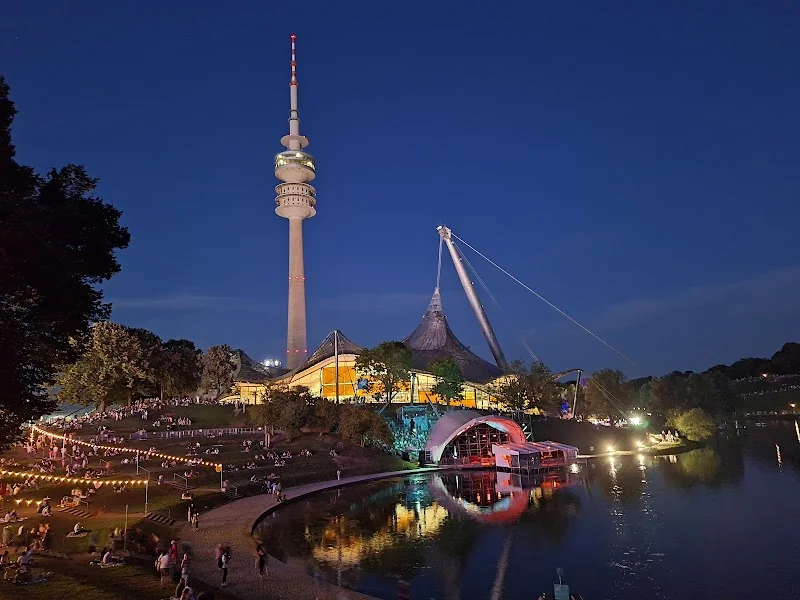
The Theatron is one of the most well-known open-air venues in Munich and a special meeting point for all those seeking free concerts, an extraordinary location by the water, and a genuine festival atmosphere. Located directly at the Olympic Lake in the Olympic Park, the stage on the amphitheater grounds combines historical significance with vibrant present. Those searching for Theatron Munich, Theatron Olympiapark, Theatron Whitsun Festival, or Theatron Music Summer usually want to quickly know when performances take place, how to get there, whether there are seats available, and what makes the location so unique. This overview is precisely intended for that purpose: as a compact yet informed introduction to one of the most atmospheric summer locations in the city. The Theatron stands for free concerts, support for emerging talent, international acts, and an audience that gathers on warm evenings on the stone steps around the lake. At the same time, the place is closely linked to the history of the 1972 Olympic Games and has developed from a temporary cultural venue into a permanent fixture of Munich's summer. ([olympiapark.de](https://www.olympiapark.de/en/the-olympic-park/park-overview/theatron))
Theatron Whitsun Festival 2026: Free Open-Air at Whitsun
The Theatron Whitsun Festival is for many Munich residents the unofficial start of the open-air season. The city of Munich announces the festival for 2026 from Saturday, May 23, to Whit Monday, May 25, 2026; performances will start at 5 PM each day, entry is free, and the program ranges from punk, pop, and rap to indie, electro, art-pop, hip-hop, and singer-songwriter. This mix is what makes it appealing: The Whitsun Festival does not focus on a single genre or high ticket prices, but rather on discovery, diversity, and spontaneity. Those who come can simply sit on the steps by the Olympic Lake and experience new acts without extensive planning. The event is organized in collaboration with the city of Munich and the Youth Cultural Works, with local ties and a clear focus on emerging and scene acts from Munich, Germany, and Europe. For SEO searches, terms like Theatron Whitsun Festival 2026, Theatron Program, Theatron Free, and Theatron Munich are particularly relevant as they reflect this search interest: When is the festival, what is happening there, and is it worth visiting even without a traditional concert ticket? The answer is clearly yes, as the festival is free, open to the public, and has been a fixed date in the Munich cultural calendar for years. ([muenchen.de](https://www.muenchen.de/node/8759?utm_source=openai))
The history of the Whitsun Festival also shows how strongly Theatron functions as a platform for new artists. According to Olympiapark, the festival tradition began as early as the early 1970s, but the actual Theatron Whitsun Festival celebrated its premiere in June 2000 and quickly became a staple in the park's annual calendar. This makes the location particularly interesting from a marketing and search perspective: Users searching for Theatron 2026 or Theatron Program 2026 not only want to see dates but usually also want to know if the event has a tradition, what its cultural significance is, and whether it is worth the trip for a short evening visit. This is where Theatron scores with a rare combination of free entry, central location, and summery lightness. Additionally, the festival atmosphere by the lake creates a feeling upon arrival that one is not just going to a concert but becoming part of an urban ritual. The frequent encounters between regional acts and international emerging bands provide musical surprises and ensure that the audience comes not only for well-known names but also to discover new voices. ([olympiapark.de](https://www.olympiapark.de/de/veranstaltungen/theatron-pfingstfestival-n5879?utm_source=openai))
Theatron Music Summer: Programs, Genres, and Summer Culture
If the Whitsun Festival marks the kickoff, then the Theatron Music Summer is the grand summer edition of the format. The official pages of muenchen.de and Olympiapark describe the Music Summer as a free open-air festival on the lakeside stage in the Olympic Park, which spans several weeks in August and features both hopeful newcomers and established bands. The musical spectrum is broad: jazz, pop, rock, hip-hop, classical, and world music are included, as well as current indie and songwriter formats. This stylistic openness explains why the search terms Theatron Music Summer, Theatron Music Summer 2026, and Theatron Program are so strongly associated with the location. Those expecting a classic festival with headliner obligations will not find it here; however, those curious about daily live concerts in a relaxed atmosphere will find one of the most beautiful summer spots in the city by the Olympic Lake. The role of the format within Munich's summer is also interesting: The Music Summer runs parallel to the summer festival in the Olympic Park and is thus part of a larger, very audience-friendly overall experience of music, leisure, and park culture. For SEO planning, this means that themes like open-air, free, music festival, lakeside stage, Olympic Lake, and summer concerts are closely linked and should appear together in the content. ([muenchen.de](https://www.muenchen.de/veranstaltungen/freizeit/feste-festivals/theatron-musiksommer-2026?utm_source=openai))
Particularly important for the perception of Theatron is the mix of tradition and current relevance. The Music Summer has been held at the amphitheater by the Olympic Lake since the early 1970s and has developed into one of the longest free music festivals in the world. According to Olympiapark and muenchen.de, this is a cult status that has not been artificially created but has grown over decades. For visitors, this means: You experience not just a concert but a piece of Munich's urban history in progress. The atmosphere is deliberately relaxed, as the format thrives on openness, short distances, and the idea of simply dropping by and discovering music. This is particularly relevant in 2026 because the search for Theatron Music Summer 2026 often connects with questions about the program, genres, and duration of the festival. Therefore, those searching for Theatron Program 2026 typically do not expect a rigid hall plan but a lively festival overview with changing bands and artists. This dynamism makes Theatron attractive for both search engines and users: It is a place where established traditions and changing content complement each other ideally. ([muenchen.de](https://www.muenchen.de/veranstaltungen/freizeit/feste-festivals/theatron-musiksommer-2026?utm_source=openai))
Directions and Parking at Theatron in the Olympic Park
For a location by the Olympic Lake, the journey is a central part of user interest, and therefore Theatron Directions and Theatron Parking are among the most important keywords. The official recommendation is clear: It is best to take the U3 or U8 to Olympiazentrum or Olympiapark; additionally, bus lines such as 144, 173, 180, and N76 serve the area around Theatron. For the Theatron Whitsun Festival 2026, the city of Munich even explicitly recommends arriving by U3 to Olympiazentrum/Olympiapark or by bicycle. This is not only convenient for visitors but also sensible, as the Olympic Park can become very crowded during popular events. Those arriving by car should pay attention to the official parking strategy of the Olympic Park: arrive early and approach the parking harp from the north via Georg-Brauchle-Ring. Especially for free open-air events, the parking situation is naturally more variable than at a fixed hall with reserved spaces, which is why public transport is usually the less stressful choice. For the search intent, it is important that users are not just looking for a theoretical city map but for reliable information on how to arrive on time and without detours. This information is also crucial for mobile-optimized landing pages, as visitors often ask for the quickest route, the nearest stops, or specific parking options. ([muenchen.de](https://www.muenchen.de/veranstaltungen/theatron-im-olympiapark?utm_source=openai))
Practical visits also include accessibility. The official information page mentions ground-level access, and there are also accessible restrooms and designated seating areas in the Olympic Tower area. This is an important factor for many users, as search queries like Theatron Directions often also encompass aspects like access, comfort, and orientation. The location itself helps: The Theatron is located directly on one of the most well-known axes of the Olympic Park, in an area that is generally well-connected and crossed by many visitor paths. Those exploring the park during the day can combine their evening visit with other leisure offerings, as the Olympic Park is much more than just a concert venue. This combination of events, natural space, and good public transport connections makes the location particularly attractive. Therefore, for visitor communication, it is advisable not only to mention the subway station but also to clearly convey that early arrival is sensible and that during heavy crowds, alternative routes like bike or public transport are often the better solution. Thus, a simple route description becomes a real service text with benefits for visitors. ([muenchen.de](https://www.muenchen.de/veranstaltungen/theatron-im-olympiapark?utm_source=openai))
Seating, Capacity, and Lakeside Stage at Olympic Lake
Capacity is one of the most searched topics related to Theatron, and for good reason: The amphitheater is visually open, functionally flexible, and can be interpreted differently depending on various event formats. On muenchen.de, Theatron is described as a semi-circular amphitheater for about 2,000 spectators with a lakeside stage. At the same time, Olympiapark reports that at particularly popular concerts, up to 7,000 people have found space on the stone steps. This range is important for SEO content because those searching for Theatron Seating or Theatron Capacity usually want a quick, reliable answer but are not necessarily satisfied with a single rigid number. Therefore, capacity should always be explained in relation to event type and usage. Those visiting Theatron do not experience a classic round seating model like in a theater but an open amphitheater with a lakeside stage and tiered area, where the atmosphere is just as important as the formal number of seats. This open architecture defines the place: The audience sits or stands by the water, looks at the stage, and simultaneously experiences the Olympic Lake, the summer air, and the expanse of the Olympic Park. For many visitors, this is precisely the difference from conventional venues and a reason why Theatron frequently appears in search queries with terms like lakeside stage, Olympic Lake, and open-air. ([muenchen.de](https://www.muenchen.de/veranstaltungen/theatron-im-olympiapark?utm_source=openai))
The stage itself is also remarkable. According to muenchen.de, the circular lakeside stage is about 280 square meters in size, giving the festivals a compact, immediate, and very personal effect. The location by the water enhances this impression, as Theatron is not simply placed in a park but is organically embedded in the topography of the Olympic Park. The audience sits close to the stage, the artists have a direct connection to the rows of spectators, and at the same time, the place remains open enough to carry the summery atmosphere. For users asking about the best spot, it can be stated that there is no classic seating arrangement with numbered rows, but an open tiered space where the viewpoint varies depending on early arrival, type of program, and personal preference. This is particularly relevant for free events, as the question of the best seats is often determined less by luxury and more by proximity, visibility, and atmosphere. Those who arrive early, sit on the steps, and view the stage in conjunction with the lake experience Theatron as it was intended: as an urban open-air space with high quality of stay and unmistakable summer identity. ([muenchen.de](https://www.muenchen.de/veranstaltungen/theatron-im-olympiapark?utm_source=openai))
History of Theatron: 1972, 1974, and the Guinness Record
The history of Theatron does not begin with a normal concert operation but with the Olympic history of Munich. Already in 1972, the amphitheater below the swimming hall was a central venue of the famous game street and served as a stage for dance, theater, artists, jugglers, and performances in the cultural accompanying program of the summer games. From 1974 onwards, the Munich music scene regularly met there for summer open-air concerts, and Theatron quickly became a fixed part of urban cultural life. This development is particularly valuable for content because it gives the place depth: Theatron is not just a venue for current events but a piece of urban memory. In an era when many venues seem interchangeable, this historical continuity is a strong differentiating feature. It also explains why searchers for terms like Theatron Munich or Theatron Olympiapark often inquire not only about programs but also about background, history, and special features. The Theatron is thus a prime example of how a location can evolve from an Olympic accompanying venue into a permanent cultural area. ([olympiapark.de](https://www.olympiapark.de/en/the-olympic-park/park-overview/theatron))
Another milestone was the year 2002 when Theatron received an entry in the Guinness Book of Records for concerts on 32 consecutive days. Olympiapark also reports concert evenings where up to 7,000 people crowded on the stone steps and bands that had their first major performances here before later filling the Olympiahalle. Mentioned are, among others, Sportfreunde Stiller and the Scorpions. This is extremely important for the brand perception of the location as it underscores Theatron's reputation as a springboard for careers. Searchers interested in Theatron 2026 or Theatron Program thus receive a clear classification: This is not just any summer venue but a stage with a developed scene and music history. The combination of Olympic origin, decades of festival practice, and internationally recognized records makes Theatron one of the most narratable places in the Munich cultural space. For SEO content, this is ideal because history, emotion, and facts naturally converge here and credibly position the location in organic search. ([olympiapark.de](https://www.olympiapark.de/en/the-olympic-park/park-overview/theatron))
Visitor Tips, Free Tickets, and Practical Information for 2026
Those wishing to visit Theatron in 2026 should consider the specifics of the format. Both major festival formats, the Whitsun Festival and the Music Summer, rely on free entry. This means: There is no classic ticket obligation as in a hall or arena, but an open, low-threshold visiting model that is ideal for spontaneous summer evenings. This is an important difference for all those searching for Theatron Tickets, as in many cases it is not about purchasing a seat but about arriving on time, good planning of the journey, and checking the daily program. Additionally, it should be noted that Theatron can only be used until 10 PM for noise protection reasons. This also shapes the character of the place: The evening remains compact, focused, and pleasantly urban, without dragging on deep into the night. So, if you are planning a relaxed open-air evening in the Olympic Park, you will find here a very accessible and simultaneously unique form of live culture. For visitors, it is also worthwhile to check the program in advance, as the Music Summer and the Whitsun Festival have different focuses and differ in lineup, duration, and musical orientation. ([muenchen.de](https://www.muenchen.de/veranstaltungen/theatron-im-olympiapark?utm_source=openai))
Practically speaking, Theatron is also interesting because it serves multiple search intents simultaneously: Those searching for a program want the date; those searching for directions want the quickest route; those searching for capacity want to know how early they should arrive; and those searching for history want to be able to classify the location. A good content text should therefore not only provide the bare facts but translate them into visitor benefits. In the case of Theatron, this means: arriving early is worthwhile, public transport is usually the best choice, and the view of the stage by the lake is the core promise of the place. Those who truly want to experience the atmosphere should not see Theatron as an isolated event space but as part of the Olympic Park, a place where culture, urban landscape, and summer experience intertwine. This is exactly what makes the location so valuable for Munich and explains why it regularly appears in search engines with terms like free, lakeside stage, Olympic Lake, Whitsun Festival, and Music Summer. The Theatron is not a loud promise but a place that has been delivering on its promises for decades: music under the open sky, in a special environment, for an audience that loves to return. ([olympiapark.de](https://www.olympiapark.de/en/the-olympic-park/park-overview/theatron))
Sources:
Show moreShow less
Theatron Munich | Whitsun Festival & Music Summer
The Theatron is one of the most well-known open-air venues in Munich and a special meeting point for all those seeking free concerts, an extraordinary location by the water, and a genuine festival atmosphere. Located directly at the Olympic Lake in the Olympic Park, the stage on the amphitheater grounds combines historical significance with vibrant present. Those searching for Theatron Munich, Theatron Olympiapark, Theatron Whitsun Festival, or Theatron Music Summer usually want to quickly know when performances take place, how to get there, whether there are seats available, and what makes the location so unique. This overview is precisely intended for that purpose: as a compact yet informed introduction to one of the most atmospheric summer locations in the city. The Theatron stands for free concerts, support for emerging talent, international acts, and an audience that gathers on warm evenings on the stone steps around the lake. At the same time, the place is closely linked to the history of the 1972 Olympic Games and has developed from a temporary cultural venue into a permanent fixture of Munich's summer. ([olympiapark.de](https://www.olympiapark.de/en/the-olympic-park/park-overview/theatron))
Theatron Whitsun Festival 2026: Free Open-Air at Whitsun
The Theatron Whitsun Festival is for many Munich residents the unofficial start of the open-air season. The city of Munich announces the festival for 2026 from Saturday, May 23, to Whit Monday, May 25, 2026; performances will start at 5 PM each day, entry is free, and the program ranges from punk, pop, and rap to indie, electro, art-pop, hip-hop, and singer-songwriter. This mix is what makes it appealing: The Whitsun Festival does not focus on a single genre or high ticket prices, but rather on discovery, diversity, and spontaneity. Those who come can simply sit on the steps by the Olympic Lake and experience new acts without extensive planning. The event is organized in collaboration with the city of Munich and the Youth Cultural Works, with local ties and a clear focus on emerging and scene acts from Munich, Germany, and Europe. For SEO searches, terms like Theatron Whitsun Festival 2026, Theatron Program, Theatron Free, and Theatron Munich are particularly relevant as they reflect this search interest: When is the festival, what is happening there, and is it worth visiting even without a traditional concert ticket? The answer is clearly yes, as the festival is free, open to the public, and has been a fixed date in the Munich cultural calendar for years. ([muenchen.de](https://www.muenchen.de/node/8759?utm_source=openai))
The history of the Whitsun Festival also shows how strongly Theatron functions as a platform for new artists. According to Olympiapark, the festival tradition began as early as the early 1970s, but the actual Theatron Whitsun Festival celebrated its premiere in June 2000 and quickly became a staple in the park's annual calendar. This makes the location particularly interesting from a marketing and search perspective: Users searching for Theatron 2026 or Theatron Program 2026 not only want to see dates but usually also want to know if the event has a tradition, what its cultural significance is, and whether it is worth the trip for a short evening visit. This is where Theatron scores with a rare combination of free entry, central location, and summery lightness. Additionally, the festival atmosphere by the lake creates a feeling upon arrival that one is not just going to a concert but becoming part of an urban ritual. The frequent encounters between regional acts and international emerging bands provide musical surprises and ensure that the audience comes not only for well-known names but also to discover new voices. ([olympiapark.de](https://www.olympiapark.de/de/veranstaltungen/theatron-pfingstfestival-n5879?utm_source=openai))
Theatron Music Summer: Programs, Genres, and Summer Culture
If the Whitsun Festival marks the kickoff, then the Theatron Music Summer is the grand summer edition of the format. The official pages of muenchen.de and Olympiapark describe the Music Summer as a free open-air festival on the lakeside stage in the Olympic Park, which spans several weeks in August and features both hopeful newcomers and established bands. The musical spectrum is broad: jazz, pop, rock, hip-hop, classical, and world music are included, as well as current indie and songwriter formats. This stylistic openness explains why the search terms Theatron Music Summer, Theatron Music Summer 2026, and Theatron Program are so strongly associated with the location. Those expecting a classic festival with headliner obligations will not find it here; however, those curious about daily live concerts in a relaxed atmosphere will find one of the most beautiful summer spots in the city by the Olympic Lake. The role of the format within Munich's summer is also interesting: The Music Summer runs parallel to the summer festival in the Olympic Park and is thus part of a larger, very audience-friendly overall experience of music, leisure, and park culture. For SEO planning, this means that themes like open-air, free, music festival, lakeside stage, Olympic Lake, and summer concerts are closely linked and should appear together in the content. ([muenchen.de](https://www.muenchen.de/veranstaltungen/freizeit/feste-festivals/theatron-musiksommer-2026?utm_source=openai))
Particularly important for the perception of Theatron is the mix of tradition and current relevance. The Music Summer has been held at the amphitheater by the Olympic Lake since the early 1970s and has developed into one of the longest free music festivals in the world. According to Olympiapark and muenchen.de, this is a cult status that has not been artificially created but has grown over decades. For visitors, this means: You experience not just a concert but a piece of Munich's urban history in progress. The atmosphere is deliberately relaxed, as the format thrives on openness, short distances, and the idea of simply dropping by and discovering music. This is particularly relevant in 2026 because the search for Theatron Music Summer 2026 often connects with questions about the program, genres, and duration of the festival. Therefore, those searching for Theatron Program 2026 typically do not expect a rigid hall plan but a lively festival overview with changing bands and artists. This dynamism makes Theatron attractive for both search engines and users: It is a place where established traditions and changing content complement each other ideally. ([muenchen.de](https://www.muenchen.de/veranstaltungen/freizeit/feste-festivals/theatron-musiksommer-2026?utm_source=openai))
Directions and Parking at Theatron in the Olympic Park
For a location by the Olympic Lake, the journey is a central part of user interest, and therefore Theatron Directions and Theatron Parking are among the most important keywords. The official recommendation is clear: It is best to take the U3 or U8 to Olympiazentrum or Olympiapark; additionally, bus lines such as 144, 173, 180, and N76 serve the area around Theatron. For the Theatron Whitsun Festival 2026, the city of Munich even explicitly recommends arriving by U3 to Olympiazentrum/Olympiapark or by bicycle. This is not only convenient for visitors but also sensible, as the Olympic Park can become very crowded during popular events. Those arriving by car should pay attention to the official parking strategy of the Olympic Park: arrive early and approach the parking harp from the north via Georg-Brauchle-Ring. Especially for free open-air events, the parking situation is naturally more variable than at a fixed hall with reserved spaces, which is why public transport is usually the less stressful choice. For the search intent, it is important that users are not just looking for a theoretical city map but for reliable information on how to arrive on time and without detours. This information is also crucial for mobile-optimized landing pages, as visitors often ask for the quickest route, the nearest stops, or specific parking options. ([muenchen.de](https://www.muenchen.de/veranstaltungen/theatron-im-olympiapark?utm_source=openai))
Practical visits also include accessibility. The official information page mentions ground-level access, and there are also accessible restrooms and designated seating areas in the Olympic Tower area. This is an important factor for many users, as search queries like Theatron Directions often also encompass aspects like access, comfort, and orientation. The location itself helps: The Theatron is located directly on one of the most well-known axes of the Olympic Park, in an area that is generally well-connected and crossed by many visitor paths. Those exploring the park during the day can combine their evening visit with other leisure offerings, as the Olympic Park is much more than just a concert venue. This combination of events, natural space, and good public transport connections makes the location particularly attractive. Therefore, for visitor communication, it is advisable not only to mention the subway station but also to clearly convey that early arrival is sensible and that during heavy crowds, alternative routes like bike or public transport are often the better solution. Thus, a simple route description becomes a real service text with benefits for visitors. ([muenchen.de](https://www.muenchen.de/veranstaltungen/theatron-im-olympiapark?utm_source=openai))
Seating, Capacity, and Lakeside Stage at Olympic Lake
Capacity is one of the most searched topics related to Theatron, and for good reason: The amphitheater is visually open, functionally flexible, and can be interpreted differently depending on various event formats. On muenchen.de, Theatron is described as a semi-circular amphitheater for about 2,000 spectators with a lakeside stage. At the same time, Olympiapark reports that at particularly popular concerts, up to 7,000 people have found space on the stone steps. This range is important for SEO content because those searching for Theatron Seating or Theatron Capacity usually want a quick, reliable answer but are not necessarily satisfied with a single rigid number. Therefore, capacity should always be explained in relation to event type and usage. Those visiting Theatron do not experience a classic round seating model like in a theater but an open amphitheater with a lakeside stage and tiered area, where the atmosphere is just as important as the formal number of seats. This open architecture defines the place: The audience sits or stands by the water, looks at the stage, and simultaneously experiences the Olympic Lake, the summer air, and the expanse of the Olympic Park. For many visitors, this is precisely the difference from conventional venues and a reason why Theatron frequently appears in search queries with terms like lakeside stage, Olympic Lake, and open-air. ([muenchen.de](https://www.muenchen.de/veranstaltungen/theatron-im-olympiapark?utm_source=openai))
The stage itself is also remarkable. According to muenchen.de, the circular lakeside stage is about 280 square meters in size, giving the festivals a compact, immediate, and very personal effect. The location by the water enhances this impression, as Theatron is not simply placed in a park but is organically embedded in the topography of the Olympic Park. The audience sits close to the stage, the artists have a direct connection to the rows of spectators, and at the same time, the place remains open enough to carry the summery atmosphere. For users asking about the best spot, it can be stated that there is no classic seating arrangement with numbered rows, but an open tiered space where the viewpoint varies depending on early arrival, type of program, and personal preference. This is particularly relevant for free events, as the question of the best seats is often determined less by luxury and more by proximity, visibility, and atmosphere. Those who arrive early, sit on the steps, and view the stage in conjunction with the lake experience Theatron as it was intended: as an urban open-air space with high quality of stay and unmistakable summer identity. ([muenchen.de](https://www.muenchen.de/veranstaltungen/theatron-im-olympiapark?utm_source=openai))
History of Theatron: 1972, 1974, and the Guinness Record
The history of Theatron does not begin with a normal concert operation but with the Olympic history of Munich. Already in 1972, the amphitheater below the swimming hall was a central venue of the famous game street and served as a stage for dance, theater, artists, jugglers, and performances in the cultural accompanying program of the summer games. From 1974 onwards, the Munich music scene regularly met there for summer open-air concerts, and Theatron quickly became a fixed part of urban cultural life. This development is particularly valuable for content because it gives the place depth: Theatron is not just a venue for current events but a piece of urban memory. In an era when many venues seem interchangeable, this historical continuity is a strong differentiating feature. It also explains why searchers for terms like Theatron Munich or Theatron Olympiapark often inquire not only about programs but also about background, history, and special features. The Theatron is thus a prime example of how a location can evolve from an Olympic accompanying venue into a permanent cultural area. ([olympiapark.de](https://www.olympiapark.de/en/the-olympic-park/park-overview/theatron))
Another milestone was the year 2002 when Theatron received an entry in the Guinness Book of Records for concerts on 32 consecutive days. Olympiapark also reports concert evenings where up to 7,000 people crowded on the stone steps and bands that had their first major performances here before later filling the Olympiahalle. Mentioned are, among others, Sportfreunde Stiller and the Scorpions. This is extremely important for the brand perception of the location as it underscores Theatron's reputation as a springboard for careers. Searchers interested in Theatron 2026 or Theatron Program thus receive a clear classification: This is not just any summer venue but a stage with a developed scene and music history. The combination of Olympic origin, decades of festival practice, and internationally recognized records makes Theatron one of the most narratable places in the Munich cultural space. For SEO content, this is ideal because history, emotion, and facts naturally converge here and credibly position the location in organic search. ([olympiapark.de](https://www.olympiapark.de/en/the-olympic-park/park-overview/theatron))
Visitor Tips, Free Tickets, and Practical Information for 2026
Those wishing to visit Theatron in 2026 should consider the specifics of the format. Both major festival formats, the Whitsun Festival and the Music Summer, rely on free entry. This means: There is no classic ticket obligation as in a hall or arena, but an open, low-threshold visiting model that is ideal for spontaneous summer evenings. This is an important difference for all those searching for Theatron Tickets, as in many cases it is not about purchasing a seat but about arriving on time, good planning of the journey, and checking the daily program. Additionally, it should be noted that Theatron can only be used until 10 PM for noise protection reasons. This also shapes the character of the place: The evening remains compact, focused, and pleasantly urban, without dragging on deep into the night. So, if you are planning a relaxed open-air evening in the Olympic Park, you will find here a very accessible and simultaneously unique form of live culture. For visitors, it is also worthwhile to check the program in advance, as the Music Summer and the Whitsun Festival have different focuses and differ in lineup, duration, and musical orientation. ([muenchen.de](https://www.muenchen.de/veranstaltungen/theatron-im-olympiapark?utm_source=openai))
Practically speaking, Theatron is also interesting because it serves multiple search intents simultaneously: Those searching for a program want the date; those searching for directions want the quickest route; those searching for capacity want to know how early they should arrive; and those searching for history want to be able to classify the location. A good content text should therefore not only provide the bare facts but translate them into visitor benefits. In the case of Theatron, this means: arriving early is worthwhile, public transport is usually the best choice, and the view of the stage by the lake is the core promise of the place. Those who truly want to experience the atmosphere should not see Theatron as an isolated event space but as part of the Olympic Park, a place where culture, urban landscape, and summer experience intertwine. This is exactly what makes the location so valuable for Munich and explains why it regularly appears in search engines with terms like free, lakeside stage, Olympic Lake, Whitsun Festival, and Music Summer. The Theatron is not a loud promise but a place that has been delivering on its promises for decades: music under the open sky, in a special environment, for an audience that loves to return. ([olympiapark.de](https://www.olympiapark.de/en/the-olympic-park/park-overview/theatron))
Sources:
Theatron Munich | Whitsun Festival & Music Summer
The Theatron is one of the most well-known open-air venues in Munich and a special meeting point for all those seeking free concerts, an extraordinary location by the water, and a genuine festival atmosphere. Located directly at the Olympic Lake in the Olympic Park, the stage on the amphitheater grounds combines historical significance with vibrant present. Those searching for Theatron Munich, Theatron Olympiapark, Theatron Whitsun Festival, or Theatron Music Summer usually want to quickly know when performances take place, how to get there, whether there are seats available, and what makes the location so unique. This overview is precisely intended for that purpose: as a compact yet informed introduction to one of the most atmospheric summer locations in the city. The Theatron stands for free concerts, support for emerging talent, international acts, and an audience that gathers on warm evenings on the stone steps around the lake. At the same time, the place is closely linked to the history of the 1972 Olympic Games and has developed from a temporary cultural venue into a permanent fixture of Munich's summer. ([olympiapark.de](https://www.olympiapark.de/en/the-olympic-park/park-overview/theatron))
Theatron Whitsun Festival 2026: Free Open-Air at Whitsun
The Theatron Whitsun Festival is for many Munich residents the unofficial start of the open-air season. The city of Munich announces the festival for 2026 from Saturday, May 23, to Whit Monday, May 25, 2026; performances will start at 5 PM each day, entry is free, and the program ranges from punk, pop, and rap to indie, electro, art-pop, hip-hop, and singer-songwriter. This mix is what makes it appealing: The Whitsun Festival does not focus on a single genre or high ticket prices, but rather on discovery, diversity, and spontaneity. Those who come can simply sit on the steps by the Olympic Lake and experience new acts without extensive planning. The event is organized in collaboration with the city of Munich and the Youth Cultural Works, with local ties and a clear focus on emerging and scene acts from Munich, Germany, and Europe. For SEO searches, terms like Theatron Whitsun Festival 2026, Theatron Program, Theatron Free, and Theatron Munich are particularly relevant as they reflect this search interest: When is the festival, what is happening there, and is it worth visiting even without a traditional concert ticket? The answer is clearly yes, as the festival is free, open to the public, and has been a fixed date in the Munich cultural calendar for years. ([muenchen.de](https://www.muenchen.de/node/8759?utm_source=openai))
The history of the Whitsun Festival also shows how strongly Theatron functions as a platform for new artists. According to Olympiapark, the festival tradition began as early as the early 1970s, but the actual Theatron Whitsun Festival celebrated its premiere in June 2000 and quickly became a staple in the park's annual calendar. This makes the location particularly interesting from a marketing and search perspective: Users searching for Theatron 2026 or Theatron Program 2026 not only want to see dates but usually also want to know if the event has a tradition, what its cultural significance is, and whether it is worth the trip for a short evening visit. This is where Theatron scores with a rare combination of free entry, central location, and summery lightness. Additionally, the festival atmosphere by the lake creates a feeling upon arrival that one is not just going to a concert but becoming part of an urban ritual. The frequent encounters between regional acts and international emerging bands provide musical surprises and ensure that the audience comes not only for well-known names but also to discover new voices. ([olympiapark.de](https://www.olympiapark.de/de/veranstaltungen/theatron-pfingstfestival-n5879?utm_source=openai))
Theatron Music Summer: Programs, Genres, and Summer Culture
If the Whitsun Festival marks the kickoff, then the Theatron Music Summer is the grand summer edition of the format. The official pages of muenchen.de and Olympiapark describe the Music Summer as a free open-air festival on the lakeside stage in the Olympic Park, which spans several weeks in August and features both hopeful newcomers and established bands. The musical spectrum is broad: jazz, pop, rock, hip-hop, classical, and world music are included, as well as current indie and songwriter formats. This stylistic openness explains why the search terms Theatron Music Summer, Theatron Music Summer 2026, and Theatron Program are so strongly associated with the location. Those expecting a classic festival with headliner obligations will not find it here; however, those curious about daily live concerts in a relaxed atmosphere will find one of the most beautiful summer spots in the city by the Olympic Lake. The role of the format within Munich's summer is also interesting: The Music Summer runs parallel to the summer festival in the Olympic Park and is thus part of a larger, very audience-friendly overall experience of music, leisure, and park culture. For SEO planning, this means that themes like open-air, free, music festival, lakeside stage, Olympic Lake, and summer concerts are closely linked and should appear together in the content. ([muenchen.de](https://www.muenchen.de/veranstaltungen/freizeit/feste-festivals/theatron-musiksommer-2026?utm_source=openai))
Particularly important for the perception of Theatron is the mix of tradition and current relevance. The Music Summer has been held at the amphitheater by the Olympic Lake since the early 1970s and has developed into one of the longest free music festivals in the world. According to Olympiapark and muenchen.de, this is a cult status that has not been artificially created but has grown over decades. For visitors, this means: You experience not just a concert but a piece of Munich's urban history in progress. The atmosphere is deliberately relaxed, as the format thrives on openness, short distances, and the idea of simply dropping by and discovering music. This is particularly relevant in 2026 because the search for Theatron Music Summer 2026 often connects with questions about the program, genres, and duration of the festival. Therefore, those searching for Theatron Program 2026 typically do not expect a rigid hall plan but a lively festival overview with changing bands and artists. This dynamism makes Theatron attractive for both search engines and users: It is a place where established traditions and changing content complement each other ideally. ([muenchen.de](https://www.muenchen.de/veranstaltungen/freizeit/feste-festivals/theatron-musiksommer-2026?utm_source=openai))
Directions and Parking at Theatron in the Olympic Park
For a location by the Olympic Lake, the journey is a central part of user interest, and therefore Theatron Directions and Theatron Parking are among the most important keywords. The official recommendation is clear: It is best to take the U3 or U8 to Olympiazentrum or Olympiapark; additionally, bus lines such as 144, 173, 180, and N76 serve the area around Theatron. For the Theatron Whitsun Festival 2026, the city of Munich even explicitly recommends arriving by U3 to Olympiazentrum/Olympiapark or by bicycle. This is not only convenient for visitors but also sensible, as the Olympic Park can become very crowded during popular events. Those arriving by car should pay attention to the official parking strategy of the Olympic Park: arrive early and approach the parking harp from the north via Georg-Brauchle-Ring. Especially for free open-air events, the parking situation is naturally more variable than at a fixed hall with reserved spaces, which is why public transport is usually the less stressful choice. For the search intent, it is important that users are not just looking for a theoretical city map but for reliable information on how to arrive on time and without detours. This information is also crucial for mobile-optimized landing pages, as visitors often ask for the quickest route, the nearest stops, or specific parking options. ([muenchen.de](https://www.muenchen.de/veranstaltungen/theatron-im-olympiapark?utm_source=openai))
Practical visits also include accessibility. The official information page mentions ground-level access, and there are also accessible restrooms and designated seating areas in the Olympic Tower area. This is an important factor for many users, as search queries like Theatron Directions often also encompass aspects like access, comfort, and orientation. The location itself helps: The Theatron is located directly on one of the most well-known axes of the Olympic Park, in an area that is generally well-connected and crossed by many visitor paths. Those exploring the park during the day can combine their evening visit with other leisure offerings, as the Olympic Park is much more than just a concert venue. This combination of events, natural space, and good public transport connections makes the location particularly attractive. Therefore, for visitor communication, it is advisable not only to mention the subway station but also to clearly convey that early arrival is sensible and that during heavy crowds, alternative routes like bike or public transport are often the better solution. Thus, a simple route description becomes a real service text with benefits for visitors. ([muenchen.de](https://www.muenchen.de/veranstaltungen/theatron-im-olympiapark?utm_source=openai))
Seating, Capacity, and Lakeside Stage at Olympic Lake
Capacity is one of the most searched topics related to Theatron, and for good reason: The amphitheater is visually open, functionally flexible, and can be interpreted differently depending on various event formats. On muenchen.de, Theatron is described as a semi-circular amphitheater for about 2,000 spectators with a lakeside stage. At the same time, Olympiapark reports that at particularly popular concerts, up to 7,000 people have found space on the stone steps. This range is important for SEO content because those searching for Theatron Seating or Theatron Capacity usually want a quick, reliable answer but are not necessarily satisfied with a single rigid number. Therefore, capacity should always be explained in relation to event type and usage. Those visiting Theatron do not experience a classic round seating model like in a theater but an open amphitheater with a lakeside stage and tiered area, where the atmosphere is just as important as the formal number of seats. This open architecture defines the place: The audience sits or stands by the water, looks at the stage, and simultaneously experiences the Olympic Lake, the summer air, and the expanse of the Olympic Park. For many visitors, this is precisely the difference from conventional venues and a reason why Theatron frequently appears in search queries with terms like lakeside stage, Olympic Lake, and open-air. ([muenchen.de](https://www.muenchen.de/veranstaltungen/theatron-im-olympiapark?utm_source=openai))
The stage itself is also remarkable. According to muenchen.de, the circular lakeside stage is about 280 square meters in size, giving the festivals a compact, immediate, and very personal effect. The location by the water enhances this impression, as Theatron is not simply placed in a park but is organically embedded in the topography of the Olympic Park. The audience sits close to the stage, the artists have a direct connection to the rows of spectators, and at the same time, the place remains open enough to carry the summery atmosphere. For users asking about the best spot, it can be stated that there is no classic seating arrangement with numbered rows, but an open tiered space where the viewpoint varies depending on early arrival, type of program, and personal preference. This is particularly relevant for free events, as the question of the best seats is often determined less by luxury and more by proximity, visibility, and atmosphere. Those who arrive early, sit on the steps, and view the stage in conjunction with the lake experience Theatron as it was intended: as an urban open-air space with high quality of stay and unmistakable summer identity. ([muenchen.de](https://www.muenchen.de/veranstaltungen/theatron-im-olympiapark?utm_source=openai))
History of Theatron: 1972, 1974, and the Guinness Record
The history of Theatron does not begin with a normal concert operation but with the Olympic history of Munich. Already in 1972, the amphitheater below the swimming hall was a central venue of the famous game street and served as a stage for dance, theater, artists, jugglers, and performances in the cultural accompanying program of the summer games. From 1974 onwards, the Munich music scene regularly met there for summer open-air concerts, and Theatron quickly became a fixed part of urban cultural life. This development is particularly valuable for content because it gives the place depth: Theatron is not just a venue for current events but a piece of urban memory. In an era when many venues seem interchangeable, this historical continuity is a strong differentiating feature. It also explains why searchers for terms like Theatron Munich or Theatron Olympiapark often inquire not only about programs but also about background, history, and special features. The Theatron is thus a prime example of how a location can evolve from an Olympic accompanying venue into a permanent cultural area. ([olympiapark.de](https://www.olympiapark.de/en/the-olympic-park/park-overview/theatron))
Another milestone was the year 2002 when Theatron received an entry in the Guinness Book of Records for concerts on 32 consecutive days. Olympiapark also reports concert evenings where up to 7,000 people crowded on the stone steps and bands that had their first major performances here before later filling the Olympiahalle. Mentioned are, among others, Sportfreunde Stiller and the Scorpions. This is extremely important for the brand perception of the location as it underscores Theatron's reputation as a springboard for careers. Searchers interested in Theatron 2026 or Theatron Program thus receive a clear classification: This is not just any summer venue but a stage with a developed scene and music history. The combination of Olympic origin, decades of festival practice, and internationally recognized records makes Theatron one of the most narratable places in the Munich cultural space. For SEO content, this is ideal because history, emotion, and facts naturally converge here and credibly position the location in organic search. ([olympiapark.de](https://www.olympiapark.de/en/the-olympic-park/park-overview/theatron))
Visitor Tips, Free Tickets, and Practical Information for 2026
Those wishing to visit Theatron in 2026 should consider the specifics of the format. Both major festival formats, the Whitsun Festival and the Music Summer, rely on free entry. This means: There is no classic ticket obligation as in a hall or arena, but an open, low-threshold visiting model that is ideal for spontaneous summer evenings. This is an important difference for all those searching for Theatron Tickets, as in many cases it is not about purchasing a seat but about arriving on time, good planning of the journey, and checking the daily program. Additionally, it should be noted that Theatron can only be used until 10 PM for noise protection reasons. This also shapes the character of the place: The evening remains compact, focused, and pleasantly urban, without dragging on deep into the night. So, if you are planning a relaxed open-air evening in the Olympic Park, you will find here a very accessible and simultaneously unique form of live culture. For visitors, it is also worthwhile to check the program in advance, as the Music Summer and the Whitsun Festival have different focuses and differ in lineup, duration, and musical orientation. ([muenchen.de](https://www.muenchen.de/veranstaltungen/theatron-im-olympiapark?utm_source=openai))
Practically speaking, Theatron is also interesting because it serves multiple search intents simultaneously: Those searching for a program want the date; those searching for directions want the quickest route; those searching for capacity want to know how early they should arrive; and those searching for history want to be able to classify the location. A good content text should therefore not only provide the bare facts but translate them into visitor benefits. In the case of Theatron, this means: arriving early is worthwhile, public transport is usually the best choice, and the view of the stage by the lake is the core promise of the place. Those who truly want to experience the atmosphere should not see Theatron as an isolated event space but as part of the Olympic Park, a place where culture, urban landscape, and summer experience intertwine. This is exactly what makes the location so valuable for Munich and explains why it regularly appears in search engines with terms like free, lakeside stage, Olympic Lake, Whitsun Festival, and Music Summer. The Theatron is not a loud promise but a place that has been delivering on its promises for decades: music under the open sky, in a special environment, for an audience that loves to return. ([olympiapark.de](https://www.olympiapark.de/en/the-olympic-park/park-overview/theatron))
Sources:
Upcoming Events
No events found
Frequently Asked Questions
Reviews
Simon Rieffel
20. August 2024
Great venue! Fun concerts.
Laura Cubillos Rico (LauriMedusa)
7. July 2022
Theatron is amazing in summer because there are many music shows or dancing etc. Here you can take a seat and enjoy.
Oliver Etzel
23. May 2013
Hello G+, cool idea of the city of Munich to organize a 3-day festival for free. If it's not raining there you can always have good times.
Dimitri S
6. December 2015
During RockAvariA 2015 it was a smallest stage. It was more or less outdoor, still in my personal opinion they had the best sound on the festival ground.
Uki Bear
4. April 2022
Seem to be a popular place for doing exercise 🏋️💪😊