
Munich
Theresienwiese, 80 München, Germany
Theresienwiese | Parking & Subway
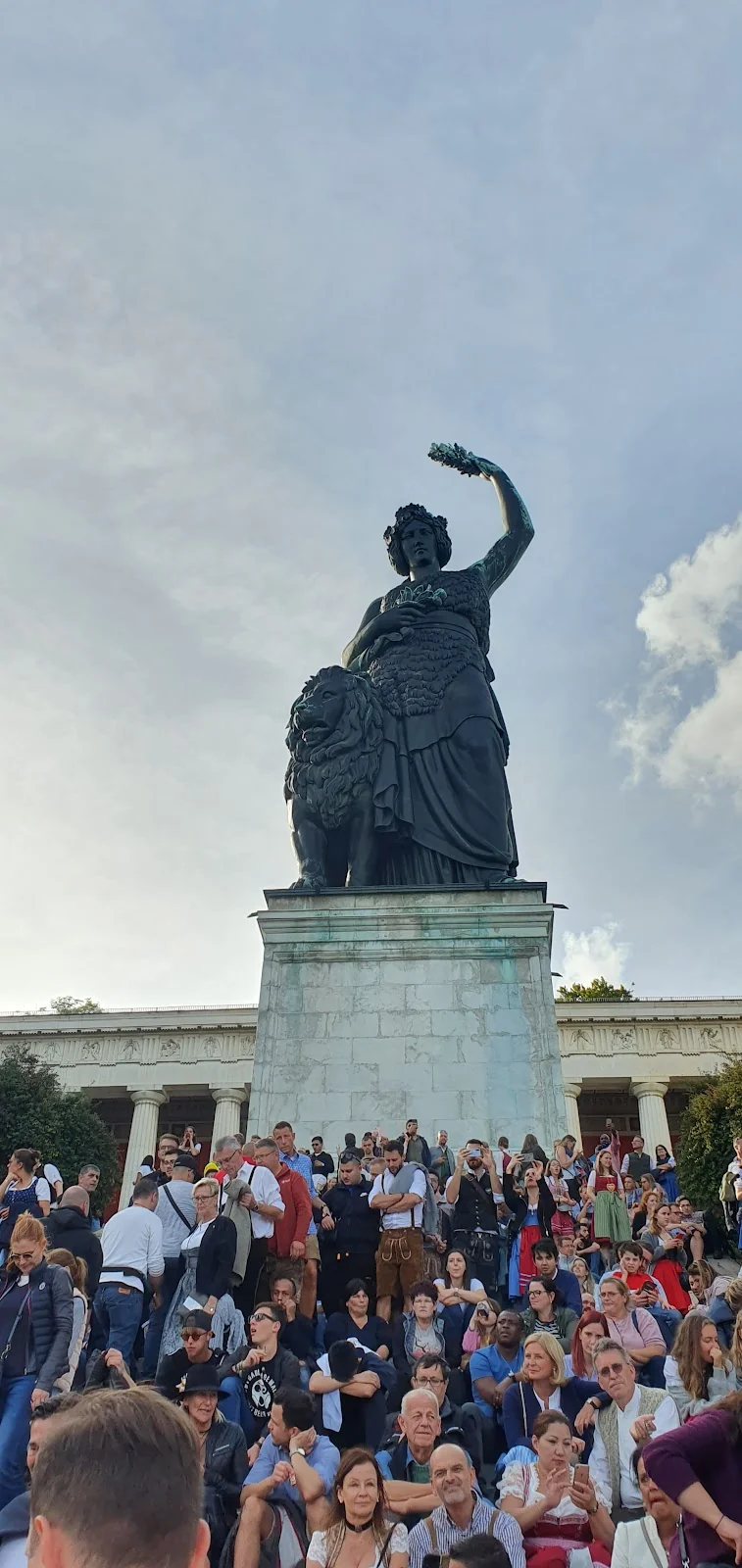
The Theresienwiese is one of the most famous open spaces in Munich and is much more than just the location of the Oktoberfest. It is named after Princess Therese of Sachsen-Hildburghausen; from the original festival site, it developed over two centuries into an area that is now considered Wiesn, a large event space, and a symbol of Munich's festival culture. The official classification as a 42-hectare festival meadow, the enormous number of visitors, and the variety of events show how strongly this place is connected to the city and its identity. At the same time, the Theresienwiese is a place with very different faces: In spring, autumn, and during the Christmas season, it completely transforms and is continually re-staged. For visitors, not only the history is important, but also the question of how to best get there, where to orient themselves, and what events actually take place there. This combination of tradition, location, transport connections, and event diversity makes the Theresienwiese one of the most exciting places in Munich. ([munich.travel](https://www.munich.travel/en/pois/markets-festivals/oktoberfest))
Getting there, Subway, and Parking at Theresienwiese
Those who want to visit the Theresienwiese should ideally use public transport. The most direct route is via the U4/U5 to the Theresienwiese station; the stations Schwanthalerhöhe, Goetheplatz, and Poccistraße are also easily accessible. If arriving by S-Bahn, many will use Hackerbrücke, from where it is just a few minutes' walk to the festival grounds. Heimeranplatz is also a practical alternative, depending on the direction of travel. The official traffic planning around the area is designed to distribute visitor flows across several stops. This is particularly important on heavily frequented days because the Theresienwiese as an event space can quickly become very crowded. Additionally, the city points out accessible entrances; many stations, such as Theresienwiese, have elevators. ([mvg.de](https://www.mvg.de/services/faq/events/Haltestellen-rund-um-das-Oktoberfestgelaende.html?lang=en&utm_source=openai))
When it comes to parking, the answer is clear: There is no regular parking available directly at the Theresienwiese during the Oktoberfest. A no-parking zone is established around the festival grounds. The official recommendation is therefore to drive only to a Park+Ride lot or an inner-city parking garage and then switch to the train or tram. For visitors with a blue parking permit, there are designated disabled parking spaces in the southern part of the Theresienwiese via Hans-Fischer-Straße during the Oktoberfest. This combination of traffic restrictions and targeted visitor guidance is typical for the Theresienwiese: The place works best when it is understood not as a car destination but as a well-connected event hub. ([muenchen.de](https://www.muenchen.de/en/events/oktoberfest/how-get-oktoberfest-routes-tickets-stations-apps?utm_source=openai))
Oktoberfest, Spring Festival, and Tollwood: the most important events
The Theresienwiese is world-famous primarily as the home of the Oktoberfest. The area becomes the stage for the world's largest folk festival for more than two weeks each year. According to official information, construction work often begins as early as July, and alongside nearly 40 beer tents, there are also over 100 rides and traditional showman businesses on the grounds. The visitor numbers and the scale of the event make it clear why the Theresienwiese is so well-known internationally: Approximately 120,000 seats are provided for the Oktoberfest, and about 13,000 people work at the festival, according to official figures. Additionally, the Oide Wiesn in the southern part is particularly characteristic, providing a nostalgic counterpoint to the large hustle and bustle with historical rides, smaller festival tents, and a quieter atmosphere. ([munich.travel](https://www.munich.travel/en/pois/markets-festivals/oktoberfest))
However, the Theresienwiese is not only alive in autumn. In spring, the Spring Festival takes place here, which the city describes as the little sister of the Oktoberfest. The festival started in 1965 and continues to bring two large beer tents, rides, a supporting program, and the famous BRK flea market to the area. Additionally, there are classic car meetings, family days, and traditional days. In winter, the area transforms into a cultural and Christmas market with arts and crafts, gastronomy, concerts, and performances with the Tollwood Winter Festival. Special events like Cirque du Soleil in a tent at the Theresienwiese also demonstrate how flexibly this place can be used. Therefore, those searching for the Theresienwiese are not just looking for a meadow but for a festival space that is continually retold throughout the year. ([munich.travel](https://www.munich.travel/en/pois/markets-festivals/fruehlingsfest-munich))
Theresienwiese today: Webcam, Map, and Orientation on Site
If you are looking for Theresienwiese today, map, or maps, the official Munich pages are the best orientation. There you can find the site plan of the Oktoberfest as a PDF, and during the season, live webcams help assess the current happenings on the grounds. This is particularly useful during high visitor traffic, as it allows you to see at a glance how crowded certain areas appear. The official webcam solution is also practical for anyone wanting to get an impression of the setup, lighting moods, or the weather on the site in advance. For many visitors, the area is initially hard to grasp because it does not have a classic city center structure with fixed building fronts but rather a wide, open space with streets, tents, entrances, and event axes. Therefore, preparing with a map, route, and stops is particularly worthwhile. ([muenchen.de](https://www.muenchen.de/en/events/oktoberfest/webcams-live?utm_source=openai))
Orientation on site means primarily knowing the major lines: Where does the festival area begin, where are the traffic axes, and where are the most important points of contact? The city offers not only maps but also guided tours of the site setup, accompanied by official guides. These tours explain how the large construction site comes together, how materials and equipment are brought to the site, and how the large tents and rides interconnect. Those who want to experience the Theresienwiese not just as visitors but also as curious explorers get a behind-the-scenes look. This is particularly exciting because the area is otherwise not freely accessible to many people during setup and teardown, and its character changes significantly depending on the season. ([ru.muenchen.de](https://ru.muenchen.de/2025/124/Oktoberfest-Exklusive-Fuehrungen-ueber-die-Grossbaustelle-119096?utm_source=openai))
History of the Theresienwiese from 1810 to today
The history of the Theresienwiese begins with a royal wedding. In October 1810, Crown Prince Ludwig, later King Ludwig I, married Princess Therese of Sachsen-Hildburghausen. The celebrations ended with a horse race on a meadow outside the gates of Munich. For this occasion, the area was named after the bride: Theresens Wiese, later Theresienwiese. It is from this tradition that the Oktoberfest developed, which has preserved the historical core idea of a folk festival to this day. As early as 1811, an agricultural exhibition was added, which was considered an early economic and social building block of the festival. The name Wiesn is the commonly used short form in Munich and shapes the language, image, and self-understanding of the place. ([stadt.muenchen.de](https://stadt.muenchen.de/dam/jcr%3Aacc9595b-4675-471e-bfba-35cf2dd7569a/oktoberfest-munich-history.pdf))
In the 19th and 20th centuries, the Theresienwiese transformed from a festival meadow with horse races into a highly organized large event with beer tents, showmen, and an ever-growing audience. According to official history, the first large beer castles were established starting in 1896, and the number of visitors grew steadily. The horse race, the oldest part of the festival, was discontinued in 1938 for organizational reasons, while other elements of the Oktoberfest continued to develop. Today, the area no longer focuses solely on beer, music, and rides, but also on brand management, safety concepts, visitor guidance, and city logistics. This is precisely what makes the Theresienwiese so interesting: it is both a historical memorial site and a highly modern event space where tradition and the present constantly meet anew. ([stadt.muenchen.de](https://stadt.muenchen.de/dam/jcr%3Aacc9595b-4675-471e-bfba-35cf2dd7569a/oktoberfest-munich-history.pdf))
Flea Market, Christmas Market, and Seasonal Special Formats
The Theresienwiese is not only a place for huge folk festivals but also for special formats with a very unique atmosphere. The large flea market, which takes place every spring on the meadow and is considered one of the largest of its kind in southern Germany, is particularly well-known. For many Munich residents, it is a fixed date because early hours, bargain hunting, and a unique mix of bric-a-brac, collectibles, and city atmosphere come together here. Additionally, the Tollwood Winter Festival shapes the year's end: arts and crafts, mulled wine stands, sustainable gastronomy, concerts, and cultural formats make the Theresienwiese a very different but equally vibrant place in winter. The winter festival lasts several weeks and traditionally ends with a New Year's Eve party. It is during this time that the versatility of the area can be seen. ([munich.travel](https://www.munich.travel/en/topics/shopping-design/flea-markets-munich?utm_source=openai))
There are also other events that explain the search interest around the Christmas market and market activities. The Tollwood Winter Festival is described by the city as a cultural festival at the Theresienwiese with a Christmas market, and the market offers arts and crafts, gastronomy, and a wide accompanying program. Thus, the Theresienwiese is not an empty space in the cold season but a highly utilized urban location with an emotional and cultural profile. For visitors looking for a Christmas market in Munich, the Wiesn is therefore an important anchor point. For SEO, this means: The keyword Christmas market is not just a secondary topic here but part of the real usage profile of the area. This is precisely why the Theresienwiese fits so well as a location page that connects event searches, seasonal calendars, and practical visitor information. ([muenchen.de](https://www.muenchen.de/es/node/61000?utm_source=openai))
Playground, Oide Wiesn, and Special Highlights for Families
Families also find interesting points of connection on and around the Theresienwiese. A good example is the newly opened play and sports area at the eastern edge of the area in 2025. There, part of the previous play stations has been converted into a fitness course, and existing table tennis tables have been renovated. In the winter months, a wide view opens up from here to Bavaria, showing how the Theresienwiese as an open space also functions beyond the large festivals. Such places make the area attractive not only for large events but also for leisure, movement, and city walks. For the search intent playground, this is particularly relevant because the Wiesn does not consist only of tents and rides but also offers small, everyday usage islands. ([ru.muenchen.de](https://ru.muenchen.de/2025/146/Neuer-Spielplatz-an-der-Theresienwiese-eroeffnet-119671?utm_source=openai))
Another family and tradition magnet is the Oide Wiesn in the southern part of the Theresienwiese. It is intentionally quieter there, with historical rides, smaller festival tents, and a nostalgic character. The city describes this area as an integral part of the Oktoberfest, which was created in 2010 as part of the 200th anniversary and has since been continued. For many visitors, this is the most charming side of the Theresienwiese, as tradition, music, and deceleration come together here. Therefore, those looking for special highlights should consider the Oide Wiesn, family offerings, changing cultural formats, and the new play and movement area together. This is where the strength of this place lies: it is not only large but also surprisingly finely structured. ([muenchen.de](https://www.muenchen.de/en/events/oktoberfest/oide-wiesn-historic-oktoberfest?utm_source=openai))
Sources:
- Munich Travel - Oktoberfest in Munich
- muenchen.de - How to get to the Oktoberfest
- muenchen.de - Webcams live from Oktoberfest
- Munich Travel - Spring Festival in Munich
- muenchen.de - Cirque du Soleil: Alegria in Munich
- muenchen.de - Tollwood Winter Festival in Munich 2025
- City of Munich - A foray through the history of the Wiesn
- muenchen.de - New playground opened at Theresienwiese
Show moreShow less
Theresienwiese | Parking & Subway
The Theresienwiese is one of the most famous open spaces in Munich and is much more than just the location of the Oktoberfest. It is named after Princess Therese of Sachsen-Hildburghausen; from the original festival site, it developed over two centuries into an area that is now considered Wiesn, a large event space, and a symbol of Munich's festival culture. The official classification as a 42-hectare festival meadow, the enormous number of visitors, and the variety of events show how strongly this place is connected to the city and its identity. At the same time, the Theresienwiese is a place with very different faces: In spring, autumn, and during the Christmas season, it completely transforms and is continually re-staged. For visitors, not only the history is important, but also the question of how to best get there, where to orient themselves, and what events actually take place there. This combination of tradition, location, transport connections, and event diversity makes the Theresienwiese one of the most exciting places in Munich. ([munich.travel](https://www.munich.travel/en/pois/markets-festivals/oktoberfest))
Getting there, Subway, and Parking at Theresienwiese
Those who want to visit the Theresienwiese should ideally use public transport. The most direct route is via the U4/U5 to the Theresienwiese station; the stations Schwanthalerhöhe, Goetheplatz, and Poccistraße are also easily accessible. If arriving by S-Bahn, many will use Hackerbrücke, from where it is just a few minutes' walk to the festival grounds. Heimeranplatz is also a practical alternative, depending on the direction of travel. The official traffic planning around the area is designed to distribute visitor flows across several stops. This is particularly important on heavily frequented days because the Theresienwiese as an event space can quickly become very crowded. Additionally, the city points out accessible entrances; many stations, such as Theresienwiese, have elevators. ([mvg.de](https://www.mvg.de/services/faq/events/Haltestellen-rund-um-das-Oktoberfestgelaende.html?lang=en&utm_source=openai))
When it comes to parking, the answer is clear: There is no regular parking available directly at the Theresienwiese during the Oktoberfest. A no-parking zone is established around the festival grounds. The official recommendation is therefore to drive only to a Park+Ride lot or an inner-city parking garage and then switch to the train or tram. For visitors with a blue parking permit, there are designated disabled parking spaces in the southern part of the Theresienwiese via Hans-Fischer-Straße during the Oktoberfest. This combination of traffic restrictions and targeted visitor guidance is typical for the Theresienwiese: The place works best when it is understood not as a car destination but as a well-connected event hub. ([muenchen.de](https://www.muenchen.de/en/events/oktoberfest/how-get-oktoberfest-routes-tickets-stations-apps?utm_source=openai))
Oktoberfest, Spring Festival, and Tollwood: the most important events
The Theresienwiese is world-famous primarily as the home of the Oktoberfest. The area becomes the stage for the world's largest folk festival for more than two weeks each year. According to official information, construction work often begins as early as July, and alongside nearly 40 beer tents, there are also over 100 rides and traditional showman businesses on the grounds. The visitor numbers and the scale of the event make it clear why the Theresienwiese is so well-known internationally: Approximately 120,000 seats are provided for the Oktoberfest, and about 13,000 people work at the festival, according to official figures. Additionally, the Oide Wiesn in the southern part is particularly characteristic, providing a nostalgic counterpoint to the large hustle and bustle with historical rides, smaller festival tents, and a quieter atmosphere. ([munich.travel](https://www.munich.travel/en/pois/markets-festivals/oktoberfest))
However, the Theresienwiese is not only alive in autumn. In spring, the Spring Festival takes place here, which the city describes as the little sister of the Oktoberfest. The festival started in 1965 and continues to bring two large beer tents, rides, a supporting program, and the famous BRK flea market to the area. Additionally, there are classic car meetings, family days, and traditional days. In winter, the area transforms into a cultural and Christmas market with arts and crafts, gastronomy, concerts, and performances with the Tollwood Winter Festival. Special events like Cirque du Soleil in a tent at the Theresienwiese also demonstrate how flexibly this place can be used. Therefore, those searching for the Theresienwiese are not just looking for a meadow but for a festival space that is continually retold throughout the year. ([munich.travel](https://www.munich.travel/en/pois/markets-festivals/fruehlingsfest-munich))
Theresienwiese today: Webcam, Map, and Orientation on Site
If you are looking for Theresienwiese today, map, or maps, the official Munich pages are the best orientation. There you can find the site plan of the Oktoberfest as a PDF, and during the season, live webcams help assess the current happenings on the grounds. This is particularly useful during high visitor traffic, as it allows you to see at a glance how crowded certain areas appear. The official webcam solution is also practical for anyone wanting to get an impression of the setup, lighting moods, or the weather on the site in advance. For many visitors, the area is initially hard to grasp because it does not have a classic city center structure with fixed building fronts but rather a wide, open space with streets, tents, entrances, and event axes. Therefore, preparing with a map, route, and stops is particularly worthwhile. ([muenchen.de](https://www.muenchen.de/en/events/oktoberfest/webcams-live?utm_source=openai))
Orientation on site means primarily knowing the major lines: Where does the festival area begin, where are the traffic axes, and where are the most important points of contact? The city offers not only maps but also guided tours of the site setup, accompanied by official guides. These tours explain how the large construction site comes together, how materials and equipment are brought to the site, and how the large tents and rides interconnect. Those who want to experience the Theresienwiese not just as visitors but also as curious explorers get a behind-the-scenes look. This is particularly exciting because the area is otherwise not freely accessible to many people during setup and teardown, and its character changes significantly depending on the season. ([ru.muenchen.de](https://ru.muenchen.de/2025/124/Oktoberfest-Exklusive-Fuehrungen-ueber-die-Grossbaustelle-119096?utm_source=openai))
History of the Theresienwiese from 1810 to today
The history of the Theresienwiese begins with a royal wedding. In October 1810, Crown Prince Ludwig, later King Ludwig I, married Princess Therese of Sachsen-Hildburghausen. The celebrations ended with a horse race on a meadow outside the gates of Munich. For this occasion, the area was named after the bride: Theresens Wiese, later Theresienwiese. It is from this tradition that the Oktoberfest developed, which has preserved the historical core idea of a folk festival to this day. As early as 1811, an agricultural exhibition was added, which was considered an early economic and social building block of the festival. The name Wiesn is the commonly used short form in Munich and shapes the language, image, and self-understanding of the place. ([stadt.muenchen.de](https://stadt.muenchen.de/dam/jcr%3Aacc9595b-4675-471e-bfba-35cf2dd7569a/oktoberfest-munich-history.pdf))
In the 19th and 20th centuries, the Theresienwiese transformed from a festival meadow with horse races into a highly organized large event with beer tents, showmen, and an ever-growing audience. According to official history, the first large beer castles were established starting in 1896, and the number of visitors grew steadily. The horse race, the oldest part of the festival, was discontinued in 1938 for organizational reasons, while other elements of the Oktoberfest continued to develop. Today, the area no longer focuses solely on beer, music, and rides, but also on brand management, safety concepts, visitor guidance, and city logistics. This is precisely what makes the Theresienwiese so interesting: it is both a historical memorial site and a highly modern event space where tradition and the present constantly meet anew. ([stadt.muenchen.de](https://stadt.muenchen.de/dam/jcr%3Aacc9595b-4675-471e-bfba-35cf2dd7569a/oktoberfest-munich-history.pdf))
Flea Market, Christmas Market, and Seasonal Special Formats
The Theresienwiese is not only a place for huge folk festivals but also for special formats with a very unique atmosphere. The large flea market, which takes place every spring on the meadow and is considered one of the largest of its kind in southern Germany, is particularly well-known. For many Munich residents, it is a fixed date because early hours, bargain hunting, and a unique mix of bric-a-brac, collectibles, and city atmosphere come together here. Additionally, the Tollwood Winter Festival shapes the year's end: arts and crafts, mulled wine stands, sustainable gastronomy, concerts, and cultural formats make the Theresienwiese a very different but equally vibrant place in winter. The winter festival lasts several weeks and traditionally ends with a New Year's Eve party. It is during this time that the versatility of the area can be seen. ([munich.travel](https://www.munich.travel/en/topics/shopping-design/flea-markets-munich?utm_source=openai))
There are also other events that explain the search interest around the Christmas market and market activities. The Tollwood Winter Festival is described by the city as a cultural festival at the Theresienwiese with a Christmas market, and the market offers arts and crafts, gastronomy, and a wide accompanying program. Thus, the Theresienwiese is not an empty space in the cold season but a highly utilized urban location with an emotional and cultural profile. For visitors looking for a Christmas market in Munich, the Wiesn is therefore an important anchor point. For SEO, this means: The keyword Christmas market is not just a secondary topic here but part of the real usage profile of the area. This is precisely why the Theresienwiese fits so well as a location page that connects event searches, seasonal calendars, and practical visitor information. ([muenchen.de](https://www.muenchen.de/es/node/61000?utm_source=openai))
Playground, Oide Wiesn, and Special Highlights for Families
Families also find interesting points of connection on and around the Theresienwiese. A good example is the newly opened play and sports area at the eastern edge of the area in 2025. There, part of the previous play stations has been converted into a fitness course, and existing table tennis tables have been renovated. In the winter months, a wide view opens up from here to Bavaria, showing how the Theresienwiese as an open space also functions beyond the large festivals. Such places make the area attractive not only for large events but also for leisure, movement, and city walks. For the search intent playground, this is particularly relevant because the Wiesn does not consist only of tents and rides but also offers small, everyday usage islands. ([ru.muenchen.de](https://ru.muenchen.de/2025/146/Neuer-Spielplatz-an-der-Theresienwiese-eroeffnet-119671?utm_source=openai))
Another family and tradition magnet is the Oide Wiesn in the southern part of the Theresienwiese. It is intentionally quieter there, with historical rides, smaller festival tents, and a nostalgic character. The city describes this area as an integral part of the Oktoberfest, which was created in 2010 as part of the 200th anniversary and has since been continued. For many visitors, this is the most charming side of the Theresienwiese, as tradition, music, and deceleration come together here. Therefore, those looking for special highlights should consider the Oide Wiesn, family offerings, changing cultural formats, and the new play and movement area together. This is where the strength of this place lies: it is not only large but also surprisingly finely structured. ([muenchen.de](https://www.muenchen.de/en/events/oktoberfest/oide-wiesn-historic-oktoberfest?utm_source=openai))
Sources:
- Munich Travel - Oktoberfest in Munich
- muenchen.de - How to get to the Oktoberfest
- muenchen.de - Webcams live from Oktoberfest
- Munich Travel - Spring Festival in Munich
- muenchen.de - Cirque du Soleil: Alegria in Munich
- muenchen.de - Tollwood Winter Festival in Munich 2025
- City of Munich - A foray through the history of the Wiesn
- muenchen.de - New playground opened at Theresienwiese
Theresienwiese | Parking & Subway
The Theresienwiese is one of the most famous open spaces in Munich and is much more than just the location of the Oktoberfest. It is named after Princess Therese of Sachsen-Hildburghausen; from the original festival site, it developed over two centuries into an area that is now considered Wiesn, a large event space, and a symbol of Munich's festival culture. The official classification as a 42-hectare festival meadow, the enormous number of visitors, and the variety of events show how strongly this place is connected to the city and its identity. At the same time, the Theresienwiese is a place with very different faces: In spring, autumn, and during the Christmas season, it completely transforms and is continually re-staged. For visitors, not only the history is important, but also the question of how to best get there, where to orient themselves, and what events actually take place there. This combination of tradition, location, transport connections, and event diversity makes the Theresienwiese one of the most exciting places in Munich. ([munich.travel](https://www.munich.travel/en/pois/markets-festivals/oktoberfest))
Getting there, Subway, and Parking at Theresienwiese
Those who want to visit the Theresienwiese should ideally use public transport. The most direct route is via the U4/U5 to the Theresienwiese station; the stations Schwanthalerhöhe, Goetheplatz, and Poccistraße are also easily accessible. If arriving by S-Bahn, many will use Hackerbrücke, from where it is just a few minutes' walk to the festival grounds. Heimeranplatz is also a practical alternative, depending on the direction of travel. The official traffic planning around the area is designed to distribute visitor flows across several stops. This is particularly important on heavily frequented days because the Theresienwiese as an event space can quickly become very crowded. Additionally, the city points out accessible entrances; many stations, such as Theresienwiese, have elevators. ([mvg.de](https://www.mvg.de/services/faq/events/Haltestellen-rund-um-das-Oktoberfestgelaende.html?lang=en&utm_source=openai))
When it comes to parking, the answer is clear: There is no regular parking available directly at the Theresienwiese during the Oktoberfest. A no-parking zone is established around the festival grounds. The official recommendation is therefore to drive only to a Park+Ride lot or an inner-city parking garage and then switch to the train or tram. For visitors with a blue parking permit, there are designated disabled parking spaces in the southern part of the Theresienwiese via Hans-Fischer-Straße during the Oktoberfest. This combination of traffic restrictions and targeted visitor guidance is typical for the Theresienwiese: The place works best when it is understood not as a car destination but as a well-connected event hub. ([muenchen.de](https://www.muenchen.de/en/events/oktoberfest/how-get-oktoberfest-routes-tickets-stations-apps?utm_source=openai))
Oktoberfest, Spring Festival, and Tollwood: the most important events
The Theresienwiese is world-famous primarily as the home of the Oktoberfest. The area becomes the stage for the world's largest folk festival for more than two weeks each year. According to official information, construction work often begins as early as July, and alongside nearly 40 beer tents, there are also over 100 rides and traditional showman businesses on the grounds. The visitor numbers and the scale of the event make it clear why the Theresienwiese is so well-known internationally: Approximately 120,000 seats are provided for the Oktoberfest, and about 13,000 people work at the festival, according to official figures. Additionally, the Oide Wiesn in the southern part is particularly characteristic, providing a nostalgic counterpoint to the large hustle and bustle with historical rides, smaller festival tents, and a quieter atmosphere. ([munich.travel](https://www.munich.travel/en/pois/markets-festivals/oktoberfest))
However, the Theresienwiese is not only alive in autumn. In spring, the Spring Festival takes place here, which the city describes as the little sister of the Oktoberfest. The festival started in 1965 and continues to bring two large beer tents, rides, a supporting program, and the famous BRK flea market to the area. Additionally, there are classic car meetings, family days, and traditional days. In winter, the area transforms into a cultural and Christmas market with arts and crafts, gastronomy, concerts, and performances with the Tollwood Winter Festival. Special events like Cirque du Soleil in a tent at the Theresienwiese also demonstrate how flexibly this place can be used. Therefore, those searching for the Theresienwiese are not just looking for a meadow but for a festival space that is continually retold throughout the year. ([munich.travel](https://www.munich.travel/en/pois/markets-festivals/fruehlingsfest-munich))
Theresienwiese today: Webcam, Map, and Orientation on Site
If you are looking for Theresienwiese today, map, or maps, the official Munich pages are the best orientation. There you can find the site plan of the Oktoberfest as a PDF, and during the season, live webcams help assess the current happenings on the grounds. This is particularly useful during high visitor traffic, as it allows you to see at a glance how crowded certain areas appear. The official webcam solution is also practical for anyone wanting to get an impression of the setup, lighting moods, or the weather on the site in advance. For many visitors, the area is initially hard to grasp because it does not have a classic city center structure with fixed building fronts but rather a wide, open space with streets, tents, entrances, and event axes. Therefore, preparing with a map, route, and stops is particularly worthwhile. ([muenchen.de](https://www.muenchen.de/en/events/oktoberfest/webcams-live?utm_source=openai))
Orientation on site means primarily knowing the major lines: Where does the festival area begin, where are the traffic axes, and where are the most important points of contact? The city offers not only maps but also guided tours of the site setup, accompanied by official guides. These tours explain how the large construction site comes together, how materials and equipment are brought to the site, and how the large tents and rides interconnect. Those who want to experience the Theresienwiese not just as visitors but also as curious explorers get a behind-the-scenes look. This is particularly exciting because the area is otherwise not freely accessible to many people during setup and teardown, and its character changes significantly depending on the season. ([ru.muenchen.de](https://ru.muenchen.de/2025/124/Oktoberfest-Exklusive-Fuehrungen-ueber-die-Grossbaustelle-119096?utm_source=openai))
History of the Theresienwiese from 1810 to today
The history of the Theresienwiese begins with a royal wedding. In October 1810, Crown Prince Ludwig, later King Ludwig I, married Princess Therese of Sachsen-Hildburghausen. The celebrations ended with a horse race on a meadow outside the gates of Munich. For this occasion, the area was named after the bride: Theresens Wiese, later Theresienwiese. It is from this tradition that the Oktoberfest developed, which has preserved the historical core idea of a folk festival to this day. As early as 1811, an agricultural exhibition was added, which was considered an early economic and social building block of the festival. The name Wiesn is the commonly used short form in Munich and shapes the language, image, and self-understanding of the place. ([stadt.muenchen.de](https://stadt.muenchen.de/dam/jcr%3Aacc9595b-4675-471e-bfba-35cf2dd7569a/oktoberfest-munich-history.pdf))
In the 19th and 20th centuries, the Theresienwiese transformed from a festival meadow with horse races into a highly organized large event with beer tents, showmen, and an ever-growing audience. According to official history, the first large beer castles were established starting in 1896, and the number of visitors grew steadily. The horse race, the oldest part of the festival, was discontinued in 1938 for organizational reasons, while other elements of the Oktoberfest continued to develop. Today, the area no longer focuses solely on beer, music, and rides, but also on brand management, safety concepts, visitor guidance, and city logistics. This is precisely what makes the Theresienwiese so interesting: it is both a historical memorial site and a highly modern event space where tradition and the present constantly meet anew. ([stadt.muenchen.de](https://stadt.muenchen.de/dam/jcr%3Aacc9595b-4675-471e-bfba-35cf2dd7569a/oktoberfest-munich-history.pdf))
Flea Market, Christmas Market, and Seasonal Special Formats
The Theresienwiese is not only a place for huge folk festivals but also for special formats with a very unique atmosphere. The large flea market, which takes place every spring on the meadow and is considered one of the largest of its kind in southern Germany, is particularly well-known. For many Munich residents, it is a fixed date because early hours, bargain hunting, and a unique mix of bric-a-brac, collectibles, and city atmosphere come together here. Additionally, the Tollwood Winter Festival shapes the year's end: arts and crafts, mulled wine stands, sustainable gastronomy, concerts, and cultural formats make the Theresienwiese a very different but equally vibrant place in winter. The winter festival lasts several weeks and traditionally ends with a New Year's Eve party. It is during this time that the versatility of the area can be seen. ([munich.travel](https://www.munich.travel/en/topics/shopping-design/flea-markets-munich?utm_source=openai))
There are also other events that explain the search interest around the Christmas market and market activities. The Tollwood Winter Festival is described by the city as a cultural festival at the Theresienwiese with a Christmas market, and the market offers arts and crafts, gastronomy, and a wide accompanying program. Thus, the Theresienwiese is not an empty space in the cold season but a highly utilized urban location with an emotional and cultural profile. For visitors looking for a Christmas market in Munich, the Wiesn is therefore an important anchor point. For SEO, this means: The keyword Christmas market is not just a secondary topic here but part of the real usage profile of the area. This is precisely why the Theresienwiese fits so well as a location page that connects event searches, seasonal calendars, and practical visitor information. ([muenchen.de](https://www.muenchen.de/es/node/61000?utm_source=openai))
Playground, Oide Wiesn, and Special Highlights for Families
Families also find interesting points of connection on and around the Theresienwiese. A good example is the newly opened play and sports area at the eastern edge of the area in 2025. There, part of the previous play stations has been converted into a fitness course, and existing table tennis tables have been renovated. In the winter months, a wide view opens up from here to Bavaria, showing how the Theresienwiese as an open space also functions beyond the large festivals. Such places make the area attractive not only for large events but also for leisure, movement, and city walks. For the search intent playground, this is particularly relevant because the Wiesn does not consist only of tents and rides but also offers small, everyday usage islands. ([ru.muenchen.de](https://ru.muenchen.de/2025/146/Neuer-Spielplatz-an-der-Theresienwiese-eroeffnet-119671?utm_source=openai))
Another family and tradition magnet is the Oide Wiesn in the southern part of the Theresienwiese. It is intentionally quieter there, with historical rides, smaller festival tents, and a nostalgic character. The city describes this area as an integral part of the Oktoberfest, which was created in 2010 as part of the 200th anniversary and has since been continued. For many visitors, this is the most charming side of the Theresienwiese, as tradition, music, and deceleration come together here. Therefore, those looking for special highlights should consider the Oide Wiesn, family offerings, changing cultural formats, and the new play and movement area together. This is where the strength of this place lies: it is not only large but also surprisingly finely structured. ([muenchen.de](https://www.muenchen.de/en/events/oktoberfest/oide-wiesn-historic-oktoberfest?utm_source=openai))
Sources:
- Munich Travel - Oktoberfest in Munich
- muenchen.de - How to get to the Oktoberfest
- muenchen.de - Webcams live from Oktoberfest
- Munich Travel - Spring Festival in Munich
- muenchen.de - Cirque du Soleil: Alegria in Munich
- muenchen.de - Tollwood Winter Festival in Munich 2025
- City of Munich - A foray through the history of the Wiesn
- muenchen.de - New playground opened at Theresienwiese
Upcoming Events
No events found
Frequently Asked Questions
Reviews
No reviews found