
Abdullah Ibrahim
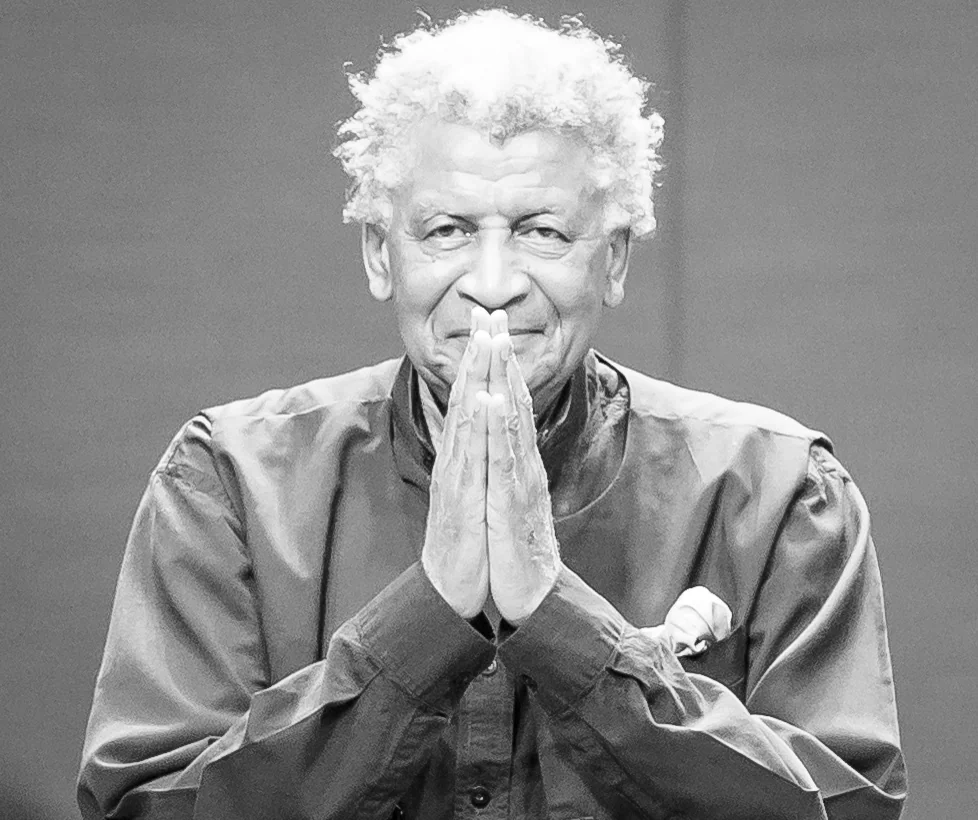
Image from Wikipedia
Image from Wikipedia
Abdullah Ibrahim – The Great Architect of South African Jazz
A Life Between Cape Town, Exile, and Spiritual Sound Language
Abdullah Ibrahim was one of the defining pianists and composers of jazz in the 20th and early 21st centuries. He was born on October 9, 1934, in Cape Town as Adolph Johannes Brand; he first became known as Dollar Brand before converting to Islam in 1968 and adopting the name Abdullah Ibrahim. His music united South African rhythms, church-influenced melodies, township forms, and jazz improvisation into a distinctive language that remained instantly recognizable worldwide. ([arts.gov](https://www.arts.gov/honors/jazz/abdullah-ibrahim))
Biographical Roots: Cape Town as a Sound Archive
Ibrahim's musical socialization began in a cultural melting pot. According to official biographical accounts, he listened in his childhood to traditional Khoi-san chants, Christian hymns, gospel, spirituals, American jazz, Township jive, Cape Malay music, and classical music. This early complexity shaped his understanding of harmony, form, and melodic memory, forming the core of his later musical career. ([abdullahibrahim.co.za](https://abdullahibrahim.co.za/biography/?utm_source=openai))
At the age of seven, he began piano lessons, and at 15 he started performing and recording professionally. Even at a young age, he became a musician who shaped bebop with a South African accent rather than simply imitating American models. This early independence explains why his artistic development must be read not as imitation but as a renegotiation of jazz from the South. ([arts.gov](https://www.arts.gov/honors/jazz/abdullah-ibrahim))
The Breakthrough with the Jazz Epistles
In 1958, Ibrahim formed the Dollar Brand Trio, and a year later, he created the Jazz Epistles, a group that made jazz history. Together with Kippie Moeketsi, Hugh Masekela, Jonas Gwangwa, Johnny Gertze, and Makaya Ntshoko, the ensemble recorded the first jazz album by South African musicians: Jazz Epistle Verse 1. This moment marked not only an artistic breakthrough but also a cultural-historical turning point for South African jazz. ([arts.gov](https://www.arts.gov/honors/jazz/abdullah-ibrahim))
The significance of this early phase extends far beyond the discography. In a time of increasing apartheid repression, jazz became a symbol of resistance, and Ibrahim's music early on represented self-assertion, freedom, and spiritual independence. The oscillation between local rootedness and international stage that characterized his later career is one of the central constants of his life's work. ([abdullahibrahim.co.za](https://abdullahibrahim.co.za/biography/?utm_source=openai))
Exile, International Recognition, and the New York Years
In 1962, Ibrahim left South Africa and initially settled in Zurich, where he caught the attention of Duke Ellington. This encounter led to recordings and opened the door for him to the United States, where he performed in prestigious venues like Carnegie Hall and the Newport Jazz Festival. Later, he toured with the Elvin Jones Quartet and expanded his musical environment in New York to include influential avant-garde figures such as Don Cherry, Ornette Coleman, John Coltrane, Pharoah Sanders, Archie Shepp, and Cecil Taylor. ([arts.gov](https://www.arts.gov/honors/jazz/abdullah-ibrahim))
During this phase, his reputation solidified as a musician who fused a sense of form with improvisation. The official biography describes him as an artist who connected South Africa's rhythmic impulses with jazz improvisation and created a spiritually charged sound world, whether solo or in a trio, with large ensembles, or with orchestras. His authority lay precisely in this: he mastered the large format but remained identifiable even in the densest arrangements. ([arts.gov](https://www.arts.gov/honors/jazz/abdullah-ibrahim))
Return, Renaming, and the Spiritual Turn
In 1968, Ibrahim returned to Cape Town, converted to Islam, and took on the name Abdullah Ibrahim. Later, in 1970, he undertook a pilgrimage to Mecca; spirituality, discipline, and musical concentration became even more central to his work thereafter. The official biography also emphasizes his engagement with martial arts and Zen philosophical ideas, which shaped both his working methods and his compositions. ([abdullahibrahim.co.za](https://abdullahibrahim.co.za/biography/?utm_source=openai))
This spiritual dimension is not a decorative embellishment but an essential characteristic of his art. Ibrahim viewed music as breath, as movement, as inner order. Interviews and portraits frequently describe how much his improvisations thrive on silence, phrasing, and meditative tension. This resulted in a style that was not simply virtuosic or purely traditional but appeared monumental in its tranquility. ([abdullahibrahim.co.za](https://abdullahibrahim.co.za/meditation-in-motion/?utm_source=openai))
Mannenberg and the Political Weight of a Composition
In 1974, Ibrahim recorded Mannenberg, a composition that soon became regarded as the unofficial anthem of resistance against apartheid. The title became a symbol of South African self-assertion, combining political consciousness with a compelling melodic simplicity that remained deeply rooted in collective memory. The historical impact of this piece is explicitly highlighted on both the German Wikipedia and the official website. ([de.wikipedia.org](https://de.wikipedia.org/wiki/Abdullah_Ibrahim?utm_source=openai))
Mannenberg exemplifies why Ibrahim was more than an excellent jazz pianist. He composed music that could exert the same power in townships, concert halls, and political moments. The blend of Cape jazz, hymnic melody, and rhythmic precision made the piece a cultural reference point far beyond the jazz scene. ([arts.gov](https://www.arts.gov/honors/jazz/abdullah-ibrahim))
Discography, Style, and Artistic Development
Ibrahim's official overview of work ranges from solo albums to trio recordings to large ensemble and orchestra projects. The website lists works including African Piano, The Song is My Story, Mukashi, Sotho Blue, The Balance, Senzo, African Suite, and African Symphony. His discography includes more than a hundred album credits and documents an extraordinarily long, productive, and stylistically open music career. ([abdullahibrahim.co.za](https://abdullahibrahim.co.za/music/?utm_source=openai))
Stylistically, Ibrahim is often placed alongside Thelonious Monk, Duke Ellington, and Randy Weston. The official website and the NEA describe his sound as a blend of South African rhythms, improvisation, and a clear, unique harmonic language. Critical reception particularly highlights that his music often thrives on melody, breath, and space, not just outer brilliance. This precisely makes his stage presence so distinctive. ([arts.gov](https://www.arts.gov/honors/jazz/abdullah-ibrahim))
Even in his later works, Ibrahim remained productive. The Balance was released in 2019 and was described on his website as a work that brings together past, present, and future into a musical narrative. In 2024, Turn To Allah followed, and in 2025, Turn to Allah: Extra Dub was released. This demonstrated a continuous evolution of his own language until the end, rather than resting on his legendary status. ([abdullahibrahim.co.za](https://abdullahibrahim.co.za/abdullah-ibrahim-looks-to-past-present-and-future/))
Current Projects, Late Recognition, and Final Resonances
Among the recent projects is the documentary Water from an Ancient Well, announced in 2023 and scheduled for spring 2024. The announcement on the official site emphasizes Ibrahim's significance as one of the greatest pianists and composers in the world. Simultaneously, an official statement from 2025 indicated that Ibrahim was still planning new concert projects and remained creatively active at 90 years old. ([abdullahibrahim.co.za](https://abdullahibrahim.co.za/water-from-an-ancient-well-is-a-feature-documentary-film-that-celebrates-the-life-and-times-of-abdullah-ibrahim/))
His accolades also underscore his authority. He was honored as an NEA Jazz Master in 2019, and the official website also notes the Japanese Order of the Rising Sun, which he received in 2020. Such honors not only reflect international recognition but also the rare combination of cultural significance, musical excellence, and political symbolism. ([arts.gov](https://www.arts.gov/honors/jazz/abdullah-ibrahim))
Cultural Influence: Jazz as Memory, Resistance, and Healing
Abdullah Ibrahim was not only a composer but a cultural memory worker. His music connected the experiences of apartheid, exile, and return with a universal aesthetic that resonated far beyond South Africa. Critical and press voices describe him as a defining voice of African jazz, as a bridge-builder between local tradition and global modernity. ([abdullahibrahim.co.za](https://abdullahibrahim.co.za/abdullah-ibrahim-looks-to-past-present-and-future/?utm_source=openai))
His influence is also evident in how generations of musicians have embraced his balance of depth, simplicity, and inner tension. He did not create a fashion but a lasting model: jazz as a remembrance of origins, as an open form of improvisation, and as a spiritual practice. This is where the greatness of his artistic development lies. ([abdullahibrahim.co.za](https://abdullahibrahim.co.za/biography/?utm_source=openai))
Conclusion: A Master Whose Music Endures
Abdullah Ibrahim woven a body of work between Cape Town and the world, between political history and spiritual gathering, between intimate piano poetry and grand ensemble artistry. His discography, stage presence, and cultural impact make him one of the most important voices in African jazz. Whoever listens to his music encounters not only a pianist but a chronicler of resistance, dignity, and creative freedom. ([arts.gov](https://www.arts.gov/honors/jazz/abdullah-ibrahim))
Those who have experienced Abdullah Ibrahim live speak of concentration, silence, and a rare emotional depth. This is precisely what made him so fascinating: he did not just play music; he shaped spaces for memory and hope. His work remains an impressive reason to approach this sound universe anew time and again. ([abdullahibrahim.co.za](https://abdullahibrahim.co.za/meditation-in-motion/?utm_source=openai))
Official Channels of Abdullah Ibrahim:
- Instagram: no official profile found
- Facebook: no official profile found
- YouTube: no official profile found
- Spotify: no official profile found
- TikTok: no official profile found
Sources:
- National Endowment for the Arts – Abdullah Ibrahim
- Abdullah Ibrahim – Biography
- Abdullah Ibrahim – Music
- Abdullah Ibrahim – Official Website
- Abdullah Ibrahim – Water from an Ancient Well
- Apple Music – Abdullah Ibrahim
- Abdullah Ibrahim – Looks to Past, Present and Future
- Abdullah Ibrahim – Returns with The Balance
- Wikipedia – Abdullah Ibrahim