
Alan Ayckbourn
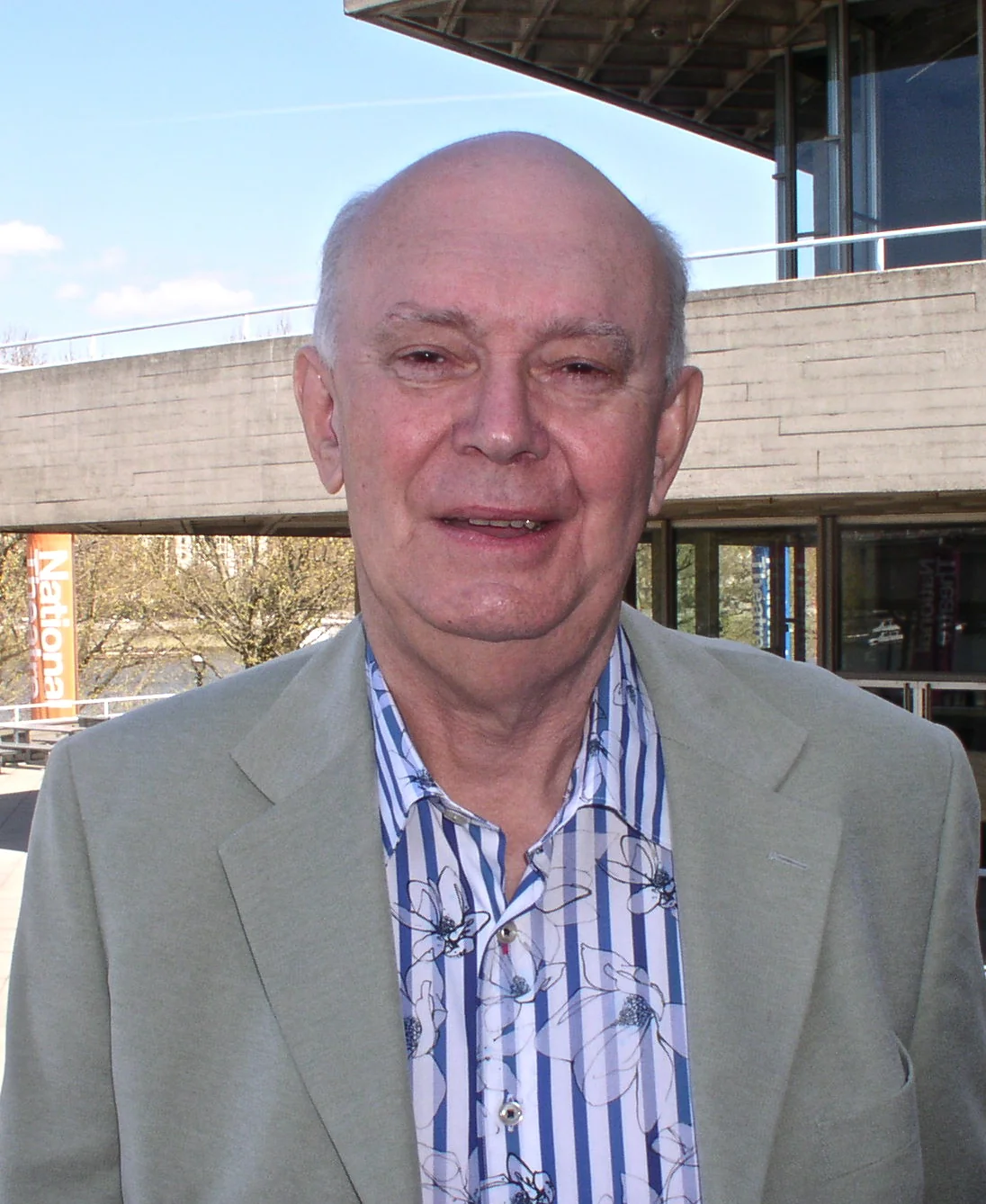
Image from Wikipedia
Image from Wikipedia
Alan Ayckbourn – Master of British Stage Comedy and Chronicler of Human Entanglements
An Exceptional Author, Director, and Theater Artist
Sir Alan Ayckbourn is one of the defining figures of contemporary British drama. Born on April 12, 1939, in Hampstead, London, he evolved from an early-stage talent to an internationally sought-after playwright and director, with his plays having been performed on stages large and small around the world for decades. His work is characterized by precise composition, sharp dialogue, and a rare ability to intertwine comedy with existential melancholy. ([alanayckbourn.net](https://www.alanayckbourn.net/resources/Resources/2025/20-Facts---Definitive.pdf))
Ayckbourn is not only an author but a theater artist in the broadest sense. His career began as an actor and stage manager before he fully committed to writing and eventually served as the Artistic Director of the Stephen Joseph Theatre in Scarborough for decades. It was here that most of his work was created, which has now grown to include over ninety plays and has been translated into more than 35 languages. ([alanayckbourn.net](https://www.alanayckbourn.net/resources/Resources/2025/20-Facts---Definitive.pdf))
Early Influences: Acting, Stage, Scarborough
Ayckbourn's professional journey began in 1956, with a position as acting stage manager at Donald Wolfit's company in Edinburgh. In the following years, he gained experience in various venues, including Worthing, Leatherhead, Oxford, and Scarborough, where he joined the Theatre in the Round of the Library Theatre Company in 1957. These years were crucial, as they instilled in him not only craft discipline but also a deep understanding of ensemble work and spatial dramaturgy. ([alanayckbourn.net](https://www.alanayckbourn.net/resources/Resources/2025/20-Facts---Definitive.pdf))
The theater form of the arena or round stage significantly shaped Ayckbourn's artistic development. Working without the classical proscenium arch sharpened his eye for precise scene direction, sightlines, and temporal layering. Later, he transformed this experience into a hallmark of his writing: His plays often function as finely tuned mechanisms, where every pause, entrance, and change of location serves a dramatic purpose. ([alanayckbourn.net](https://www.alanayckbourn.net/resources/Resources/2025/20-Facts---Definitive.pdf))
The Breakthrough: From Initial Success to Major British Contemporary Stage
Ayckbourn's career in playwriting began in 1959 with The Square Cat. However, the real breakthrough came with Relatively Speaking, which was considered his first major success in 1967 and quickly established him as an important new comedy author. From then on, his name became associated with a form of intelligent boulevard theater that undermines social surfaces and reveals the underlying conflicts. ([alanayckbourn.net](https://www.alanayckbourn.net/resources/Resources/2025/20-Facts---Definitive.pdf))
Particularly remarkable is the consistency of his success. According to his official website, Ayckbourn lives in Scarborough, has written 92 full-length plays, and has been performed on the West End, Broadway, and worldwide for decades. Importantly, his theater career has never been merely literary: As a director, he shaped the premieres of many of his works, directly influencing their tone, rhythm, and scenic precision. ([alanayckbourn.net](https://www.alanayckbourn.net/?utm_source=openai))
The Scarborough Years: An Artistic Laboratory
In 1972, Ayckbourn became the Artistic Director of the theater in Scarborough, which later became the Stephen Joseph Theatre. He led the stage for 37 years, making the place the center of his productivity. Most of his plays were and continue to be premiered there, turning Scarborough into a sort of workshop for British comedic theater. ([alanayckbourn.net](https://www.alanayckbourn.net/resources/Resources/2025/Biography---Definitive.pdf))
This long-term institutional work is a significant part of Ayckbourn’s authority. Unlike many playwrights of his generation, he developed his work not in a mere exchange between city theaters and metropolises but in close connection with his own house and a recurring ensemble. This resulted in plays characterized by high playability, role precision, and a deep awareness of actor direction. ([alanayckbourn.net](https://www.alanayckbourn.net/resources/Resources/2025/20-Facts---Definitive.pdf))
Drama and Style: Comedy with Psychological Resonance
Ayckbourn's style blends seemingly light comedy with sharply observed social critique. His characters often stem from the English middle class, suburban environments, marital configurations, and everyday professional worlds, yet beneath the polite surface, abysses of vanity, silence, misunderstanding, and alienation quickly open up. The Guardian described in a later review that Ayckbourn consistently dissects the inability of people to communicate. ([theguardian.com](https://www.theguardian.com/stage/2016/jun/10/confusions-heros-welcome-review-alan-ayckbourn-plays-new-york?utm_source=openai))
Critics also highlight his technical virtuosity. In the reception of A Chorus of Disapproval, it has repeatedly been emphasized that Ayckbourn weaves a great deal of sadness, pathos, and bitterness into a comedy without losing the comedic flow. This balance between lightness and emotional weight makes his plays enduring: They serve as entertainment while also functioning as precise studies of human self-deception. ([encyclopedia.com](https://www.encyclopedia.com/arts/educational-magazines/chorus-disapproval))
Notable Works and Lasting Resonance
Some of Ayckbourn's most well-known and successful works include Absurd Person Singular, How the Other Half Loves, The Norman Conquests, Bedroom Farce, and A Chorus of Disapproval. The official website also points to numerous other formats, including family plays, musicals, "chance plays," and duologies, highlighting the formal diversity of his oeuvre. Ayckbourn works not only with a recognizable signature but also with great structural curiosity. ([alanayckbourn.net](https://www.alanayckbourn.net/resources/Resources/2024/Play-List---Definitive.pdf?utm_source=openai))
His plays have received numerous international awards and have been repeatedly rediscovered. A Chorus of Disapproval won several major British theater awards, including the Olivier Award, following its successful premiere in Scarborough and later production at the National Theatre. The official biography and contemporary reviews place Ayckbourn as an author whose popularity has been reinforced not against, but through critical recognition. ([encyclopedia.com](https://www.encyclopedia.com/arts/educational-magazines/chorus-disapproval))
Directorial Work, Institutions, and Influence on British Theatre
Ayckbourn’s significance extends far beyond writing. Between 1986 and 1988, he worked at the National Theatre at the invitation of Sir Peter Hall with his own company, directing among others A Small Family Business, A View from the Bridge, Tons of Money, and 'Tis Pity She’s a Whore. These directorial works demonstrate that he possesses significant authority not only as an author but also as an interpreter of foreign texts. ([alanayckbourn.net](https://www.alanayckbourn.net/resources/Resources/2025/20-Facts---Definitive.pdf))
His influence is also reflected in institutional recognition. In 1987, he was appointed CBE, and ten years later, he was knighted by Queen Elizabeth II. The official website also cites his appointment as the Cameron Macintosh Visiting Professor of Contemporary Theatre at Oxford in 1992, as well as his status as Director Emeritus of the Stephen Joseph Theatre from 2018. In this way, Ayckbourn exemplifies a rare model of artistic continuity, where writing, directing, and cultural infrastructure intertwine. ([alanayckbourn.net](https://www.alanayckbourn.net/resources/Resources/2025/20-Facts---Definitive.pdf))
Current Projects and a Vibrant Presence
Even in advanced age, Ayckbourn remains productive. The official biography mentions Earth Angel as a premiere for summer 2025 at the Stephen Joseph Theatre, and the official website continues to list him as an active authority on his own work. This confirms a remarkable state of artistic presence: Ayckbourn is not a historical name, but a currently working theater author with ongoing productions and continued relevance. ([alanayckbourn.net](https://www.alanayckbourn.net/resources/Resources/2025/Biography---Definitive.pdf))
Additionally, current schedules show that his plays are regularly restaged. For example, Bedroom Farce has been announced for the 2024/2025 season at the Queen’s Theatre Hornchurch, and other productions like How the Other Half Loves continue to appear in contemporary casting announcements. This presence serves as evidence of the ongoing repertoire capability of his dramas and comedies. ([queens-theatre.co.uk](https://queens-theatre.co.uk/news/2024/05/14/queens-theatre-hornchurch-announce-debut-season-with-creative-directors-autumn-winter-season-2024-2025/?utm_source=openai))
Cultural Influence and Why Ayckbourn Endures
Ayckbourn has significantly shaped the image of modern British comedy. His plays are precisely constructed, dialogue-rich, and often informed by a deep knowledge of social rituals. Recognition from critics such as Michael Billington, who praised A Chorus of Disapproval as “magnificent comedy,” underscores the connection of structural art and emotional truth in his work. ([encyclopedia.com](https://www.encyclopedia.com/arts/educational-magazines/chorus-disapproval))
His cultural value also lies in the astonishing range. According to the official website, his plays have been translated into over 35 languages and performed worldwide. Additionally, there is the striking longevity of his themes: misunderstanding, vanity, partnership, social pressure, the desire for recognition, and the fragile comedy of daily life. This is precisely why Ayckbourn functions not only as a classic but as an author whose theater still speaks directly today. ([alanayckbourn.net](https://www.alanayckbourn.net/resources/Resources/2025/Biography---Definitive.pdf))
Conclusion: An Essential Theater Author with Undiminished Radiance
Alan Ayckbourn captivates because he never merely exposes human weaknesses but transforms them into precisely composed stage situations. His career brings together craft rigor, institutional experience, international recognition, and a rare loyalty to his own artistic center in Scarborough. Those who wish to experience British theater as a living art form will find in Ayckbourn an author whose comedies simultaneously entertain, challenge, and resonate long after. ([alanayckbourn.net](https://www.alanayckbourn.net/resources/Resources/2025/Biography---Definitive.pdf))
A live experience of his plays is particularly worthwhile because Ayckbourn's texts unfold their full precision on stage: timing, ensemble work, and atmospheric shifts only reveal their full effect in the space. His theater art remains a lesson in how great dramatic form emerges from everyday life, irony, and emotional undercurrents. ([encyclopedia.com](https://www.encyclopedia.com/arts/educational-magazines/chorus-disapproval))
Official Channels of Alan Ayckbourn:
- Instagram: https://www.instagram.com/ayckbourn_playwright/
- Facebook: no official profile found
- YouTube: https://www.youtube.com/channel/UCw_wK39Pa4Hnfziu9On5nNg
- Spotify: no official profile found
- TikTok: no official profile found
- Bluesky: https://bsky.app/profile/alan-ayckbourn.bsky.social
- WordPress: https://archivingayckbourn.home.blog/
Sources:
- Alan Ayckbourn's Official Website - Artist's Official Site
- Alan Ayckbourn: A Short Biography - Official Biography
- Alan Ayckbourn: 20 Facts - Official Fact Overview
- Alan Ayckbourn's Official Website - Social Media / Websites
- Alan Ayckbourn - YouTube
- Alan Ayckbourn, Playwright - Bluesky
- Around Ayckbourn - Official Blog
- A Chorus of Disapproval - Encyclopedia.com, Critical Reception
- Queen's Theatre Hornchurch - Season Announcement 2024/2025
- Wikipedia: Image and text source
Upcoming Events
From Now On by Alan Ayckbourn
False Snake
False Snake
False Snake
False Snake
False Snake