
Annett Louisan
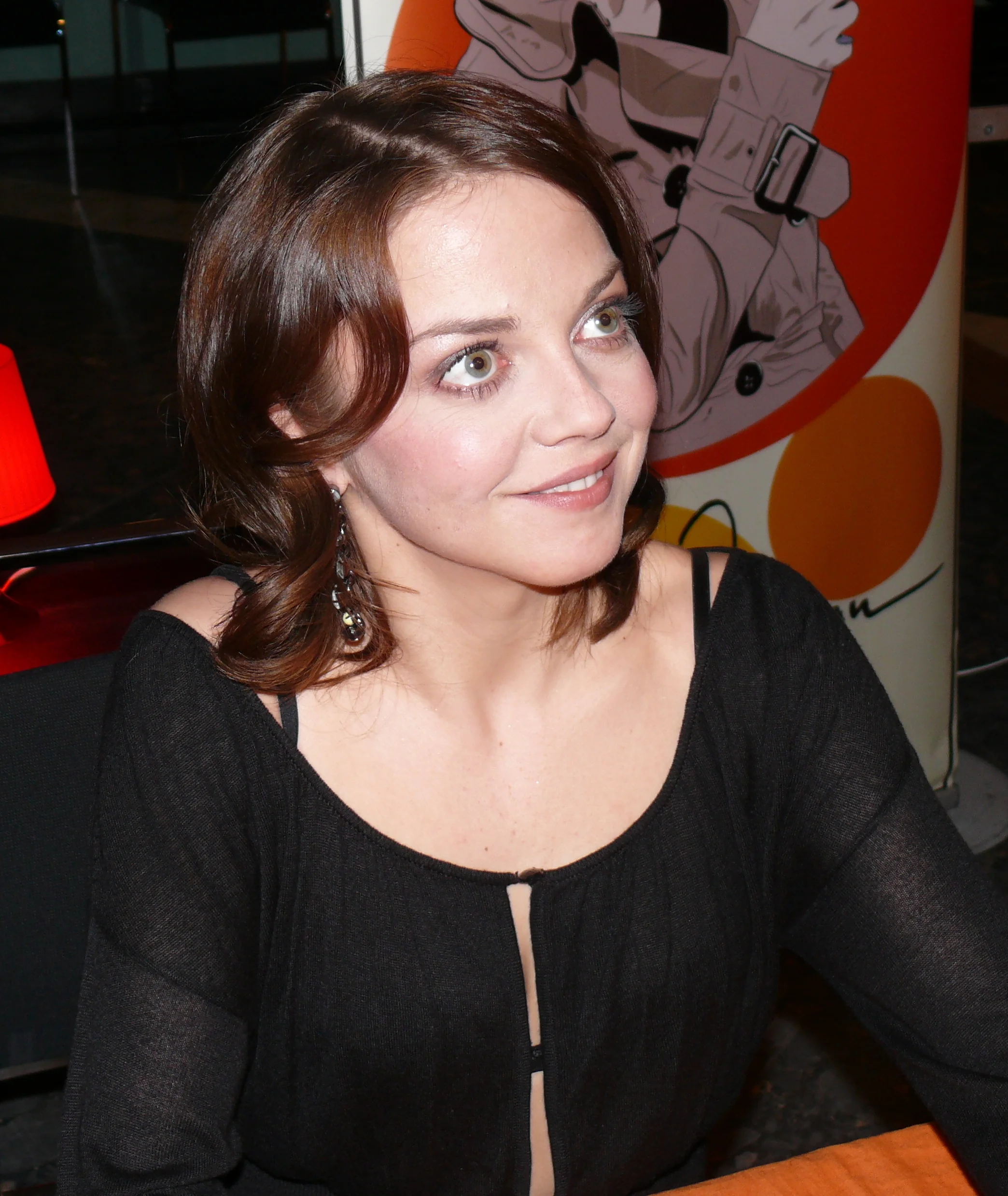
Image from Wikipedia
Image from Wikipedia
Annett Louisan: The Elegant Voice of German-language Chanson
An artist between chanson, pop, and fine irony
Annett Louisan, born as Annett Päge on April 2, 1977, in Havelberg, has been one of the most distinctive voices in the German pop and chanson scene since her breakthrough. Her stage name refers to her grandmother Louise and suits a singer who found her own aesthetic language early on, balancing elegance, vulnerability, and musical precision. The decisive starting point was marked by her debut album Bohème in 2004, which not only brought her commercial success but also made visible the signature of her entire subsequent career. ([de.wikipedia.org](https://de.wikipedia.org/wiki/Annett_Louisan?utm_source=openai))
From Havelberg to Hamburg: The biographical beginnings
Annett Louisan's early life story is closely tied to her journey to Hamburg, where she experienced a vibrant music scene as a teenager while sharpening her artistic interests. According to her official artist page, she initially dedicated herself to painting and financed her studies at the Art Academy in Hamburg by working as a backing singer for pop songs and commercial jingles. This phase continues to shape her profile today: Louisan thinks of music not just as singing, but as a crafted whole made up of attitude, lyrics, and atmosphere. ([annettlouisan.de](https://www.annettlouisan.de/home?utm_source=openai))
Her musical socialization was not determined by a single genre, but rather by a blend of German-language hip-hop, pop, and chanson aesthetics. From this friction, her unmistakable style developed, based on intimacy, pointed observations, and clear melodic leadership. It became clear early on that Annett Louisan would not simply be another pop singer, but a storyteller with her own stage persona. ([annettlouisan.de](https://www.annettlouisan.de/home?utm_source=openai))
The breakthrough with Bohème and the song that changed everything
With the debut album Bohème, Annett Louisan made an immediate impact in 2004. The album sold over half a million copies, was awarded double platinum, and became the most successful release of her career. The debut single Das Spiel climbed to number 5 on the German singles chart and introduced the singer to a broad audience. ([ndr.de](https://www.ndr.de/kultur/musik/pop/Annett-Louisan-feiert-20-Jahre-ihres-Debuetalbums-Boheme%2Cannettlouisan470.html?utm_source=openai))
Particularly Das Spiel early on showcased why Louisan was perceived so strongly: the piece combined playful lightness with a fine tension between role models, desire, and self-assertion. From a music journalism perspective, the strength lay not only in her voice but in the arrangement of the figure of Annett Louisan herself: charming, controlled, flirtatious, yet never merely superficial. In this way, she established a mark in German pop culture that stood in stark contrast to conventional chart acts. ([ndr.de](https://www.ndr.de/kultur/musik/pop/Annett-Louisan-feiert-20-Jahre-ihres-Debuetalbums-Boheme%2Cannettlouisan470.html?utm_source=openai))
Building a career: Between album successes and artistic refinement
After Bohème, the success was not limited to a lucky moment but continued with a series of albums that consistently achieved high chart placements. Unausgesprochen was released in 2005, Das optimale Leben in 2007, Teilzeithippie in 2008, In meiner Mitte in 2011, and Zu viel Information in 2014; her discography documents a consistent presence in the German-language music market. Berlin, Kapstadt, Prag, Kleine große Liebe, Kitsch, and Babyblue further solidify her as an album artist with staying power. ([en.wikipedia.org](https://en.wikipedia.org/wiki/Annett_Louisan?utm_source=openai))
Especially interesting is how Louisan has continually recalibrated her musical development. According to her official artist page, she returned to the big concert stage in 2019 with Kleine große Liebe after a two-year break, while Kitsch in 2020 featured English-language songs for the first time. These steps demonstrate an artist who does not merely manage her repertoire but expands it, interweaving pop, chanson, and personal narrative in new ways. ([annettlouisan.de](https://www.annettlouisan.de/home?utm_source=openai))
Musical style: Chanson with pop sensuality and narrative depth
In the reception, Annett Louisan is often described as the voice of German-language chanson, but this categorization falls short when considering her stylistic range. Her songs traverse pop, chanson, acoustic elements, as well as influences from blues, soul, jazz, and swing. The lyrics often revolve around love, disappointment, self-image, and societal roles, granting her music a psychological and cultural depth that is rarely so consistently formulated in German pop. ([annettlouisan.de](https://www.annettlouisan.de/home?utm_source=openai))
Particularly the second album phase demonstrates how consciously Louisan works with musical colors. Sources highlight that Das optimale Leben moves more toward the Franco-German chanson tradition and incorporates bal-musette, tango, and bossa nova rhythms. This stylistic refinement underscores her claim to sound not only popular but also compositionally and atmospherically distinct. ([en.wikipedia.org](https://en.wikipedia.org/wiki/Annett_Louisan?utm_source=openai))
Discography, charts, and awards: A solid foundation of success
Annett Louisan's discography reveals remarkable continuity: ten studio albums, along with live albums, compilations, EPs, and numerous singles document a productive and stable long-term music career. Her debut Bohème remains the most successful release while other albums achieved high placements multiple times in Germany, Austria, and Switzerland. According to the discography overview, she has now sold over 1.7 million records; her official artist page claims far more than one million records sold. ([de.wikipedia.org](https://de.wikipedia.org/wiki/Annett_Louisan/Diskografie?utm_source=openai))
Her path is also clearly documented in terms of awards. In 2005, among others, she was nominated for the ECHO as Female Artist of the Year and received the Goldene Stimmgabel as Best Female Solo Artist. These honors mark not only sales successes but also recognition within the music industry, representing a blend of popularity, relevance, and artistic assertiveness. ([en.wikipedia.org](https://en.wikipedia.org/wiki/Annett_Louisan?utm_source=openai))
Current projects: Sehnsucht and new stage presence
The latest phase of her career is characterized by a visible reorganization. On the official website and in current press materials, the new album Sehnsucht is highlighted, located in Hamburg and associated with a live presentation at the Elbphilharmonie. The announcements also refer to a new concert series in which Annett Louisan will present her fresh songs alongside familiar titles and audience favorites. ([annettlouisan.de](https://www.annettlouisan.de/home?utm_source=openai))
In this way, she continues her career exactly at the point where she has carried it for over two decades: on stage. The press texts emphasize her sensual, playful, and passionate presence, while the tour overviews suggest a close connection between studio production and live presentation. Annett Louisan remains not just a studio figure but a stage artist with a clear presence and an expanded repertoire. ([annettlouisan.de](https://www.annettlouisan.de/de/presse?utm_source=openai))
Cultural influence: Between image, self-assertion, and pop history
Annett Louisan is more than a successful singer; she represents a specific form of German-language pop culture in which style, lyrics, and persona are closely intertwined. Early on, she was assigned labels by the media such as "Pop-Lolita" or similar tags, but it is precisely this friction between public perception and artistic self-definition that defines her cultural value. Her work shows how female pop figures in Germany can navigate between projection and self-control. ([diepresse.com](https://www.diepresse.com/436426/annett-louisan-der-teilzeithippie?utm_source=openai))
From a music journalism perspective, her significance also lies in the fact that she thinks of chanson not as a museum piece, but as contemporary. Her songs connect emotional directness with linguistic precision, her arrangements focus on transparency rather than overload, and her voice carries a blend of warmth and distance that remains instantly recognizable. This is precisely what creates the recognizability that has kept her career stable over many years. ([annettlouisan.de](https://www.annettlouisan.de/home?utm_source=openai))
Conclusion: An extraordinary talent with lasting appeal
Annett Louisan remains intriguing because she has never reduced her success to a single hit album but has consistently developed her own artistic identity over the years. She combines chanson, pop, and personal storytelling into a form of German-language music that is both accessible and artistic. Those who follow her development experience a singer who continually reinvents herself without losing her signature. ([annettlouisan.de](https://www.annettlouisan.de/home?utm_source=openai))
Particularly live, this art unfolds its full effect: then stage presence, voice, arrangement, and atmosphere coalesce into an evening that transcends nostalgia. Anyone who has yet to experience Annett Louisan on stage should take this opportunity, as her concerts most clearly demonstrate why she has been one of the defining voices in the German music scene since 2004. ([semmel.de](https://semmel.de/pressemitteilungen/mitteilung/weltpremiere-annett-louisan-stellt-ihr-neues-album-sehnsucht-live-in-der-elbphilharmonie-vor.html?utm_source=openai))
Official channels of Annett Louisan:
- Instagram: no official profile found
- Facebook: no official profile found
- YouTube: no official profile found
- Spotify: no official profile found
- TikTok: no official profile found
Sources:
- Annett Louisan - Official Website
- Annett Louisan - Press / Press Materials
- Wikipedia: Annett Louisan
- Wikipedia: Annett Louisan / Discography
- NDR - Annett Louisan Celebrates 20 Years of Her Debut Album "Bohème"
- Die Presse - Interview / Report on Annett Louisan and "Kitsch"
- Die Presse - Annett Louisan: The Part-Time Hippie
- Semmel Concerts - Press Release for "Sehnsucht"
Upcoming Events
Annett Louisan - 22 Years of Bohemia
Annett Louisan - 22 Years BOHÈME ANNIVERSARY CONCERT