
Eugène Ionesco
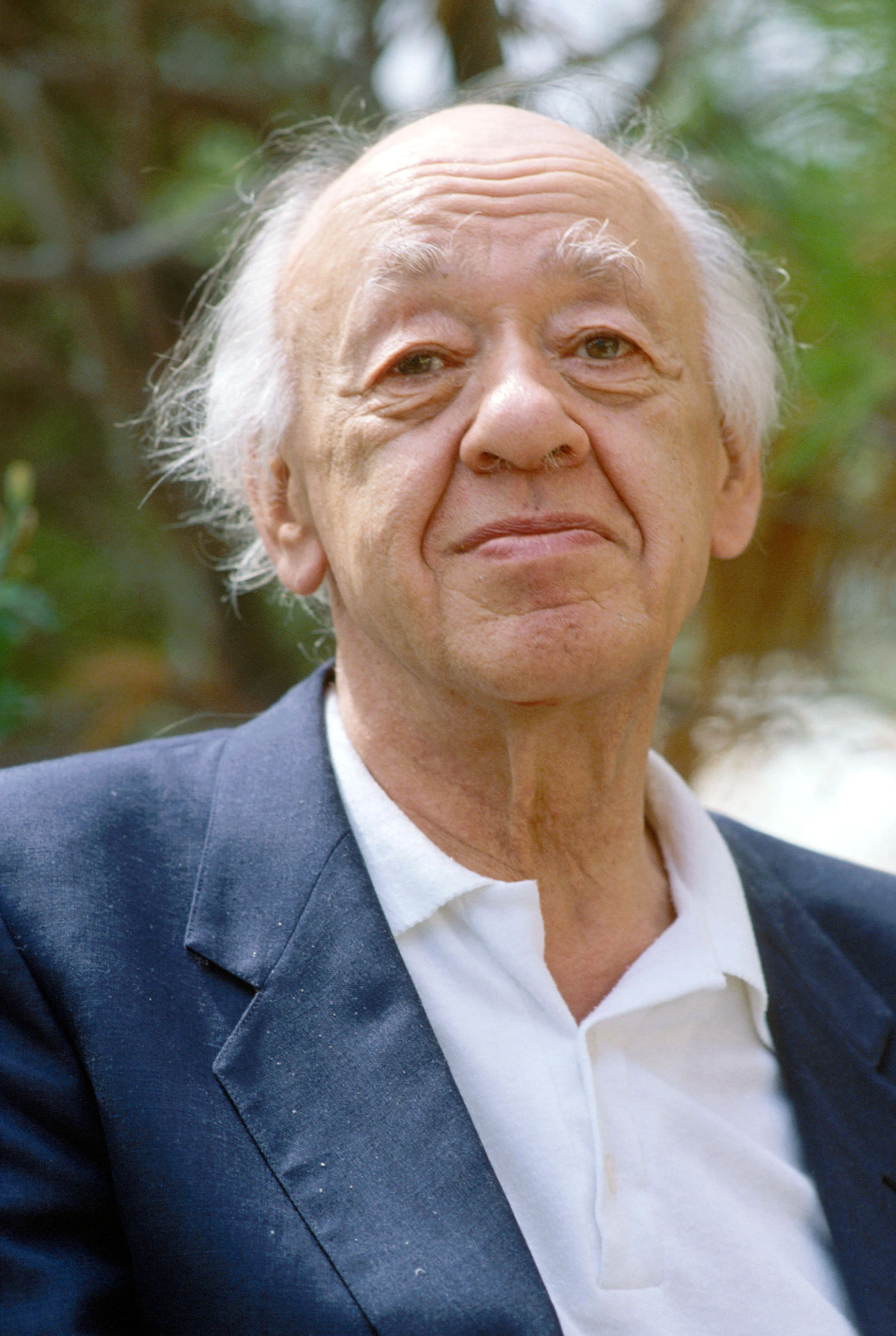
Image from Wikipedia
Image from Wikipedia
Eugène Ionesco – The Master of Absurd Theater and His Enduring Power
An Author Who Redefined the Stage of the 20th Century
Eugène Ionesco, born in 1909 in Slatina, Romania as Eugen Ionescu and died in 1994 in Paris, is considered one of the most influential playwrights of the European post-war culture. He primarily wrote in French and became one of the defining voices of absurd theater, which he dissected with humor, skepticism, and analytical sharpness. His work combines linguistic humor, political friction, and a radical view of the banality of everyday life. ([de.wikipedia.org](https://de.wikipedia.org/wiki/Eug%C3%A8ne_Ionesco?utm_source=openai))
Those who read Ionesco or experience him on stage encounter not a pleasing realism but a theater of displacement, repetition, and existential unrest. This is precisely where his greatness lies: he transformed the seemingly trivial into an aesthetic and intellectual provocation that still resonates today. Some of his best-known plays include The Bald Soprano, The Chairs, and The Rhinoceros. ([de.wikipedia.org](https://de.wikipedia.org/wiki/Eug%C3%A8ne_Ionesco?utm_source=openai))
Early Years Between Romania and France
Ionesco's life journey began between two cultural spaces that profoundly influenced his later stance. Biographical sources point to his birth in Slatina, his studies of French literature in Bucharest, and his early closeness to avant-garde circles. This biographical duality—Romanian origins and French literary identity—explains part of his artistic tension. ([academie-francaise.fr](https://www.academie-francaise.fr/les-immortels/eugene-ionesco?utm_source=openai))
His early influences were literary, intellectual, and also intertwined with cultural-political tensions. Ionesco worked in various cultural contexts before establishing himself as an author; later biographical sources emphasize his engagement with language, his approach to poetic forms, and his early confrontation with the mechanisms of intellectual convention. This starting point is crucial to his later oeuvre, which never settled for a simple narrative form. ([ionesco.dk](https://www.ionesco.dk/biographie-en.html?utm_source=openai))
The Breakthrough: From Language Critique to Worldwide Success
The actual artistic breakthrough came with the plays that initially puzzled the audience and then captivated them for the long term. The Bald Soprano and The Lesson were revived in the 1950s and became key works of a theater that presents language not as a secure means of communication but as a fragile, often absurd system. A Parisian theater kept these plays in its repertoire for decades—a clear indication of their extraordinary stage resonance. ([de.wikipedia.org](https://de.wikipedia.org/wiki/Eug%C3%A8ne_Ionesco?utm_source=openai))
With The Rhinoceros, Ionesco reacted to political and societal hardening, particularly to patriotism and racism. The play became one of his most famous texts as it makes the mechanics of collective seduction visible in a visually powerful, unsettling dramaturgy. It is here that Ionesco’s ability to intertwine social criticism with grotesque comedy and existential depth is particularly evident. ([de.wikipedia.org](https://de.wikipedia.org/wiki/Eug%C3%A8ne_Ionesco?utm_source=openai))
Work, Form, and the Dramaturgy of the Absurd
Ionesco's body of work includes around 30 dramas as well as essays, short stories, a children's book, and later, painting. This range makes him an artist who did not see the stage as a closed form but as a space for intellectual experimentation. His writing revolves around language, identity, repetition, emptiness, and the comedy of social rituals—a tone that continually distances him from naturalistic conventions. ([ionesco.de](https://www.ionesco.de/%C5%92uvres.html?utm_source=openai))
Particularly significant is his treatment of dialogues, which often become autonomous and tilt into routines, clichés, or linguistic absurdities. This is where Ionesco's aesthetic authority lies: he exposes communication as a fragile process while simultaneously showing how much people depend on the forms of speech. Therefore, early French and international literary criticism placed him as a central figure of the Theater of the Absurd. ([ionesco.de](https://www.ionesco.de/page-daccueil.html?utm_source=openai))
Political and Social Explosiveness
Ionesco's dramas possess a clear ideological sharpness. They address not only the fragility of language but also the pressure of collective systems that subsume, discipline, or ridicule the individual. Themes range from the banality of everyday life to political susceptibility and the inner emptiness of modern societies. ([ionesco.de](https://www.ionesco.de/homepage.html?utm_source=openai))
This critical perspective made him important far beyond the theater world. Ionesco was elected to the Académie française in 1970, a sign of institutional recognition for an author who had so radically shifted the rules of drama. This honor also shows how strongly his once provocative texts have entered the canon. ([academie-francaise.fr](https://www.academie-francaise.fr/les-immortels/eugene-ionesco?utm_source=openai))
Reception, Influence, and Enduring Presence
The reception of Ionesco's work is characterized by a rare double movement: early irritation and later canonization. What initially appeared as an attack on conventional theater is now seen as a precise diagnosis of modernity. His plays are performed, discussed, and continually re-read internationally because they pose fundamental questions about language, power, and the loss of meaning not at a historical distance, but with immediate theatrical force. ([de.wikipedia.org](https://de.wikipedia.org/wiki/Eug%C3%A8ne_Ionesco?utm_source=openai))
The academic and museal engagement with his work remains vibrant. The comprehensive overviews of works and biographies on Ionesco-related sites and entries in established reference works indicate that his oeuvre is read not as a concluded heritage but as a continuing point of reference. His later venture into painting adds a visual dimension to this profile without diminishing the language-critical energy of his dramas. ([ionesco.de](https://www.ionesco.de/werke.html?utm_source=openai))
Current Projects and Publications
As Eugène Ionesco passed away in 1994, there are no current projects, new albums, or ongoing publications in the strict sense. Recent online sources refer to revivals, biographical studies, editions, and scholarly receptions of his work. For an artist page, this means: the relevance lies not in new publications but in the unbroken history of staging and interpreting his texts. ([ionesco.de](https://www.ionesco.de/%C5%92uvres.html?utm_source=openai))
Works and Key Milestones Instead of Discography
Since Ionesco was not a musician but a dramatist, a catalog of his works replaces a classical discography in his case. Key milestones include the early texts, the breakthrough with The Bald Soprano and The Lesson, the international establishment of the 1950s, and the enduring presence of The Rhinoceros. These works not only mark highlights of his authorship but also points of an aesthetic revolution on stage. ([de.wikipedia.org](https://de.wikipedia.org/wiki/Eug%C3%A8ne_Ionesco?utm_source=openai))
Additionally, essays, short stories, and later visual works round out the profile of an artist who never separated language, thought, and form. This multifacetedness is particularly important for the reception: Ionesco stands not only for a piece or a concept but for an entire attitude toward art and society. Those who read his texts encounter an uncompromising poetics of uncertainty. ([ionesco.de](https://www.ionesco.de/%C5%92uvres.html?utm_source=openai))
Conclusion: Why Eugène Ionesco Continues to Fascinate Today
Eugène Ionesco remains intriguing because he did not soothe theater but shook it awake. He showed how fragile language is, how ridiculous conventions can appear, and how quickly society can tilt into mechanics, uniformity, and madness. His plays possess a rare blend of comedy, sharpness, and philosophical depth that directly engages contemporary audiences. ([de.wikipedia.org](https://de.wikipedia.org/wiki/Eug%C3%A8ne_Ionesco?utm_source=openai))
Those who experience Ionesco live—or rediscover his works on stage—encounter an author of extraordinary present power. This is precisely where his lasting appeal lies: he does not just write about the absurd; he makes it visible as an aesthetic experience. And for that reason, his name permanently belongs among the great fixed points of European theater history. ([landestheater-tuebingen.de](https://www.landestheater-tuebingen.de/downloads/81482_Kahle_Sa-ngerin_Web.pdf?utm_source=openai))
Official Channels of Eugène Ionesco:
- Instagram: No official profile found
- Facebook: No official profile found
- YouTube: No official profile found
- Spotify: No official profile found
- TikTok: No official profile found
Sources:
- Wikipedia – Eugène Ionesco
- Ionesco.de – Biographie
- Ionesco.de – Startseite
- Ionesco.de – Werke
- Ionesco.de – Œuvres
- Académie française – Eugène Ionesco
- Ionesco.dk – Biography of Eugene Ionesco
- Ionesco.dk – Biographie d'Eugène Ionesco
- Ionesco.de – Biographie (französisch)
- Wikipedia: Image and text source