Hirokazu Koreeda
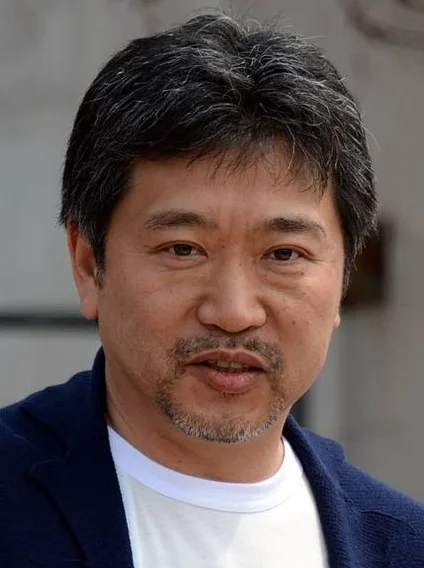
Image from Wikipedia
Image from Wikipedia
Hirokazu Kore-eda: The Master of Subtle Humanistic Cinema
A Director Who Shapes Great Film History Through Quiet Gestures
Hirokazu Kore-eda is one of the most influential contemporary Japanese filmmakers. Born on June 6, 1962, in Kiyose in Tokyo Prefecture, he evolved from a TV documentary filmmaker into an internationally celebrated auteur, whose works regularly garner attention at major festivals around the world. His films revolve around family, memory, loss, social fractures, and the dignity of everyday life. This creates a unique blend of empathy, formal precision, and emotional depth that makes his work unmistakable.
From Television to International Authorship
After studying at Waseda University and joining TV Man Union, Kore-eda began his career with award-winning documentary formats. This background shapes his style to this day: he observes closely, works with restraint, and relies on the power of small moments. His early feature film Maborosi made it clear that this is a director who does not explain characters but rather makes their inner movements visible. The images appear calm, yet beneath the surface, a complex psychological and social fabric unfolds.
With After Life, Kore-eda achieved a new level of international resonance. The film combined poetic fantasy with a deeply human reflection on memory and transience. Here, the central strength of his cinema became evident: it does not seek grand effects but rather investigates what binds people together at their core. This aesthetic stance has made him a key figure in modern Japanese cinema and a director whose works are discussed far beyond national borders.
The Breakthrough: Family Stories with Global Impact
The international breakthrough came with Nobody Knows, which caused a stir at Cannes in 2004 and made Yuya Yagira the youngest winner of the Best Actor Award in festival history. The film tells the story of four children abandoned by their mother and develops a quiet yet harrowing portrait of responsibility, neglect, and the will to survive. Kore-eda works here with an observational skill that never feels voyeuristic. He anchors the drama in everyday gestures, thereby making the emotional weight of the material palpable.
With Still Walking, Kore-eda continued this path and created a work that many regard as particularly personal. The film about a family, their rituals, and their unspoken conflicts showcases Kore-eda's sensitivity to the tension between closeness and distance. His direction remains unassuming yet precise: dialogues, glances, pauses, and spaces convey as much as classic narrative elements. This results in a cinema that never imposes itself yet stays deeply in memory.
Festival Successes, Awards, and the Maturity of an Author
Key milestones in his career include competing in Cannes with Distance and receiving the Jury Prize for Like Father, Like Son. The latter was not only a success with both audiences and critics but also further evidence of how precisely Kore-eda translates familial order systems into moral and emotional crises. The film achieved record box office numbers in several territories and solidified Kore-eda's position as a director who resonates with both arthouse audiences and a broader public. His works combine authorship with accessibility without losing their complexity.
The pinnacle of this development was marked by Shoplifters, which won the Palme d'Or at Cannes in 2018 and was also awarded the César for Best Foreign Language Film. The film about an improvised family community on the fringes of society brought together Kore-eda's central themes in a particularly concentrated form. Poverty, care, identity, and the question of what family actually means appear not as theses but as lived experiences. The authority of his cinema lies precisely in this: it does not judge, it observes with compassion and great formal security.
Expansion of the Work: Abroad, Series, New Narrative Spaces
In recent years, Kore-eda has broadened his work significantly. La Vérité was his first production shot outside Japan and brought him together with Catherine Deneuve and Juliette Binoche. With Broker, he undertook his first Korean directing project, which once again showcased his ability to narrate sensitive topics across national boundaries with a clear humanistic perspective. Such projects demonstrate that Kore-eda is not a director of a single tradition but an international storyteller reshaping his themes in different cultural contexts.
He has also become more open to television. The Netflix series Asura, which premiered on January 9, 2025, brought his exploration of family tensions into a serialized format. According to Netflix, Kore-eda wrote and directed the seven episodes himself; the series is set in late 1970s Japan and focuses on four sisters and the upheavals of a family secret. This work confirms that Kore-eda retains his strength even in long formats: the precise attention to relationships, hierarchies, and the silent cracks beneath the surface of everyday life.
Current Projects and Releases
Among his recent and upcoming works is the live-action adaptation of Tatsuki Fujimoto's Look Back, expected in 2026, with Kore-eda serving as director, screenwriter, and editor. The production was announced in late 2025 and is slated for release in Japanese theaters in 2026. Concurrently, another project titled Sheep in the Box is listed as an upcoming release. This constellation shows a director who, even after decades in the profession, is not stagnating but seeking new materials, new formats, and new audiences.
Such current works underline the vitality of his music career in the broader sense of his visual art: Kore-eda is an author who utilizes composition, rhythm, and montage with great care. His films and series are never purely formal but exert their impact through the relationship between direction and emotion. That is precisely why his new projects regularly receive international attention and are broadly discussed in film criticism.
Style, Themes, and Cultural Influence
Kore-eda's style is characterized by restraint, precision, and great emotional discipline. He avoids melodramatic exaggeration and instead relies on observation, ensemble direction, and the expressiveness of everyday gestures. In many of his works, family is at the center, often depicted as a fragile system of love, duty, silence, and misunderstandings. This interest in the smallest social shifts has made his work a reference point for modern humanistic cinema.
Several reviews and film historical evaluations regard him as one of the most important voices in contemporary Japanese cinema. The BFI highlights how consistently his films revolve around familial structures and absence, while the Criterion Collection describes Still Walking as a particularly personal work. Such assessments affirm his authority as a filmmaker, whose signature is immediately recognizable in the international film culture. Kore-eda does not tell loudly but precisely; not pathetically, but with a rare blend of gentleness and consistency.
Why Hirokazu Kore-eda Remains So Exciting Today
Hirokazu Kore-eda remains an exceptionally exciting artist because he continually brings cinema back to its most human form. His films connect social observation, formal clarity, and emotional truthfulness at a level that finds recognition worldwide. Those who follow his work experience a director who does not explain the present but makes it palpable. Especially in the live context of festival screenings, retrospectives, or premieres, the full power of this art unfolds.
Official Channels of Hirokazu Kore-eda:
- Instagram: no official profile found
- Facebook: no official profile found
- YouTube: no official profile found
- Spotify: no official profile found
- TikTok: no official profile found
Sources:
- KORE-EDA.com - Official Website
- KORE-EDA.com - Profile & Works
- Netflix About - Asura streams January 9
- Netflix Tudum - Asura: Cast, Plot, Trailer
- GKIDS - Look Back live-action acquisition
- BFI - Where to begin with Hirokazu Kore-eda
- The Criterion Collection - Still Walking
- Los Angeles Times - Kore-eda and His Humanistic Cinema
- Wikipedia: Image and Text Source