
Kassandra (Mythologie)
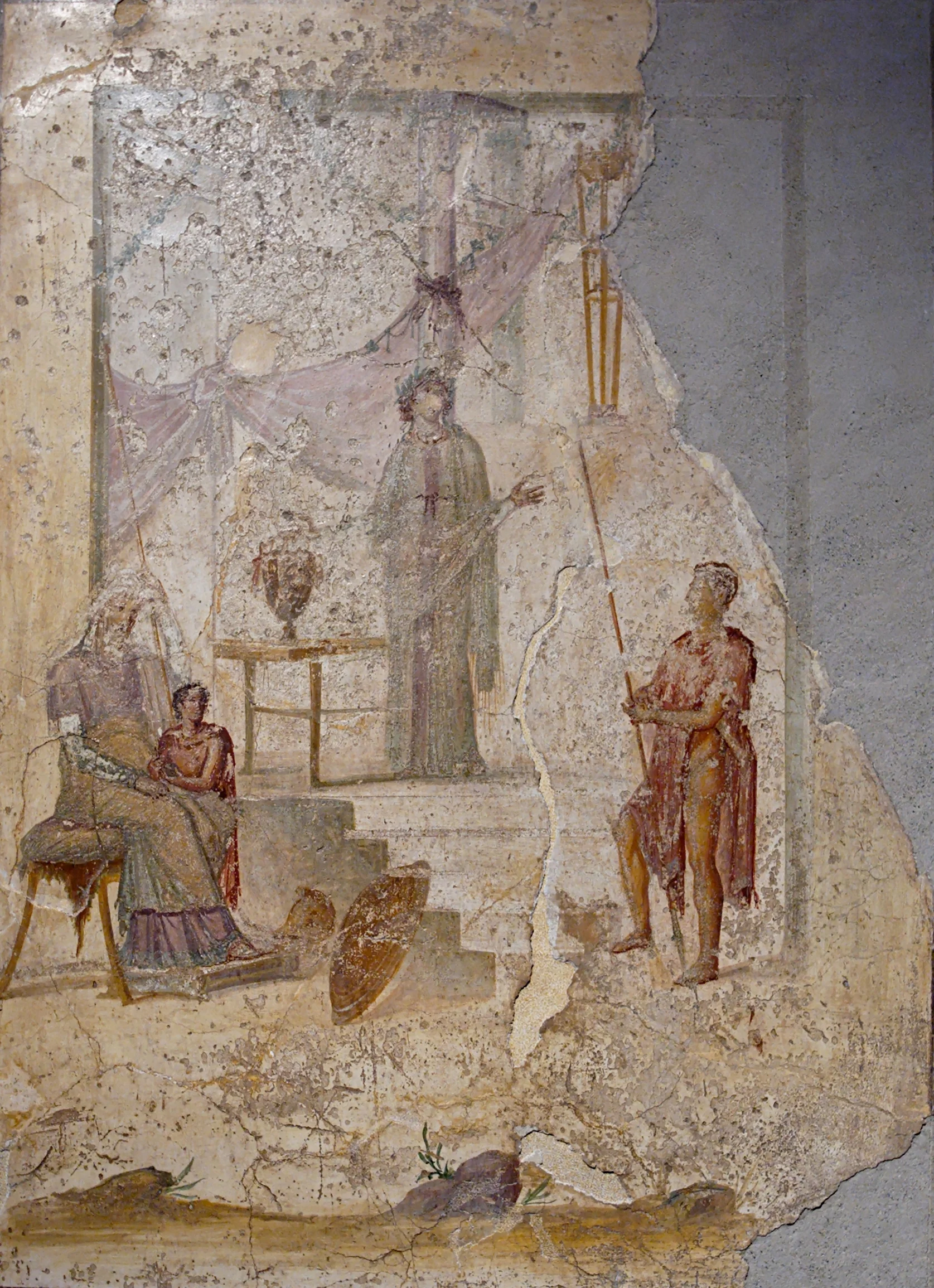
Image from Wikipedia
Image from Wikipedia
Cassandra – the Tragic Prophetess of Troy
One of the Most Striking Figures of Greek Mythology
Cassandra is one of the most unforgettable characters in Greek mythology: daughter of the Trojan King Priam and Hecuba, sister of Hector, Paris, Polyxena, Troilus, and twin sister Helenus. Her name still stands for the fate of knowing the truth and yet being ignored. In ancient tradition, she is depicted as a tragic heroine whose warnings to Troy were never heeded, and whose story has coined the term "Cassandra's call." ([perseus.tufts.edu](https://www.perseus.tufts.edu/hopper/text?doc=Perseus%3Atext%3A1999.04.0104%3Aentry%3Dcassandra-bio-1&utm_source=openai))
The Origin of a Trojan King's Daughter
Tradition places Cassandra at the center of the Trojan royal family. She grows up in a household where power, war, and downfall are closely intertwined, and her siblings embody the entire dramatic spectrum of the Trojan myth. That she becomes the seer lends her character a particular tension: In an environment of political and familial catastrophes, she early recognizes what is to come, yet this very knowledge isolates her from her surroundings. ([perseus.tufts.edu](https://www.perseus.tufts.edu/hopper/text?doc=Perseus%3Atext%3A1999.04.0104%3Aentry%3Dcassandra-bio-1&utm_source=openai))
The Gift of Prophecy and the Curse of Apollo
The most well-known version of the myth tells that Apollo granted Cassandra the gift of prophecy after falling in love with her beauty. When she rejected his seduction attempts or refused the promised reciprocation, the god transformed the gift into a curse: her prophecies would be true, but never believed. This ambivalence makes Cassandra one of the strongest psychological figures of antiquity, as knowledge for her is associated not with effectiveness, but with powerlessness. ([academic.oup.com](https://academic.oup.com/edited-volume/61673/chapter-abstract/548508392?utm_source=openai))
Cassandra in the Shadow of the Trojan War
Within the Trojan narrative, Cassandra emerges when disaster is already near. Ancient authors depict her as a voice of foreboding, warning of the Trojan Horse, the fall of Troy, and other calamities, without anyone believing her. In this role, she becomes the tragic chronicler of decline: she sees the beginning of the end but cannot prevent it. ([perseus.tufts.edu](https://www.perseus.tufts.edu/hopper/text?doc=Perseus%3Atext%3A1999.04.0104%3Aentry%3Dcassandra-bio-1&utm_source=openai))
The Conquest of Troy and Her Bitter End
After the fall of Troy, her fate intensifies in a cruel manner. In the recorded tales, Cassandra seeks refuge in the temple of Athena but is eventually forcibly taken by Ajax the Locrian; in other traditions, she is led away as the spoils of Agamemnon to Mycenae. There, her path tragically ends with her death in a foreign land, linked to the downfall of the house of Agamemnon and the dark aftermath of the Trojan War. ([perseus.tufts.edu](https://www.perseus.tufts.edu/hopper/text?doc=Perseus%3Atext%3A1999.04.0104%3Aentry%3Dcassandra-bio-1&utm_source=openai))
Literary Impact: From Antiquity to Modernity
Cassandra is much more than a side character in the Trojan myth. Her fate has been reinterpreted in ancient tragedy, later narratives, and modern literature, as it describes a universal pattern: the truth is spoken, but not acknowledged. The term "Cassandra" has thus long become a cultural model representing unheard warnings, ignored insights, and tragic realization without power. ([encyclopedia.com](https://www.encyclopedia.com/literature-and-arts/classical-literature-mythology-and-folklore/folklore-and-mythology/cassandra?utm_source=openai))
The "Cassandra's Call" as a Cultural Symbol
The resonance of this figure extends deeply into philosophy, psychology, politics, and everyday culture. The modern use of the name Cassandra refers to individuals whose legitimate warnings are dismissed as exaggerated, inconvenient, or ominous, even though they later prove to be accurate. This shift in meaning demonstrates how firmly the mythological character remains embedded in collective thought today. ([encyclopedia.com](https://www.encyclopedia.com/literature-and-arts/classical-literature-mythology-and-folklore/folklore-and-mythology/cassandra?utm_source=openai))
Style and Symbolism of the Character
From a cultural-historical perspective, Cassandra encompasses several archetypal dimensions: seer, daughter of a royal house, survivor of war, and victim of a divine slight. Her character represents knowledge without recognition, insight without power, and the destructive force when truth is not politically or emotionally accepted. This is precisely why she feels so modern: Cassandra is the protagonist of the ignored alarm, and this conflict remains timeless. ([perseus.tufts.edu](https://www.perseus.tufts.edu/hopper/text?doc=Perseus%3Atext%3A1999.04.0104%3Aentry%3Dcassandra-bio-1&utm_source=openai))
Why Cassandra Fascinates Today
Cassandra captivates because her story is not only told by gods and kings but is an existential drama: those who know the truth but find no ears to hear experience one of the bitterest forms of solitude. Her tragedy lies not in the absence of the gift but in the impossibility of making that gift effective. Those interested in Greek mythology, ancient tragedy, and powerful female figures encounter in Cassandra one of the most striking characters of all. ([en.wikisource.org](https://en.wikisource.org/wiki/1911_Encyclop%C3%A6dia_Britannica/Cassandra?utm_source=openai))
Conclusion: Cassandra is compelling because she embodies the eternal tension between knowledge and powerlessness. Her figure connects myths from Troy with an experience still understandable today: being right yet unheard. Those who wish to experience the full force of the ancient narrative world should read Cassandra as one of the great tragic voices of mythology. ([en.wikipedia.org](https://en.wikipedia.org/wiki/Cassandra_%28metaphor%29?utm_source=openai))
Official Channels of Cassandra (Mythology):
- Instagram: no official profile found
- Facebook: no official profile found
- YouTube: no official profile found
- Spotify: no official profile found
- TikTok: no official profile found
Sources:
- Wikipedia – Cassandra (Mythology)
- Perseus Tufts – Dictionary of Greek and Roman Biography and Mythology: Cassandra
- Oxford Classical Dictionary – Cassandra
- Theoi Greek Mythology – Classical Myths and Sources
- World History Encyclopedia – The Pythia / Cassandra Reference
- Encyclopedia.com – Cassandra
- British Museum – Cassandra
Upcoming Events
Kassandra – Theater Games Glyptothek Munich