
Niki Lauda
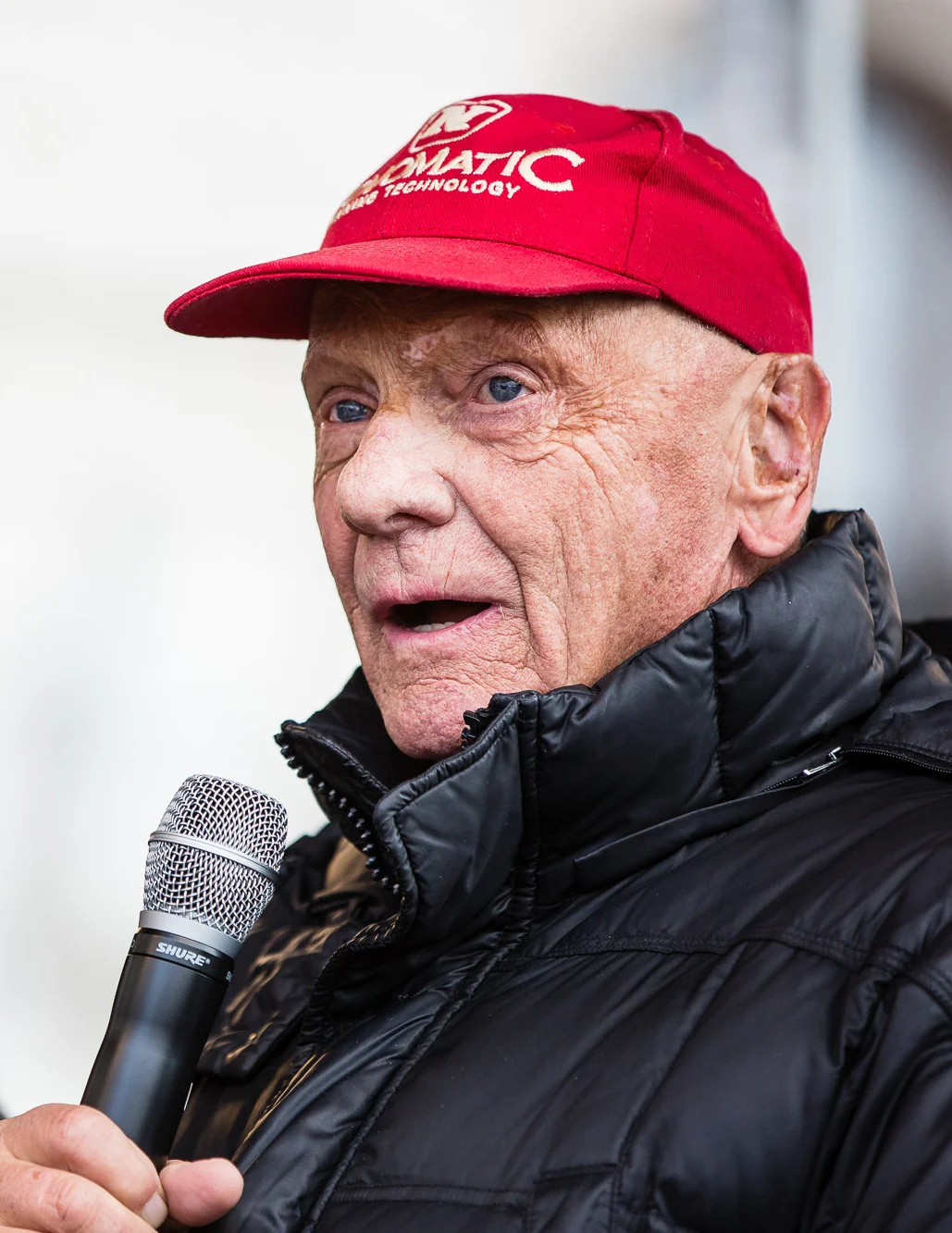
Image from Wikipedia
Image from Wikipedia
Niki Lauda – the uncompromising icon of motorsport
A legend between precision, pain, and triumph
Andreas Nikolaus "Niki" Lauda was born on February 22, 1949, in Vienna and died on May 20, 2019, in Zurich. As an Austrian racing driver, entrepreneur, and pilot, he influenced international motorsport for decades. Between 1971 and 1985, he competed in Formula 1 and became a three-time world champion – a lifetime achievement that is still regarded today as the epitome of discipline, technical intelligence, and mental toughness. ([de.wikipedia.org](https://de.wikipedia.org/wiki/Niki_Lauda))
Early years and the path to racing
Lauda's career did not start as a romantic tale of heroism, but rather as a radical decision against conventions. He committed to motorsport early on and worked his way up through the formula series and sports car racing until he made his Formula 1 debut in 1971. His time with March, B.R.M., Ferrari, Brabham, and McLaren shows a driver who was not tied to a single brand but continually faced new technical challenges. ([de.wikipedia.org](https://de.wikipedia.org/wiki/Niki_Lauda))
Even at this stage, Lauda's style was revealed: analytical, sober, and focused on efficiency. He not only drove fast but also worked with an almost engineering-like attention to tuning, race strategy, and vehicle balance. It was this combination of driving skills and technical judgment that made him an exceptional figure in the field. ([de.wikipedia.org](https://de.wikipedia.org/wiki/Niki_Lauda))
The breakthrough at Ferrari
Lauda experienced his sporting breakthrough in 1975 with Ferrari. With the Ferrari 312T, constructed by Mauro Forghieri, he won five races and set standards in a year when he also became the first and only driver to complete a lap at the Nürburgring in under seven minutes. This season marked the moment when Lauda transitioned from a talented race car driver to a dominant force in Formula 1. ([de.wikipedia.org](https://de.wikipedia.org/wiki/Niki_Lauda))
In 1977, he won his second title. Lauda clinched the championship before the end of the season and subsequently left Ferrari for Brabham. The separation was a testament to a confident driver who never saw sporting success as a final destination. He was always seeking the next challenge – a characteristic that defined his entire racing and entrepreneurial career. ([de.wikipedia.org](https://de.wikipedia.org/wiki/Niki_Lauda))
The 1976 crash and Lauda's return
Hardly any chapter in sports history is as well-known as Lauda's severe crash at the 1976 German Grand Prix. His Ferrari caught fire, Lauda suffered severe burns, and inhaled toxic fumes; nevertheless, he returned to racing just weeks later. This comeback solidified his status as a legend, as it showcased not only athletic performance but extraordinary willpower. ([de.wikipedia.org](https://de.wikipedia.org/wiki/Niki_Lauda))
The crash changed not only Lauda but also motorsport itself. The international attention was immense, the safety debate intensified, and the Nürburgring's Nordschleife lost its place in the Formula 1 calendar forever. Lauda's name became closely associated with the issue of racing safety. ([de.wikipedia.org](https://de.wikipedia.org/wiki/Niki_Lauda))
Brabham, McLaren, and the third world championship title
After Ferrari, Lauda initially drove for Brabham. He remained competitive there, despite the team going through a technically challenging phase. He later moved to McLaren, where he won his third world championship title in 1984 – with a lead of only half a point over Alain Prost, the narrowest title margin in Formula 1 history. This victory is considered a masterpiece of strategic maturity and demonstrates Lauda's ability to win races through intelligence rather than mere aggression. ([de.wikipedia.org](https://de.wikipedia.org/wiki/Niki_Lauda))
The 1984 season was an internal team duel at the highest level. While Prost was often faster in qualifying, Lauda focused on race setup, thus securing the necessary points at the decisive moment. This title was not the result of youthful aggression, but of a mature, precise racing philosophy. ([de.wikipedia.org](https://de.wikipedia.org/wiki/Niki_Lauda))
Entrepreneur, pilot, and aviation pioneer
After retiring from Formula 1, Lauda transitioned to aviation and became an entrepreneur with a keen sense for risk and organization. In 1979, he founded Lauda Air, followed by other airline projects like Niki and Laudamotion. He was a pilot himself and closely intertwined his entrepreneurial career with a passion for technology and mobility. ([de.wikipedia.org](https://de.wikipedia.org/wiki/Niki_Lauda))
His entrepreneurial biography is characterized by successes as well as setbacks. Particularly, the crash of Lauda Air Flight 004 in 1991, resulting in 223 fatalities, heavily impacted the company's history. Nevertheless, Lauda remained a significant figure in European aviation, continually returning to the field with new concepts and renewed energy. ([de.wikipedia.org](https://de.wikipedia.org/wiki/Niki_Lauda))
Late motorsport return and authority in the paddock
Even after retiring, Lauda remained connected to motorsport. In the 1990s, he advised Ferrari, helped reorganize the team, and played a role in signing Michael Schumacher. From 2001 to 2002, he also worked with the Jaguar team, initially as the race director and later as team principal. Thus, Lauda was not only a driver but also a strategist, decision-maker, and a man with real influence on the structures of Formula 1. ([de.wikipedia.org](https://de.wikipedia.org/wiki/Niki_Lauda))
This second career behind the scenes underscores his authority. Lauda was not just a nostalgic figure of racing history, but an active shaper of the present sports landscape. In the press, on television, and among professionals, he remained a voice taken seriously for its clarity and experience. ([de.wikipedia.org](https://de.wikipedia.org/wiki/Niki_Lauda))
Awards, resonance, and cultural legacy
Lauda's achievements were also officially recognized. For his second title, he was named Austria's Sportsman of the Year in 1977. Furthermore, he continued to serve as a symbol of perseverance – through documentaries, obituaries, and feature films like Rush, which made his rivalry with James Hunt accessible to a wide audience. ([de.wikipedia.org](https://de.wikipedia.org/wiki/Niki_Lauda))
Today, his name represents a rare blend of technical excellence, relentless self-discipline, and global media impact. Lauda embodied the modern race driver: calculated, analytical, media-savvy, and simultaneously vulnerable enough to display genuine human greatness. It is precisely this range that keeps his cultural influence strong to this day. ([de.wikipedia.org](https://de.wikipedia.org/wiki/Niki_Lauda))
Discography, publications, and current projects
A musical discography in the classical sense does not belong to Niki Lauda's work. Verified sources document autobiographical and biographical publications about his life, including Meine Story and later book projects that record his career and perspective on motorsports. Current music projects, albums, or singles are not documented in the verified sources. ([de.wikipedia.org](https://de.wikipedia.org/wiki/Niki_Lauda))
No verified new publications or artistic projects related to Niki Lauda could be identified for 2024 and 2025 either. Search results instead continue to point to his historical significance in motorsport, obituaries, documentaries, and memorial formats. For a classic fan or music page, this is an exceptional case, which makes the page particularly interesting: Here stands an icon whose impact extends far beyond a single genre. ([de.wikipedia.org](https://de.wikipedia.org/wiki/Niki_Lauda?utm_source=openai))
Conclusion: Why Niki Lauda continues to fascinate
Niki Lauda remains compelling because he never left performance to chance. He combined speed with intellect, ambition with clarity, and personal setbacks with an almost unprecedented ability to rebound. His story is one of an extraordinary individual who has shaped motorsport, aviation, and public perception alike. Anyone wanting to experience motorsport in its purest form encounters in Lauda one of the greatest figures in this history. ([de.wikipedia.org](https://de.wikipedia.org/wiki/Niki_Lauda))
His legacy lives on in the great races, in the safety culture of Formula 1, and in the memory of a man who not only won but set standards. Experiencing Niki Lauda means understanding a benchmark for discipline, courage, and precision. That is why every look at his career is worthwhile – live on the track, his presence would undoubtedly have been just as electrifying as on the historic stage of the sport. ([de.wikipedia.org](https://de.wikipedia.org/wiki/Niki_Lauda))
Official channels of Niki Lauda:
- Instagram: No official profile found
- Facebook: No official profile found
- YouTube: No official profile found
- Spotify: No official profile found
- TikTok: No official profile found