
Pedro Almodóvar
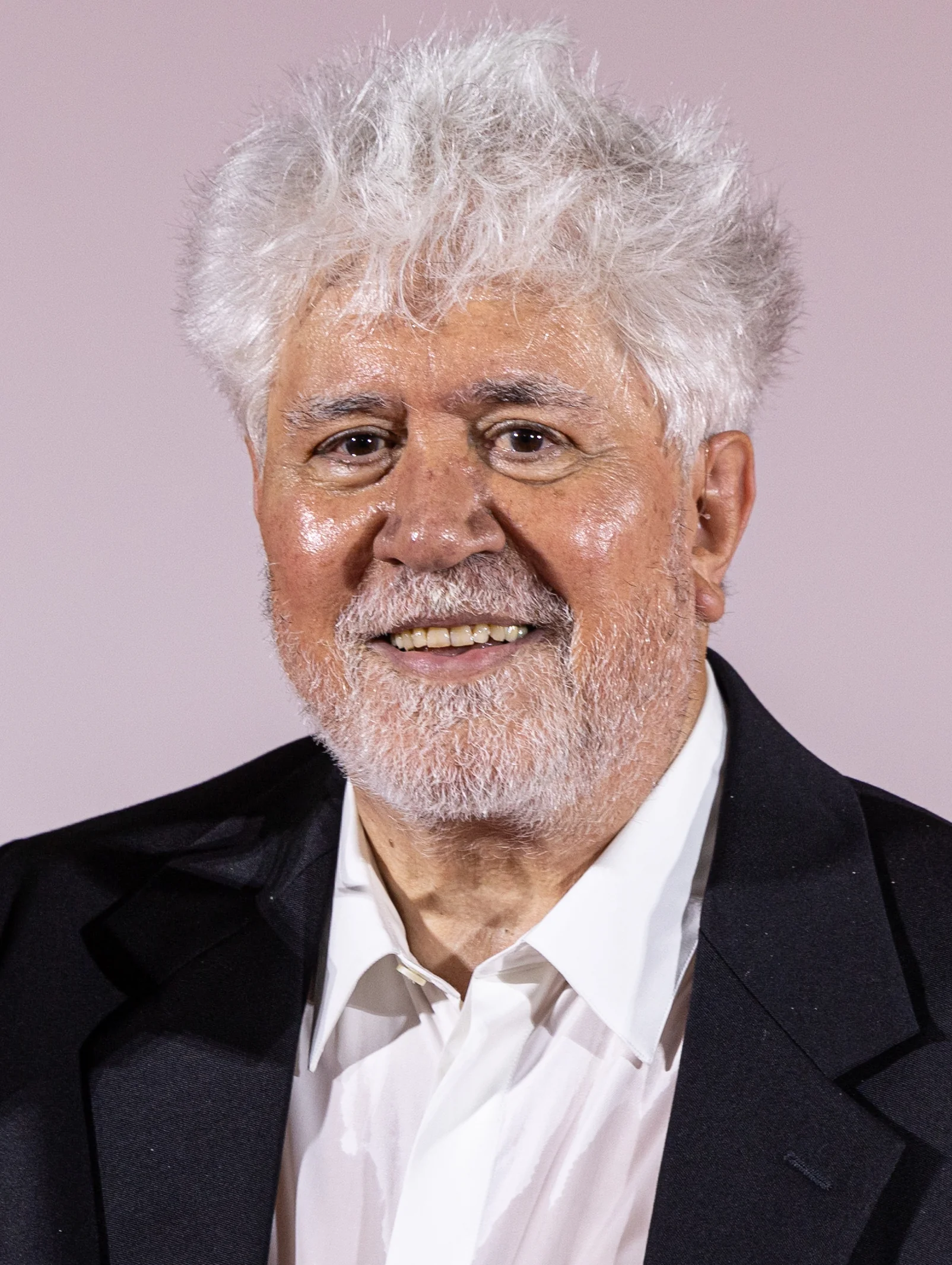
Image from Wikipedia
Image from Wikipedia
Pedro Almodóvar: The Color Rush of European Author Cinema
A Master of Emotion, Pop Culture, and Uncompromising Imagery
Pedro Almodóvar Caballero, born on September 25, 1949, in Calzada de Calatrava in the province of Ciudad Real, is one of the most influential directors of modern world cinema. His name represents cinema of strong emotions, melodramatic intensification, and visual precision that resonates far beyond Spain. As a director, producer, and screenwriter, he has developed a distinctive style that merges societal taboos, female perspectives, and pop cultural energy into a unique author cinema. ([britannica.com](https://www.britannica.com/biography/Pedro-Almodovar?utm_source=openai))
Early Years: From La Mancha to Cultural Awakening
Almodóvar's artistic socialization occurred during a time of transformation. His work emerged from post-Franco Spain, where the "Movida madrileña" became an explosion of freedom, experimentation, and urban counterculture. In this atmosphere, he developed the mix of irony, provocation, and emotional openness that has defined his later musical career as an artist in imagery, sound, and storytelling. The early phase of his career was closely linked to the subculture, from which he drew not only material but also attitude and rhythm. ([en.wikipedia.org](https://en.wikipedia.org/wiki/Pedro_Almod%C3%B3var?utm_source=openai))
His early works emerged from a scene that consciously worked against conventions and operated with a low budget but great aesthetic independence. From the early short films and the underground milieu, a style took shape that fused the ordinary, the eccentric, and the emotionally relaxed with striking formal control. These early experiences significantly influenced his later artistic development, early focusing him on autonomy, rhythm, and strong character-driven narratives. ([encyclopedia.com](https://www.encyclopedia.com/people/literature-and-arts/film-and-television-biographies/pedro-almodovar?utm_source=openai))
The Breakthrough: From Underground to International Auteur Star
With his feature film debut Pepi, Luci, Bom y otras chicas del montón, Almodóvar began a career that quickly brought him from the Spanish underground into the international discourse. The filmography of the 1980s marks his rise as a stylist with global appeal: bright humor, sexual self-determination, melodramatic intensity, and a sense for strong characters condensed into a cinema that was immediately recognizable. In this phase, he solidified the authority that would later make him perhaps the most famous Spanish director of his generation. ([encyclopedia.com](https://www.encyclopedia.com/people/literature-and-arts/film-and-television-biographies/pedro-almodovar?utm_source=openai))
His work evolved in stages, ranging from the marginal underground phase through the early more commercial years to the internationally celebrated blockbusters. This development is not just a career story; it also chronicles a story of stylistic refinement: from the anarchic impulse emerged a precisely composed narrative style, and from the pop gesture, a mature dramaturgy. Critical reception and audience success ran increasingly parallel. ([encyclopedia.com](https://www.encyclopedia.com/people/literature-and-arts/film-and-television-biographies/pedro-almodovar?utm_source=openai))
Films, Characters, and the Art of Melodrama
Almodóvar’s cinema thrives on characters who stand on the fringes of societal norms, and it is precisely there that they reach their emotional greatness. His films combine melodrama, comedy, and tragedy with a visual aesthetic that employs colors, spaces, and costumes as instruments of a composition. The tension between surface and inner pain is one of his most powerful characteristics; his works often feel light-footed while simultaneously being carried by existential weight. ([britannica.com](https://www.britannica.com/biography/Pedro-Almodovar?utm_source=openai))
This is especially evident in films like Women on the Verge of a Nervous Breakdown, All About My Mother, Talk to Her, Volver, Bad Education, The Skin I Live In, Julieta, and Pain and Glory. These works make Almodóvar an author who continuously orchestrates biographical motives, gender representations, and familial conflicts anew. His narratives are never purely privatizing; they are always also a reflection of a changing society. ([en.wikipedia.org](https://en.wikipedia.org/wiki/List_of_awards_and_nominations_received_by_Pedro_Almod%C3%B3var?utm_source=openai))
Awards, Recognition, and Cultural Standing
The international breakthrough was soon reflected in award wins. All About My Mother won the Oscar for Best Foreign Language Film in 2000 and the Golden Globe in the same category; later, The Room Next Door received the Golden Lion at Venice in 2024. These awards document not just success, but also the long-term relevance of a body of work that has continuously established itself anew over decades. ([en.wikipedia.org](https://en.wikipedia.org/wiki/Pedro_Almod%C3%B3var?utm_source=openai))
The critical reception regularly highlights his ability to blend European author cinema with popular energy. This balance makes Almodóvar an authority of modern cinema: his films are accessible yet demanding, emotionally open yet formally controlled. The cultural significance of his work lies in his capacity to translate Spanish contemporary narratives, queer perspectives, and melodrama into a globally understandable cinematic language. ([britannica.com](https://www.britannica.com/biography/Pedro-Almodovar?utm_source=openai))
Musicality in Cinema: Soundtrack, Rhythm, and Emotional Composition
Although Pedro Almodóvar is not a musician in the strict sense, his cinema possesses a distinct musicality. His use of popular songs, musical motifs, and emotional repetitions gives many scenes the character of a dramatic score. Film analysis sources emphasize that he utilized popular music for conveying emotions in earlier works, employing it as a narrative accent. ([en.wikipedia.org](https://en.wikipedia.org/wiki/Pedro_Almod%C3%B3var?utm_source=openai))
This formal musicality manifests in the rhythm of the editing, the color logic of the imagery, and the way dialogues, glances, and silences are juxtaposed. Almodóvar’s cinematic language employs repetition, variation, and contrast—principles that are also central to music. This results in a work that is not just visually engaging but nearly audible. ([en.wikipedia.org](https://en.wikipedia.org/wiki/Pedro_Almod%C3%B3var?utm_source=openai))
Current Projects: The Late Maturity of a Great Author
With The Room Next Door, Almodóvar presented his first English-language feature film in 2024. The film was associated with themes such as dying, farewell, and the climate crisis while marking a new step in his artistic development. The international response was extraordinary: Venice honored the film with the Golden Lion, further solidifying Almodóvar's status as a living icon of author cinema. ([theguardian.com](https://www.theguardian.com/film/article/2024/sep/07/almodovars-the-room-next-door-wins-golden-lion-at-venice-film-festival?utm_source=openai))
His later works show a director who does not weaken his classic vocabulary, but rather condenses it. From the vibrancy of his early years emerged greater emotional clarity, and from the eccentric gesture developed a more precise, mature form of dramaturgy. It is this late sovereignty that makes his most recent works so exciting: they bear the mark of an author who completely masters his medium. ([screendaily.com](https://www.screendaily.com/reviews/the-room-next-door-venice-review/5196746.article?utm_source=openai))
Cultural Influence: Spain, World Cinema, and the Power of Freedom
Almodóvar's influence extends far beyond individual films. He has redefined the image of Spanish cinema internationally and established an aesthetic that places female figures, queer realities, and emotional experiences at its center. His works have shaped not only the arthouse audience but also changed the perception of Spain as a culturally bold, modern filmmaking country. ([britannica.com](https://www.britannica.com/biography/Pedro-Almodovar?utm_source=openai))
His ability to translate personal obsessions into universal narratives makes him persistently relevant. He combines populism with intellect, camp with tragedy, melodrama with social observation. This mix explains why his films remain in conversation across generations and continue to reach new audiences. ([en.wikipedia.org](https://en.wikipedia.org/wiki/Pedro_Almod%C3%B3var?utm_source=openai))
Conclusion: A Director Who Transforms Emotion into Art
Pedro Almodóvar remains one of the most exciting European auteur filmmakers because he never simply tells stories; he creates emotional landscapes. His artistic journey from subcultural rebellion to globally acclaimed mastery displays a career filled with courage, stylistic awareness, and consistency. Experiencing his work means encountering a cinema that condenses color, pain, humor, and humanity into unmistakable grandeur. To witness him live during a screening, a festival discussion, or a retrospective is to feel the energy of a true film author in its purest form. ([encyclopedia.com](https://www.encyclopedia.com/people/literature-and-arts/film-and-television-biographies/pedro-almodovar?utm_source=openai))
Official Channels of Pedro Almodóvar:
- Instagram: No official profile found
- Facebook: No official profile found
- YouTube: No official profile found
- Spotify: No official profile found
- TikTok: No official profile found
Sources:
Upcoming Events
Fresh from Cannes: Bitter Festival
Bitter Festival
Bitter Festival
Bitter Festival
Bitter Festival
Bitter Fest
Bitter Festival
Bitter Fest – Pedro Almodóvar at filmforum Duisburg
Bitter Fest