
Ricardo Viñes
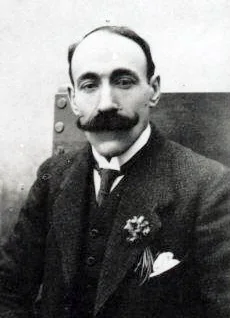
Image from Wikipedia
Image from Wikipedia
Ricardo Viñes: The Pianist Who Made Modernity Audible
A Catalan Sound Visionary Between Barcelona and Paris
Ricardo Viñes, born Ricard Viñes i Roda, was one of those pianists who not only played but also shaped an era. Born on February 5, 1875, in Lleida and died on April 29, 1943, in Barcelona, he grew up during a time when the piano transformed from bourgeois salon art to a driving force of musical avant-garde. His artistic biography intertwines Catalan roots, the Parisian school, and the energy of an interpreter who not only embraced new music but actively brought it to concert halls. ([enciclopedia.cat](https://www.enciclopedia.cat/gran-enciclopedia-catalana/ricard-vines-i-roda))
Viñes is regarded as a central figure in the Catalan pianists' school and one of the most important interpreters of the Spanish piano repertoire. At the same time, he moved with unusual openness within the French, Russian, and South American sound worlds of his time. This dual anchoring made him significantly impactful in music history: he was a virtuoso, mediator, and discoverer all in one. ([marstonrecords.com](https://www.marstonrecords.com/pages/lagniappe-7-vines))
Early Education: From Lleida to Barcelona, from Barcelona to Paris
His education began in Barcelona, where he was initially taught by Joan Baptista Pujol. By 1887, he had won the first prize in piano at the Municipal School of Music, before he moved to Paris in 1887 at the urging of Isaac Albéniz to study at the Conservatoire with Charles-Wilfred de Bériot and Antoine Lavignac. In 1894, he won the first prize at the Paris Conservatoire, a success that marked the beginning of his international career. ([enciclopedia.cat](https://www.enciclopedia.cat/gran-enciclopedia-catalana/ricard-vines-i-roda))
Paris became not just a place of learning for Viñes but an artistic center. There he met Maurice Ravel, with whom he formed a lifelong friendship, and he early on mingled with the circle of Debussy, Séverac, Fauré, Satie, and later Les Six. This proximity to the leading composers of modernity shaped his reputation as a pianist with exceptional stylistic intelligence and a keen sense for the new. ([marstonrecords.com](https://www.marstonrecords.com/pages/lagniappe-7-vines))
The Breakthrough as an Interpreter of Musical Modernity
The actual breakthrough came not through a single star recital in the modern sense but through an attitude: Viñes became the pianist of the avant-garde. Following his 1898 recital, he rapidly became the leading interpreter of new piano music, the protagonist in numerous premieres and first performances, and one of the defining intermediaries of the new French piano aesthetics, according to the cultural administration of Catalonia. This was not a supporting role but cultural pioneering work. ([cultura.gencat.cat](https://cultura.gencat.cat/ca/temes/commemoracions/2025/anyricardvines/biografia/?utm_source=openai))
His repertoire extended far beyond established classical works. He passionately advocated for new and contemporary pieces, presenting them in Europe and South America, while many of his peers preferred to stick with the Austro-German and Slavic core repertoire. Scholarly literature describes his technique as brilliant and his programming as deliberately unconventional; therein lies his authority as an interpreter. ([marstonrecords.com](https://www.marstonrecords.com/pages/lagniappe-7-vines))
Premieres, Dedications, and Artistic Alliances
Ricardo Viñes occupies a prominent place in music history at the intersections of significant works. Among the compositions associated with his name are Debussy's Poissons d'or, Ravel's Oiseaux tristes, and Fauré's Noches en los jardines de España, which were dedicated to him. As a premier interpreter, he played a key role: he brought central works of French piano music to the public for the first time and thus helped to shape the canon of modernity. ([en.wikipedia.org](https://en.wikipedia.org/wiki/Ricardo_Vi%C3%B1es))
The significance of this collaboration extends beyond individual dedications. Viñes understood the piano as a laboratory for tone colors, articulation, and form. That composers such as Ravel, Debussy, Satie, and Falla sought him as a partner demonstrates not only his pianistic sovereignty but also his trust in new musical languages. In his milieu, virtuosity, intellect, and aesthetic curiosity converged. ([marstonrecords.com](https://www.marstonrecords.com/pages/lagniappe-7-vines))
Discography and Sonic Legacy
Viñes did not leave behind a large catalog of recordings like a late Romantic superstar pianist, yet his recordings hold significant documentary value. Marston Records notes that the release "Ricardo Viñes: The Complete Recordings" gathers all of his surviving recorded works; these documents date from 1930 to 1936. Particularly because Viñes seemingly did not love the recording studio, this audio material seems all the more precious: it preserves the sound of an interpreter whose contemporaries praised his authority and colorfulness. ([marstonrecords.com](https://www.marstonrecords.com/pages/lagniappe-7-vines))
Even beyond the recordings, his influence endures in collections, editions, and research projects. The University of Colorado Boulder holds a Ricardo Viñes Piano Music Collection; concurrently, Catalan institutions and festivals dedicate themselves to his legacy with lectures, exhibitions, and concert series. His musical heritage thus remains not a stagnant museum piece but part of an active culture of historical remembrance. ([es.wikipedia.org](https://es.wikipedia.org/wiki/Ricardo_Vi%C3%B1es?utm_source=openai))
Style, Technique, and Musical Personality
Viñes' playing has been described as colorful, authoritative, and highly educated. Not only was technical security crucial, but also the ability to articulate a wide range of styles with idiomatic precision: French delicacy, Spanish rhythm, Russian expressiveness, and an almost analytical clarity in dealing with complex structures. Particularly with the new works of his friends, he was not merely an executor but an interpreter with a formative approach. ([marstonrecords.com](https://www.marstonrecords.com/pages/lagniappe-7-vines))
His aesthetic stance was modern and open but never arbitrary. He sought not the safe showpiece but the musical discovery, the substance in detail, and the allure of the new. In this sense, Viñes embodies a generation of pianists that expanded the repertoire rather than simply reproducing it. His name thus symbolizes a musical career where programming, sound culture, and cultural mediation are inseparably intertwined. ([marstonrecords.com](https://www.marstonrecords.com/pages/lagniappe-7-vines))
Teacher, Author, and Impetus for a Whole Scene
Viñes worked not only on stage but also in education. Among his students were Francis Poulenc, Marcelle Meyer, Joaquín Nin-Culmell, and Léo-Pol Morin; particularly Marcelle Meyer is regarded as an important heir to his piano tradition. Poulenc later expressed his admiration for Viñes, stating that he was the only virtuoso at the time who played Debussy and Ravel. This illustrates how greatly his impact extended beyond his own concert life. ([en.wikipedia.org](https://en.wikipedia.org/wiki/Ricardo_Vi%C3%B1es))
Additionally, he exhibited a reflective and literary side. Viñes published contributions in musical journals, wrote texts on Spanish music, and left diaries that are frequently cited in research. His own small compositional activity with pieces such as Minuet spectral, Crinoline, or Thrénodie: hommage à la mémoire d’Erik Satie complements the image of a musician who not only interpreted but also thought and wrote into the music of his time. ([enciclopedia.cat](https://www.enciclopedia.cat/gran-enciclopedia-catalana/ricard-vines-i-roda))
Cultural Influence: Why Ricardo Viñes Still Matters Today
Ricardo Viñes was a catalyst of musical modernity. He helped bring works by Debussy, Ravel, Satie, Falla, Albéniz, Granados, Mompou, and Séverac to the public and drew attention to Russian piano music by Mussorgsky, Balakirev, and Prokofiev in France. Thus, he was not just a Spanish pianist but a first-rate European cultural mediator. ([en.wikipedia.org](https://en.wikipedia.org/wiki/Ricardo_Vi%C3%B1es))
His influence is also reflected in the culture of remembrance. Libraries, concert halls, and cultural institutions in Catalonia continue to engage with his legacy, and in 2025, exhibitions and lectures were planned to celebrate his 150th birthday, highlighting his historical significance. An artist who once defended new music against the taste of the conventional remains remarkably alive in the 21st century. ([auditori.cat](https://www.auditori.cat/en/events/museum-exposition-ricard-vines-paris/?utm_source=openai))
Ricardo Viñes fascinates because he never understood virtuosity as an end in itself. He combined stage presence, intellectual curiosity, and the courage to take risks into an artistic stance that feels as modern today as it did then. Anyone wanting to understand the history of the piano in the early 20th century cannot overlook him. Those wishing to experience him live can today mainly find direct access to this extraordinary musician through historical recordings, concerts, and research projects. ([marstonrecords.com](https://www.marstonrecords.com/pages/lagniappe-7-vines))
Official Channels of Ricardo Viñes:
- Instagram: no official profile found
- Facebook: no official profile found
- YouTube: no official profile found
- Spotify: no official profile found
- TikTok: no official profile found
Sources:
- Enciclopèdia.cat – Ricard Viñes i Roda
- Marston Records – Ricardo Viñes: The Complete Recordings
- Departament de Cultura de la Generalitat de Catalunya – Biography
- Catalunya País d’Arxius – Photograph of the pianist Ricard Viñes
- Biblioteca de Catalunya – Conference on Ricard Viñes
- L’Auditori – Ricard Viñes in Paris. Diary of a Pianist
- College Music Symposium – Miroirs, by Maurice Ravel
- Wikipedia – Ricardo Viñes