
Sybille Krämer
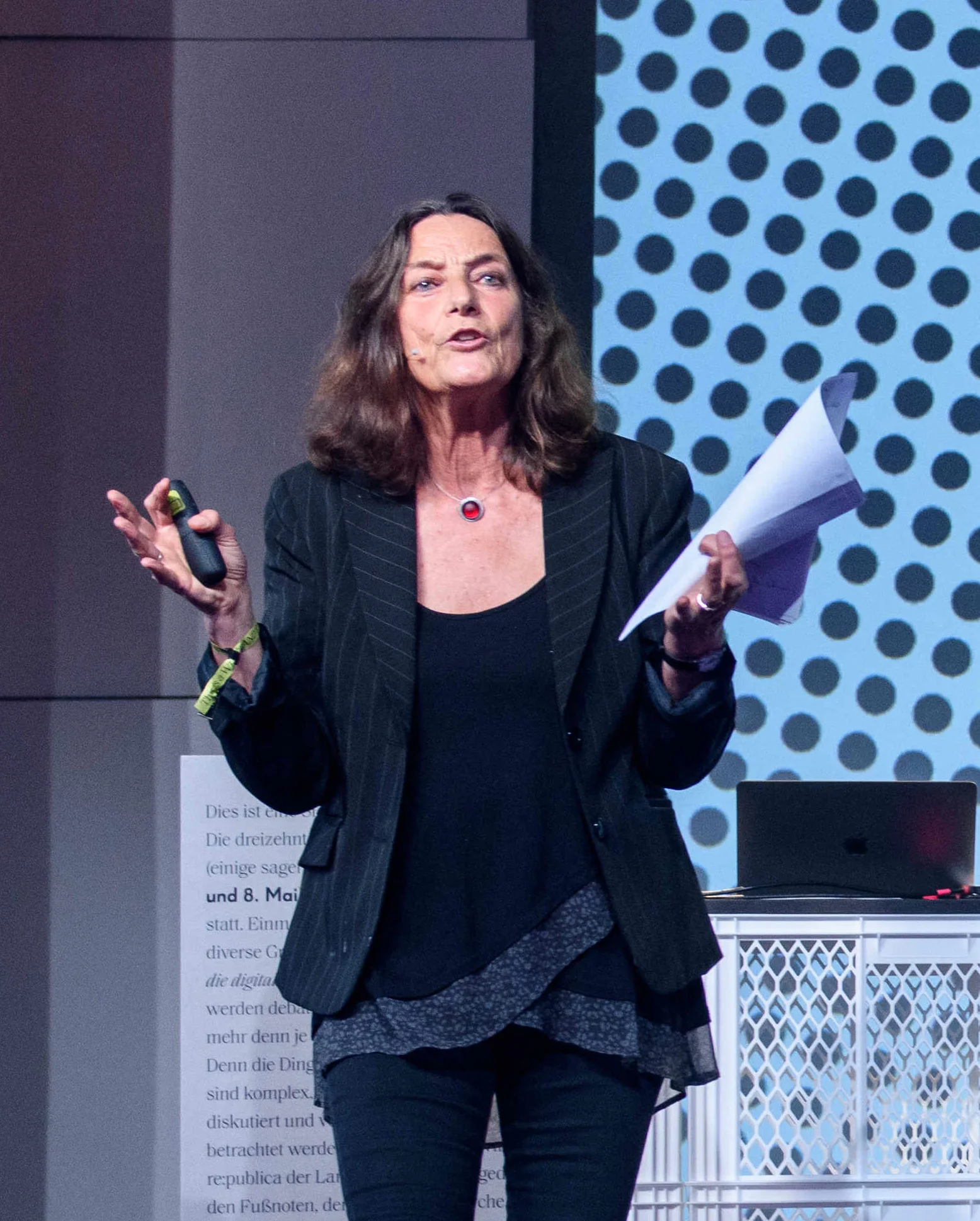
Image from Wikipedia
Image from Wikipedia
Sybille Krämer: A Pivotal Voice in Philosophy Between Language, Media, and Cultural Technology
Thinking as Precise Art: The Work of Sybille Krämer
Sybille Krämer is one of the most influential contemporary German philosophers. Born in 1951 in Trier, she has shaped theoretical philosophy, philosophy of language, and philosophy of media with a body of work that extends far beyond academic discourse. Her research merges conceptual clarity with broad cultural theory, revealing how language, writing, signs, and technical media shape thought. ([de.wikipedia.org](https://de.wikipedia.org/wiki/Sybille_Kr%C3%A4mer?utm_source=openai))
Her career unfolded along central stations of the German academic landscape: studies in Hamburg and Marburg, PhD in Marburg, habilitation in Düsseldorf, and from 1989 a professorship at the Free University of Berlin. She taught there until her retirement in April 2018, before transitioning to the role of senior professor at Leuphana University of Lüneburg in 2019. This academic path illustrates a thinker who does not perceive philosophy as a closed discipline but as a vibrant space for interdisciplinarity, cultural critique, and conceptual work. ([geisteswissenschaften.fu-berlin.de](https://www.geisteswissenschaften.fu-berlin.de/we01/institut/mitarbeiter/emeriti-und-profs-im-ruhestand/kraemer/index.html?utm_source=openai))
Biographical Development: From Trier to the Heart of Philosophy
The biographical foundation of Sybille Krämer lies in a classical yet demanding humanistic education. She studied philosophy, history, and social sciences in Hamburg and Marburg, laying the groundwork for a way of thinking that never considers philosophical questions in isolation, but always in relation to historical and social conditions. This complexity makes her work highly relevant for media studies, cultural theory, and epistemology. ([geisteswissenschaften.fu-berlin.de](https://www.geisteswissenschaften.fu-berlin.de/we01/institut/mitarbeiter/emeriti-und-profs-im-ruhestand/kraemer/index.html?utm_source=openai))
After her PhD and habilitation, Krämer evolved into a defining figure in the academic field. At the Free University of Berlin, she served not only as a professor but also in research contexts such as the Collaborative Research Center “Cultures of the Performative,” the excellence cluster “Topoi,” and the graduate school “Written Imagery.” These institutional entanglements demonstrate the authority of her thinking and her ability to translate theoretical debates into productive research contexts. ([fu-berlin.de](https://www.fu-berlin.de/presse/publikationen/fundiert/archiv/2009_02/12_kraemer/index.html?utm_source=openai))
Career and Academic Authority: A Philosopher with Institutional Influence
Few other German philosophers have shaped discussions around language, mediatization, and operational sign practices as consistently as Sybille Krämer. Her areas of focus range from the theory of mind and consciousness to language philosophy, as well as theories of writing, images, and media. Particularly important is her perspective on the non-semantic but also material and operational aspects of language: speaking, writing, diagrams, and notations appear as cultural practices with epistemic functions. ([fu-berlin.de](https://www.fu-berlin.de/presse/publikationen/fundiert/archiv/2009_02/12_kraemer/index.html?utm_source=openai))
Her academic authority is not founded merely on publications but also on scholarly responsibility. Krämer has been a member of the Science Council, the Scientific Panel of the European Research Council, and the Senate of the German Research Foundation. Additionally, she has held visiting professorships and fellowships in Vienna, Oxford, Zurich, Lucerne, Graz, and other renowned locations. This international presence underscores that her philosophy is firmly anchored in the European discourse. ([geisteswissenschaften.fu-berlin.de](https://www.geisteswissenschaften.fu-berlin.de/we01/institut/mitarbeiter/emeriti-und-profs-im-ruhestand/kraemer/index.html?utm_source=openai))
Thinking in Signs, Writing, and Media: The Core Motifs of Her Work
At the center of Sybille Krämer's thinking is the question of how culture is organized through technical and symbolic forms. Her work on written imagery, mediatization, and diagrammatics shows that knowledge emerges not just in statements but also in visual, material, and operational structures. This shifts the focus of philosophy away from purely abstract models toward the concrete conditions under which meaning becomes visible and manageable. ([fu-berlin.de](https://www.fu-berlin.de/presse/publikationen/fundiert/archiv/2009_02/12_kraemer/index.html?utm_source=openai))
Her keen interest in the "exteriority" of the mind and in the mechanisms of thought—those cultural tools through which thinking is organized, expanded, and stabilized—is particularly striking. These include writing, maps, diagrams, and media transmission. In this perspective, philosophy becomes a cultural technique of reflection: it examines not only the contents of thought but also its forms, media, and transitions. ([de.wikipedia.org](https://de.wikipedia.org/wiki/Sybille_Kr%C3%A4mer?utm_source=openai))
Publications and Thematic Profiles: A Work of High Conceptual Density
Among her more well-known monographs are works on language, speech acts, and communication, as well as on medium, messenger, and transmission. These texts mark central points of her theoretical program: language as action, communication as a social practice, and mediatization as a condition of knowledge. Her later works on witness, visuality, and cultural infrastructures continue this path and demonstrate a thinker who has never confined herself to a single specialty. ([fu-berlin.de](https://www.fu-berlin.de/presse/publikationen/fundiert/archiv/2009_02/12_kraemer/index.html?utm_source=openai))
The Free University of Berlin explicitly refers to her publications and articles, which are still accessible there. This is not merely a bibliographical footnote but an indication of the lasting impact of her work: Krämer's texts continue to be referenced in seminars, research projects, and cultural theoretical debates. Her name stands for a philosophical school of precise argumentation, methodological openness, and conceptual integrity. ([geisteswissenschaften.fu-berlin.de](https://www.geisteswissenschaften.fu-berlin.de/we01/institut/mitarbeiter/emeriti-und-profs-im-ruhestand/kraemer/index.html?utm_source=openai))
Current Role and Scientific Presence
Even after the formal end of her professorship in Berlin, Sybille Krämer has remained scientifically active. Since March 2019, she has been a senior professor at Leuphana University of Lüneburg, transferring her intellectual work into a new institutional framework. This continuation demonstrates that her research is by no means complete but continues to resonate in new contexts, influencing new generations of students and researchers. ([zkm.de](https://zkm.de/de/personen/sybille-kraemer?utm_source=openai))
The current significance of Krämer primarily lies in the urgency of her questions today: How do digital media change the perception of knowledge? What role do writing, images, and operational representations play in a connected culture? And how can philosophically capture what occurs between speaking, writing, and technical transmission? Her work does not provide simple answers but offers precise concepts and robust models of thought. ([geisteswissenschaften.fu-berlin.de](https://www.geisteswissenschaften.fu-berlin.de/we01/institut/arbeitsbereiche/ab_kraemer/forschung/index.html?utm_source=openai))
Cultural Influence and Scholarly Reception
Sybille Krämer has significantly contributed to the perception of media philosophy in Germany as not a marginal issue but a core question of contemporary philosophy. Her investigations into written imagery, operativity, and mediatization connect analytical clarity with cultural scientific depth. Her influence lies precisely in establishing ways of thinking that not only interpret texts but also examine the material and symbolic conditions of knowledge. ([fu-berlin.de](https://www.fu-berlin.de/presse/publikationen/fundiert/archiv/2009_02/12_kraemer/index.html?utm_source=openai))
Academic honors and festschriften also reveal the extent to which her work has shaped colleagues, peers, and generations of students. The Free University of Berlin explicitly refers to a "dynamic body of work" that has been documented in word, image, sound, and film. This indicates a thinker whose importance does not reside in a single book but in a long-term intellectual movement. ([geisteswissenschaften.fu-berlin.de](https://www.geisteswissenschaften.fu-berlin.de/we01/institut/mitarbeiter/emeriti-und-profs-im-ruhestand/kraemer/index.html?utm_source=openai))
Conclusion: Why Sybille Krämer Remains Compelling Today
Sybille Krämer is compelling because she brings philosophy to the point where language, media, writing, and cultural techniques intersect. Her work demonstrates with rare clarity that thought never exists independently of its forms. Anyone interested in epistemology, philosophy of language, media philosophy, or the cultural history of knowledge will find in her one of the most important reference points in contemporary German philosophy. ([fu-berlin.de](https://www.fu-berlin.de/presse/publikationen/fundiert/archiv/2009_02/12_kraemer/index.html?utm_source=openai))
Her ability to translate abstract questions into precise concepts makes her an exceptionally readable author. Those wishing to experience her work should not only read her texts but also engage with them in lectures, discussions, and academic contexts. Sybille Krämer represents a philosophy that sharpens thinking, makes media visible, and interrogates the present with intellectual discipline. ([geisteswissenschaften.fu-berlin.de](https://www.geisteswissenschaften.fu-berlin.de/we01/institut/mitarbeiter/emeriti-und-profs-im-ruhestand/kraemer/index.html?utm_source=openai))
Official Channels of Sybille Krämer:
- Instagram: No official profile found
- Facebook: No official profile found
- YouTube: No official profile found
- Spotify: No official profile found
- TikTok: No official profile found