
Zubin Mehta
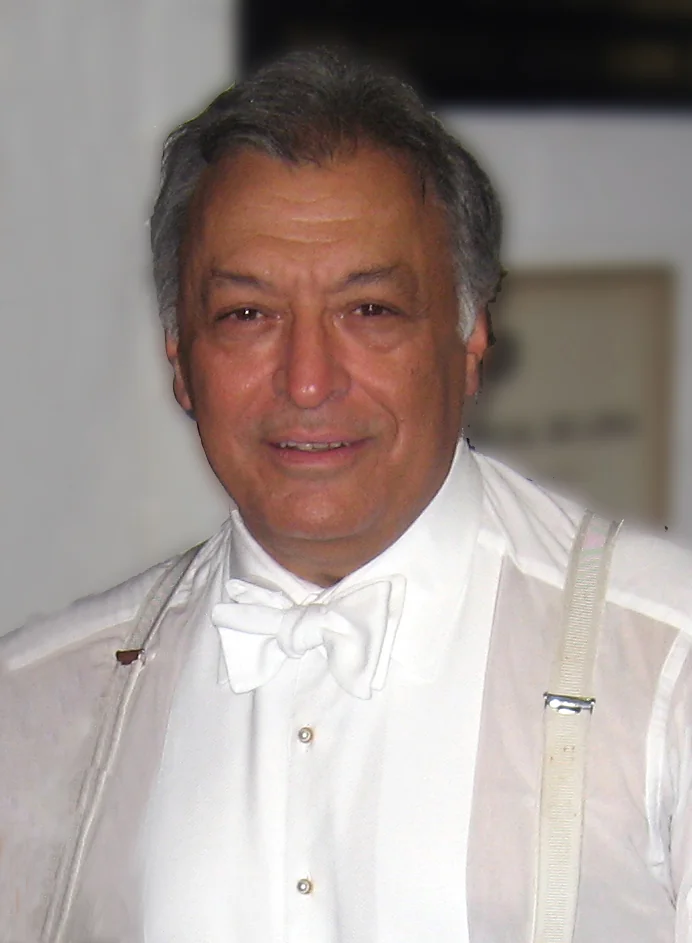
Image from Wikipedia
Image from Wikipedia
Zubin Mehta: The Maestro Between Bombay, Vienna, Los Angeles, and Tel Aviv
A Conductor of Global Repute, Shaped by Musical Authority and Historical Radiance
Zubin Mehta is one of the defining conductors of the 20th and 21st centuries. Born on April 29, 1936, in Bombay, now Mumbai, he became an internationally sought-after maestro, with a musical career spanning the great concert and opera houses of the world. His artistic development combines Indian heritage, European education, and an exceptional stage presence that established him early on as a prominent figure in classical music.
His name stands for expansive orchestral culture, sonic authority, and a conducting art that embraces both symphonic repertoire and operatic tradition. As the music director of the Los Angeles Philharmonic, the New York Philharmonic, the Bavarian State Opera, and the Israel Philharmonic Orchestra, he shaped institutions for decades. Even today, he is perceived as an honorary and guest conductor of special significance.
Early Years in Bombay and the Path to Vienna
Zubin Mehta grew up in a musical family. His father, Mehli Mehta, founder of the Bombay Symphony Orchestra, early instilled in him a deep understanding of orchestral sound, discipline, and musical form. These formative years laid the groundwork for a career that would later be characterized by precision, breadth, and great repertoire security.
After a brief study of medicine, Mehta ultimately chose music and moved to Vienna in 1954. At the Vienna Music Academy, he studied conducting under Hans Swarowsky, a key figure in the Austrian conducting school. The years in Vienna opened his access to European tradition and sharpened his sensitivity to score, style, and orchestral balance.
The International Breakthrough: Competitions, Debuts, and Early Principal Positions
The international breakthrough came with remarkable speed. A conducting competition in Liverpool drew attention to his extraordinary talent and propelled his career forward. At a young age, he conducted major orchestras in North America and Europe, impressing audiences with a remarkable maturity in handling both symphonic and operatic repertoire.
Mehta was invited early on to significant podiums, including debuts with the New York Philharmonic, the Philadelphia Orchestra, and the Montreal Symphony Orchestra. From 1961 to 1967, he served as the music director of the Montreal Symphony Orchestra. Shortly thereafter, he assumed one of the most prestigious positions in American music life: from 1962 to 1978, he was at the helm of the Los Angeles Philharmonic.
Los Angeles and New York: Orchestral Culture at the Highest Level
The years in Los Angeles made Mehta one of the most well-known figures in North American music life. Under his leadership, the Los Angeles Philharmonic gained international profile and sonorous range. His work there combined expressive energy with structural clarity and solidified his reputation as a conductor who brings great scores to life with dramatic tension and strict form discipline.
From 1978 to 1991, Mehta served as the chief conductor of the New York Philharmonic. This phase provided him with further global visibility and solidified his standing among the great conductors. His interpretive authority, repertoire ranging from Strauss to Verdi, and his commanding presence in the centers of classical music formed the image of a maestro of international significance.
Israel Philharmonic Orchestra: An Artistic Partnership
Mehta's name is particularly closely associated with the Israel Philharmonic Orchestra. Over many decades, this relationship evolved into one of the longest-standing and most visible partnerships between a conductor and an orchestra. From 1977 to 2019, he served as the orchestra's chief conductor, later being honored as Music Director Emeritus and Conductor Emeritus.
This connection symbolizes continuity, trust, and an exceptional shared sound culture. Official orchestra sources describe the relationship as historically grown and characterized by intense collaboration. For Mehta, it signified not only a musical but also a cultural life mission that extended far beyond the concert hall.
Operatic Art, Bavarian State Opera, and European Roots
Mehta's work has never been limited to the symphonic realm. Early on, he shaped the world of opera with distinctive interpretations. He conducted at venues such as the Metropolitan Opera, La Scala in Milan, Covent Garden, and the Vienna State Opera, evolving into a conductor who integrates vocal lines, orchestral transparency, and dramatic intensification.
From 1998 to 2006, he served as the General Music Director of the Bavarian State Opera. These years marked another important chapter in his European grounding. In 2004, he was appointed Honorary Conductor there, and he remained closely connected to Munich's music scene even after. The historical significance of this relationship is still evident today in projects, concerts, and recordings with the Munich Philharmonic.
Musical Language: Sound, Drama, and Fidelity to the Score
Zubin Mehta is often described as having an expressive, expansive conducting style. His approach to music combines rhythmic tension, broad melodic arcs, and a clear vision of orchestral architecture. This signature unfolds particularly powerfully in the repertoire of Richard Strauss, Brahms, Verdi, Puccini, Wagner, and Bruckner.
His interpretations thrive on the ability to organize large forms without losing dramatic breath. Critical voices from the music press have repeatedly praised his sovereignty on the podium, while discographies and archival recordings attest to his importance as a style interpreter between late Romanticism, opera, and classical modernism. In his artistic development, technical control merges with an often radiant, physically present sound ideal.
Discography, Recordings, and Enduring References
Mehta's discography includes numerous significant recordings, including works by Brahms, Bruckner, Strauss, Wagner, Verdi, Puccini, and Orff. Notably widespread are recordings made with the Los Angeles Philharmonic, the New York Philharmonic, the London Philharmonic Orchestra, and the Israel Philharmonic Orchestra. Many of these productions continue to circulate in the international catalog and shape the listening canon of classical music enthusiasts.
Frequently cited references include his opera recordings and symphonic cycles, such as Verdi's Il Trovatore, Puccini's Turandot, Bruckner and Brahms interpretations, as well as Strauss recordings. The Munich Philharmonic will release new recordings in 2024 as part of a Brahms cycle under his direction, including the four symphonies and the two piano concertos with Yefim Bronfman. This demonstrates that Mehta's recording activities remain relevant even in advanced age.
Current Projects and Late Honors
Even beyond his former top positions, Mehta remains actively present. In 2024, a Brahms cycle with the Munich Philharmonic will be at the focus, accompanied by releases on the orchestra's label and with Warner Classics. These activities do not mark a nostalgic look back but rather an ongoing engagement with a core repertoire that Mehta has shaped for decades.
Additionally, there are late honors that confirm his status in the music world. In 2024, he received the Golden Honorary Coin from the City of Munich. Previously, he had received awards such as the Praemium Imperiale and the Tagore Award for Cultural Harmony. Such honors underline that Mehta is perceived not only as a conductor but also as a historical cultural figure.
Cultural Influence and International Awards
Mehta's cultural influence extends far beyond individual concerts. He represents the global opening of the classical music scene, where an artist born in India could take on leading roles in the most important music centers of the Western world. His career embodies musical internationality, institutional stability, and the enduring effectiveness of a conductor who has shaped generations of musicians.
His honors include the appointment as an honorary member and honorary conductor of various orchestras and opera houses as well as state awards. In 2022, Australia named him an Honorary Companion of the Order of Australia. Such recognitions not only reflect his achievements but also his status as an ambassador of classical music.
Conclusion: A Maestro with Historical Depth and Unbroken Radiance
Zubin Mehta remains fascinating because his career reflects nearly a century of music history and has remained vibrant. He combines global stage presence with institutional loyalty and international significance with a clear sense of musical tradition. Anyone who listens to his recordings or follows his work with great orchestras encounters a conductor who not only organizes sound but transforms it into grand narratives.
It is precisely this blend of authority, experience, and artistic continuity that makes Mehta an exceptional figure. His concerts and recordings illustrate how powerfully lively interpretation, repertoire knowledge, and stylistic sovereignty can interact. Those who have the opportunity to experience Zubin Mehta live encounter one of the great architects of symphonic and operatic thinking.
Official Channels of Zubin Mehta:
- Instagram: No official profile found
- Facebook: No official profile found
- YouTube: No official profile found
- Spotify: No official profile found
- TikTok: No official profile found
Sources:
- Wikipedia: Zubin Mehta - Image and Text Source
- Britannica - Zubin Mehta Biography
- Munich Philharmonic - History
- Munich Philharmonic - Zubin Mehta
- Warner Classics - Brahms: The Piano Concertos
- Warner Classics - Johannes Brahms: The Symphonies
- Munich Philharmonic Label - Zubin Mehta
- Praemium Imperiale - Zubin Mehta
Upcoming Events
MEHTA / GRUBER / MOZART, BRUCKNER / 8. Abo B